Archive for the ‘Articles’ Category

Yes, Passport To World Band Radio Has Closed Their Website

Friday, August 27th, 2010

Over the past weeks, many of you may have noticed that the website for Passport To World Band Radio, Passband.com (note: no hyperlinking here), has closed shop. This, of course, following the death of every SWLer’s favorite guide, the  Passport To World Band Radio. If this is new to you, read some of our previous posts about this.

As I pointed out in previous posts, do not despair! There are alternatives for finding shortwave radio schedules. For starters, consider purchasing the World Radio and TV Handbook. If you’re looking for online sources of schedules, also consider some alternatives I listed on SWLing.com’s Resource page.

Passband.com was a great source for news in the world of shortwave radio.  I (humbly) believe our blog, the SWLing Post, is as well. Consider subscribing to our RSS feed. Also, check our Blogrool links (right navigation column) for other great radio websites.

Remember, you’re not alone and shortwave radio is not dead. Indeed, it’s quite an active lifeline to many communities around our small planet.

Happy listening!

Fiji democracy group planning pirate radio

Tuesday, August 24th, 2010

(Source: New Zealand Herald)

In a move inspired by pirate radio stations of the 1960s, political activists in the South Pacific are planning to position a Dutch-registered merchant vessel in international waters off the coast of Fiji to defy censors in the military dictatorship.

Opponents of the coup leader and self-appointed Prime Minister, Commodore Frank Bainimarama, hope to have the station broadcasting news and interviews by the end of next month to circumvent draconian media laws imposed on press, radio and television.

Since taking power in a military coup in December 2006, Fiji’s strongman has slowly eaten away at the country’s democratic freedoms, installing newsroom censors and cracking down on foreign media ownership.

Newspapers and radio stations now have to be 90 per cent locally owned, a stipulation that will almost certainly see the closure of the 140-year-old Fiji Times.

The popular title, which has been owned by News Ltd since 1987, has been emasculated since the censors moved in to demand the removal of any anti-government stories.

With most of the population too poor to access the internet or satellite television, most Fijians rely on the press and transistor radios for their news. That is why Usaia Waqatairewa of the Fiji Democracy Movement has opted for pirate broadcasting.

Now exiled in Australia, he plans to stream live programming to the ship from a Sydney newsroom and rebroadcast the material from a transmitter on the AM waveband.

“The basic purpose is to inform the public of what’s really happening in Fiji so they can make an informed decision about whether to support Bainimarama or not,” he said.

Even the phones no longer guarantee confidentiality since the Government ordered mobile and landline users to register all their personal details. One local carrier, Vodafone, is also demanding that customers provide a left-hand thumb print and PIN, which the user would normally keep secret.

The head of the Justice Ministry, Aiyaz Sayed-Khaiyum, claims the compulsory registration of all phones is the result of a spate of bomb threats and bogus calls. Critics suggest it is more to do with the interim Government wanting to create a database of callers whose views do not correspond with the regime’s.

Telephone paranoia even extends to some tourists. A German businessman who used his satellite phone in a restaurant recently was reported to the police, who promptly raided his hotel room. He left the country in disgust shortly afterwards.

So far, such stories have not damaged tourism, which is one of the few Fijian industries still booming. A devalued currency and a strong Australian dollar have made Fiji a bargain destination for overseas holidaymakers.

But while the tourists are still heading to Fiji, businesses are pulling out. Australia’s Commonwealth Bank has sold its Fijian arm, and Qantas is trying to sell its 46 per cent stake in Fiji’s national airline, Air Pacific. Despite these economic warning signals, Commodore Bainimarama remains determined to do things his way. He has promised to go to the country in 2014 but as he has repeatedly postponed his general election plans, few believe he will keep his word.

And if an application for a loan of more than $700 million from the IMF fails, “the country’s economic outlook will be shocking”, says Anthony Bergin of the Australian Strategic Policy Unit.

CRACKDOWN LEADS TO POVERTY AND FEAR

Fiji has had four coups in the past two decades and is facing an economic crisis that threatens to bring more instability to the 800,000 people who inhabit this sprawling archipelago.

And there are concerns about human rights as Commodore Frank Bainimarama cracks down on those who oppose his dictatorship.

In a rare interview aired by the Australian Broadcasting Corporation last month, the military leader said “we’ll need to shut some people up” before the country can return to democracy. “I don’t trust the people,” declared the Prime Minister, adding that he was none too happy about politicians or the judiciary, either.

After silencing the powerful Methodist Church and the chiefs who are the traditional rulers of this fiercely patriotic nation, Commodore Bainimarama sacked many judges.

Suspended from the Commonwealth, Fiji risks becoming a pariah in the region.

The Prime Minister also recently expelled Australia’s acting high commissioner to Fiji.

The reforms he talks about strike at the heart of Fiji’s racially divided society. For many years, about half the population was of Indian origin, descendants of indentured labourers brought to Fiji in the 19th century to help in the sugar industry. Faced with eviction from their farms after their leases expired, thousands of Indians have sought refuge overseas while many of those unable to leave have ended up in squatter camps.

When Commodore Bainimarama seized power he promised a fairer society, with legislation designed to protect the interests of the Indian community. But unemployment, poverty and fear have created a society whose people are often too scared to talk.

- Independent
By Roger Maynard

NOTE: We’ve been following the story in Fiji for more than a year now as it is a prime example of how important shortwave radio is to people who live in a country that restricts local media. Check out our previous posts about the situation in Fiji.

Victorian era “radio”

Monday, August 16th, 2010

A stentor reading the day's news to 6200 subscribers - An image depicting the stentor of Telefon Hirmondó. Source: Wikimedia Commons
This post is off topic from my typical posts about wireless technology. Nonetheless, I’m a sucker for documentaries regarding the history of technology.

BBC Radio 3 recently had a Sunday documentary about the “Pleasure Telephone”–a Victorian era technology that used telephone almost like we use radio today. As someone interested in broadcasting and technology, I found the story fascinating.

BBC no longer has the documentary available to stream from their site.

However, Clark Boyd, of PRI’s The World Technology Podcast, picked up the story and published the bulk of it at the end of his July 14th show. You can find it here.

It’s worth a listen–in fact, the PRI World Technology Podcast series in general is worth a subscription. I never miss an episode.

For more information on the pleasure telephone, check out this article in Early Radio History, or its Wikipedia entry.

Russian Agents Used Shortwave Radio to Receive Coded Messages

Tuesday, June 29th, 2010

Courtroom drawing of the suspects. Source: NY Times

Many of you may have noticed in the news yesterday that shortwave radio was used by the 11 Russian agents who were carrying out espionage within the United States. An article in the New York Times noted that one of the methods they used to communicate with the S.V.R. headquarters in Russia was via shortwave radio. The article mentioned that the agents would send “coded bursts of data” via shortwave transmitter.

The NY Times article failed to mention that the agents no doubt received messages from Russia via shortwave numbers stations.

So why is shortwave radio–a rather “low-tech” communications medium–used in modern espionage? The primary reason is it’s almost impossible to trace, thus messages leave little to no breadcrumbs for one to follow back to the source.

For decades, radio listeners have been trying to figure out from where numbers station broadcasts originate. They’ve had very little success. Indeed, the only breaks we’ve had have been when the broadcasting station makes a mistake. This has happened once with a numbers station message originating from Radio Havana Cuba. Listeners heard the faint sound of an RHC broadcast in the background–they were obviously hearing noise from across the studio hall.

Of course, another reason shortwave radio is used to relay secret messages is because it’s almost impossible to block. I wrote an article called “When shortwave radio is better than the Internet” that describes why this characteristic alone is an important reason to keep shortwave stations on the air around the world. No government or local authority can prevent you from listening to shortwave broadcasts–whether you’re a spy (like this lot) or simply living in a country where the folks in charge like to  control your access to the news and information.

One small shortwave  radio can break through all of that red tape.

UPDATE: For more information on how radio was used by these agents, check out the US Department of Justice’s website. In particular, check out pages 11-12 in this document. (Thanks to David Goren for this tip.)

For more information:

Jonathan Marks Visits Wolf Harranth, OE1WHC, Dokufunk Curator

Monday, March 22nd, 2010

Every shortwave radio listener and amateur radio operator should watch this video. Brings new life (ironically) to QSLing.

A visit with Wolf Harranth, OE1WHC, Dokufunk Curator from Jonathan Marks on Vimeo.

Irish Times Reports On Shortwave Broadcaster Targeting North Korea

Wednesday, March 17th, 2010

Free North Korea Radio is giving voice to a growing opposition to the dictatorship, writes David McNeill in Seoul.

Building up a new network of stringers took time. Today, 10 freelance journalists provide reports from behind the bamboo curtain on a retainer of about $100 (€73) a month. They include a university professor, a teacher, at least two soldiers and a North Korean security agent…

…FNKR provides them with small digital recorders, which are used to record interviews, and mobile phones with signals that work across the Chinese border – Pyongyang’s fledgling mobile- phone system was bought from Egypt and is incompatible with the South Korean network.

The recordings are smuggled across the Chinese border and transported back to Seoul via a network of spies.

The results detonate on air during Voices of the People , where the raw views of the North’s citizens – electronically distorted – are broadcast back into their own country. Brainwashed automatons in so much reporting, the people heard here emerge as thrillingly human, alive and angry.

Read full article in the Irish Times.

Other reports of Free North Korea Radio:

Radio World: Whatever Happened to Shortwave Radio?

Friday, March 12th, 2010

For all its transmission expense and audio problems, analog shortwave radio has one clear advantage over the Internet and domestic radio/TV: It cannot be easily blocked — even when states try to disrupt its signals using jamming transmitters.

This is one of the best articles I’ve read recently about the state of shortwave broadcasting. It features authorities on the subject like Andy Sennitt, Larry Magne and Kim Elliott. Moreover, it highlights the historical appeal and the challenges shortwave broadcasts face in the internet age. Click here to read the full article on Radio World’s website.

forth magazine: Clandestine, not confidential

Wednesday, March 10th, 2010

Jason Walsh, of Ireland’s forth magazine, attempts to separate the news from the propaganda on the international airwaves – and finds it impossible

IMAGINE THERE was a communications medium that spanned virtually the entire globe and was virtually impossible to censor. Now imagine that, unlike the internet, it couldn’t be switched-off by the powers that be and didn’t require expensive equipment or monthly subscription fees to access. That would be a powerful voice for democracy, wouldn’t it?

Read the full article here.

A Look Inside the 2010 World Radio TV Handbook (WRTH) and Interview with Publisher

Monday, January 11th, 2010

wrth2010The World Radio TV Handbook (WRTH)–a printed guide to broadcasts on shortwave, mediumwave, longwave, and FM, as well as on TV–is now available for purchase in its 64th edition. This guide is known as the key reference book for hard core DXers, shortwave radio listeners, broadcasters and radio enthusiasts of all stripes.

This year, WRTH‘s publisher sent me a copy of their latest reference directly from the UK; as has often been the case, I found myself immersed in its pages within moments of opening the mail package.

This year in particular, it is my belief that WRTH will become even more important to radio listeners.  The main reason for this is the fact that in 2009, International Broadcasting Services, Inc., decided to halt production of its fine broadcast guide, Passport to World Band Radio. [To learn more about this, check out previous posts here and here].

On SWLing.com, I had always suggested newcomers to the hobby check out Passport (PWBR) over WRTH simply because the main body of its guide was laid out in a “TV Guide”-like fashion, easy for a beginner to understand. In other words, it sorted broadcasts by Universal Time and listed all of the broadcasts available (primarily in English) with information about program content, where you could find it on the radio dial, and even included mini-reviews–often humorous–of the shows. This format was very accessible for those who may not yet have a full grasp of the nuances of shortwave radio listening.

Although not intentionally formatted for newcomers, WRTH is also reasonably easy to use, and a much, much more comprehensive guide to broadcasts than Passport to World Band Radio. Indeed, I find that I when I hear a unknown broadcast in a language that I also don’t know, I reach for WRTH to solve the mystery.

What’s inside WRTH?

The bulk of WRTH is a tried-and-true radio reference book with major sections delineated by convenient side bars which make navigating through this substantial book much easier.

Click to see sample of WRTH's International Radio section.

Click to see sample of WRTH's International Radio section.

WRTH offers the following:

  • Features and Reviews
  • National Radio
  • International Radio
  • Frequency Lists
  • Terrestrial Television
  • Reference

The “Features and Reviews” section is always the first thing I read when I receive my new copy of WRTH. This year, for example, WRTH features receiver reviews of the Icom IC-7600, IC-7000 (ham transceiver), Eton Satellite 750, and a selection of very low-cost portables. They also feature mini-reviews of some “Cold War Classics,”  as they are known, like the Collins R390, Racal RA17, Harris RF-590 and the Rohde & Schwarz EK 070.  [By the time I finished reading about these fine classic rigs, I'll admit, my mouth was watering...] They also feature the BBC World Service, Samoan Radio, a Digital Update, and more.
As a shortwave and medium wave (AM broadcast) listener, I find that I use WRTH based on the way I’m listening to radio.  Either I listen for a particular station or country by looking it up in the national or international sections of WRTH, then listening on known frequencies at the appropriate time.  Or, I simply tune through the bands, and when I locate something of interest on my radio dial, I turn to WRTH‘s frequency list to see what station I’m hearing. WRTH will also give you useful information for QSLing and identifying the coordinates of the transmission site any given broadcaster is using. Indeed, WRTH gives you more info about a broadcast than any other radio reference book with which I’m familiar. This is one of the reasons it has become a staple reference for serious radio listeners.

An Interview With Nicholas Hardyman, Publisher of WRTH

This year, in particular, I had a few questions that only WRTH could answer–so I asked Nicholas Hardyman, WRTH‘s publisher, if he would agree to a brief interview.  He accepted with enthusiasm.

Thomas (SWLing.com): WRTH is now in its 64th edition; how has your content changed over the years?

Nicholas (WRTH): The biggest changes have been in the large increase in stations following deregulation across the globe. This is most evident is the explosion in the number of FM stations, although this is also happening in some countries that are still fairly heavily regulated. We have also seen a large increase in TV stations which we cannot, unfortunately, fully reflect in WRTH. The change that is coming is obviously the switch to digital transmissions both for TV and radio. It will be very interesting to see how that plays out.

Thomas: How do you gather all of your detailed broadcast information and update it each year?

Nicholas: Through the hard work and dedication of the finest set of contributors and editors any publisher could hope for. We have a very extensive and deep contributor network and consequently get a lot of information.

Thomas: Passport to World Band Radio has decide not to publish a 2010 edition; do you feel your customer base is broad enough to support your future publications?

Nicholas: Yes, I think it is. We serve several markets and different specialties within those markets so I hope our readers will continue to support our unique offering.

Thomas: Who are some of your typical readers?

Nicholas: DXers and listeners are our largest market, and of those, our typical reader is a man aged 50+ with a strong interest in technology and a loyal commitment to WRTH. We also have a lot of readers who have a professional interest in radio and others who are most interested in global transmissions.

Nicholas, thank you for the interview; I believe I speak on behalf of Shortwave radio listeners around the globe when I say that DXing wouldn’t be the same without a copy of WRTH at hand. Keep up the good work, and happy DX!

If you would like a copy of WRTH, simply click on one of the following to order your copy:

UKQRM And The Fight Against Noise

Sunday, December 20th, 2009
The noisy cuprits. Comtrend's power line adapters.

The noisy cuprits--Comtrend's power line adapters.

Whether you’re new to shortwave radio listening or have been an amateur radio operator for years, more than likely you’ve occasionally encountered electrical interference, that annoying hum or buzz that permeates your listening experience. This noise can often be difficult to pinpoint or eliminate. For most of us, the common culprits are fluorescent lights, computer monitors, televisions or even so-called “wall warts” (those ubiquitous AC adapters we use for most consumer electronics). For those of us living in sparsely populated rural areas, we can more easily find noisy interference in our own homes or on our farms (electric fences are notorious sound interrupters). If you live in an urban area, identifying interference can be a constant battle, since it may be the new LCD TV of the couple living in the apartment above you.

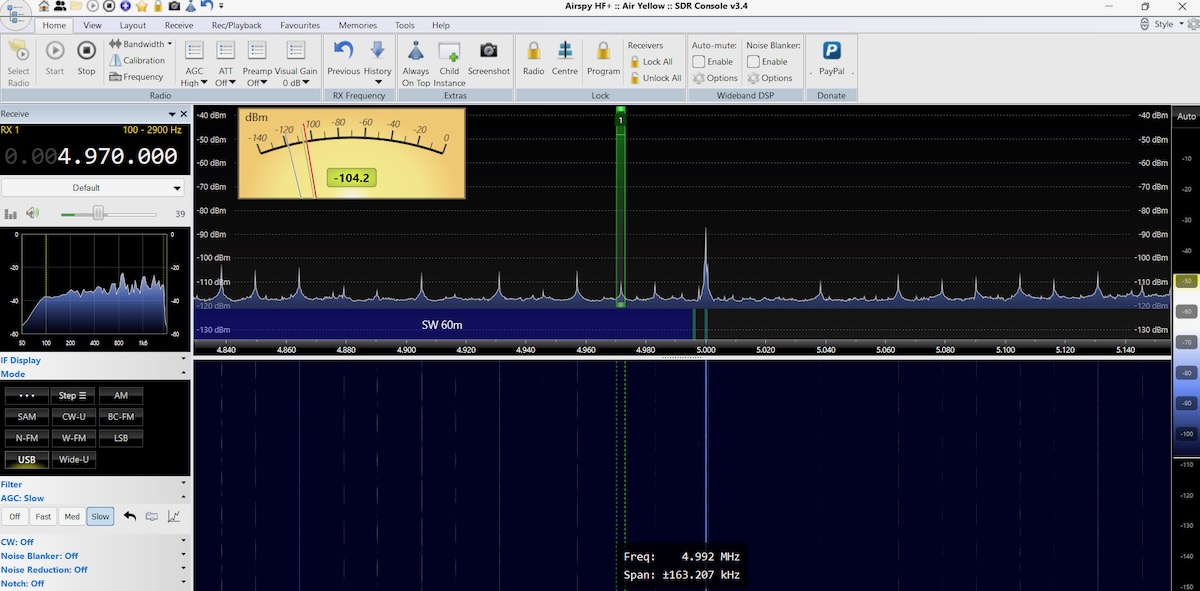
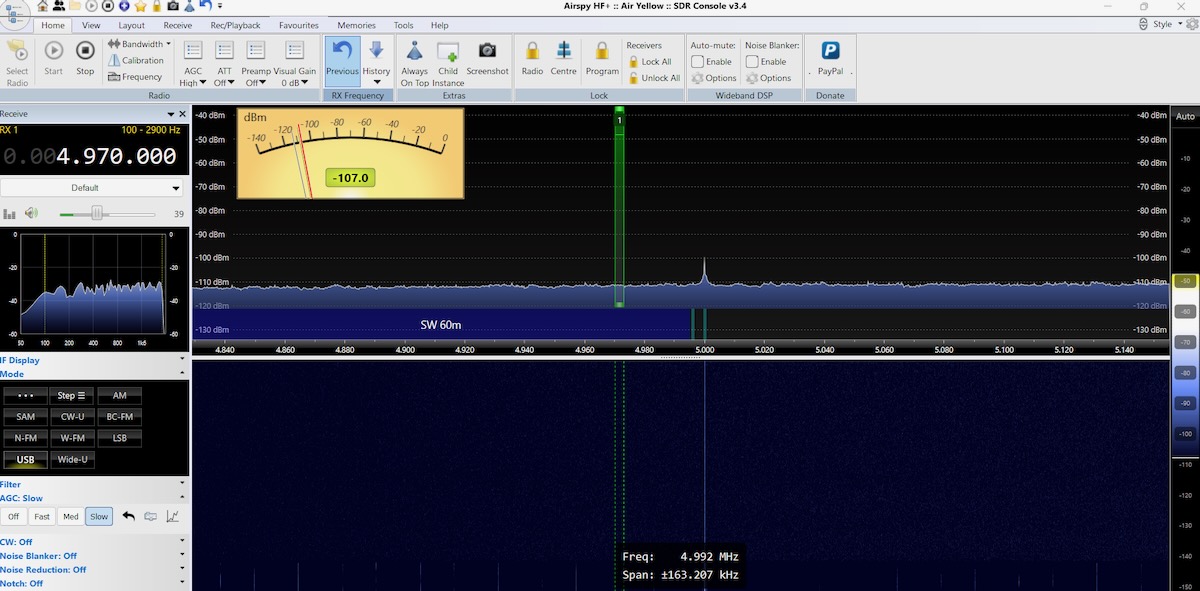
Or, even worse, the source of radio interference could be installed in your neighbors’ homes, in the form of a nationally mass-marketed home entertainment device promoted by your telephone company. That was the case for SWLer Mike Trodd in the United Kingdom; his neighbors installed a “BT Vision” multimedia entertainment package with Comtrend power line adaptors offered by British Telecom. “I switched on my short wave set to find a loud +20db screaming noise on all HF frequencies,” Mike describes. “Initially I suspected the actual home hub, but soon worked out it was the power line adaptors that were the cause.”

Figure 1 - Shortwave interference from PLT devices.

Figure 1 - Shortwave interference from PLT devices. Click to enlarge.

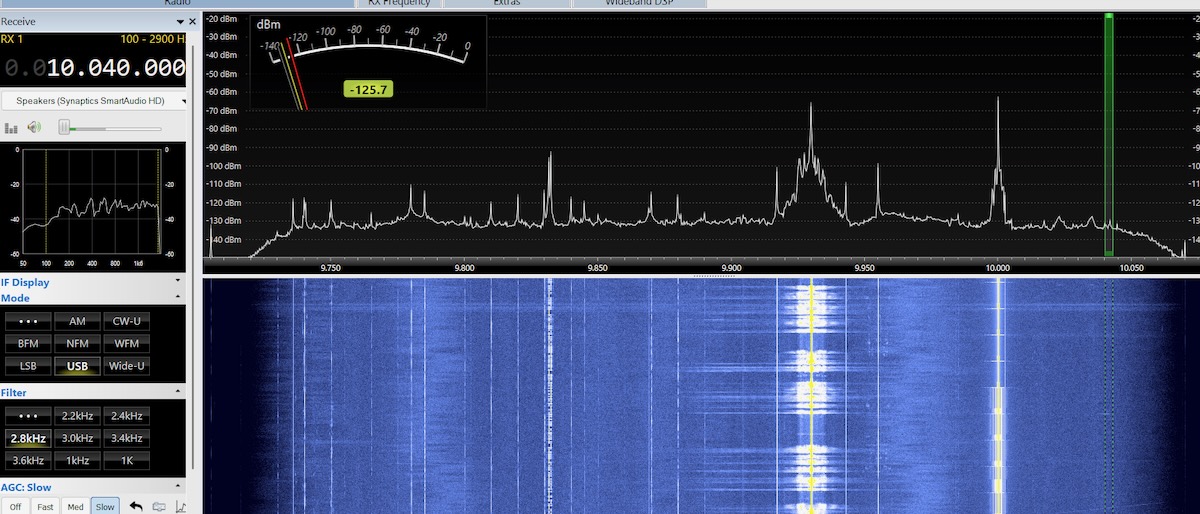
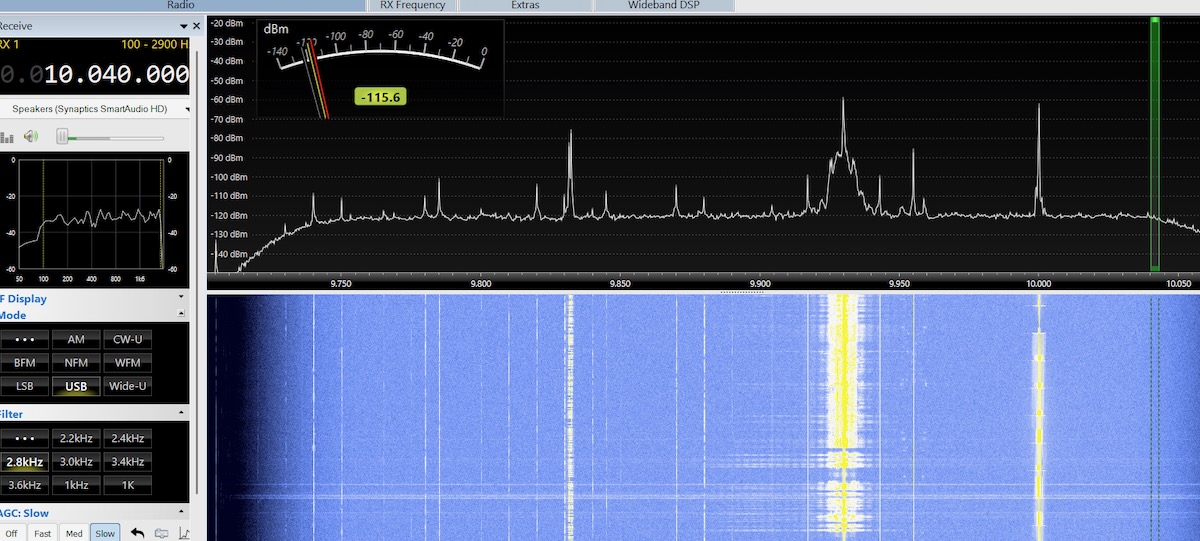
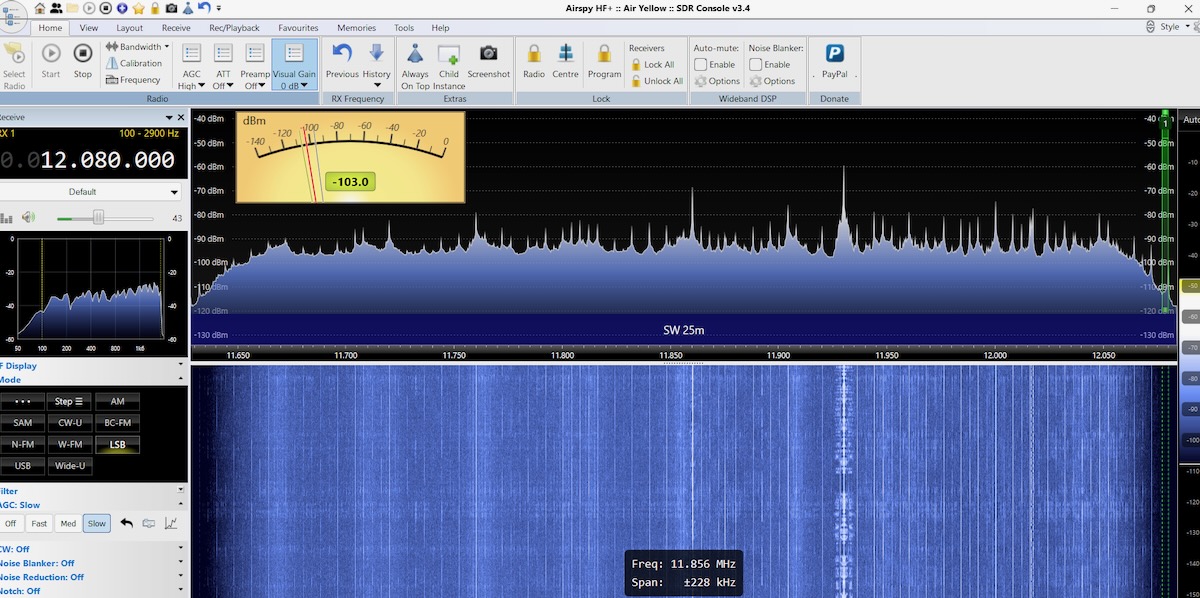
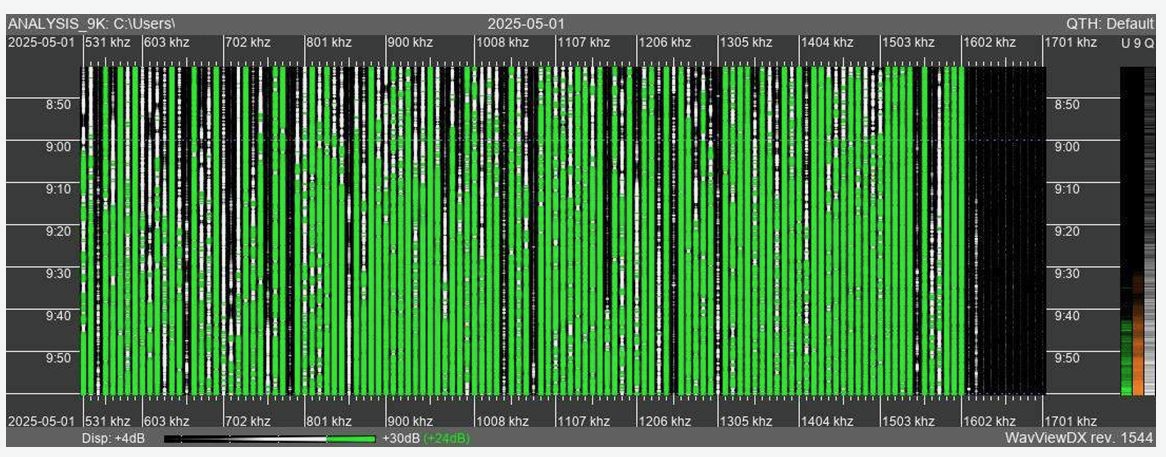
The fact is, these power line adapters use a smaller scale, more local version of a technology that amateur radio operators have long fought–namely “BPL”, or Broadband over Power Lines. In this case, though, Comtrend’s power line adapters turn your home’s electrical system into a communications system–also called Power Line Telecom (PLT). This novel (and possibly illegal) device has one crippling side-effect:  loud broadband noise across most of the shortwave radio listening spectrum (see figure 1).

What did Mike do after discovering the source of his interference? He contacted the authorities, and upon learning that, despite laws protecting radio, there is no effort being made at enforcement, he founded a program to fight the interference. “I created UKQRM because once I discovered the source,” he says, “I was disgusted that it was being allowed and nothing was being done at all!”

So, how bad is the noise, anyway? Take a look at Mike’s first homemade video:

It’s pretty obvious that the interference is substantial and will deafen shortwave and ham radios. How did British Telecom respond to Mike’s well-documented evidence of the problem?  “[They] were dreadful!” he exclaimed.”Initially you just can’t get any information out of anyone. Their dreadful overseas call centres are a waste of time. Only when a letter was sent to the chairman was any kind of reply received.”  But even this was less than satisfactory.  “To date,” he adds,”BT has never communicated its point of view.”

Are you safe from PLT interference if you don’t live in the UK? “PLT is already rolling out, uncontrolled,” Mike states, “across the EU. Portugal is suffering greatly as there are not even notches. In the US, PLT again is gathering speed. As successive governments give this illegal equipment the green card; I see a day when the HF spectrum is lost to us all.”

I asked Mike what radio operators and listeners can do? “We need support from radio listeners; in the main, this needs to be [in] an education role. Tell anyone who will listen about this. Point out that PLT does not meet regulations and laws and yet it’s being driven by the EU and governments, driven over the people with no regard at all.”

I urge you to take a look at UKQRM’s website and see what you can do to fight interference on our radio spectrum.

Mike, on behalf of all radio listeners, thank you for fighting the good fight!