Monthly Archives: October 2025

Carlos’ Illustrated Radio Listening Report and Recording of CGTN (October 29, 2025)

Many thanks to SWLing Post contributor and noted political cartoonist, Carlos Latuff, who shares the following illustrated radio listening report of a recent CGTN broadcast.


Carlos notes:

Hurricane Melissa makes landfall in Cuba, CGTN Radio, 11640 kHz

Click here to view on YouTube.

From Missouri to Oklahoma: Discovering America’s Secure Nets on 5140 kHz

Many thanks to SWLing Post contributor Don Moore–noted author, traveler, and DXer–who shares the following post:


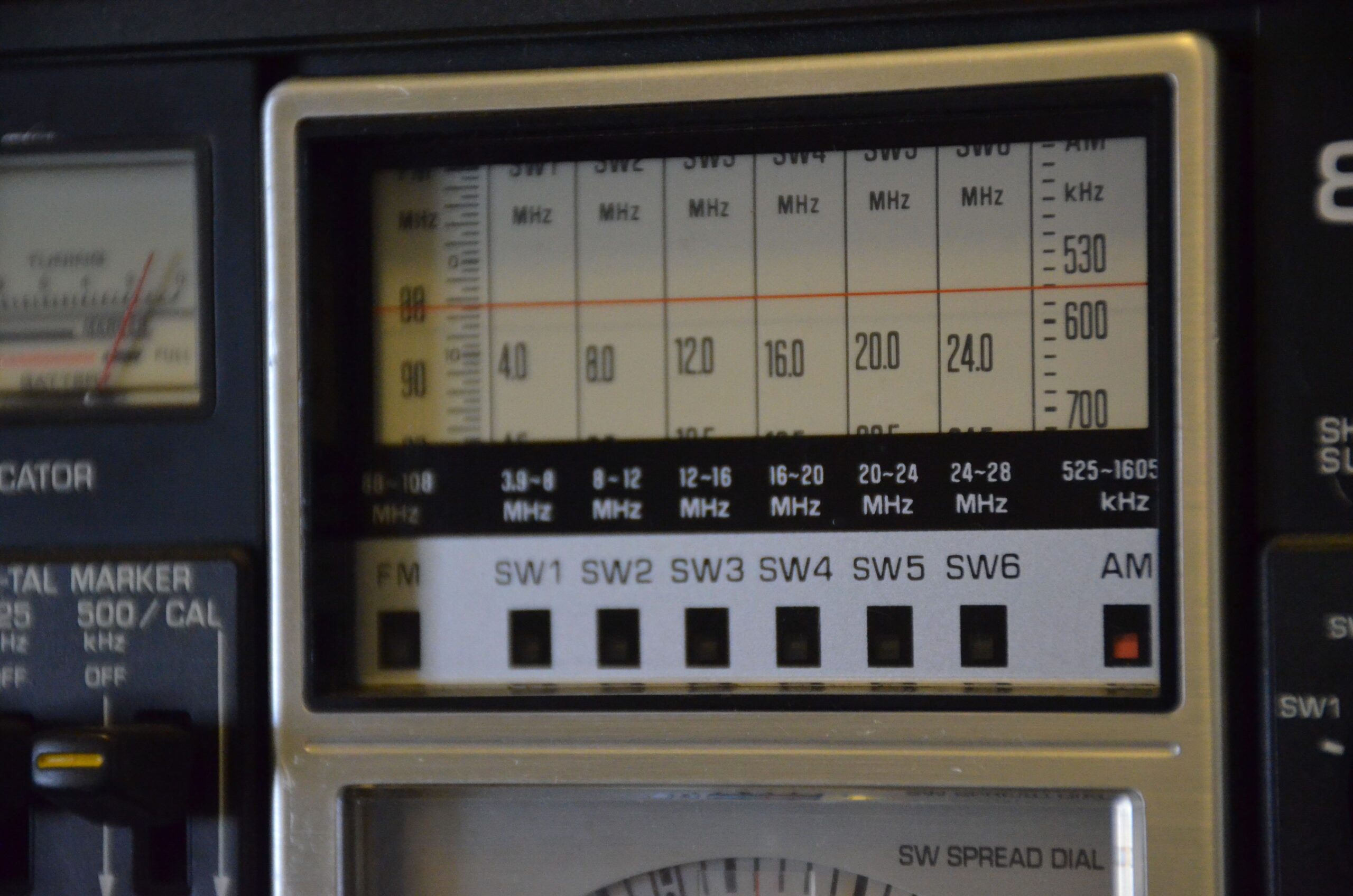
Icom IC-756 Pro Transceiver DialThe Missouri and Oklahoma Secure Nets

By Don Moore

Don’s traveling DX stories can be found in his book Tales of a Vagabond DXer [SWLing Post affiliate link]. If you’ve already read his book and enjoyed it, do Don a favor and leave a review on Amazon.

I’m always looking for new stations to add to my logbook, and the more unusual, the better.  So I was intrigued by a pair of messages in the Utility DXers Forum (https://www.udxf.nl/) email group in mid-August. Steve Handler posted a list of emergency station call signs from the state of Missouri that he found on the web in a 2014 emergency plan document. Then Jack Metcalfe responded that the last time he had checked, in early 2024, they ran a regularly scheduled net on 5140 kHz.

I immediately sent an email to Jack to find out more. He answered that on Wednesdays the Oklahoma State Secure Net had been doing a check-in at 0900 local time and that the Missouri State Secure Net followed at 0930 local time. Both of these started on 5140 kHz and then moved to 7477 kHz.

Going After the Secure Nets

I was spending my summer at an Airbnb in the north suburbs of Chicago. It wasn’t a good place to DX from, but I had already found a good listening site at the Old School Forest Preserve near Libertyville, Illinois. I began a series of regular Wednesday morning listening sessions. I knew that this wasn’t the best time of year for reception on lower frequencies, but I wanted to give it a try.

All I got from the Oklahoma net was a few very weak and unreadable signals. From the Missouri net, I got two loggings of the net control station, WNBE830, and of WQKX373 in St. Charles County. Two other Missouri stations did check in, but they were too weak for me to copy the call signs. They did say that the net is only on the first and third Wednesdays of the month. And there was nothing on 7477 kHz, so they apparently stick to 5140 kHz only now.

Recording of WNBE830 as heard on 5140 kHz at 1430 UTC on 03 September 2025, as heard in Old School Forest Preserve:

In mid-September, I left Chicago to visit my daughter in western Colorado. While I was planning my return drive back east along I-70, I realized that I would be spending the night of Tuesday, October 14, somewhere around Kansas City. And that meant I would be in the area the next morning for the third Wednesday of the month. I made plans for another mini DXpedition.

I found a hotel in the west suburbs and the next morning headed to a picnic shelter in nearby Wyandotte County Park for another remote DX session with my Airspy HF+ Discovery SDRs and PA0RDT mini whip. It was an excellent location. I logged five stations participating in the Oklahoma net. During the initial chitchat before the roll call, it was mentioned that some of the participants were at a conference. I might have gotten more stations if it hadn’t been for that. The Missouri net, on the other hand, did not make an appearance even though it was the third Wednesday.

Recording of roll call in the Oklahoma State Secure Net on 5140 kHz at 1407 UTC on October 15, 2025, as heard in Wyandotte County Park.

How To Log the Secure Nets

I didn’t hear as many new stations as I had hoped, but then I was listening in late summer and early autumn. There had already been several hours of daylight before the net started, which isn’t the best for propagation on the lower shortwave frequencies. The northern hemisphere is moving into winter, and as that happens, sunrise times will move later. And that will allow 5140 kHz to be heard at greater distances during the timeslot these nets are on. If you can hear WWV on 5 MHz in mid-morning in mid-winter at your location, you should have a chance at these.

The nets are on at 0900 and 0930 local (Central) time. When I was tuning in, that was 1400 and 1430 UTC, but when the US goes off of Daylight Savings Time on November 2nd, that changes to 1500 and 1530 UTC. From what one of the Oklahoma stations said, it sounded like the Oklahoma net is on every Wednesday. The Missouri net did say only first and third Wednesdays, but according to Jack Metcalfe, it was weekly some years ago. And for some reason, they weren’t on the third Wednesday of October.

I’m going to be spending the next four months traveling in Southeast Asia, so I won’t be DXing these again until I return to Chicago for a short visit in March. But hopefully some of you reading this in North America will try to hear these networks, too. Given that there is some question as to which Wednesdays these networks take place, I suggest setting up your SDR to make a spectrum recording including 5140 kHz every Wednesday at 1400/1500 UTC for the next few months. And let me know what you hear by dropping me a message to Don AT DonMooreDXer DOT com. If I get enough good information, I’ll put together an update to this article.

And that brings up something else. Do you know of any other regularly scheduled utility voice networks on shortwave like this one? Over twenty years ago, the US Army Corps of Engineers and the Federal Aviation Administration had weekly voice nets, but those are long gone.

Please post what you know in the comments or send me an email to the above address.

Oklahoma Secure Net Stations

On logs going back to 2005, these are the stations that Jack Metcalfe has heard participating in the net.

  • KNBV428 Santa Fe, NM
  • KNFG267 Oklahoma City, OK (normal net control)
  • KNGR728 Rush Springs, OK
  • WGY926 Oklahoma City, OK
  • WNBM839 Stillwater, OK
  • WNCH624 Department of Emergency Management, Tulsa, OK
  • WNPV700 Durant, OK
  • WNUW211 Oklahoma City, OK
  • WNUW212 Department of Emergency Management, Shawnee, OK
  • WNUW213 Department of Emergency Management, Altus, OK
  • WNUW215 Ponca City, OK
  • WNUW216 Oklahoma City, OK
  • WNUW217 Ardmore, OK
  • WPBV938 Beaver, OK (Beaver County EOC)
  • WPFY721, Oklahoma Emergency Management Agency EOC at the National Guard Armory, Seminole, OK
  • WQSY836 Byng, OK

My logs include three more stations either participating in or being unsuccessfully called.

  • WQYW833 Unknown location
  • WQZT582 Broken Arrow
  • WSHM692 Oklahoma City

Missouri Secure Net

Stations Jack Metcalfe has logged.

  • WNBE830 Ike Skelton Training Center, Jefferson City, MO (net control)
  • WNUW240 Missouri EMA, Jefferson City, MO
  • WQKE203 Missouri Dept of Transportation, Jefferson City, MO
  • WQOI753 Missouri Dept of Transportation, Hannibal, MO
  • WQOI754 Missouri Dept of Public Safety, Sikeston, MO
  • WQOJ557 Missouri State Police Radio Shop, Jefferson City, MO
  • WQOL350 Missouri Dept of Public Safety, Chesterfield, MO
  • WQOL459 Missouri Dept of Transportation, Lee’s Summit, MO

I heard one additional station:

  • WQKX373 St. Charles County, MO

Next listed are the stations Steve Handler found listed in the 2014 edition, Appendix 2, Section 2.22 of the 2014 Emergency Operations Plan. This plan was publicly posted by the City of Battlefield at the following URL:

https://core-docs.s3.us-east-1.amazonaws.com/documents/asset/uploaded_file/4319/CBM/3591786/complete_emergency_operations_plan.pdf

  • KNNT320 Boonville, MO
  • KNNT321 Greenwood, MO
  • WNUW238 Battlefieldd, MO
  • WNBE824 Jackson, MO
  • WNBE825 Rock Port, MO
  • WNBE826 Lee’s Summit, MO
  • WNBE827 Macon, MO
  • WNBE828 St. Louis, MO
  • WNBE829 Springfield, MO
  • WNBE830  Jefferson City, MO
  • WNBE831 Poplar Bluff, MO
  • WNBE832 St. Joseph, MO
  • WNBE833 Willow Springs, MO
  • WNBE834 Raytown, MO
  • WNBE835 St. Charles, MO
  • WNBE836 Hillsboro, MO
  • WNBE837 Neosho, MO
  • WNUS448 Union, MO 64084
  • WNWU734 St. Joseph, MO
  • WPCY526 Kansas City, MO
  • WPBN258 Kirkwood, MO
  • WNZJ459   Belton, MO
  • WPES740  Camdenton, MO
  • WPGA369 Fort Leonard Wood, MO
  • WPKX561 Hermann, MO

According to the same document, the net is authorized to use the following frequencies. Under 7477 kHz, there is a note that the station uses 1000 watts during the day and 250 watts at night.

2326, 2411, 2414, 2419, 2439, 2463, 5140, 5192, 7477, 7802, 7805, and 7935 kHz.

A big thanks to Jack Mecalfe for his assistance with this and to Steve Handler for making the initial post that drew my interest. 

An Introduction to WavViewDX SDR Playback Software (A Totsuka DXers Circle Article by Kazu Gosui)

Many thanks to SWLing Post contributor Nick Hall-Patch, who has kindly provided a translation of this article from the Japanese-language publication PROPAGATION by the Totsuka DXers Circle (TDXC). In this piece, Kazu Gosui introduces WavViewDX, an impressive SDR file playback and analysis tool developed by Reinhard Weiß of Germany.


About WavViewDX, SDR File Playback Software

by Kazu Gosui

Introduction

“WavViewDX,” developed by Reinhard Weiß of Germany, is SDR file playback software. It maps the received signals from SDR-recorded files into bar graphs, with time on the vertical axis and frequency (channel) on the horizontal axis, for each of the following channel separations: medium wave (9/10 kHz), short wave (5 kHz), and FM (50/100 kHz).  Clicking the cursor (blue crosshair) plays the received audio. By “visualizing the received signal” through mapping (see also the separate article by Satoshi Miyauchi), you can see at a glance the start and end times of broadcasts, fade in, fade out, channels you should listen to, and channels you don’t need to listen to.

Basic Usage and Screen Description

First, download and install WavViewDX from the WavViewDX webpage (https://rweiss.de/dxer/tools.html). The latest version is version was 1544 as of June 8, 2025, when this was written, but version 1662 is available in October 2025. When you launch WavViewDX, the Main Window (Figure 1) will appear, showing Analysis View, the Operation/Settings Panel, Logbook and Database.

Figure 1

To play back recorded files, you must import them. Click Import to display the Import SDR Recording settings screen. Source files can be selected as single or multiple files, or by folder. Set the reception location, time, channel separation, etc., and begin importing. A progress percentage will appear, and green and white bar graphs will appear on the Analysis View screen. Hovering the cursor over a bar graph and clicking will display a red circle, and the audio recorded for that channel and time will play. Scrolling the mouse will allow you to zoom in and out of the Analysis View.

When you import, a WVD format file is created. Once you’ve imported the files, you can simply load the corresponding WVD file at another time, and the files will be available to play immediately.

In addition to Import and Load, the following settings are available at the top of the Main Window.

  • Analysis: Allows you to select the file/folder and frequency separation when importing.
  • Carrier Views: Displays offset frequencies to identify and estimate the received medium wave station.
  • Database: Links with the MWLIST webpage (https://www.mwlist.org/ul_login.php) to identify and estimate the received medium wave station.
  • Logbook: For documenting stations heard, along with creation of audio recordings during playback.
  • More: Allows you to set multiple options, such as manual tuning and contrast setting.
  • Setup: Allows you to set the sound device and select the file format for recording audio clips during playback.
  • About: Allows you to select the software version, Help, etc.

The Main Window also displays the frequency list linked to the aforementioned Database and the Logbook.  The database frequency list can be selected by region, such as Europe or East Asia. The Logbook allows you to record reception records and associate recorded audio files.

The right side of the Main Window contains the operation and settings panel. At the top are the Frequency Display and Spectrum View. Hovering the cursor over Spectrum View allows you to select PBT (Pass Band Tuning) and NOTCH.

Below these are:

  • Spectrum Zoom (x1, x2, x4), which expands the spectrum;
  • Bandpass Bandwidth Presets ([2.5] etc.), which change the reception bandwidth;
  • Player Time Controls (Play/Pause; -30s etc.), which control the playback time;
  • Carrier View, which displays the offset frequency; (+/- 30Hz, and can be shifted above and below the nominal .000 frequency)
  • Demodulator Modes, which change the reception mode.

(Keyboard shortcuts are available for the above functions.)

  • The AF Highpass Filter adjusts the audio frequency passband to improve intelligibility.
  • The Spike Filter reduces popping during reception.
  • Phasing combines two synchronized recording files to reduce same-frequency interference and noise.
  • NCE (Neighbor Channel Eliminator) reduces interference from adjacent channels.
  • Binaural allows you to select the sideband of the AF output during playback.
  • The AF Audio Recorder allows you to record by clicking during playback. Recording formats include WAV, FLAC, and MP3.

As you can see, there are so many features it’s impossible to introduce them all. Detailed adjustments to each function make it even easier to use; it may seem tedious at first, but give the features a try. The user interface is intuitive, so you’ll quickly get used to it. If you’re unsure how to use something, just press the F1 key and refer to the Help.

Actual Usage 

Let’s try it out. The import settings are set to MW 9+10kHz Channel Analysis Configuration. Configuration, and other settings are set to default. (editor’s note:  “SDR Calibration” allows the use of reference carrier frequencies in the data, for those SDRs without a frequency standard, so that each carrier frequency in the passband will be displayed accurately.)   Once the import is complete, a bar graph will appear. Figures 2 and 3 show the analysis view of the actual file import from early May 2025, during the Hachijojima DXpedition showing evening reception; time is UTC.

Figure 2

Figure 3

9kHz separation is used in Figure 2. You can hear the audio from 630kHz at the time indicated by a circle. Black areas of the bar graph indicate no signal, while white to green indicates good signal reception. If you miss an ID during reception, press the up arrow key to rewind the time by 5 seconds and listen again.   Click Recording to record the ID.

As you can see, the bar graph color changes from black to white and then white to green over time. This indicates that as the day turns from daytime to evening and then nighttime, channels that previously had no reception begin to receive broadcasts. Sunset on this day was 9:29 UTC (18:29 JST), and the received signal fade in was between 8:30 UTC (17:30 JST) and 9:15 UTC (18:15 JST).

Next, click Analysis and switch to MW 10kHz channel analysis. The Analysis View after switching is shown in Figure 3. This shows the reception status with 10kHz separation. Most channels are black, with a few white spots. There is very little green. In this image, there are certainly no 10kHz channels with good audio, but by clicking on the white, we can see some with faint English talk and music. I checked the database and found that these channels appear to be Hawaiian stations (see orange circle marks in Figure 3) that have been active since around 8:30 UTC.

Also, Latin music was heard on 1230 kHz (Orange circle in Figure 3). This may be Radio Dos from Argentina. By visualizing reception status like this, I was able to determine where to listen and where not to listen. During the Hachijojima expedition in May, I was blessed with outstanding reception conditions from the evening through the early morning hours of the following day, and was able to track 187 overseas medium wave stations, including 165 in Australia, 5 in New Zealand, 2 in Papua New Guinea, Solomon Islands, Tonga, Marshall Islands, Kiribati, Palau, Fiji, Tuvalu, Indonesia, and the Philippines, achieving significant results. Playback and analysis took about a week, which was shorter than usual, thanks to WavViewDX.

Summary 

As mentioned above, WavViewDX has proven to be an efficient tool for analysis, allowing users to discover previously unnoticed stations. Since it can play files recorded with various SDRs, we hope that many DXers will use it. WavViewDX is compatible with multiple PC operating systems, including Windows, Linux, and macOS, and is freeware. According to Reinhard Weiß, additional features and enhancements are planned for the future, so we look forward to seeing its future developments. Finally, we would like to express our gratitude and respect to Reinhard Weiß for developing such useful and excellent software.

Reference Materials 

Table 1. Supported IQ Formats

ELAD FDM-SW2 Generic RAW recordings
GQRX recordings HDSDR
Jaguar Linrad RAW, single and dual-channel
recordings PERSEUS (*.wav)
PERSEUS P22 (*.P22) SDR#
SDR Console SDR Uno
SDRconnect SpectraVue
WiNRADiO DDC WiNRADiO RXW (only for G33)
Winrad

Trying WavViewDX on FM 

WavViewDX is primarily geared toward medium wave DX, but it seems like it can be used for FM DX as well. The image in Figure 4 shows reception from 79-87MHz using an RSPdx-R2 and an indoor YouTwin antenna. It supports stereo and has good audio quality. With an outdoor antenna, it could also be used for FM DX, such as with sporadic E and other short-lived propagation enhancements.

Figure 4


These English translations were prepared for IRCA’s DX Monitor, and are used with the kind permission of  IRCA as well as of the authors and the editor of the Totsuka DXers Circle publication, PROPAGATION.

RFA Temporarily Suspends Broadcasts During US Government Shutdown

Deutsche Welle (DW) reports that Radio Free Asia (RFA) has temporarily halted its broadcasts due to the ongoing U.S. government shutdown, which has disrupted operations at the U.S. Agency for Global Media (USAGM). The pause affects several RFA language services and follows similar impacts on other U.S. international broadcasters.

You can read the full story on DW’s website: Radio Free Asia halts broadcasts amid US government shutdown (DW)

Carlos’ Illustrated Radio Listening Report and Recording of Radio Mitre (October 27, 2025)

Many thanks to SWLing Post contributor and noted political cartoonist, Carlos Latuff, who shares the following illustrated radio listening report of a recent Radio Mitre broadcast.


Carlos notes:

Hurricane Melissa, Radio Mitre 790 kHz AM (AR), Rádio da UFRGS 1080 kHz AM (BR)

Click here to view on YouTube.

An Uncertain Future for Radio Slovakia International

Many thanks to SWLing Post contributor Paul Jamet, who shares the following message:

Hello Thomas,

The future of RSI is uncertain!

Read:  https://mt-shortwave.blogspot.com/2025/10/radio-slovakia-internationals-future.html

I spoke on the phone with RSI’s French service, and during the program “Entre Nous – Courrier des auditeurs” on Sunday, October 26, 2025, the presenters asked listeners to respond and write to the Director General of STVR, Ms. Martina Flašíková.

Here is a text I wrote to inform people about the plan to shut down RSI – Radio Slovakia International by the end of 2025 and, above all, to support this station: https://rsi.stvr.sk/

I do invite all RSI listeners around the world to write to:


Paul’s Message

Support for Radio Slovakia International: Let’s not silence a precious voice of Slovakia

I was deeply saddened to learn about the planned closure of Radio Slovakia International (RSI). As a loyal listener for more than thirty years,

I wish to express my strong attachment to this radio station and to emphasize its vital role in promoting the culture, history, and vitality of Slovakia throughout the world.

Since its creation, RSI has managed to project an open-minded, thoughtful, and respectful voice, contributing to international understanding and enhancing

Slovakia’s global image. In my view, RSI is much more than a radio station — it is a true instrument of soft power, a cultural ambassador that strengthens the positive perception of the Slovak Republic.

Over the years, RSI’s team has built an authentic human connection with its listeners — one based on respect, loyalty, and friendship.

This international community is an invaluable intangible asset that deserves to be preserved, not dismantled.

While I fully understand the budgetary challenges faced by public broadcasters, I am convinced that other solutions exist: modernizing broadcast formats, strengthening online presence, and expanding cooperation with cultural and diplomatic institutions. Closing RSI would mean extinguishing a remarkable showcase of Slovakia and depriving the country of a respected and credible international voice.

I sincerely hope that the Slovak authorities will recognize the enduring value of this unique media and find ways to keep this wonderful radio adventure alive.

Paul Jamet – French service listener for over 30 years

L’Isle-Adam – France, October 27, 2025


Of course, everyone is free to personalize their own message of support based on their relationship with RSI.

Thank you and have a nice day. Best regards.

Paul JAMET

Radio Club du Perche.

We love you telephone thing, listening in…

Greetings all SWLing Post community, here’s what Imaginary Stations crew will sending up into the atmosphere next week. There’ll be another telephone tribute via shortwaveradio.de called Skybird Telegraph & Telephone Co. 2 on Saturday 1st November 2025 at 1200 hrs UTC and then again on Sunday 2nd November 2025 at 1000/1400/2200 hrs UTC on 3975 kHz and 6160 kHz.

Expect all sort of phone related tunes, an interview with a telephone answering machine, a report about the furthest tin can telephone call ever, dialing tones from all around the world and the all-time top 10 of missed calls, all subject to availability of course and if there’s any snow on those telegraph wires.

Fab fact: By the way do you know why the telephone is sometimes known as “The blower”? Early telephone handsets and local exchange apparatus used to produce audible “blowing” noises (clicks and hums and the suction-like sound of magneto generators). Wonderful! 

Get connected and tune in for more telegraph and telephone madness!

On Wednesday 5th November 2025 at 0300 UTC via WRMI we bring you another KBIN. The show is some recycled radio including mixes from some of our Imaginary Stations favourite shows so tune in and catch yourself another great value for money transmission.

More on Skybird Telegraph & Telephone Co. below:

For more information on all our shows, please write to us at [email protected] and check out our old shows at our Mixcloud page here.

FastRadioBurst23