Category Archives: News

The SWLing Post is upgrading servers

(Source: Google Analytics)

(Source: Google Analytics)

Dear Readers,

If you notice a little downtime over the next few days, it is because
we are in the process of moving the SWLing Post (and all of
SWLing.com) to a new, upgraded server.

Over the years, readership has grown at an incredible rate, and I am
most grateful. Your encouraging comments and personal stories fuel
this blog in innumerable ways.

The upgrade is mainly in response to the increased traffic here on the
site, as well as to implement security measures that should help with
recent attacks from abusers in China who actually attempted to bring
our site down. (No kidding!)

This morning, I glanced at my Google Analytics statistics. In the past
thirty days–which has only been “average”–SWLing.com has had over
78,000 pageviews and over 15,000 unique visitors. Wow! These numbers
do not include the 200+ readers who view the SWLing Post via
Feedburner and other RSS readers. As many of you know, we also have an
active Kindle subscription base, whose numbers increase monthly.

So I’d simply like to say, Thank you! And thanks for your
patience.
I would have never guessed back in 2008 when I
began this hobby site, that it would have such an interactive
readership. Going forward, I would like the site to become even more
interactive–so I welcome even more of your stories, your photos, your
recordings, and your thoughts on radio and international broadcasting.

Our new server is faster, provides more bandwidth, and even better
overall support. Though page loads have always been fairly quick,
they’ll be even quicker now. Our upgraded bandwidth gives us even more
room to grow–a necessity, based on the current upward trend.

In the near future, we will begin to invite sponsorship from selected
radio retailers and businesses. Ads from sponsors relevant to
the hobby will be chosen and appropriately placed. We promise,
however, that our site will never be cluttered with
irrelevant, obtrusive ads–no pop-ups, nothing gimmicky–just
industry-related and hobby-related business and services. Our goal is
to simply make enough to support The SWLing Post over the long-haul,
and to showcase businesses that invest in and support the wonderful
hobby of shortwave radio. We also welcome direct donations from
readers, who can support us in any amount here.

Again, thank you all for your incredible support–and, especially,
your considerate comments and emails. The radio listening hobby can
feel rather solitary at times, but you have built community around
this site, and it’s particularly inspiring to realize that this club
of listeners is growing.

Thank you,

Thomas

Wired: Listen to a Solar Flare Drown Out Radio Communications on Earth

(Photo: NASA via Wired)

(Photo: NASA via Wired)

(Source: Wired)

Over the weekend, a tiny spot on the sun erupted into a moderately sized solar flare that was particularly loud in radio waves. With the sound of a roaring wave, it completely drowned out radio communication all over the Earth between 28 MHz and 21.1 MHz.

The recording [found on this page] comes from either a short wave radio station or a Ham radio transmission, said amateur radio astronomer Thomas Ashcraft, who works with NASA’s Radio JOVE project. It’s interesting to hear the voices get “swallowed up as the solar wave passes through,” he added in an e-mail to Wired.[]

Read the full article on Wired.

CommRadio CR1 is now available for purchase

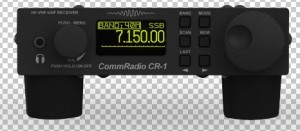
The CommRadio CR-1

The CommRadio CR-1

You can now purchase the CommRadio CR1 (we recently mentioned) for $500 plus $12 shipping on CommRadio’s website.

Don Moore (N0HDX), founder of CommRadio, placed the following statement on the CR-1 order page:

As the lead designer of the CR-1, I am pleased to offer this new radio to you. It draws on my experience as a kid building Knight Kits, from my paper route earnings through currently owning a classic Drake 2B and a Zenith Transoceanic; my benchmarks for enjoyable, high quality short wave listening. I added a smooth machined aluminum tuning knob and minimized the number of buttons to provide you (and me), an intuitively obvious and enjoyable radio to operate. This radio is solid as a brick, looks cool and sounds great. The tall feet have a purpose besides good-looks: rest your hand on the tabletop to spin the knob and for the bottom- speaker to bounce the sound to you instead of going straight up into up in space. The military ‘black box’ people who visit us see it sitting on the shelf with the bright OLED display and they all say: “I want one!” Well, here it is. Let the CR-1 draw you into the wonderful hobby I’ve enjoyed throughout my life.

I do love the look of this little radio–its simplicity reminds me of the Palstar line of shortwave radios.

RootIO: community powered micro radio stations

RootIOThanks, Benn, for sharing this:

Radio continues to be a powerful tool for community information, and the RootIO project amplifies it by mixing its power with new mobile and Internet technologies. RootIO is an open-source tool kit that allows communities to create their own micro radio stations with an inexpensive smartphone and transmitter, and to share, promote, and collaborate on dynamic content. The project will be piloted in Uganda in partnership with the Uganda Radio Network, UNICEF Uganda and UNICEF Innovation Unit.

http://www.knightfoundation.org/grants/20123667/

http://rootio.org/

https://twitter.com/RootioRadio

CommRadio is introducing the CR-1, a new tabletop shortwave receiver

The CommRadio CR-1

The CommRadio CR-1

US-based CommRadio is introducing a new tabletop, SDR-based, shortwave receiver this year: the CR-1. Their website has a few specifications and the video I’ve embedded below.

The CR-1 receives the full medium wave and shortwave spectrum (.5-30 MHz), plus some portions of VHF and UHF (FM broadcast band, Aircraft, Marine, NOAA weather radio, GMRS and FRS services).

The receiver architecture is a dual conversion super-heterodyne design with low-IF , I-Q digital sampling, 16 bit DSP with digital audio CODEC.  Their website also mentions DSP algorithms for all demodulation: DSB-AM, SSB, CW, WBFM, NBFM and channel filtering.

Other impressive features:

  • Can be powered from USB or a 6-18 VDC power source (from a separate 2.1mm jack).  The CR-1 possibly has the most flexible power source I’ve ever seen in a shortwave receiver!
  • The knobs are black anodized machined aluminium and front panel is powder coated machined aluminium; case is 20 gauge powder coated steel
  • Three antenna inputs
    • BNC for HF/MW
    • 3.5 mm audio jack (rated at 1000 Ohm, for roll-up antennas or telescoping whip),
    • BNC for VHF and UHF
  • Very portable size!

Full specs are available on their website: commradio.com

We will also keep you posted with any future updates.

Short Wave or Short Range?

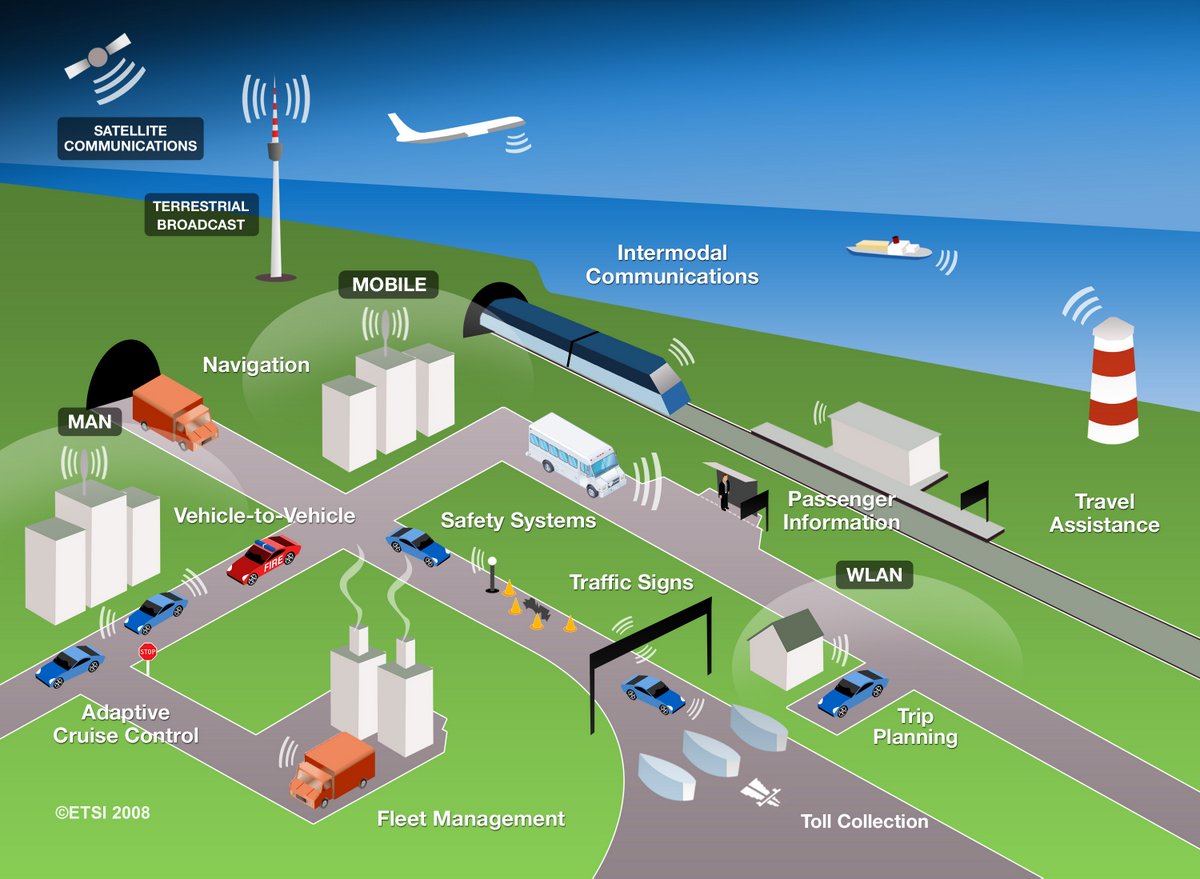
Examples of Dedicated Short Range Communications (Source: Technologijos)

Examples of Dedicated Short Range Communications (Source: Technologijos)

Readers Benn and Mike agree with others who’ve commented on the questionable accuracy of the article posted earlier today from Talking Points Memo. Most likely, Toyota’s autonomous vehicle technology system is not based on shortwave (or high frequency) technology. Benn writes:

What may have happened is that Toyota’s media people confused Short Range with Short Wave. Officially the 5.9 GHz system they referred to is called Dedicated Short Range Communications (DSRC). That’s what the FCC named it when they allocated that band.

The FCC is into dry technical facts and not marketing. DSRC is too geek of a term. The government had to come up with a name that sounded more 21st Century, like Apple invented it or something. So it’s now the awesome Dept of Transportation Service Mark called IntelliDrive.

The irony is that an autonomous vehicle system must rely on near-range, or short-range communications; anything long-range wouldn’t make a lot of sense.

It’s too bad it’s not shortwave–!  Don’t get me wrong, shortwave isn’t suited to this use. But I like to imagine how good propagation and band openings might affect road traffic. (Perhaps a car in Seattle would tell one in New York local driving conditions???) Plus, on a more serious note, if a vital first-world technology relied heavily upon HF communications, perhaps proper regulations would be put in place to protect our spectrum from the copious amounts of locally-generated RFI we deal with daily…Oh, it’s fine to dream.

Toyota is developing a shortwave-driven car?!?

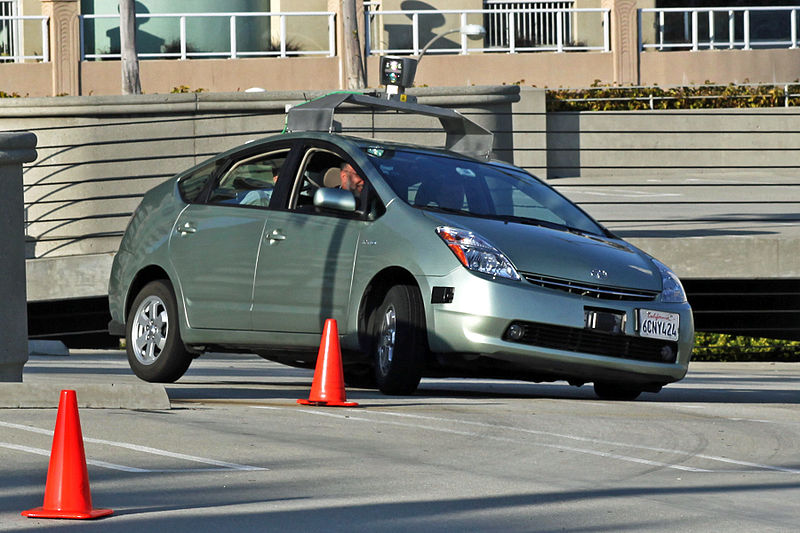
(Photo: Wikimedia Commons & Toyota)

(Photo: Wikimedia Commons & Toyota)

Though I’ve always believed that the shortwave spectrum is a medium–a conduit for international communications  not simply confined to analog audio broadcasts–I would have never guessed it would be used in an autonomous vehicle technology system. But check this out (and see update/comments below, plus our follow-up post):

(Source: TPM)

Toyota and Audi turned heads earlier this month by announcing that they were following in Google’s tracks and developing partially self-driving, or “autonomous” vehicle technology systems of their own.

At that time, Toyota noted in press materials that it has been testing one such semi-autonomous vehicle system — the Intelligent Transportation System (ITS), which uses short wave radio signals to have cars communicate with other vehicles and surrounding infrastructure to avoid collisions — at a simulated city inside its Higashi-Fuji Technical Center in Susono City, Japan.

Toyota also said that further “research and development will continue at Toyota Research Institute, North America (TRiNA), in Ann Arbor, Mich.” […] Read the full article on TPM.

Update: Sean (@VA5LF) commented on Twitter, “wow, that sounds ill-advised. HF is no place for local area comms!”

I wholeheartedly agree, Sean. The use of LED traffic lights alone bombards my car’s AM radio with Radio Frequency Interference (RFI). I can’t imagine my life depending on a technology that is so vulnerable to RFI. I would assume Toyota has a way to overcome this, else this info is simply incorrect/inaccurate. I mean, imagine how geo storms or skip would effect local driving conditions. 🙂

Reader comments:

One commenter noted:

“I didn’t know that VHF, UHF, or 5.9 GHz bands were considered short wave.”

Then Mike sent a message with the following comment:

I was just reading the posting about Toyota and self driving vehicles and the mention of “short wave radio signals”. I wonder if some how they meant “near field communication (NFC)”  and it has been translated to short wave (near field – short distance) radio communication? NFC is a proven technology being used for payment systems etc.

Just wondering aloud.

Indeed. I strongly suspect this journalist got their terminology a little skewed! Check out our follow-up post.