Tag Archives: Radio Europe

Radio Europe Shares Station Details and Photos with Paul Jamet

Many thanks to SWLing Post contributor Paul Jamet, who shares a follow-up to his recent reception reports of Radio Europe on 6130 kHz.

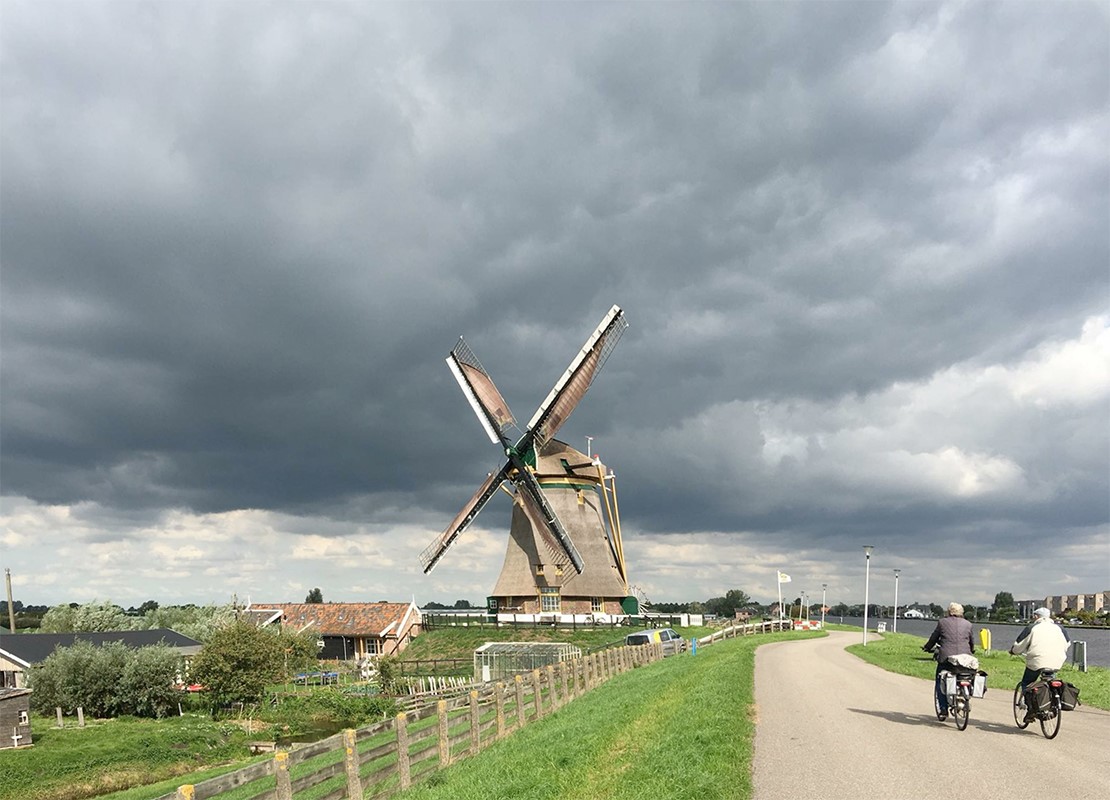
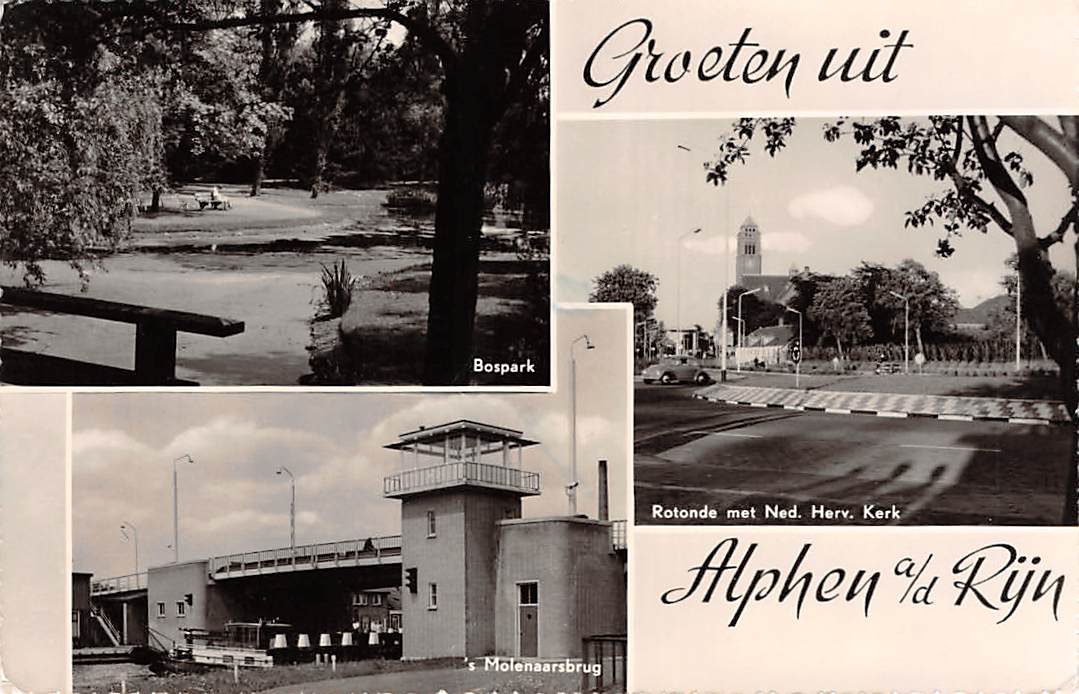
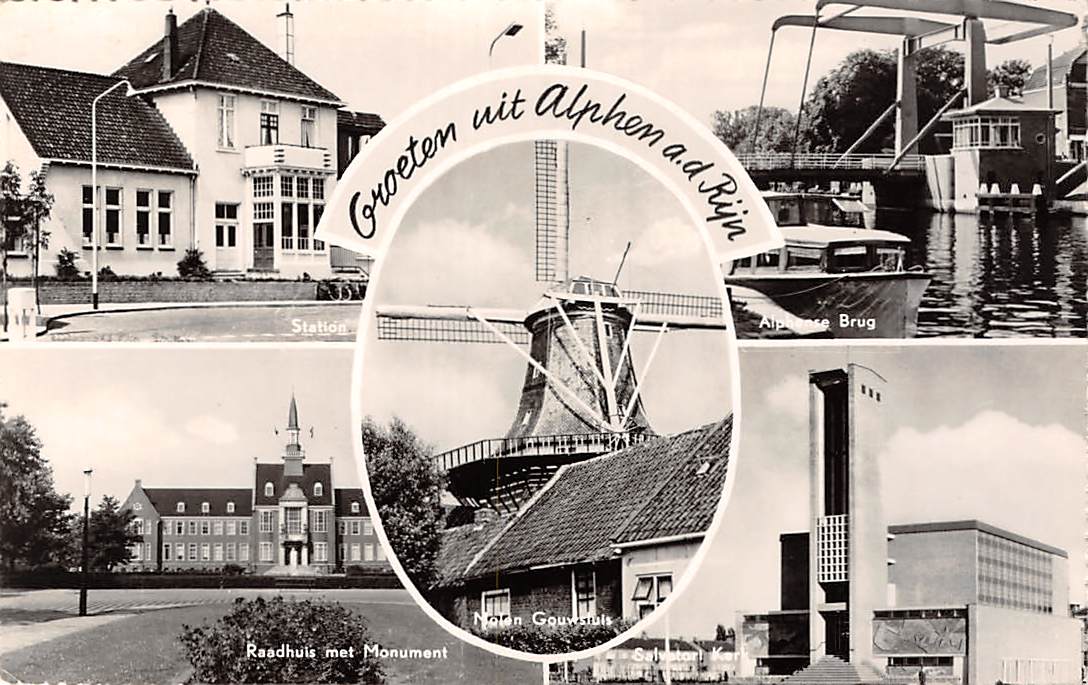
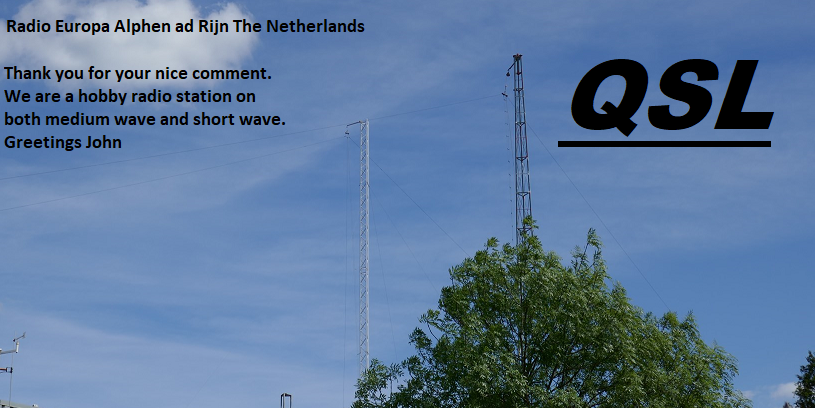
Paul not only received a QSL card (see above) from the station but also exchanged several friendly messages with the team behind Radio Europe—three brothers from the Netherlands who have been active in radio since the 1970s. They also included the following photos and postcards:

In their replies, the Radio Europe team wrote (English translation):

Hi Paul,

Great photos and thanks again for the recording and comment.

I’ll add a little more about who we are. We are three brothers who have been involved in this wonderful hobby since the 1970s. We started out on 27 MHz, and after obtaining some licenses, we started building radio tubes, transmitters, receivers, and antennas, including loop antennas for broadcasting on legal frequencies.

For years, John, the owner of RadioEuropa, used homemade tube transmitters. For several years now, we have been using factory transmitters, which consume less energy.  We also use sound processors to make the audio sound as good as possible. We also work with a V-type antenna inverter that is located a few meters above the ground. The photo shows the old situation high up, but since the move, everything is now on the ground floor.

Based on the responses, we believe that the antenna and transmitter are working well.  Given that it can sometimes be windy, John plans to keep the antenna low for the time being, because on shortwave, the sound can always vary or be heard differently.  This also makes it very interesting for us.

Thanks again.

You have a beautiful radio and antenna.
Best regards from the Netherlands.
Radioeuropa
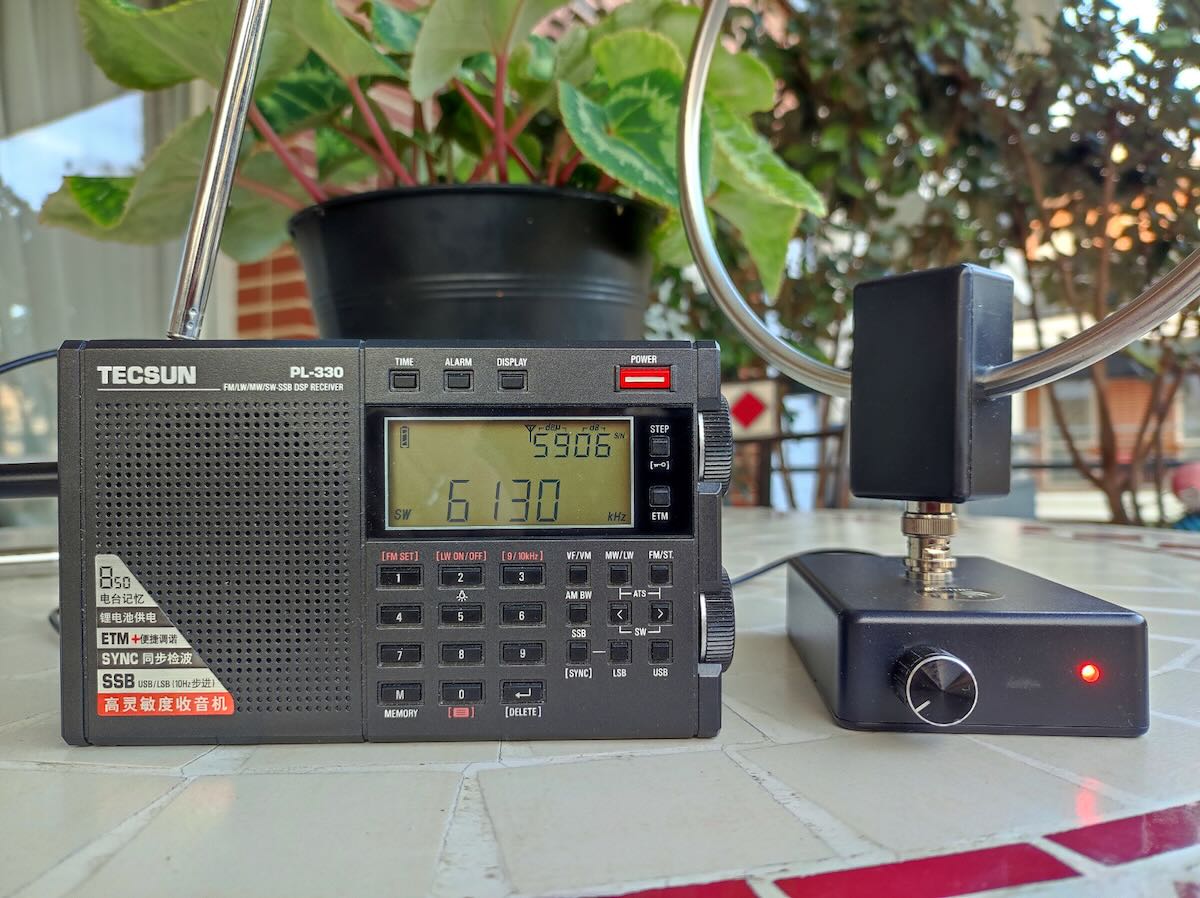
Paul also shared his most recent recording of Radio Europe made from his balcony in France, using a TECSUN PL-330 receiver and a Deshibo GA-450 loop antenna (20 cm diameter–see photos above and below). Even from a city location surrounded by small buildings, reception was quite good.

“This little loop antenna from Deshibo sometimes gives interesting results,” Paul notes. “The TECSUN PL-330 is a safe bet.”
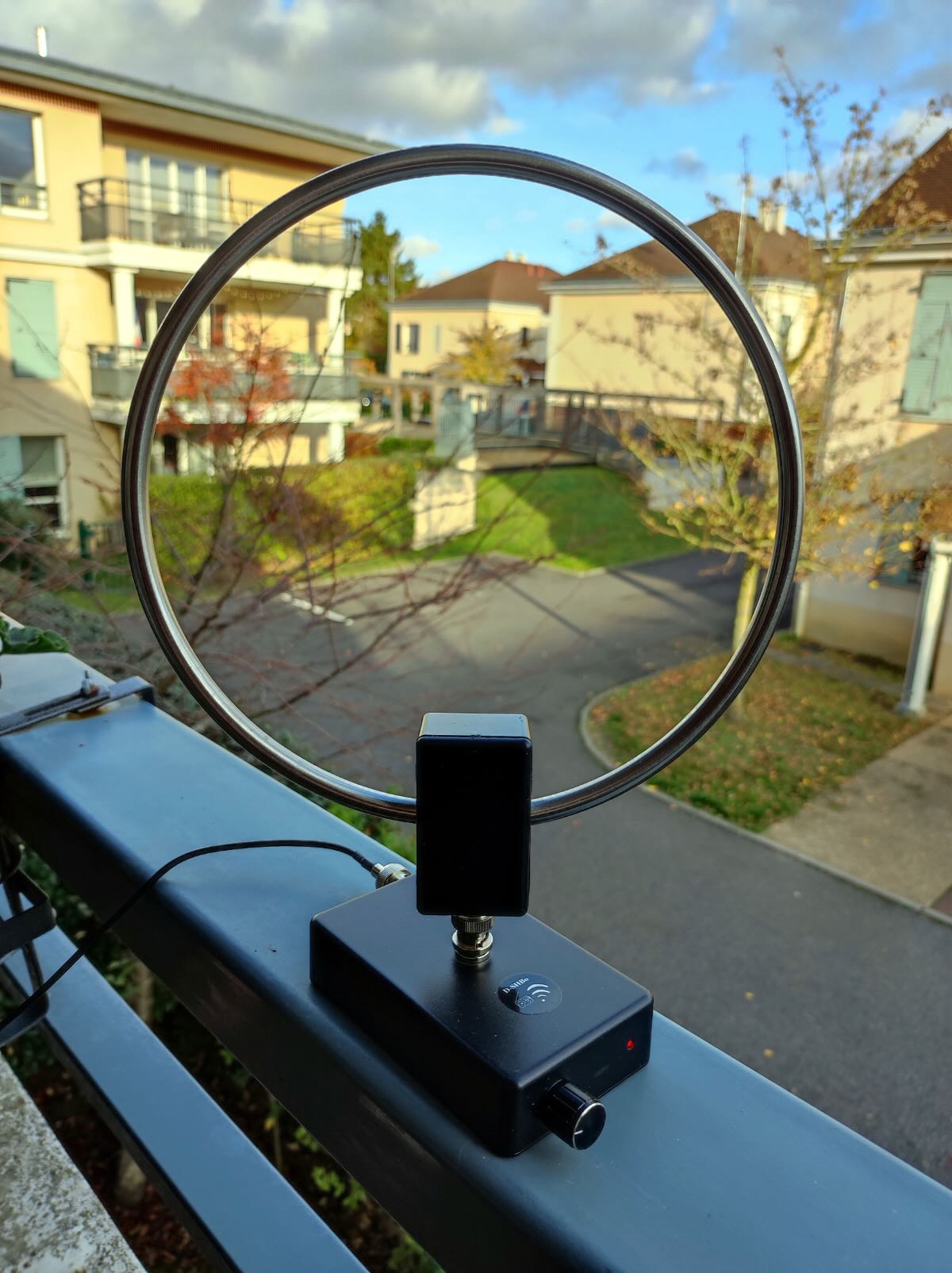
Many thanks again to Paul for sharing his listening reports, correspondence, and these great insights into one of Europe’s independent shortwave broadcasters!


Radio Europe on Shortwave: Two Short Recordings from Paul Jamet

Many thanks to SWLing Post contributor Paul Jamet, who writes: 

I read the article about Radio Europe transmitting to Western Europe on 6130 kHz.

Here are two recordings:

One made from my balcony with the XHDATA D-808 and a 3m wire antenna. Recording with my smartphone near the speaker. There’s fading after 1 minute.
Note that I live 410 km from Amsterdam as the crow flies:

The other with Twente’s web SDR; very good SINPO! 55555

The Kall Krekel transmitter, which broadcasts RSI programs from Slovakia with 1 kW, does not give such good results.

Best and 73

Paul JAMET

Thank you for sharing this, Paul! Both you and Bob have given me good reason to (at least attempt to) catch Radio Europe on the air!

Bob’s Radio Corner: It’s DX Season

Noted by Bob Colegrove

In the Northern Hemisphere the nights continue to get longer as we approach the winter solstice; we gain an hour of early evening darkness on Sunday, November 2nd; the summer atmospheric disturbances are nearly gone; propagation is better.  It’s time to set aside the activities of summer and once more dive underneath the headsets.

DXing is not the same thing as listening.  For listening you position yourself in a nice recliner with the radio on a table beside you.  You set the radio to ATS and scan the available fare.  You select one of the more interesting results and, together with your favorite beverage, listen to the programming.  DXing, on the other hand, requires well planned work and lots of patience.  Critics might say it also requires some imagination; however, I have always tried to be honest with myself and ask if what I am hearing is truly QSLable.

Sir Oswald Davenport, intrepid DXer and Chairman,
National Association of Armchair Adventurers

Don’t get me wrong, I listen a lot, but I also DX.  Living on the East Coast of NA, I often direct my antenna toward Asia and the Pacific hoping to hear Japan and New Zealand.  However, more often than not, these have proven to be illusive.  DXing is like fishing.  Often, you pull up an old boot or find the bait is gone.  Further, the sound quality of a true DX signal will have no appeal to an audiophile.  It is intentionally weak and subject to fading.

So, you get your wins when you can.  Last February I scanned the 49-meter band stopping at 6130 kHz to identify some faint pop/rock music.  There were two possibilities, a Chinese station and Radio Europe.  If you have never heard of Radio Europe, it is in Alphen aan den Rijn, The Netherlands, and has a rather imposing name for a modest 1 kW station.  It is targeted to Western Europe, and is listed in HFCC, B25.  The station is identified periodically in English by a dramatic baritone male announcer.  The recording was made at 0211 UTC on February 6, 2025.  The announcement begins 9 seconds into the clip; Radio Europe is mentioned at 23 seconds.

The curious thing is Radio Europe is not necessarily well received at the U. of Twente SDR site just 100 miles away.  Science notwithstanding, there is simply no accounting for propagation.

Well, Radio Europe is back this season as strong as I have heard it, and if you’re a NA East Coaster, you might give it a try from 2300 UTC on.  I see it was reported in Florida in 2023.  Using exalted carrier single sideband (ECSS) (SSB in simpler terms) seems to produce the best results.  Despite low power and long distance, it’s occasional stations like Radio Europe that keep this DXer fishin’.  For a clear sample, it streams here http://p.liveonlineradio.net/?p=radio-europe.

Good DXing ’25-’26.

Dexter D. Xer