
Many thanks to SWLing Post contributor and noted political cartoonist, Carlos Latuff, who shares the following illustrated radio listening report of a recent NHK broadcast.
Carlos notes:
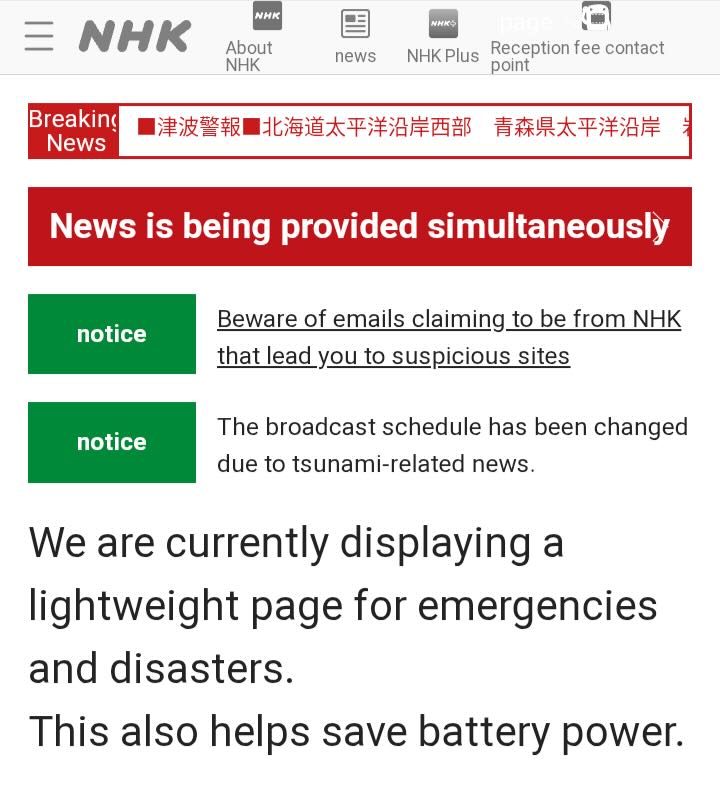
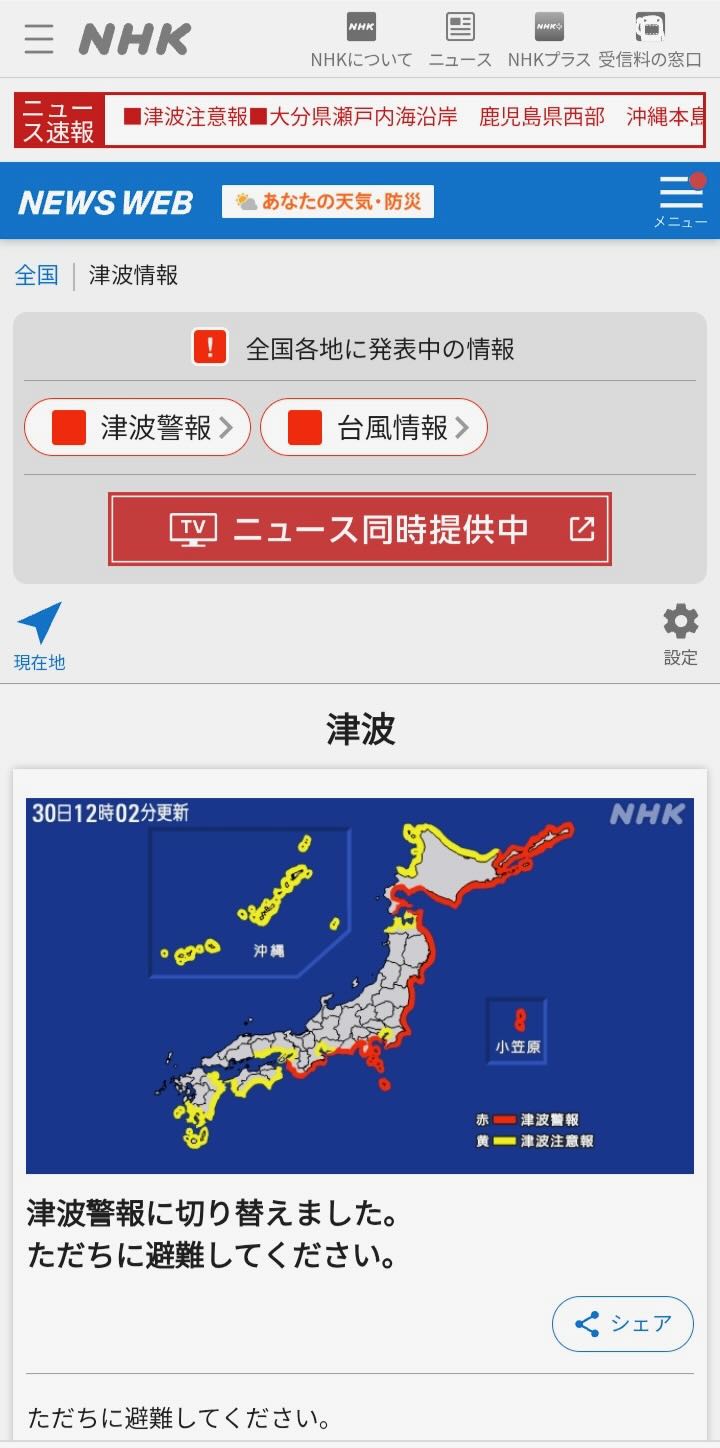
When an emergency occurs, such as an earthquake or tsunami, NHK, the Japanese public broadcaster, switches its programming to exclusively news coverage of the event. Even the broadcaster’s homepage switches to a light version to reduce cell phone battery consumption.
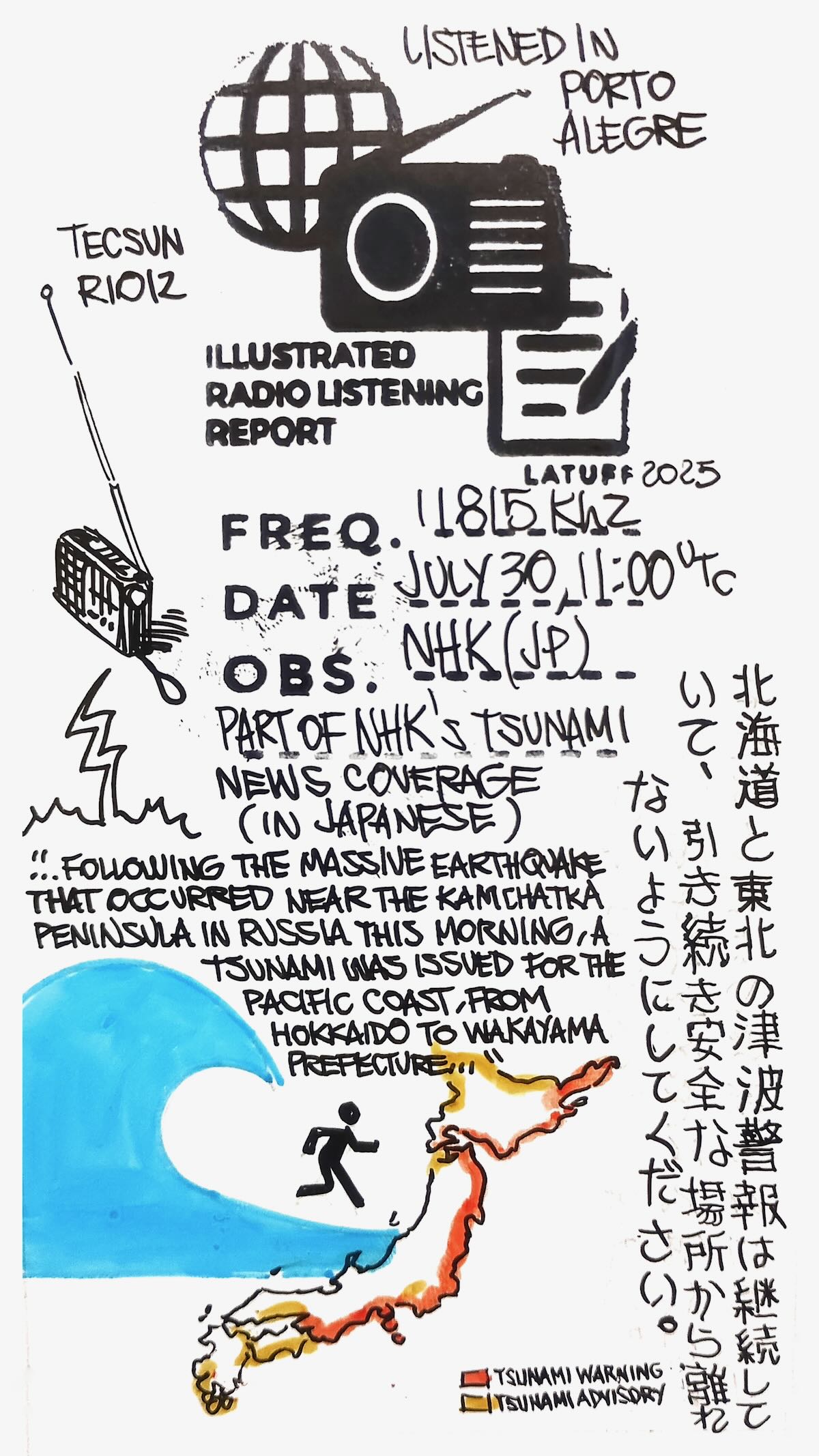
When I received news of the tsunami, it was already after 10 p.m. in Porto Alegre, Brazil, and the propagation to Japan at that time is terrible; you couldn’t hear anything!
However, in the morning, after 4 a.m., propagation reopens, and then it was possible to monitor part of NHK’s radio coverage of the tsunami.
Click here to view on YouTube.
I cannot get over how unreliable the emergency warning system is in Japan considering all of the types and frequency of activation.
https://www.jma.go.jp/jma/en/Emergency_Warning/ew_index.html
https://esolia.com/japan-emergency-broadcast-system-j-alert/ shows a system which uses satellite fed loudspeakers which I assume are battery backed up but also blackout susceptible mobile phones and TVs.
They also use FM and high frequency broadcasts. I cannot find the frequencies on the NHK website. Fortunately https://new.hfcc.org/data/schedbybrc.php?seas=A25&broadc=NHK has them.
https://nerv.app/en/ no mention that it will not work when a base station’s battery is empty!
How is this system supposed to work in rural areas particularly in the early hours of the morning..
Digital Radio Mondiale can transmit using alerts from standby or switch from another program, the maps and mot shown in the above website indexed multilingual detailed text which is particularly useful in the recovery phase for finding different types of help. It can display many different character sets .
India has a DRM warning system which can work in >7 million cars and now the Chinese are going to start DRM/CDR receiving systems in most new cars for the domestic market.
> I cannot get over how unreliable the emergency warning system is in Japan
Because perhaps it’s precisely the opposite? According to various sources, J-Alert, which is capable of delivering messages “directly via a system of nationwide loudspeakers, television, radio, email, and cell broadcasts”, is “globally acclaimed for its speed and coverage”, “regarded as the best in the world” (The Nation Thailand). Japan has been called “the country that has been able to realize the potential of early warning systems the fullest and become a global leader in innovating, developing, and implementing an effective early warning system” (World Economic Forum). “The use of J-ALERT in the Great East Japan Earthquake demonstrated its effectiveness”, says the UN Office for Disaster Risk Reduction. The World Bank also agrees, saying that J-Alert has “ability to reach rapidly most of Japan’s population” and that during “Great East Japan Earthquake and Tsunami, affected municipalities that had already introduced the receiver and trigger controller reported that J-ALERT was effective for protecting lives”.
So we can clearly see that J-ALERT is anything but unreliable. It’s there and it’s already been proven to work. This is in stark contrast to DRM, where no deployments of the Emergency Warning Functionality and no receivers capable of receiving these warnings are known. In fact, no any type of a widely available receiver is known.
Speaking of India, this may be reason why no other broadcaster except for All India Radio has launched DRM broadcasts. There are about four hundred private stations and not a single one has deemed DRM worthwhile. With each passing year it seems more and more like a ‘white elephant’ government project.