Shortwave listening and everything radio including reviews, broadcasting, ham radio, field operation, DXing, maker kits, travel, emergency gear, events, and more
Many thanks to SWLing Post contributor Perry Lusk, who writes:
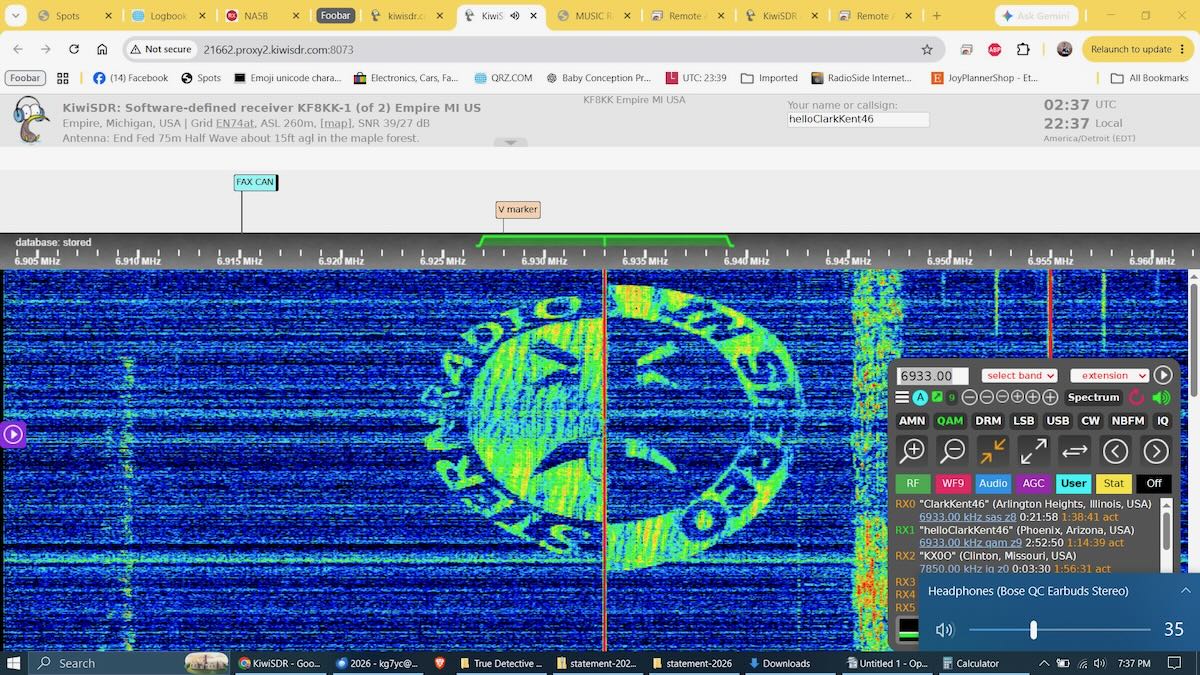
Thanks to Dan Greenall for the article on SDR waterfalls. There is a lot of activity lately that I have found on the Kiwi SDR KF8KK located in Michigan.
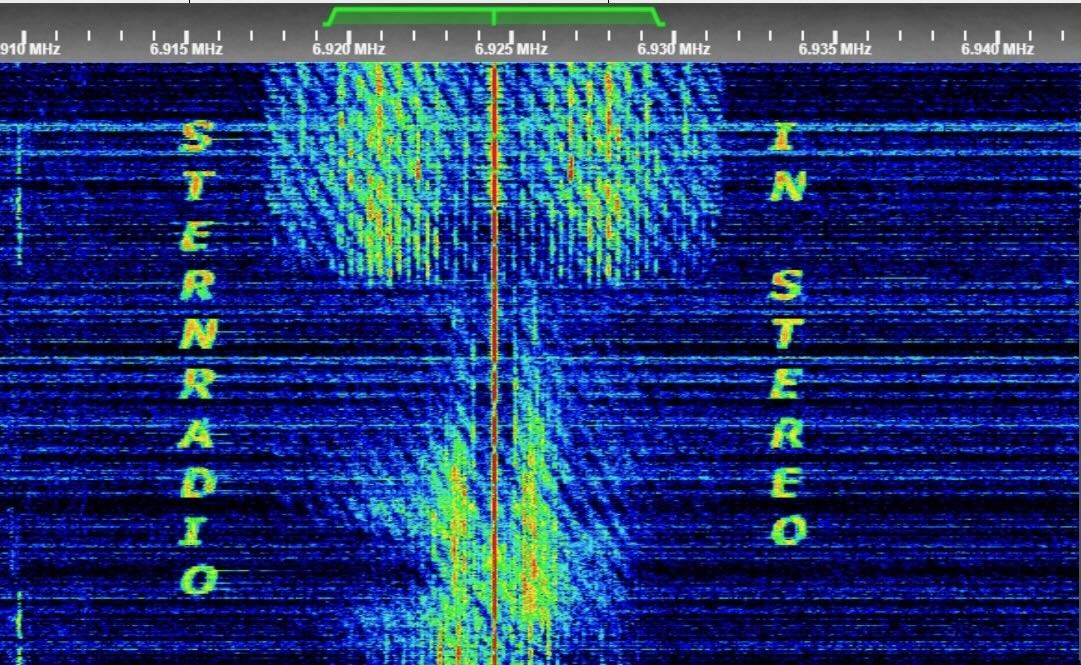
So far, Stern Radio has the most creative examples:
As you can see, they broadcast in Motorola C-QUAM Stereo AM. The SDR will decode it by selecting QAM next to the AM mode button. It is quite the experience.
I have also attached an audio recording in stereo:
Many thanks to SWLing Post contributor Dan Greenall, who writes:
Hi Thomas
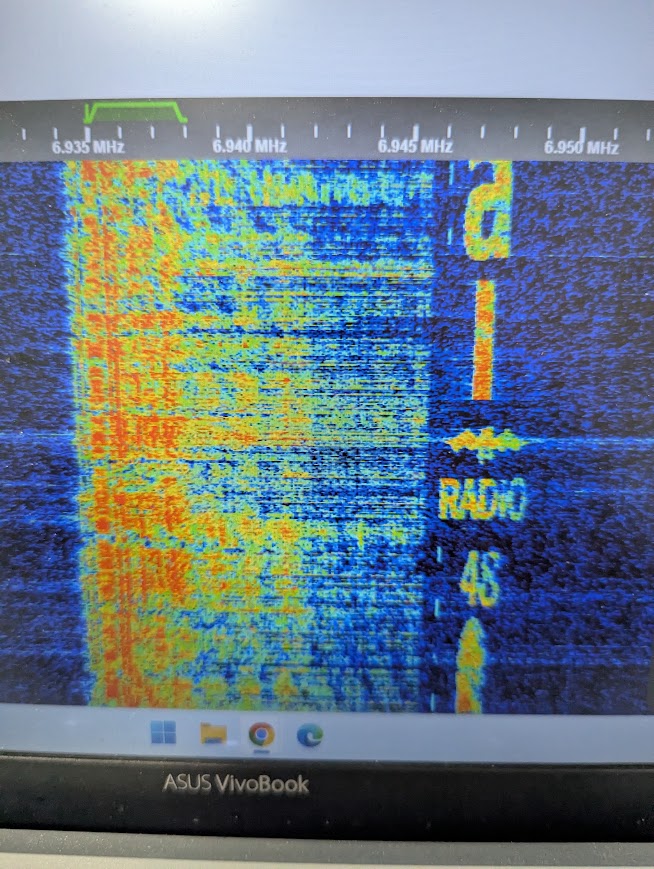
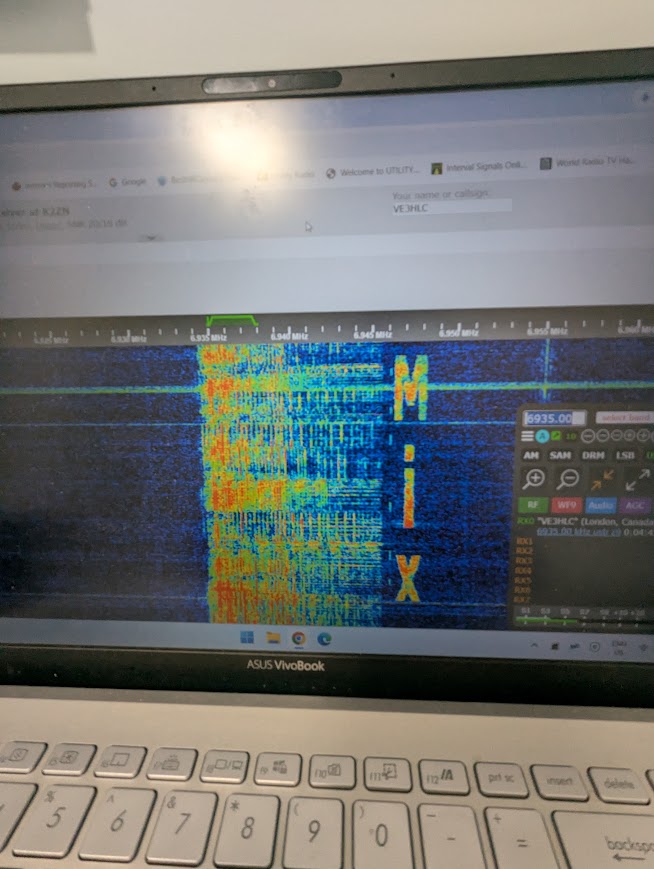
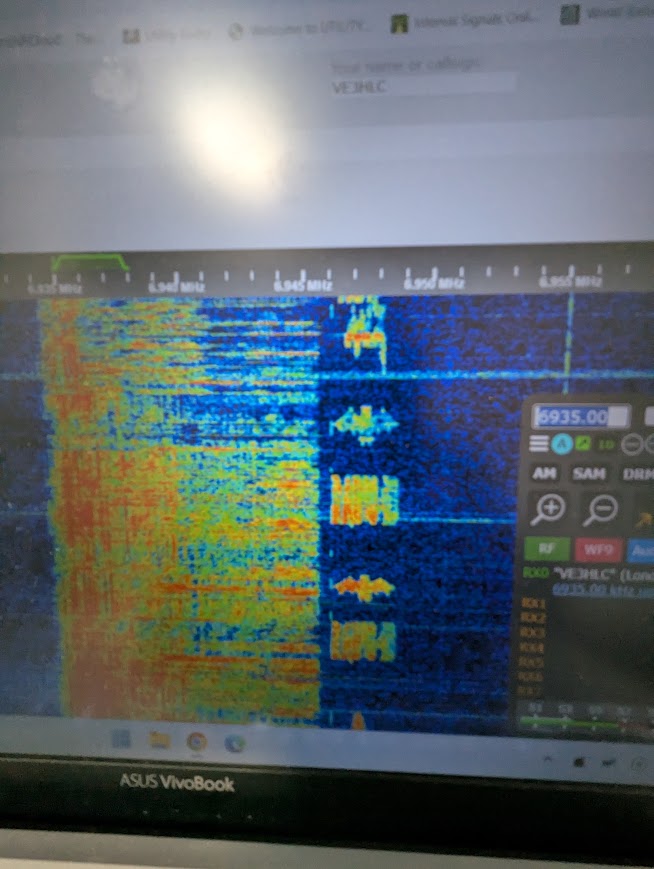
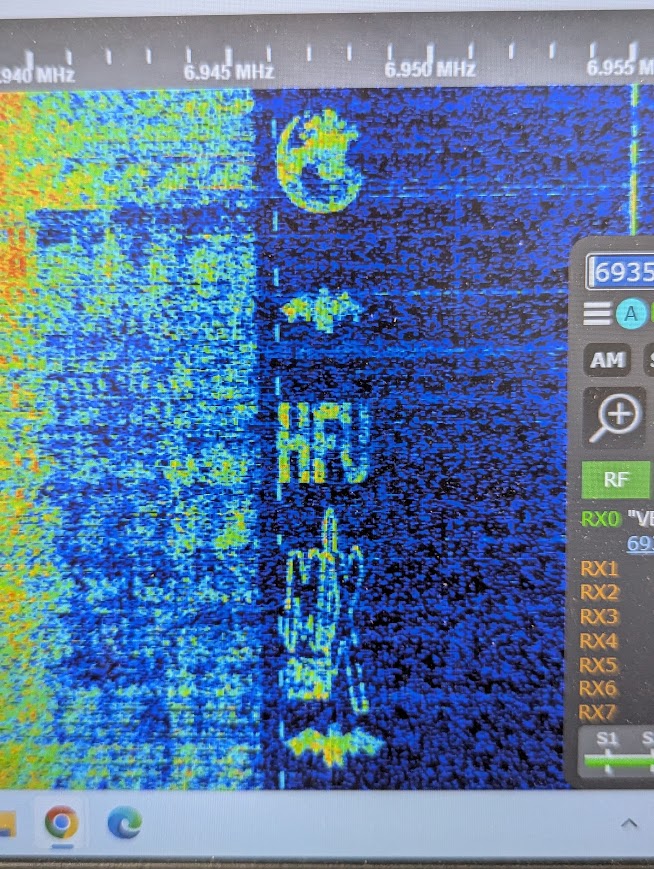
The concept of transmitting images through SDR waterfalls is relatively new to me. Last weekend, while listening to pirate Radio 48 (via Mix Radio International) remotely on SDRs in Rochester, NY, and Cape Cod, MA, I snapped these photos of their 10 kHz-wide USB signal on 6935, along with some of the pictures and text that scrolled down beside it.
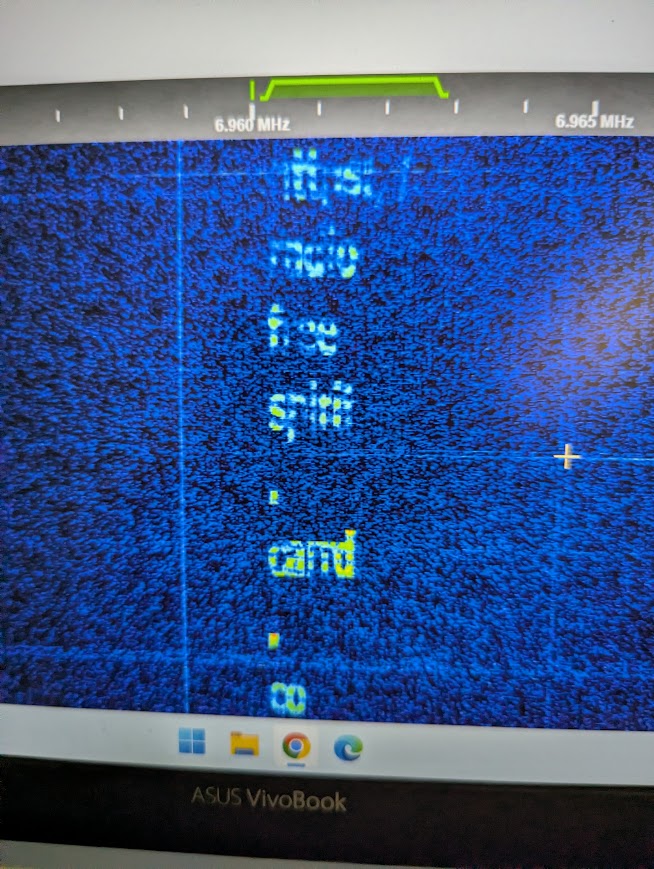
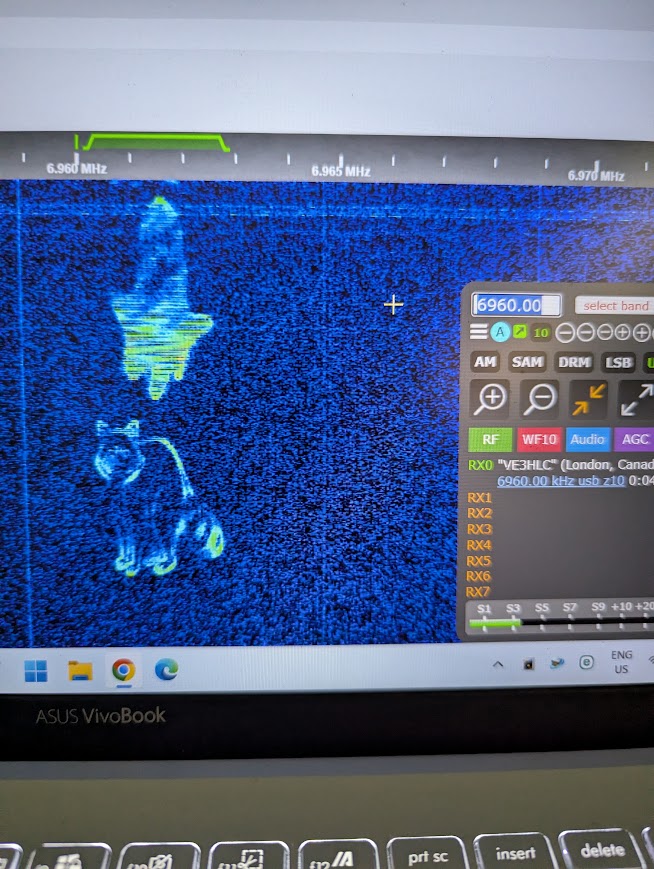
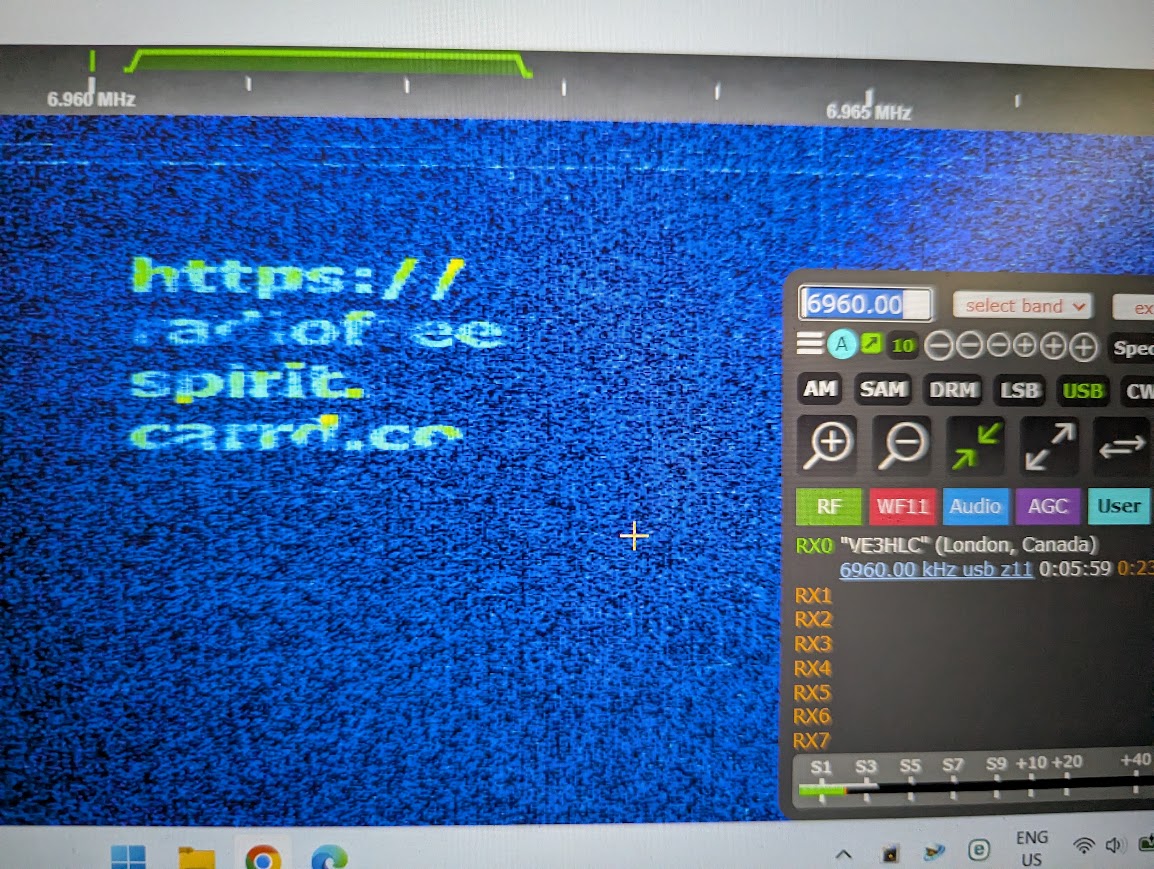
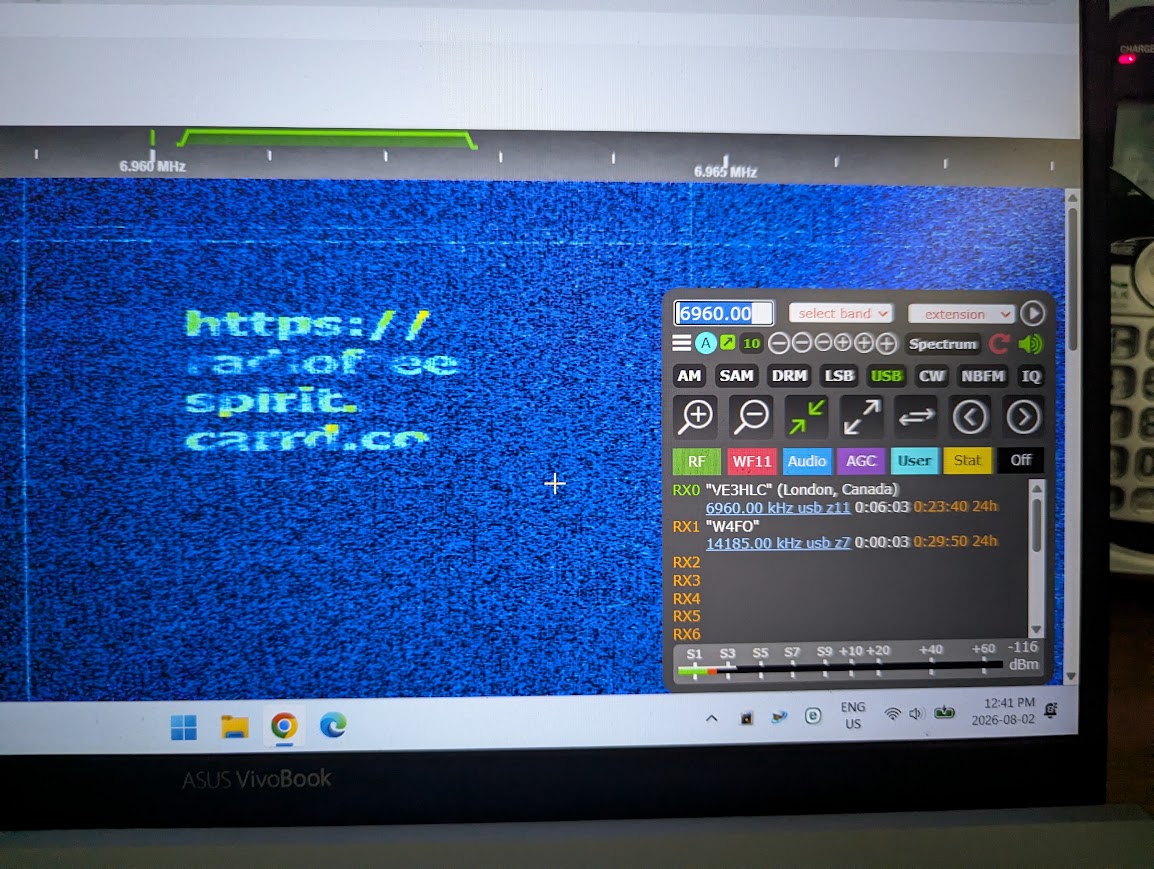
Less than 24 hours later, I came across another stream of graphics, this time on 6960 kHz. It displayed a web page address for Radio Free Spirit. These were followed by a brief stream of audio on USB of a man and woman having a conversation, which ended abruptly without any announcement. I searched out an email address for Radio Free Spirit and sent off an inquiry. Within 15 minutes, a response was received confirming it had been them, simply running a test and had not expected anyone to hear them or reply.
Photos taken of both stations are attached here along with some related audio clips.
Radio 48:
Radio Free Spirit:
I am wondering if others have had experiences with this type of reception and if any international broadcasters have ever dabbled in it.
Many thanks to SWLing Post contributor, Carlos Latuff, who writes:
Hey Thomas, just got a broadcast (Nov 5, 2023) on 21640 kHz, from 15h30 to 16h00 UTC here in Rio de Janeiro. A potpourri of pop rock songs and then a female voice says ‘this is the end, have a nice day’.
Both Carlos and I assume this could be a shortwave pirate. If you can help Carlos identify this station, please comment!
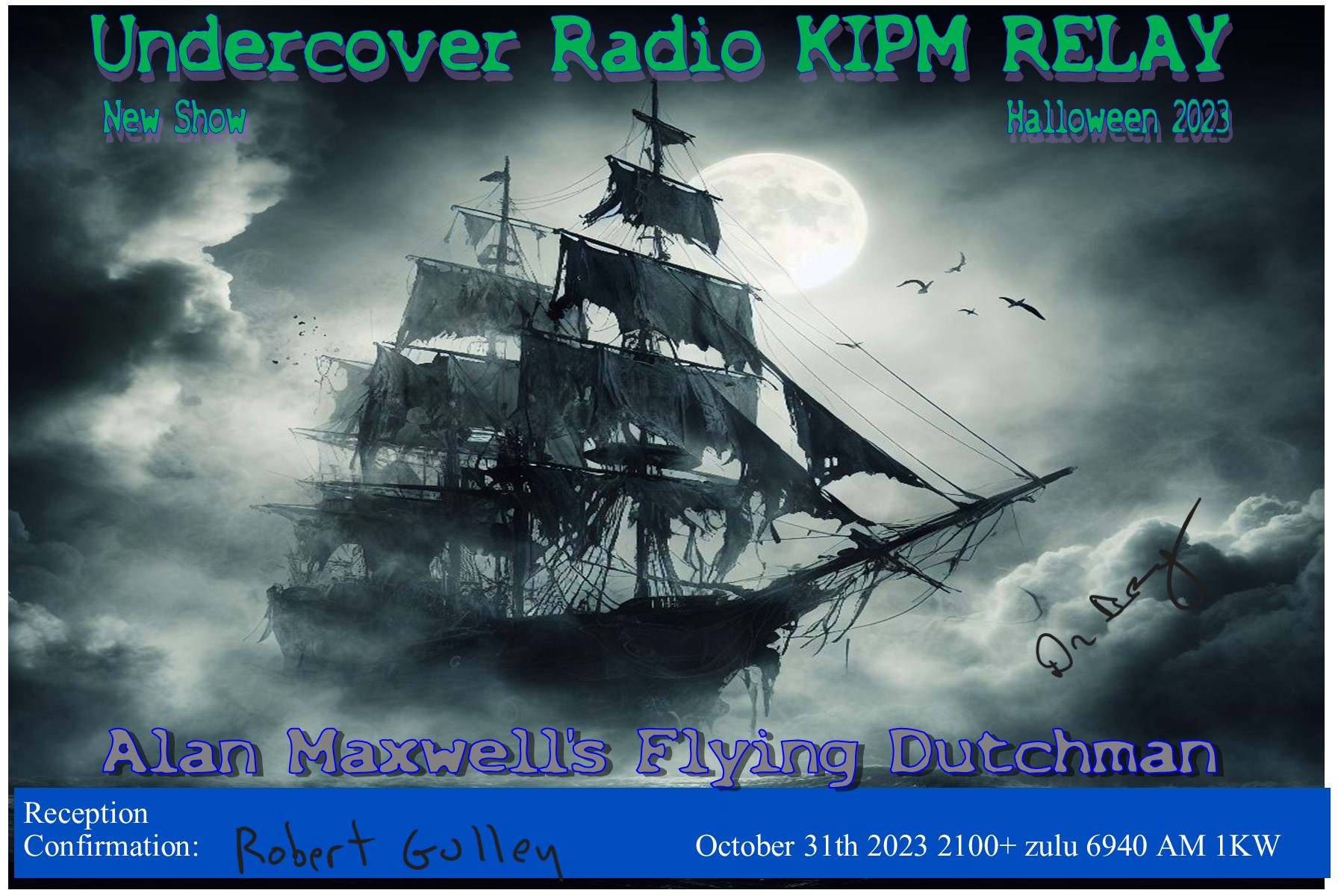
This QSL card just came today from a broadcast on Halloween, station Undercover Radio. There were a number of broadcasts that night, but this was by far the most unusual that I heard!
Halloween is typically the most active day of the year for shortwave pirates. Spend some time on the HF bands tonight and you’ll easily tune in to numerous stations. Expect pirates to emerge like The Great Pumpkin!
Here are two things you’ll want to do this Halloween weekend:
HF Underground
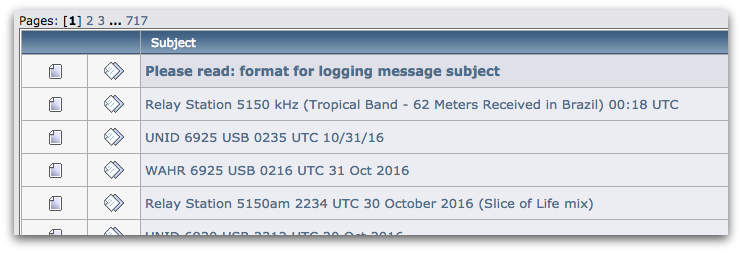
Follow real-time pirate radio spots and loggings on the HF Underground discussion forum. If you’ve never tuned to a pirate in the past, these real-time loggings will help you find pirates while they’re on the air and also help you ID them!
Listen!
Listen for pirate radio stations tonight! Turn on your radio anytime today, but especially around twilight and tune between 6,920 – 6,980 kHz. Pirates broadcast on both AM and SSB; you’re bound to hear a few. If you’re brand new to pirate radio listening, you might read my pirate radio primer by clicking here.
The PIRATE Act Prohibits Landowners and Property Managers from Aiding Pirate Radio Operations
—
WASHINGTON, July 21, 2023—The FCC’s Enforcement Bureau today issued nine warnings to landowners and property managers in the Miami area for apparently allowing illegal broadcasting from their properties. The FCC may issue a fine exceeding $2 million if it determines that a party continues to permit any individual or entity to engage in pirate radio broadcasting from any property that they own or manage.
“Providing a safe haven for pirate radio operations that can interfere with licensed broadcast signals and fail to provide emergency alert system notifications can have serious consequences for landowners and property managers that allow this conduct to occur on their properties,” said Loyaan A. Egal, Chief of the Enforcement Bureau. “I want to thank our field agents for their continued efforts to ensure compliance with federal law in this area.”
The Notices of Illegal Pirate Radio Broadcasting sent today target properties identified by
Enforcement Bureau field agents as sources of pirate radio transmissions. These notices formally notify landowners and property managers of the illegal broadcasting activity occurring on their property; inform landowners and property managers of their potential liability for permitting such activity to occur on their property; demand proof that the illegal broadcasting has ceased on the property; and request identification of the individual(s) engaged in the illegal broadcasting.
The PIRATE Act provides the FCC with additional enforcement authority, including higher
penalties against pirate radio broadcasters of up to inflation-adjusted amounts of $115,802 per day with a maximum of $2,316,034. In addition to tougher fines on violators, the law requires the FCC to conduct periodic enforcement sweeps and grants the Commission authority to take enforcement action against landlords and property owners that willfully and knowingly permit pirate radio broadcasting on their properties.
Readers note that the number of comments on the Shortwave Modernization Petition have surpassed well over 600 at time of posting. No doubt, this particular petition is getting more visibility and notice than expected.
You may know someone who met the love of their life through writing letters, and these days you’d be hard pressed to NOT know people who’ve met online… but have you ever come across someone who’s met her husband in Morse code?
Ulla Knox-Little knew that getting to do an expedition to Antarctica as the radio room operator would be a life-changing experience, but she never expected it to lead to her meeting the love of her life.
Last month, Readex welcomed librarians to a special breakfast presentation at this year’s ALA Annual Conference in Chicago, IL. Dr. Alban Webb, lecturer of Media and Cultural Studies at the University of Sussex, captivated the audience in attendance with his talk on “The Art of Listening: BBC Monitoring and the Historical Significance of the Transatlantic Open Source Intelligence Relationship”
Dr. Webb—a noted historian of BBC World Service—gave a fascinating and informative overview of the history of open-source intelligence (OSINT) and the role of BBC Monitoring, highlighting perspectives these newly digitized archives represent for the study of the 20th century history. Click here to read the full article.
Tens of thousands of ordinary Russians are joining the resistance
n a bedsit in Vologda, a Russian city 500 miles north of Moscow, a man sat at a desk surrounded by recording equipment. In his early 60s, tall and thin with long grey hair, glasses and a moustache, he looked like an ageing rock star making a new album. His name was Vladimir Rumyantsev. He lived alone, and his day job was as a stoker, tending a furnace in a factory boiler-room. In the evenings he was the dj of his own pirate-radio station, broadcasting anti-war diatribes against Putin’s “special military operation” in Ukraine.
Rumyantsev set up the station before the war as a hobby. Radio Vovan (a play on a nickname for Vladimir) mainly broadcast music from the Soviet era that he found in online archives. He said he needed a break from oppressive state propaganda. “Some kind of ‘patriotic’ hysteria started on the airwaves, and as the sole occupant of the flat I voted unanimously to ban the broadcasting of federal tv and radio channels in my home. Well, I had to create something of my own to replace it,” he wrote to me. [Continue reading. Note that this article may be behind a paywall from your location…]
Jabrallah Tia was a teacher in Sudan in 2011 when a brutal war forced him to flee to a refugee camp in newly established South Sudan. Thirteen years later, Tia is still in a camp but with a new career: journalist.
The Ajuong Thok camp in the Ruweng Administrative Area is home to almost 40,000 refugees and displaced people, most from Sudan. Another influx is expected soon, after a fresh conflict broke out in April.
“It’s terrible now when Sudan has started another war. … We’re expecting more people to come from Sudan, as they’re fleeing the war there,” Tia told VOA in a video interview over Zoom.
He knows what that’s like. Tia had to leave everything behind when he fled his home in South Kordofan state. But he said he has found new meaning in his journalism work. Continue reading →