
 By Jock Elliott, KB2GOM
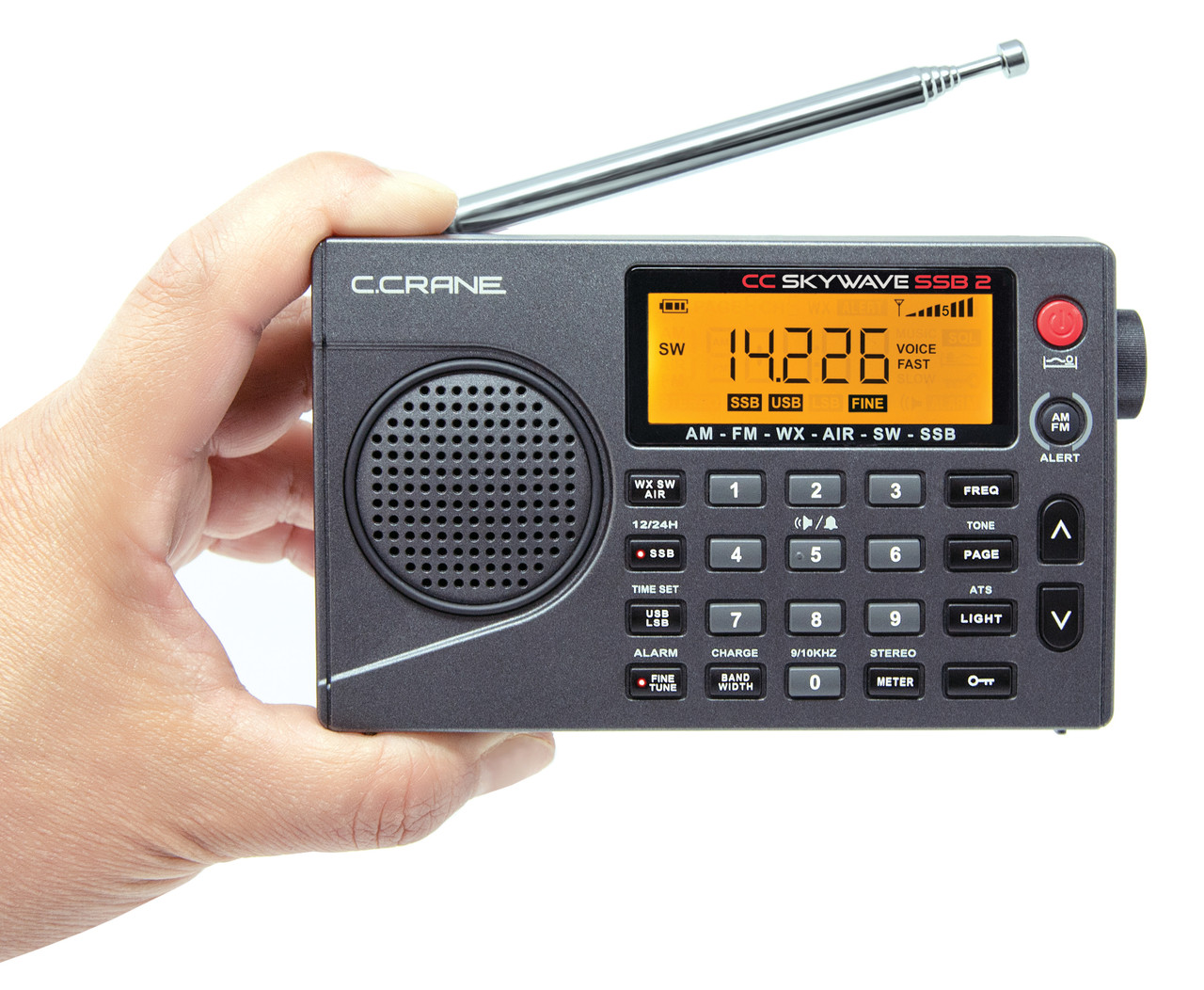
Just yesterday morning, I was reminded that sometimes really small things can make a significant difference SWLing. So here are some things that I found can make an improvement, particularly if you are using one of the modern shortwave portables with its whip antenna.
- Turn off as many electronics as possible in the room where you are listening. Computers, scanners, LED lights and all sorts of other electronics can introduce digital “hash” into the airwave near your radio. Turning them off may reduce the noise floor. Remember, we are all about improving signal-to-noise: we want more signal, less noise. Yesterday, I was trying to chase some English language broadcasts and found that turning off a nearby police scanner made a significant difference. If weather permits, moving outside can make a huge difference.
- Feel free to move the whip antenna of your radio to different orientations such as horizontal and various points of the compass. Again, yesterday I was unable to hear one particular station with the whip antenna vertical, but when I lowered it to nearly horizontal and pointed toward the south, the station was audible.
OLYMPUS DIGITAL CAMERA
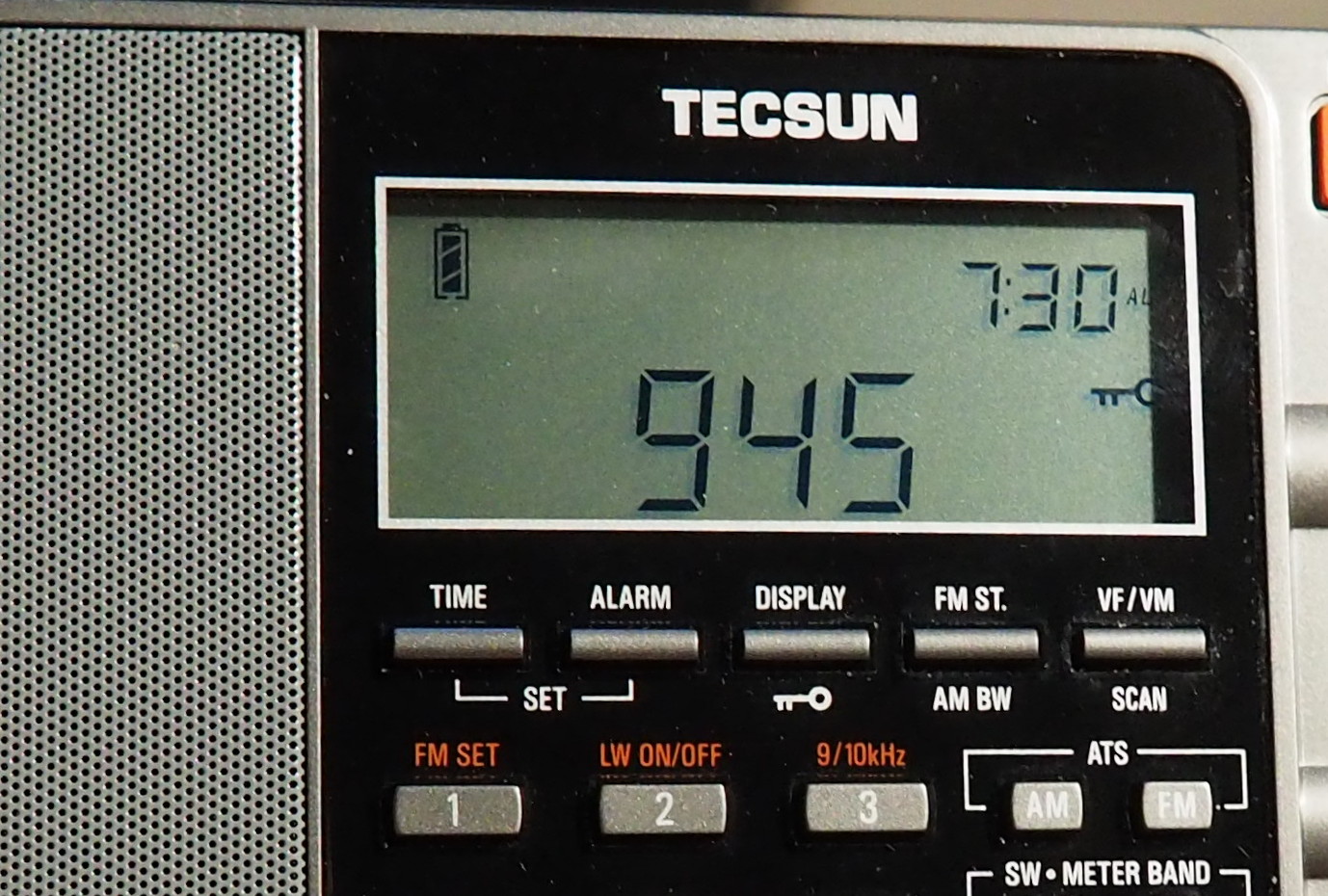
- If you are just getting started, try using the search/scan/seek function of your radio to see what broadcasts it detects. Remember, though, that the seek function will reveal only what it can detect, so you might also try it with your antenna in different orientations. (See number 2 above.)
OLYMPUS DIGITAL CAMERA
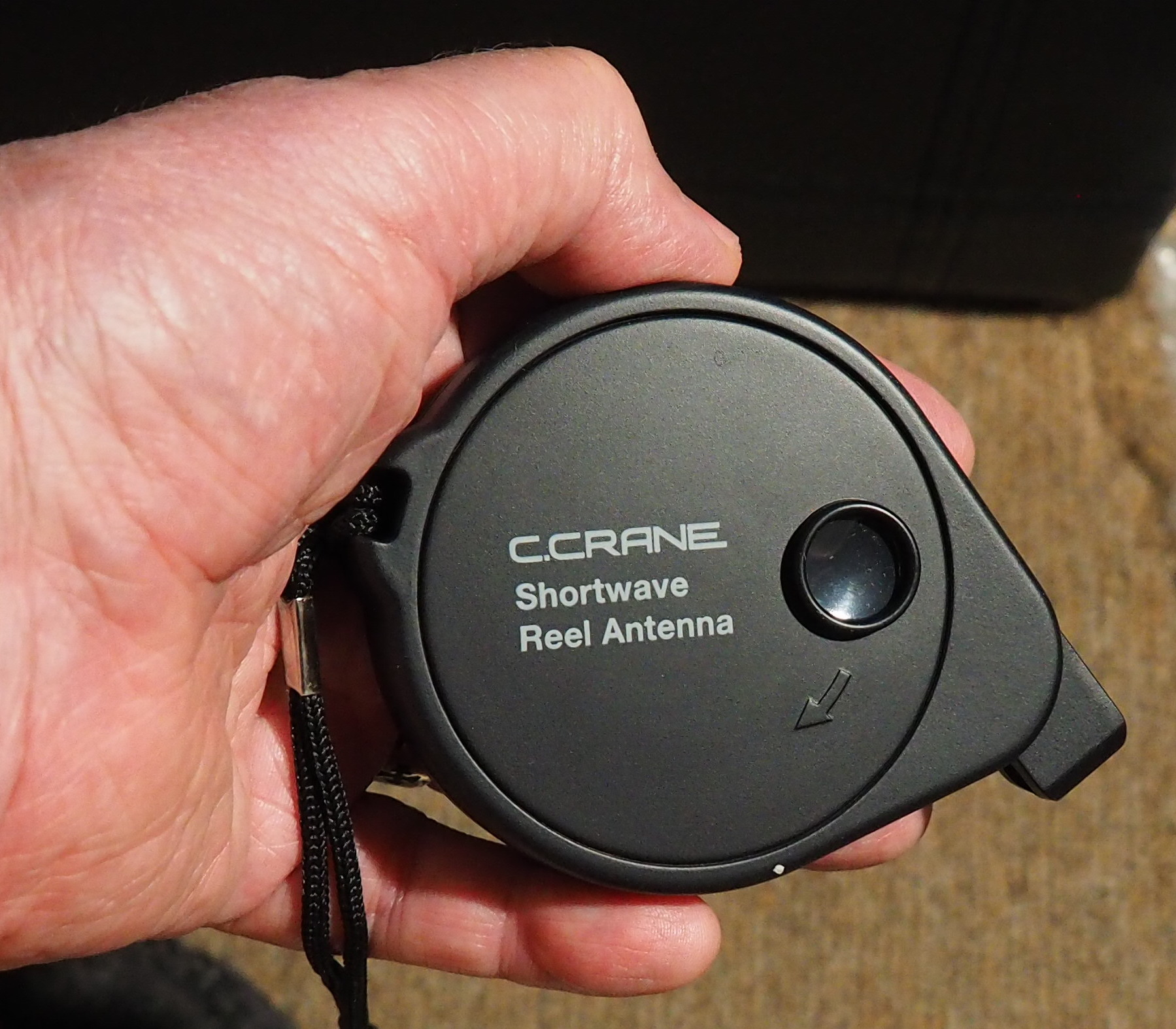
- Try using a bigger antenna. If you radio came with an auxiliary roll-up antenna, try deploying it. One of my auxiliary antennas is designed so that the far end can be clipped to a curtain. Try different configurations and see which works best. If you radio didn’t come with one, it is easy to improvise: get yourself 20 feet of insulated wire and an alligator clip. Attach the clip to the wire, then clamp the jaws of the alligator clip to the whip antenna on your radio. Try different configurations. The only hard and fast rule is: never, EVER, deploy an antenna where it can fall on a power line or a power line can fall on it. And, if you deploy your antenna outside be sure to haul it in when lightning threatens. Don’t go nuts with the length of the wire . . . 20 feet will do. Carlos Latuff, whose radiofax and weatherfax interceptions often grace this blog, often uses a wire antenna that is just 3 meters long!

- It is very useful to have a list of target frequencies, particularly since so many modern portables have a keypad that makes punching in a frequency as easy as using a calculator. I can highly recommend the charts produced by Harold Sellers of the Ontario DX Association. These include the World English Survey (a listing of English language broadcasts by time and frequency), Target Listening by Country, and Target Listening by Time. Just because a station is listed at a particular time on a particular frequency doesn’t mean that you will be able to hear it, but I find it fun to punch in the numbers and discover what I can You can be notified when each month’s charts can be downloaded. They are posted to the ODXA Facebook Group files section and also on three IO Group files section: ODXA, World of Radio and CIDX.
I hope these small suggestions will be of some help in making your listening better.
As always, Jock – excellent insights! When I was a lad there used to be a program (on radio!) called “Will with a Way.” It was an early version of what we now call DIY programming. What stuck with me more than anything else was the title – it has come to mind so many times as an adult. Of course I am not really being true to the title, as “Will” was the fellow’s name who had the show, but I think of it as “if you have the will there is a way.” I apply that to the radio hobby almost daily! Cheers!
If your RFI is really high, your best weapon is a magnetic loop antenna aka small receive loop. At home, my RFI is so high that I don’t benefit from a larger/longer antenna. For example: Using the telescopic antenna (75 cm) vs using 3m of wire. Reason is that the signal-to-noise ratio is roughly the same in both cases and that all of those very weak signals are below the noise floor anyway, and the ones that make it through the noise are already strong enough to be received with the telescopic only. Conclusion: In a high RFI environment, it’s not about maximising the signal strength but maximising the SNR. You need to find an antenna type that will pick up less of that RFI. A cheap and simple antenna for this is the small receive loop. For a start, you can use a cheap wire terminal with 3.5mm mono jack. Using a 1:1 balun further improves the result.
Sebastian,
I certainly agree with you about loops.
What length of wire would you suggest for use with the “cheap wire terminal with 3.5mm mono jack”?
Cheers, Jock
Going into the back yard improves things somewhat, but really what I need to do is leave the city altogether. All of the 5G and wifi garbage adds up to the ruination of shortwave listening. I remember the 80s, 90’s and into the 2000s getting numbers stations, the buzzsaw, the woodpecker, not to mention the soothing sounds of solar emissions, but I get very little if any of that now.
I thought my portable radio was rather mediocre as its reception was never quite as good as the old Heathkit model my grandpa made. But then on vacation in rural Pennsylvania I tried the same portable at a campground and was blown away with what I was picking up, including a numbers station. I hadn’t heard one of those in years and thought perhaps they had become obsolete. But no, they are still out there.
Wow, Art, that “rural campground” story makes me want to take a drive out into the country and discover what I can hear away from RFI.
Cheers, Jock
5. I still have some kind of software to cut sw schedules in timetables, languagetables, hourly … but … where is the direct link to
WES Oct.pdf and TLbyTime Oct.pdf
“These include the World English Survey (a listing of English language broadcasts by time and frequency), Target Listening by Country, and Target Listening by Time. “
Good stuff! Regarding No. 1, yes, go outside if possible, maybe even to a park. I enjoy sitting outside with a portable away from all the RF hash in the house. If you have a receiver that can do medium wave on the whip antenna (such as a Tecsun PL-990X or Qodosen DX-286) you’ll be amazed at how much you can hear on the whip if you just get away from local noise sources.
And regarding No. 2, we always hear people complaining about not being able to swivel the antenna on some receivers such as the XHDATA D-220. “It’s not vertical when I use the kickstand!” Vertical isn’t the be all and end all for a short whip when the RF is coming down from the ionosphere with all kinds of crazy random polarization. Pick up the radio and move it around in different orientations!
William,
Thanks for the kind words and your suggestions.
In regard to the 220, if you can’t swivel the antenna, then swivel the radio!
Cheers, Jock
Great tips, Jock.
I would agree, No. 1 is essential, at least around here. A universally rotatable loop is the only way I can kill the residual noise after everything else is unplugged..
Probably the quickest way to get a list of current English transmissions is at https://www.short-wave.info/. This is based on the Aoki list which is updated regularly.
Bob,
Thanks for the kind words and the “hot” link!
Cheers, Jock
Number 1. Is the most important. If the signal is not there, it is not there. And the main reason for it not being there is rfi radio frequency interference from all the low quality, unshielded power supplies in the house. The only thing to do is shut off the mains supply to the house and power your equipment from batteries. Even then you will get some local rfi, but you will most of those DX stations you want to pick up. If that doesn’t work there is one sure fired solution. Move!
Robert,
Killing the mains will work all right, but dread resetting the digital clocks after.
And sometimes playing with the orientation of the whip brings up a signal that did not appear to be there before.
Thanks for your comments.
Cheers, Jock
Ah, the never-ending quest to nail the RF noise culprits. In my 28-unit co-op building, every time one of the elevators is called to duty, the electrical noise wipes out the entire broadcast band. But, why oh why, are those elevators always seemingly activated just when the top of the hour IDs are coming in?
I do a fair amount of DXing evenings from my building’s roof deck. The sea of solar panels don’t seem to be a problem, but I discovered an iPhone and/or Fire tablet too close to the radio will cause annoying noise. And, lo, the Fitbit I keep on my left-hand wrist is a noise-maker when holding the receiver in my that hand!
And, any day now, neighbors will festoon their balconies with elaborate blinking and winking holiday lights. It’s enough RF racket to bring out the Scrooge in any man.
Still, we fight on.
SamA,
You cracked me up.
RFI . . . bah, hambug!
Cheers, Jock
Great article. I get the schedule of English broadcast every once in a while but I can’t remember from where. Please tell me how I can get it now. Thank you.
Tom
Tom,
Trying signing up for https://groups.io/g/cidx and be sure to subscribe to updates. When Harold Sellers posts a new set of monthly files, you will be notified and you can download them. If you want to get this months files, sign up and then visit the files section: https://groups.io/g/cidx/files
Cheers, Jock
Tom,
Just found them on the ODXA Facebook page. October 5th is the latest Harold posted.
Tom,
Sign up for https://groups.io/g/cidx and then visit https://groups.io/g/cidx/files to get the latest files.
That should work.
Cheers, Jock
Nice tips, Jock.
Thanks Carlos. That means a lot coming from you.
Cheers, Jock