
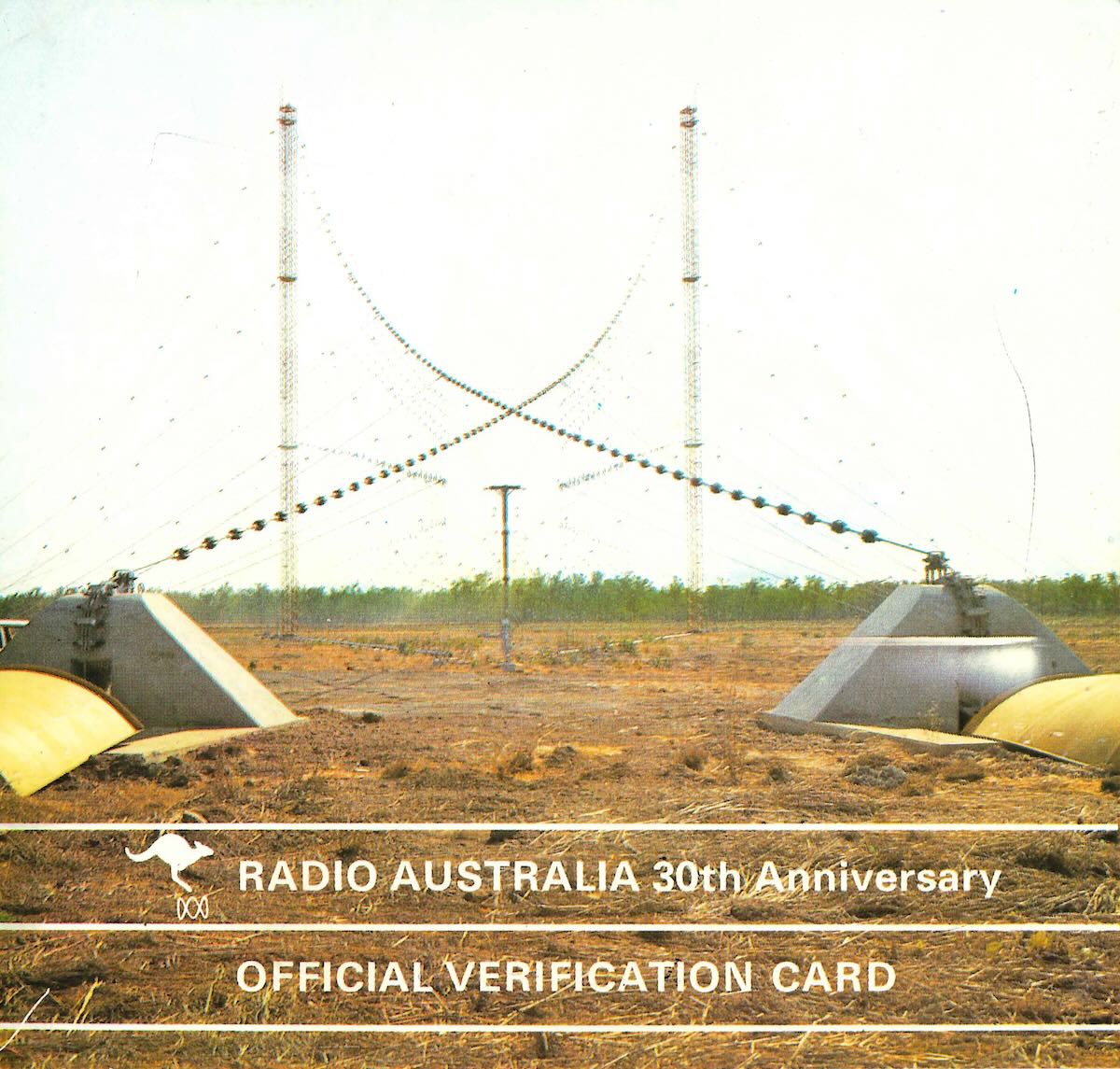
Radio Australia from the collection of Tom Gavaras
Many thanks to SWLing Post contributor Tom Gavaras, who recently reached out with an update:
“I want to make you aware that I have posted almost all of my shortwave QSL cards online, representing more than 210 broadcast countries. They can be viewed at: https://radiotapes.com/qsl/”
What an incredible achievement! Tom’s QSL collection spans decades of shortwave radio history and includes verification cards from a vast range of international broadcasters.
Browse the collection here: https://radiotapes.com/qsl/
Thanks again, Tom!
An amazing collection. Thank you for sharing it.
Fantastic collection!
Do any stations other than RFA and “pirates” still mail QSL cards?
Almost all shortwave broadcast stations still mail QSL cards.
Great collection, walking down memory lane.
*One correction, Senegal is in Africa not Asia.
Thank you for the correction. Not sure how I missed that. I have made a few other corrections/tweaks.
Shortwave radio is currently in a complex phase: it experienced a steep decline especially in Europe and North America since its peak around the end of the Cold War in 1989, but there is evidence of a **resurgence and stabilization globally as of 2025**.
Key points about the current status:
– Despite many big broadcasters in North America and Europe cutting back or ceasing shortwave transmissions, **over 260 broadcast stations remain active worldwide in 2025**, including clandestine, domestic, and international services.
– There is a **significant shortwave audience globally**, with estimates suggesting over a billion receivers worldwide and about 200 million tuned in at any given moment. Shortwave radio has its highest penetration in developing countries but is also used by business travelers, diplomats, aid workers, and non-native language listeners everywhere.
– Some regions, especially **Africa, South Asia, and parts of Latin America, still rely heavily on shortwave radio** for broad reach, making it a vital communications tool where internet or satellite coverage is spotty or controlled.
– The resurgence is partly driven by new, portable, affordable shortwave radios with improved usability and features, catering to listeners who want a simple, battery-powered device to receive global broadcasts. Factories in China reportedly produce 300,000 shortwave radios per month, indicating strong demand.
– The shortwave frequency landscape also includes new licenses, and construction permits for shortwave broadcasting in the U.S., some with unconventional or specialized uses like digital radio or data transmission, showing innovation alongside traditional broadcasts.
– Shortwave conditions fluctuate with solar and geomagnetic activity that affect signal propagation, but interest remains stable among hobbyists and listeners, although it won’t return to Cold War levels of popularity.
In summary, after decades of decline mainly in Western countries, shortwave radio **has stabilized globally with a solid niche audience and continuing importance in certain regions**, alongside technological updates making it more accessible to new users.
Thank you for posting this, Tom. A really great site to help preserve radio history. I will post it to My Favorites.
73, Dan
Dan, thank you for all the great audio and QSLs that you have shared. You have the most amazing collection and we are fortunate that you saved so much through the years!
These are great! Lots of good memories on the shortwaves in the late 70s and 80s.
Thank you
N6HBJ