
Many thanks to SWLing Post contributor, Michael (BD4AAQ) who shares the following guest post:
WT2 Mini Handheld With Everything Radio
by Michael Ye (BD4AAQ)
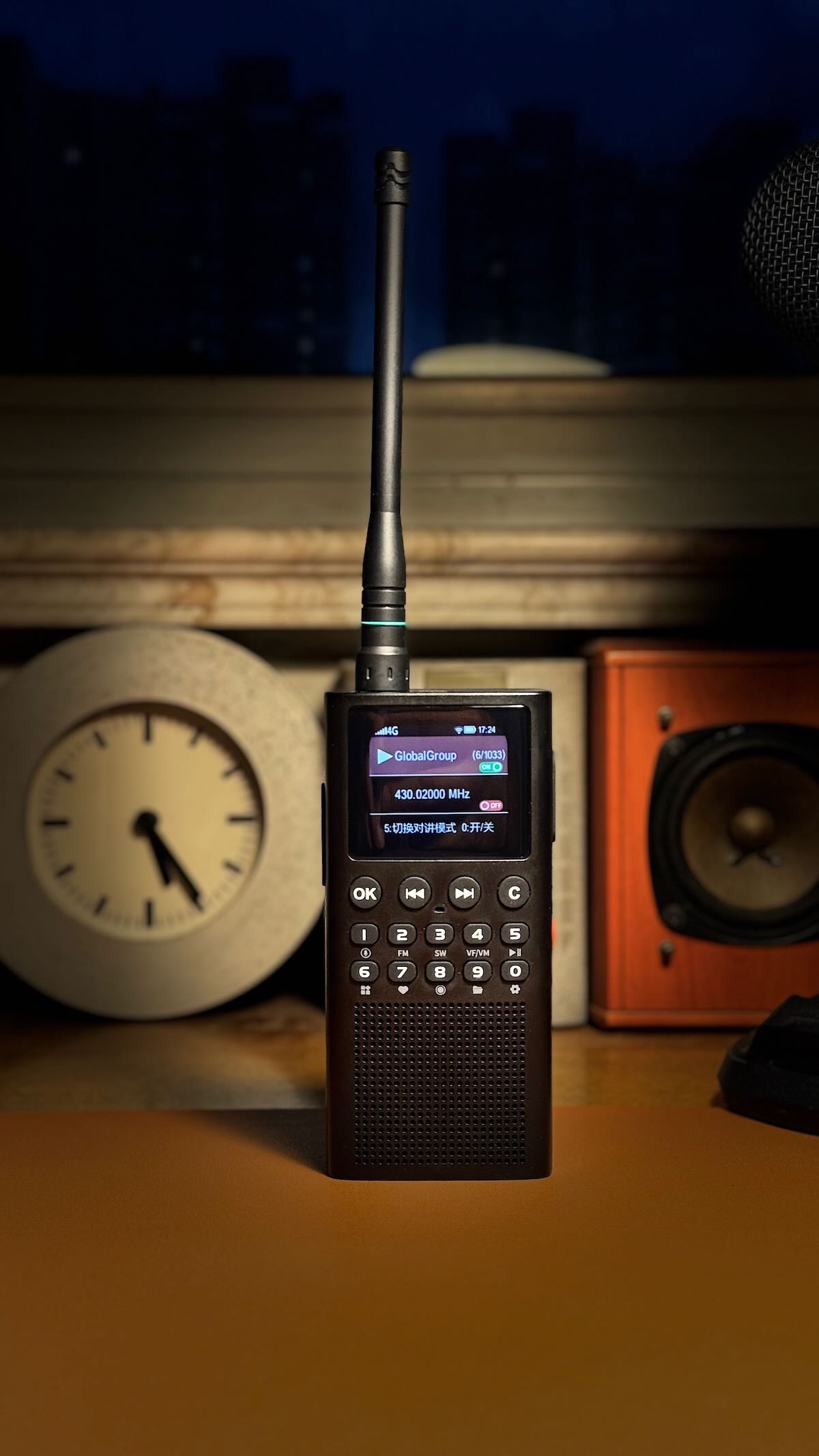 What Exactly Is the WT2?
No exaggeration. The WT2, a recent radio developed by Choyong, includes nearly every type of radio imaginable: ham radio, traditional shortwave and medium-wave radio, internet radio and, last but not least, push-to-talk over cellular radio!
The radio is powered by the TEF6686 chip, which has an excellent track record in high-performance radios. This suggests the WT2’s performance will surpass that of the highly regarded LC90. Packing so many features into a handheld device would have been unimaginable a decade ago without state-of-the-art technology and the internet.
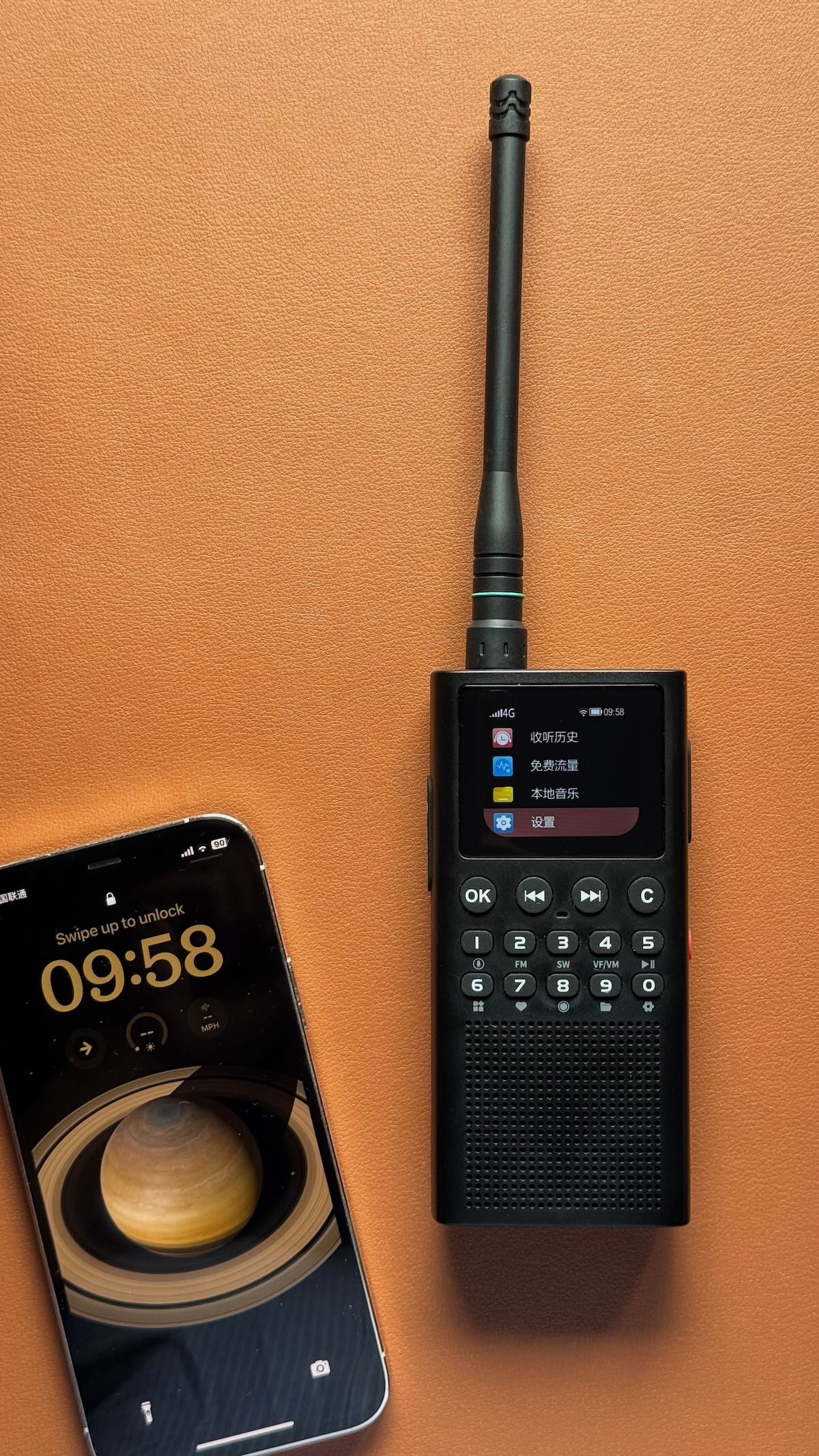
I’m fortunate to be among the first to get my hands on the WT2. I’d seen its picture before but was still pleasantly surprised when I unboxed the real thing and saw its actual size. The picture below shows my iPhone 12 Pro next to it for comparison. At this small size, it fits sleekly into one’s pocket. I’ve always wanted a radio to listen to while walking or jogging. Now, I have one.
Continued Success of Choyong Radio Receivers
As a young and innovative technology company, Choyong was the first to launch a radio receiver combining traditional radio with internet radio: the LC90. The LC90 has been a resounding success. An improved version, the LC95, has been launched domestically in China. Rumours suggest that the LC100 is in development to build on the success of the LC90 and LC95.
Now, powered by the TEF6686 chip, the WT2 delivers even greater sensitivity and selectivity. Its unique combination of multiple radio types in a single, compact handheld form factor makes it highly competitive. In fact, I’m unaware of any other radio that packs so many features into such a sleek design. The young team at Choyong boldly leads the way, fearlessly testing the market waters.
Internet Radio
Choyong has confirmed that the WT2, like the LC90, will be available in both export and Chinese versions.
“In terms of the stations that can be heard, the internet radio exhibits significant differences from that of the Chinese version. The Chinese version is designed to exclusively feature Chinese language stations (and a few English language stations) in China. If we liken the Chinese internet radio to a closed system such as iOS, it is stable, reliable but restrictive. In contrast, the export version could be compared to Android, offering more open, inclusive and customisable user experience.
On the export version, the MENU button provides access to the main menu, which begins with the six continents (excluding Antarctica) and allows users to navigate to the desired country and then select a specific station.”
The WT2 supports Wi-Fi for indoor use and comes with a built-in eSIM for 4G cellular connectivity. This allows you to easily carry the WT2 in hand or slip it into a pocket, making it ideal for listening to internet radio while walking or jogging.
Traditional Radio
Shortwave performance is impressive, especially considering the small antenna. Surprisingly, the 13.6cm walkie-talkie antenna extends to a full 48cm. This significantly improves shortwave reception, as well as FM reception. Unfortunately, the WT2 lacks SSB demodulation on shortwave, which is a bit disappointing.
Medium-wave reception is poor with the receiver’s whip antenna. Indeed, what can you expect from a whip antenna without a ferrite bar? However, I experimented by connecting a longer wire to the antenna’s SMA connector, and MW reception improved remarkably, much to my surprise.
Arguably, the WT2’s FM reception is outstanding. I compared this compact radio with various others, large and small, old and new, and the WT2’s FM performance is simply the best. Its sensitivity generally surpasses that of competing models, allowing me to receive stations that were inaudible on others. A prime example is Shanghai’s Classic Music Channel on 94.7 MHz, which many report as having medium to weak signal strength. Yet, the WT2 pulled it in with exceptional clarity, free of the occasional hissing I noticed on other radios.
Ham Radio and Walkie-Talkie
Amateur radio operators will appreciate the WT2, as it covers the standard Ultra High Frequency (UHF) amateur band, with a maximum transmitting power of 2 watts. It also includes the FRS/GMRS bands (not for use in China). The Very High Frequency (VHF) band is expected in future models.
Caution: When transmitting with the WT2, retract the extended antenna to avoid damaging the device.
Although the WT2 is a compact handheld, it includes features found in other walkie-talkies, such as squelch, tone squelch and scanning, all packed into this sleek device.
PoC Talking
Push-to-talk over cellular (PoC) is not new, but it has gained popularity in recent years with the rise of 4G and 5G mobile communications.
A decade ago, taxi drivers in Shanghai used traditional walkie-talkies to communicate within their network for vehicle dispatch or casual rag-chewing. Some were radio amateurs, but I suspect others were not and were thus operating illegally without a proper license. Years later, most of them, if not all, had switched to PoC, a modern method offering legal communication with crystal-clear audio and virtually no distance limitations.
I gave it a try, and of all the people who could have answered, it was BA8BM, a fellow ham in Sichuan, China. Needless to say, the audio was excellent!
With the WT2, users can create as many groups as they like, each supporting up to 10,000 members!
Other Features
The WT2 features a TF card slot that accepts cards with a maximum capacity of 32 GB. This storage can be used for playing music or serving as an external data drive.
The Bluetooth connection supports internet radio but not traditional radio. I successfully connected my AirPods and Bose headphones. They work well for internet radio but by design not for traditional radio.
The WT2 is equipped with a 2,500 mAh rechargeable lithium battery. Unlike the LC90, the battery is not user-replaceable. For a lightweight radio like the WT2, I’d say 2,500 mAh is sufficient for most daily use.
Key Takeaways
The WT2 is a remarkable compact radio that combines traditional and modern radio technologies. It features a 240×283 mini screen with a vibrant, high-quality colour display that’s truly impressive. The extendable antenna enhances shortwave and FM reception. The audio is crisp and clear but slightly soft. Bluetooth supports internet radio but does not work with traditional radio.
With its four-in-one radio capabilities, users can communicate or listen however they prefer. Want to make a CQ call with a fellow ham? You have amateur radio. Craving crystal-clear conversation? PoC is available. Feel like tuning into nostalgic, sometimes noisy broadcasts over the airwaves? Shortwave, medium-wave, and FM are ready. Eager to explore internet-based radio? There’s a wealth of stations from across the country or around the world.
The WT2 is much smaller (though slightly thicker) than an iPhone and can be used handheld or, via Bluetooth, slipped into a pocket for walking or jogging.
The WT2 has a voice assistant to help you navigate its internet radio and other features with ease.
A versatile little gadget for radio hams, shortwave listeners (despite lacking SSB), and broadcast listeners alike!
Neil, you said it! I remember how I used two radios placed close to each other so their local oscillators would “interfere”and demodulate SSB.
100% correct! I remember making a small external BFO oscillator that I could hold against the radio to beat against the signals when I was a young ‘un too. It was really simple
🙂
I have one of these brilliant devices that was sent to me by Choyong to Alpha/Beta test & report, and it works really well. There are some minor things that need to be sorted out in the firmware for the “English version” but it is a brilliantly imagined piece of kit , and perfect to talk to my Allstar micro node too 🙂
Great review Michael 🙂 – I might catch you on the “global channel” one day!
Hi Neil. There are 1024 members in the GlobalGroup that I see. I wonder if it is the same group. Sure it would be great to talk to you on the GlobalGroup.
Thank you. Amazing how versatile this radio is..
Sounds great!
Anyway, how does the radio connect to the internet?
By using a WiFi or can it access a mobile internet via SIM card?
Yes, as stated in the article, the WT2 supports Wi-Fi for indoor use and comes with a built-in eSIM for 4G cellular connectivity.
The future LC100 radio should have…SW band (inclusive), FM/AM, Air Band. LW ( in case this band becomes more active in the tropics!), Air Band, Marine Band, Citizens Band, ssb.! The Radio Shack PatrolMan had these bands back in 1975, so it can be done, now!
There was an odd thing in the specs that said to have the telescoping antenna pushed down when you transmit. Perhaps they meant to have it extended, logically. Didn’t make sense did it?
I have one of these radios, and I’m going to guess that in its collapsed state, it would be better tuned for the UHF band, as that’s all it can transmit in currently, and that might be all it can ever do, if the limitations are in the hardware itself. You would be correct to fully extend the antenna if it was capable of transmitting in the VHF range, but it does not have that capability. I still extend it for listening to SW and the FM bands for best results.
How does it connect to the internet? Is there a SIM card for access to mobile data access? Or like a standard internet radio it uses the WiFi network?
The TEF668x chips support I2S for outboard processing, like with the optional NXP digital audio decoding chips. I2S passes basically PCM audio. If manufacturer was so inclined, it seems like perhaps a small microcontroller or FPGA chip could be used to run some math code (like weaver demod?) for basic SSB reception.
Can’t see how that could work, at least for the TEF6686/7 used in these cheap radios. The I2S output is simply already-demodulated audio, not a low/baseband IF or IQ signal necessary for independent sideband demodulation.
It might be possible with the TEF6688/9, since they have a separate IQ output for a digital decoder.
I could be off base here, but it seems like a rather crude SSB DSP implementation might be possible.
Tune via AM. We should know the AM filter width. We should know the samplerate since I2S is PCM encoded. Seems like our chip could decode PCM, use a Hilbert transform to get our data, mathematically generate a local LO (positive or negative for either side), multiply the data by our LO value, take the real part, cleanup filtering if needed, and encode to PCM for the return I2S transport. Fine tuning would have to be done at the initial AM demod, assuming the TEF668x supports fine enough tuning steps.
The bandwith would be narrow, especially for voice comms, so I would hope a cheap enough MC chip might suffice. The math might could further streamlined by instead using a Weaver transform.
Huge YMMV here. I get the general idea, but I am not too inclined to dig into the DSP math.
Thanks, Robert and all, for your professional comments on an amateur post. Let’s hope that Choyong visits the site and considers your proposals.
You guys are over thinking it 😉 a simple tunable oscillator circuit external to the rest of teh circuit could be used as a BFO to resolve SSB & CW.. Old school but sooooo simple 🙂