Shortwave listening and everything radio including reviews, broadcasting, ham radio, field operation, DXing, maker kits, travel, emergency gear, events, and more
Many thanks to SWLing Post contributor Fred Waterer who shares this article from Radio World that takes a closer look at how online SDR networks have transformed shortwave listening. Even for those of us who regularly use Web SDRs, it’s an interesting perspective on how these global receiver networks continue to evolve and expand the reach of radio in the 21st century.
5 thoughts on “Radio World: The World Is at Your Mouse Click”
Robert Richmond
My Kiwi And Web888 are both online as Radio Free Citrus from the Nature Coast area in Florida. My 148′ loop-on-ground antenna favors lower- to mid-HF, while upper-HF can be fair to okay during daytime hours when propagation cooperates.YMMV, of course.
Daytime SNR is not great due to nearby solar installs and similar, but both receivers are usually ranked high on the SNR lists at night (Eastern time). Pretty good considering I am in a moderately developed neighborhood.
Robert, could you send me email pls? I am somewhat familiar with your area. You can see two YouTubes of mine at Yankeetown on my YT page, @christopherdunne7848.
Hi, Alex,
I tried to reach out to the email you gave me, but it bounced back. My email address is my first name at swling.com. Feel free to reach out.
Cheers,
Thomas
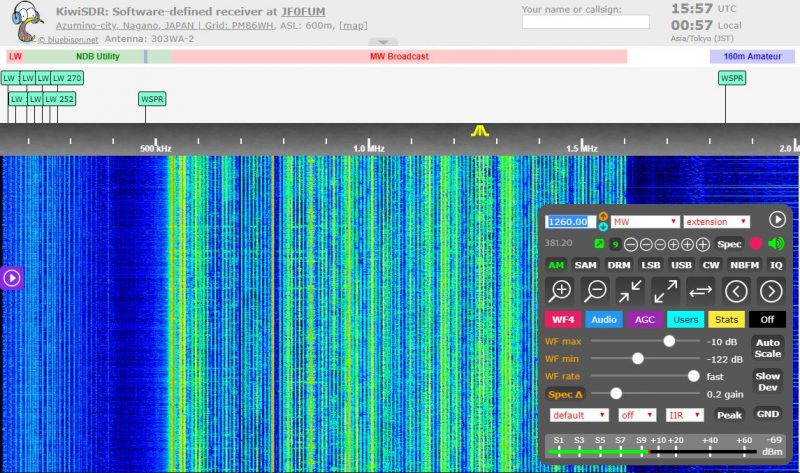 Many thanks to SWLing Post contributor Fred Waterer who shares this article from Radio World that takes a closer look at how online SDR networks have transformed shortwave listening. Even for those of us who regularly use Web SDRs, it’s an interesting perspective on how these global receiver networks continue to evolve and expand the reach of radio in the 21st century.
My Kiwi And Web888 are both online as Radio Free Citrus from the Nature Coast area in Florida. My 148′ loop-on-ground antenna favors lower- to mid-HF, while upper-HF can be fair to okay during daytime hours when propagation cooperates.YMMV, of course.
http://21084.proxy.kiwisdr.com:8073
http://web888.servehttp.com:8074/
Daytime SNR is not great due to nearby solar installs and similar, but both receivers are usually ranked high on the SNR lists at night (Eastern time). Pretty good considering I am in a moderately developed neighborhood.
http://rx.linkfanel.net/snr.html
https://www.rx-888.com/web/rx.html
I keep planning to eventually setup a OpenWebRX+ server for select bands using other antennas as well.
Robert, could you send me email pls? I am somewhat familiar with your area. You can see two YouTubes of mine at Yankeetown on my YT page, @christopherdunne7848.
My email is cd050659[at]gmail[dot]com
Hi Thomas,
Got a quick question for you — mind dropping me a line?
Thanks,
Alex
Hi, Alex,
I tried to reach out to the email you gave me, but it bounced back. My email address is my first name at swling.com. Feel free to reach out.
Cheers,
Thomas
The photo is of a KiwiSDR https://kiwisdr.nz/
Locations of online receivers http://rx.linkfanel.net/
https://new.hfcc.org/data/guidepost.phtml for frequency allocations for HF broadcasters.
Radio New Zealand has a new DRM/AM transmitter aiming at the South Pacific. Sometimes it is heard in the West Coast of the USA.