
Many thanks to SWLing Post contributor Ian Millett (N3CVA), who writes:
Thomas,
This was posted to the RNZ website at 2 pm NZ time November 1.
RNZI announces start of Pacific Cyclone Watch Service
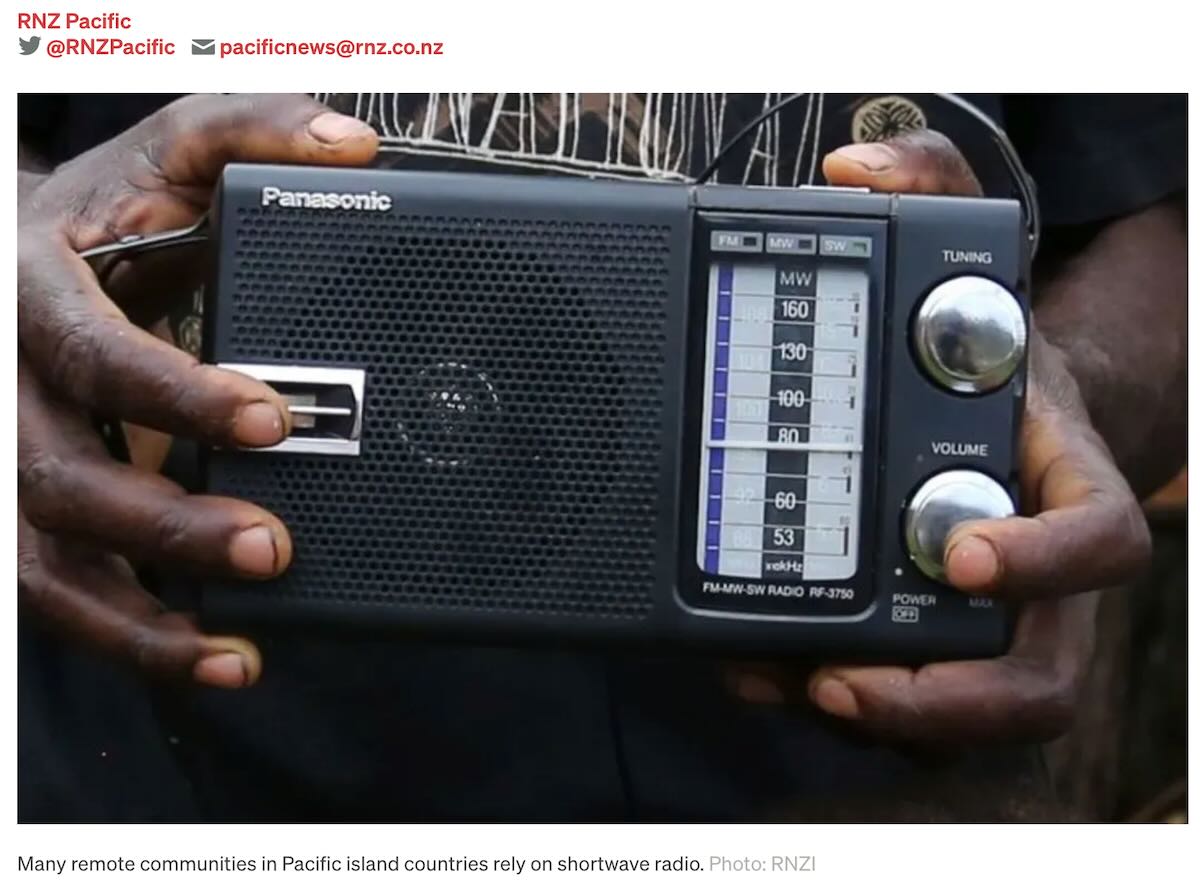
Image source: Screenshot of RNZI announcement
https://www.rnz.co.nz/international/pacific-news/577507/rnz-pacific-cyclone-watch-service-activated
A photo of a shortwave radio in a news article on Radio New Zealand International’s online Pacific page (see screenshot above) caught my attention. It shows someone holding a Panasonic RF-3750 portable FM/MW/SW receiver from the 1990’s (like the one pictured below). The caption reads, “Many remote communities in Pacific island countries rely on shortwave radio.”
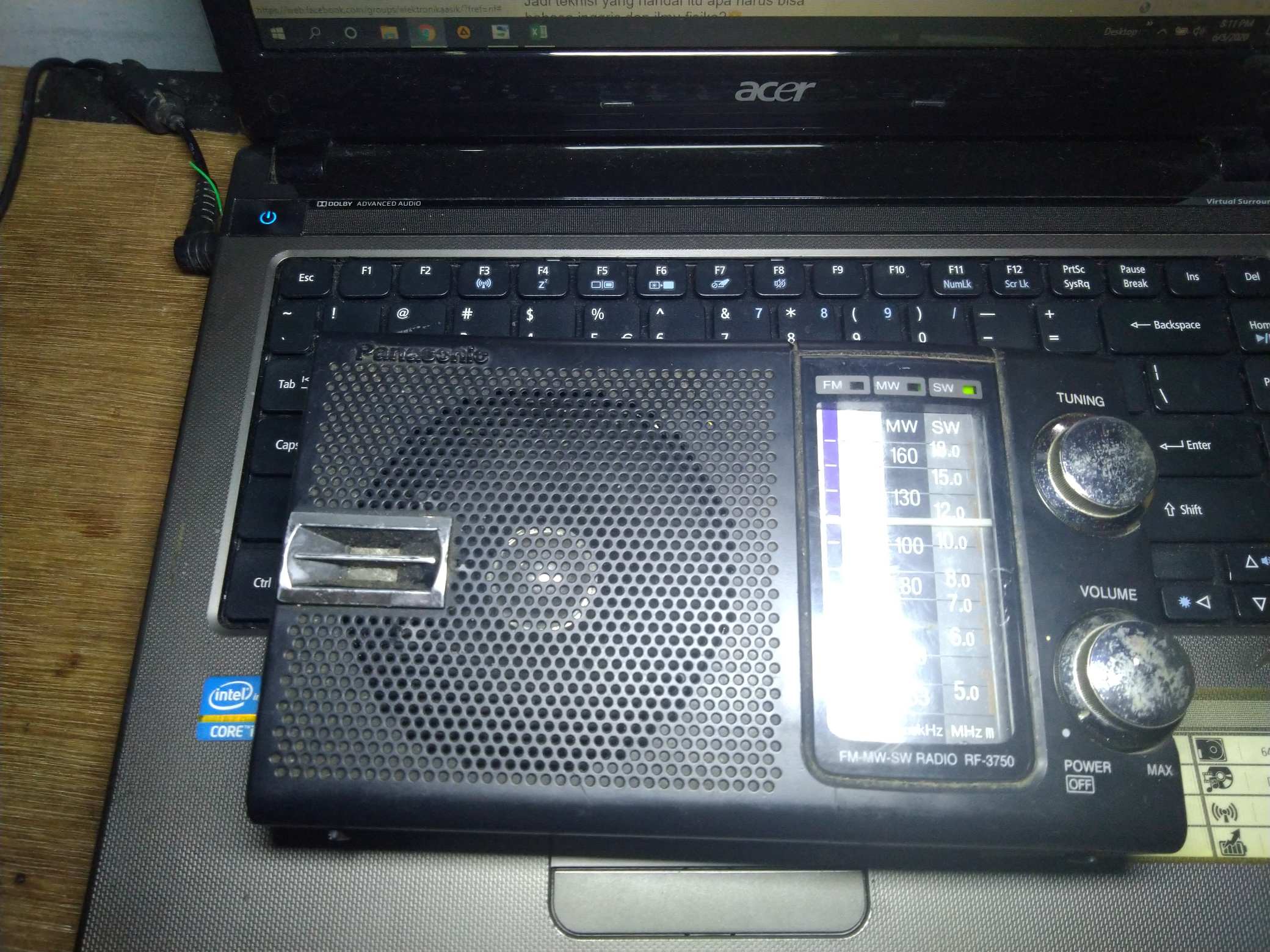
Photo Credit: Internet Archive Community Images Collection (IMG_20200605_201148.jpg).
The article, titled “RNZ Pacific Cyclone Watch Service activated” is about RNZ Pacific’s Cyclone Watch Service that operates during the South Pacific cyclone season which runs from November 1 through April 2026. RNZ Pacific will broadcast hourly updates from Meteorological services in the region once cyclone alerts are issues. The article reminds readers that when local power grids and broadcasters are down “our broadcasts may be the only updates that people in the Island nations and territories can receive.” It also lists the on-air frequencies for the RNZ Pacific Cyclone Watch Service for the 2025-2026 cyclone season.
I’m glad RNZI is still on shortwave and understands its role in providing these broadcasts of critical information to remote areas. I remember during the 1970s, listening to Pacific cyclone bulletins broadcast by Radio Australia and plotting them on my National Geographic maps. I grew up on an island at the southern end of the Caribbean archipelago and from June to November I was plotting the track of cyclones in my own region, with information from medium stations like Radio Antilles, Montserrat, and Trans World Radio, Bonaire, and of course WWV on shortwave.
Credit for this information goes to RNZI https://www.rnz.co.nz/international/listen
Totally agree! My original comment was about the benefit of the service, not about the technology and certainly not about DAB!
qwertyamdx
Where is DAB+ successfully deployed?
The European Union legislated all new passenger vehicles must contain a digital terrestrial receiver for the past 5 years. Just released by the Norwegian media regulator which has no analog main stream radio increases profits for broadcast radio when compared to other media. Remember they have the lowest transmission costs because they & their Government broadcasters only use DAB+.
Indian car manufacturers & importers have voluntarily installed DRM receivers for no extra charge in 13 million vehicles. The number is rapidly rising depending on car sales. India has never had commercial AM radio. DRM’s second channel is providing continuous coverage of cricket matches which can last 5 days to a cricket mad country.
There is a small All India Radio FM service and similar number of commercial FM stations. The Indian Government had demos of DRM & a modified all digital HD Radio in band 2 some years ago. They are yet to announce their selection.
Compare this with the percentage of HDRadio stations transmitting pure digital and the percentage of registered cars with HDRadio receivers. There is only one manufacturer of non vehicle HDRadio. Remember HD2 – HD4 have 20 kbit/s audio!
What does any of these have to do with RNZ’s cyclone watch service on shortwave?
Bob,
The bandwidth is identical to all other SW broadcasts, no power is wasted in a carrier which AM must have. >67 % of AM power is in the carrier and contains no audio.
RNZ Pacific, obviously do not agree, since they have been broadcasting it for 16 years and last year replaced one of its transmitters so that both can transmit it.
You obviously not listened to it. Noise free, distortion free, interference free stereo sound in the HF band which is why they use it to feed FM transmuters in remote islands
China covers its own country in HF & MF DRM as does India. >13 million Indian cars contain DRM receivers and nowt they will be installed in all new cars for China.
Kudos to RNZ! WRMI would do well to consider its potential role in doing the same type of thing in the Caribbean and Central America for Hurricanes, Earthquakes and other disasters!
Excellent suggestion, Bob.
BobL,
The reason why RNZ Pacific replaced its old HF transmitter is because Tonga had an undersea earthquake which broke the fibre optic cable, the ash cloud stopped all satellite communications for 5 weeks. Cyclones/hurricanes also stop satellite communications, leaving only HF radio! There are many Tongans who also live in NZ.
Having a pair of high power HF transmitters a long way from the incident gives reliability.
The Caribbean Broadcasting Association has been investigating HF DRM for education and emergency warnings before the hurricane.
Thank you for sharing this news, Ian.
I have been following recent weather events through radio broadcasts, and for me, living in Rio Grande do Sul, which last year faced torrential rains that resulted in death and destruction, I can attest to the importance of radio. And with these meteorological events becoming increasingly frequent and violent thanks to climate change, the importance of radio in informing the population is becoming ever more evident. Congratulations to Radio New Zealand for this initiative.
RNZ is a station that understands the usefulness of shortwave.
Remember: in 2024, RNZ commissioned a 100 kW AMPEGON transmitter to broadcast its programs in DRM to FM stations in the Pacific Islands. A professional use of DRM:
https://swling.com/blog/2024/08/rnz-inaugurates-new-analog-and-drm-ampegon-transmitter/
DRM is a waste of power and bandwidth. Very few shortwave receivers can decode DRM broadcasts and the ones that can are overpriced rubbish.
Hello Bob,
I think you are confusing
1 – “Digital Rights Management” (DRM) : https://www.fortinet.com/resources/cyberglossary/digital-rights-management-drm
with the broadcasting standard
2 – “Digital Radio Mondiale” (DRM)! : https://www.drm.org/
Most SDR kiwis allow you to listen to radio programs broadcast in DRM… India has adopted DRM to digitize its MW and SW broadcasts… China too, etc.
Have a nice day. 73
Very few receivers? I would say none! That’s why DRM campaigners always mention KiwiSDRs which are of no use to an ordinary listener. You just cannot get a portable DRM receiver, from anywhere. The first thing you see on a “Products” page of the DRM consortium website is an… evaluation board – no further comments necessary.
As for China that has been also mentioned as in the comments as “covering its country in HF & MF DRM”, I think it’s worth to mention that it refers to a single radio station (China National Radio 1), running test transmissions on few of its SW transmitters. Is it a fast deployment if we consider the fact that DRM has been around since 2001? Are more Chinese stations expected to follow the suit? Is pursuing DRM in 2004 a wise, well-researched strategy based on the markets and customers needs, or just a ‘white elephant’ government project?
In IT, a single decade is an entire era, not to mention two and a half. The Chinese have recently boasted about their 6G test deployments reaching 260 Gbps speeds. In comparison, HF DRM with less than 30 kbps feels like something taken straight from the stone age!
It doesn’t when you use the newest most efficient compression system xHE AAC. Not only is it used by DRM but also etflix, Meta (for Facebook and Instagram), and Amazon (for new Echo and Fire TV products), as well as by other companies such as Audible and Langit Musik Indonesia, Windows 11, XBox, IOS. No other radio broadcast system uses such a new & efficient audio compression. Even DAB+ in Australia uses the less efficient HE AAC, commercial broadcasters have chosen stereo at total of 32 kbit/s per program.
If listening to 32kbps DAB+ is the only choice you have, I can only offer my sincerest condolences. Running a system like this and calling it “modern”, while it degrades the audio quality to levels most of us remember from early mp3s downloaded via dial-up is a disgrace. Fortunately, there are also some good deployments of DAB+, like in Sweden, where the public radio runs most of their stations in 192 kbps AAC-LC. A real bliss to listen! But I think we’re getting a bit off the topic there.
Describe the audible effects we can hear and name the songs you can hear these effects on so I can identify it along with the compression algorithm and the bit rate. The audio source must be only converted into the transmission standard once from a 48 kHz AES lossless original. This will exclude CDs.
There are still DRM receivers available in Aliexpress, for example, but people don’t find them. That’s probably because the Aliexpress’ search engine gets mislead by searches like “DRM radio”. It does find DRM radios by including the brand name in the search terms, however. Searching for “Gospell DRM receiver” shows that DRM radios are available.
Very few people have bought these seemingly overpriced radios.
Ten years ago, India introduced a DRM receiver from the brand “AVION”:
https://swling.com/blog/2015/11/avion-drm-receiver-now-shipping-via-amazon-india/
https://www.amazon.in/Avion-DRM-Digital-Radio-DRM-AM-FM-M/dp/B012GIDF1O
In India, the country that has chosen Digital Radio Mondiale [DRM], new cars must be equipped with a DRM car radio:
India Tuning In – DRM Digital Radio in over 13 Million Indian Cars by end of 2025 – October 29, 2025
https://www.drm.org/india-tuning-in-drm-digital-radio-in-over-13-million-indian-cars-by-end-of-2025/
Personally, I bought a DRM receiver in 2010: the DiWave 100:
https://www.universal-radio.com/catalog/portable/0023.html
An excellent receiver made by a French company that has since gone out of business! I can’t update the firmware… I listen to Radio Romania International, which still uses HE AAC, but I can’t listen to stations that use xHE AAC…
Finally, among professional uses, TdF – TéléDiffusion de France transmitted color weather maps in DRM to competitors in the MiniTransat in 2019 (unless I’m mistaken). Currently, TdF is working to promote DRMCast: a receiver picks up the DRM signal and retransmits it via WiFi for smartphone owners!
https://www.tdf.fr/wp-content/uploads/2022/05/Radio-Fiche-produit-DRMCast.pdf
There are other experiments… and also the DREAM software… To be continued…
Yes, there were some DRM portables available in the first decade of the 00s, but they are long gone now. The Avion is no more and the ones that were supposed to be introduced (and have also been marketed in the comments on this site): Starwaves, Gospell, Solargrove… etc – all of these are just vaporwave.
As for the supposed success of DRM in India, gazillions receivers in cars and so on – why is it only the state-owned station that has embraced the system? Wherever you see DRM “successfully deployed” in a given country, as claimed by i.e. by the DRM consortium, it always means the same: there is a single government-owned station that has launched the transmissions and the rest does not seem to care at all.
Please, have a glace at this:
DRM Cites Receiver Growth in India
Meanwhile the country slowly feels its way with digital for the FM band
https://www.radioworld.com/tech-and-gear/digital-radio/more-than-13m-cars-in-india-will-have-digital-radio-by-end-of-year
The paper discusses the significant growth of Digital Radio Mondiale (DRM) receivers in passenger cars in India. As of July 2025, approximately 12 million cars on Indian roads are equipped with DRM receivers, and this number is expected to reach 13 million by the end of the year.
The growth of DRM-enabled cars is largely driven by in-car listening—a crucial factor for digital radio’s success in India. Major car manufacturers like Maruti Suzuki, Tata, Mahindra, Hyundai, MG, Mercedes-Benz, and Toyota have integrated DRM receivers factory-fitted in their vehicles.
In Europe, we have a similar scenario with DAB+… New cars must be equipped with a DAB+ receiver… And there are no DAB+ receivers in stores with such advanced features as a color touch screen! But some countries are turning off FM transmitters. Norway was the first country to do so, followed by Switzerland, and now Germany is following suit. Public radio stations have already started, but private stations have, let’s say, two more years to end their FM broadcasts.
Oh for goodness sake! DRM and AM are both used by RNZI. DRM is received locally in some islands and re-broadcast. It’s practical…