
UPDATE (16:15 UTC, August 14, 2026): This post has been updated to clarify that XHDATA is preparing to release two different receivers, the D-228 and D-226. The original version of this post conflated some of the specifications and features of the two models. Many thanks to Paul Jamet for the clarification.
 Many thanks to SWLing Post contributor Paul Jamet, who shares the following news:
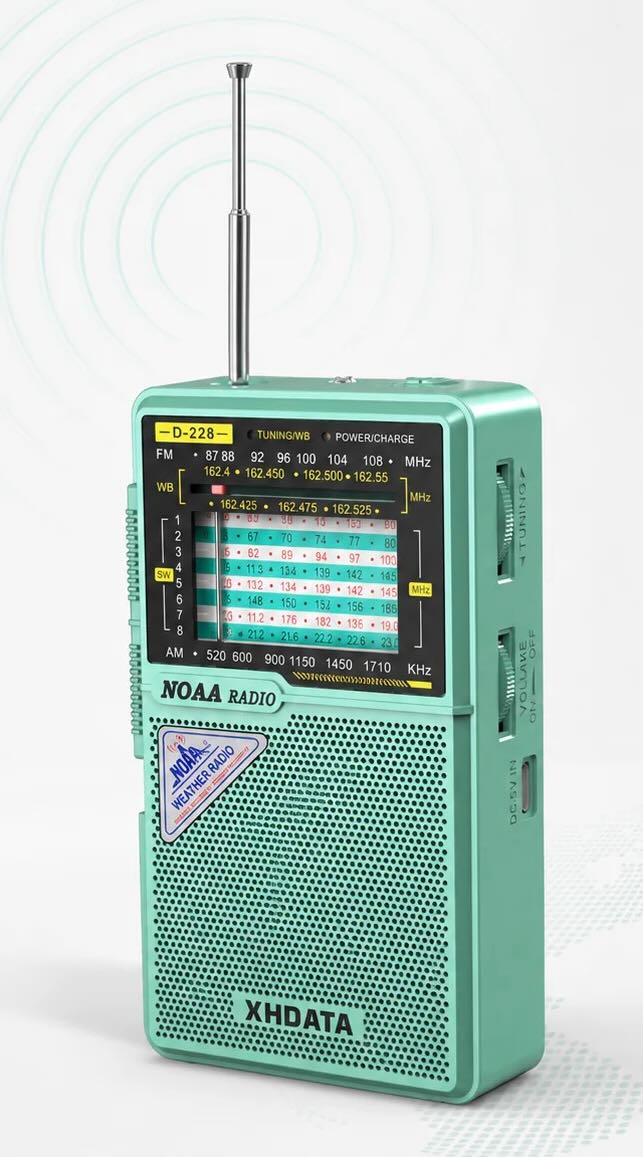
Have you heard of the D-228? XHDATA’s new dial-type receiver? Description and additional info:
https://www.xhdata.com.cn/products/xhdata-d-228-noaa-radio
FM: 87–108 MHz – AM: 520–1710 kHz, 10 kHz – SW: 5.6–23 MHz – WB: 162.4–162.55 MHz
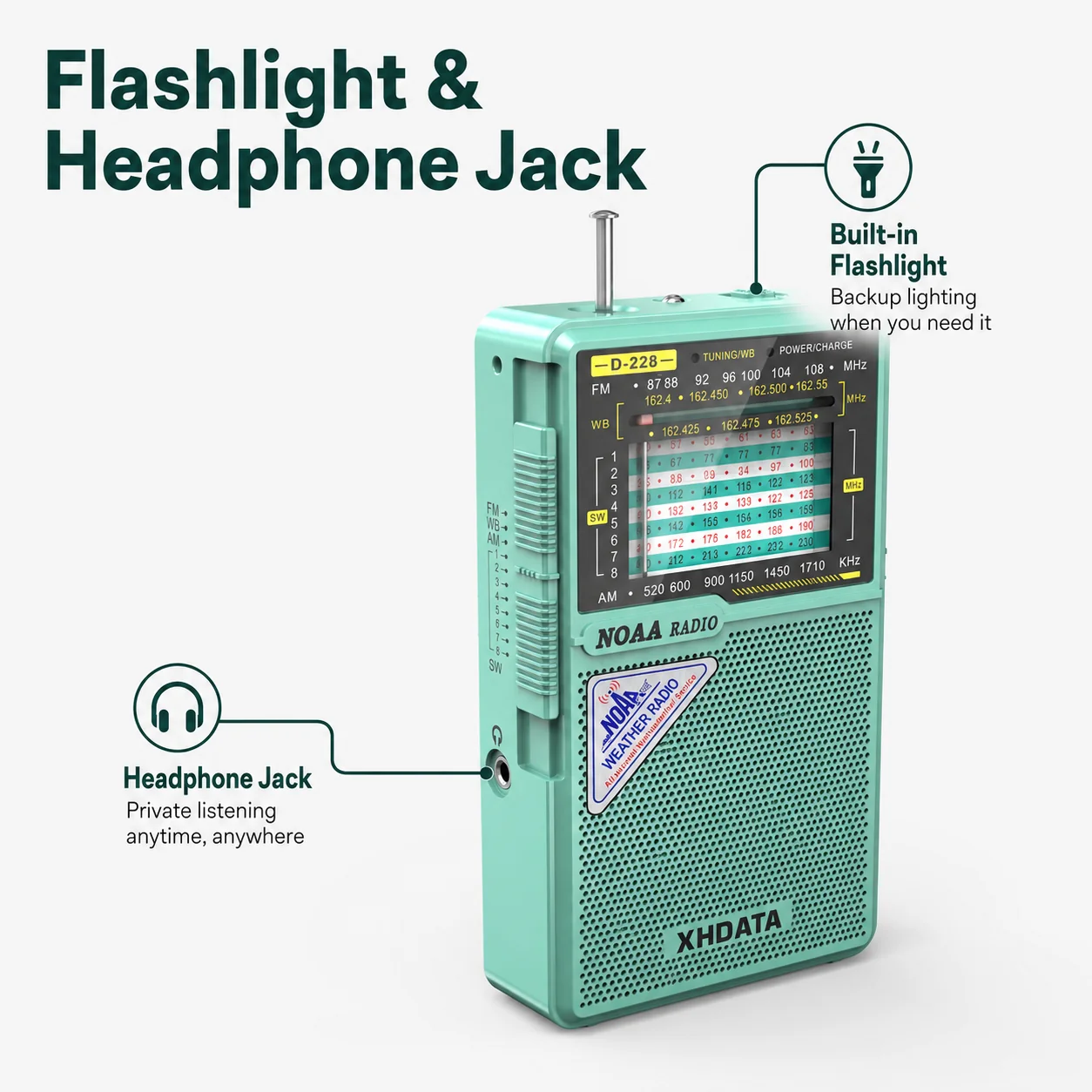
The D-228 includes reception of the NOAA weather band and is therefore primarily intended for the North American market. The D-228 is currently available only in green.
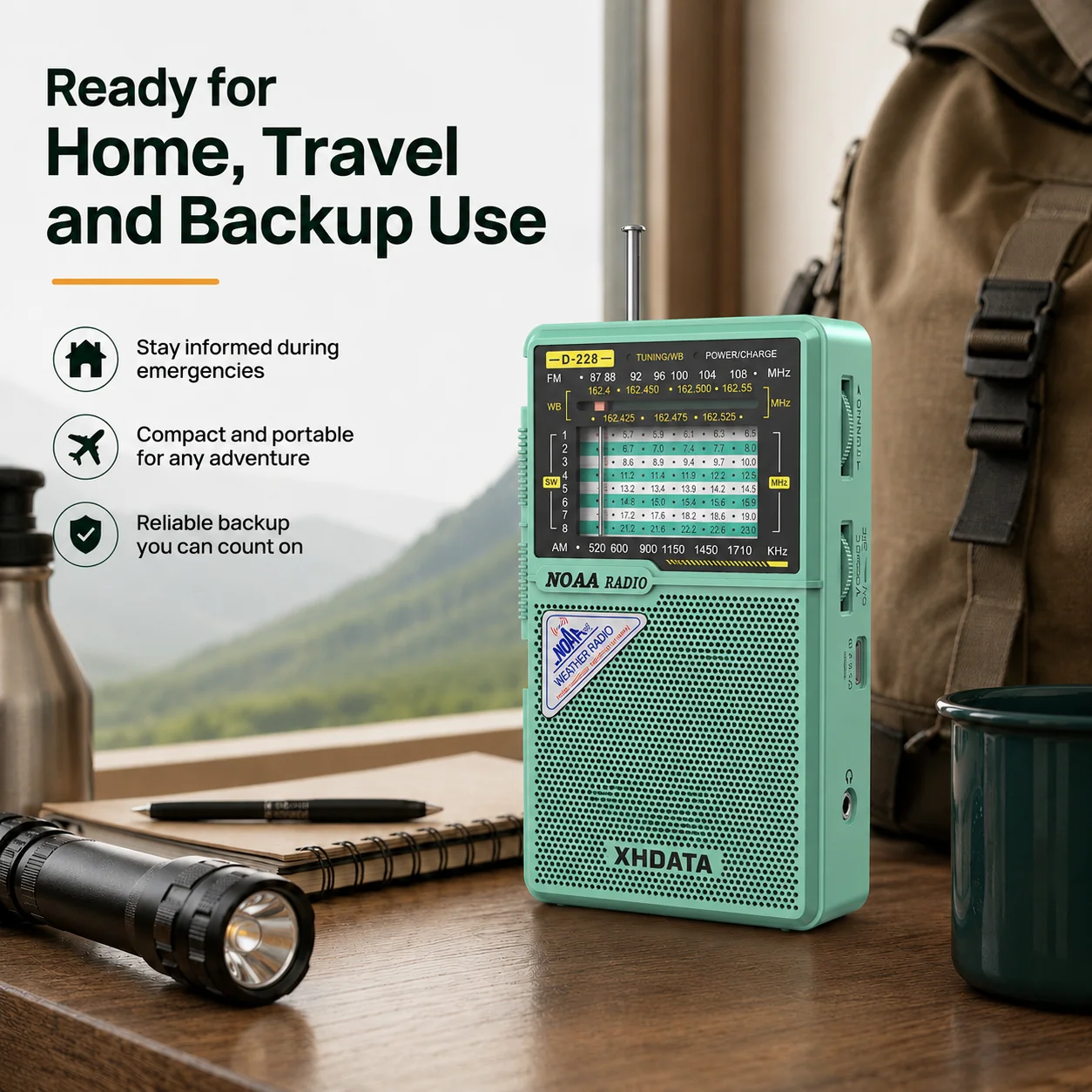
Both the D-228 and D-226 feature three power modes—rechargeable battery, AA batteries, and 5V DC—as well as a small flashlight, allowing XHDATA to classify these compact receivers as emergency radios.
There is, however, another model that should not be confused with the D-228: the XHDATA D-226, which XHDATA says will also be available soon.
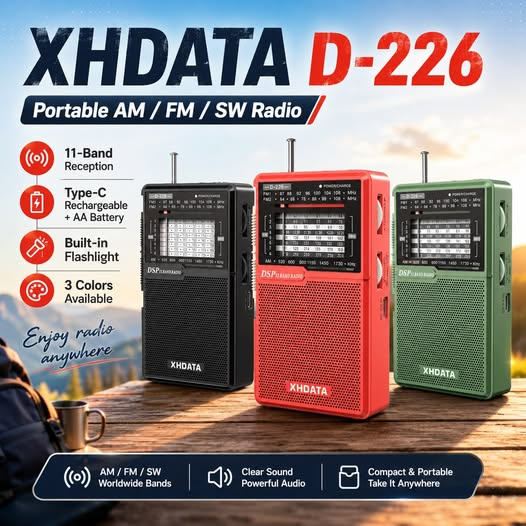 The D-226 does not support the NOAA weather band and is intended primarily for the global market. Its specifications are:
FM: 64–108 MHz – AM: 520–1730 kHz, 9/10 kHz – SW: 4.75–22 MHz
The D-226 will be available in three colors.
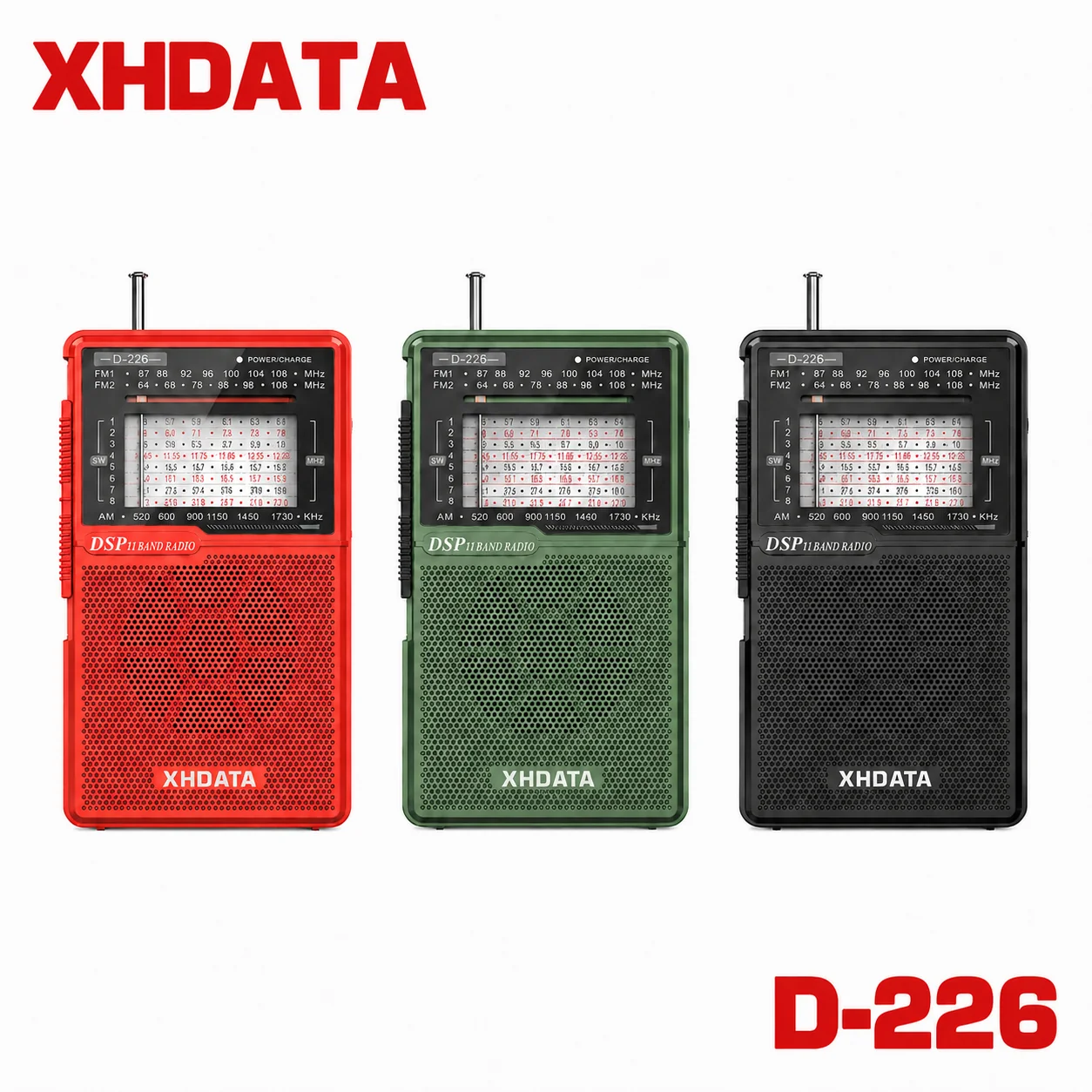 Paul notes that he had initially assumed the D-226 would follow the reception specifications of the D-219, but he now believes that assumption may not be accurate. XHDATA subsequently clarified the distinction between the two new receivers.
The D-228 uses a different radio chip than the D-220, it’s a CACHIP C9650 vs the Skyworks Si4825. The C9650 offers similar wide and narrow band SW choices, FM range choices and MW, but adds WB. Also it has a factory specified option for stereo output that seems to not be used in the D-228 as the left and right audio output are shorted together on the PCB — I have not tired to split them but from reading the datasheet it looks like this shorting is done because one channel has no connection internally on the chip.
The case on the D-228 is much larger then the D-220 for no apparently good reason. There is a 1000mAh lipo cell inside but could easily accommodate a much larger capacity cell. Overall is feel cheaper than the D-220 but is very similar in function.
Performance-wise I found the D-220 has far superior FM band sensitivity, about the same MW band performance and I’m still evaluating the SW bands. There are 9 narrow SW bands available on the C9650 and this radio implements all of them except 3.2 – 5.5 MHz. The narrow bands make this much more usable than the D-220 even if the performance is comparable. Also there’s a tuning LED that helps to know if you’ve “found” the right spot on the dial.
The WB performance is very good even if the tuning mechanism is totally inappropriate for the 7 frequencies it tunes. The C9650 documentation claims that it can recognize NOAA alerts, but I don’t know if/how this radio will respond to them.
I’ll be interested to see if the tiresome micro movement tuning found on the D-220 (MW band) has been improved on this new model.
IMHO strictly on use as a radio, the second (green) version of the D-219, which increments the DSP in 1 KHz steps, and has much more friendly SW tuning, remains the preferred choice in this lineup.
I have one on the way. Should get here today.
Tom Stiles