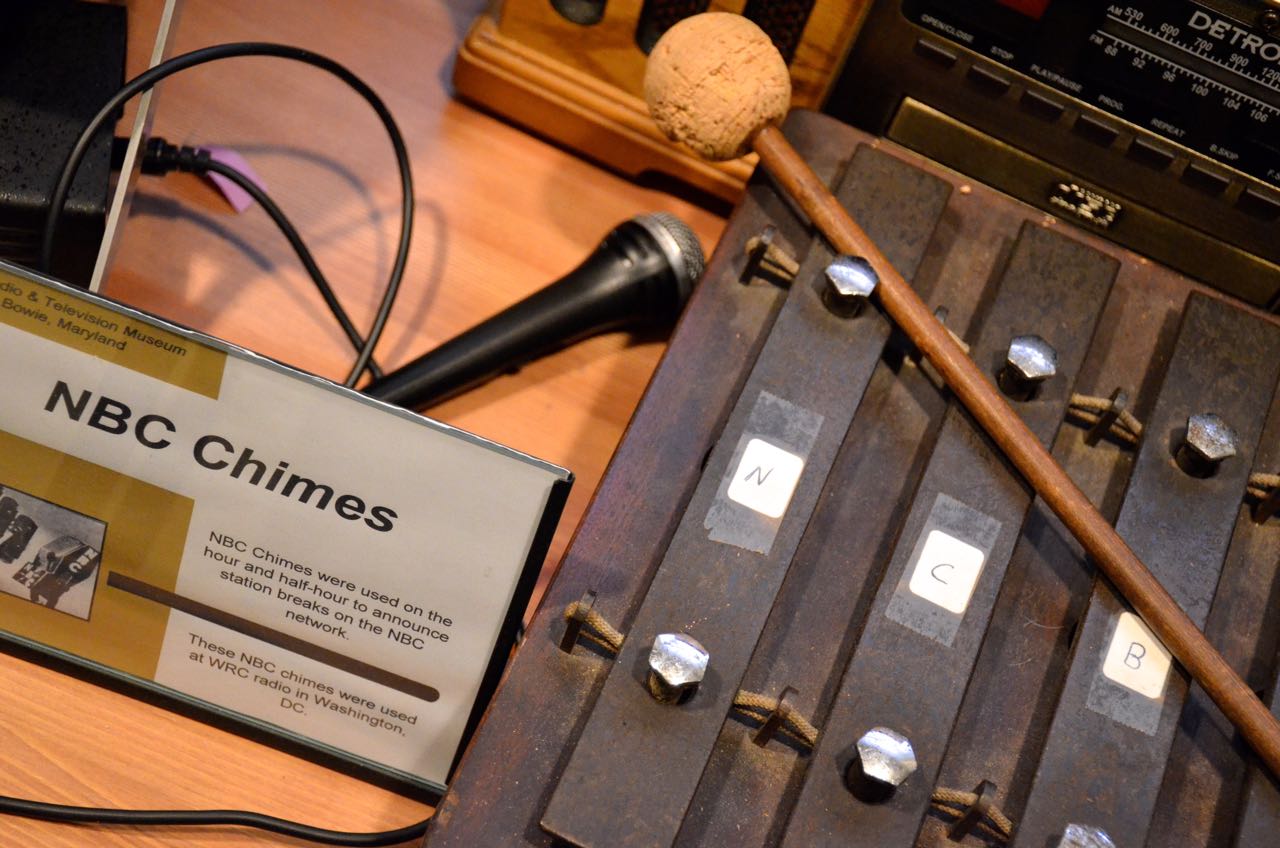
Original NBC Chimes. Photo taken at the NCRTV museum
Radio Waves: Stories Making Waves in the World of Radio
Welcome to the SWLing Post’s Radio Waves, a collection of links to interesting stories making waves in the world of radio. Enjoy!
Many thanks to SWLing Post contributors David Iurescia, Dan Van Hoy, and Tracy Wood for the following tips:
EWTN Global Catholic Television Network: Catholic News, TV, Radio | EWTN (EWTN Global Catholic Television Network)
IRONDALE, Ala. — EWTN Global Catholic Network announced today the end of its shortwave radio service, WEWN, after 34 years of operation. The decision, approved by EWTN’s Board of Governors, will take effect Oct. 31, 2026.
Launched on Dec. 28, 1992, WEWN was EWTN’s first radio service, offering Catholic programming to national and international listeners in geographic regions where access to other forms of media was often limited. It also served as a catalyst for EWTN’s expansion into international television operations beginning in 1995. Since then, EWTN’s 11 global television channels and numerous regional channels have reached audiences in more than 160 countries and territories. EWTN Radio has grown to become an extensive network with over 600 AM/FM stations worldwide as well as satellite and digital platforms.
’40 Watts From Nowhere’: How a Feisty Pirate Radio Station Stormed the Airwaves in 1990s Silver Lake With Help From the Red Hot Chili Peppers and More (Variety)
The 1990s were a very different time — especially in Silver Lake, California — once a fertile neighborhood of artists and musicians and now a pricey hot spot. Three decades ago, the indie music scene was flourishing with homegrown acts like Beck and Rilo Kiley, based around clubs like Spaceland and the Garage.
And for more than two heady years, music lovers within a mile or two of the Sunset Junction area could groove to the wildly eclectic sounds of KBLT, a pirate radio station that operated from 1995 to 1998.
When NBC Radio Began 100 Years Ago – Radio World (Radio World)
The first broadcast of the National Broadcasting Company was heard on Nov. 15, 1926. Author John Schneider tells how it came about.
In the early years of the 20th century, the infant technology of radio was envisioned as a method of point-to-point communications. The transmission of one-to-many (i.e., broadcasting) was not yet envisioned.
Worldwide, the British Marconi Company dominated the technology through its control of key patents. Its subsidiary, American Marconi, operated key relay stations in the U.S. and controlled most land and sea radio communications.
After World War I, the U.S. Navy and federal government worried that wireless communication was in the hands of a foreign-owned company. As a solution, the government essentially forced American Marconi to sell its U.S. assets and patents to General Electric.
Do you enjoy the SWLing Post?
Please consider supporting us via Patreon or our Coffee Fund!
Your support makes articles like this one possible. Thank you!