Shortwave listening and everything radio including reviews, broadcasting, ham radio, field operation, DXing, maker kits, travel, emergency gear, events, and more
November cyclone damage fuels Sri Lanka dengue surge, CGTN Radio, 11770 kHz
In general, when we think about climate change and its consequences, high temperatures, rainfall, and floods come to mind. However, a report released by CGTN radio on June 29 highlights a different aspect. According to Sri Lankan health authorities, the devastation caused by Cyclone Ditwah—which battered the island in November 2025—created conditions that fostered the proliferation of dengue-carrying mosquitoes, resulting in an outbreak of the disease.
Paraguay vs Germany: Reporter from Paraguayan Rádio Ñanduti comments on the public celebration after Paraguay’s victory over Germany: “The Guarani lion ate the German shepherd!”
Many thanks to SWLing Post contributor Carlos Latuff, who shares the following article. Carlos writes:
Panasonic Microcassette Recorder
To record my radio listening sessions, I usually use a Sony digital recorder, model ICD-PX240. However, last week I purchased another beauty—this time a Panasonic microcassette recorder, model RN-305, manufactured in Japan in 2000.
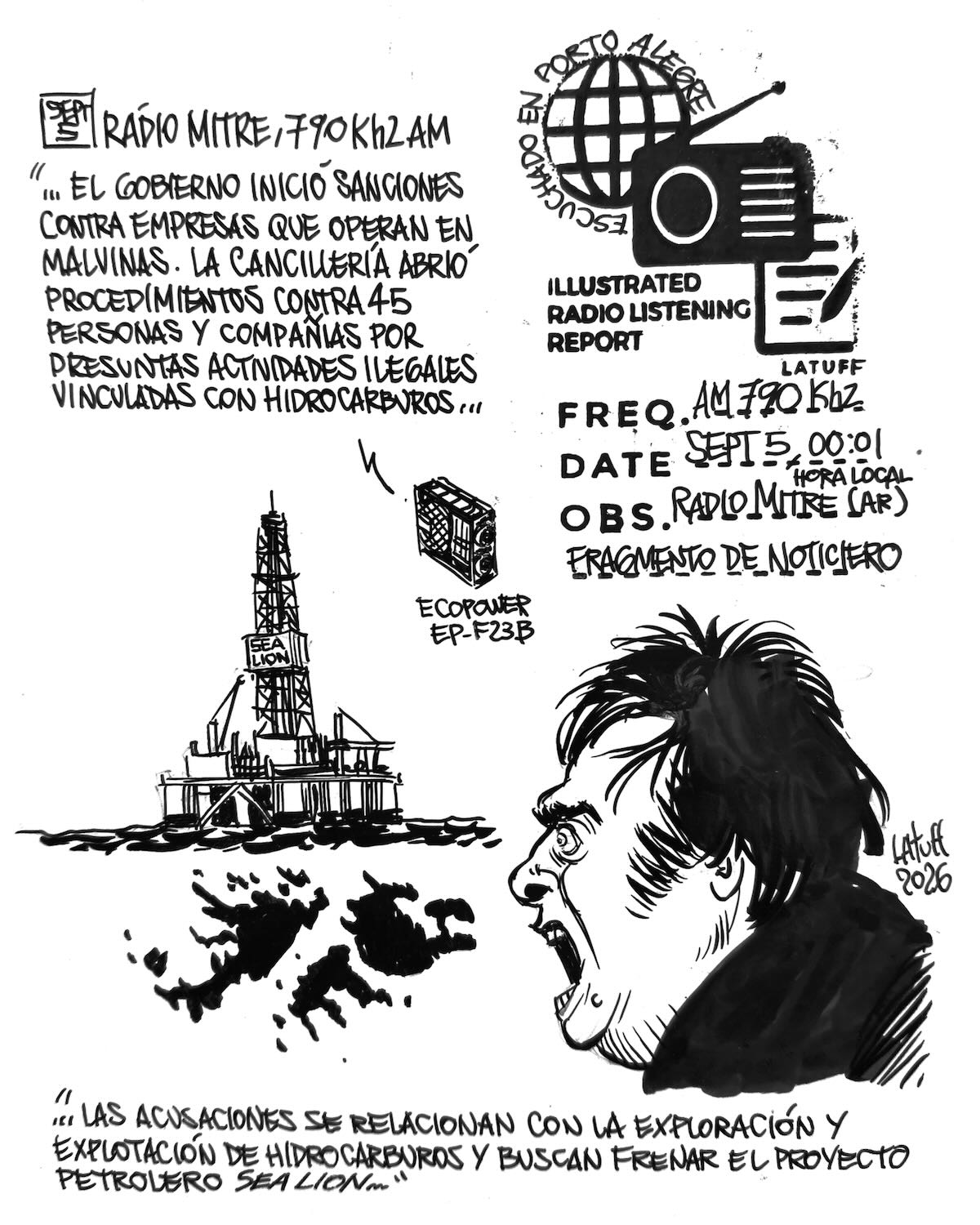
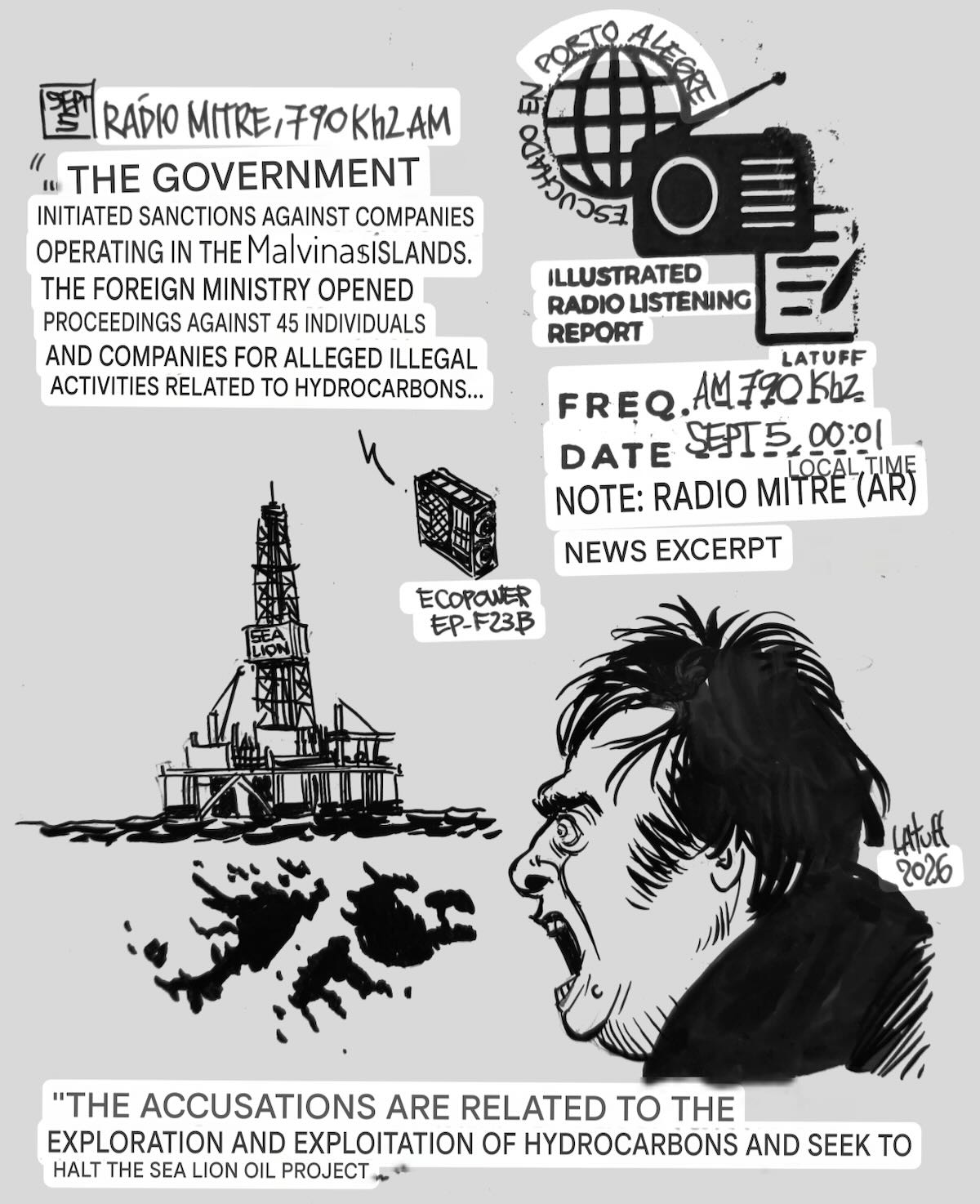
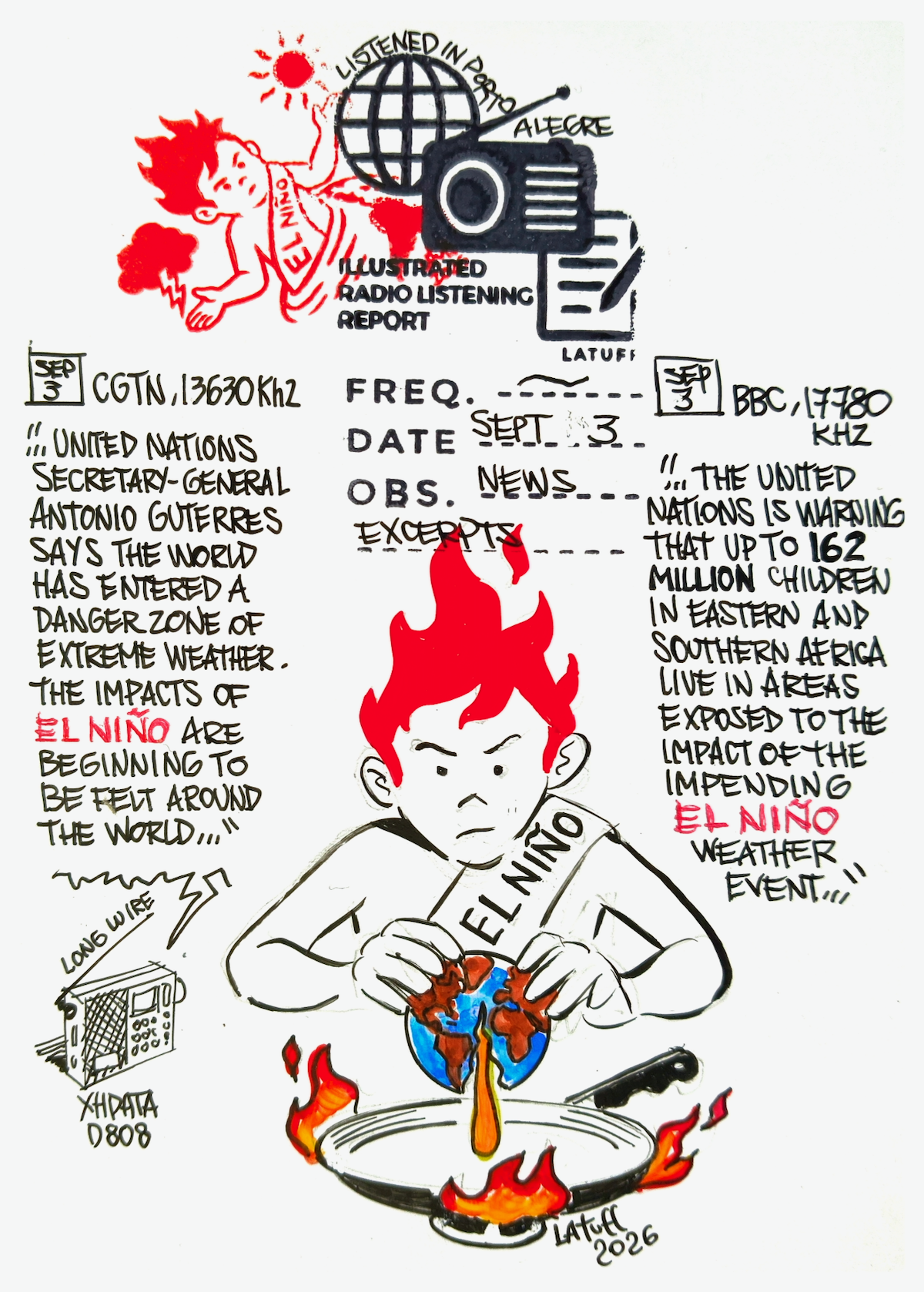
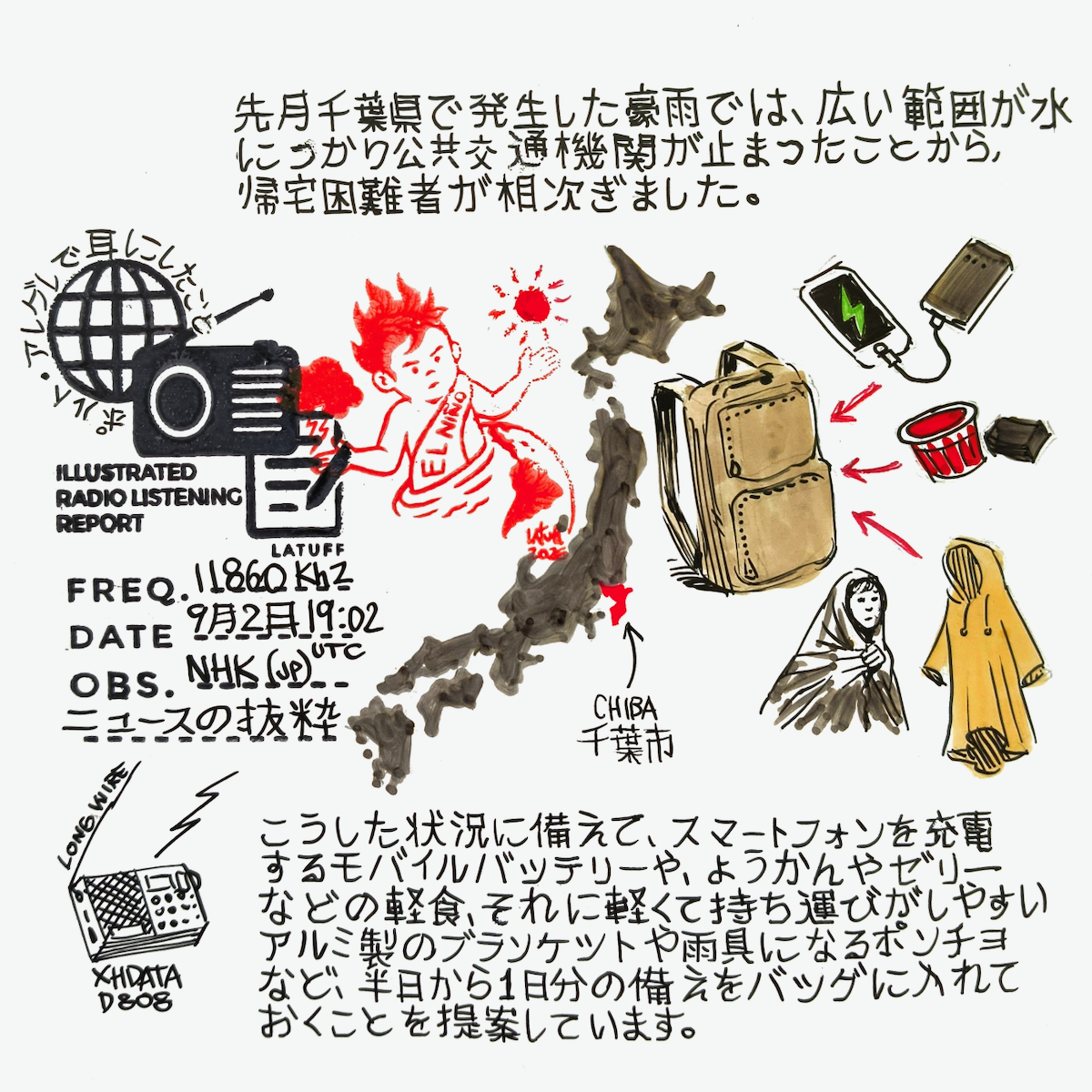
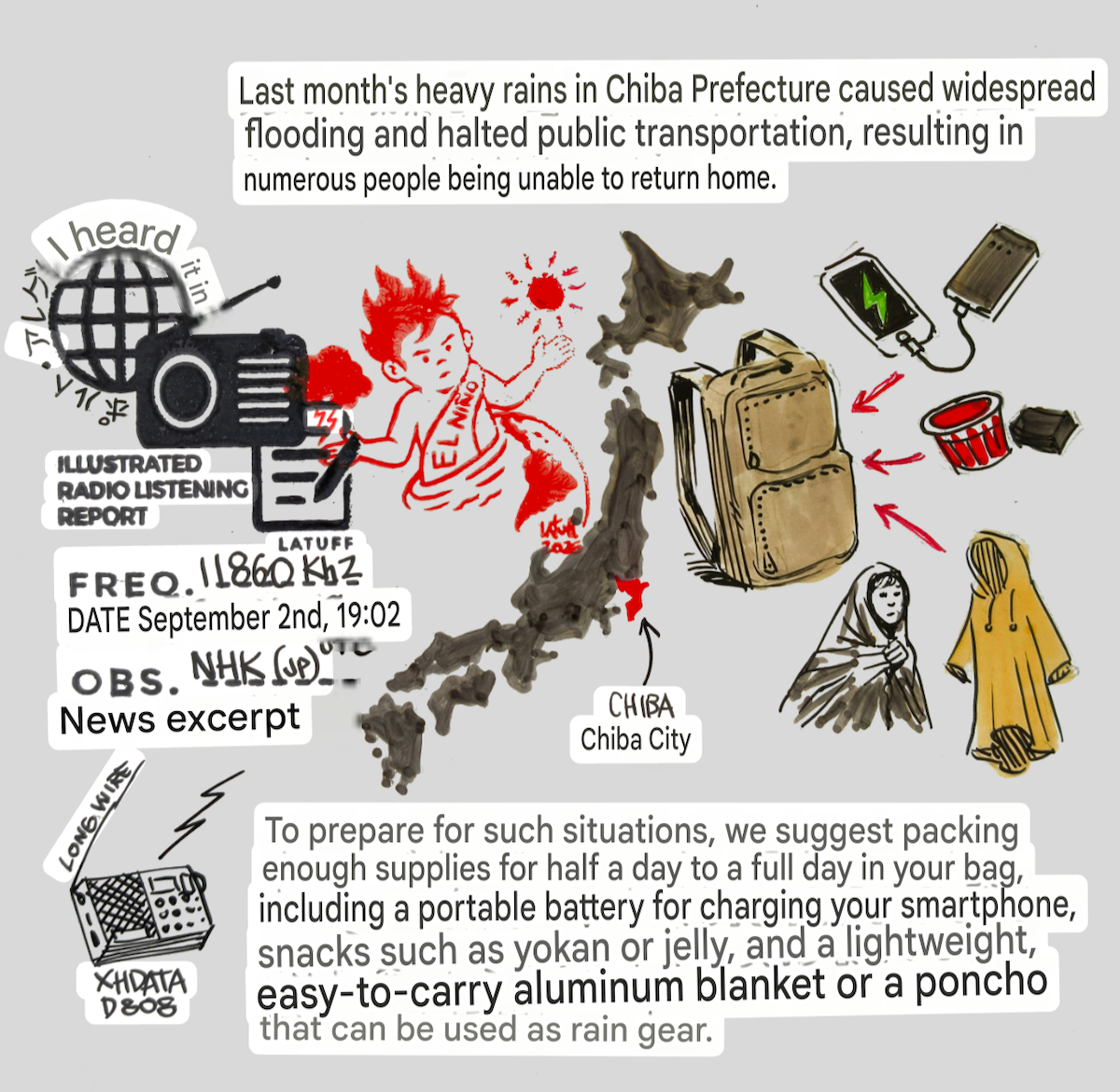
I decided to test it out, and here are the results. The listening sessions were conducted in Porto Alegre using XHDATA D808 and Ecopower EP-F23B receivers.
Earthquake in Venezuela, Spain and France offering rescue workers.
US Secretary of State assured Gulf allies the Strait of Hormuz will stay open as Iran threatens transit fees.
Former Israeli leaders threatened legal action over alleged Jewish terrorism in the occupied West Bank.
June 26, 2026
BBC, 15400 kHz (in English)
Earthquake in Venezuela, more than 900 people are now known to have died in two earthquakes. The U. N. says 50,000 people are missing.
The U.S. announced a framework to end fighting between Israel and Hezbollah in Lebanon.
John Bolton pleaded guilty to one charge of mishandling information.
A state of emergency was declared in Crimea.
Extreme heatwave in Europe, Germany recorded temperatures above 41°C on Friday, in France, festivals, street parties and Paris Pride were canceled, while alcohol sales were restricted in Paris, in the Netherlands, electric bus charging failures disrupted public transport.
Paris suspended flights to and from Kinshasa, D.R. Congo, after a passenger tested positive for Ebola.
Civil unrest in Tanzania.
D.R. Congo sued Rwanda at the International Court of Justice over alleged atrocities.
Earthquake in Venezuela: Full coverage.
Lebanon and Israel reached a U.S.-brokered deal for Israel’s withdrawal from southern Lebanon.
Radio Exterior de España, 17715 kHz (in Arabic)
Venezuela was struck by two earthquakes of magnitude 7.2 and 7.3 according to the U.S. Geological Survey on Wednesday. Collapsed buildings and several damaged structures were observed in the capital, Caracas. Acting President Delcy Rodriguez reported in an initial tally that the two earthquakes resulted in 32 deaths and 700 injuries. State of emergency was declared after the two earthquakes, which were followed by approximately 20 aftershocks. The earthquakes caused further damage, including building collapses and the closure of Simón Bolívar International Airport. The state of La Guaira was the most affected and was declared a disaster area, as explained by Acting President Delcy Rodriguez.
Vatican Radio, 11870 kHz (in English)
Africa News Panorama: Ebola outbreak in D.R. Congo, more that 1100 cases with 300 deaths.
Anti-immigrant rallies in South Africa.
Rescue workers are working in the rubble of a three-story building that collapsed in Nigeria.
Radio 2, 1230 kHz AM (in Spanish)
Venezuela increased to 920 the dead and there are at least 3360 injured in the latest reports of the Ministry of Health after the earthquakes of Wednesday. In addition to 50.000 people who remain missing.
Many thanks to SWLing Post contributor, Carlos Latuff, who writes
I recently purchased a Sony SRF-S84 radio, which, despite its diminutive size, has excellent sensitivity. From what I’ve researched, this model began production by the Japanese company in 2001 and was discontinued around 2010. Below are the radio’s specifications, taken from its instruction manual.
The radio is an analog AM/FM model with a small tuning dial that requires a deft touch. It operates on a single AAA battery (excellent battery life), has no built-in speaker, and features a stereo headphone output (P2). Despite its tiny internal ferrite antenna (approximately 3 cm long) and the typical oscillations of medium waves, I was able to receive stations from neighboring countries very well here in Porto Alegre, Brazil.
Here is some audio from this little marvel. I focused only on the medium waves. All listening sessions were conducted outdoors, at night, and without the aid of a MW loop antenna.
Audio 1
Radio 10, AM 710 kHz, Argentina, June 17, 22h30 (local time)
Audio 2
Radio Universo, AM 970 kHz, Paraguay, June 17, 22h33 (local time)
Audio 3
Radio Atlantica, AM 760 kHz, Argentina, June 17, 22h45 (local time)
Audio 4
Radio Super Rede Boa Vontade, AM 1300 kHz, Brazil, June 17, 23h43 (local time)
I found it strange to come across interference from a Chinese radio station on the BBC’s shortwave broadcast. For about a month, between April and May 2026, I was monitoring this special BBC radio service, transmitted from a station in Madagascar and aimed at Sudan and Gaza in Arabic. Aside from some technical and propagation issues, this was the first time I had encountered this kind of interference.
At first, I thought it was some sort of technical problem. The interference from the Chinese radio made it impossible to understand what was being said on the BBC broadcast. I tried again on other days, and the problem persisted. On May 25 at 17:00 UTC, I tuned into another BBC broadcast, this time transmitted from Ascension Island and aimed at West Africa in English, on the frequency 17780 kHz. To my surprise, the BBC broadcast was once again overpowered by the signal of a Chinese station — I couldn’t tell whether it was China National Radio or China Radio International (also known as CGTN Radio).
This monitoring was done on an Ecopower EP-F23B radio — a white-label model — with DSP technology and manual tuning. I wondered if it might be a problem with the device itself. So I used a digital Xhdata D808 radio, and when I tuned precisely to the frequency, I determined that the issue wasn’t a technical fault with my equipment, but rather deliberate interference with the BBC broadcast.
Faced with this situation, I started to believe this wasn’t a technical problem but an intentional act. I decided to investigate online, and it didn’t take long to find confirmation of my suspicions.
I found an article written in 2021 by two communication scholars, Yanqiu Zhang and Daniel Oloo Ong’ong’a, titled “Unveiling China’s digital diplomacy: A comparative analysis of CGTN Africa and BBC News Africa on Facebook.” It became clear to me that radio waves were once again the stage for geopolitical rivalry. The article focuses on the clash between the two broadcasters on social media, but clearly, this battle isn’t limited to the internet.
Continuing my research, I found news reports that illustrated this conflict well. On February 4, 2021, The Guardian reported: “Chinese state broadcaster loses UK licence after Ofcom ruling; Regulator concludes news network CGTN is ultimately controlled by Chinese Communist party.”
Well, well, ladies and gentlemen — we’re back to the good old days of the Cold War, aren’t we?
Following this arbitrary decision by the British government, the Chinese government quickly responded, as reported by the BBC itself on February 12 of that same year: “China bans BBC World News from broadcasting.”
Despite the differences between the BBC (a public service broadcaster) and CGTN (a state broadcaster), the fact is that both represent the interests of their respective nations.
In the 19th century, the British Empire — “on which the sun never set” — had colonies in Africa. The BBC, founded in 1922, was the voice of that empire. Indeed, in 1932 it created the Empire Service, the forerunner of the World Service. The British crown thus exerted its soft power through the microphones of the BBC and its hard power through the rifles and bayonets of its soldiers.
But the days of the redcoats are long gone. After much struggle and much bloodshed, African peoples expelled their British colonizers. However, the post-colonial BBC continues to defend the interests of the British state, even as it faces major financial difficulties. Due to budget cuts, the BBC has bet on digital platforms, cut radio programs in other languages, reduced its shortwave presence, and has been carrying out mass layoffs.
In contrast to the British broadcaster, Chinese CGTN has expanded its reach across the African continent, investing in digital platforms, but also in radio transmitters, programming in multiple languages, and the production of low-cost radios — with AM, FM, and shortwave, plus a flashlight and solar panel — taking into account that a large portion of Africa’s population has limited access to electricity and the internet.
A Chinese-made radio, with a solar panel, flashlight, AM, FM and shortwave bands, advertised by an electronics store in Nigeria for the equivalent of US$11.
Illustrated Radio Listening Report related to CGTN broadcast in Arabic. While the BBC announced in 2023 the end of its Arabic broadcasts, CGTN broadcasts in that language on 7 different frequencies daily.
The BBC’s soft power in Africa was built in the wake of Britain’s colonial past. CGTN, on the other hand, reflects the relationship China has consolidated with the African continent as its largest trading partner.
The BBC, like the United Kingdom, is no longer the empire it once was, struggling to maintain what little influence it has left with whatever budget remains. CGTN, however, is the portrait of a rising economic power — a China that builds its soft power the same way it built its economic leadership: with persistence and patience.
In January of this year, UK Prime Minister Keir Starmer visited the president of China Xi Jinping in an attempt to resolve differences between the two nations. Meanwhile, the shortwave battle between the CGTN and BBC continues. A clash between a declining power and an emerging one. This isn’t about chasing ratings. It’s geopolitics, played out on the radio waves, before the ears of the world.
In any case, these are conclusions I drew from the recent history of animosity between the United Kingdom and China, notably involving the BBC and CGTN. It’s possible the interference I detected is just technical problems, who knows? Perhaps a simple coincidence.