
Many thanks to SWLing Post contributor Paul Jamet, who writes:
 I read and enjoyed Robert Gulley’s post about the new XHDATA D-226 receiver.
As for me, I was contacted by XHDATA and received a receiver on September 2; I rushed to test it yesterday afternoon in a park in the town where I live—L’Isle-Adam, N.N.W. of Paris.
I agree with Robert Gulley K4PKM’s observations and conclusions.
I can provide a few recordings to demonstrate the capabilities of this new receiver.
The following recordings were made during listening tests conducted on September 2, 2026, in a park in L’Isle-Adam, along the banks of the Oise River. The recordings were made using my smartphone, so you may hear some wind noise at times.
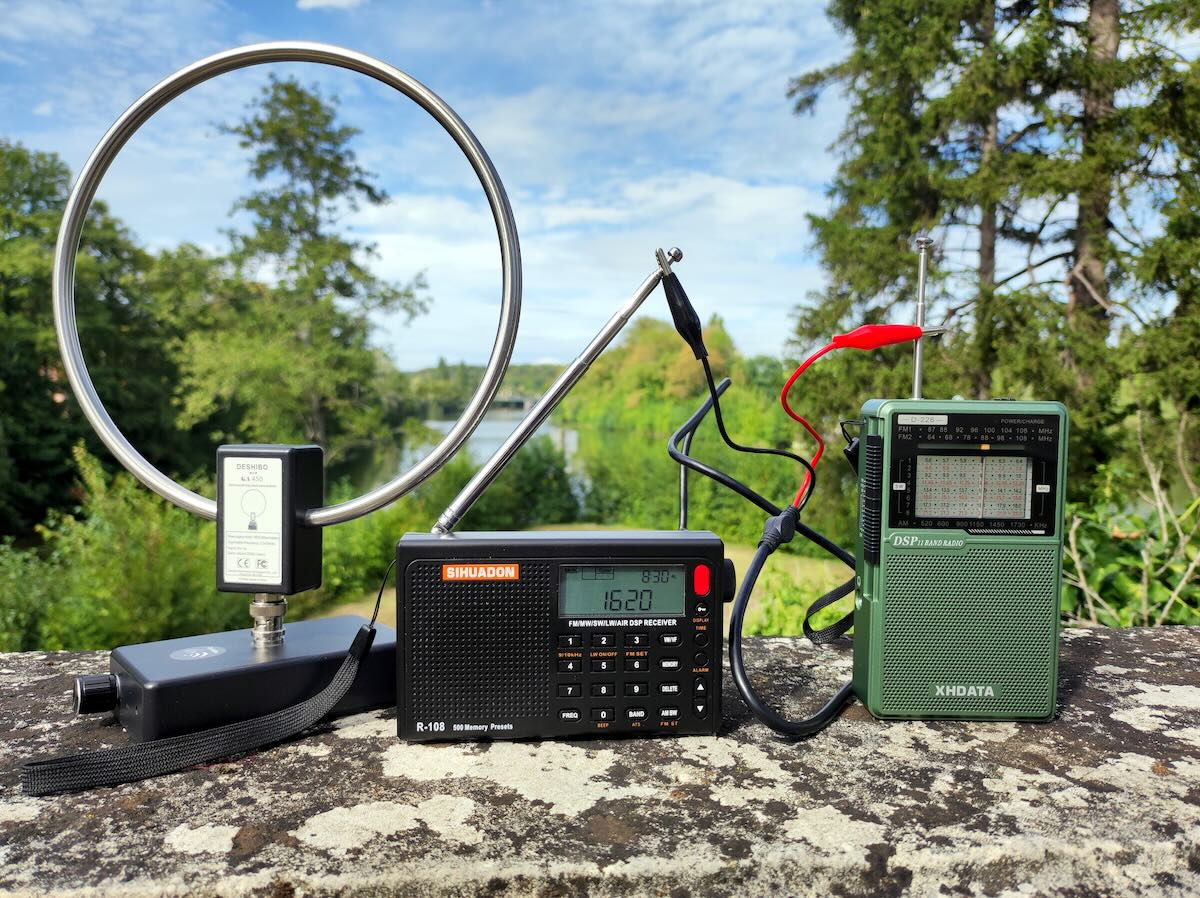
Voice of Korea – French Service, 15,245 kHz
14:27 UTC — Without additional antenna
Voice of Korea – Russian Service, 12,015 kHz
15:31 UTC — With Deshibo G-450 loop antenna
China Radio International – Chinese Service, 17,735 kHz
14:40 UTC — Without additional antenna
Radio Europe, 6,130 kHz
14:20 UTC — With Deshibo G-450 loop antenna
Radio Europe, 6,130 kHz
15:19 UTC — With Sony AN-71 wire antenna
Note: The authorized transmission power for Radio Europe in the Netherlands is 100 watts. It operates under a low-power medium-wave (LPAM) license, which limits its transmitter to 100 W (carrier wave power). As the crow flies, the transmitter is approximately 400 km away.
Voice of Korea vs. XHDATA R-108 – Russian Service, 12,015 kHz
15:41 UTC — Without additional antenna; first minute is the D-226, followed by the R-108
Two particularly interesting recordings
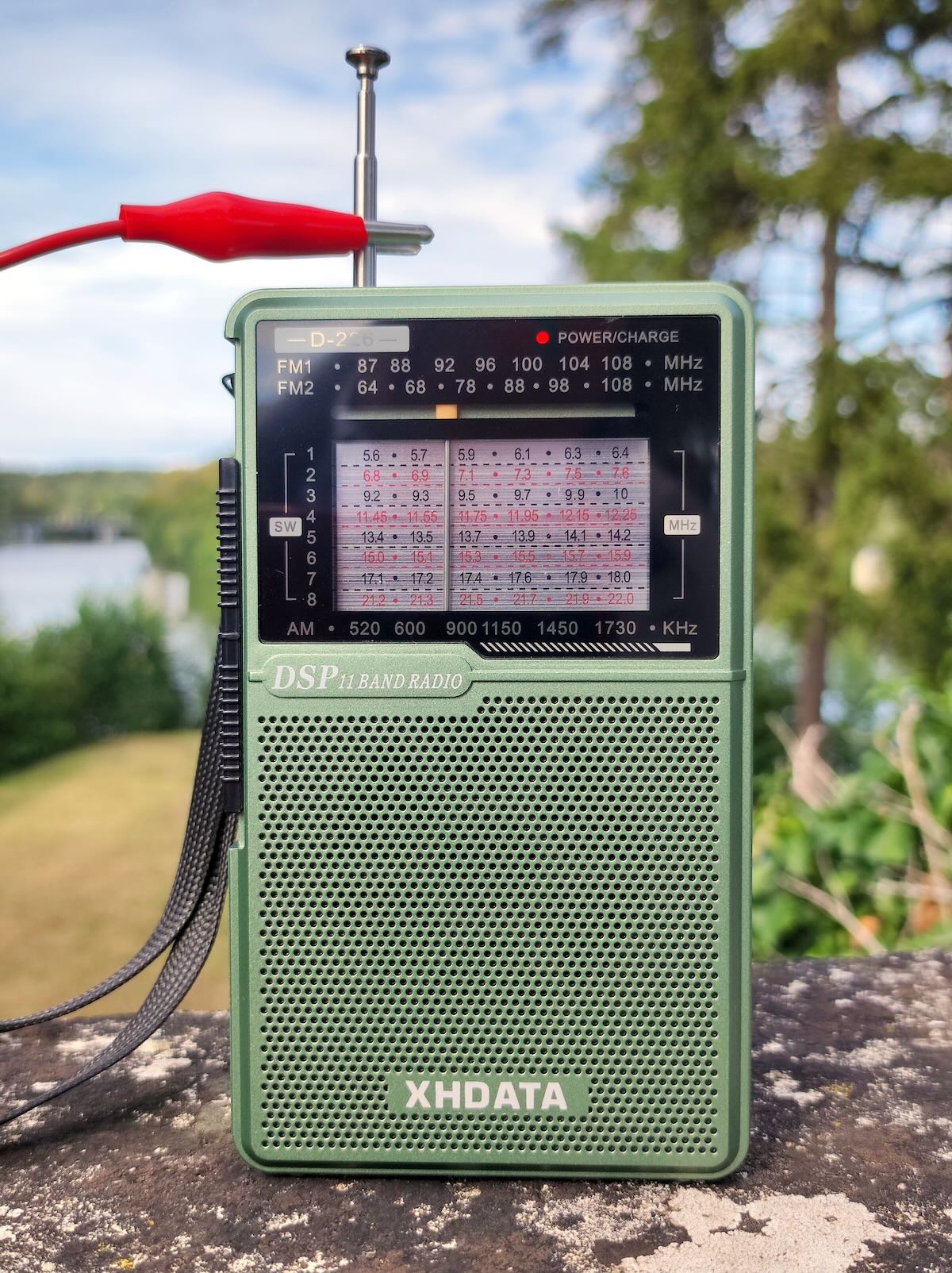
Two recordings are of particular interest:
- Radio Europe: This is a very low-power transmission (100 W), and reception is impossible without an antenna on both the D-226 and the R-108. The D-226 can pick up the weak signal using a small portable antenna.
- D-226 vs. R-108: This recording compares the D-226 and the R-108 using the Voice of Korea signal in Russian. The D-226 performs just as well as the R-108.
Best regards.
Paul JAMET