
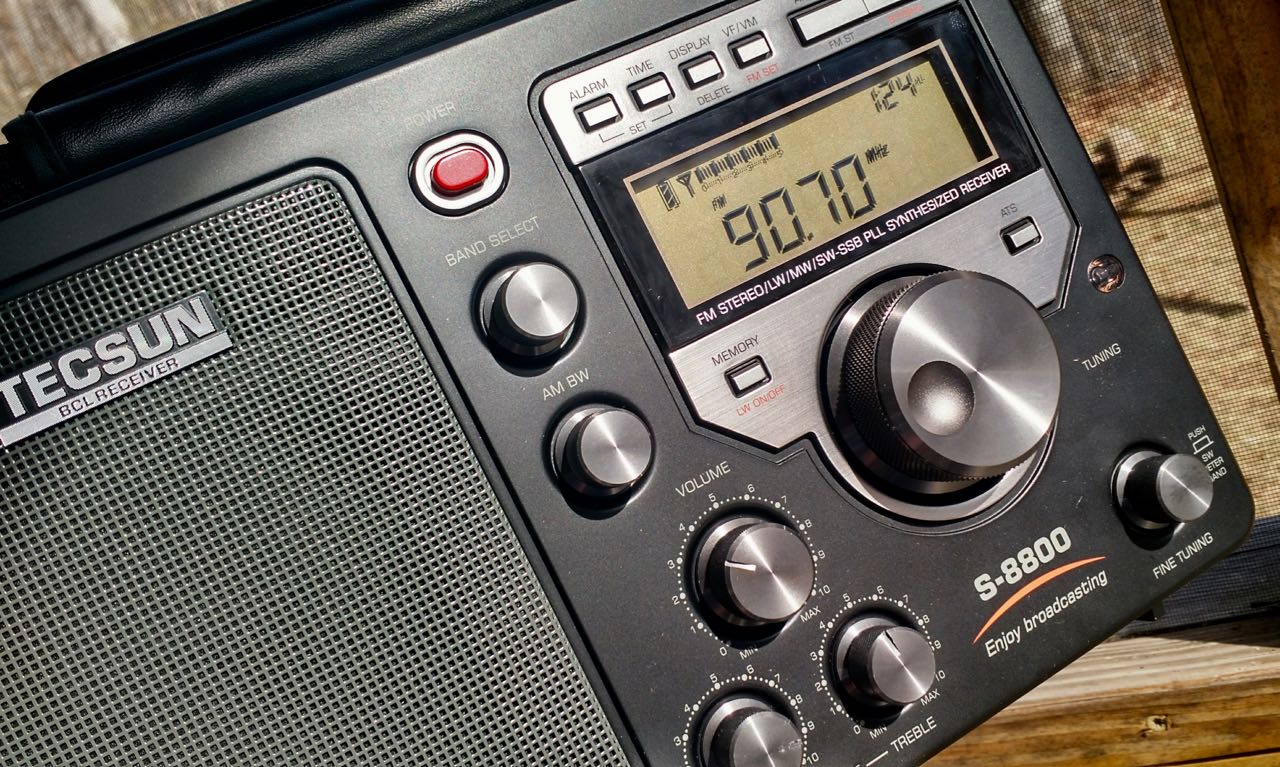
 Many thanks to SWLing Post contributor Richard Langley for sharing a recent CBC article that explores the real-world consequences of funding cuts to public broadcasting in the U.S.: Trump-era plan to cut U.S. public broadcasting could hit rural communities hard
While discussions around federal budgets become politicized, it’s important to step back and examine the tangible, local effects such changes will bring — especially in rural and underserved communities where over-the-air (OTA) public radio may be the only consistent, reliable information lifeline.
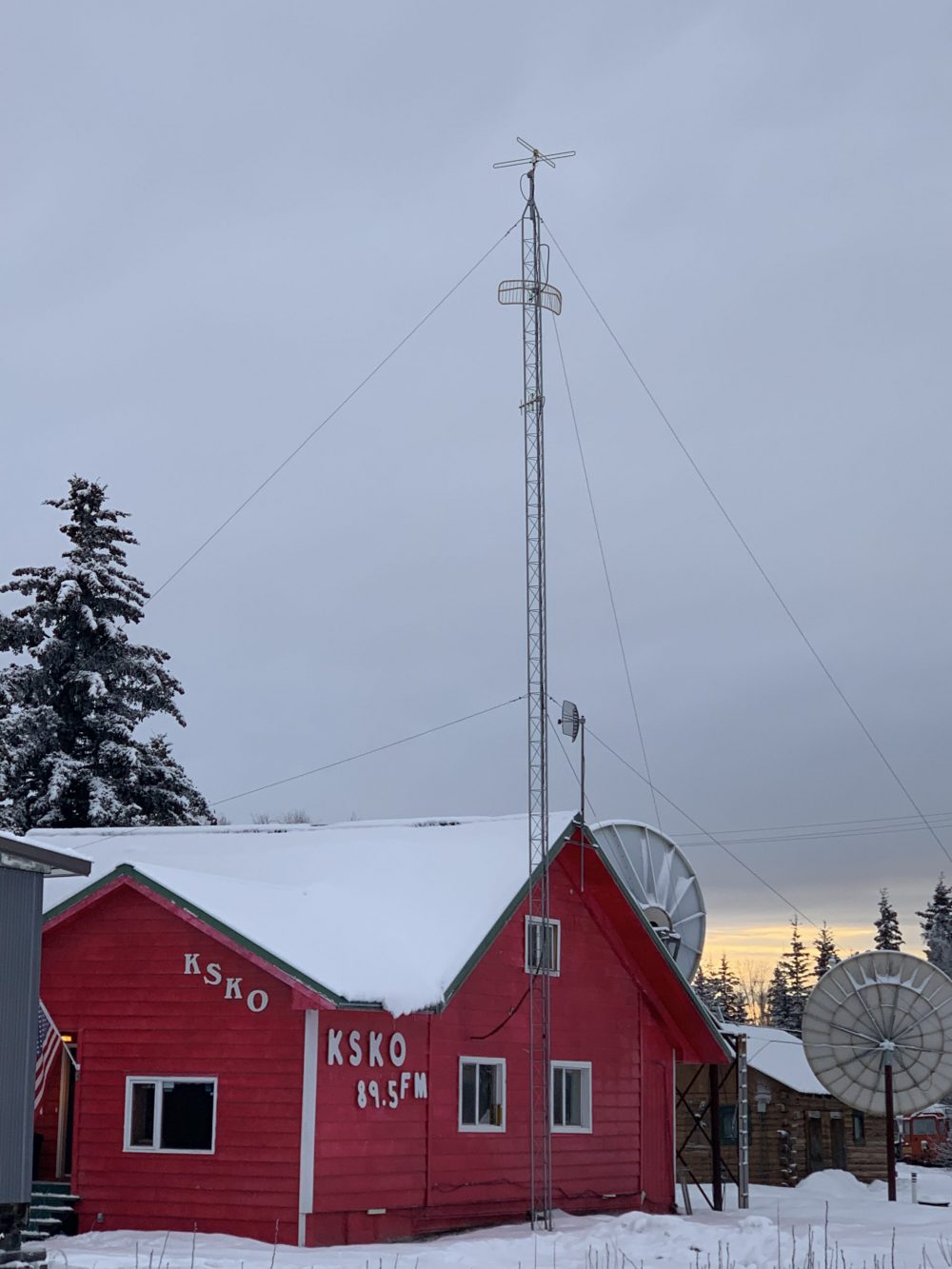 One such community is served by KSKO 89.5 FM, a public radio station based in McGrath, Alaska, and operated by longtime SWLing Post friend and contributor, Paul Walker. KSKO serves villages across the Upper and Middle Kuskokwim region, many of which have no access to high-speed internet or even cellular service. As KSKO’s press release puts it:
“The U.S. House of Representatives has approved a plan […] to rescind $9 billion in previously allocated federal funding. This includes a devastating $1.1 billion cut to the Corporation for Public Broadcasting (CPB), effectively eliminating all federal support for KSKO Radio.
As a result, Kuskokwim Public Broadcasting Corporation will begin scaling back operations in a way that allows us to remain on the air for as long as possible.”
This is not an isolated case. Here at SWLing Post HQ in Swannanoa, North Carolina, we’re still dealing with the aftermath of Hurricane Helene, which caused massive infrastructure disruption across the state. When systems failed in the aftermath of the storm (read one of my journal entries here), over-the-air radio stepped up.
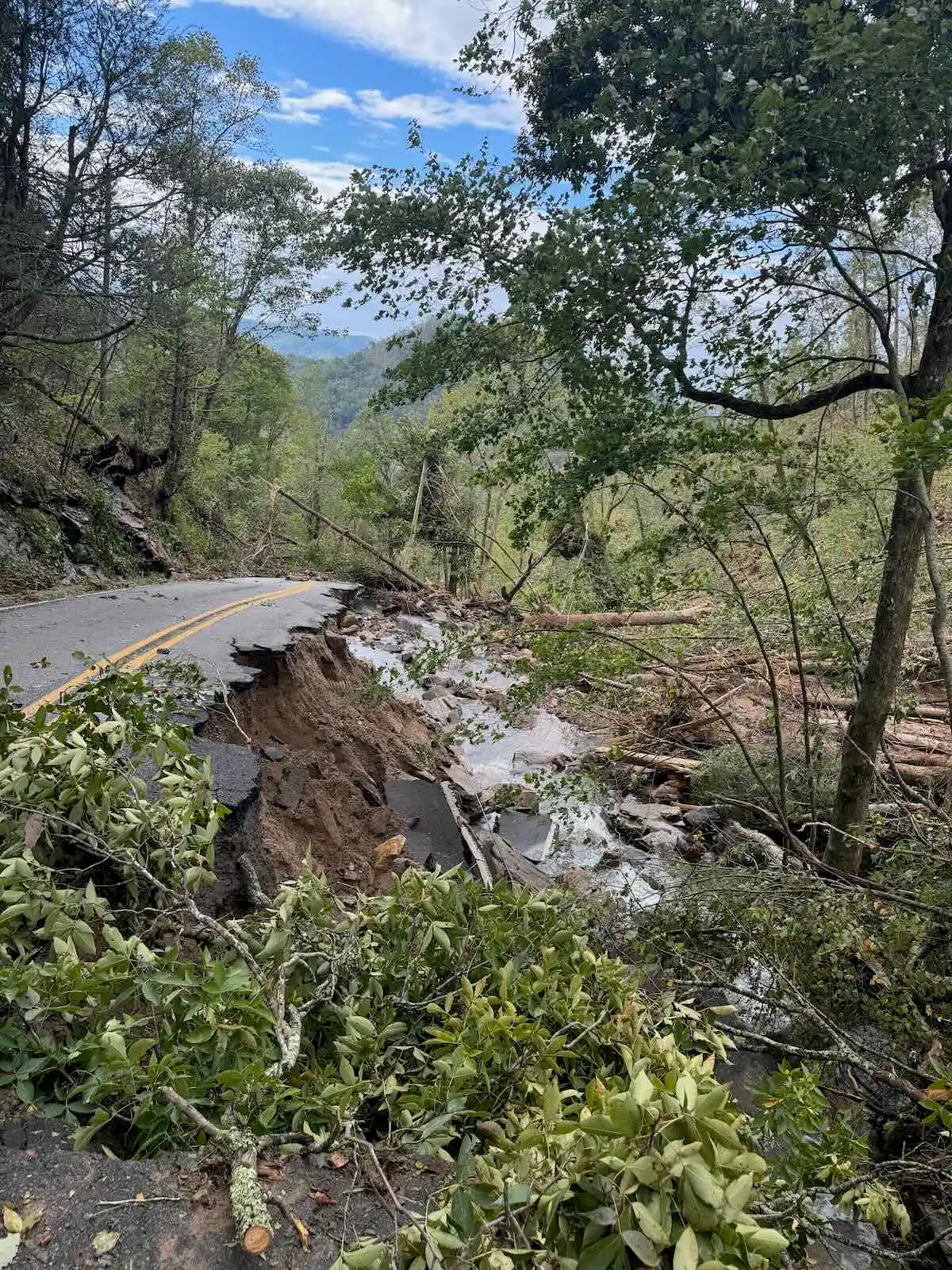
A photo of one of the many sections of our mountain road that was washed away in the aftermath of Hurricane Helene.
According to Ele Ellis, CEO of Blue Ridge Public Radio (BPR), (quoted in the CBC article):
“We hear stories upon stories of people telling us, ‘OK, well, we got a crank radio or we had a crank radio, and we knew you’d be on.’ […] Some would crank up the volume and put the radio on a mailbox, and neighbours would gather to listen… That’s what they had to do to get information that was going to help them live.”
Having grown up in rural western North Carolina myself, I can personally attest to how vital BPR is to so many remote communities. For some, it’s the only station they can receive. If CPB-funded stations like BPR and KSKO lose their transmitter sites due to budget cuts, that critical connection vanishes — not just news, but local announcements, weather alerts, and emergency communications.
Whether or not one agrees with the politics behind these decisions, there is a real-world human cost of eliminating public broadcasting support. While PBS and NPR will certainly survive, it’s the small rural member stations — the ones that reach into mountain hollows and villages across the tundra — that go silent.
We encourage readers to support their local stations (like KSKO and BPR) if they’re able, and to advocate for the preservation of public media access in remote communities.
Combined with recent, severe cuts to the National Weather Service (which has real-world impact), these public broadcasting reductions represent a dangerous erosion of the tools we depend on during times of crisis.
For rural America especially, it’s a recipe for turning natural disasters into human tragedies.
I tend to treat CBC viewpoints on American politics with the appropriate grain of salt. Everyone wants to complain about budget cuts to their own sacred cow, but NOBODY steps forward to say “I value this, and I’ll pay for it.”
I used to love listening to NPR and I sent in contributions. Then it morphed into a blatantly political propaganda outlet and it’s been fifteen years since I turned it off.
To paraphrase Uri Berliner, they were “hoist by their own petard” . I won’t miss them.
As someone from Australia who follows US news and politics fairly closely (understatement, in truth), I’ve actually found NPR’s reporting to be more balanced and well-sourced than most. Of course, no outlet is perfect—and NPR has certainly evolved over time—but I still see them producing thoughtful, public-service journalism that digs deeper than the headlines. I feel their international coverage, investigative work, and commitment to local reporting through member stations really stand out in today’s media landscape.
That said, I respect that your experience with NPR led you in a different direction.
Out of curiosity, I’d genuinely appreciate hearing which US-based news outlets you believe are currently doing solid, unbiased reporting.
Well, this appears to be a hot button issue. I’m pretty sure we can all agree that the dissemination of important or potentially emergency information is important.
I started listening to all things considered in 1970 while I lived in a cheap apartment and barley had a pot to piss in. Over the years and up until the turn of the century we enjoyed the unbiased programming on NPR as well as National Public Television. Then sometime in the early 2000s, it probably coincided with Obama being elected, NPR and the CPB started to no longer be unbiased. You might not have noticed this if you were/are a democrat, but it is hard reality. Ever since 2016 IMO the CPB has become a far-left broadcaster who espouses political and moral behavior that is not in keeping with the majority of Americans, as is evident by President Trump being elected by the popular vote.
Again, information of many kinds needs to be available to as many people as possible 24/7 365. BUT, it is NOT in the interest of tax paying Americans to see our tax dollars being used to broadcast biased information that the majority of us do not agree with. If CPB was still balanced and un-biased this may not have been necessary. If a broadcaster wants to support a particular political ideology on their own dime, I have no problem with that, but not on the tax payers dollars.
In the aftermath of Hurricane Katrina, a single volunteer-run low-power FM station, WQRZ-LP, did a far better job of serving the hard-hit coastal MS community than any of the NPR stations in MS or LA. A more effective solution than continuing Public Radio funding would be to open up LP-FM licensing in under-served regions. The current license application windows are capricious at best, but it is closer to the truth to simply call them prohibitive. Additionally, commercial LP-FM stations should be a new category in these rural and small town areas. Where I currently live in NW FL, 80% of the FM spectrum is empty. Small commercial stations could take up the slack in these areas – if only the FCC would permit them.
Another problem with Public Broadcasting as a news source is that well over half of the non-urban population simply will not tune in to it. One minute, it’s news; the next, it’s sliding into a thinly disguised political editorial that the majority of a rural audience deeply disagrees with. The content model doesn’t work here.
No, the solution is not more centralized public subsidy of a system that is already failing the majority of citizens. That is the way of say, Cuba. The solution is to open up low-power licensing in these under-served areas, and let diverse viewpoints, innovation, and the market provide many solutions so that everyone can be reached in emergencies. That is the way of liberty, and not coincidentally, the way that will actually get the job done in emergencies.
Thank you for your comment, Rob! I agree—LP-FM stations can serve their communities incredibly well, especially during disasters if their station is robust enough to stay on the air without grid power. WQRZ-LP after Hurricane Katrina is a great example of just how vital hyper-local coverage can be when larger systems fail.
But the real hurdle for LP-FM—and public radio alike—isn’t licensing (though that part’s not easy at present); it’s sustainable funding. In rural and remote communities, there’s often little to no advertising base to support ongoing operations. Even full-power commercial stations in more populated areas are struggling to stay afloat as ad revenue declines.
KSKO in McGrath, Alaska, is a great case in point. It’s a tiny station that rebroadcasts across vast, roadless communities—villages that rely on KSKO not just for entertainment, but for emergency alerts and essential local information. They stay on the air thanks to CPB funding. Without that support, dozens of communities will be cut off from their only consistent source of radio news and emergency communication. They’re looking into ways that the community can keep it afloat for a while longer, but reality is, there’s no ad base.
Opening more LP-FM licenses in underserved areas is a great idea, but it won’t solve the core issue. These stations still need a viable funding structure or they risk the same fate as under-resourced public radio outlets.
The reality is that public broadcasting is often the only non-commercial source of news, weather alerts, and cultural programming in these areas. It’s not perfect, but it is community-focused. Farmers, for example, frequently rely on their local NPR affiliate for crop reports and emergency weather updates because sometimes, they have little else.
It’s not an either/or issue. LP-FM, public radio, and commercial stations each serve important roles. But in places where the market fails—where no commercial outlet can survive—public support is the only way to keep these lifeline services operating. Sometimes we get so caught up in red versus blue that we forget we’re tossing out resources that serve the entire community.
If NPR was so worried about the local stations, I am sure that they could have submitted a plan that indicates how they would alter programming to bring them in line. Instead NPR just wants to do what they want to do, and have Uncle Sam foot the bill. That kind of attitude doesn’t work very well in the commercial workplace, so why should they be any different. NPR’s bull headedness is what is killing the local stations.
Thanks for your comment, Tom. It’s important to note that NPR doesn’t own or operate local stations. Most are independently run—often by nonprofits or universities—and NPR is just one of many content providers they license programming from.
The current funding cuts are aimed at the Corporation for Public Broadcasting (CPB), which helps small and rural stations stay on the air, especially where there’s no commercial market to support them. These aren’t bloated budgets—they cover basics like transmitters, staff, and emergency broadcasts.
Stations choose their own programming–in fact, I imagine some of the stations that will shut down have little to no NPR affiliation. If a station wants local news, classical music, or farming reports, that’s entirely their call. NPR isn’t forcing a national agenda—they’re offering content that stations may or may not use.
Defunding this system doesn’t just hurt NPR—it threatens the survival of trusted local outlets that serve communities commercial media often ignores. Public broadcasting isn’t about turning a profit; it’s about ensuring everyone—regardless of location—has access to news, education, and emergency information.
” owned, by …universities………..”
This is one of my major beefs with NPR. They have totally usurped control of college radio stations and misused their licenses to build their network. College stations are provided favorable license consideration so that college students can operate and listen to things of interest to college kids. The intent was NOT to provide NPR the ability to dominate the the college radio spectrum.
We have two examples locally. In one case a major university operates NPR almost 24/7. All the licensing and infrastructure is paid for by the university. The other major university station is…well run by college kids. There’s all sorts of strange stuff to listen to. While it’s no longer on, the “Acapella Hour ” was strange and interesting, as were other niche programming offered by… STUDENTS for STUDENTS, as the FCC envisioned.
NPR double dips by monopolizing a taxpayer funded radio infrastructure (provided via the universities) and offers the students very little in return.
They had this figured out.
While it’s easy to say stations should only exist if they’re self-supporting, that model simply doesn’t work in many rural or economically stressed communities, where public radio is often the only consistent source of local news, emergency alerts, and weather updates. Public funding exists specifically to fill those gaps where private industry fails.
NOAA Weather Radio may technically cover most of the lower 48, but that doesn’t mean everyone can reliably receive it—especially in mountainous areas or places without infrastructure. Public radio stations often rebroadcast NOAA alerts and add vital local context, which can be a lifeline in emergencies.
Calling NPR and PBS “liberal speak-easies” ignores the fact that they serve all Americans, regardless of political affiliation. And if these services were as politically persuasive as some claim, wouldn’t all those rural communities with NPR and PBS access be voting blue? In reality, they’re predominantly red areas, and many farmers and rural residents rely on public broadcasting because, quite often, they have little else.
Taxpayer support for public media and NOAA is not waste—it’s an investment in equity, safety, and access to information, especially in the places most often overlooked by profit-driven media.
Radio stations will operate if they can be self-supporting. Weather radio in the VHF band are covering the entire lower 48 states. Alaska had shortwave coverage in the ate 40’s that was effective for business, private and warning. I am confident that NOAA has a station in most of the populated areas. PBS and NPR are liberal speak-easies that deserve no tax funded revenues for any reason.