
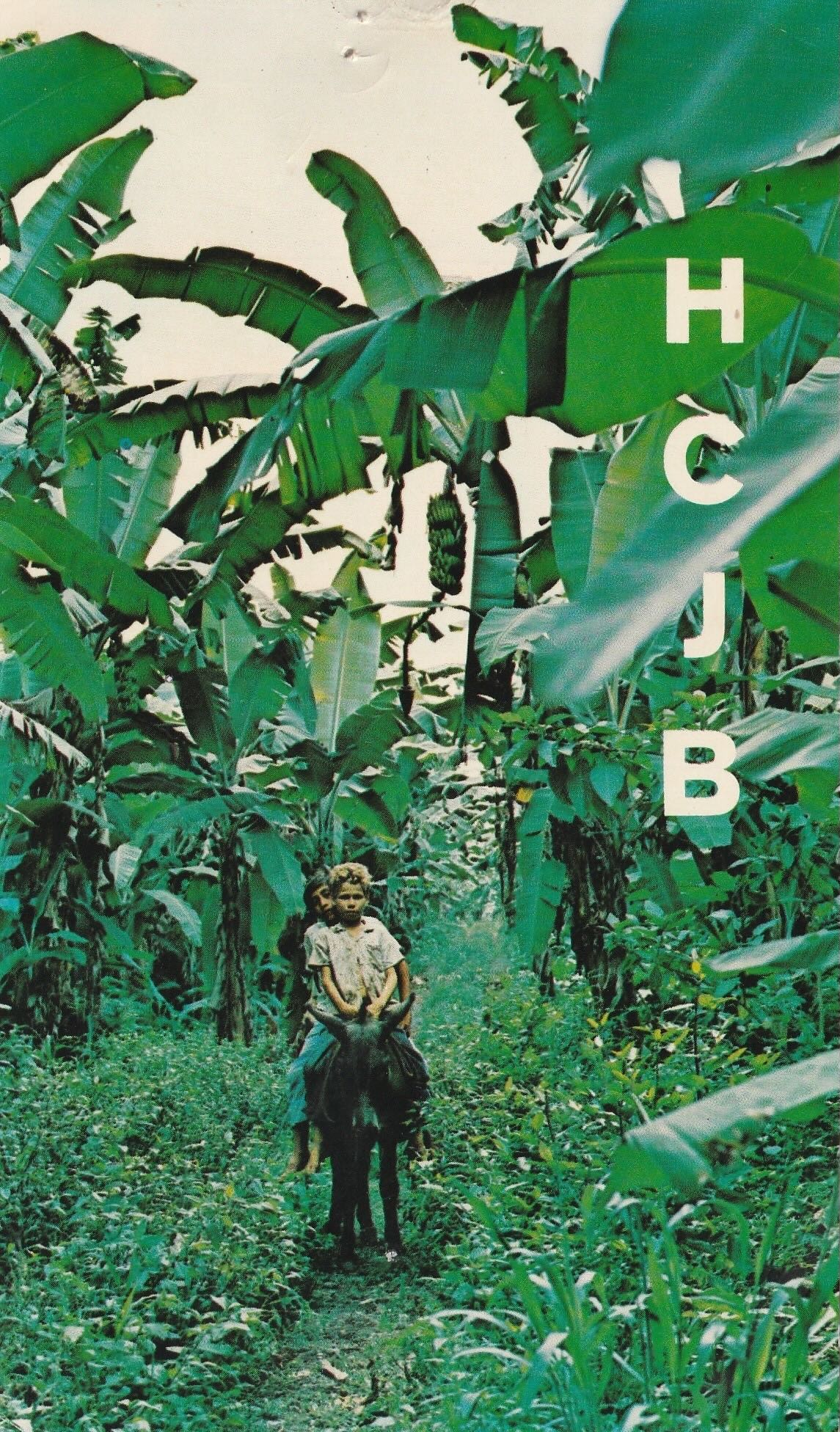
 Many thanks to SWLing Post contributor, Dan Greenall, who writes:
In the 1970s, the powerful signal from radio station HCJB, the Voice of the Andes, in Quito, Ecuador, could be heard with station identifications (similar to this one circa 1971) being given between programs.
I am led to believe that they were made by the late Bob Beukema (1928-2001), since his resonant radio voice was often referred to as the “Voice of the Andes”. My listening post at the time was Ancaster, Ontario, Canada.
Today, the station can still be heard broadcasting from Ecuador, albeit with much lower power, perhaps 10 kW at the most, and a much simpler antenna arrangement.
The accompanying recording was made July 30, 2025 on 6050 kHz around 0200 hours UTC using a Kiwi SDR located in Lima, Peru. Even though programming is only in Spanish and indigenous languages, some of that wonderful Andean music can still be found here.
73
Dan Greenall, Ontario, Canada
I didn’t know HCJB still broadcast from Ecuador on shortwave–I thought it was only Germany now. So we currently have one Ecuadorean, one Bolivian, and three-or-four Peruvians on shortwave (depending on Radio Cultural Amauta’s mood), down a good 99% from the 1960s-1980s peak.
I lived in New Zealand in 1960. I was 15 years of age and interested in SW radio. I also had built a simple crystal set and disconnected the earth lead whilst listening one day. To my amazement, I received HCJB very clearly indeed. I often listened to your station when the set was configured like this!
Do I hold the record for receiving your station over such a distance on a crystal set? Have you any idea how this may have happened?
I will find your comments interesting despite this happening many years ago.
My very first QSL card in 1977 was from HCJB listening on a borrowed Hammarlund S38-D. The card I still have. The radio eventually had to go back.
Oops! Hallicrafters S38-D.
I was just a grade school kid that tuned the Hammarlund HQ-110 in my older brother’s HAM Shack to various stations, but the only one I really remember was HCJB. Always a very strong & listenable signal !
I really enjoy Andean music and I’m sure it must have been HCJB that introduced me to it. I used to listen on my Hallicrafters S-40A. It was a bit over 20 years ago that we were attending a fair in Idaho and as we waked around I heard the unmistakable sound, and exclaimed to my wife, “Andean music!”. She had no idea what I was talking about, and thought I had said “Indian music.” I followed the sound of the music and found the group Atahualpa Manta performing. I bought one of their CDs and I now have another of their albums in my Google Play Music library.
Oops, I mean YouTube Music library.
I remember that HCJB experimented with some SSB teat broadcasts at one stage. I think with a much reduced carrier , but you needed a very stable receiver to to tune in properly , otherwise the audio would sound strange. With modern stable digital receiver the system would work . The experimental HCJB transmissions would only require a fraction of electrical power compared to ordinary full AM transmission.
I often wondered why stereo AM never was tried with upper and lower sidebands for left and right audio channels , and with reduced carrier . I am sure that with modern technology it would be simpler that all the complex AM stereo systems that have been tried.
Des Walsh EI5CD
Excelente valor documental. Estos materiales me reconfortan el alma.
Saludos,
Gabriel CX7BI – CX0001