
 By Jock Elliott, KB2GOM
Rob, W4ZNG, endured three weeks without electricity on the Mississippi Gulf Coast as a result of Hurricane Katrina.
When he and I spoke about his experience (and what any one of us might want in our “fertilizer hits the fan” radio kit), he mentioned that during Katrina, all of the local broadcasters were wiped out. There was a local low-power FM broadcaster who got permission to increase power to 1,000 watts and was broadcasting where to get food and water. There was a New Orleans AM station that was on the air, but all of its coverage was “New Orleans-centric.” After a few days, some local FM broadcasters, working together, cobbled together a station that they put on the air and began broadcasting news. Rob also began DXing AM stations at night to get additional news.
Hold that thought for a moment.
A few weeks ago, Andy, W2SRA, pops up on the Radio Monitoring Net (which I run on Tuesday nights) with a list of “Rolling News” medium wave stations that can be heard at least some of the time from my location in the Capital District of New York State. Rolling news stations broadcast news ‘round the clock.
The list includes:
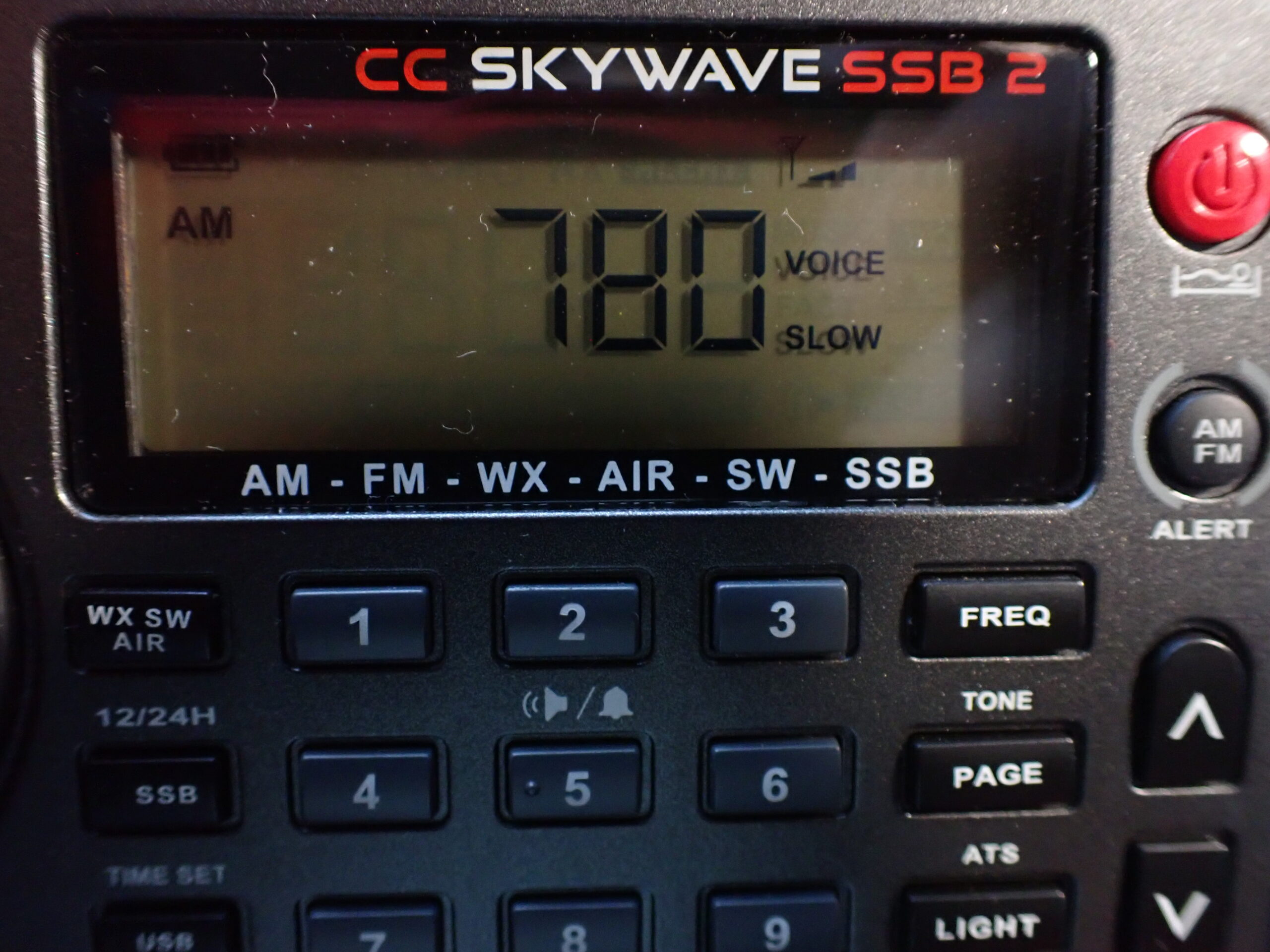
- 780, WBM, Chicago, IL
- 1010, WINS, New York City
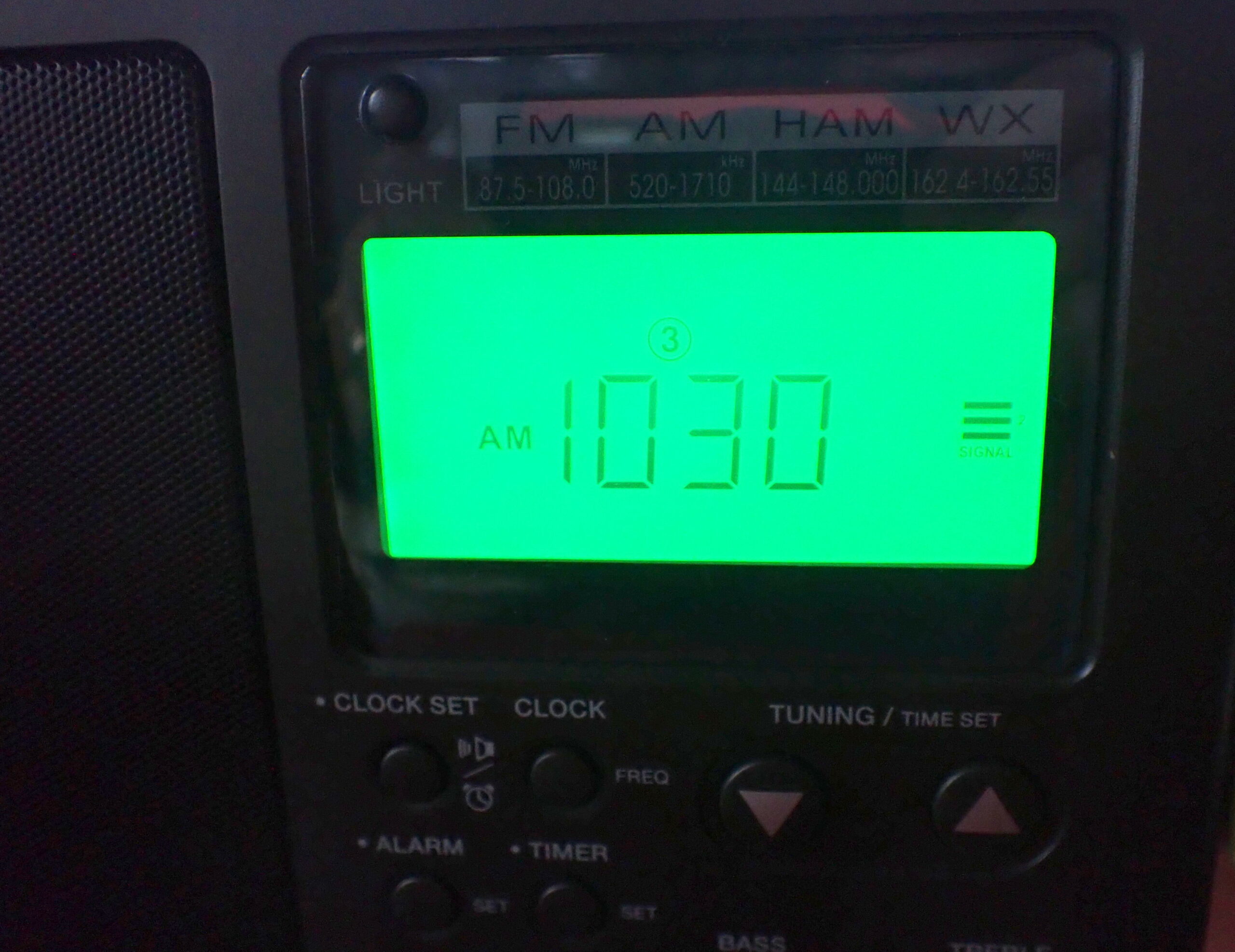
- 1030, WBZ, Boston, MA
- 1060, KYW, Philadelphia, PA
- 1090, WBAL, Baltimore, MD
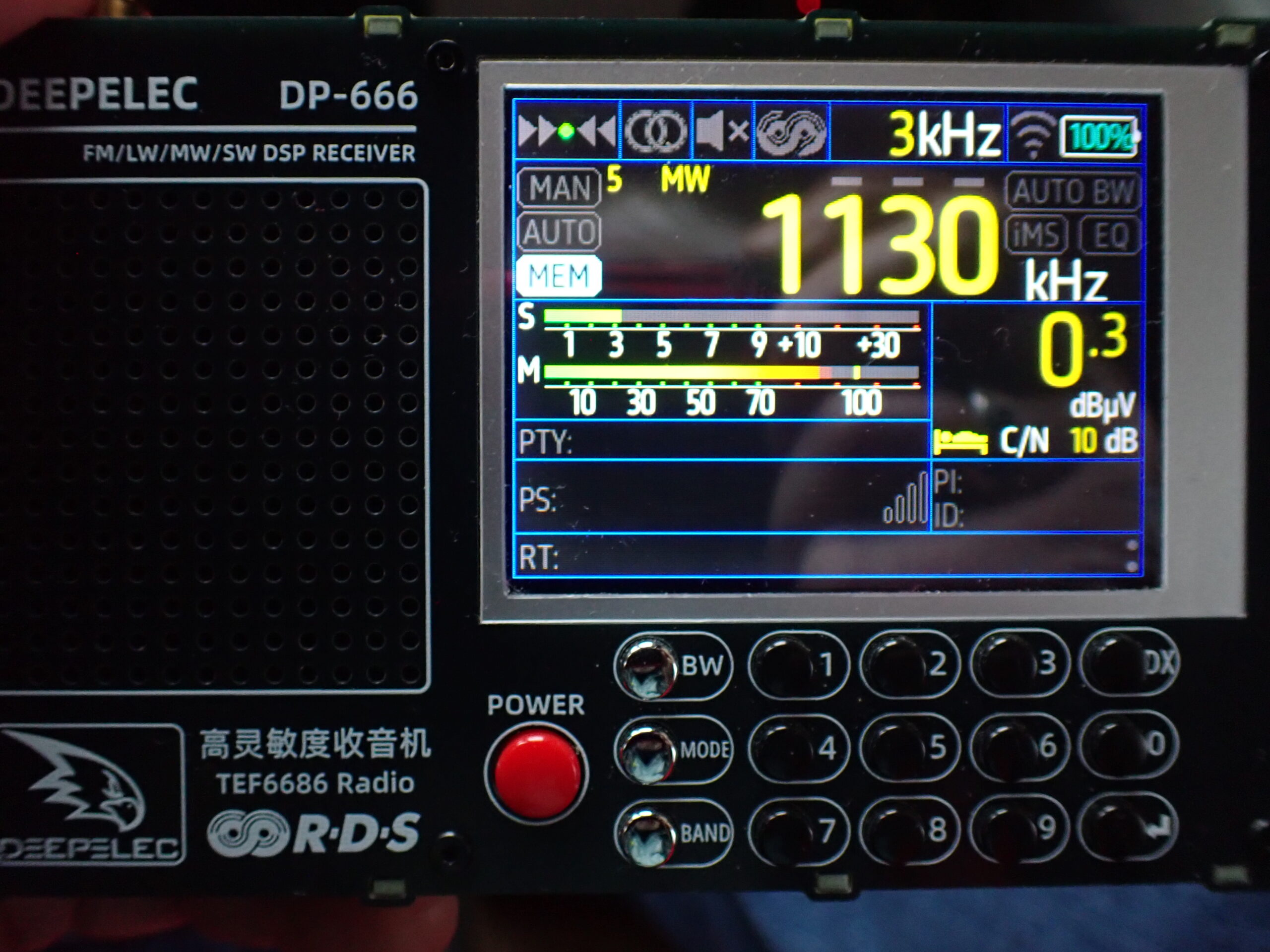
- 1130, WBBR, New York City
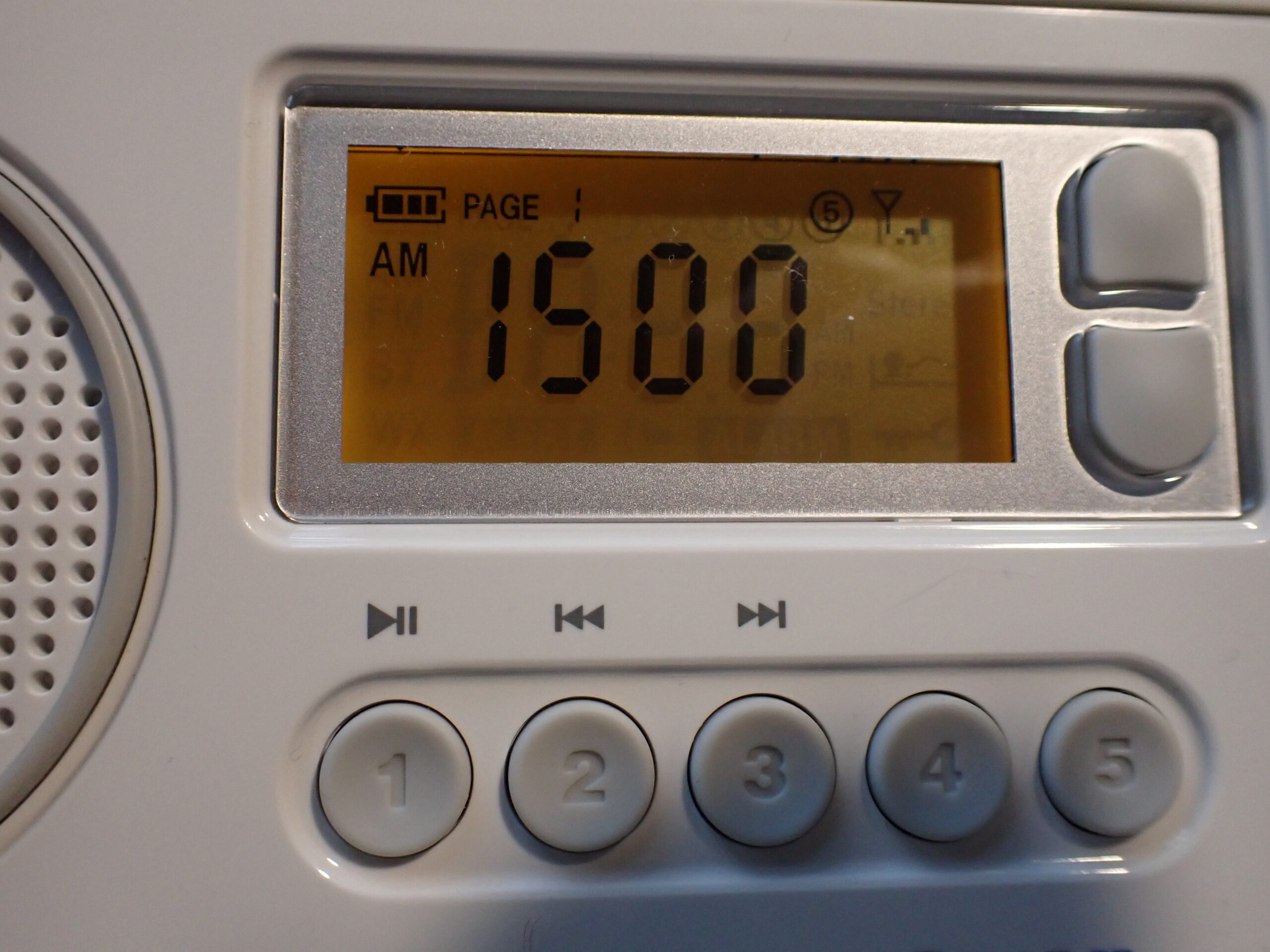
- 1500, WFED, Washington, DC
When I saw that list, I thought “This is a pretty good resource.”
Then a day ago, something clicked, the lightbulb went on, and I realized: “This is exactly the list of stations that I would want if I were in the same situation as Rob after Katrina, where my local stations were dark, and I wanted to know what was going on! I named the list: the News Cruiser.
So, in the predawn hours, I decided to put the News Cruiser list to the test. I plugged the frequencies into several of my radios, and here is what I found. With the CCrane Skywave SSB 2, the signals ranged from copyable with noise to marginal to uncopyable, depending on the station. With the CCrane CCRadio SolarBT the results were better, but often tough to copy. Neither of these radios has the ability to connect to a medium wave loop antenna through a direct wired connection, although they can be inductively coupled to a loop such as the Terk AM Advantage.
The CCrane 2E, a much bigger radio with a much bigger internal ferrite bar antenna, produced markedly improved results. All three of these radios can be powered by off-the-shelf AA or D cells, which I considered to be an advantage during an emergency.
Two other radios, the Qodosen DX-286 and the Deepelec DP-666, which are powered by rechargeable batteries, acquitted themselves quite well when hardwired to the Terk AM Advantage loop antenna, but I prefer radios that can accept off-the-shelf commercial batteries.
If you live in North America, you can create your own News Cruiser list for your emergency radio by consulting https://radio-locator.com/ and using the search function to find stations that broadcast in the “News” format.
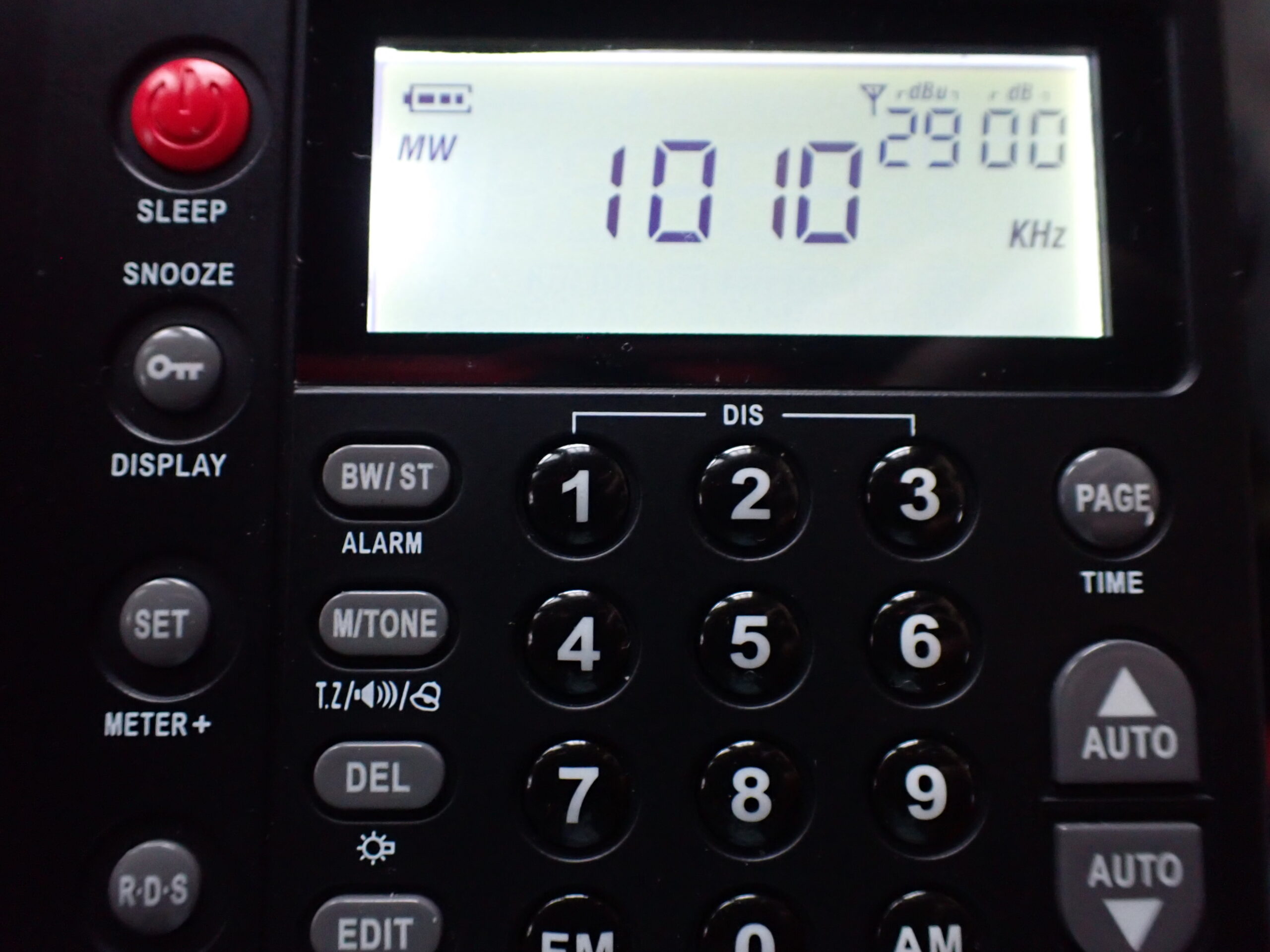
Once you have assembled your list, test it out with the radio you would grab in an emergency and see how well they perform. You might find the perfect combination that you like or you might discover that there is some room for improvement.
In any event, I heartily recommend that every household has an emergency radio that can be easily deployed to discover essential information when the fertilizer hits the fan. The point is to discover what works for you and to discover it before it is needed.
Further, I would very much like to know what works for you no matter where in the world you are located. Let me know in the comments below.
Whenever the power goes out during high winds or snow storms, I use my first-edition BayGen freeplay radio to keep informed. An analog radio with a wind-up generator for power, so no need for batteries. When I need it, it just works! Without mains power, the QRM on AM is practically non-existent, so I can pick up stations that I normally wouldn’t be able to hear over the noise. It’s like the 1970’s of my childhood have returned!
NOAA published a list similar to this post.
https://www.noaa.gov/atmosphere/learning-lesson-am-in-pm-clear-channel-stations
Wow, thanks Zack! This an excellent resource.
Cheers, Jock
Excellent information and plan, Jock. I have a couple of powerhouse AM stations withing easy range, and I have a C.Crane EP with those big, beautiful “D” cells. (Big flashlights and tabletop portables should always have “D” cells!)
Hopefully none of us will face a Katrina again, but long-term power outages need pre-planning for sure.
Cheers! Robert
Robert,
” long-term power outages need pre-planning for sure . . . ” Roger that.
And D cells . . . well they rock!
Cheers, Jock
Thanks for the tip, Jock. Any information related to radio in case of emergency is more than welcome…it’s necessary.
Carlos,
Amen, brother, Amen!
Cheers, Jock
It might be worth a search to find the stations that have been specially “hardened”, usually with help from FEMA, to survive and remain functional during emergencies. In my area that is 740 KCBS San Francisco. I saw a video of their emergency backup studio facility at their transmitter site near Novato and I was genuinely impressed.
Don,
Good idea. A map of those hardened stations can be found here: https://www.fortwortharchitecture.com/forum/index.php?showtopic=7121
Cheers, Jock
Jock, this is a great idea. My three go-to AM stations are in three different directions from my QTH in Panhandle Florida (just inland from Cape St. George), with several other possibilities as backups. These primaries are:
– WWL New Orleans 870, 300 miles WNW over a salt water path. Works night & day.
– WHBO Tampa area 1040, 180 miles SE over a salt water path. Works daytime.
– WSB Atlanta 740, 285 miles NNE via skywave. Nighttime only.
None of these are rolling news stations, but do have top and bottom of the hour news breaks. The beauty of their locations is that they are nearly 120 degrees away from each other and several hundred miles away, so it would take quite a disaster to knock them all out! (in which case I’m probably not worried about getting national news…)
Anyway, do a little digging ahead of time. Look over this list of clear channel stations https://en.wikipedia.org/wiki/Clear-channel_station#List_of_clear-channel_stations and find some near enough to you, either day via groundwave or nighttime via skywave. Then use Radio Locator (yes, David, it’s not perfect, but it’s a good start) to find distant AM stations that you might get in the daytime (use the “Fringe Stations” button at the bottom of the search page). It’s amazing what you can find out there, and a lot of these little stations are worthwhile listening even when times are good.
Rob,
Thanks! Those are excellent suggestions.
Cheers, Jock
Tecsun PL-330 or similar portable with ETM scanning.
Mentioning batteries, I keep a Tecsun R-208 for emergencies and similar. It is nothing great, but it is a relatively low-power, simple analog AM/FM receiver using 2x D batteries. I have not really bothered keep track as it is rarely used, but I suspect it would play for hundreds of hours at low volume or with headphones.
About the lack of external antenna support, I have used my Tecsun AN-200 AM tuned loop to couple outdoor antennas to portable receivers with internal ferrite AM antennas. The AN-200 has an antenna connector, but instead of feeding the receiver, plug the external antenna into the AN-200. The AN100 then acts as an inductive antenna coupler between the radio and outdoor antenna, and I have found the AN-200 tuning is still usually usable enough to act as a moderate preselector.
Robert,
Interesting use of loop antenna. I never thought of that!
Cheers, Jock
Radio Locater is interesting, but it isn’t quite up to date. CFOS 560 in Owen Sound went silent on October 31, 2025. CFOS-FM went on the air on August 1, 2025 on 89.3. The locater also omits the stations up and down the eastern shore of Lake Huron, which are often audible on Georgian Bay. I rate it fair.
David,
Which resources would you recommend for sleuthing out your personal “News Cruiser”?
Cheers, Jock