
 by Karl D. Forth
On mediumwave, Cuba was a heavyweight, with many high-powered transmitters all over the dial, exceeding the already generous allocation agreed to by the North American nations in 1941.
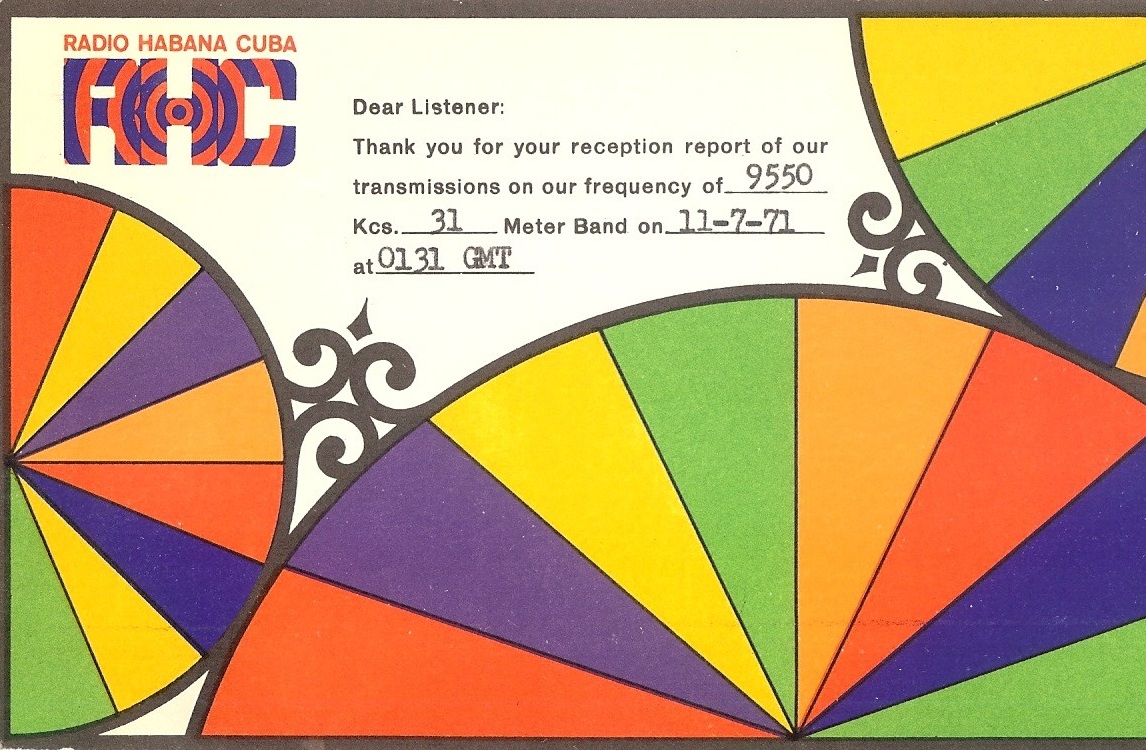
In 1971, Radio Havana Cuba broadcast on shortwave with Spanish to the Americas, English, French, Portuguese, and a few other languages.
Later, I saw a magazine ad from the 1960s. The ad was for Hallicrafters, a Chicago maker of shortwave radios and communications equipment. The ad showed a menacing-looking caricature of the Cuban dictator speaking and posed the question:
“Have you ever actually heard this son of a bitch?”
Fidel Castro’s understanding of radio was no accident. He studied its use in other Latin American countries and in previous coup attempts, and used it shrewdly in his own rise to power.
One program seemed to a 15-year-old to cross the line. The Voice of Vietnam was an English language program aimed at the United States that was broadcast from Havana, not Hanoi. This program seemed strident and objectionable, which may have been the goal.
Today, Cuban broadcasting is in a shambles. Hurricane Rafael flattened its largest shortwave transmitter site. Ongoing problems with the power grid and shortages of fuel have led to nationwide power outages. Many AM stations are off the air. Technicians from China who kept things running have reportedly left the country.
Karl D. Forth has been interested in radio and DXing for more than 50 years. This story was included in the book Radio Nights and Distant Signals.
Please note: all Amazon links are affiliate links that support the SWLing Post at no cost to you.
I have a digital copy of that Hallicrafters “ad”. At one time I was having trouble finding my copy so I did an Internet search and didn’t have much luck finding another copy, but I did come across at least one comment speculating that it might be a spoof and not a real ad that was ever actually published by Hallicrafters. It would be interesting to hear from anyone who has more information about it and could confirm one way or the other!
Here it is. Found on Facebook. Says it was from 1961. You be the judge.
https://www.facebook.com/groups/cbradiolounge/posts/3900131143464434/