Tag Archives: Shortwave Memories

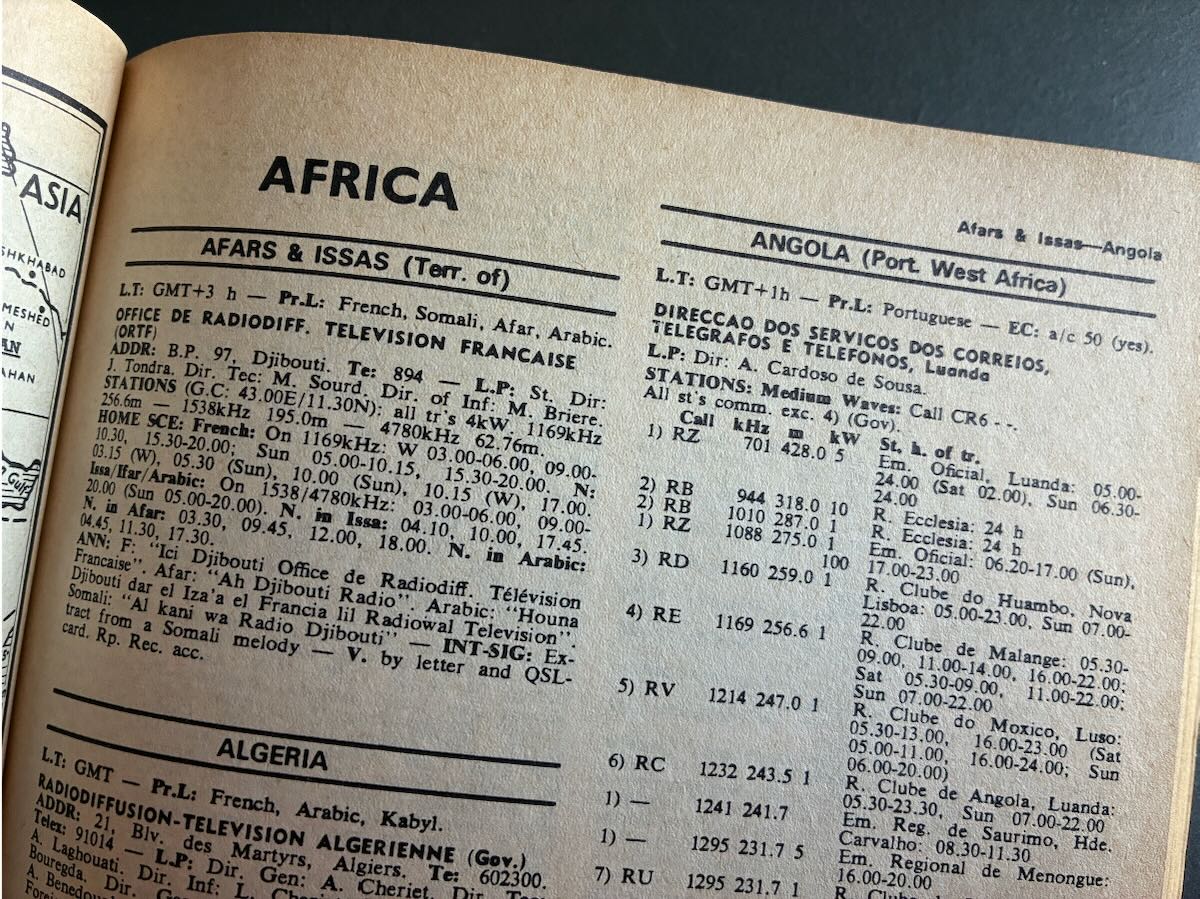
Shortwave Memories — World Radio-TV Handbook

by Karl D. Forth

Reading through the 1971 World Radio-TV Handbook only as a reference source was interesting, but as I started listening more I also realized I felt part of what was happening – I could hear many of the countries described, one way or another.

I’ve always liked directories. You can often learn more of what’s happening than you can in a textbook.

The 25th edition of the directory of international radio and television was published in 1971 in English in Hvidovre, Denmark, and printed in Great Britain.

Looking at the information, organized by continent and country, you discovered that most European countries had a domestic network of AM and FM stations, including some very high-powered AM stations, along with domestic shortwave services and a full complement of what were called foreign services, the international broadcasts.

In Africa, many listeners got their news from domestic shortwave broadcasters and some AM stations. In 1971, FM had not penetrated Africa except in a few places. Likewise, Asia had few FM broadcasters outside of Japan and a few other countries. All domestic broadcasts in Indonesia, for example, were on shortwave, there was no AM broadcasting at that time.

I counted almost 75 advertisers in the 1971 WRTH, including many shortwave stations and makers of professional recording and studio equipment.

Advertisers included Radio Moscow, Shure stereo cartridges, Voice of America, Radio RSA from South Africa, Radio Sweden, Continental Electronics, Hallicrafters, a Chicago area maker of shortwave radios, and Hammarlund Mfg. Co., a maker of top-line receivers.

WRTH also had the music signature and description of the interval signal for dozens of stations.

The United States listing in WRTH had only AM mediumwave stations with more than 10 kW, and no FM stations listed. Also included were Voice of America, and shortwave stations AFRTS, KGEI, WNYW, and WINB.

Central and South America still had a bounty of mediumwave and shortwave stations, including many smaller private stations

More than 23 countries were listed with DX programs. WRTH also listed time signal stations (almost every major country had one) and programs in Esperanto. TV had not achieved widespread coverage in many areas, although most countries had at least a few over-the-air channels.

I should mention two other publications from 1971, both well-written and informative. The first issue of Communications World in 1971, from Davis Publications, was written by Don Jensen and was a great introduction to the hobby. That same year, Communications Handbook, published by Popular Electronics, came out, with a mediumwave and shortwave DXing overview written by Richard Wood that also featured very good descriptive writing and information.

Karl D. Forth has been interested in radio and DXing for more than 50 years. This story was included in the book Radio Nights and Distant Signals.

Karl D. Forth has been interested in radio and DXing for more than 50 years. This story was included in the book Radio Nights and Distant Signals.

Please note: all Amazon links are affiliate links that support the SWLing Post at no cost to you.
Shortwave Memories — Ghana’s North American Service

by Karl D. Forth

Many of the African nations achieved independence in the 1960s, and as they raised their new national flag they wanted to be connected to the outside world. One of the first things they often did was build an airport so they could be accessible. The second was setting up a shortwave radio station so their national voice could be heard both domestically and internationally.

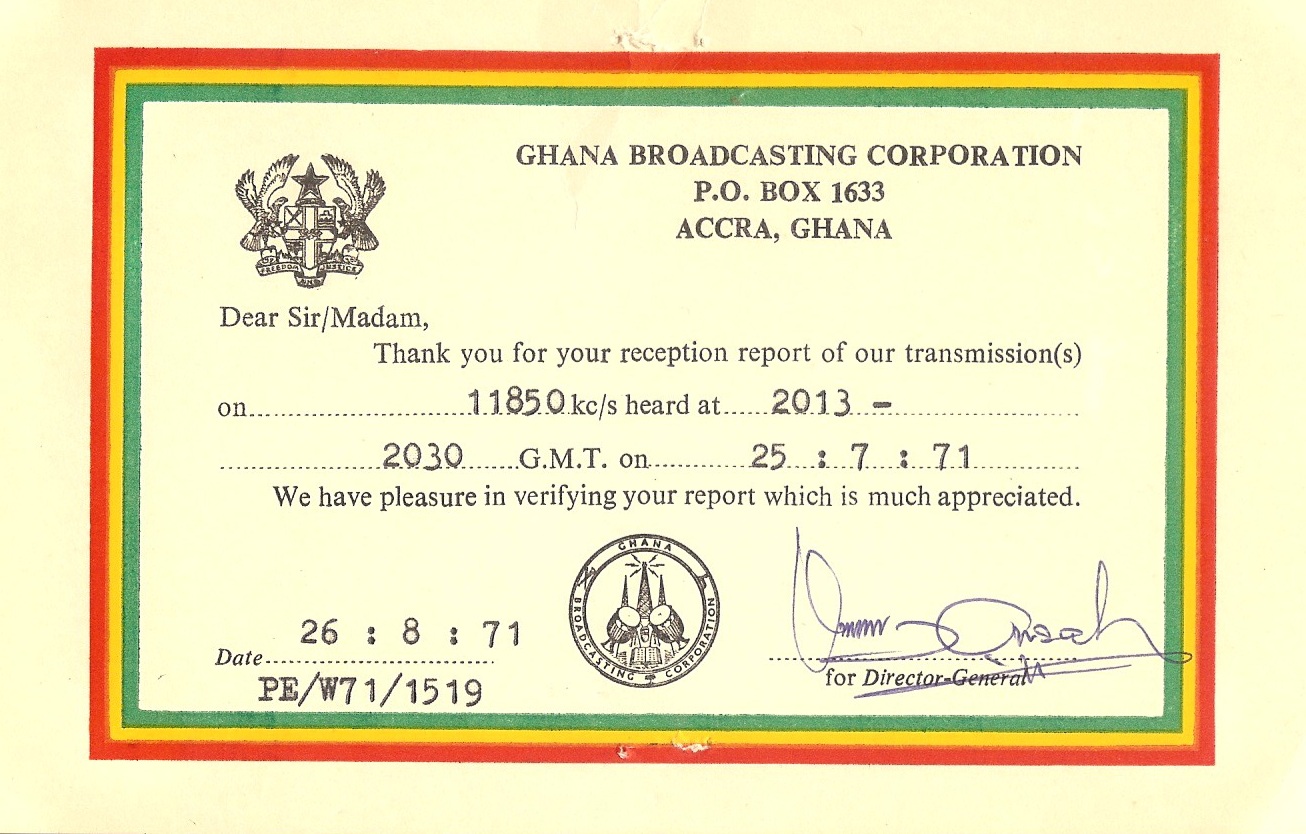
Radio Ghana, an early independent country (1957), took this a step further by establishing a North American shortwave service, audible in the mid-afternoon in the eastern United States. In my early listening months, this was one of the more exotic places I could receive on my portable shortwave radio.

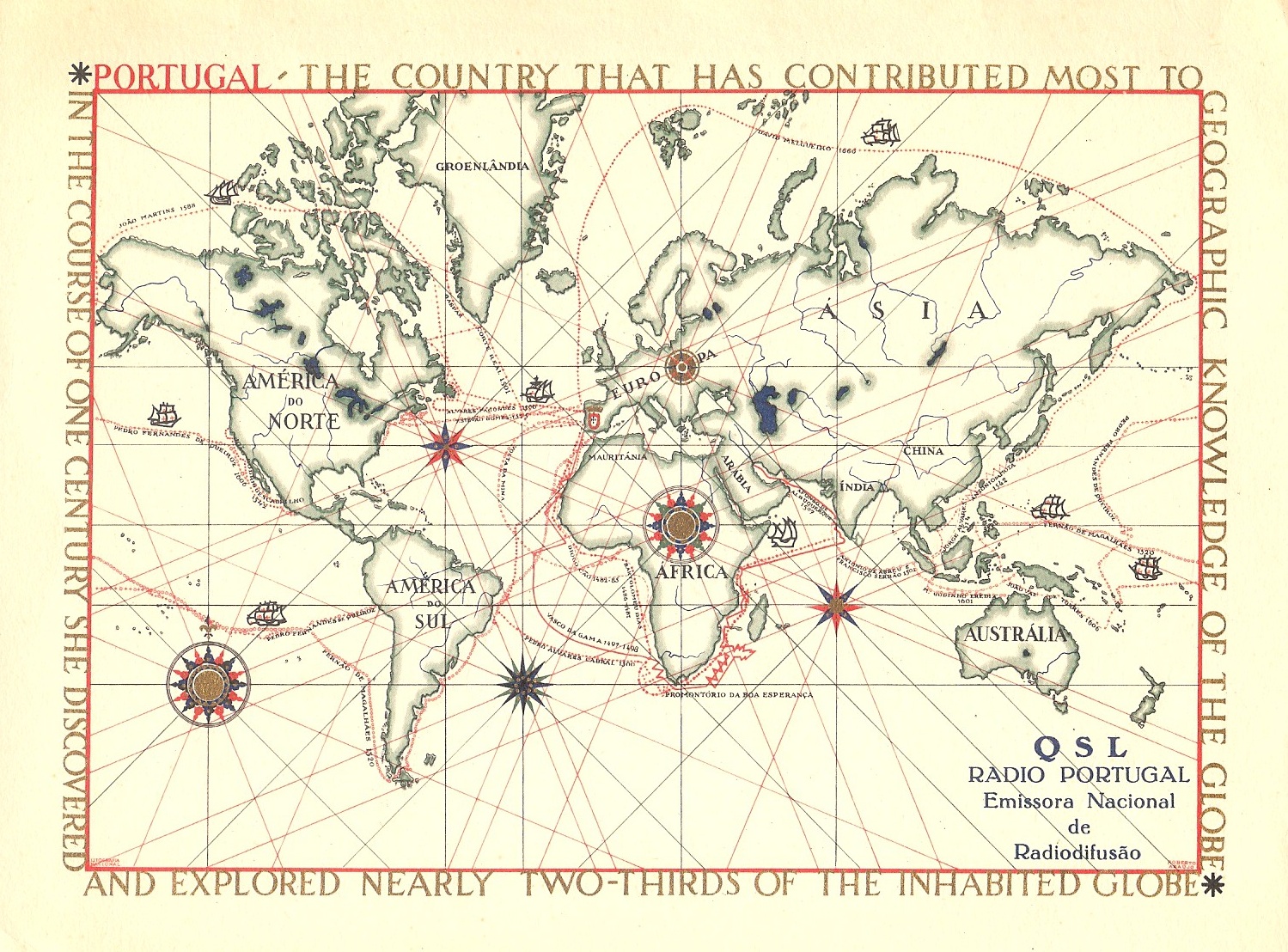
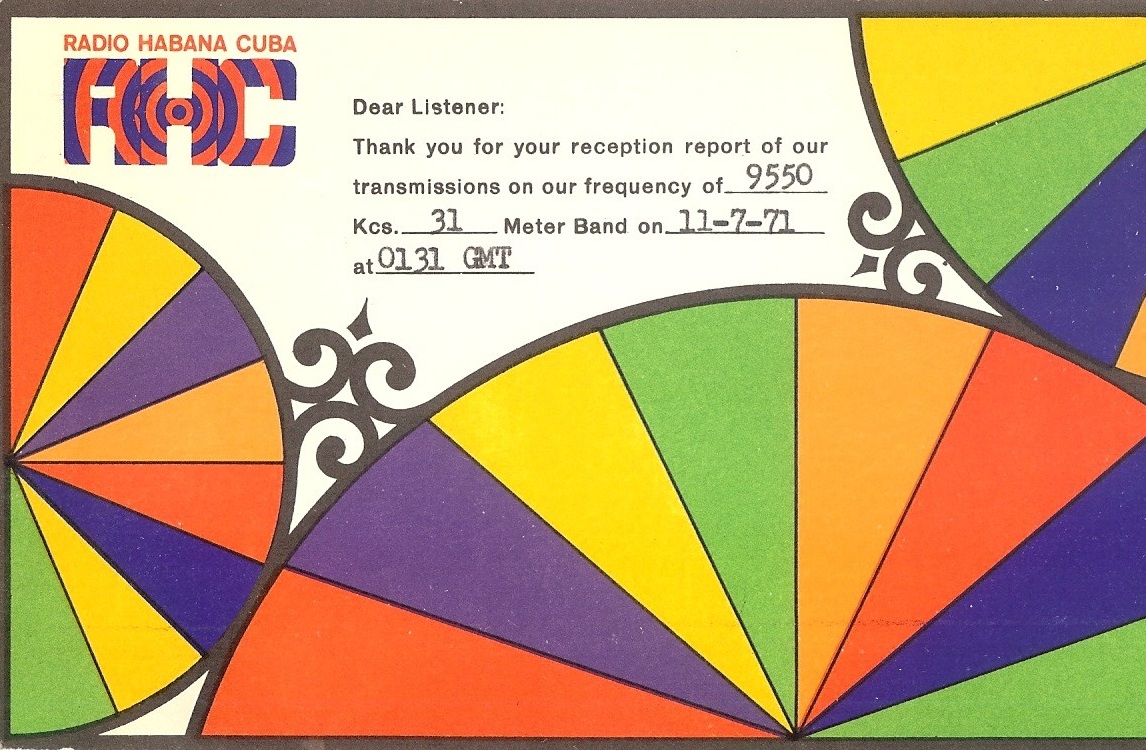
I sent them a letter, seeking a QSL card verifying reception, and more information. Employees at the Accra General Post Office gathered letters, rather infamously so, and a few weeks later I received a pen pal aerogram from a postal worker in Accra. At the time, this was welcome and a little bit exciting. I remember showing the first letter to my mother and father. They seemed to approve, with a reaction of “this hobby may not be so bad.”

My correspondence with the postal employee continued for a year or two, beyond the life of the North American service. He never did ask for money or anything else (many other listeners received requests for money from other postal workers), but he did dispense a bit of advice that I’ve always remembered. After learning that I was a high school student, he advised: Don’t Play With Books. That means don’t screw around with your educational opportunity.

Ghana Broadcasting Corp. had a number of frequencies for domestic broadcasts in places such as Ejura and Tema. The external service was based in the capital, Accra, and its broadcasts included two frequencies to North America from 2000 to 2100 GMT daily.

For many years after the North American service ended, Ghana could be heard on several 60 meter frequencies in the late evening and sometimes during late winter afternoons.

Karl D. Forth has been interested in radio and DXing for more than 50 years. This story was included in the book Radio Nights and Distant Signals.

Please note: all Amazon links are affiliate links that support the SWLing Post at no cost to you.
Shortwave Memories — Go Go Radio Moscow

by Karl D. Forth

Radio Moscow didn’t seem confrontational. We’re here, their attitude seemed to be, and we’re going to offer our opinion on things, which you may or may not like.

Looking at the World Radio-TV Handbook in the early 1970s, Radio Moscow was on dozens of frequencies from many different transmitters thousands of miles apart. The Far Eastern transmitters were 5,000 miles from Moscow.

In 1974, Radio Moscow offered programs in 64 languages, along with Russian by Radio, and a transcription service. U.S.S.R. was one of the largest broadcasters, with shortwave transmissions in many languages, from Bambara to Urdu.

“If you’d like first-hand information about the Soviet Union, its developed socialist society, the Soviet way of life and the Soviet view on major international issues tune in to Radio Moscow,” an ad for the broadcaster stated.

I thought that Radio Moscow offered a straightforward outlook, and they tried to make the programs truthful but were sometimes selective in what was covered. Their job was to promote progress that was being achieved in the Soviet Union, and to criticize the West.

(If you’re interested in the Soviet viewpoint from that time, an interesting book to read is Parting With Illusions, by Vladimir Pozner.)

One subject that got under Radio Moscow’s skin was NATO’s deployment of short-range cruise missiles in the early 1980s.

Later, there was Vasily’s Weekend, broadcast about 1990 and 1991, in the last days of the Soviet Union. The show, hosted by one Vasily Strelnikov, a Russian who had grown up mostly in America, was an informal English-language program of popular music and listener requests, a segment that must have stood in contrast to the station’s other programs.

Moscow’s exit from shortwave was sudden. It was renamed the Voice of Russia in 1993, after the breakup of the Soviet Union. The shortwave radio broadcasts were ended completely by Vladimir Putin in 2014.

Go Go Radio Moscow was an actual 45 single by Nikita the K, probably the only 45 record about a shortwave station. It was an American record and was not, as far as we know, ever played on Radio Moscow. (For the record, there is a rock band called Radio Moscow based in Iowa, not the Russian capital.)

Karl D. Forth has been interested in radio and DXing for more than 50 years. This story was included in the book Radio Nights and Distant Signals.

Please note: all Amazon links are affiliate links that support the SWLing Post at no cost to you.
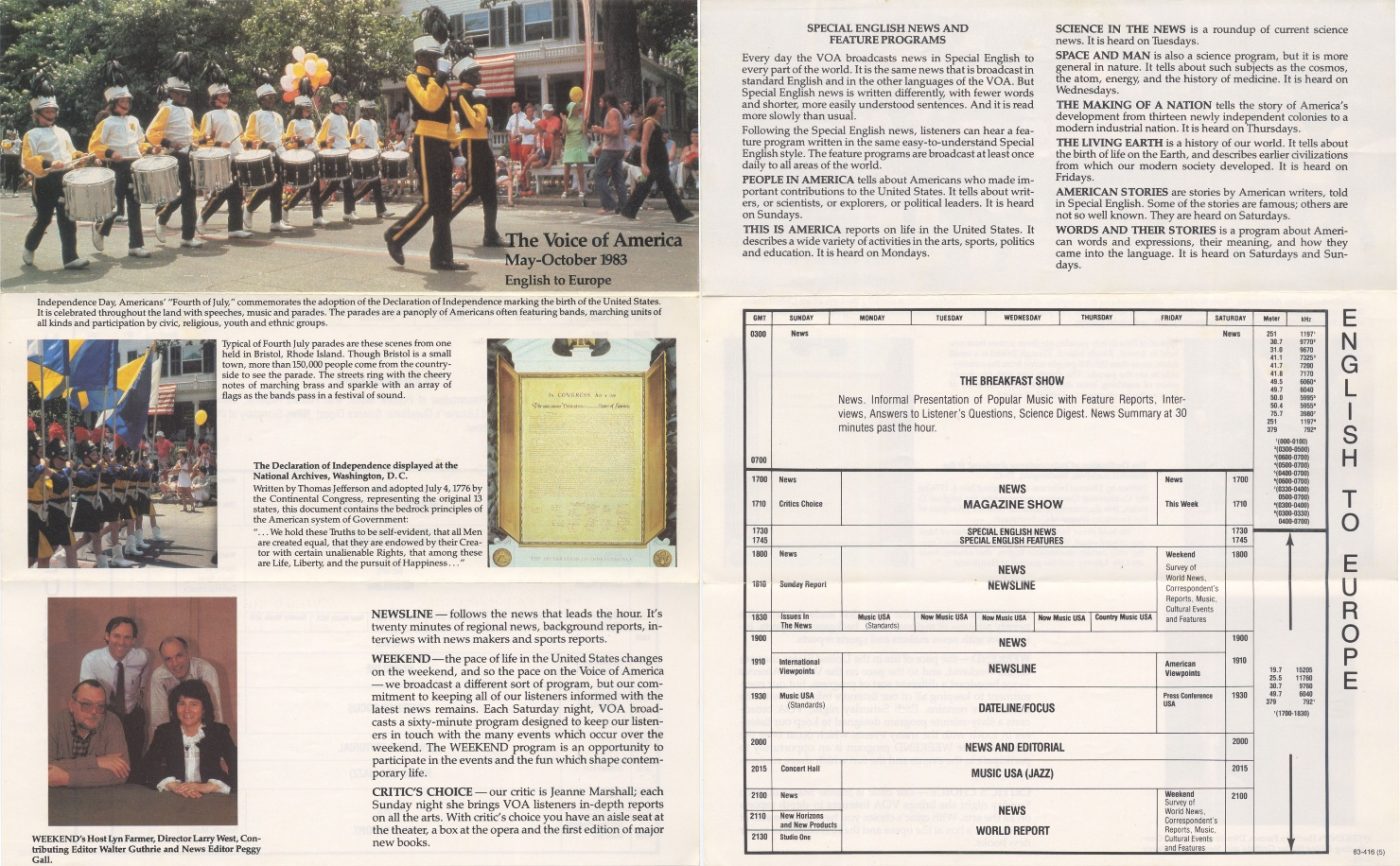
Guest Post: Mark explores a 1983 Voice of America information pack

Many thanks to SWLing Post contributor, Mark Hirst, who shares the following guest post:


VOA Information Pack 1983

by Mark Hirst

Introduction

A recent guest post on this blog by Jock Elliott asked the question, ‘Why Listen to Shortwave?’

The comment I left at the time was my interest in how nations view themselves, and how they project that view to the world. This might be in the form of cultural exports like music, or teaching us about famous people or revered institutions in their country.

When I first started listening to shortwave in the early eighties, I never got into the habit of asking for QSL cards, being quite thrilled enough to receive programme guides in envelopes stamped with the postmark of other countries.

At the time, the primary stations for me included Radio Netherlands, Radio Sweden, Swiss Radio International, and the Voice of America. While most might send a small leaflet about their country with a frequency schedule, the information pack I received from the Voice of America stands head and shoulders above the others.

I thought readers might be interested in a brief description of this pack and with it a glimpse back into the world of 1983.

Please note that as you read the following sections, you can click on the images to view a larger version.

Package Contents

The package arrived in a manila envelope, with the logo and address of the VOA printed in the top left corner. In the top right corner is the logo of US Mail, with a declaration that postage and fees where paid for by the US Information Agency.

Package contents included:

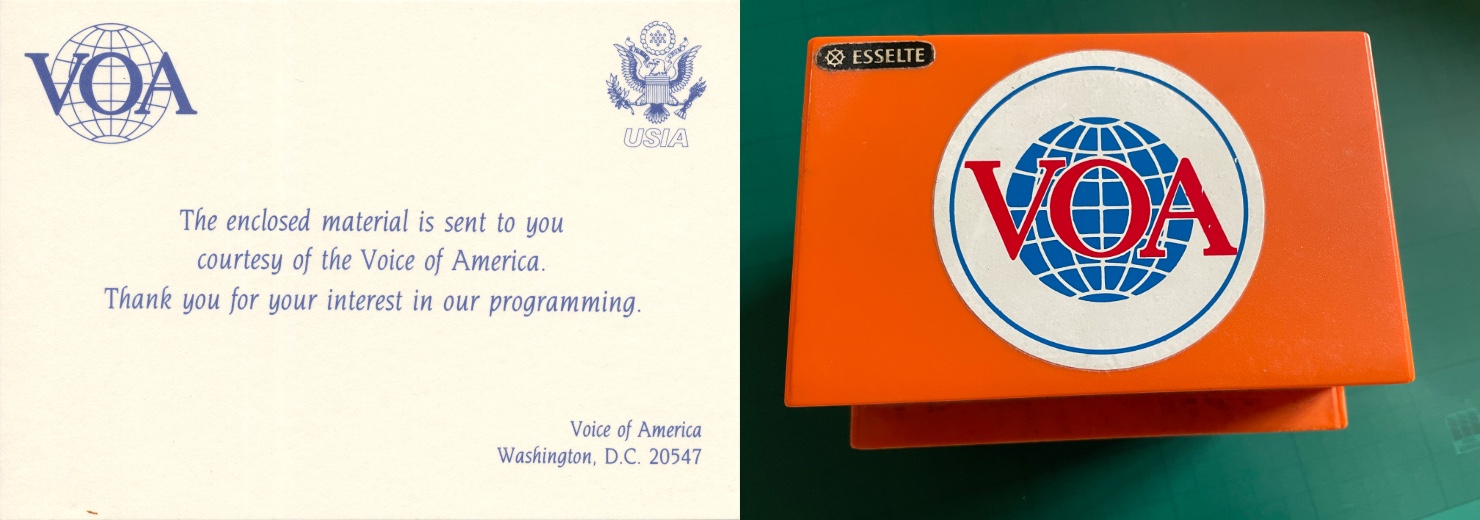
  • Compliments Card
  • VOA Sticker
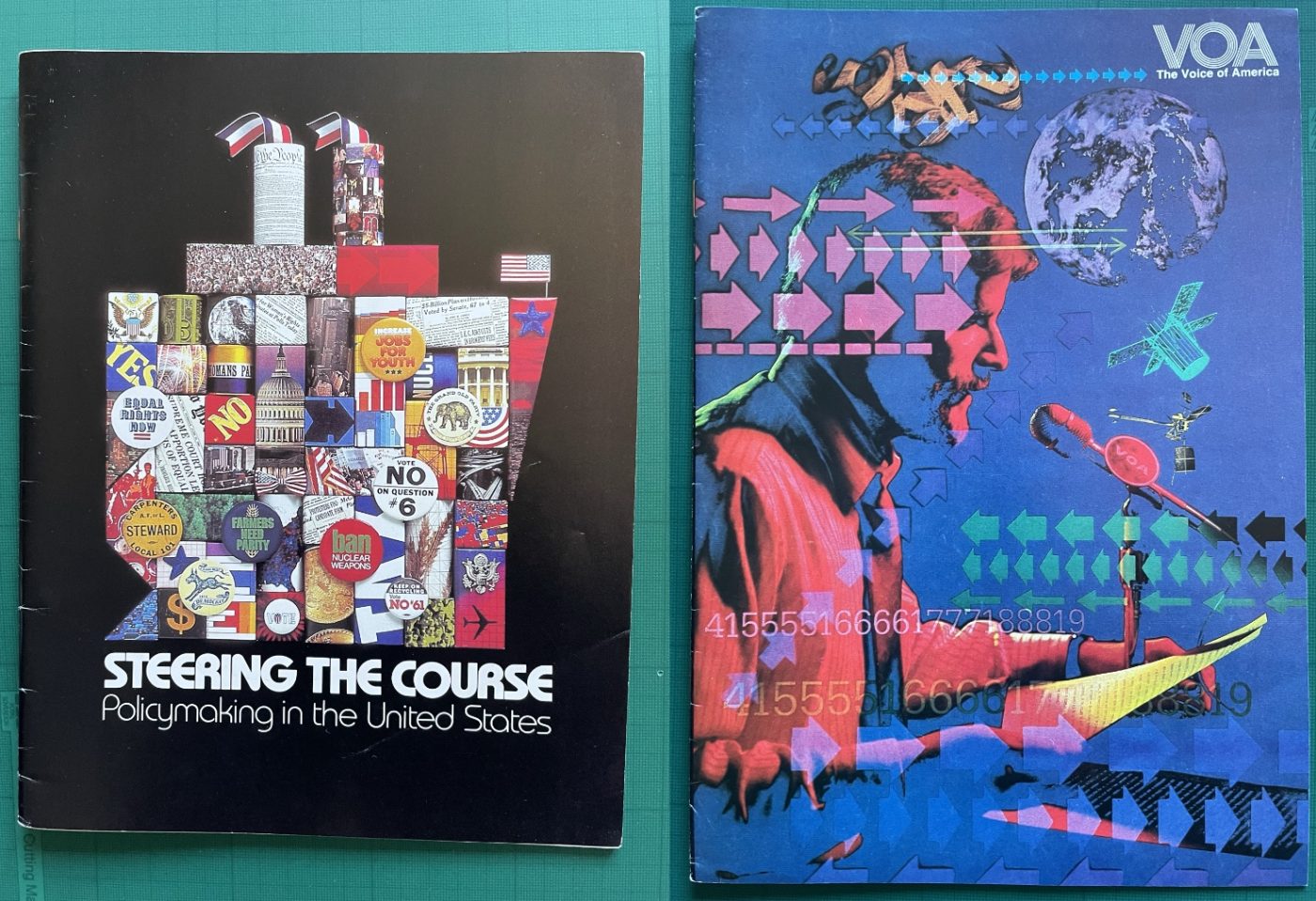
  • Steering the Course Magazine
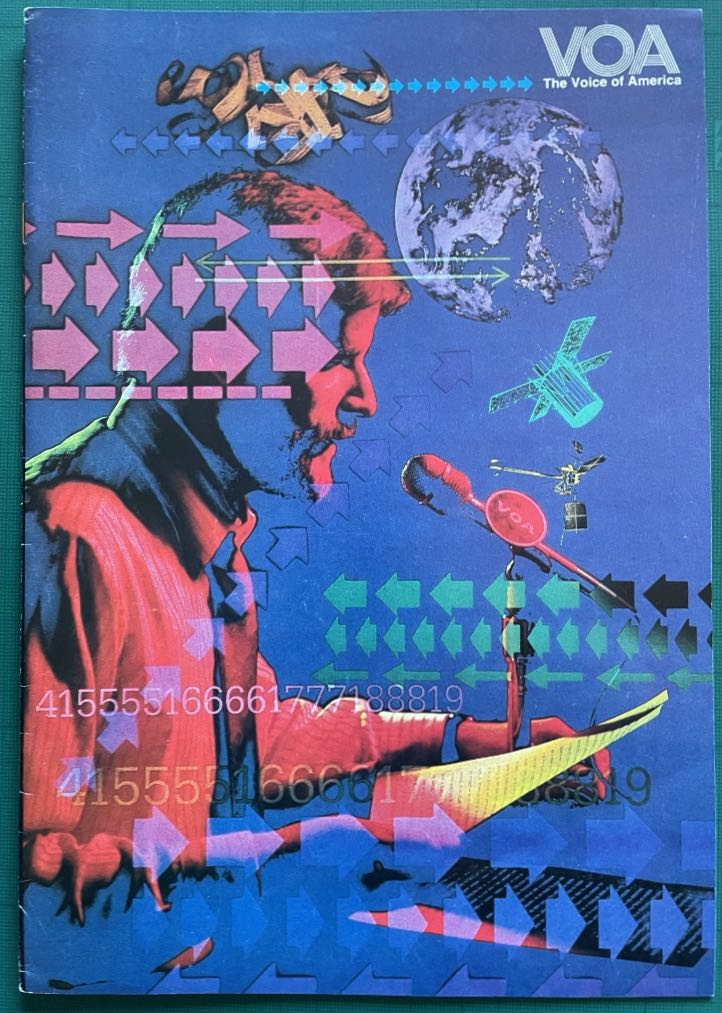
  • VOA Magazine
  • May-October 1983 Programme Schedule

VOA – The Voice of America

This guide begins by outlining the mission of the VOA, emphasising its aim to be an authoritative and reliable source of news. Continue reading

K9ZDK: Return of a Silent Key

Many thanks to SWLing Post contributor, Dan Van Hoy (VR2HF), who writes:

It was one of the most sublime moments in my 55+ years in radio. Almost every night I listen to shortwave station, KNLS in Anchor Point, Alaska, from my home in Hong Kong. KNLS broadcasts to Asia and the Pacific in English, Russian and Mandarin. The English broadcast is an amazing mix of secular and Christian music and topics, science, current affairs and more. It has something for both the seeker and the saint and is one of the most informative and entertaining shows on radio.

On this particular Monday evening, August 3, 2020, I tuned in late to the English broadcast from KNLS at 1000 UTC, but went on to listen to the remainder of the show. To my complete surprise as the show closed I heard “73 de K9ZDK” in Morse code and quickly wrote down that callsign. I assumed it was the engineer on duty, obviously a ham, having a little on-air fun with a big transmitter and antenna.

A few minutes later, I also heard “CQ de K9ZDK” at the beginning of the Russian program at 1100 UTC. So, I looked up K9ZDK on QRZ.com and found it was Zavier, a young ham who had become a silent key in June of 2019.

Zavier Klingensmith (K9ZDK) Silent Key

A little more online sleuthing and a phone call later revealed that his father, Thomas, KL0K, was at the controls of KNLS that night sending Zavier’s final CQ and 73 on this planet with at least 1 million watts of power (ERP: 100KW TX + 10dBd TCI curtain array) all around Asia and the Pacific. His call on CW was heard on every English, Russian and Mandarin show that evening over 16 hours of broadcasts (two Continental 100 KW transmitters). Wow!

In Zavier’s memory, Thomas has created a DIY kit for an Iambic Keyer and is offering it for FREE (though you might want to send some $$ for his production and mailing costs…my suggestion) to anyone who asks. Details can be found at Thomas’, KL0K, QRZ page. Maybe one of the first things you can send when your keyer is completed is,”K9ZDK de YOUR CALL, 73 OM!”

Thomas, our thoughts and prayers go out to you and your family. Thanks for the amazing on-air tribute to Zavier. I suspect he was listening with a big, big smile!

Dan VR2HF, Hong Kong
(K7DAN, USA)

Dean’s love of the JRC NRD-515 spans 35 years…

Many thanks to SWLing Post contributor, Dean Bianco, who kindly allowed me to share his note which accompanies the photo above:

Me and my then brand-new JRC-NRD-515 in 1985.

Thirty-five years later in 2020, it is still with me. It works today as it did when it was first taken out of its box! This fact is a testament to the 515’s precision engineering, high-quality components, and tank tough build! The only trouble in these 35 years was the gummy 2.4 kHz mechanical filter issue that all 515’s eventually suffer. However, that was an easy fix and other than de-oxit every five years in the controls, and dusting the interconnect circuit wire RCA plugs, it performs flawlessly. It was used two hours ago.

I have an advanced SDR stand-alone, the astounding Icom R-8600 that has better sound, better specs, and more facilities to peak and tweak a flea-powered signal out of a huge pile of powerhouse flamethrowers than does the old 515. But, when I want to experience the old-school large knobs, the large tuning wheel and the sheer enjoyment that only an old heavy metal radio can provide, I turn to the classic NRD-515!

I don’t blame you, Dean.  I have never owned an NRD-515, but I have always admired its design and layout. It has such an all-business, military/rugged look.  One thing I really love about the NRD-515 is how the RF and AF gain pots flank either side of the main encoder. The controls spacing is also ideal, in my book. Check out the following photo I took of Dan Robinson’s NRD-515:

Thanks so much, Dean!

Any other NRD-515 owners or lovers out there?  Please comment!

Guest Post: Missing the Static

Many thanks to SWLing Post contributor, Lou Lesko, who shares the following guest post:


Missing the Static

by Lou Lesko

Nineteen-ninety-one, my girlfriend Michelle and I were asked to house-sit her parent’s place in a remote part of Morgan Hill, south of San Jose, California. One had to drive for two miles on a dirt road through a running creek to get to the house deep in the woods. It was magical. The place ran on generators and a massive array of batteries.

We stayed in the master bedroom. Bob, Michelle’s step-father, had a shortwave radio on his bedside table. The radio was connected to a huge twenty foot high antenna stuck in the ground outside the bedroom window. Fumbling through the controls for the first time I found the BBC in London and a myriad of other broadcasts in different languages from cities all over the globe. It was mesmerizing.

Thanks to a book I found, Passport to World Band Radio, I learned that scanning to find broadcasts was called DXing. The book also listed frequencies and some of the known active times of stations around the world. It also explained the phenomena of shortwave: radio signals within a specific frequency range have properties that cause them to bounce between the ionosphere and the earth’s crust allowing efficient propagation around the globe. Conditions like weather, the electronic interferences of modern life, and solar flares all had an effect on the quality of the signal and how far it could travel.

The more I learned, the more I listened. Scrolling through the static to discover random broadcasts from radio Cuba or radio Moscow was blissful escapism that charged my imagination. At the time the BBC had 120 million weekly listeners. The largest audience of any broadcast medium in history.

It was a sad day when Michelle’s parents returned. Not only did Michelle and I have to go back to our tiny apartment—playing house was fun—I had to give up the shortwave radio.

A month later Michelle gave me a portable shortwave radio as a Christmas gift. It wasn’t nearly as powerful as the rig in Morgan Hill, but it worked fabulously well for receiving strong signals. I listened to it every night before falling asleep.

Three years later, during an annual trip to Yosemite, I wondered what the reception would be like if I were to take the portable radio up a few thousand feet way out of the range of street lights, televisions, toasters—all things electronic that impede reception of anything except the strongest signals.

I embarked on a solo hike up 12,000 feet to the top of Mammoth Peak in Tuolumne Meadows. Optimal listening time was just after sunset and into the night California time. Alone, wrapped in a subzero sleeping bag, a bitting breeze blowing, bathed the etherial pale glow of moonlight reflecting off the white granite, I turned on my radio. It was overwhelming. Every tiny turn of the dial yielded something new I had never heard before. I tuned in to almost every part of the globe.

Shortwave has faded. Its gradual decline started at the end of the cold war, Western governments no longer saw the need to shoulder the large costs associated with transmitting on shortwave frequencies. The demise was further hastened in 2001 when then BBC World Service Director Mark Byford stopped the broadcasts to North America citing the emerging Internet and satellite radio as the future for reaching audiences. He was of course correct.

Radio Garden, a web site that delivers a graphical version of what shortwave used to do, offers an animated picture of the globe dotted with internet radio broadcasters. Click on a dot, listen to a radio station in another part of the world in crystal clarity. Radio Garden is exceedingly clever and a wonder of modern technology. As are podcasts, streaming television, Facetime calls. All of it extraordinary and life altering. And yet, every once in awhile, I miss that unique thrill I used to get when I discovered a voice broadcasting from a far away place I’ve never been. Every once in awhile, I miss the static.


Lou Lesko is a writer, and a former editor-at-large for National Geographic.

Click here to visit Lou’s website.

Lou, thank you for sharing the static!