
 by Karl D. Forth
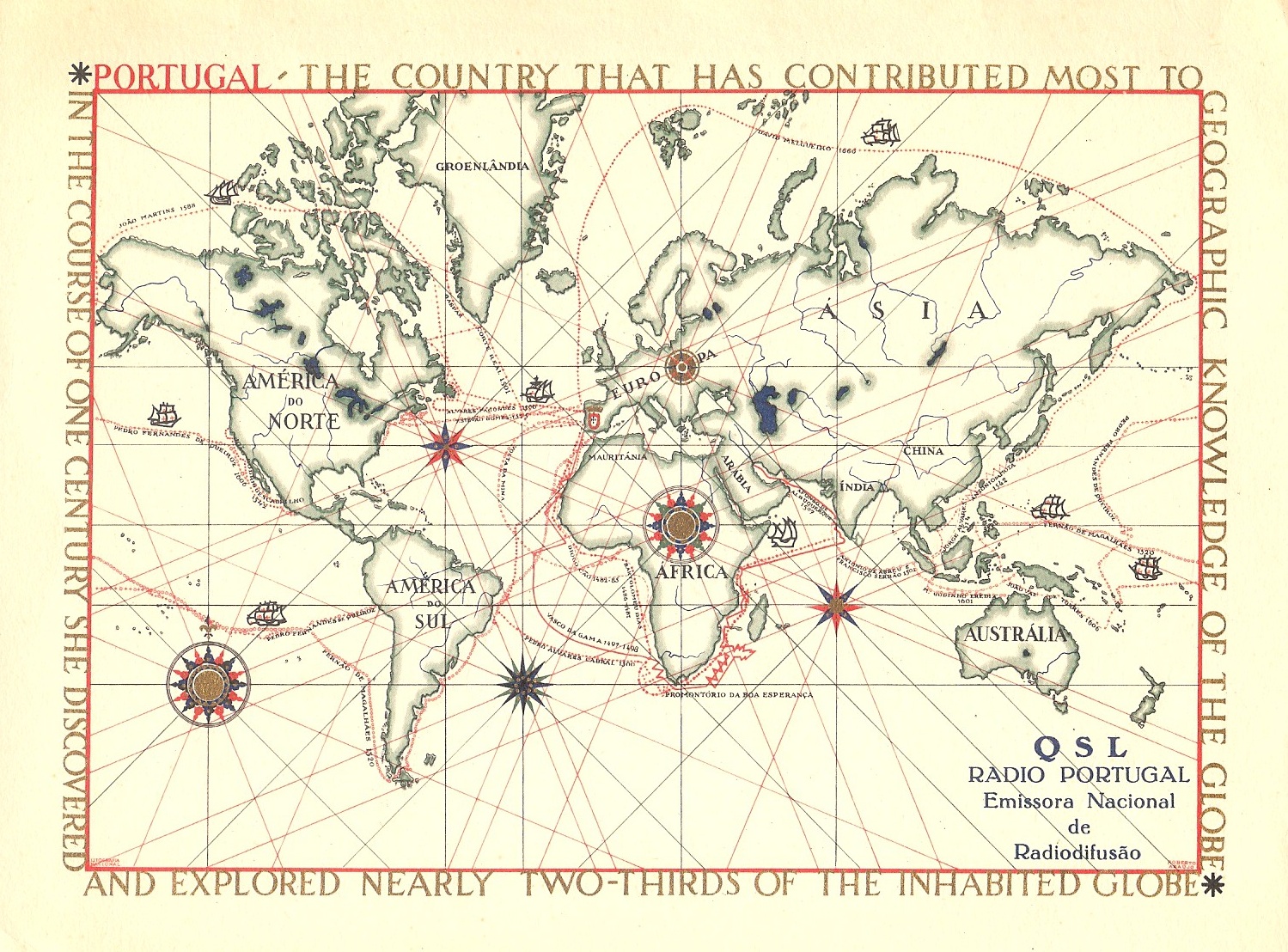
I can remember very early in my shortwave listening wondering how many people were tuned in to a particular broadcast at the same time I was. I was listening to Radio Portugal on a warm evening in June 1971 when I first had this thought. How many others in North America were listening to Radio Portugal, the Voice of The West, and their evening English service at 9 p.m. CDT in the summer of 1971?
The BBC, Radio Canada International, and Radio Nederland probably had a decent audience. And Radio Moscow and Radio Havana Cuba always drew some curious listeners.
What about a smaller broadcaster with an English transmission to North America? How many were listening to any international shortwave broadcaster?
How many were watching Gunsmoke or Rowan & Martin’s Laugh-In compared to a feature on Portuguese oilseed production and chestnut exports?
There was no Arbitron ratings book as there was for AM and FM stations in the United States, but it’s fun to think about having a listening diary for shortwave stations, sent not to ARB’s headquarters in Beltsville, Maryland, but somewhere like Geneva, Switzerland, for tabulation.
The stations themselves didn’t know either, but they made audience estimates based on listener mail. Some stations that you may have listened to only a few times and wrote to get a QSL continued to send schedules for years after, counting you as a regular listener. When seeking funding, the stations pointed out that they sent schedules to 5,000 listeners, for example, every few months. (I’m looking at you, RAI.)
I’ve also read stories of shortwave schedules still coming to the house of parents of the listener many years after the listener moved away and started a separate life. (He or she probably picked up the schedules when they visited Mom and Dad, I figure.) Today, I’m still asking the same questions about how many are listening. The stations remaining on shortwave are, too. I’ve read some of the estimates for a major broadcaster’s over-the-air and digital audience that seem extremely optimistic.
Karl D. Forth has been interested in radio and DXing for more than 50 years. This story was included in the book Radio Nights and Distant Signals.
Please note: all Amazon links are affiliate links that support the SWLing Post at no cost to you.
I suspect that most international shortwave expenditures beyond VOA, BBC, Radio Moscow, and Radio Australia (for the Pacific only) were a waste of money by any reasonable metric, even during the peak years of shortwave and the Cold War. No way did RCI, Radio Nederland, or DW have significant listenership in their target areas, even less so for Radio RSA and other second-tier broadcasters. If you look at c.1980 Listener’s Notebooks in FRENDX you’ll see that budget cuts and overall questioning of the mission were the norm in many to most countries with transparent budgeting (so not the East Bloc), so even before the 1990s+ terminal decline of international broadcasting it was always on the chopping block.
I’m in Hanoi for a month and have been listening to the Voice of Vietnam external service. As well as broadcasting on shortwave, it’s also available on FM 101.5 in Hanoi, which is where I catch the English service each day.
In the English-language “Letterbox” program, they featured a selection from the more than 340 letters, emails, and phone calls from listeners in 31 countries and territories that they had received in the past week. The program from the previous week featured highlights from more than 350 letters, emails, and phone calls from listeners in 32 countries and territories.
The program answers listeners’ questions about Vietnam, and I was really surprised at the amount of feedback their English service receives each week.
I’m just enthusiast in his late 20s. Radio is what made me and engineer.
When I was a kid, I used to play with this Philips shortwave radio, then got into making a radio, super-regens, hobby transmitters, then Arduino, then into electrical engineering. Recently I bought an SDR and started SWLing again.
Its a shame the glory days of SWLing is over.
Some stations even ran listener contests like this one from Radio Moscow to help celebrate the 50th anniversary of the Soviet Union in 1972.
The contest “rules” and some program schedules were found in the basement of my parents home after their passing
https://archive.org/details/rmps-1
I used to listen to Radio Moscow myself in the 1970s, but I could never bring myself to write to them. Even though I was a teenager, I was deeply cynical about Soviet media. In the context of Cold War international broadcasting, the programming felt kind of devious to me. While I couldn’t put my finger on exactly what was wrong back then, looking back at their 50-year anniversary quiz now, I see it as a classic, calculated piece of “soft” propaganda.
Radio Moscow used the engaging label of a “quiz” to draw international listeners in. However, the real core of the competition—and almost certainly the deciding factor for the prizes—was the essay contest built into Question 2. Questions 1 and 3 are standard, factual trivia regarding the 15 republics, US-Soviet diplomatic history, and American presidency.
In contrast to 1 and 3, Question 2 asks: “How would you explain the unity and friendship between the different nationalities of this multinational country?” This is a highly subjective prompt requiring a carefully crafted narrative rather than a simple fact-check. It is also a leading question. Instead of asking if unity and friendship existed, it explicitly asserts that they did. This forced participants to accept the Soviet state’s idealized premise as undisputed fact before their pens even touched paper.
By soliciting these letters globally and broadcasting the “best”—meaning the most ideologically aligned—answers on the air, Radio Moscow could artificially project a global chorus of foreign voices validating the Soviet system.
Very interesting assessment – thank you for that. Cheers!
Nearly all of this resonates with me and brings very similar memories!
I have misplaced my collection of Sweden Calling DX’ers Bulletins and I am really frustrated every day looking for them.
Too bad the hobby and all fans are on the way to extinction.