
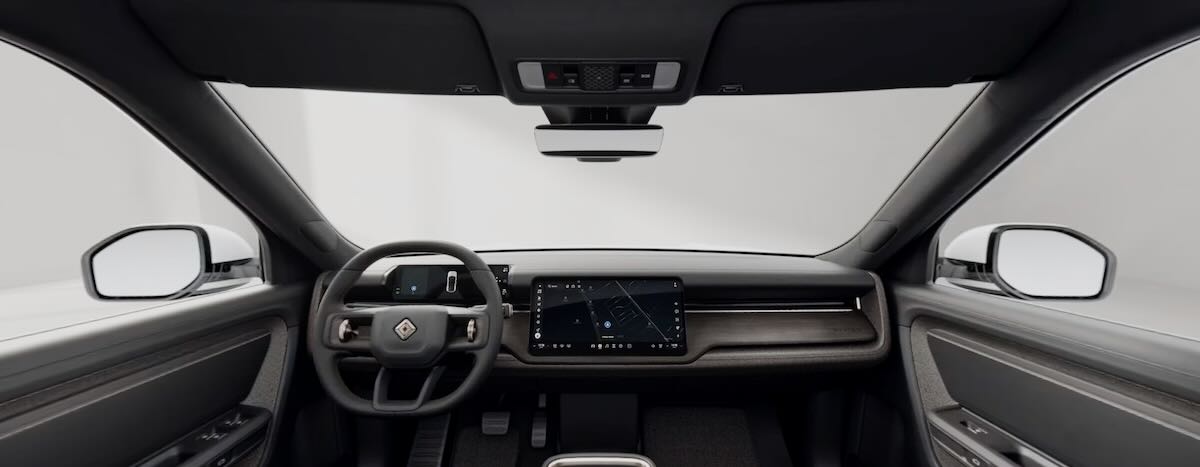
Many thanks to SWLing Post contributor Dennis Dura, who shares the following article about a growing trend among automakers: removing not only AM receivers from new vehicles, but FM as well. This is in favor of internet-connected streaming services. While the shift may seem inevitable, it raises important questions about emergency communications, rural connectivity, and the future of free over-the-air broadcasting.
Read the full article here: https://www.digitalmusicnews.com/2026/06/16/fm-radio-excluded-from-new-vehicles/
..these new Malahit type radios coming on the market are NOT the regular analogue radios of the past 100 years! This being said, is this the absolute limit that can be reached with these old analogue types? We can’t go higher and radio technology has peaked..?
The advantage of broadcasting is that all listeners get the same message at the same time.
DAB+ has Automatic Safety Alert is described https://www.worlddab.org/dab/asa-emergency-warnings#:~:text=ASA%20operates%20automatically%20in%20the,robust%20DAB%2B%20radio%20transmission%20network.
ETSI can be observed towards the bottom of the page. Unfortunately DAB+ cannot be used in the Americas because they use most of the band 3 for TV.
The other alternative is Digital Radio Mondiale which can operate in the 48 – 108 MHz band. A single transmitter can use 6 adjacent channels to transmit 18 audio programs and 6 data channels. It is extensively available in India and Indonesia.
https://www.drm.org/wp-content/uploads/2024/07/EWF-leaflet-short-2023.pdf and
https://www.drm.org/wp-content/uploads/2026/05/DRM-Handbook_v6.0.1_EN.pdf
Additional functions
Alternate Frequency Functions should be used to switch all radios in the disaster area to the channel containing the EWF messages. There is a switchoff command for the end of the emergency in that zone.
https://www.etsi.org/deliver/etsi_es/201900_201999/201980/04.03.01_60/es_201980v040301p.pdf is the current latest standard. Journaline can carry still pictures although it needs to be updated from very old computer scanning standards to UHDTV and divided down to the resolution. https://jpeg.org/jpegxs/index.html is required to give the best results.
In addition the Conditional Access should be offered to the emergency services for access to one or all of the crews.
https://www.etsi.org/deliver/etsi_ts/102600_102699/102668/01.01.02_60/ts_102668v010102p.pdf sends commands to the vehicle navigation systems to keep vehicles away from the emergency.
Since the Weather radio has been switched off in Canada DRM should be considered to transmit all existing programs with the EWF included in times of emergency. This is much better than using mobile phones, AM or FM radio.
“Since the Weather radio has been switched off in Canada DRM should be considered to transmit all existing programs with the EWF included in times of emergency. This is much better than using mobile phones, AM or FM radio.”
I can guarantee that almost nobody in Canada has a DRM-capable radio, but that a fair proportion would have the requisite Weather-band radios. It is ridiculous that the Canadian Government have closed the service, but it would be more ridiculous to setup a new service in DRM, or transition any service, private, governmental, or commercial to DRM. Never going to happen.
Bob,
I would agree at the moment you would be lucky to find a single DRM receiver in Canada because broadcasters are not using it.
It is up to the broadcasters to get together and for all cities use DRM in the 48 – 88 MHz band. This means that a single DRM transmitter can carry 6 radio stations with 3 audio programs each and 6 data channels. A switch off date of 10 years be specified nationally.
In addition a high power DRM transmitter in the high frequency (SW) bands to transmit to all of Canada including the remote regions.
These moves will reduce electricity consumption by about half or more and once analog is switched off more money to broadcasters.
Mangoesman
But it’s an issue that does not exist only in Canada. In India, there is a nationwide deployment of DRM since 2017 and now in 2026, almost a decade later, no electronic chain store lists any type of a DRM-capable portable receiver on their websites. It seems that the launch of DRM was totally ignored by the market – of over 300 FM stations, not a single one has expressed any interest in converting to DRM. So it’s not really “up to the broadcasters to get together and for all cities use DRM”, it’s not a task that was already placed on them. First, they (together with their audiences) would need to see some kind of a use case and an added value of doing so. I personally do not see any of these appearing on the horizon.
I come from an almost 55 year career in broadcasting. I have been on-air, engineering, management, and ownership. Today, most domestic radio stations are incapable of really being reliable in times of emergencies. The economics and competition today has diminished radio’s dominance. It was a different world 30+ years ago. Those that think people under 40 will trade their phone for radio are living in a bygone era.
Bob,
Internet uses 700 MHz – 26 GHz which is all line of sight. Individual transmitters/ receivers used in cell phone systems typically are backed up for a few hours. After which they fail.
Many broadcast systems, particular AM have diesel generators which can keep the transmitters going for many days. In the USA the government has subsidised some transmitters for emergency use but for analog, they must switch off usual programming
Now digital broadcast systems can send warnings to a specified area leaving the other listeners untouched.
Sadly it’s true, in large part because of the monopolization of the airwaves… In my market it seems like ‘ihateradio’ owns half of the dial… -I mean iheart, but they must hate radio because they spend more time running promos for podcasts, and I notice there are more and more of these promos and less paid advertisements, which means that their business model is failing. I wish ‘iheart’ would just drop dead, sell off their stations to local owners. That might actually revive the medium.
But of course it’s unlikely, thanks to the telecommunications act of the 90s signed by that scumbag Bill Clinton (I’m sounding like one of your rants Bob Biermann!) which facilitated the monopolization at the expense of local oriented programming… One thing I notice about all of these ‘ihate’ stations, they’re running the same damn news and weather reports, and often the announcer you may think is local is actually being heard in many cities at the same time! It’s a travesty.
But still, it’s worth it for the few local and community owned stations out there. I’m affiliated with -meaning I’m a paid member and formerly a programmer on – WAIF-FM in Cincinnati, which is one of the few truly independent, community supported stations remaining in the country -being non-affiliated with any university or government entity.
This is another trend: many of the college radio stations are being gobbled up by NPR or other government… well not so much government funded lately, but large corporate “benefactor” funded stations. This was recently the case with WCSB in Cleveland. It was affiliated with Cleveland State, until the university president decided to sell out. It had a wide variety of programs, from Hungarian music to experimental noise, with deep connections to diverse communities, and then suddenly, the students and programmers were told the gig is up, to be escorted out by police, when the station switched over to automated smooth jazz. Something for yuppies to listen to in traffic jams.
So no, the trend is not good, but it cannot be attributed to the technology alone -in fact there is a growing backlash against digital tech from gen Z, I’m happy to say. The trouble ultimately is with our government and the corporations it serves.
So let’s have a revolution again and take it all back.
correction: I’m a *paying* member of WAIF -it’s an all volunteer station. I believe the engineer gets paid one dollar a year.