
 Many thanks to SWling Post contributor, Paul Jamet, who hares the following article and notes:
I enjoyed this beautifully illustrated article: Snail Mail QSLs – A Few Stories from a Bygone Era
I’m also taking up the invitation to share a memorable QSL card of my own.
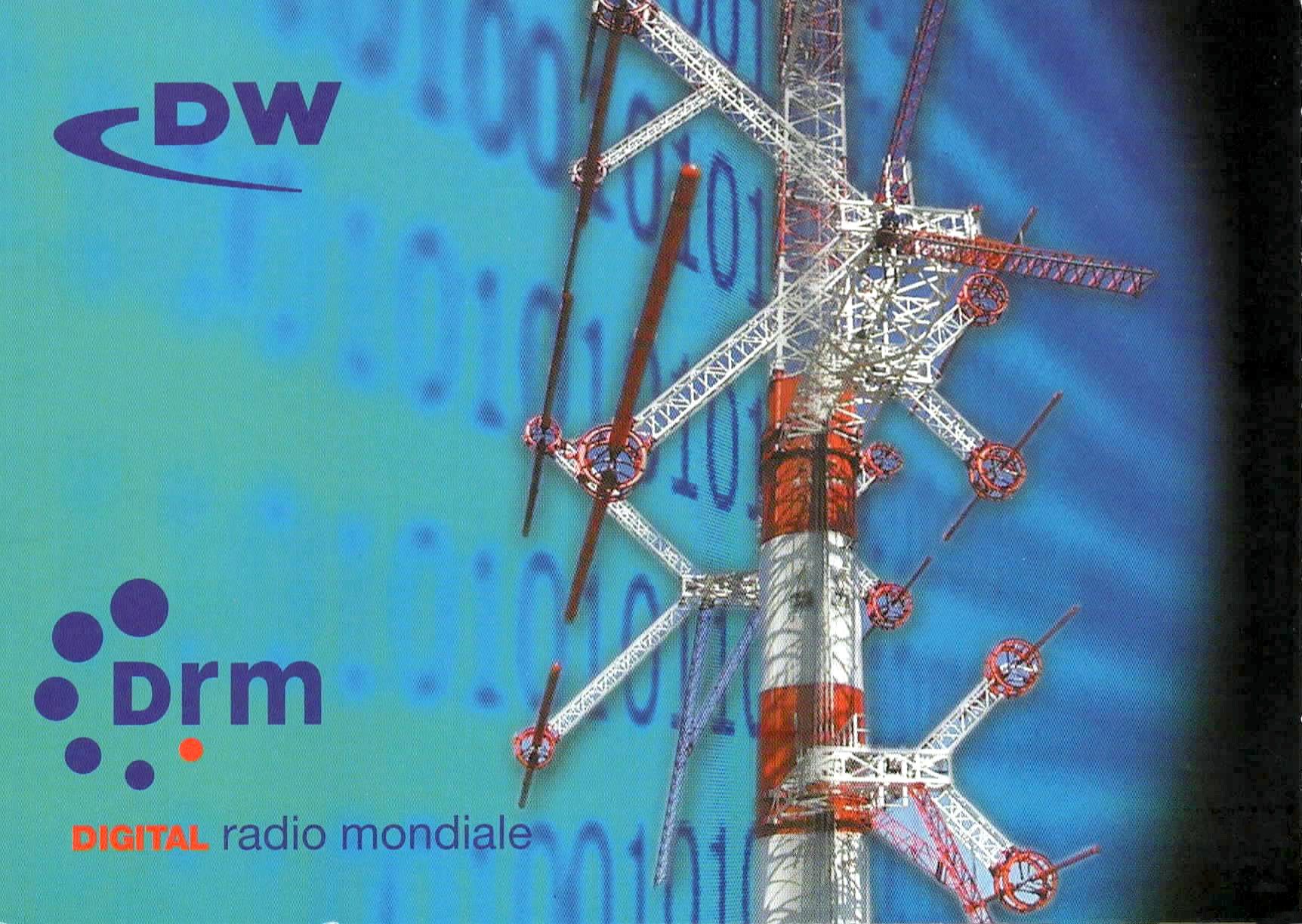
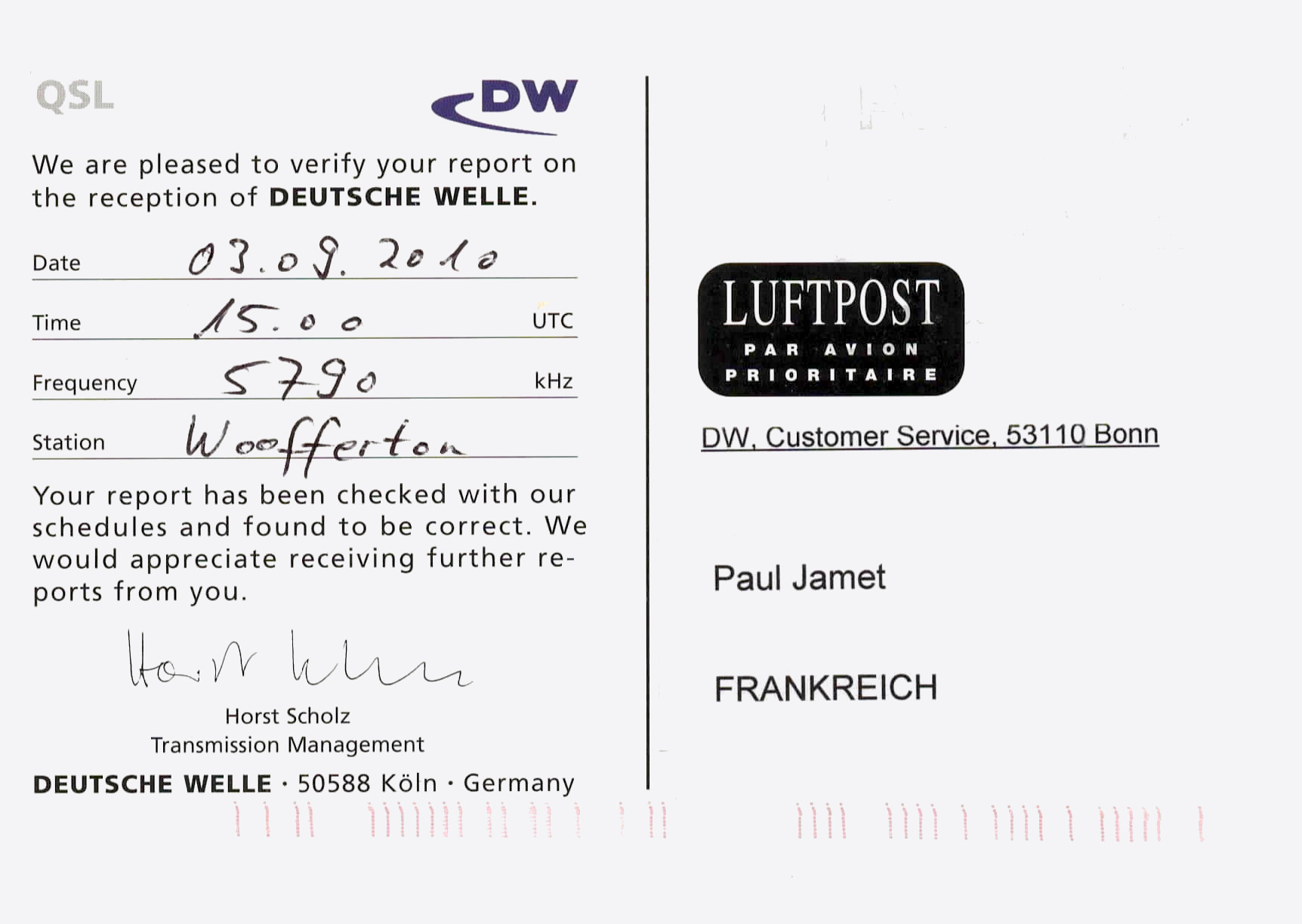
I’ve received hundreds of QSL cards by snail mail. After some hesitation, I’ve chosen a QSL card that I received quickly (in 6 days) but which reflects a time when two very important international radio stations were strong believers in Digital Radio Mondial (DRM):
Testimony of a Joint BBC / DW DRM Programme for Europe
by Paul Jamet
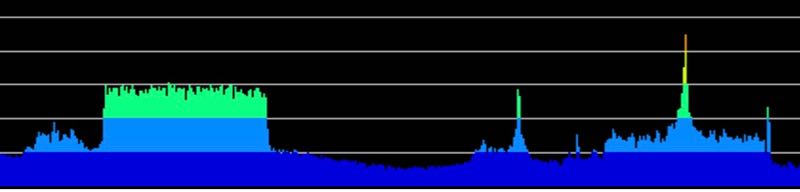
My most memorable QSL card bears witness to the collaboration between the BBC World Service (BBC-WS) and Deutsche Welle (DW). These two broadcasters launched a major radio project in the late 2000s: a joint shortwave transmission in DRM (Digital Radio Mondiale), aimed at providing a high-quality digital service for Europe.
The BBC and DW established a partnership to pool their transmission capabilities and deliver a single digital stream (in English) across Europe. Transmission sites located in Sines (Portugal), Woofferton (United Kingdom), and Moosbrunn (Austria) were used to ensure broadcasting from 06:00 local time until midnight.
This is why I invested around €300 in purchasing a DiWave 100 receiver to listen to this programme, broadcast using a technology that both broadcasters were intensively testing at the time. The AFS function—Alternative Frequency Switching or Signalling—allowed the receiver to automatically follow frequency changes throughout the day without any manual intervention. The programme originated alternately from Berlin or London, on one or more frequencies transmitted from the sites mentioned above.
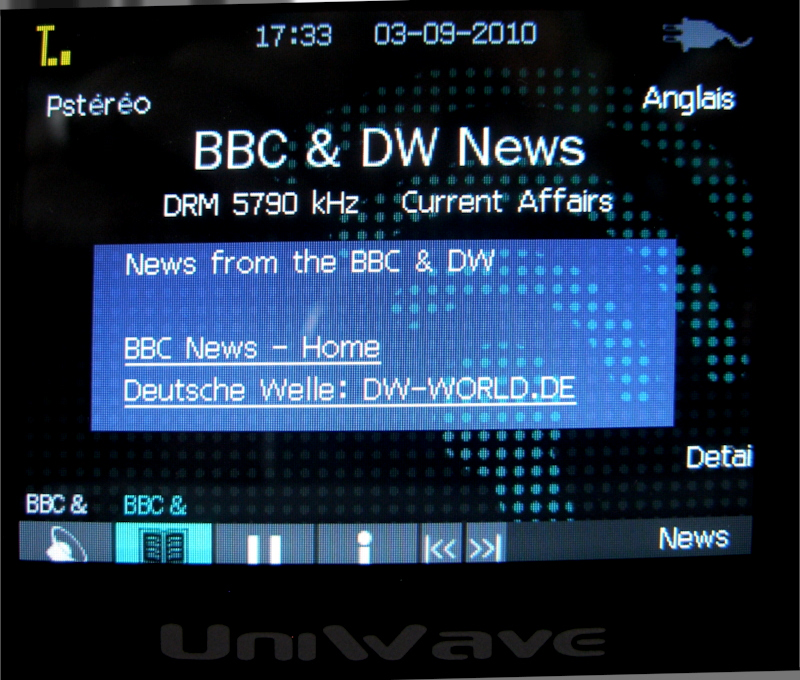
This QSL card, along with the screenshot from the DiWave 100 that enabled me to obtain it, stands as evidence of a broken dream [mainly due to the rise of streaming, but also the lack of DRM receivers].
 The BBC and DW eventually abandoned the project. In terms of digital broadcasting, DAB+—a technology stemming from the European Eureka project—has become dominant across Europe. Today, the BBC World Service, and especially Radio Romania International, continue to broadcast daily to Europe. TDF (Télédiffusion de France) is conducting trials on various frequencies from its Issoudun transmission centre.
Today, I still believe in DRM. This technology uses HF bands and makes it possible to cover vast areas with a single transmitter, while offering significantly improved listening conditions and additional services such as text transmission (Journaline), images, and emergency warning messages (EWF technology).
References :
- DW And BBC Join Forces On DRM
https://www.drm.org/dw-and-bbc-join-forces-on-drm/ - EWF – Emergency Warning Functionality
https://www.drm.org/wp-content/uploads/2024/03/DRM-EWF-Emergency-Warning-Overview-v2.pdf - NAUTEL – DRM
https://www.nautel.com/products/digital-radio/drm/
The BBC has just switched off Long Wave. They are still transmitting DRM for an hour a day in the early morning. They should transmit coloured weather maps for ships along with weather forecast text daily. After all India has at least 13 million vehicles containing DRM receivers installed by the manufacturer on the production line.
Why should the BBC transmit coloured weather maps for ships if there are no receivers capable of receiving them? Would these coloured weather for ships be supposed to be received by a tiny minority of Indian motorists? I mean, I’m not directly against it – they still maintain this token DRM presence (not sure why), so it wouldn’t cost them anything to add maps, comic strips or whatever else – I’m just wondering what would be the use case for it?
Without transmitting an essential service no receivers will be sold!
But the BBC is indeed transmitting, isn’t it?