
 by Dan Greenall
Before the days of the internet and e-mail, the most common way for the listener to contact a radio station was to mail them a letter. This would include requests for a QSL card or letter, which would “officially” verify that reception took place and the details heard were accurate.
 Waiting for a reply was part of the SWL experience. A few weeks would go by, sometimes months, and the anticipation would build. I would arrive home from school or work each day in hopes of finding an envelope bearing exotic-looking stamps from halfway around the globe in my mailbox. This was the ultimate reward! Although I didn’t realize it at the time, many of these QSL’s would one day bear historical significance.
 Today, I have to admit, much of that magic is gone. With the advent of online streaming and the availability of remote SDR’s, broadcasters are understandably less enthusiastic about receiving a report from a distant listener. Though I have one or two email QSL’s, I have not mailed out a reception report since 1999.
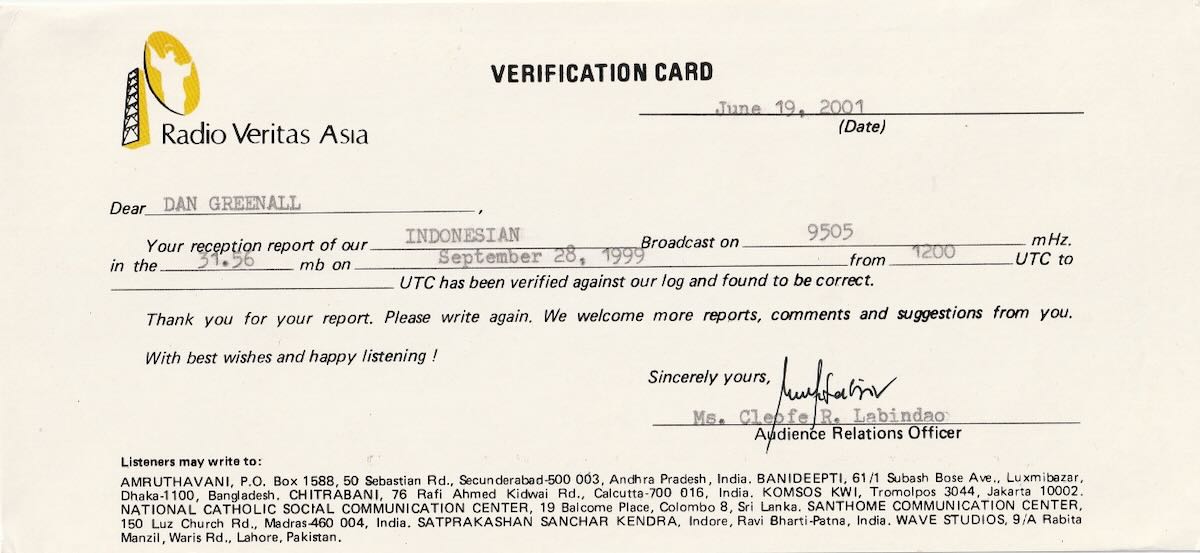 It was to Radio Veritas Asia in the Philippines, and their card finally arrived in 2001.
Some of my favorites were personal replies from a staff member at the station.
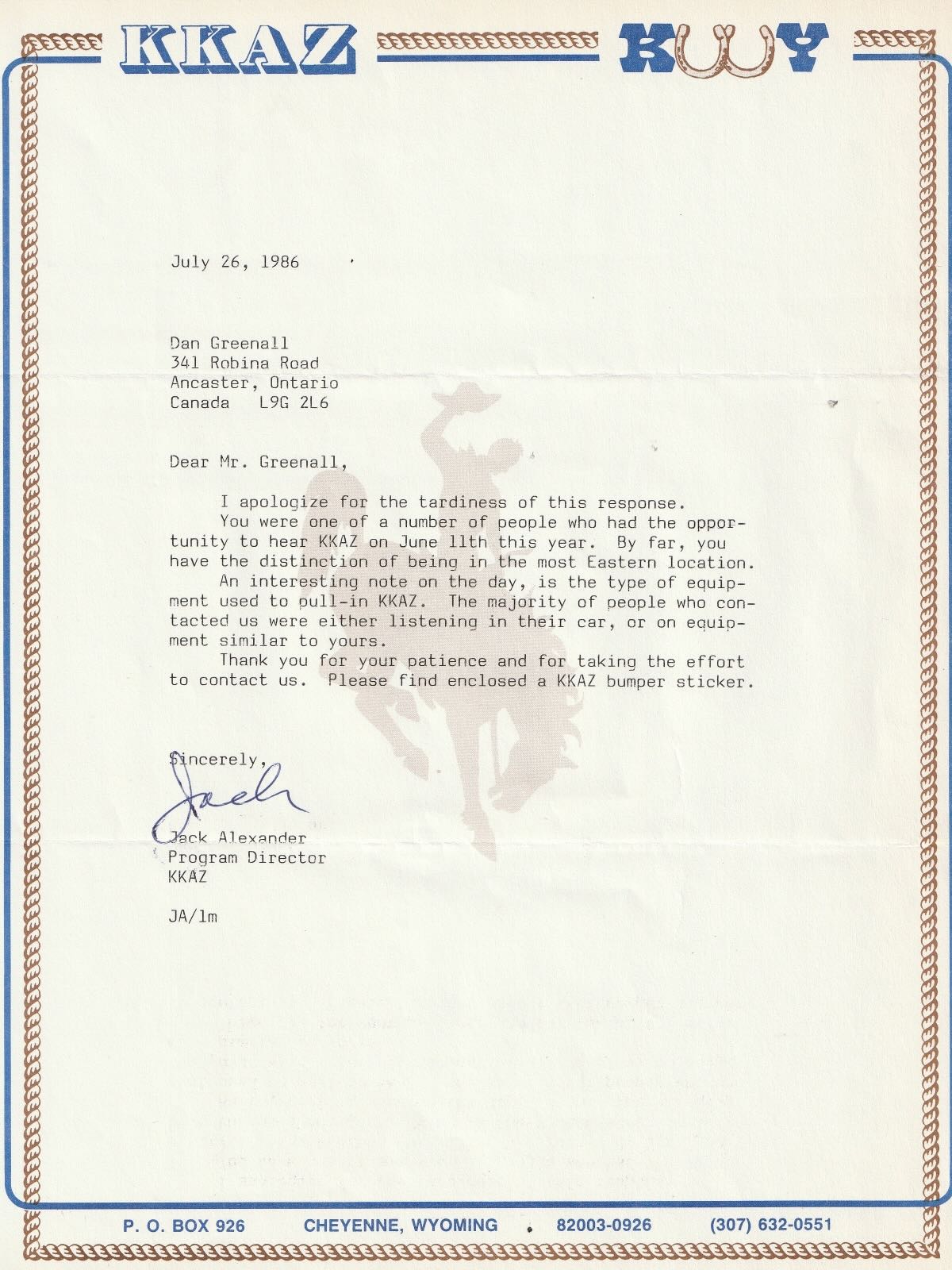
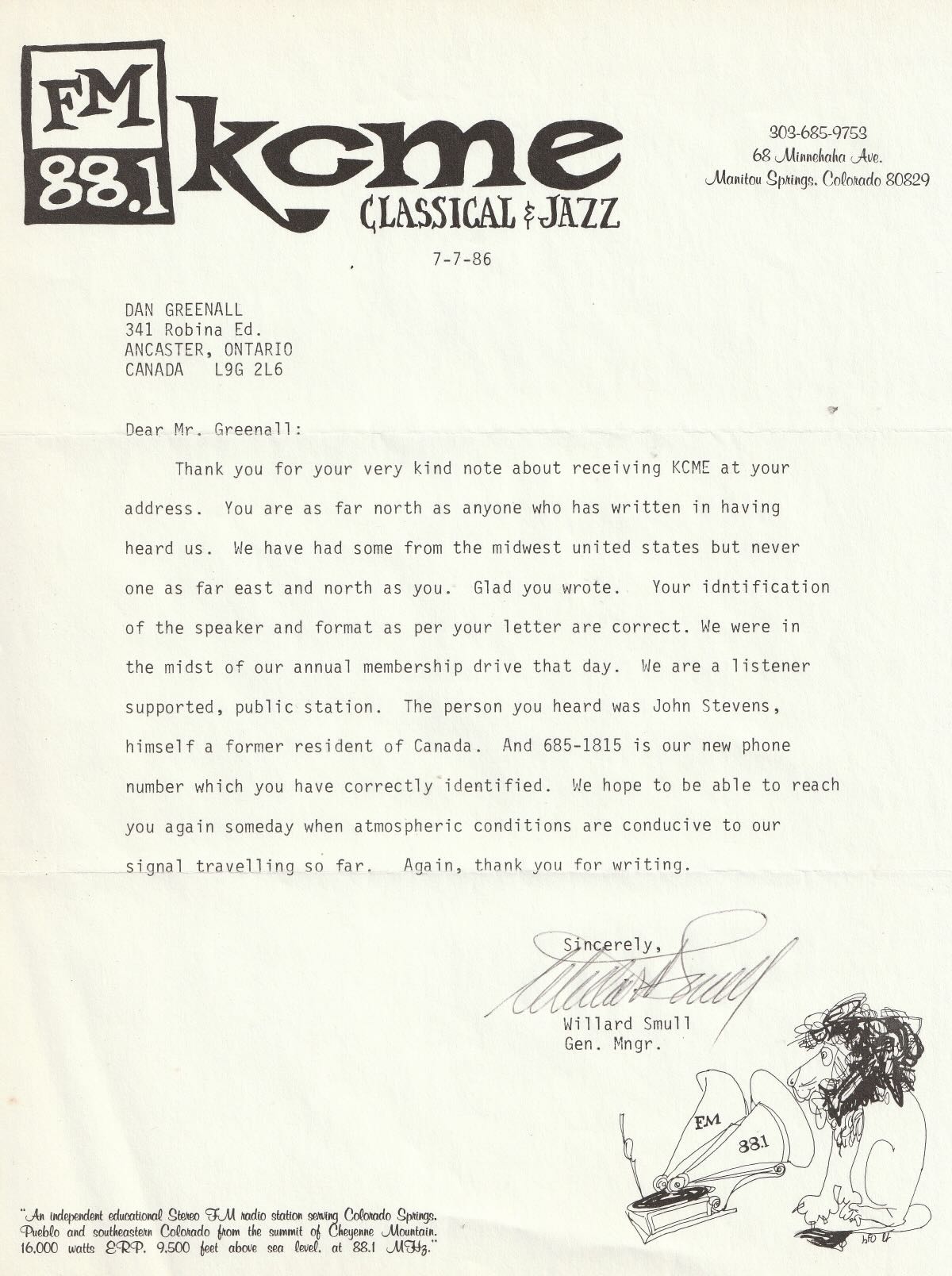
Examples are these 1986 letters received from FM stations KKAZ in Cheyenne, Wyoming, and KCME, Manitou Springs, Colorado, informing me that I was their most distant listener on the date of reception.
As well, B. Rudolph Paulus, the station manager at a low-powered maritime station in Rabaul, Papua New Guinea, typed out a long friendly letter and even included eight colour photographs of the station, equipment, and staff members.
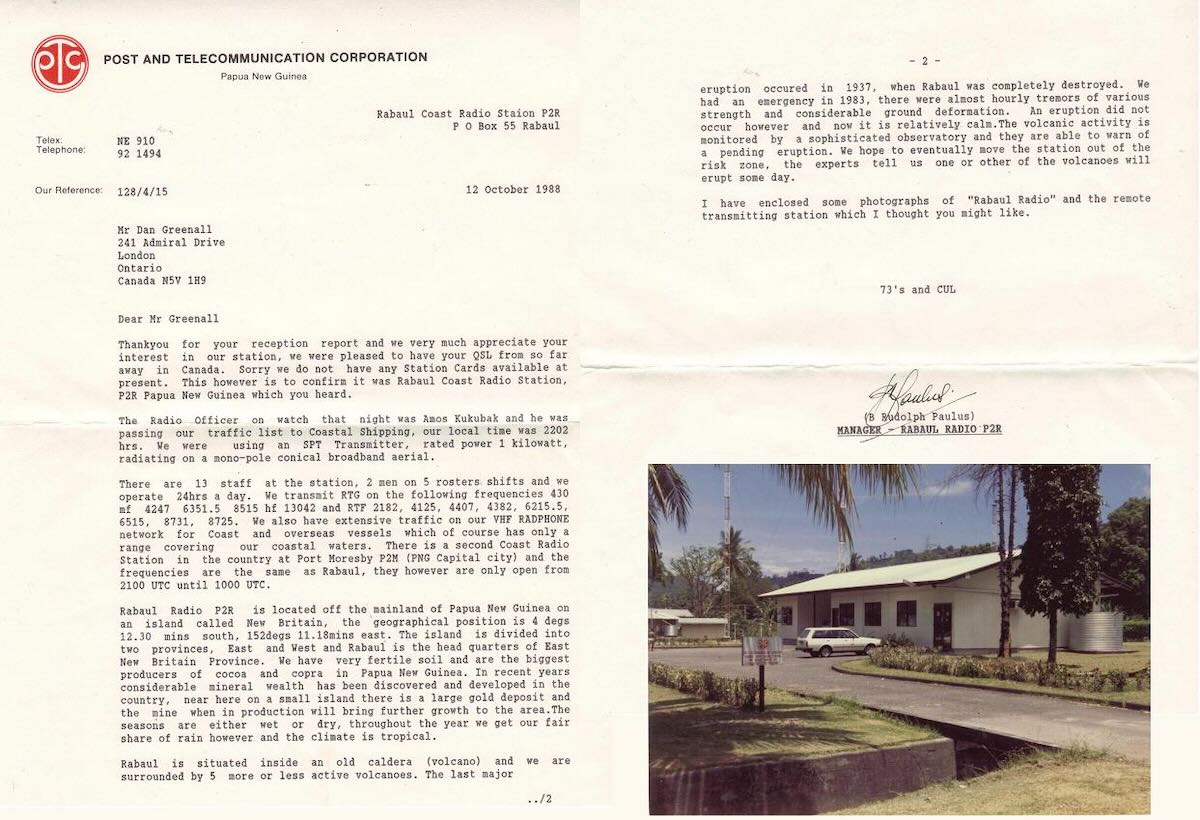 That was in 1988. Six years later, Rabaul suffered from a devastating volcanic eruption, and the fate of the station is unknown.
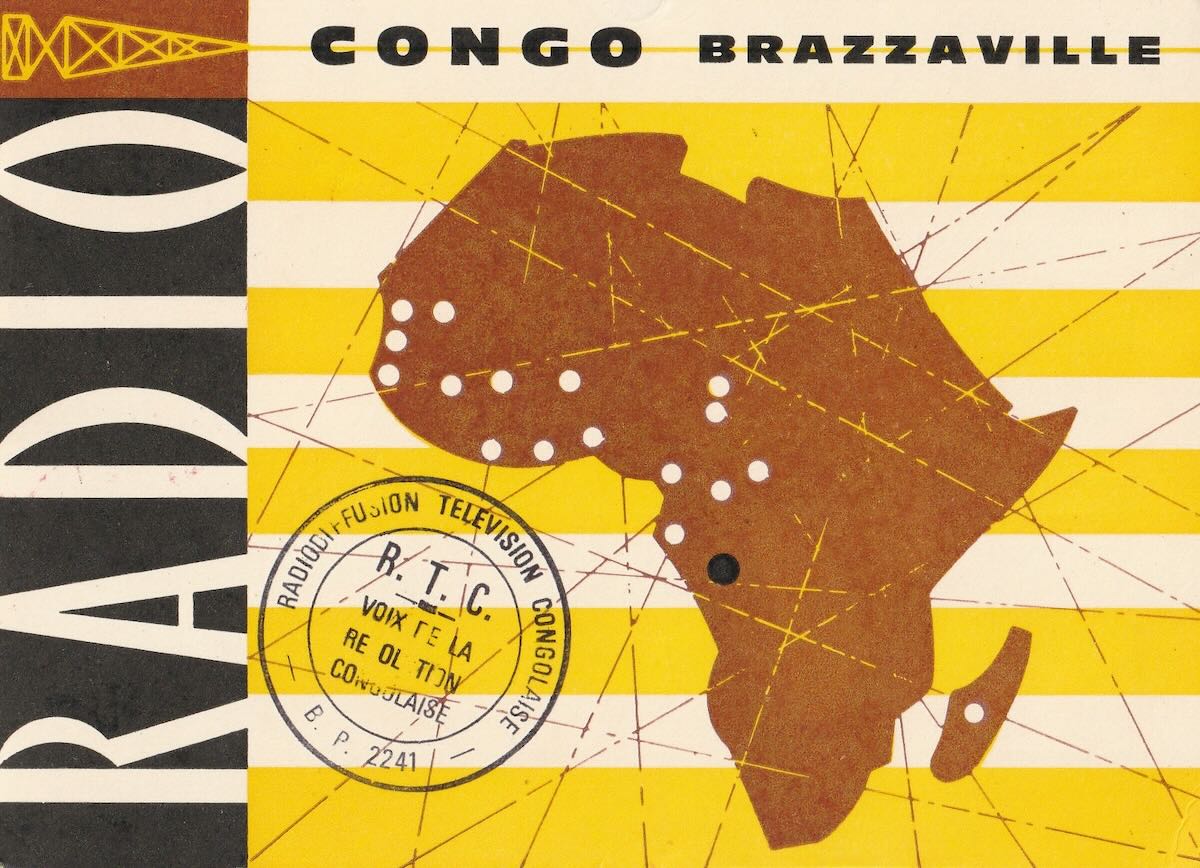
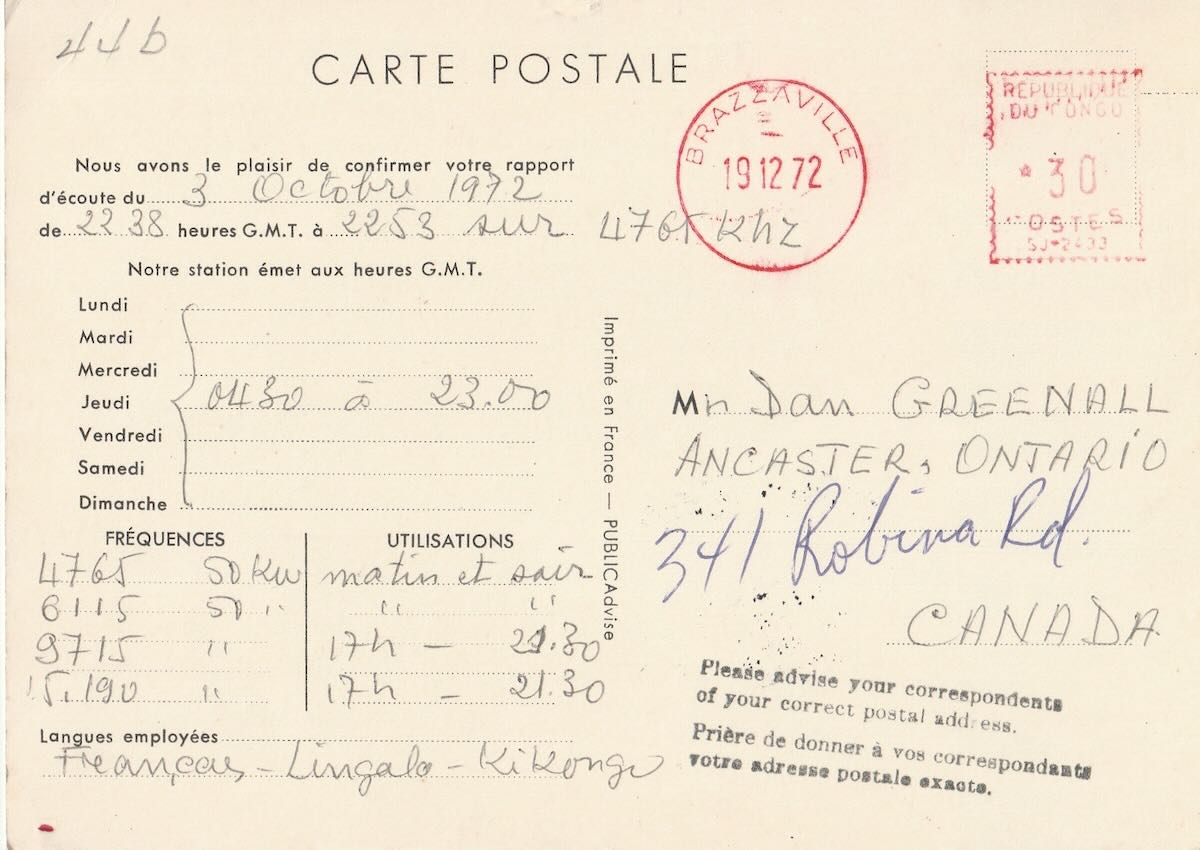
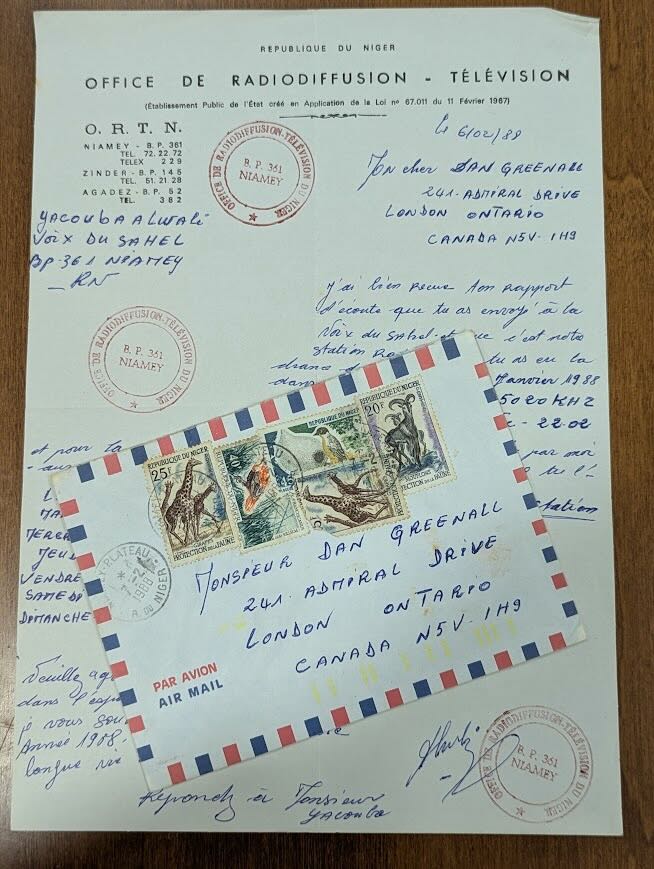
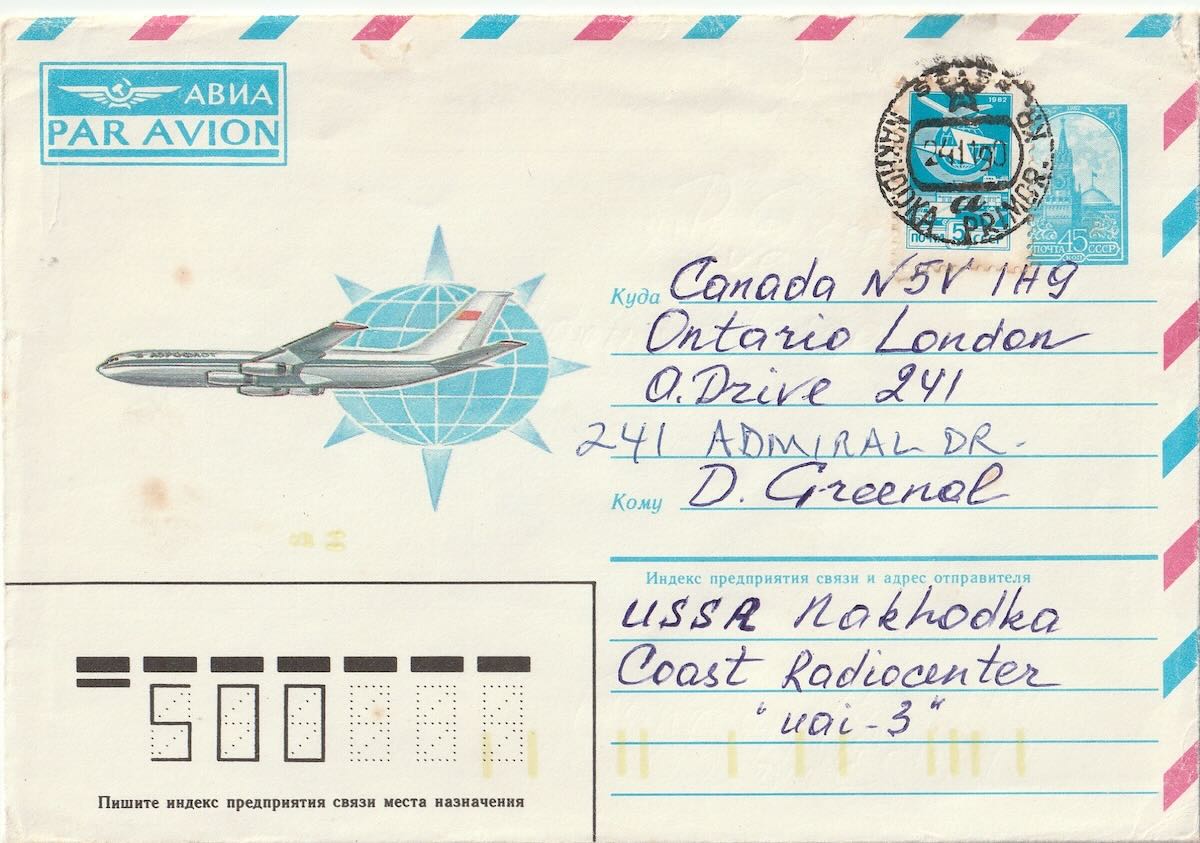
In some countries, the postal service could be irregular at best, so one could really never know if your letter got delivered. Then again, there were times when a station would fail to write my complete address on the card or envelope before mailing it. Fortunately, these managed to reach my hometown, where the folks at the local post office seemed to know who I was and added the missing information. These ones from Congo and the USSR were lucky to arrive.
As a radio amateur VE3HLC in 1978, I was thrilled to receive this beautiful postcard from a station I had contacted in the jungles of Guyana.
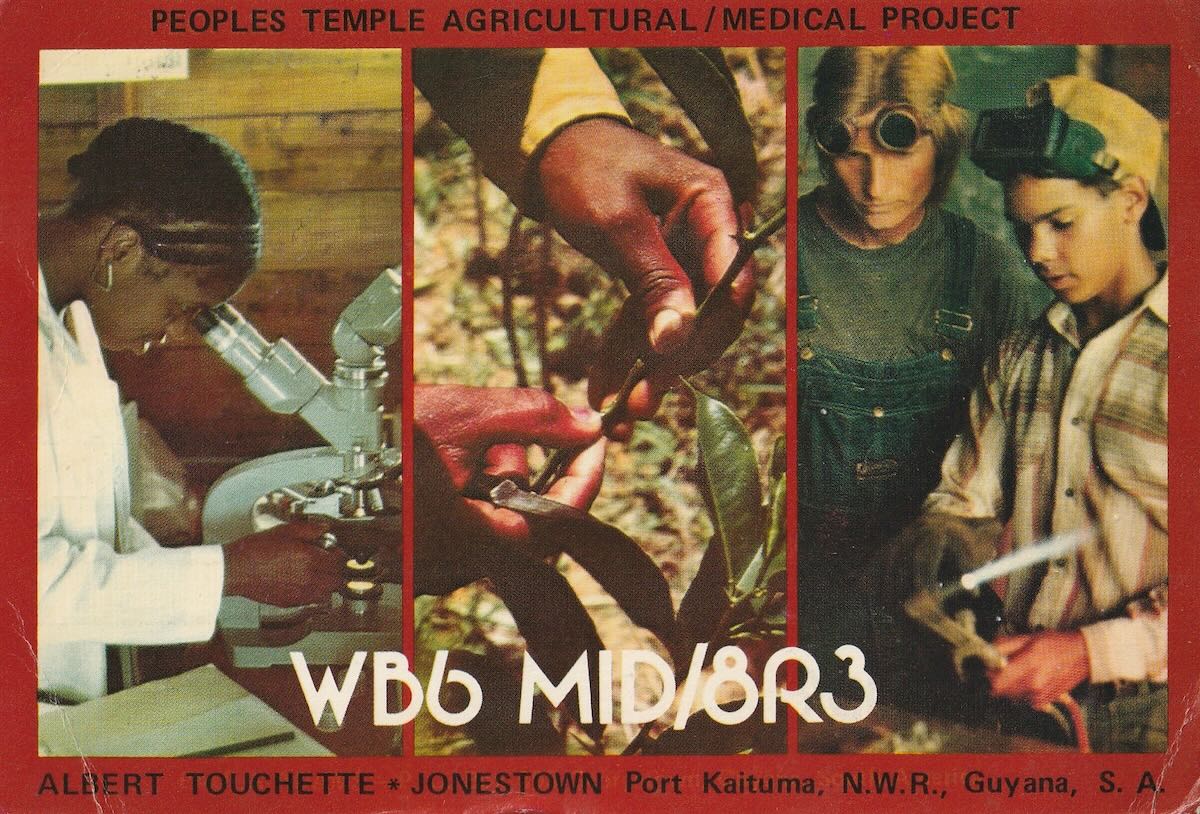
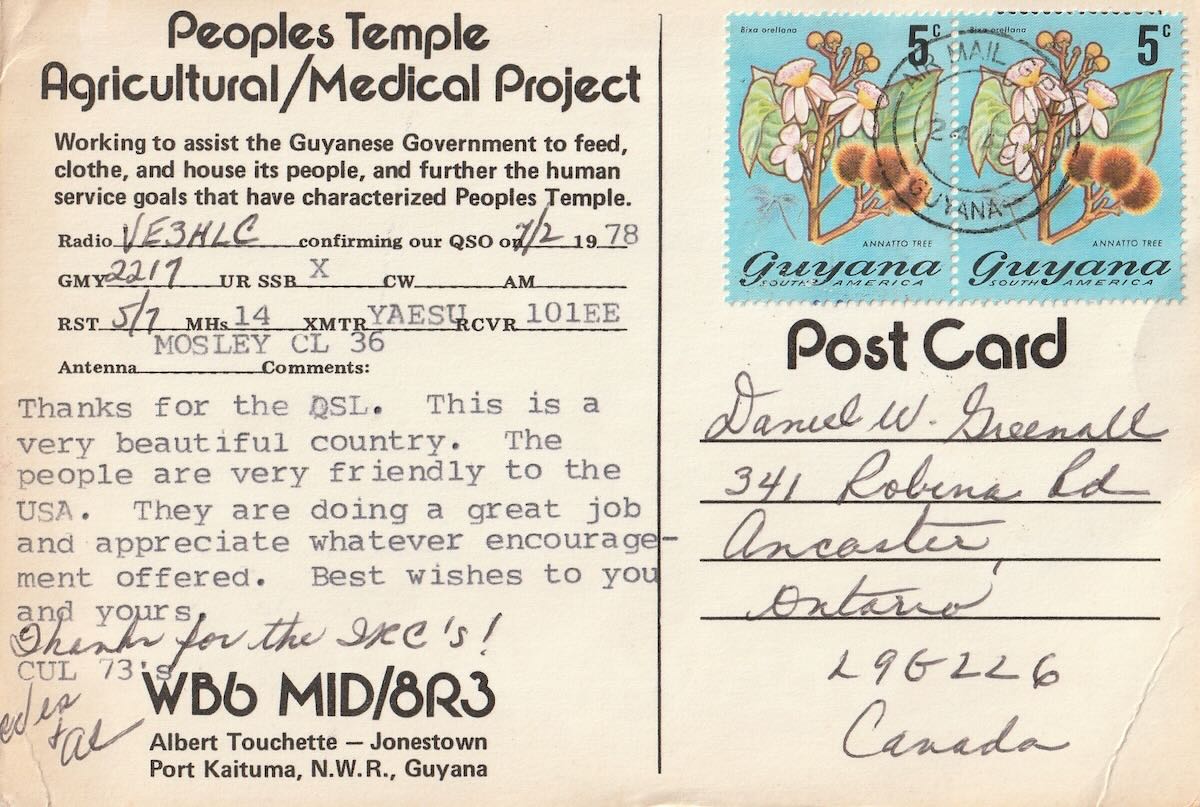 A few months later, I was horrified to learn of the unspeakable tragedy that had occurred at the Peoples Temple in Jonestown.
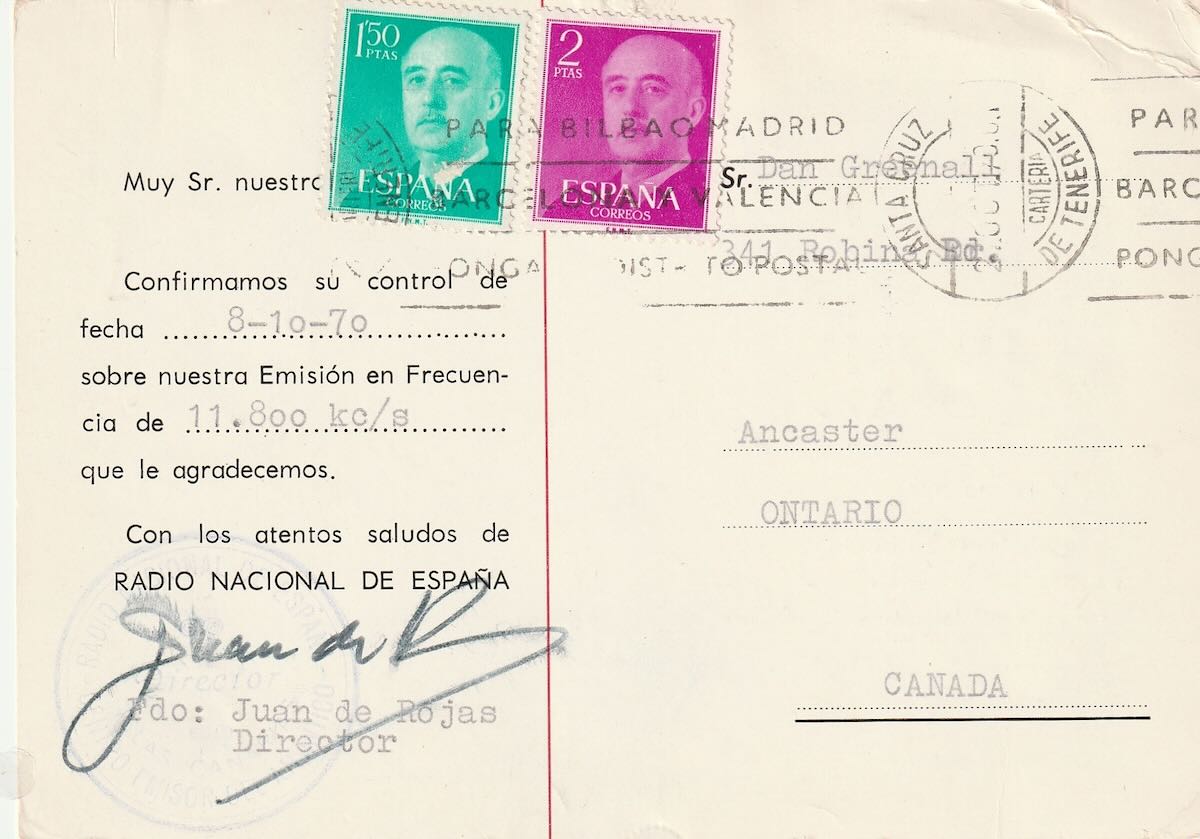
Even the postmark could prove significant, as evidenced by this card from Radio Nacional de España that came direct from their relay site at Santa Cruz de Tenerife in the Canary Islands.
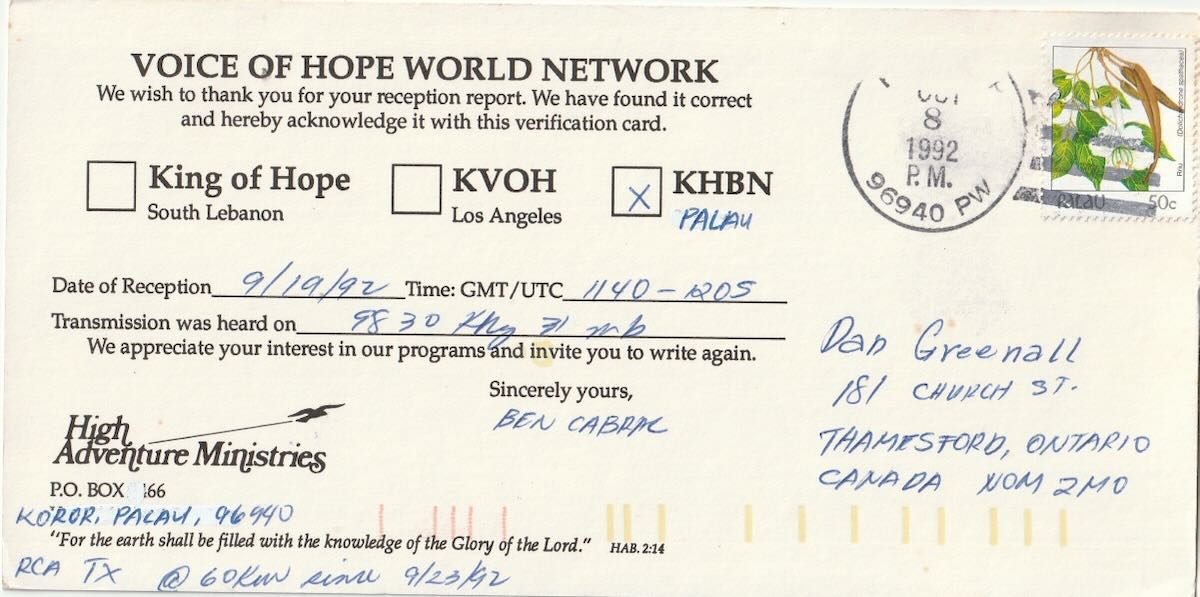
 In 1992, the island of Palau was still being governed by the U.S. The postmark on this card from KHBN shows the old zip code they once had.
 Many long-time listeners continue to keep these historical treasures tucked away in boxes or albums, waiting for their stories to be told. What is your most memorable QSL?