The Vietnam Wars
Connecting the Pieces Through Radio: A Personal Journey
by Don Moore
Part One
Don’s traveling DX stories can be found in his book Tales of a Vagabond DXer [SWLing Post affiliate link]. If you’ve already read his book and enjoyed it, do Don a favor and leave a review on Amazon.
Except where noted otherwise, all photos are from the Vietnamese Military History Museum in Hanoi.
Last winter, I spent several months traveling through Southeast Asia. When I arrived in Hanoi I had the usual plans on my agenda. I wanted to learn more about Vietnamese culture and history. I wanted to sample authentic local food. I wanted to spend a few days outside the city to see some natural sites. And there was one more thing. I wanted to understand the Vietnam War better.
Understanding history is always at the top of my agenda when I travel. But this time was different, as it was also very personal. I was too young to have been in the Vietnam War, but the war was a constant presence throughout my childhood. It was on the front page of the daily newspaper. It was in the radio news reports. And it was on television. The Vietnam War is often called the first television war, as television brought the reality of the war directly into our living rooms. My family regularly watched the CBS Evening News with Walter Cronkite and his calm, controlled manner in reporting the news. I remember videos of soldiers hacking their way through dense jungle foliage. I remember bombed-out buildings, helicopters crashing, and wounded soldiers being carried in stretchers. It wasn’t like the war stories in my history books.
Early in the war, around 1966, one of my mother’s cousins was drafted and sent to Vietnam. A few months later, he suffered a severe head wound and was sent home. I was nine years old, and I remember him watching me play with my toy soldiers in a corner at a family gathering. What did he think of my childish innocence? That was the last time I saw him. He left the area and lived a disturbed, difficult life until passing away several years ago.
Once a week, Walter Cronkite would report the official casualty counts from the Pentagon. Whatever the number of American dead was, our South Vietnamese allies generally had about twice that number. And our Viet Cong and North Vietnamese enemies? They always suffered about ten dead for every American killed. The pattern was very consistent, and the numbers said it all. We were winning. So why did the nightly news also carry reports of massive anti-war protests around the country?
The war and the protests against it continued. In 1970, I was in junior high school and still several years too young for the draft. That didn’t stop my mother from worrying that the war would last long enough to drag me into it. It certainly seemed possible. My parents and many of the adults around me didn’t think highly of the hippies doing the protesting. But those same adults were also questioning whether the war was worth the cost. I didn’t understand that. Shouldn’t we want to win the war, whatever the cost?
American history was my passion when I was a child. I read a steady stream of history books that always put my country and its great leaders in the best possible light. My heroes were people like Davy Crockett and Daniel Boone, perfect and admirable in every way. And John Wayne. I loved his western and World War II movies. I was becoming a flag-waving my-country-does-no-wrong super patriot. I believed that the Vietnam War was a good thing and that we were on the side of right. I saw the war as just one more chapter in our glorious history. My parents did not teach me to think that way. That wasn’t who they were. I had gotten that way by taking the books I chose to read and the movies I chose to watch too seriously.
In 1971, I discovered shortwave radio. I wasn’t surprised by the anti-American sentiment on stations like Radio Moscow and Radio Havana. They were on the side of evil. And some of the language they used was humorous. Imperialist running dogs? Really? What puzzled me was what I heard on stations like the BBC, Radio Canada, Radio Netherlands, and Deutsche Welle. They were good guys on our side. Why were our friends so strongly questioning what we were doing in Vietnam? Something didn’t add up.
Mark Twain famously said that travel is fatal to prejudice and narrow-minded thinking. With me, it started with shortwave radio. I expanded my reading list to include history and recent events from the rest of the world, especially Latin America. In the school library, I began critically reading the news reports from Time, Newsweek, and The New York Times. I began to understand that reality was different from what I had come to believe. Until 1971, the world was black and white. Good versus evil. Bad guys versus good guys. That’s how a child thinks. In 1971, I began to learn that reality has many shades of gray. Understanding the Vietnam War was a key part of that change.
The Vietnam War ended just before I graduated from high school in 1975. Soon other events and wars around the world filled the daily news cycle. The Vietnam War faded from memory. Then about twenty years ago, I came across bound copies of old Time and Newsweek magazines while browsing at the Penn State University library. I pulled out a volume from the late 1960s and began leafing through it. I spent the rest of the afternoon reading about the war as it happened. That rekindled my interest in the era that I grew up in, and since then I’ve read several books on the Vietnam War. But I always knew I was missing part of the story. That is what I was searching for when I landed at Hanoi airport.
Two Sculptures
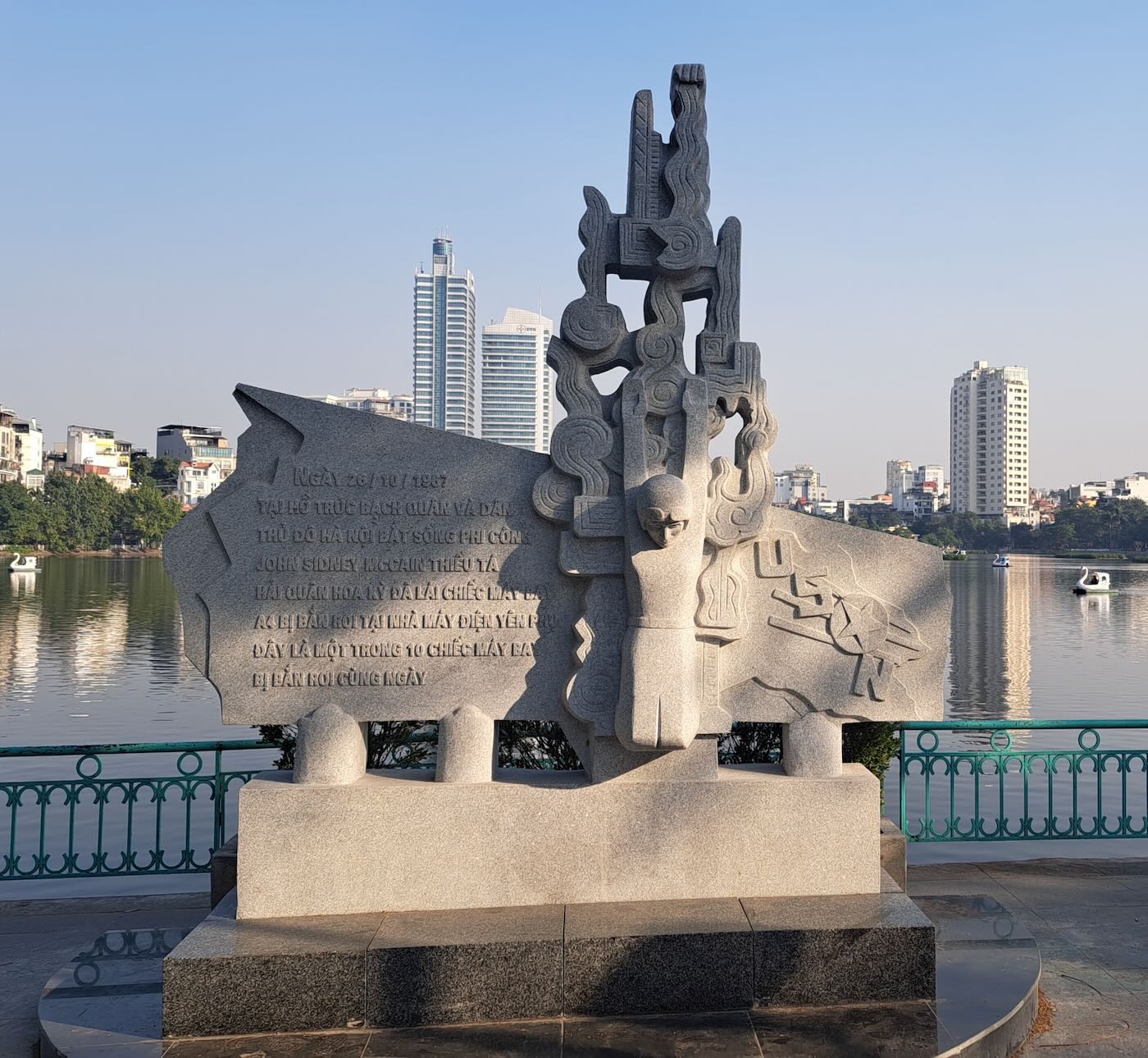
One of the first places I sought out was the John McCain memorial. A young Navy pilot when his plane was shot down over Hanoi in late 1967, McCain spent over five years in Hanoi’s notorious Hoa Lo Prison. Later, he became a congressman and a senator, and in 2008 he ran for president against Barack Obama. McCain wasn’t perfect; heroes never are. But he was a highly principled, independently thinking man, and even those who disagreed with his politics respected him for that.
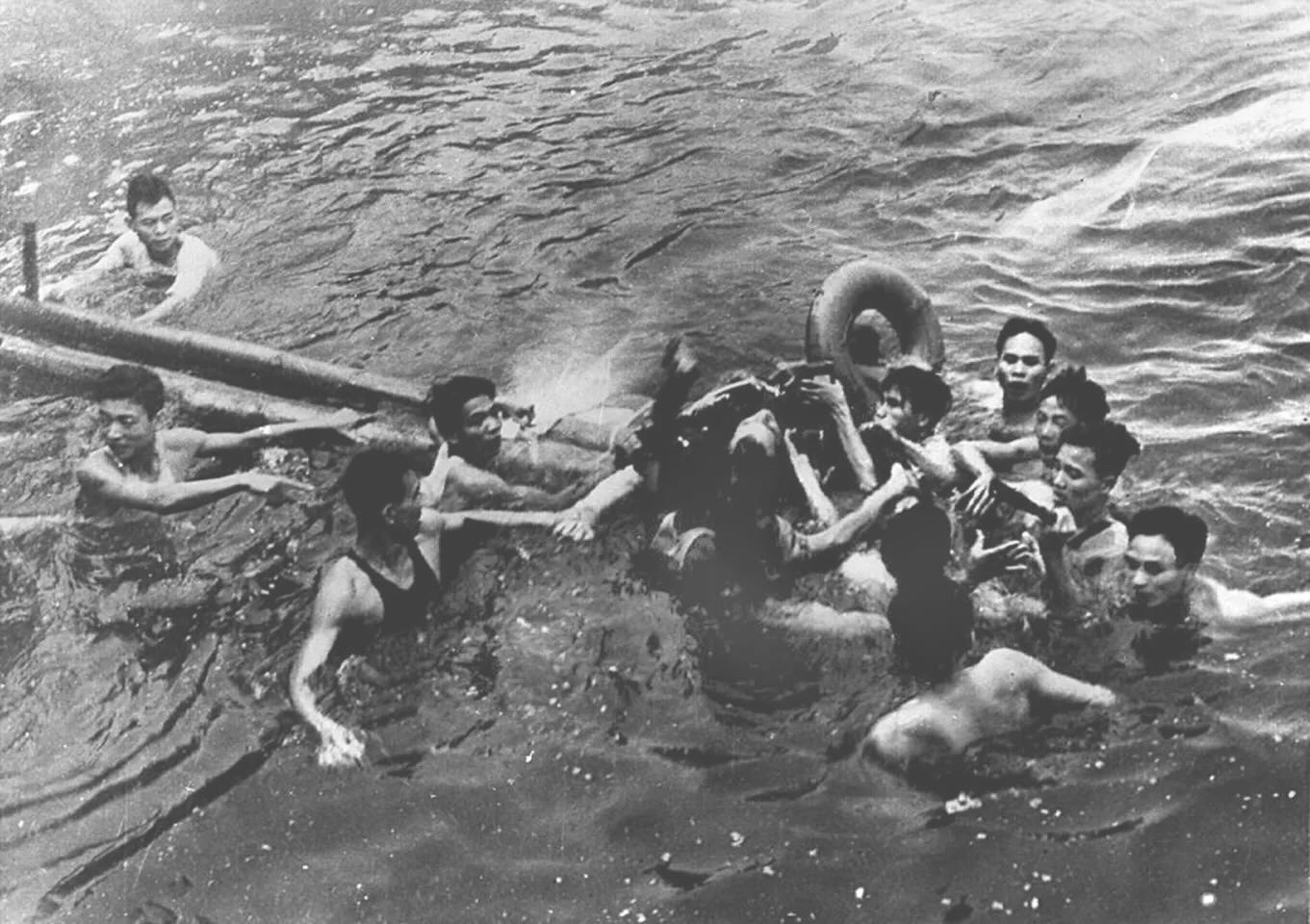
A river runs through Hanoi, and there are several small lakes within the central city. American forces launched over a million air sorties against the north during the war. When their planes were hit by enemy fire, American pilots attempted to direct their damaged aircraft towards water for a better chance of survival versus crashing into buildings. That’s what injured John McCain did. This picture from the Ho Loa Prison Museum shows Vietnamese civilians who went into the lake and pulled McCain from the water before he could drown. They did that for dozens of downed American pilots.
As I stood there looking over the now peaceful lake, I tried to picture the scene as a Vietnamese civilian at the time. Enemy planes are flying overhead, dropping bombs to destroy my city and kill my people. Shells are exploding above me as my side tries to shoot them down. And in front of me in the lake is an injured enemy pilot about to drown as his nearby plane sinks below the surface. Amidst all the chaos, would I risk my life by going into the lake to save his? I know that a part of me would want to let the $%#* drown. Would I save him? I don’t know the answer.
A few days later, I visited the Vietnam Military History Museum, the best place in Hanoi to learn about the war. This statue of Ho Chi Minh, flanked by a man with binoculars and another man with a field telephone, is more meaningful than you might think just by giving it a casual glance.
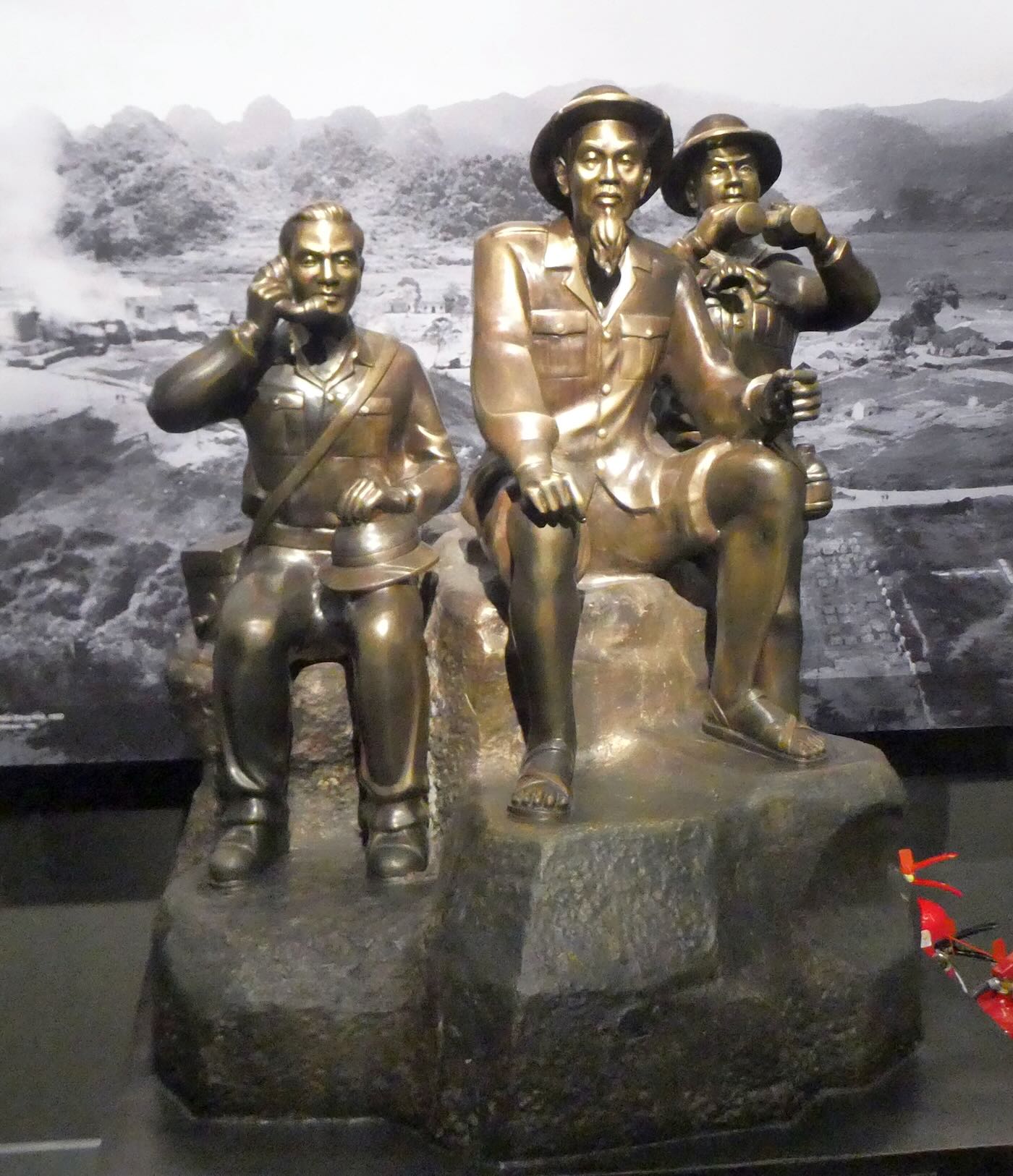
Ho Chi Minh understood that two essential components of winning a war are intelligence gathering and good communication. And that viewpoint carries over into the museum displays. The museum has all kinds of fighting equipment on display. But along the way, there is also an extensive collection of radio equipment with good explanations of how and when it was used. Photos of the radios in the museum would, by themselves, make for an interesting pictorial. But they are meaningless without understanding the context they belong to.
Two Thousand Years of Warfare
The use of radio communication in warfare has only been around for a little over a century, and this story begins long before that. That’s why the title refers to “The Vietnam Wars.” The Vietnam Military History Museum has three sections, and the first is totally focused on China. The story told in that room is long and complex. Two thousand years ago, Vietnam was ruled by China. Then in the year 40 CE, two sisters, Trung Trac and Trung Nhi, began a rebellion. They raised an army of 80,000 men and women (including numerous women generals) and successfully pushed the Chinese out of their region.
Three years later, a much larger Chinese army put the rebellion down and executed the sisters. But it didn’t end there. The Vietnamese people continued to rebel and eventually pushed the Chinese out. In the following centuries, China continued to attempt to rule Vietnam. Sometimes they succeeded, but the Vietnamese never accepted Chinese rule. Men and women, together, would rise up to fight the invaders. The lesson in this room is that the Vietnamese people have been fighting to keep foreign powers from controlling their country for over two thousand years. It’s a sobering thought.
By the 19th century, China was in decline but Southeast Asia was now a target for European colonialism. So the subject of the second section of the museum is France. In 1858, French troops landed in Da Nang, along the central coast. That initial attack was repulsed but the French regrouped and a year later attacked Saigon, in the south of the country. This time they established a foothold and the three years of war that followed resulted in France gaining control of three southern provinces. The next few decades were a series of wars followed by treaties intended to be broken until eventually France gained control of all of Vietnam as well as neighboring Cambodia and Laos.
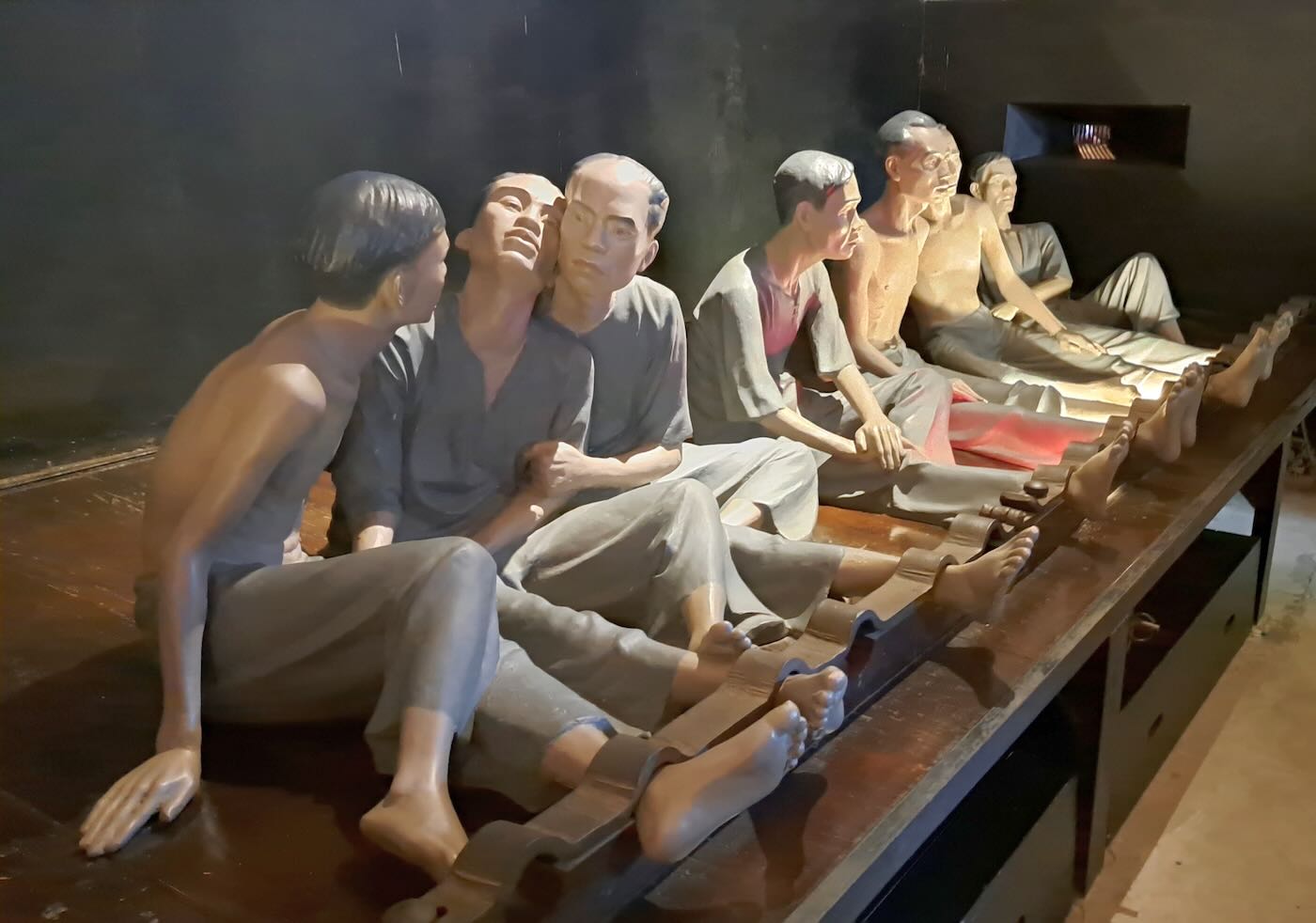
Taking control of Vietnam wasn’t easy and neither was ruling it afterwards. The Vietnamese never stopped resisting French rule and major rebellions broke out every few years. But the best place to understand the scope of Vietnamese resistance is at the Hoa Lo Prison Museum, where John McCain and other American POWs were kept. The prison had seven cellblocks when the French colonial government opened it in 1901. Two cellblocks were for criminals and five for political prisoners. That’s an incredible ratio. And as bad as American POWs had it later, the Vietnamese political prisoners of the early 1900s had it far worse, as shown in this display in one of the actual rooms at the prison museum.
The Japanese Occupation
In June 1940, the French government surrendered to Hitler’s Germany, resulting in the formation of the puppet Fascist Vichy French government in the south of France. Most of France’s overseas territories, including French Indochina, came under control of the Vichy government. But France was a long way from Indochina, and their control was tenuous. In June 1940, Japan invaded northern Vietnam. Initially, there was some scattered fighting, but the two sides, both allies of Hitler’s regime, soon came to an understanding. The Vichy French would continue to nominally rule French Indochina, but the Japanese were really in charge.
Needless to say, the Vietnamese people did not acquiesce. And as bad as treatment from the French had been, the Japanese were worse. Once again the Vietnamese rebelled and gradually all the resistance forces became united under the leadership of the Viet Minh organization and its founder, Ho Chi Minh. For most of the war they were on their own, but by early 1945 the United States began air-dropping supplies and advisors from the OSS (later CIA).
On 15 August 1945, Japan announced its unconditional surrender, which would lead to the official surrender ceremony a few weeks later. It was understood that Japanese troops would remain in control of the various territories they had occupied until the European colonial powers could send in forces to replace them. The Viet Minh, however, did not agree. The very next day, Ho Chi Minh convened a meeting of the Viet Minh leadership. Also present were several American advisors.
The result of the meeting was what became known as the General Uprising. American-made radio equipment made it very easy to coordinate plans throughout the country. Over the next two weeks, Viet Minh forces marched in and took over cities and towns all across Vietnam. In one or two places the Japanese soldiers briefly resisted but mostly it was a peaceful takeover. The Japanese soldiers understood that the war was over and saw no reason to fight and die for French rule in Vietnam.
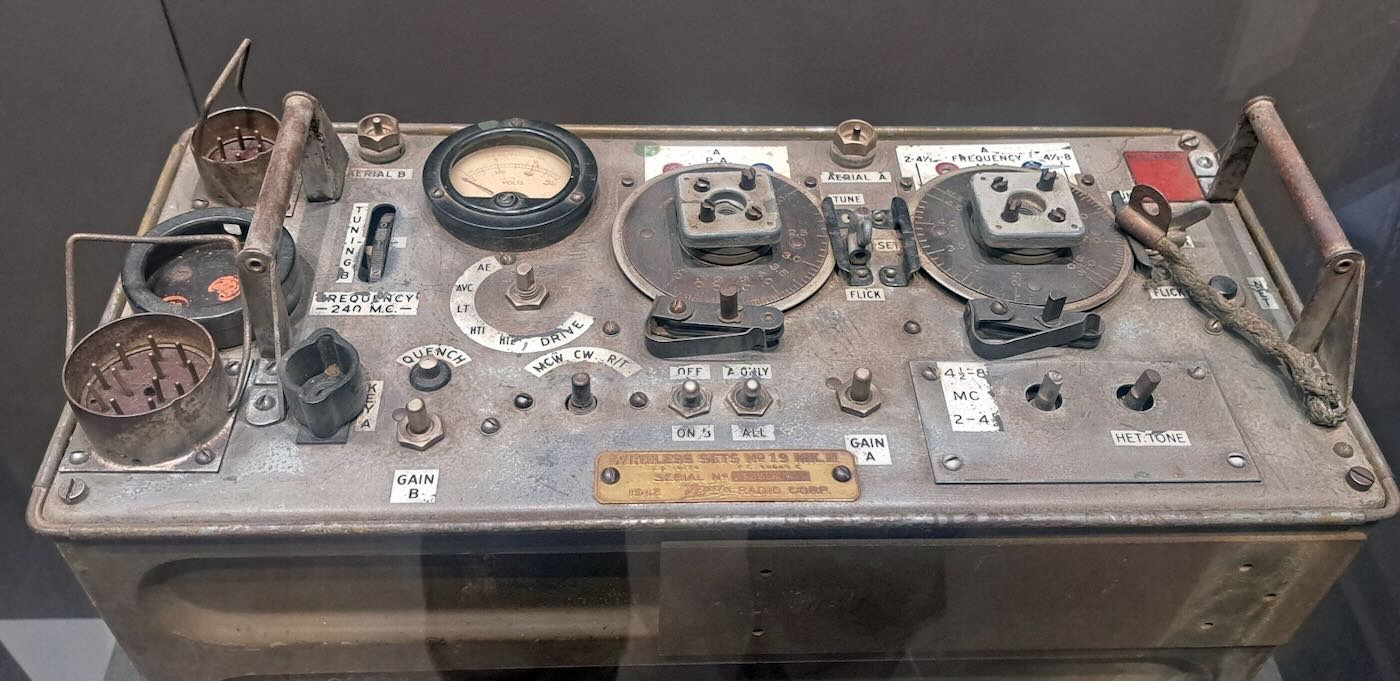
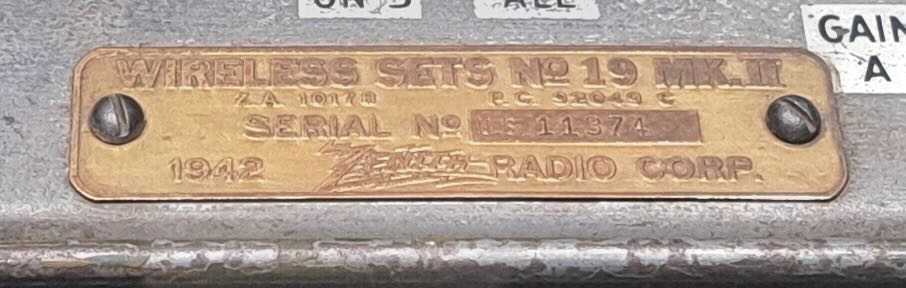
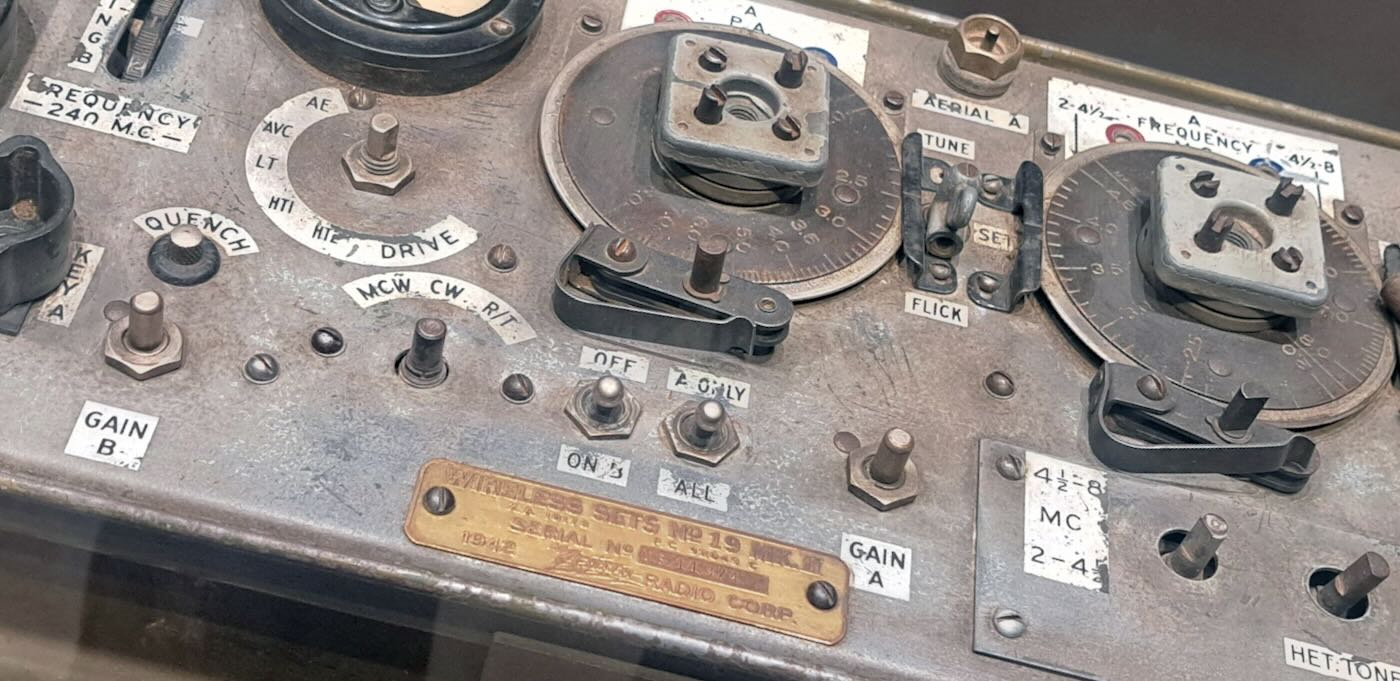
The Wireless Set No. 19 was developed in 1940 by the British War Office and saw heavy use in the North African desert campaigns. The Mark II models were primarily made by several manufacturers in Canada in 1942. Most of those had Cyrillic labels and were sent to the Soviet Union. A small number of Mark II models, including this one, were made in Chicago by the Zenith Corporation.
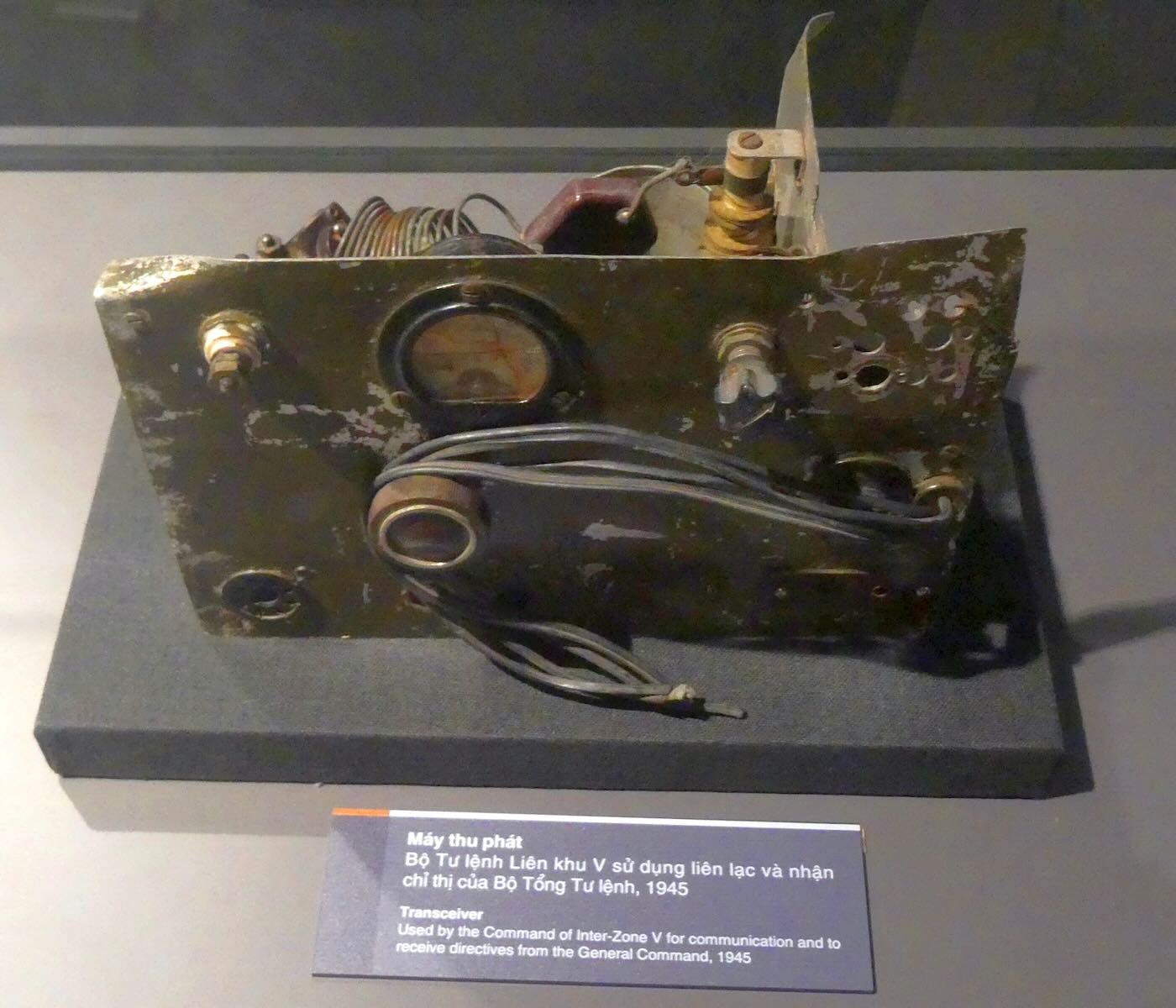
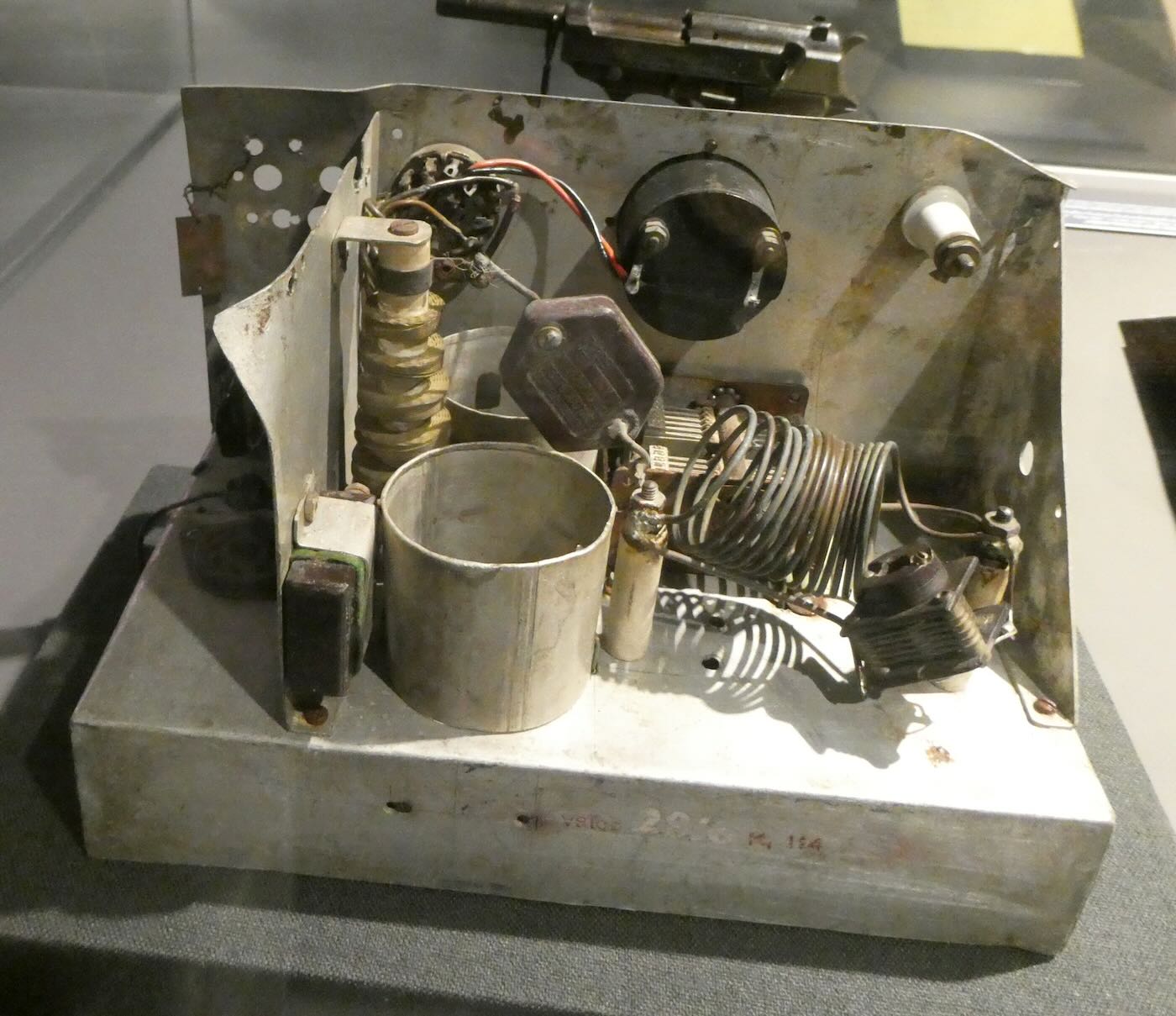
There were no markings to indicate who made this next set, which appears to be homebrew.
The next piece is truly a spy radio. The first photo shows the SSR-1-G unit, which was the receiver in the SSTR-1 set. The second photo, from Wikimedia Commons, shows the complete set.
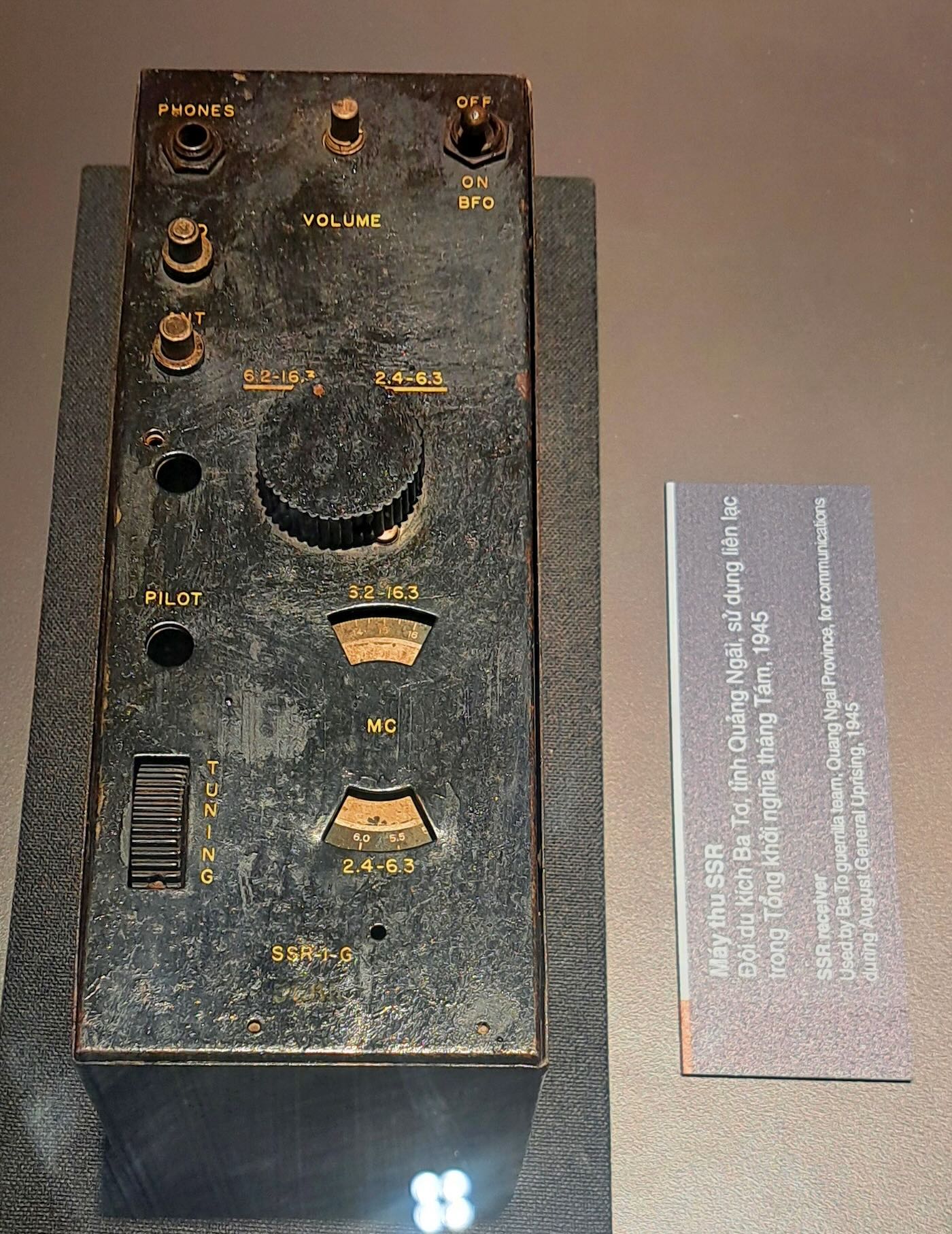
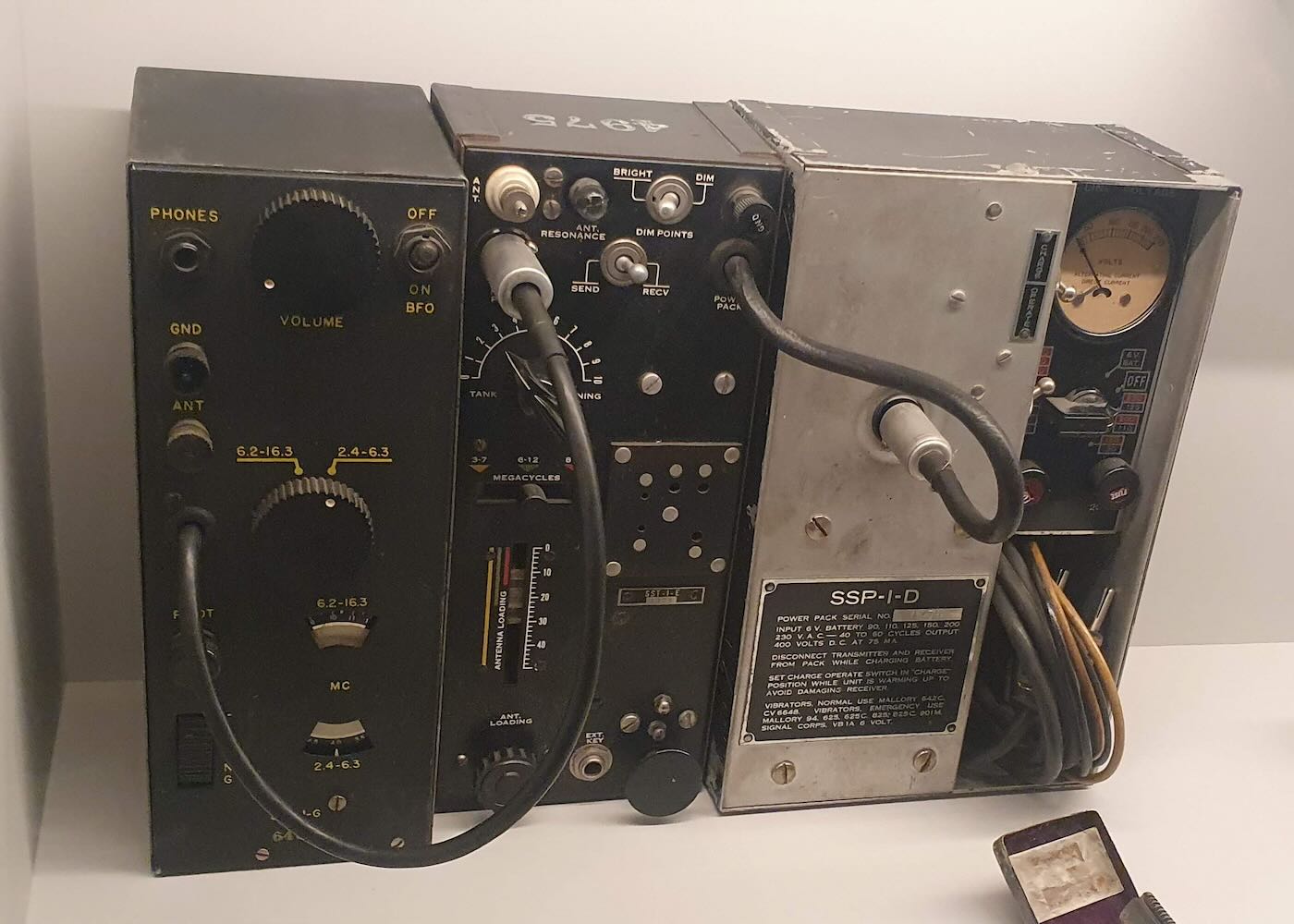
The name stands for Strategic Services Transmitter Receiver Number 1. Developed by the U.S. Office of Strategic Services in 1942, it consisted of a receiver, a transmitter, a power supply, and a box of spare parts. It could run off either AC or DC, and everything could fit in a small suitcase. The versatility and portability of the set made it perfect for use by resistance fighters in Europe during World War II and later by spies in the early days of the Cold War. And some units found their way to the Vietnam theater.
A New Beginning
On 30 August 1945, the Viet Minh under Ho Chi Minh controlled all of Vietnam. Over the next few days, the Viet Minh leadership, with assistance from their American advisors, drafted a Declaration of Independence. It was heavily modeled on the American Declaration of Independence and even directly lifted some phrases in a few places. On 2 September 1945, Ho Chi Minh read the declaration in public and over the radio airwaves. Vietnam was now a single united independent country, totally free of foreign rule.
Next: Part Two
Links
- The Trung Sisters’ Rebellion: https://www.history.com/articles/trung-sisters-vietnam-rebellion-han-dynasty
- The Mark II Transceiver: https://www.radiomuseum.org/r/mil_gb_wireless_set_no19_mk_iimk.html
- More about the Mark II Transceiver: https://en.wikipedia.org/wiki/Wireless_Set_No._19
- A detailed look at the SSTR-1 radio set: https://www.cryptomuseum.com/spy/sstr1/
- Original 1942 instructional video on using the SSTR-1: https://www.youtube.com/watch?v=iQBFxirEmVw