
Canada’s shortwave time station, CHU, is moving

Press release from the National Research Council (NRC) of Canada:
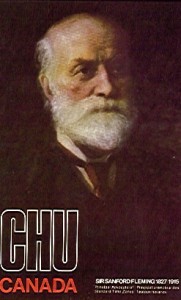
CHU's QSL card used in the 1980s depicting Sir Sanford Fleming, father of uniform times zones.

1980s QSL card from radio station CHU depicting Sir Sanford Fleming, father of uniform time zones.

Time to change your shortwave radio dial

After seventy years of broadcasting Canada’s official time, NRC’s shortwave station CHU will move the transmission frequency for the 7335 KHz transmitter to 7850 KHz. The change goes into effect on 01 January 2009 at 00:00 UTC.

CHU is a part of NRC’s system for disseminating official time throughout Canada, broadcasting 24 hours a day from a location approximately 15 km south-west of downtown Ottawa. Listeners hear tones to mark the seconds, voice to announce the time in French and English, and digital data to set computers.

The atomic clocks at CHU are part of the ensemble of clocks in the time and frequency research laboratories in Ottawa, at the National Research Council Canada. The NRC clocks are used in conjunction with clocks in the time laboratories of other countries to construct the internationally accepted scale of time, UTC (Coordinated Universal Time), which is now the reference for official time used by all countries. UTC is the modern implementation of Greenwich Mean Time.

“Coincidentally, this frequency change comes at a time when NRC is investing resources to refurbish the aging transmitters at CHU in order to provide clear, dependable shortwave services as part of NRC’s mandate to disseminate time to all Canadians.” said Raymond Pelletier, Technical Officer at the NRC-Institute for National Measurement Standards, who oversees the CHU facility. “The shortwave time service is especially beneficial for those in remote locations where there is limited access to internet and telephone communication. CHU also provides a back up against failure of other services.”

In April 2007, the International Telecommunications Union re-allocated the 7300-7350 KHz band from a fixed service to a broadcasting service. Since then, interference on the 7335 KHz frequency has come from many information broadcasters around the world.

CHU listeners in Canada and around the world who have for so long considered the 7335 KHz frequency exclusively for time signals, are very vocal about this interference. We have heard from amateur radio operators, watchmakers, astronomers, and navigators who use the tones and voice signals. As well, comments were received from those who use the carrier as a calibration source at a distance for their equipment.

To give notice to users, CHU will broadcast an announcement in both English and French. More information
about CHU can be found at:
http://inms-ienm.nrc-cnrc.gc.ca/time_services/shortwave_broadcasts_e.html
Comments about the CHU change can be sent by e-mail to [email protected].
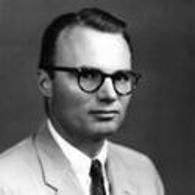
VOA honors former director who introduced Special English programming

Henry Loomis (1919-2008)

Henry Loomis (1919-2008)

Voice of America (VOA) recently broadcast a tribute to former director, Henry Loomis who passed away last month. The VOA tribute was appropriately broadcast in “Special English”–a broadcast method Loomis created and championed at VOA.

Importance of Special English

Loomis developed the concept of Special English for VOA while travelling the world in the 1950s. He noticed that English was quickly becoming an international language and VOA’s international listeners were keen to learn but needed a simplified “text book” English broadcast to better understand the content. Loomis developed English broadcasts with slower speaking rates and more simplified vocabulary.

Though VOA began broadcasting in Special English on October 19, 1959, the programming was internally criticized as ineffective and American embassies even demanded that the slower rate program be cancelled. Regardless, Loomis continued to champion the method and hundreds of listeners soon wrote to VOA praising the system. Today, Special English programming remains some of the most popular at VOA.

Other Special Language Broadcasts

Since I am a native English speaker, I rarely listen to programming in Special English. However, I have listened to programming from other international broadcasters in Special French (Français Facile).

Français Facile from Radio France International gave me the confidence to listen to professional news broadcasts in French when I was still a student. Though I speak French fluently now, I still like to listen to these broadcasts. I believe the slower rate and careful diction actually help to improve my French vocabulary.

If you have never heard a broadcast in Special English, I encourage you to listen to the VOA broadcast mentioned above–click here to download the recorded broadcast as an mp3 file (courtesy of VOA).

More information on Loomis and Special English:

Great article on Passport’s site

Passport To World Band Radio has published a free article on their site called the, “100th Anniversary of Radio’s Great Danes.” It’s a fascinating short read about Einar Dessau, Johan Nyrop and Peter L. Jensen –the first gentlemen to successfully transmit and receive voice and music via shortwave in March 19, 1909. We’re about to celebrate the 100th Anniversary of this event. The Passport Article has some great photos including one of the very first QSL cards.

Sorry–no longer available.

Passport is a real gem in the SWLing world.

If you haven’t picked up your new copy of Passport To Word Band Radio 2009, you can do so by clicking the image to the right, or visiting their site. Their annual book contains not only a full schedule of shortwave broadcasts in a “TV Guide” style, easy to read format, but they also include fascinating stories about shortwave broadcasters and shortwave history.

Update: All links have been removed above because, unfortunately, Passport to World Band Radio is no more. But hey! We’re here! Check out our latest posts and archives.