Tag Archives: Radiofax

Inspired by Carlos, John dives into the world of Radiofax

Many thanks to SWLing Post contributor, John Johnson, who writes:

Well, based on this post from Carlos Latuff–QSL: Australian Radiofax Received in Brazil–I got interested in HF weather fax decoding. I asked how to do it and got an answer but did not find a linked post that would help.

So as usual a wikipedia is helpful: WEFAX – Signal Identification Wiki

Which led me to realize… I already owned the Black Cat Systems decoder in my iPhone, but alas had never tried to use it!

So I reinstalled the HF FAX program. It had been included in a package of iPhone ham software programs I had previously purchased. I then searched the frequencies linked here: Marine Weather Broadcasts from the USCG

And soon after on 12179kc on my D-808 around Noon eastern time on 11/4/23 was decoding my first partial wx fax from Boston, I believe:

I then started fine tuning the D-808 and as you can see the fax quality began to improve significantly…

Alas the signal ended very abruptly, before I could perfectly tune it… I never received a complete fax but this was a fun radio exercise and I will keep at it.

WxFax (this is my name for it) reminds me of my NDB beacons. Both are older tech that appear to be rapidly disappearing. Just last night I was happy to tune two new but weak Canadian LW beacons from my Michigan location on my D-808. Alas I then refreshed the dxcentre NDB list–at: https://www.dxinfocentre.com/ndb.htm–only to find that I would be losing 3 relatively strong beacons to decommission within weeks! Such is the life of an LW NDB chaser in the year 2023.

Thanks to Carlos for giving me something else to chase on SW HF!

John Johnson (N8ELK)

This is brilliant, John! The more you work with the app and reception, the better you’ll get at clear decodes. It’s a skill you’ll build very quickly. Thank you for sharing this!

QSL: Australian Radiofax Received in Brazil

Many thanks to SWLing Post contributor, Carlos Latuff, who writes:

For the first time, I received in Porto Alegre a noisy radiofax from the Bureau of Meteorology of Australia: Mean Sea Level Pressure (MSLP) map.

Frequency of 20469 kHz USB, 08h45 UTC.

Radiofax (noisy)

Original

My request for a QSL card was kindly answered (attached along the radiofax and the original chart from BoM’s website). Notice that BoM’s transmitter is 1 KW only!

I realize that your Radiofax decode wa noisy, but I feel like that’s an impressive feat considering the distance involved, the fact that your radio was a portable, and their output power was only 1,000 watts. Proper Radiofax DX! Thanks for sharing! 

Carlos notes passing of New Zealand MetService Radiofax

Artwork by Carlos Latuff

Many thanks to SWLing Post contributor, Carlos Latuff, who writes:

Hello Thomas,

I’m sad to know that the New Zealand meteorological agency MetService, has retired radiofax in July 1st, and is focusing on “modern solutions” of sending synoptic charts to vessels. In 2021 I received several radiofax charts from MetService in Porto Alegre.

https://about.metservice.com/our-company/national-weather-services/retirement-of-radiofax

This is a video I shot in 2020:

Carlos improves quality of radiofax decodes

Many thanks to SWLing Post contributor, Carlos Latuff, who writes:

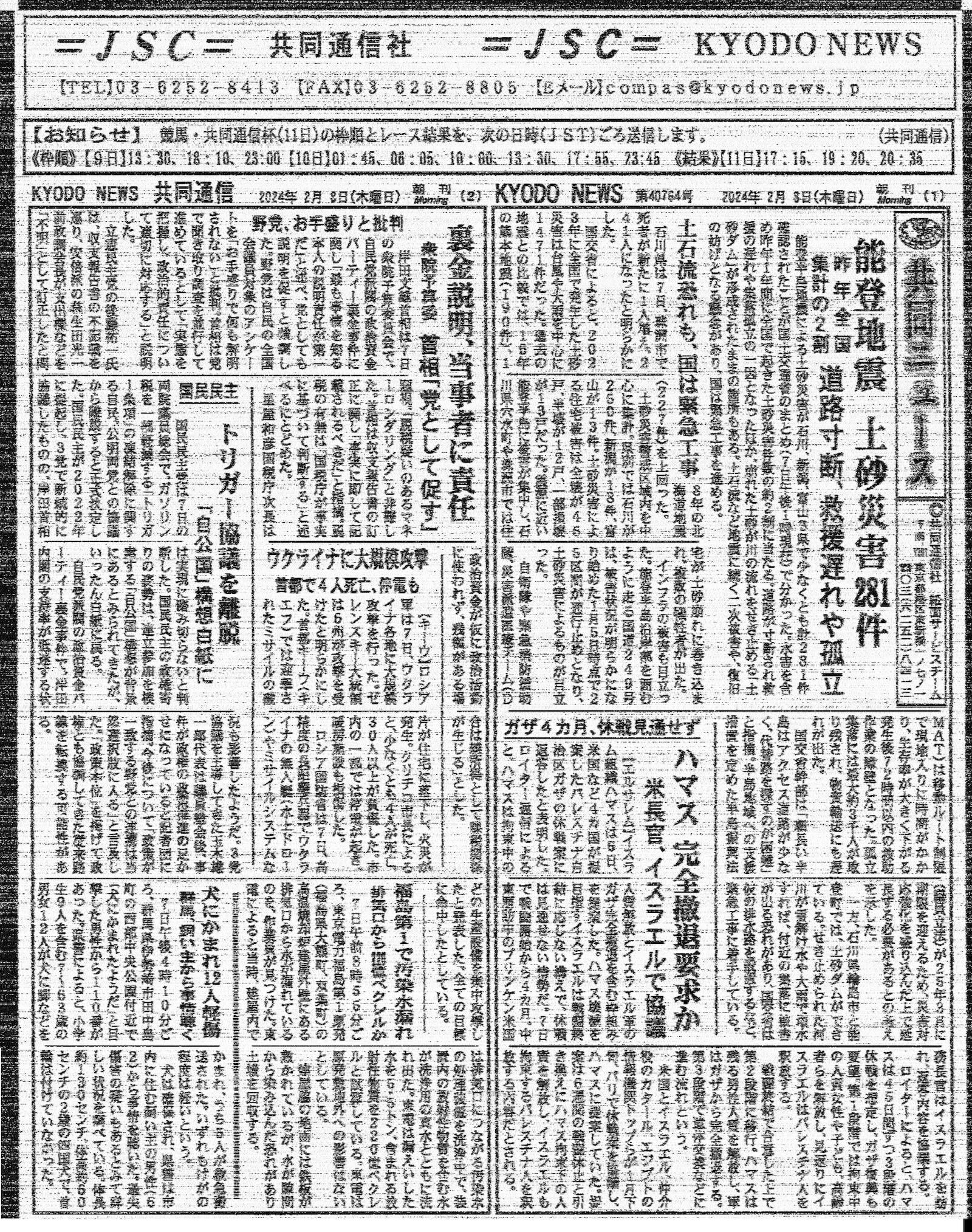
I made some adjustments and now I receive better quality radiofaxes. Since I started receiving radiofaxes in 2021, I had forgotten a fundamental detail.

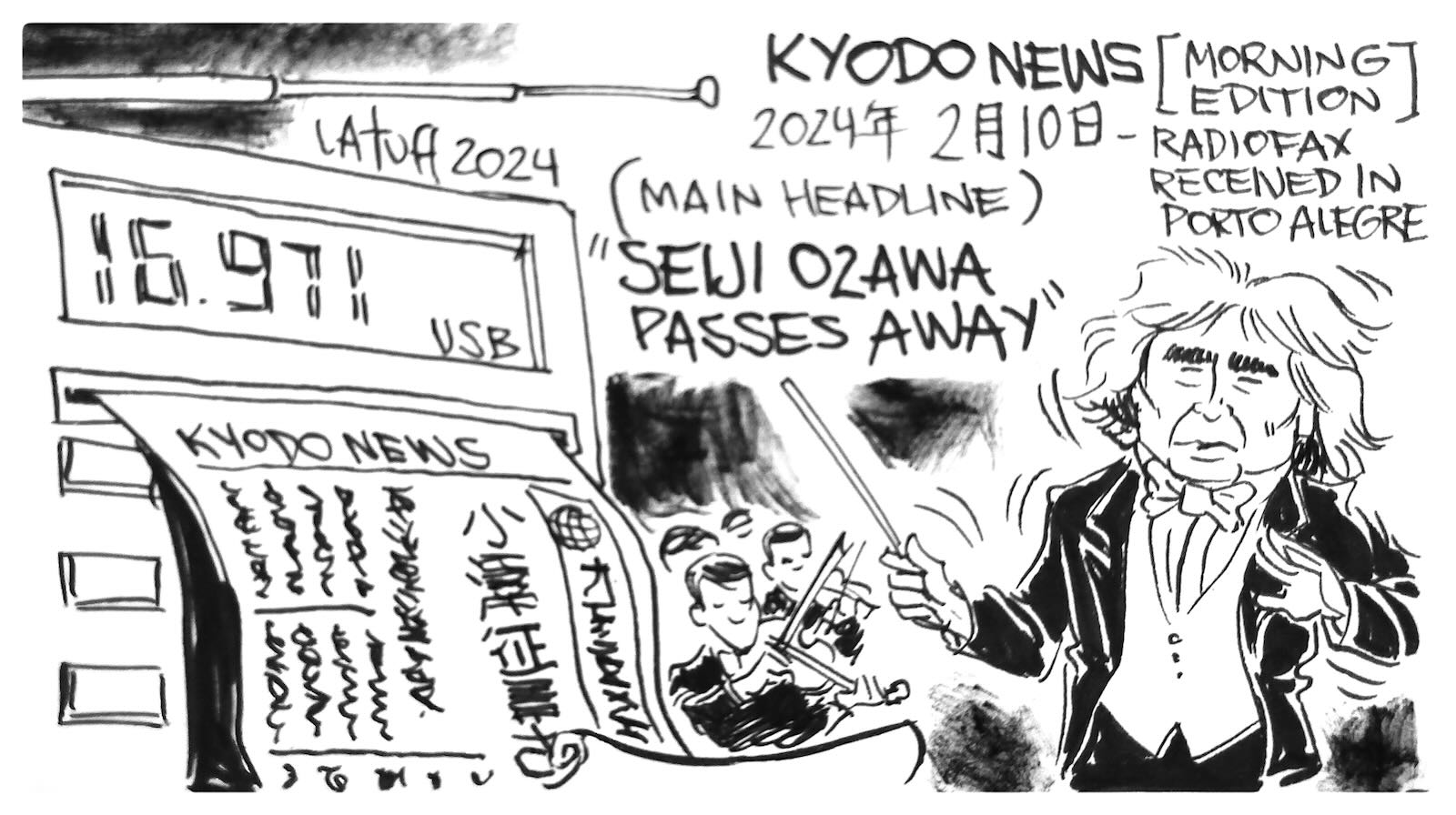
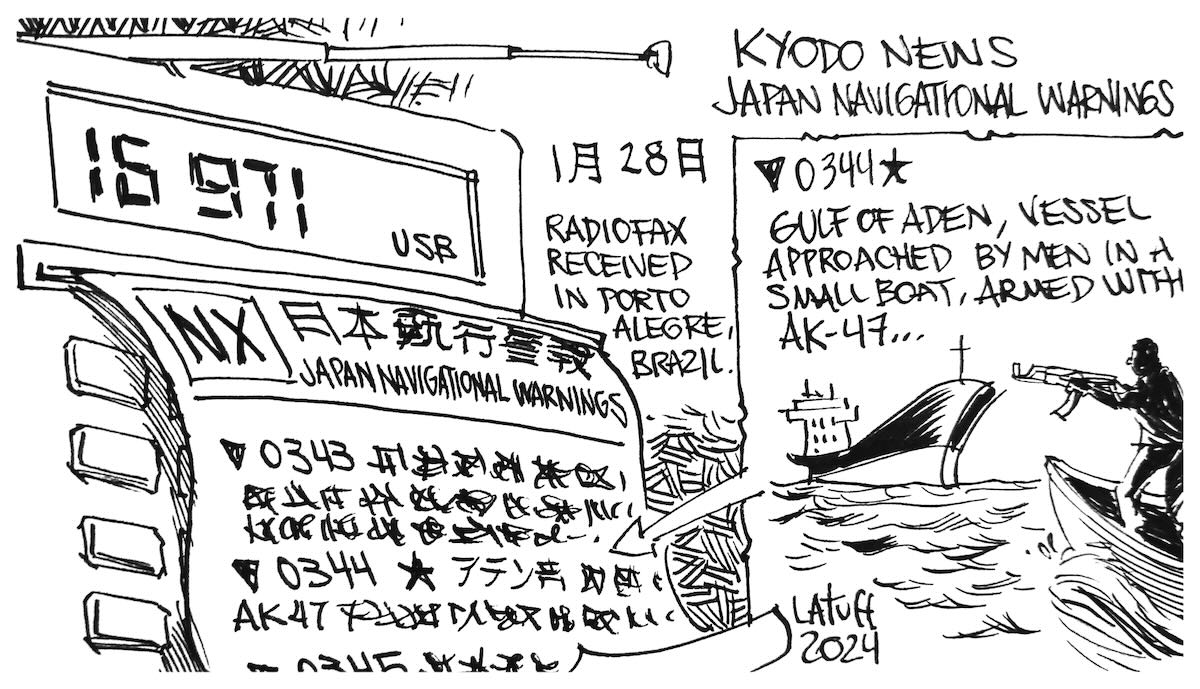
To tune 1.9kHz lower than the advertised frequency. For example, the frequency of Kyodo News is 16971 kHz. I therefore tune in 16970 kHz. Of course, the fact that I tune in at 4:10 am in Brazil also makes a difference, as the propagation is quite good at that time.

Thank you for sharing that tip with up about moving down 1.9 kHz lower than the broadcast frequency. It certainly works–your decodes a very clean.

Carlos pulls headlines from Kyodo News radiofax

Many thanks to SWLing Post contributor, Carlos Latuff, who writes:

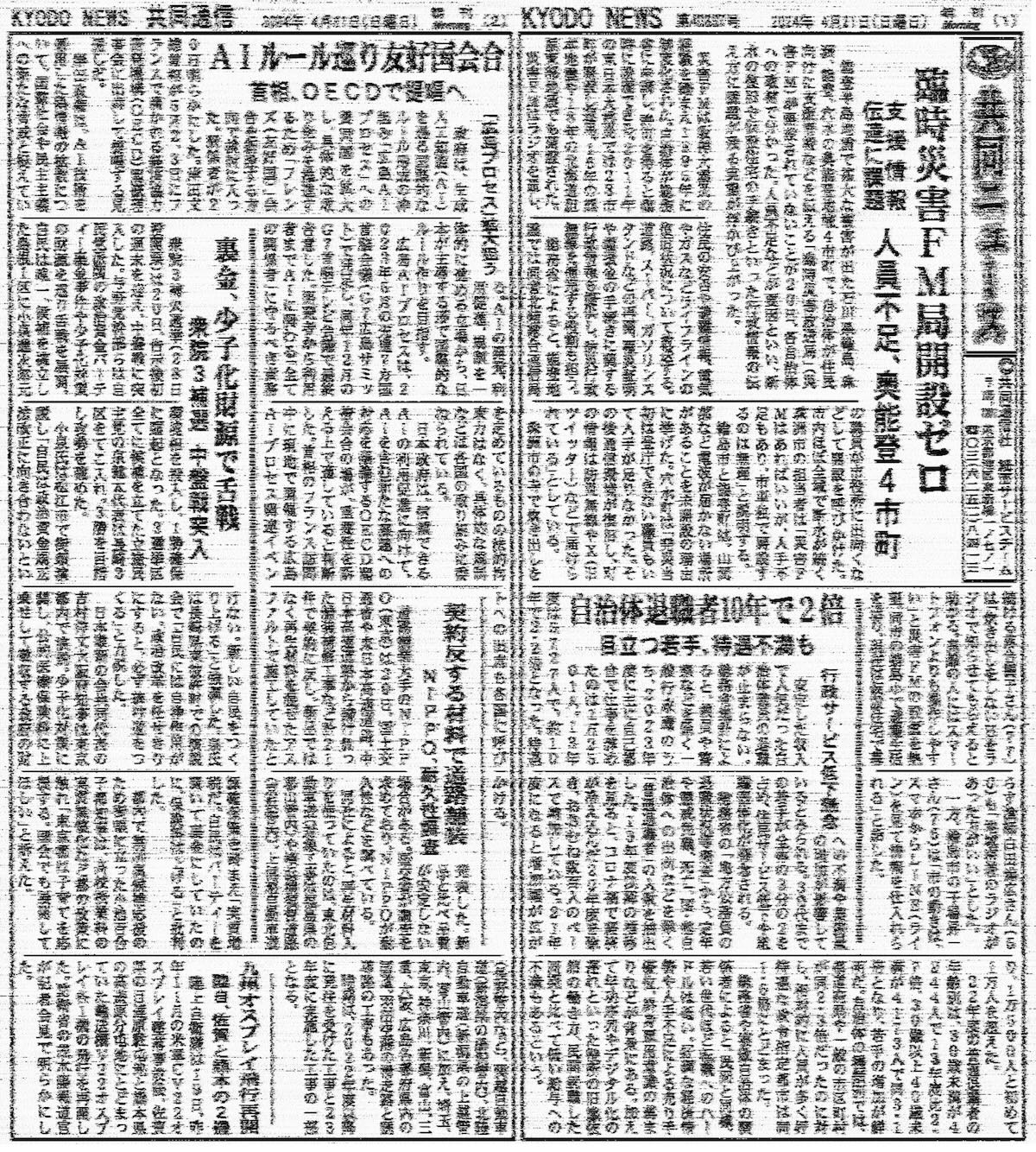
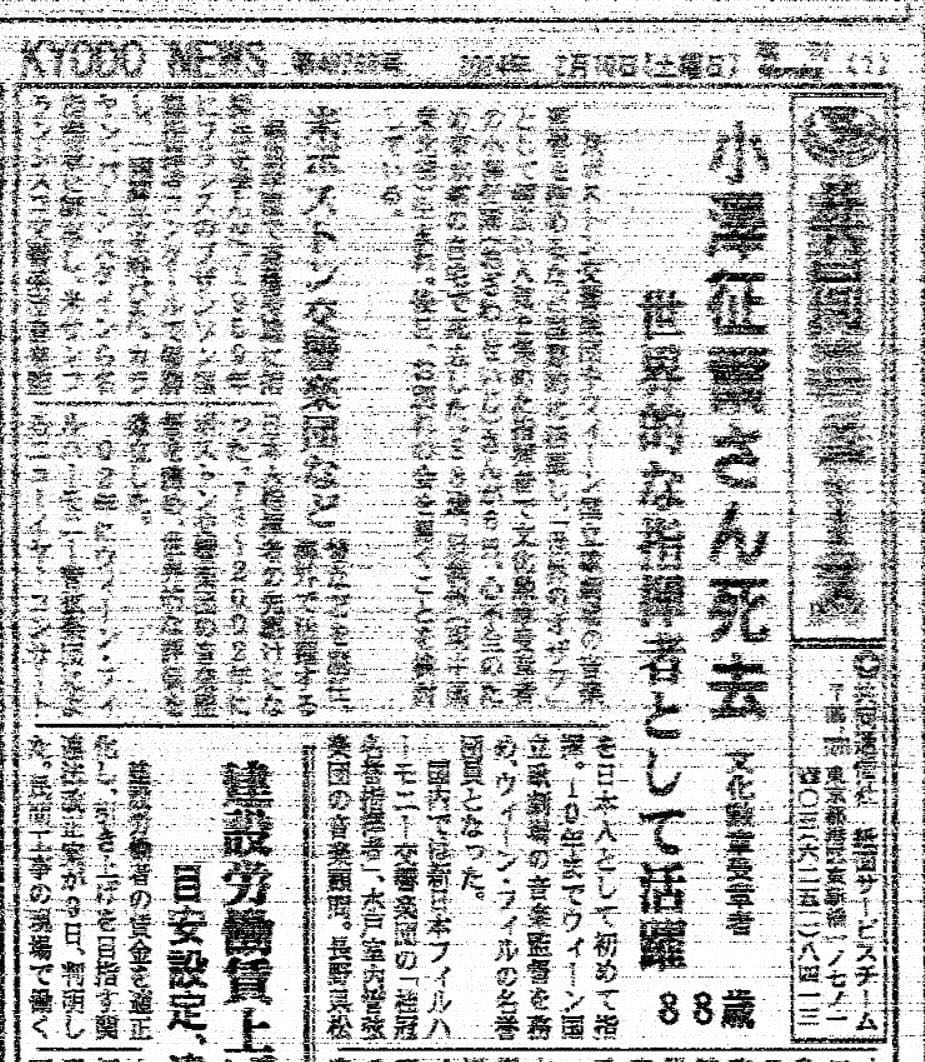
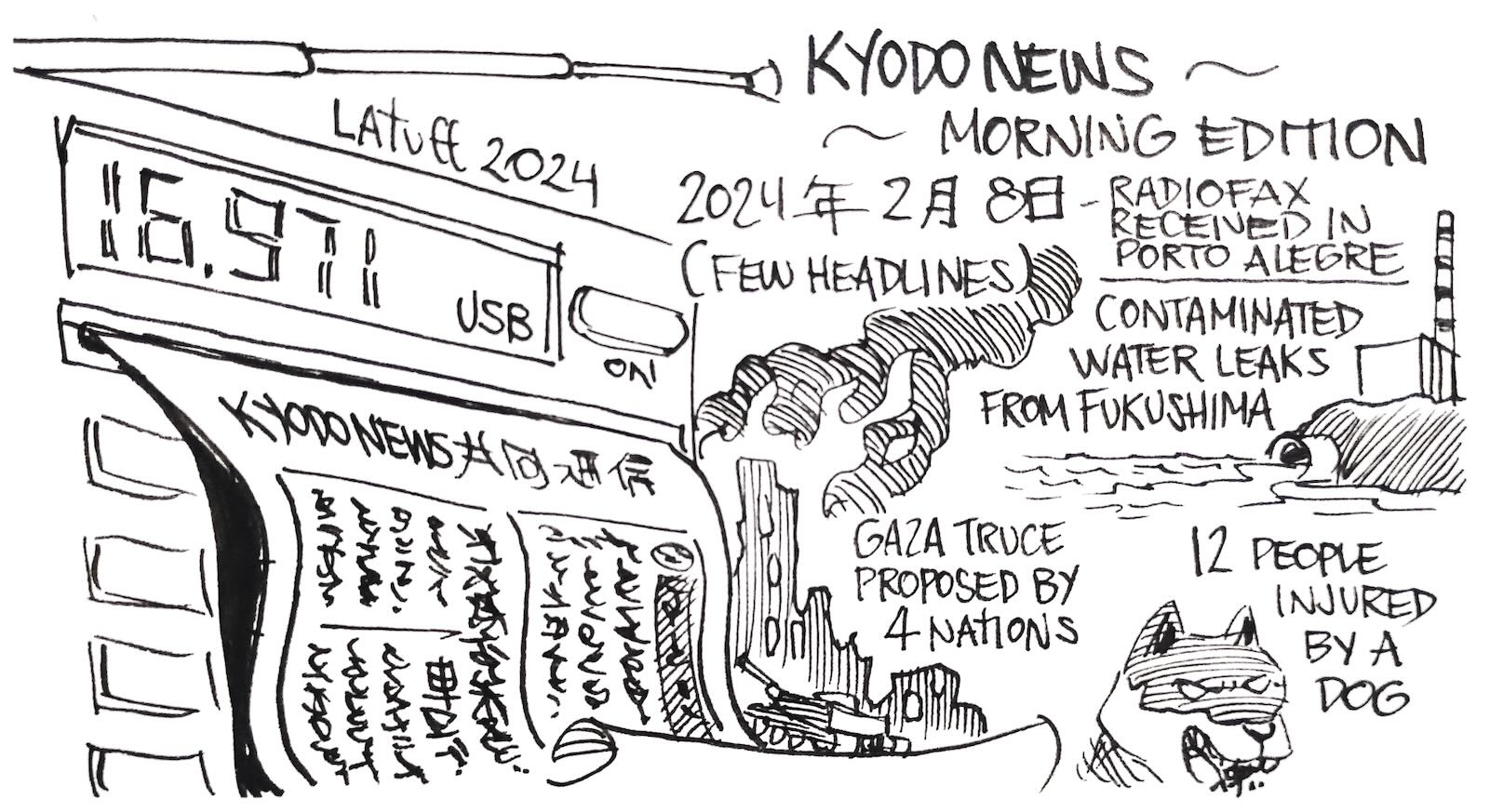
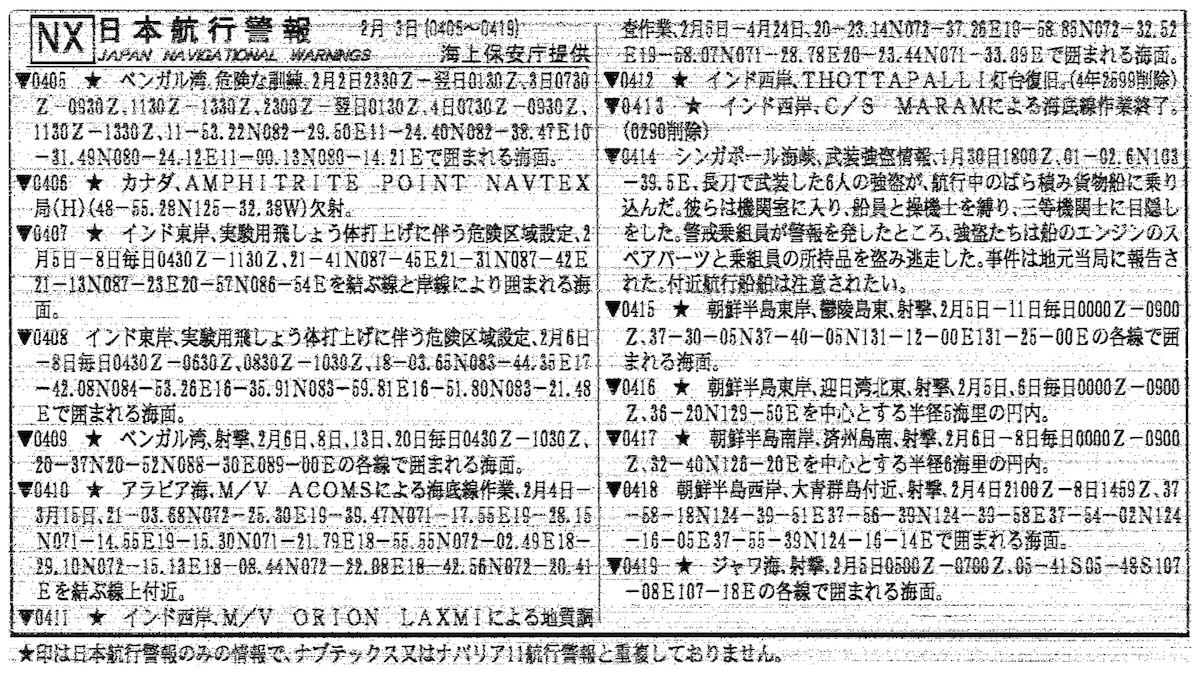
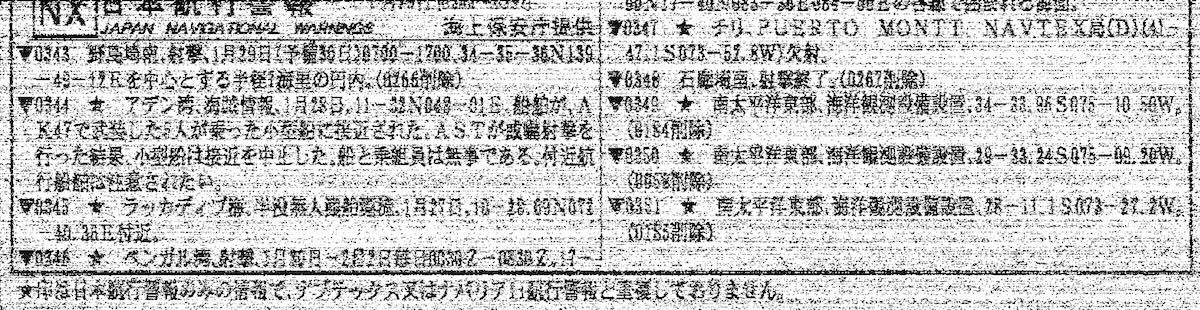
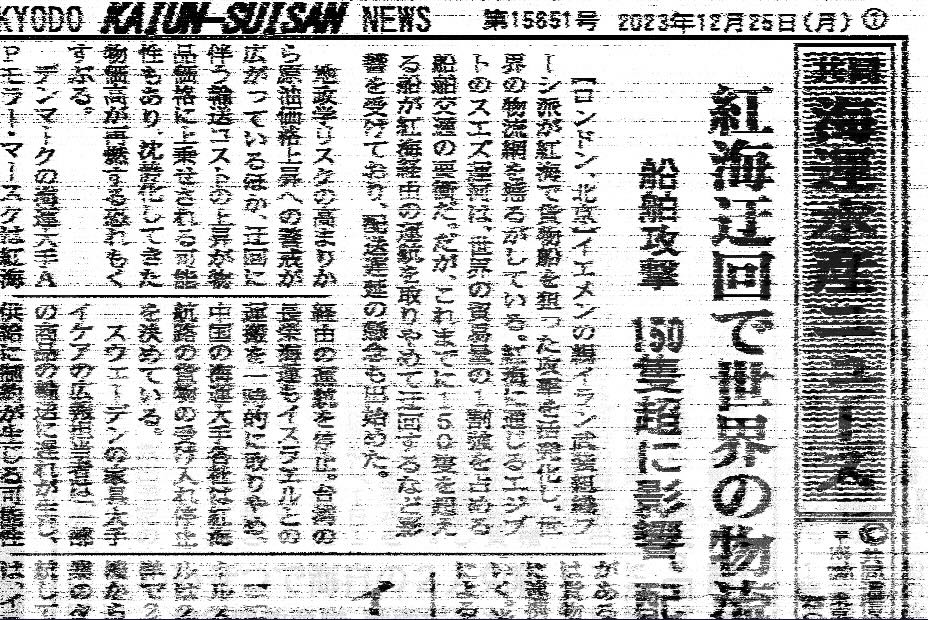
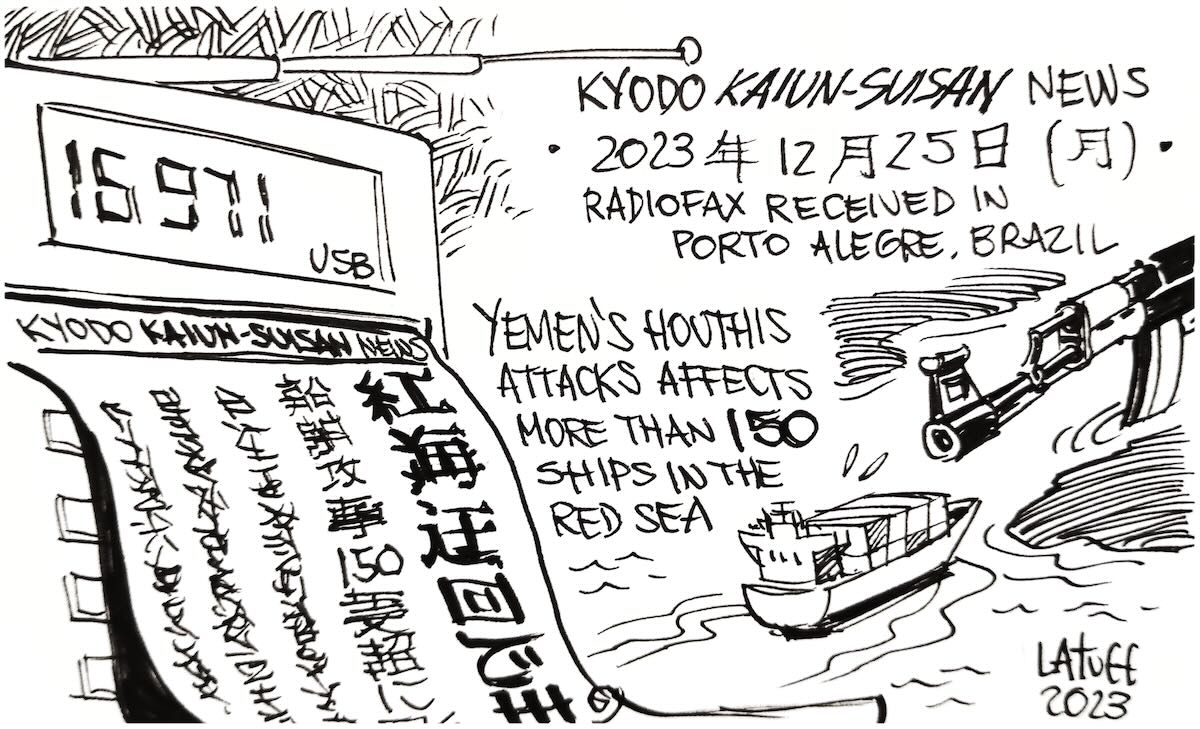
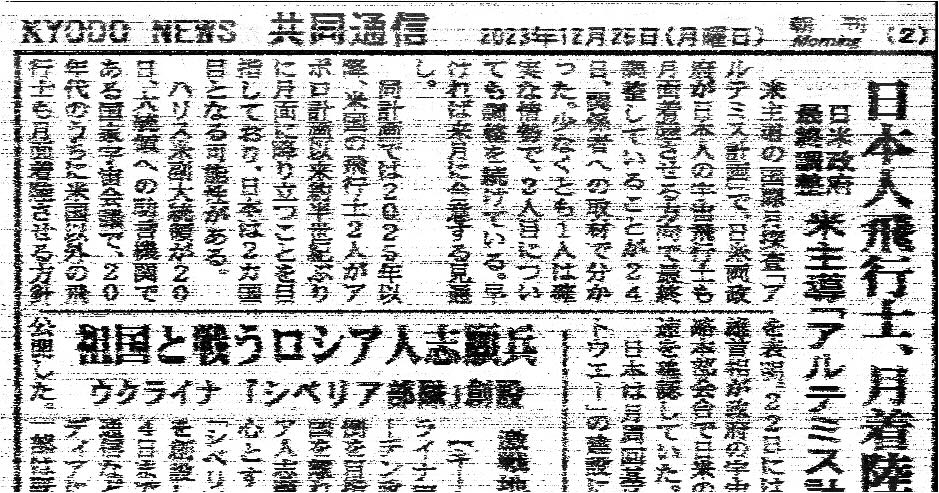
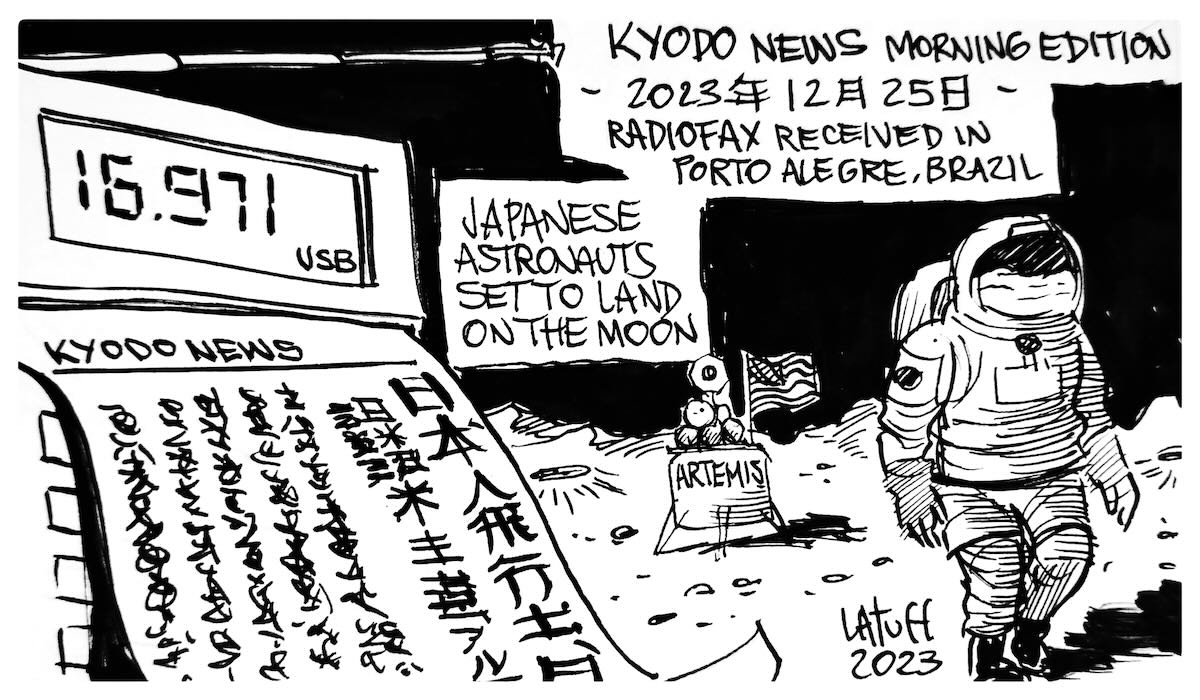
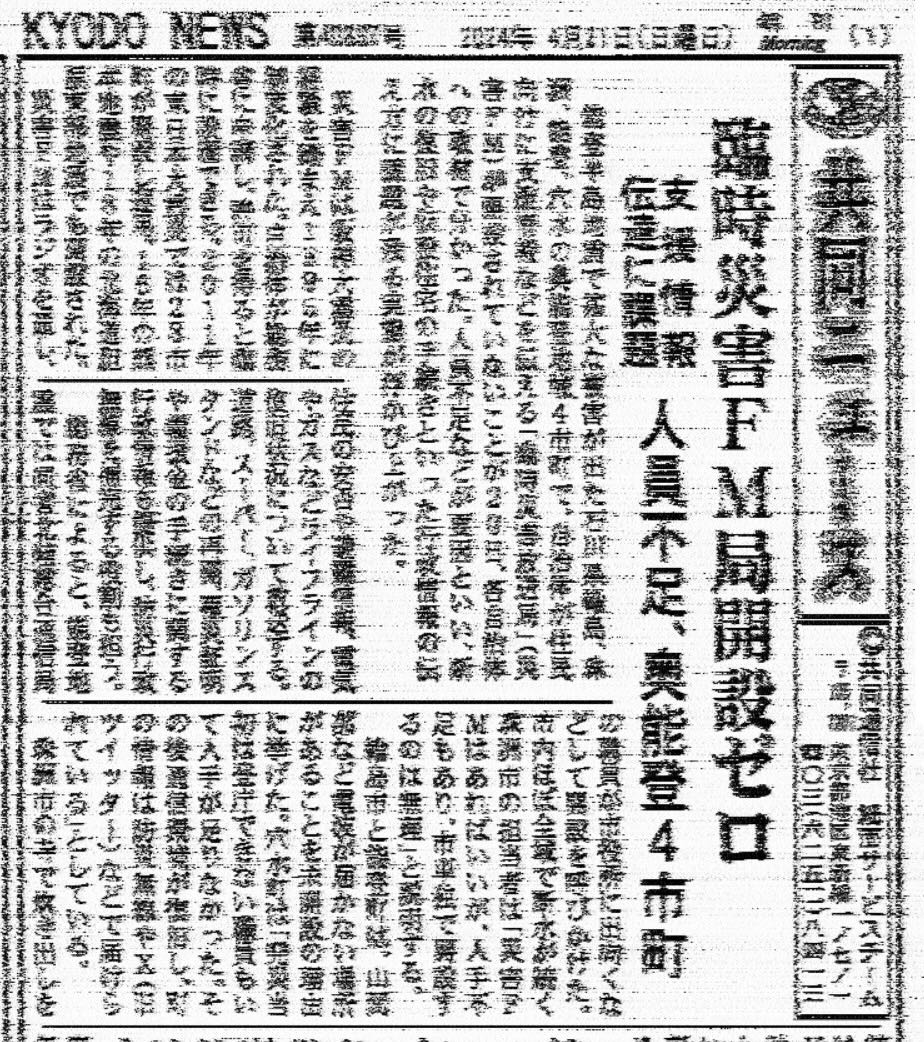
Kyodo News is a Japanese news agency, the only one in the world that still transmits news via radiofax to Japanese vessels, on shortwave frequency of 16971 kHz USB. The international radiofax transmission standard is 120 lines per minute, but the Kyodo News standard is 60 lines per minute.

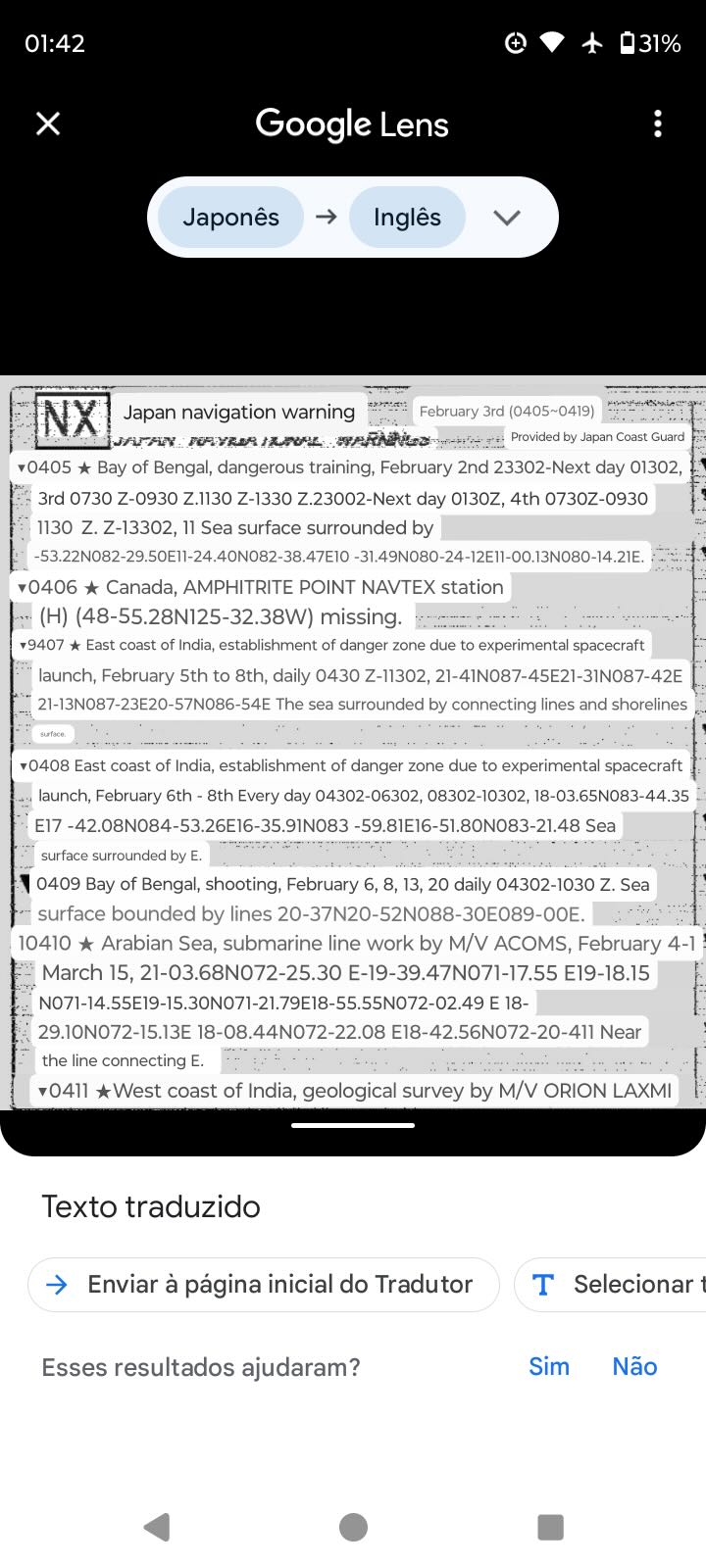
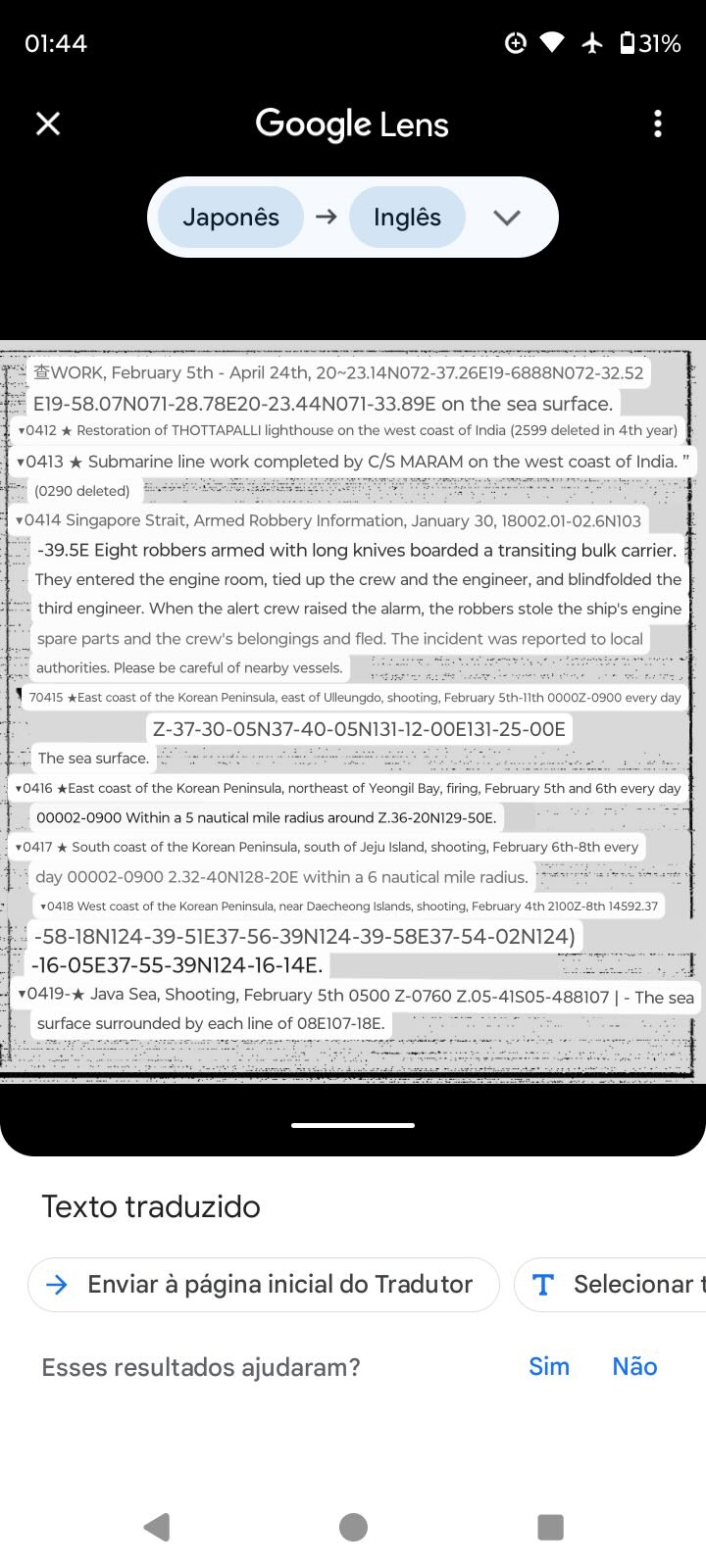
However, the retransmission of the bulletin in English is done at a cadence of 120 lpm. I’m using an Android application called HF Weather Fax with which I’m decoding the radio signal coming from Japan and received in Porto Alegre, Brazil. The receiver is the Xhdata D-808 and the antenna is a magnetic loop. The image arrived this morning in Porto Alegre, at 4:10 am local time, quite noisy and with a lot of effort I managed to decipher some headlines.

Carlos’ illustrated listening reports of Typhoon Khanun from Okinawa and KBS

Many thanks to SWLing Post contributor and noted political cartoonist, Carlos Latuff, who shares his radio log art from two recent reports and a radiofax.


Good morning, Thomas.
My radio activity on August 10, 2023.

Attached are two illustrated listening reports about Typhoon Khanun: one from Okinawa Fishery radio station and the other from KBS World Radio.

Okinawa Fishery

Here is the audio via YouTube:

KBS World Radio

Here is the audio via YouTube:

Radiofax


Also attached a typhoon warning issued yesterday by South Korean meteorology agency via radiofax at 05h00 UTC and received in Porto Alegre. Signal wasn’t good, therefore image arrived with poor quality. Even though, it’s possible to notice the map of Korea and the path of Typhoon Lan, now a tropical storm.

Thank you so much for documenting these broadcasts, Carlos, and sharing them with us in the SWLing Post community!

Carlos’ E-QSL card from JFX Kagoshima

Many thanks to SWLing Post contributor, Carlos Latuff, who writes: 

I got an e-QSL card (see above) from Kagoshima fishery radio station, related to the Radiofax (below) I received on August 2, 2023, at 22h UTC, on 8658 kHz USB, here in Porto Alegre:

That’s just brilliant, Carlos! I didn’t even realize that JFX still issued QSL cards. Thanks so much for sharing this!