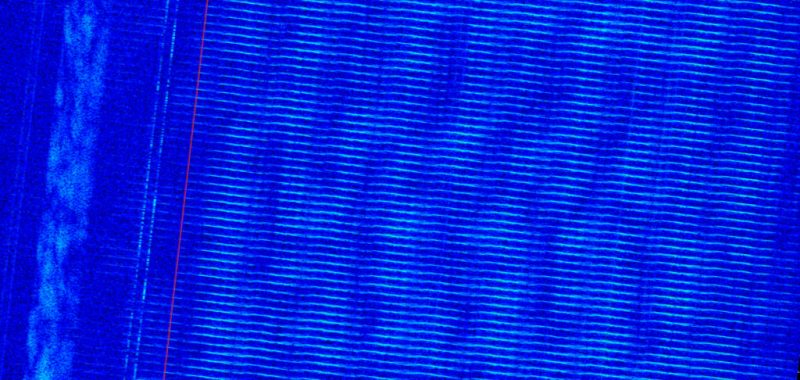
 Many thanks to SWLing Post contributor Dennis Dura for sharing this excellent Hackaday feature: Quieting That Radio. If you’ve ever struggled to hear weak signals through modern RFI, this piece, featuring content from Electronics Unmessed, is well worth checking out. It explores the hidden interference SDR setups often face and offers simple, practical/inexpensive fixes—like adding a counterpoise or ferrite choke—that can make all the difference in pulling in those hard-to-hear stations. This is advice we’ve recommended in past articles, but it’s brilliant to see demonstrated improvement.
The SWLing Post
Shortwave listening and everything radio including reviews, broadcasting, ham radio, field operation, DXing, maker kits, travel, emergency gear, events, and more

The “elecricity earth wire” (AKA power line grond) may be a good electrical ground but not a good RF ground, le me try an example; let’s say that the wire going from the wall plug to the ground spike has a lenght which is near half wave at 7 MHz, now, on the 40 meters band that wire will NOT be a good RF ground since it will present very high impedance to the RF return currents so we’ll have the darn “RF in the shack” along with tons of noise
I live around 500 m from a single mast radiator carrying 70 kW of AM. At the base in the very sandy soil which as long radial buried wires. a number of surrounding suburbs had lots of interference problems and one person who lives much closer than I could hear the program in his metal shed where rust caused a diode effect which demodulated the signal. The copper wire had been buried for around 70 years. After much complaint about hearing the radio in analog landline phones, patterning on TV, local interference the reception of other broadcasters the earth wires were replaced and the problem was much reduced. It went when landline phone went to voice over internet, although internet speeds were reduced in ADSL. It disappeared from DVB-T digital TV as well. DAB+ digital radio also completely gets rid of it. Despite the digital transmitters being 35 km away.
The regulator recognises that poor conductivity soil reduces the coverage area of medium frequency (AM) transmissions
Some comments on grounds, reception and noise:
In the 1980s I was in charge of a coal cleaning plant that constantly produced thousands of tons of rock. An airport had been built on the waste rock pile, and a NDB (nondirectional beacon radio transmitter) installed a few hundred yards off one end of the 3100 foot runway. The NDR had an “automatic” SWR adjustment circuit for its very short vertical monopole antenna. Antenna was only 50 foot high for 1410 kHz, radiated power 50 watts. The problem was that during dry weather spells the SWR would still go too high and the NDB would go off air. This happened 2 to 3 times per year. Root cause was bad ground conductivity because it was sitting on a hill of “Devonian age oil shale rock” known for very poor ground conductivity.
The fix that worked was to improve the NDB station’s ground field by drilling holes for 5 more spread out ground rods, plus pouring some liquid copper sulfate into all the ground rod spots.
About a year after this “fix” I took 5 employees on a 2000+ mile plane trip to British Columbia, CA to look at special coal drying equipment (Weststar Mining?). After we had taken off flying back to Kentucky, the pilot motioned to me to come up to the cockpit. He said: We are at 14,000 feet and I can already pick up our NDB over 2000 miles away. Whatever y’all did really was a good fix!
My “walkie-talkie” repair guy (a Ham himself) also complained that he was getting lots of QSL requests after we installed the extra NDB grounds.
Several years after this I read a book by a Kentucky Utilities engineer ( O.C. Seevers, 1994, Ground currents and the myth of stray voltage) who said that poor electrical grounds were the root cause of vast $ utility damage, and how to “bring those bad grounds up to acceptable effectiveness.”
I later told a VP of KU I had read the book, and he said
“Oh yea, that ol’crank constantly b###ing that we should keep an expensive crew adding ground rods until his silly meter reads low enough.” When an international Power Co E-On bought KU, this VP got fired.
On noise: In the late 1980s I bought a Palomar Engineers Company electrostatic shielded 5 to 15 Mhz amplified antenna. It had a low signal output, causing you to turn the volume way up, but did a good job of reducing noise. It also required a “safecracker’s touch” to tune, so I eventually added a 4:1 vernier dial. I sold it at a swap meet in Greensboro NC, but have regretted it ever since.
One now gone Costa Rican SW station “Radio for Peace International”
used to get its station electrical power on a single high voltage copper wire, and had to rely on a good ground return path to a distant Hydro-electric generator. Station manager (James?) told stories of chasing down ground troubles.
I live around 500 m from a 50 + 20 +10 kW set of AM transmitters. The only way to stop interference is to use single point earthing. It also applies inside equipment including audio amplifiers as one source of ‘hum’.
For those in 50 Hz electricity countries, 3 phase electricity uses 3 phase wires and neutral. In populated areas a single phase and neutral are connected to each house from a star connected secondary. The neutral is connected to earth in the meter box of each house as well as at the distribution transformer. The current drawn at each house is never equal and neither is the ground conductivity, which makes the current vary taking the path of least resistance. In 60 Hz countries the secondary of the distribution transformer is centre tapped. Any imbalance between the two active wires results in the same effect.
The transmitter mast is insulated from the ground at the base which sits on a buried copper wire horizontal earth mat with a single thick wire going to the tuning unit.
correction: 393 khz, XYC beacon
I have read that you cannot have too many grounds to help reduce noise. My lead in coax shields are grounded to 8 ft. rods where the antennas terminate. My amp/preselector is grounded as well. I keep the soil moist for conductivity. I only use batteries in the radios to avoid AC line noise. This system works well for me but I’m going to try some ferrite chokes as well. Thanks for the videos!
Rob,
You should only ever have one earth which should be connected to the input to the receiver. Multiple earths often will have different voltages causing ‘earth loops’ making noise worse.
A 1 m long copper pipe vertically driven into the ground. Decreasing ground resistance for example avoiding dry ground. If you cannot, improve the soil quality by adding organic fertiliser to retain moisture.
A linear power supply does not produce any interference
I have ordered some of those snap-on ferrite chokes and plan to give them a try.
The cost of experimentation is pretty low.
Thanks for posting this!
Cheers, Jock
This may be a generational thing. Younger listeners who are accustomed to consumer electronics (no noise on the smart phone!) often object to the noise coming from a simple direct conversion (HDR!) receiver. But those of us who grew up with analog shortwave receivers knew that a certain amount of noise was a necessary part of the game, and in fact was one way to test the sensitivity of the receiver. When you connected the antenna, did the noise level go up? If so, you were hearing the “band noise.” Some of it was from thunderstorms in Brazil, some from the weed-whaker down the road, some from remnants of the big bang. Sure, you could decrease the gain of the receiver to the point that this band noise is no longer audible. You will be able to listen to Brother Stair with no noise. But that weak station coming in from far-off Ulan Bator might no longer be audible. FM was another way to eliminate the noise. Personally, on an HDR analog homebrew shortwave receiver, I like the noise. It lets me know that the receiver is working.
Bill,
I was confused by HDR, where Hybrid Digital Radio, which was invented in the USA where domestic High Frequency (SW) broadcasting is banned. Hybrid Digital Radio cannot work in the HF bands because it creates too much interference to other broadcasters.
I suspect your HDR should be Software Designed Receiver which converts the incoming signal to a low frequency directly and the digitises it. SDR receivers in AM and SSB modes are still noisy from impulse noise sources such as arcing and lightning.
Digital Radio Mondiale is noise and interference free even in the HF and MF bands
Has anyone tried this device? What about the improvement?
https://swling.com/blog/2024/05/kostas-releases-the-nr-1-noise-blanker/
Hi Carlos,
The device works amazingly well for impulse type noise, like power line noise, electric fence noise, tram lines noise, or any noise that is produced by sparks.
You can find videos of it’s operation by different HAMs that own this in this playlist: https://www.youtube.com/playlist?list=PL0KwxiKZqJ1TzQpscf3voh5CR1c30WLD_
Feel free to contact the company that produces it for price and availability https://shop.elisys.gr/products/nr1/
73
If you want to keep receivers quiet the following steps are required.
1. Unless switch mode plug packs are shielded and well filtered which many are not, then either run on rechargeable batteries. Do not charge when in use. Alternatively use a power supply containing an iron cored transformer and linear regulator.
2. The antenna input should be fed using coaxial cable where the shield is connected to ground at the receiver’s antenna input. Its best not using the electricity earth wire but by a thick cable connected to a copper a 1 m long copper stake vertically in the ground.
3. Dipole antennas need to be connected to the coax using a ferrite cored balun.
4 Digital Radio Mondiale receivers when tuned to a DRM broadcast never have noise, distortion or adjacent channel interference . https://kiwisdr.nz/ contain a DRM decoder and if you wish you can make the receiver available on line to multiple other simultaneous users.
If there is sufficient digital errors the DRM receiver will mute, but this occurs at a weaker signal than for AM