Tag Archives: RFI

A swimming pool, RFI and a lightning strike: My SWLing Story

by Troy Riedel

New readers will not recognize my name.

Longtime readers may not recognize my name, but chances are you may remember my story.

I once contributed posts to this Blog … until … ‘the swimming pool’. During COVID, my wife decided she wanted an in-ground swimming pool. The construction started in May 2020 and was completed in May 2022 (note: my pool contractor is now out of business; he ruined another company’s business as a ‘partner’, has many lawsuits filed against him, and I know he’s served time in jail under work release – all subsequent to our project).

No exaggeration.

If you’re interested in reading the entire story of my problem, I’ll refer you to my last two posts here:

For those who don’t have time to catch up, here’s an overview:
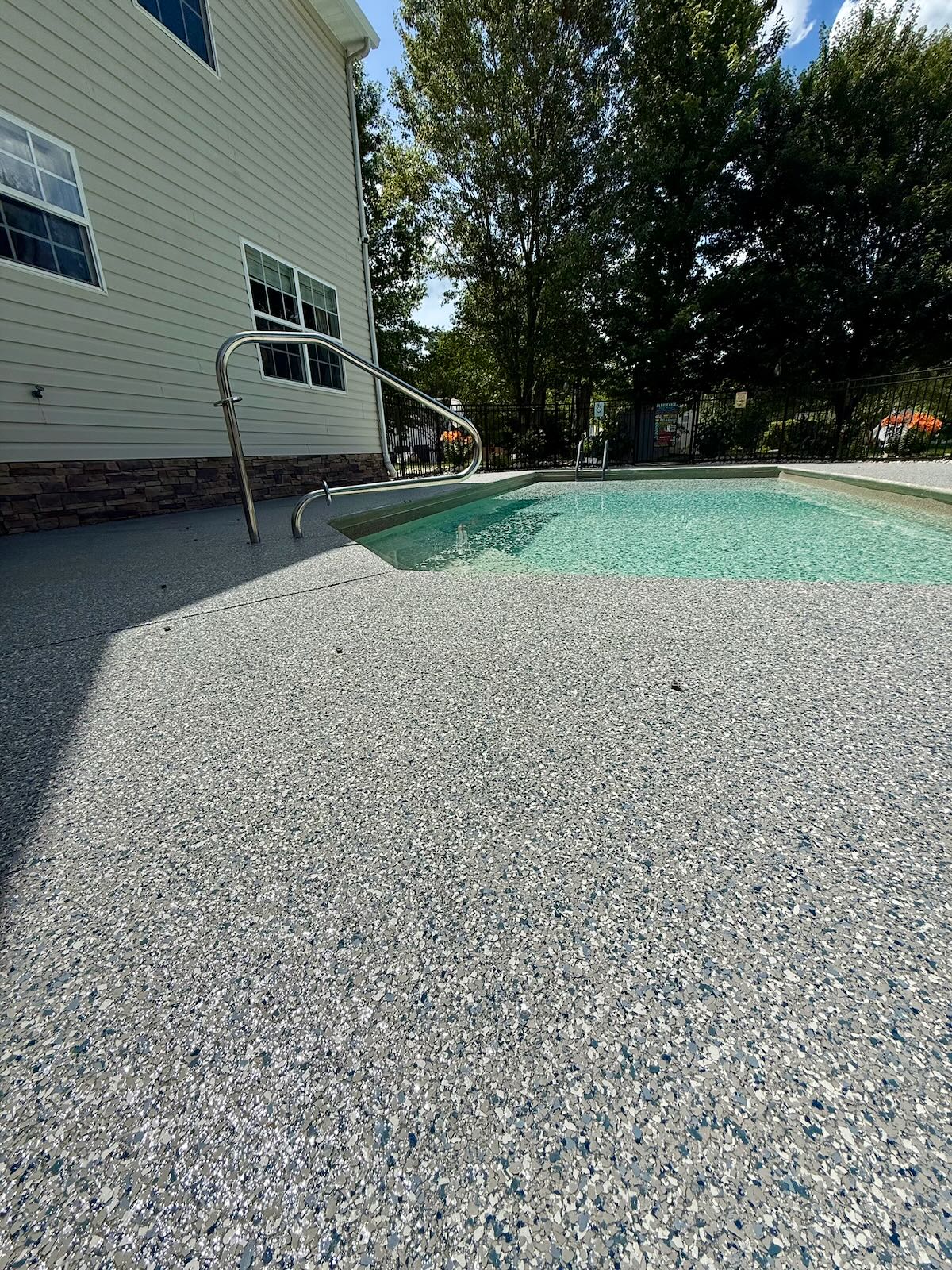
Late in the pool construction after the bonding was installed and the concrete deck was poured, I turned on my collection of portable shortwave radios, and I experienced the worst, most horrendous EMI/RFI imaginable. Nothing – and I mean nothing – on the shortwaves was intelligible. 100% uninterrupted static.

The SWLing Post Nation was great. I must have had three dozen? … four dozen? … people comment and offer advice (both on and off the Blog). And I received very detailed opinions, suggestions, and analyses via my personal email. Unfortunately, nothing mitigated my problem. My actions:

  • I hired an independent electrician at an hourly rate to check the pool & the entire house – he could not find the problem.
  • I called the power company (Dominion). To Dominion’s credit, they dispatched an expert and a ladder truck, but they confirmed the source was not from the main power line nor from their transformers.

So approximately 5-years ago, I was forced to abandon the SWLing hobby. Early on, I’d turn on my radios every two months to see if my issue abated. After a while, I checked quarterly. Then semi-annually. In the last year or two, I’ve turned on my radios every winter to check and every time, I still had the horrendous and almost incomprehensible EMI/RFI issue rendering my SW radios as paperweights.

Fast forward to recent history.

In late June 2026, my house suffered a direct lightning strike. The bolt struck the metal chimney cap. My wife & I were sitting in the room with the fireplace and the entire room glowed! There was no fire, but I had a hole in the siding. One of my six security cameras was blown off the side of the house. Flames literally shot out of one electrical outlet on the opposite side of my house. In total, I suffered over $13,900 in damage (thank you, Allstate Insurance).

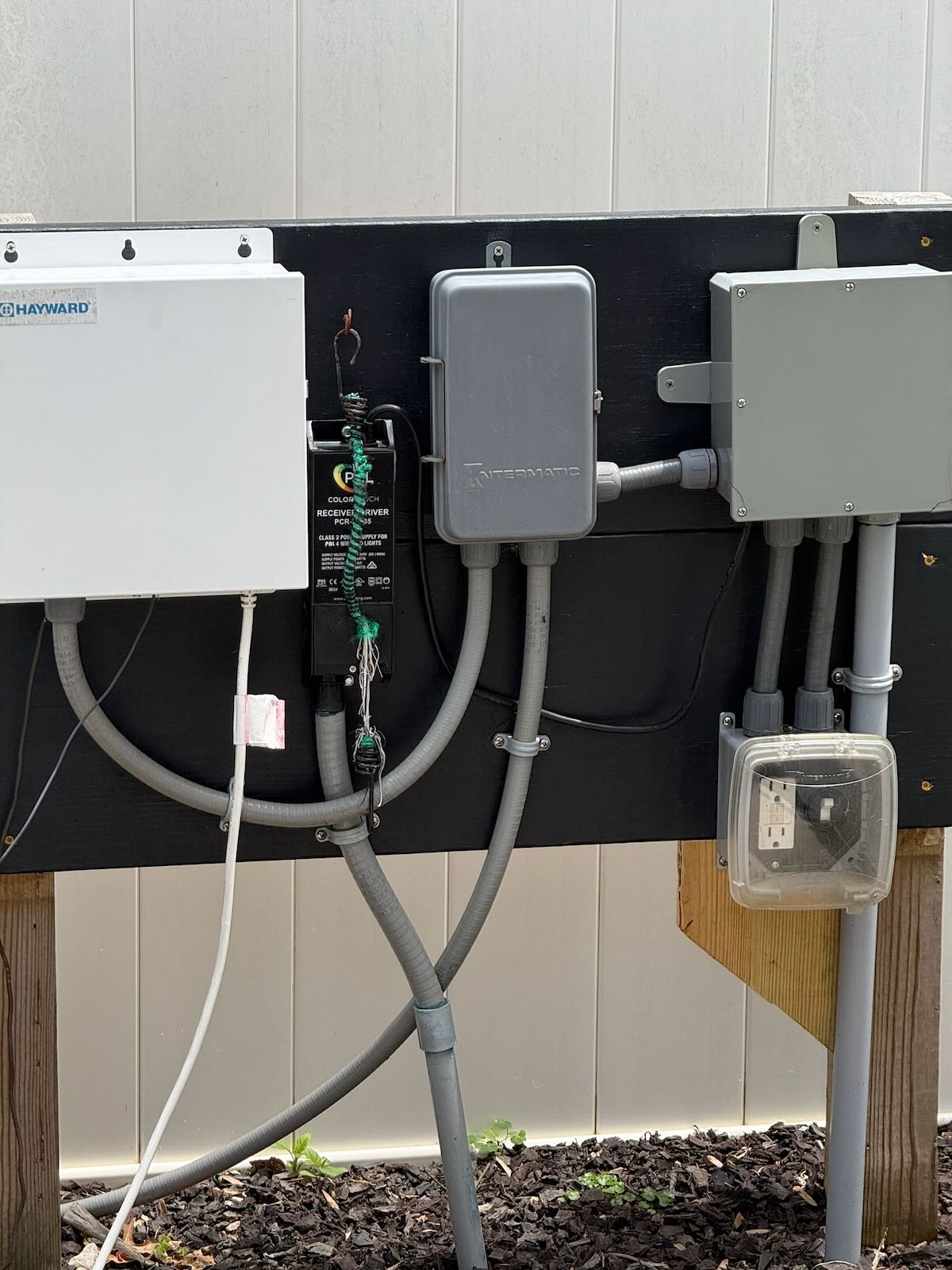
The pool suffered two damaged items: an outdoor ground fault outlet and the pool light were both fried (the light and the connected transformer for the light both connect to the ground fault circuit outlet).

One of the SWLing Nation friends that I made five years ago is Ken English. Every so often he’ll send me a text message, and we’ll have a friendly chat. Last Saturday Night, he reached out and we text chatted. During the chat I mentioned the lightning strike. He replied, ‘Did it [the lightning strike] change your interference problem?’

Hmm, great question. Did it? How could it? But wait, maybe somehow it did!

I turned on my radios and guess what? The interference is gone! And I now know the source of this five-year problem that knocked me off the shortwaves. The pool light!
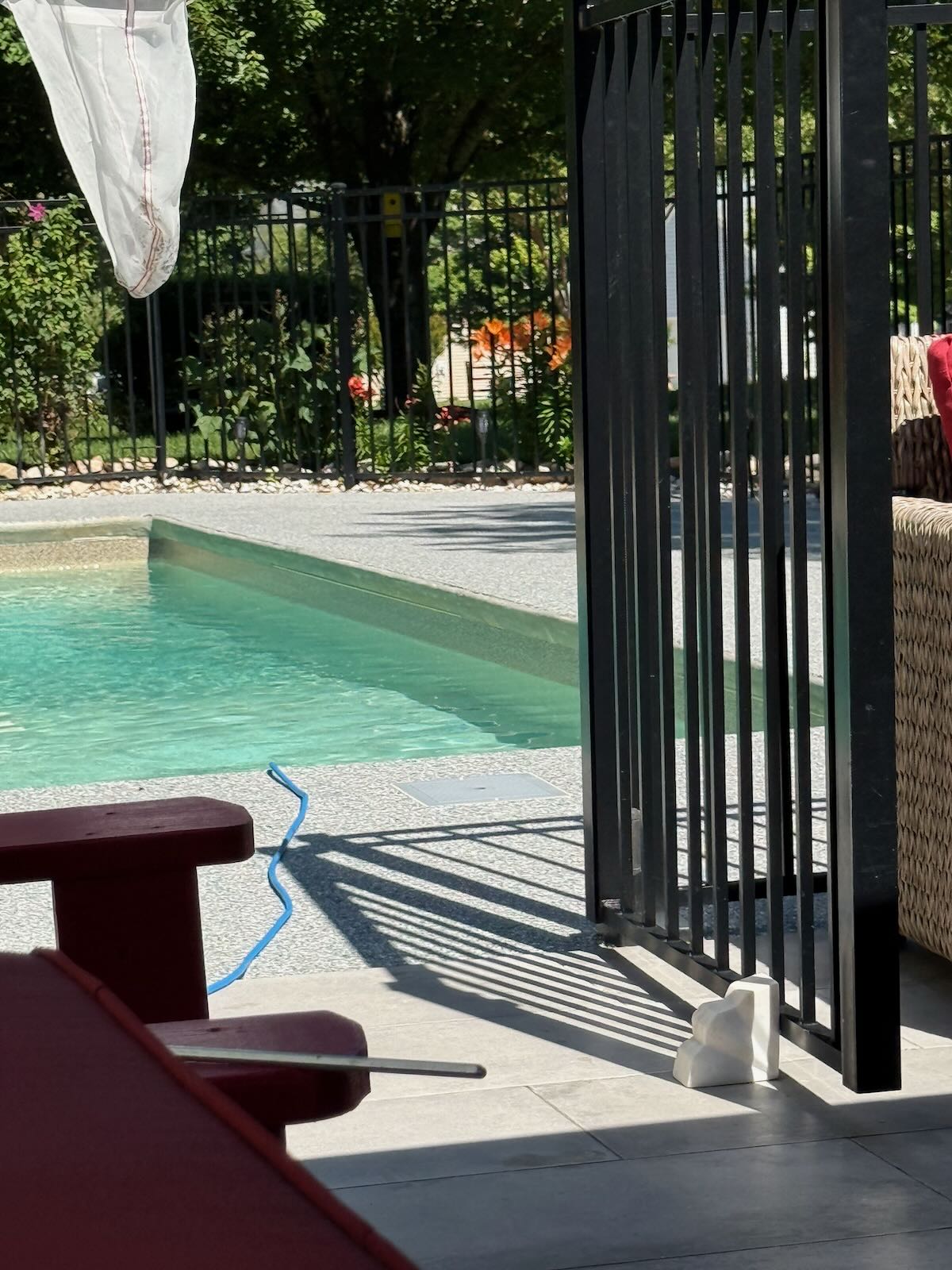
The pool light is underwater. The power cord to the light runs underground for 80-feet where it connects to the transformer, which is on the ‘outdoor power panel’ that runs the pool electronics and equipment. I had a professional replace the light and transformer which required snaking 80’ of power cord out and replacing it with a new 80’ power line.

I’m not an electrician. I can’t explain the dynamics behind it. But a direct lightning strike that caused over $13,900 of damage has me back on the shortwaves!

Thank you, lightning. And thank you, Ken, because without your Saturday Night text, I would not have discovered that my 5-year problem was mitigated until – probably – some cold, cloudy December night.
Taming the Noise: Don Moore’s Simple, Cheap Filter Solution for Traveling DXers

Many thanks to SWLing Post contributor Don Moore–noted author, traveler, and DXer–who shares the following post:


A Cheap and Simple Noise Filter

By Don Moore

Don’s traveling DX stories can be found in his book Tales of a Vagabond DXer [SWLing Post affiliate link]. If you’ve already read his book and enjoyed it, do Don a favor and leave a review on Amazon.

My DXing career started over fifty years ago in an upstairs bedroom in tiny Milesburg, Pennsylvania. I had a consumer-grade multi-band radio and some copper wire strung from the roof to a nearby tree.  It was a simple setup but it worked very well. Do you know what I didn’t have? A noise problem. The only time I remember noise ruining my DX was when my mother was using the electric mixer and that meant she was making cookies or a cake. I never complained.

Times have changed, haven’t they? What DXer doesn’t complain about noise these days? I know people who have left the hobby because the place they lived at and DXed at for decades gradually became so noisy they couldn’t DX anymore.

Unsurprisingly, a lot has been written about how to find and eliminate noise in your home. However, most of my DXing is done as I wander the globe. I try to find places to stay at that should be good for DXing. But no matter how good a place looks beforehand, there’s no way of knowing what the noise level will be until I get there.

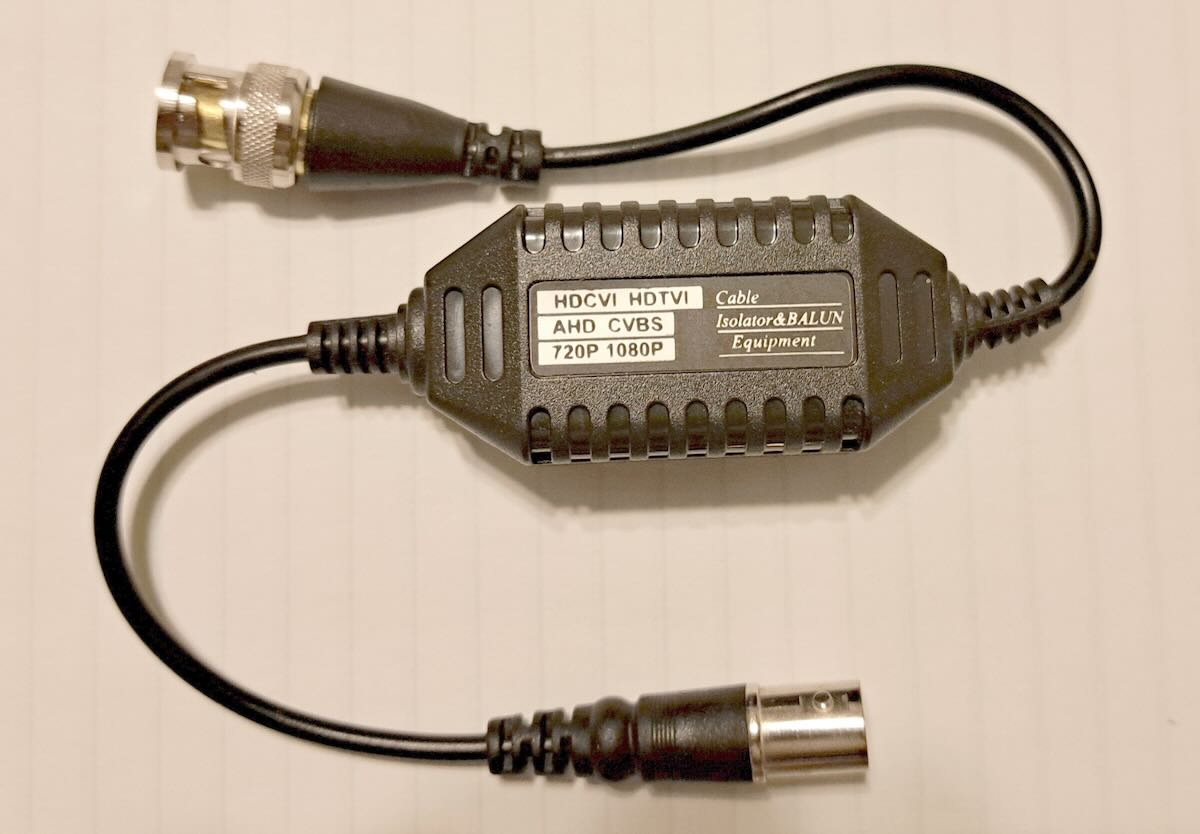
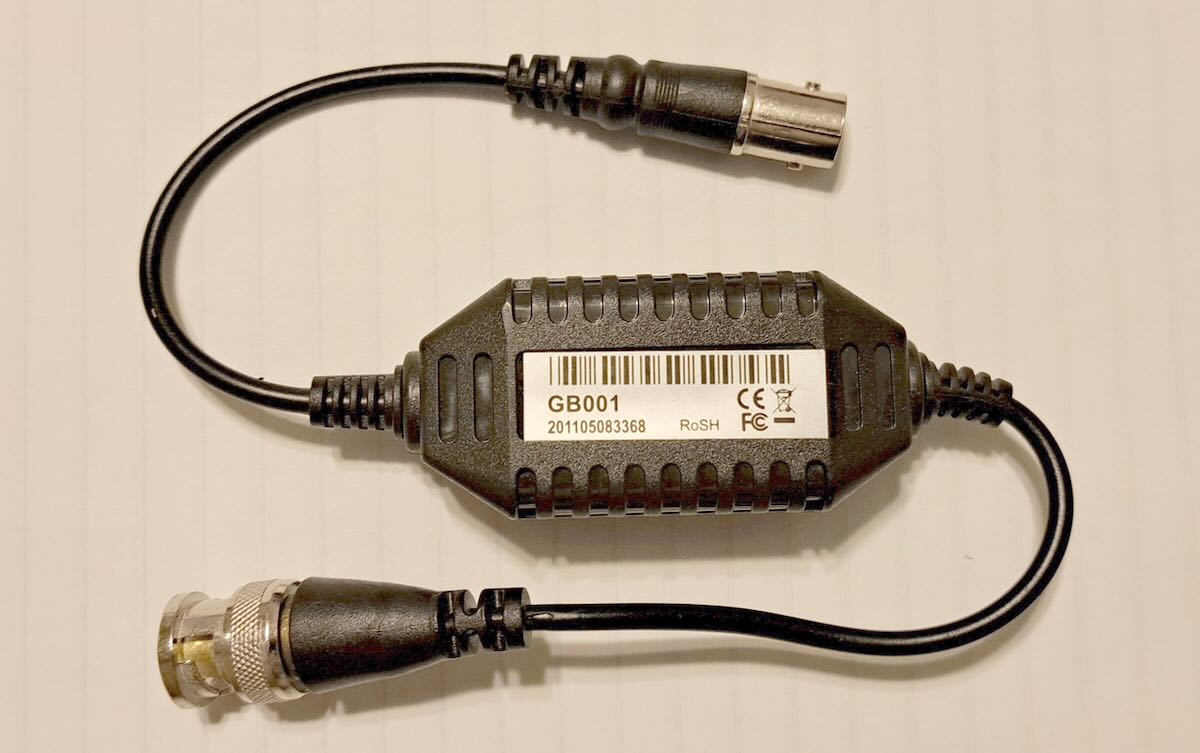
As a traveling DXer, I need quick, easy, and compact noise solutions. The best solution I’ve found are these CCTV distortion filters (ground loop isolators) that Brett Saylor recommended to me several years ago.

No, these weren’t designed for radio use. And they aren’t a miracle solution that will eliminate all the noise that plagues DXers. Sometimes they’re no use at all. But I’ve DXed in dozens of locations over the past ten years and there have been multiple occasions where one of these filters has turned what would have been a disappointing stay into a good DX session. I don’t go anywhere without two of these packed in my mobile DX shack.

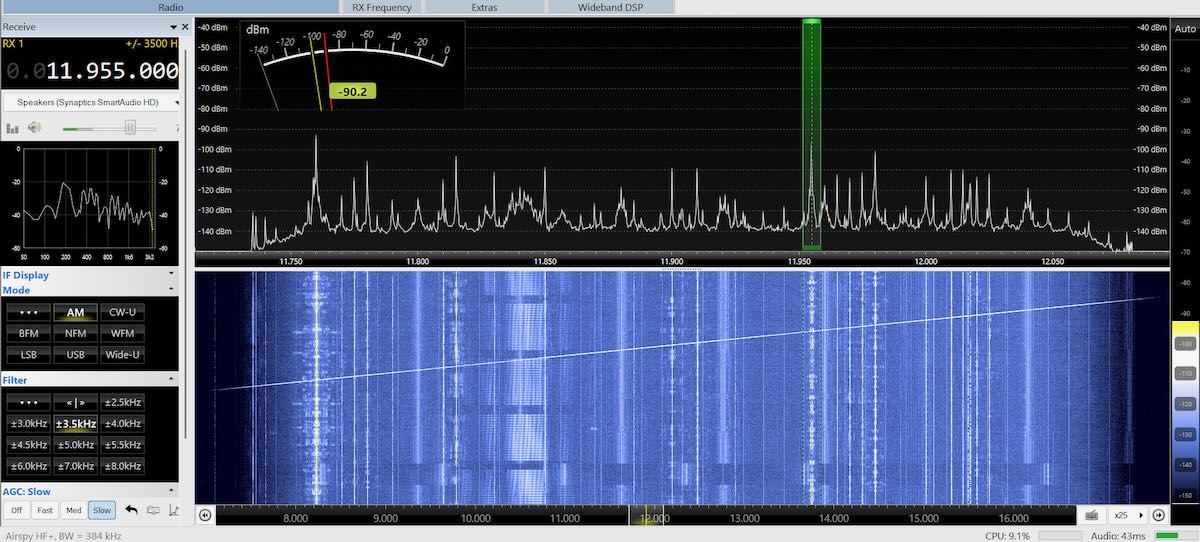
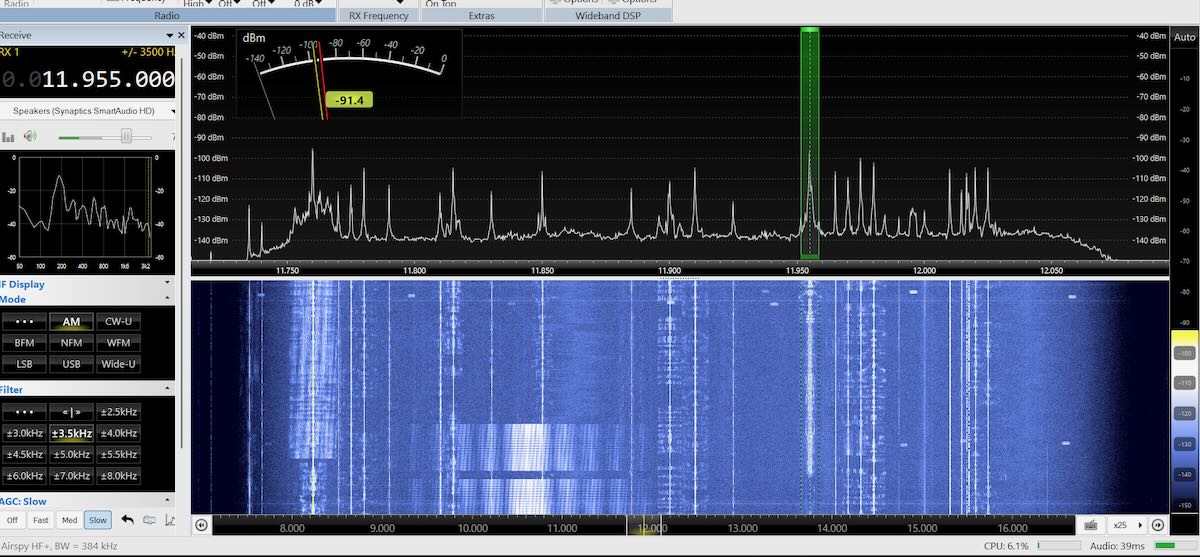
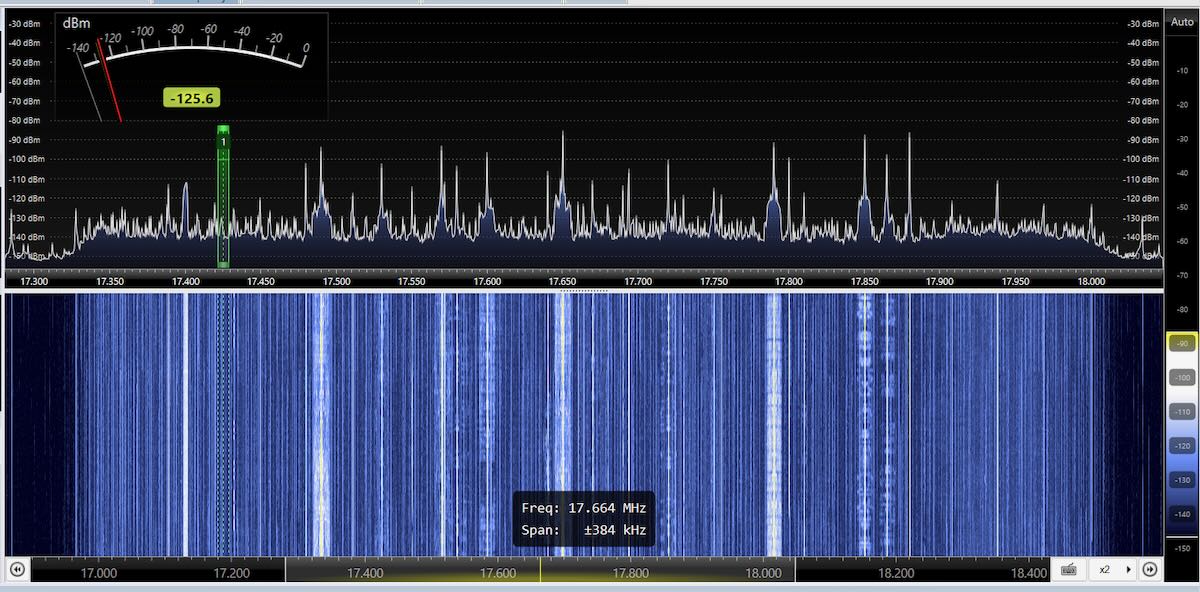
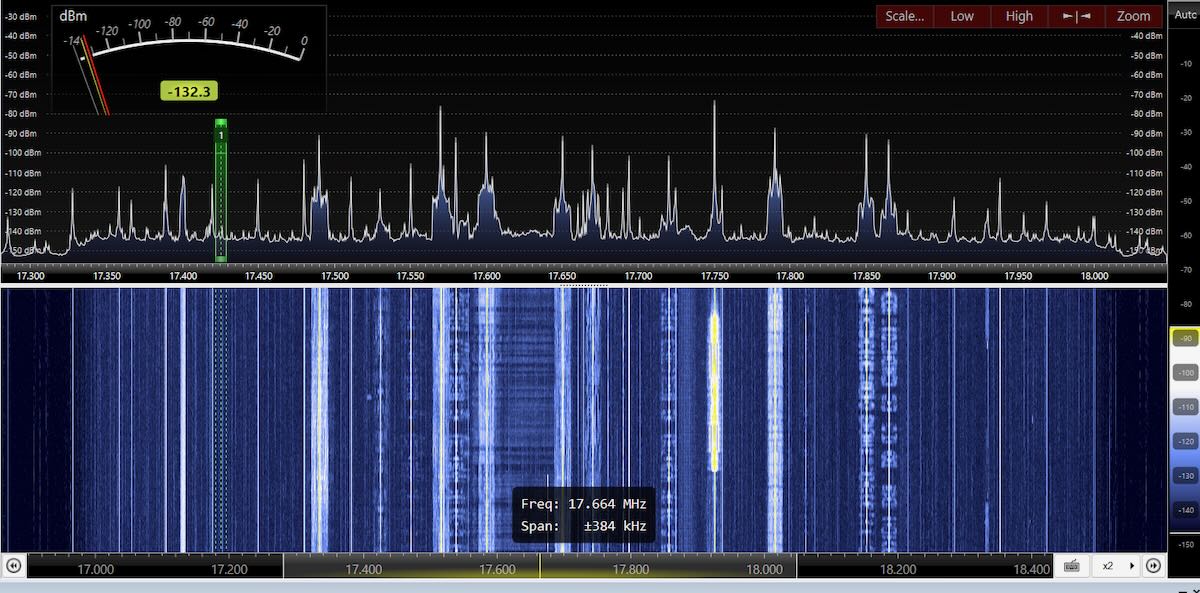
But let me show you some results. All of these SDR screenshots were made with SDR-Console using an Airspy HF+ Discovery SDR connected to a PA0RDT mini-whip antenna.

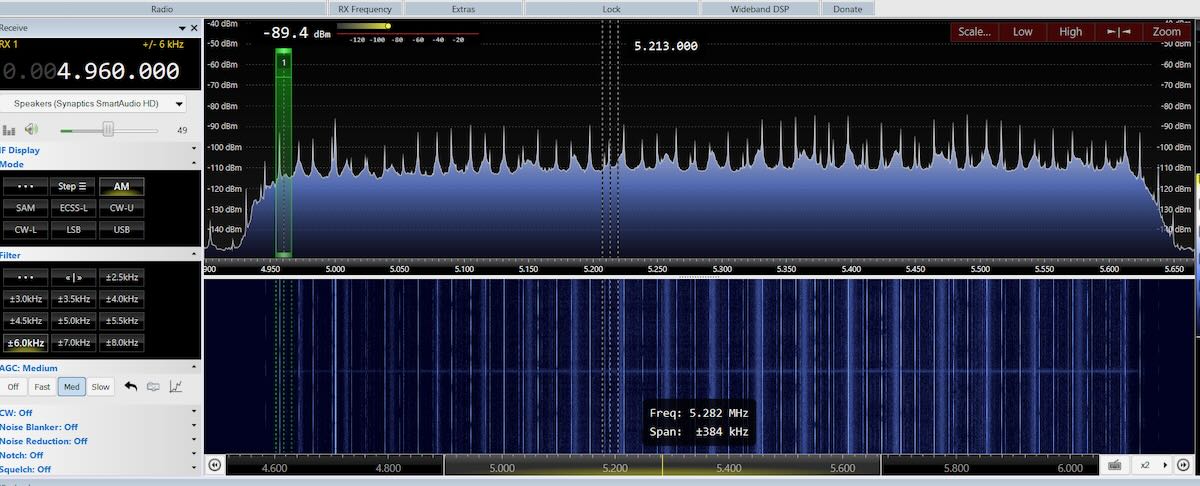
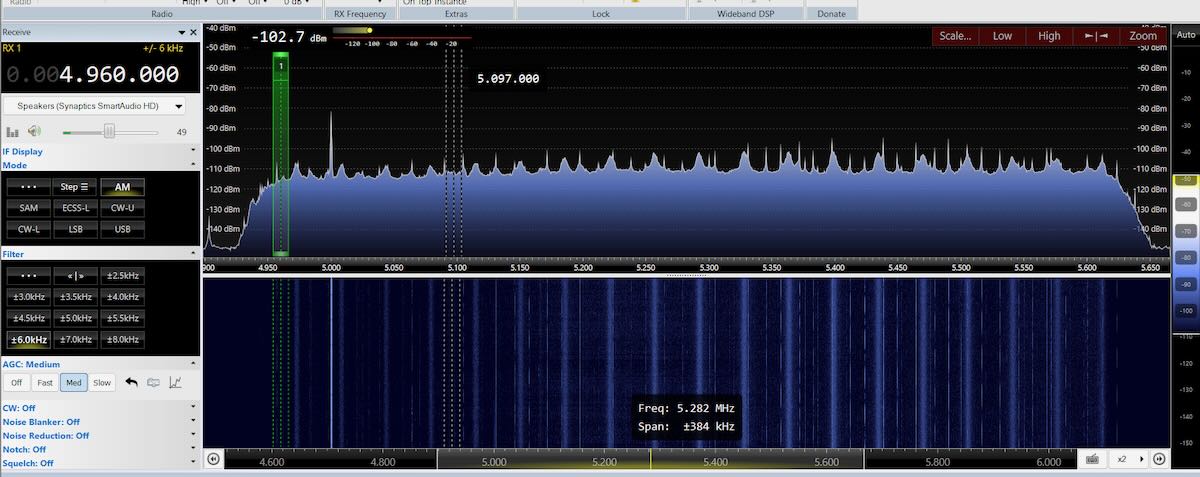
I spent last summer in the north suburbs of Chicago and several times went to a park to test my DX equipment. Around midday, the lower shortwave frequencies were filled with noise peaks. On this first image, it’s hard to pick out WWV on 5 MHz from all the noise peaks. In the second image the filter hasn’t totally eliminated the noise, but WWV’s signal is now strong and clear.

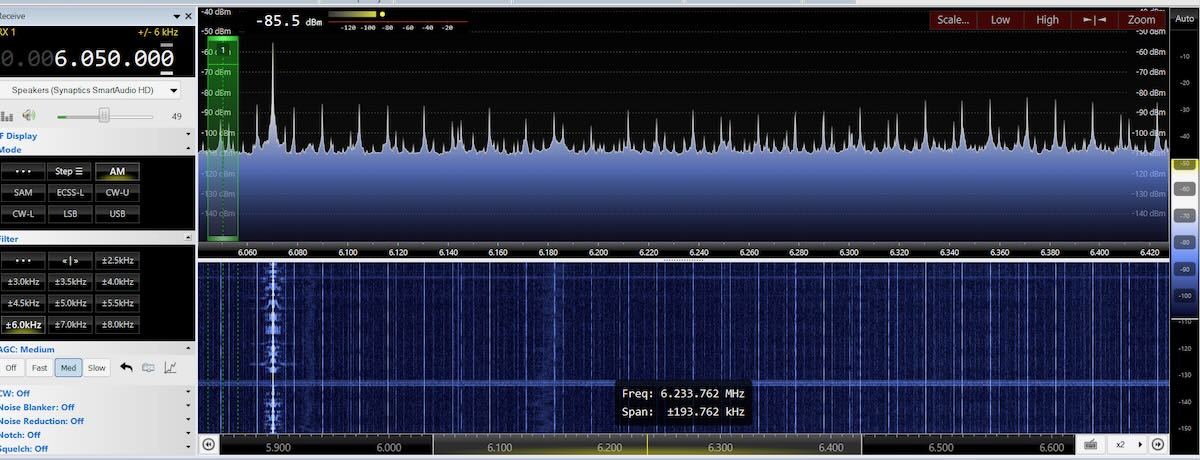
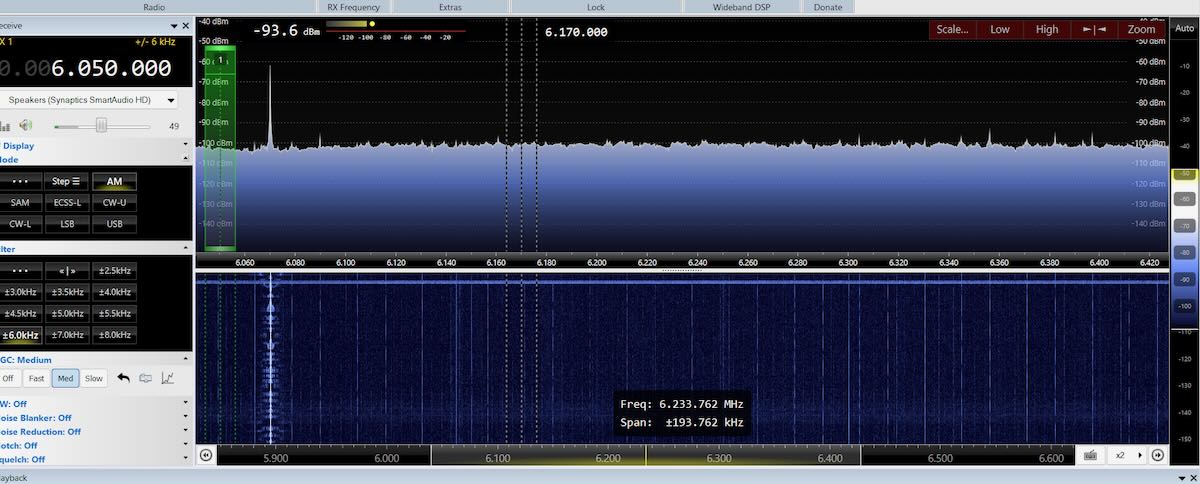
The noise was nearly as strong on 49 meters but the filter almost totally eliminated it. CFRX’s signal on 6070 kHz was slightly weaker with the filter, but it was significantly more listenable without the noise.

Which frequencies noise affects can vary between locations. At that park the noise was gone above about 11 MHz.  While traveling across the US in mid-October, I stopped at a park just west of Kansas City to do some more DXing and equipment tests.  The noise there was bad in the middle shortwave bands, such as in the 25 meter band.

But the filter did a good job cleaning it up.

Finally, about two years ago when I was DXing in Rafina, Greece, the noise was bad on the higher bands. Here are before and after screen shots on the 16-meter band.

These filters should work with any coax-fed antenna. I’ve used them with beverages, Wellbrook loops, the PA0RDT, and the MLA-30+ loop. If the antenna has an interface, such as the last three mentioned, the filter goes between the interface and your receiver (and not between the interface and the antenna).  I’m not sure what the impedance on these is, but I’ve used them with both 50- and 75-ohm coax cable.

Sources of the Filters

An Internet search for “CCTV Ground Loop Isolator” brings up all kinds of products. They are probably all the same but I have no way of knowing that. So I recommend getting the exact ones that I have purchased. Just compare the product to the pictures of mine.

Here are links to three current sources for these exact ones on Amazon. They can also be found on eBay and other sites. [Note that all of these links are affilliate links that support the SWLing Post at no cost to you.]

A Few More Ideas

At just a couple dollars each, every DXer should have a few of these filters in their shack. But types of noise vary and at several places I’ve DXed from using one of these filters made no difference at all. When that happens I have a few other solutions to try.

The first thing I try is to either move the antenna or, if it’s directional, to point it in a different direction. On several occasions that’s all it has taken to totally eliminate what at first seemed like an impossible noise problem.

If the noise is coming in through the power lines, unplugging the laptop and DXing off of battery power might do it. (I only use SDRs powered off the USB connections on my laptop.)  If you do that, be sure to unplug the cord from the outlet and move it away from the wall.  If you unplug the cord from the laptop and leave the other end plugged into the outlet, it may act as an antenna and radiate the noise from the power lines into your SDR. And, yes, I learned that lesson the hard way!

Do you have any interesting experiences or solutions to the DX noise problem? Please leave them in the comments section. 

Noise-Reduction Ideas via Hackaday & Electronics Unmessed

Many thanks to SWLing Post contributor Dennis Dura for sharing this excellent Hackaday feature: Quieting That Radio. If you’ve ever struggled to hear weak signals through modern RFI, this piece, featuring content from Electronics Unmessed, is well worth checking out. It explores the hidden interference SDR setups often face and offers simple, practical/inexpensive fixes—like adding a counterpoise or ferrite choke—that can make all the difference in pulling in those hard-to-hear stations. This is advice we’ve recommended in past articles, but it’s brilliant to see demonstrated improvement.

Click here to read on Hackaday.

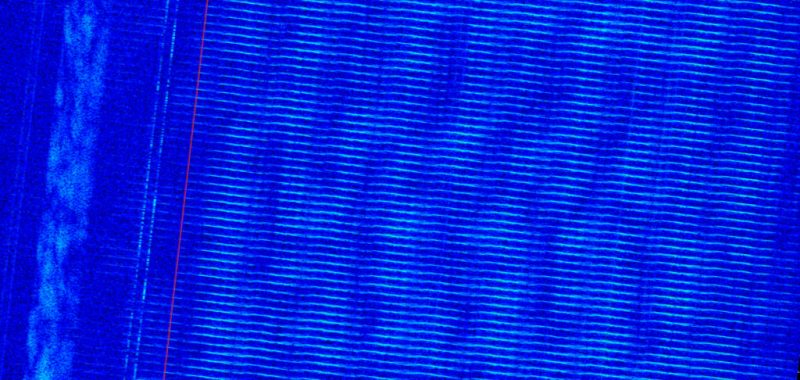
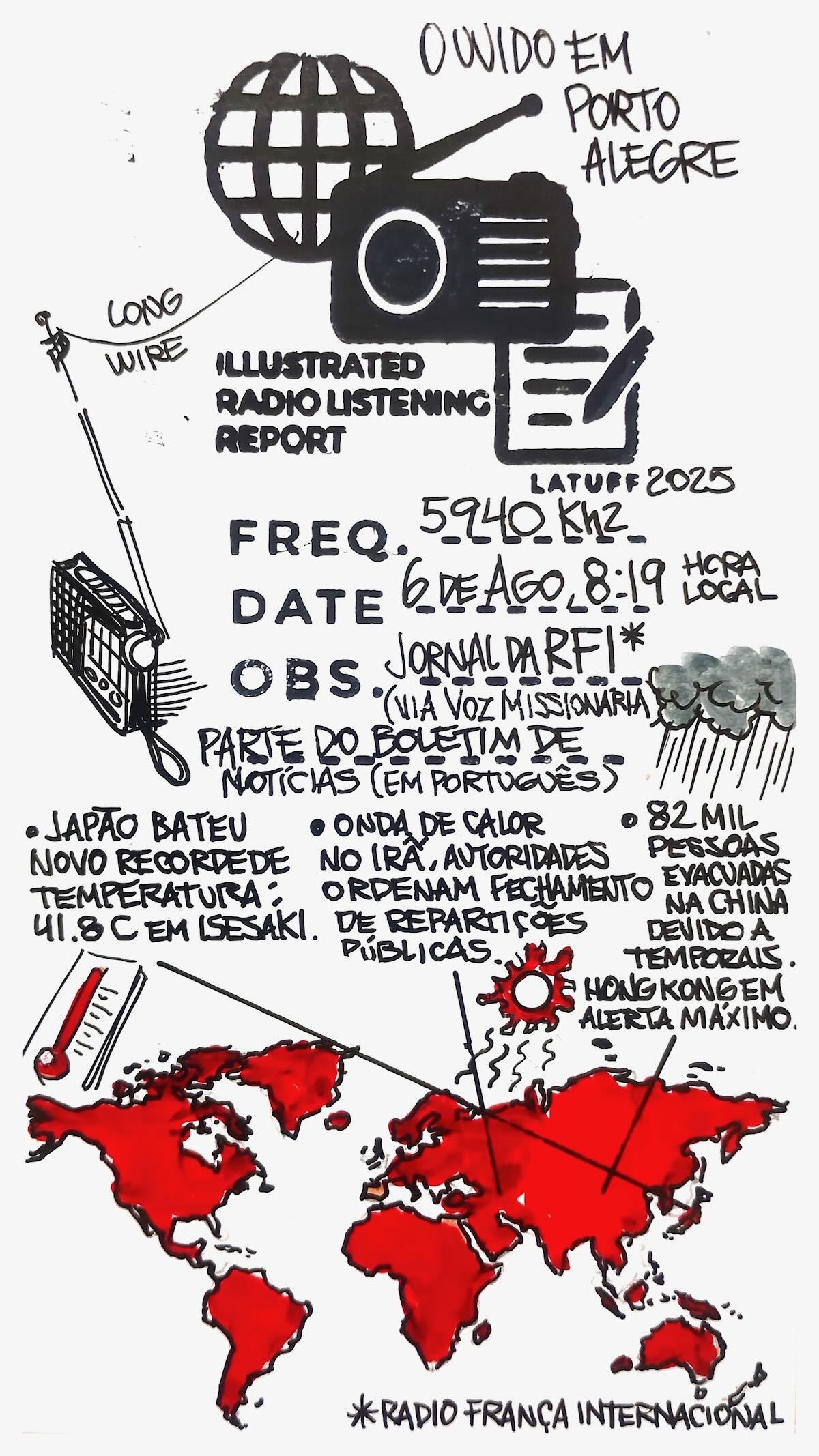
Carlos’ Illustrated Radio Listening Report and Recording of RFI (August 6, 2025)

Many thanks to SWLing Post contributor and noted political cartoonist, Carlos Latuff, who shares the following illustrated radio listening report of a recent RFI broadcast via Voz Missionaria.


Carlos notes:

Heat wave in Japan and Iran, heavy rains in China. RFI News via Radio Voz Missionária, 5940 kHz

Click here to view on YouTube.

Radio World: NRSC Studies RF Noise on Various Roadway Types

Many thanks to SWLing Post contributor, Dennis Dure, who shares the following item from Radio World:

NRSC Studies RF Noise on Various Roadway Types (Radio World)

Radio World asked Cris Alexander to read the report and comment

The National Radio Systems Committee recently published the results of a study on AM band noise.

The report, principally authored by John Kean, is titled NRSC-R102, “Measurement of AM Band RF Noise Levels and Station Signal Attenuation.” It was released in January.

The study consisted of several measurement series conducted along roadways both in urban and rural areas, measuring the signal strength of three different Baltimore/Washington 50 kW AM stations as well as the RF noise on three different unoccupied AM band frequencies.

Measurements were made across five environments: rural, rural-suburban, suburban, urban and dense urban. The results were mostly as one would expect, but there were a few surprises. [Continue reading…]

Click here to download the NRSC PDF report.

Radio Waves: AM Buzzkill, AM FEMA Push, AM Devitalization, and RFI-Blocking Chips

Radio Waves:  Stories Making Waves in the World of Radio

Welcome to the SWLing Post’s Radio Waves, a collection of links to interesting stories making waves in the world of radio. Enjoy!

Many thanks to SWLing Post contributors Rich Dalton and Dennis Dura for the following tips:


The JacoBLOG Junk Drawer – The AM Radio Edition (Jacobs Media Strategies)

Is there a bigger buzzkill blog topic than AM radio?

In a an era where digital has transformed radio broadcasting’s content and revenue focus, the last thing anyone wants to talk about in 2023 is lowly AM radio. But like that old drunk uncle who shows up at the reunion, AM is still part of the radio family.

In its heyday, AM ruled the radio roost. It wasn’t until the late 70’s when FM surpassed AM in total listening, and later profitability. Before then, AM was the behemoth. And the biggest and best in class could be magically heard in dozens of states each night. Weather, atmospherics, and bodies of water all factored into AM reception.

Many Baby Boomers vividly recall laying in bed at night, precariously tuning in a faraway AM station carrying a ballgame or even broadcasting progressive music. Or grabbing a portable transistor radio – like the one sitting in our junk drawer – taking it to a sporting event and having a great audio soundtrack from legends like Vin Scully, Ernie Harwell, or Jack Buck. [Continue reading…]

Former FEMA Leaders Continue Push for AM Preservation (Radio World)

Say the removal of AM radios from cars is “a grave threat to future local, state and federal disaster response and relief efforts”

The laundry list of current and former government officials advocating for the safeguarding of AM radio in electric vehicles continues to grow.

On Feb. 26, seven former leaders of the Federal Emergency Management Agency penned a letter to Secretary Pete Buttigieg of the Department of Transportation advocating for the preservation of the senior band and urging regulators to take action to protect the nation’s public safety.

“Because of the great distances that its signal carries, and due to its resiliency during even the worst natural disasters, the success of the National Public Warning System hinges on the use of AM radio,” the collective of former FEMA leaders wrote. “However, should EV makers continue removing AM radios from their vehicles, this vital public safety system will no longer function as intended.”

The dialogue between automakers and AM advocates has grown signficiantly in recent weeks. As we reported earlier, the Alliance for Automotive Innovation sent a reply to Sen. Ed Markey after he asked individual car companies about their commitment to broadcast AM radio in electric and other future vehicles. In the days following, Markey, the alliance, the National Association of Broadcasters and, now, FEMA officials and and an FCC commissioner have continued a public discourse.[Continue reading…]

AM Devitalization (All Access)

Been to a shopping mall lately?

It’s not pretty. Vacancies dot even the most successful malls. The lesser malls feel abandoned, like modern ruins, isolated and scary. One mall near us is so barren, they’ve marked off part of one end and use it for pickleball. Even the mall walkers are gone. If a mall can’t draw mall walkers in South Florida, that’s a harbinger of doom.

The reasons that big indoor malls aren’t thriving anymore aren’t a secret. Habits changed. Tastes changed. People shop online now, or go to discounters like Walmart or Target. Department stores have fallen out of favor. Teens don’t hang out in the food court anymore; they’re congregating on TikTok. What’s left are traditionalist shoppers who want to try stuff on or handle it before buying, or people who want to see stuff in person before firing up the Amazon app and buying it there. Other than Apple stores and a few other chains with loyal customers, there’s not a lot to draw people to the mall anymore, and what’s left is kinda creepy. Some malls are now mostly occupied by local businesses trying to make a go of it, and things like gyms and churches and DMV offices. I got my Florida driver’s license in a half-repurposed mall. It was strange. [Continue reading…]

Boffins concoct interference-busting radios (The Register)

Radio interference can be a pain to deal with, regardless of whether it’s a rogue baby monitor interrupting your Wi-Fi or a stadium full of smartphone signals drowning each other out.

However, brainiacs at MIT say they’ve developed a radio chip that can see through the noisiest RF hellscape by actively blocking unwanted frequencies before they can scramble messages.

The chip was developed to address the growing challenges associated with 5G and other wireless communications standards. It takes inspiration from several adjacent domains – including digital signal processing and applied electronics – explained Negar Reiskarimian, assistant professor of electrical engineering and computer science at MIT.

The work, presented at the International Solid-State Circuits Conference (ISSCC) last week and detailed in a recent blog post, combines a number of existing technologies into a novel radio chip, which researchers say can contend with RF interference 40 times higher than existing wideband receivers. What’s more, they say the method doesn’t require large, bulky filtering equipment.

Even in its current development stage, the chip is small enough – just 0.65mm square – for use in mobile devices, according to Reiskarimian and Soroush Araei, an MIT grad student working on the project. And while 5G is highlighted as a potential application for radios based on the design, they note there’s no reason it can’t be used for other wireless signals like Wi-Fi. [Continue reading…]


Do you enjoy the SWLing Post?

Please consider supporting us via Patreon or our Coffee Fund!

Your support makes articles like this one possible. Thank you!

Resource for tracking down sources of PV system RFI

Photo by Vivint Solar

Many thanks to SWLing Post contributor, Jerome van der Linden, who writes:

Hello Thomas,

In asking the manufacturer of the inverter for the solar array on our house what I might be able to do to reduce the EMI coming out of it, he gave me some Googling ideas, which led me to the following article which I think is worth passing on to others:

https://www.solar-electric.com/learning-center/reducing-electromagnetic-interference-pv-systems.html/

I was particularly interested in the sentence: Conversely, inverters connect to AC circuits in the home, turning every inch of the house wiring into an antenna that radiates the interference.

The guy who wrote the article has a lot of experience in chasing down this problem.

Cheers

Jerome van der Linden

Thanks for sharing this, Jerome. As more and more homes install solar solutions, tracking down sources RFI has certainly become an art form. When we installed our rather simple PV system over a decade ago, our installer stuck with telephony approved gear–charge controllers, etc. that are often used in communication central offices. 

Thank you for sharing!