
Many thanks to SWLing Post contributor Dan Greenall, who shares the following post:
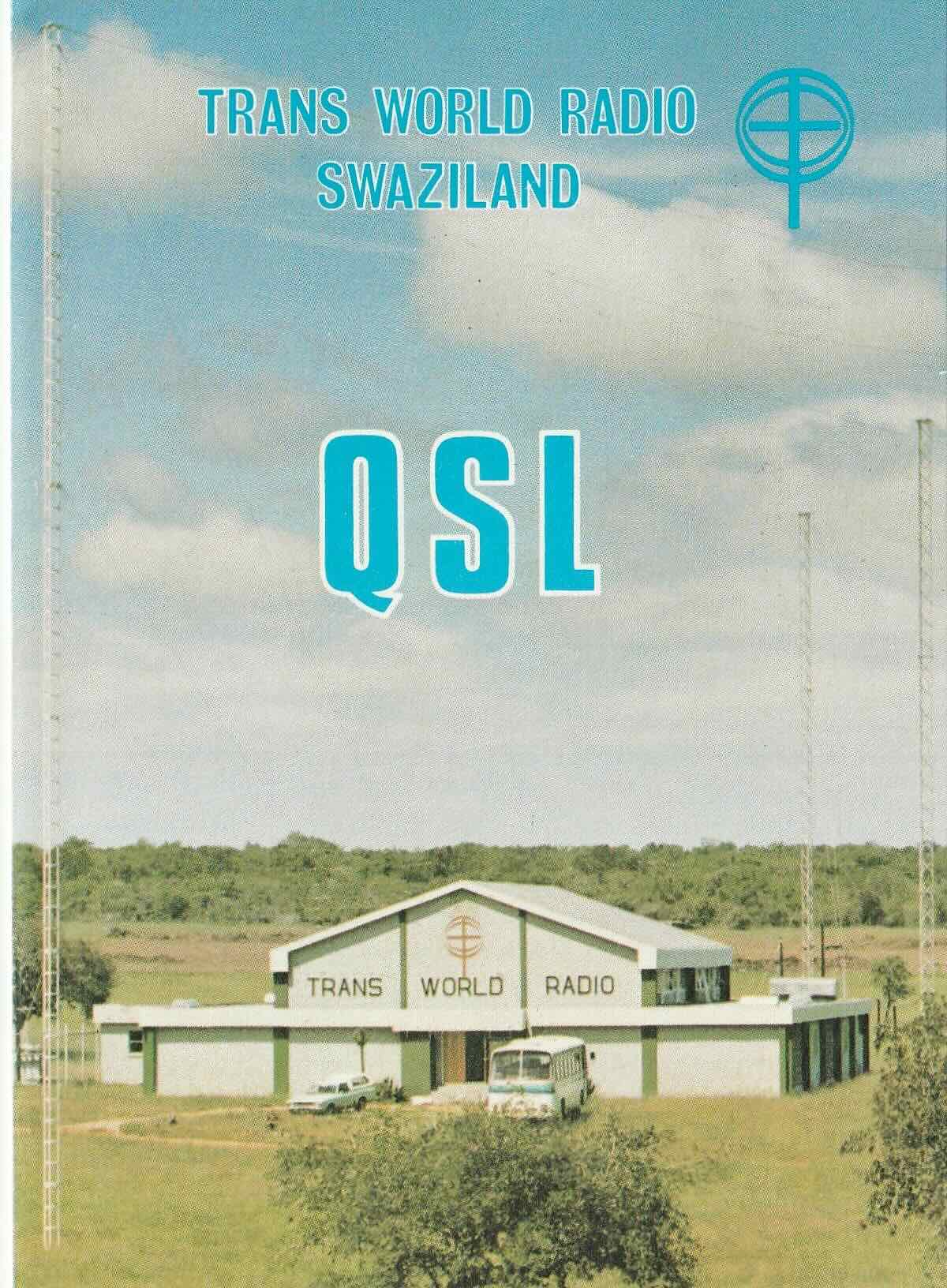 Much to the delight of DXers, Trans World Radio began broadcasting from the African country of Swaziland over 50 years ago. According to the 1975 World Radio TV Handbook, they had four 30 kW transmitters to conduct initial testing in the 90, 60, 49, and 41 metre bands. Their interval signal, played on hand bells, reportedly comes from the song “We’ve a Story to Tell the Nations” and has a music box feel to it. It would pause frequently for an ID in English. This recording was made on November 2, 1996, on 4750 kHz just prior to 0400 UTC sign-on: https://archive.org/details/trans-world-radio-swaziland-1996
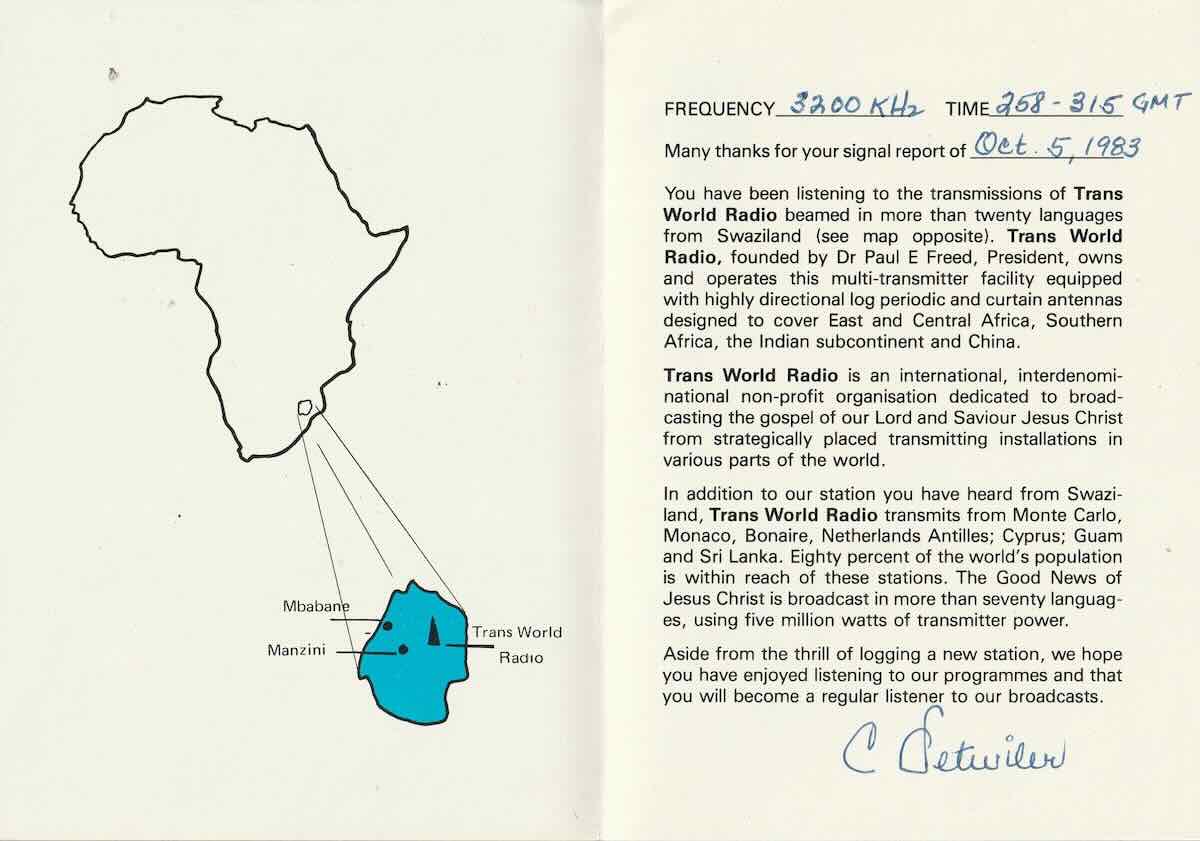 Today, the station is still on the air and follows the same format as in years past, except for the name of their country, which changed to Eswatini in 2018.
I chose a Kiwi SDR in neighboring South Africa to make this recent recording, on August 21, 2025 around 1359 UTC on 9585 kHz, leading up to the start of a program in the Portuguese language.
Try 15125 kHz between 1700 and 1730 GMT.
Am appreciative of your update on TWR. What a beautiful sound it is to hear the handbells again. The audio started following about 30 seconds of silence – I mention this so other interested folks will know to wait for that period of time. Again … thank you.
Added info: Found all the boardcasting in languages and nations and frequencies and modes by going to TWR.org and clicking on “Regions” down toward the bottom of the page.
I recently received a broadcast from TWR Africa in Indianapolis, Indiana USA on 13800 kHz at 19:22 UTC. Per short-wave.info, the language was Lingala and the transmitter site was Manzini, Eswatini.
I did monitoring for TWR and have a QSL for first week of transmission from Swaziland.
John Green SWL – ZS1JHG