Shortwave listening and everything radio including reviews, broadcasting, ham radio, field operation, DXing, maker kits, travel, emergency gear, events, and more
Update/Correction: It was discovered after posting this recording and message that it’s actually Radio ELWA’s 72nd anniversary year, despite a recent post on their website claiming it was their 70th anniversary.
Carlos notes:
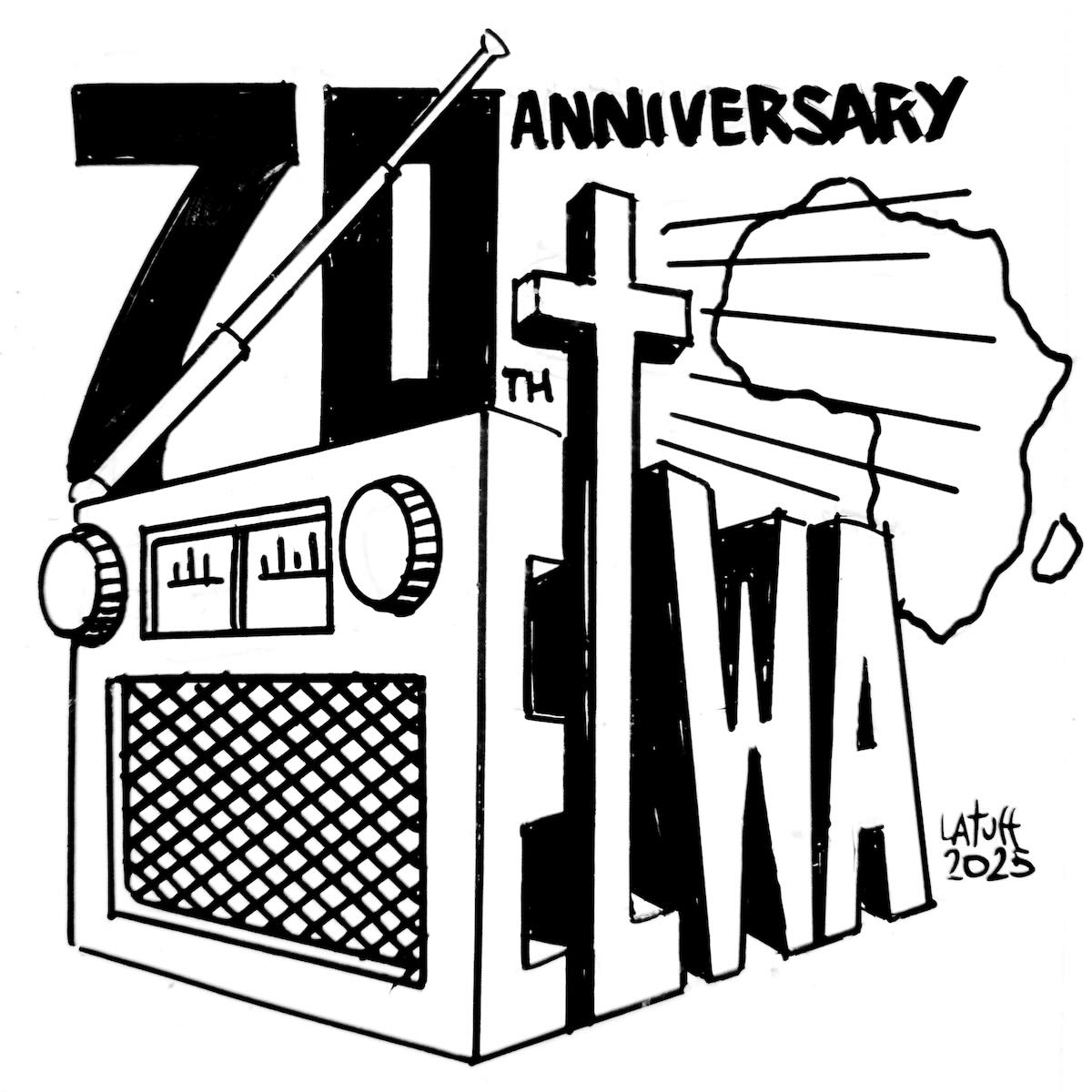
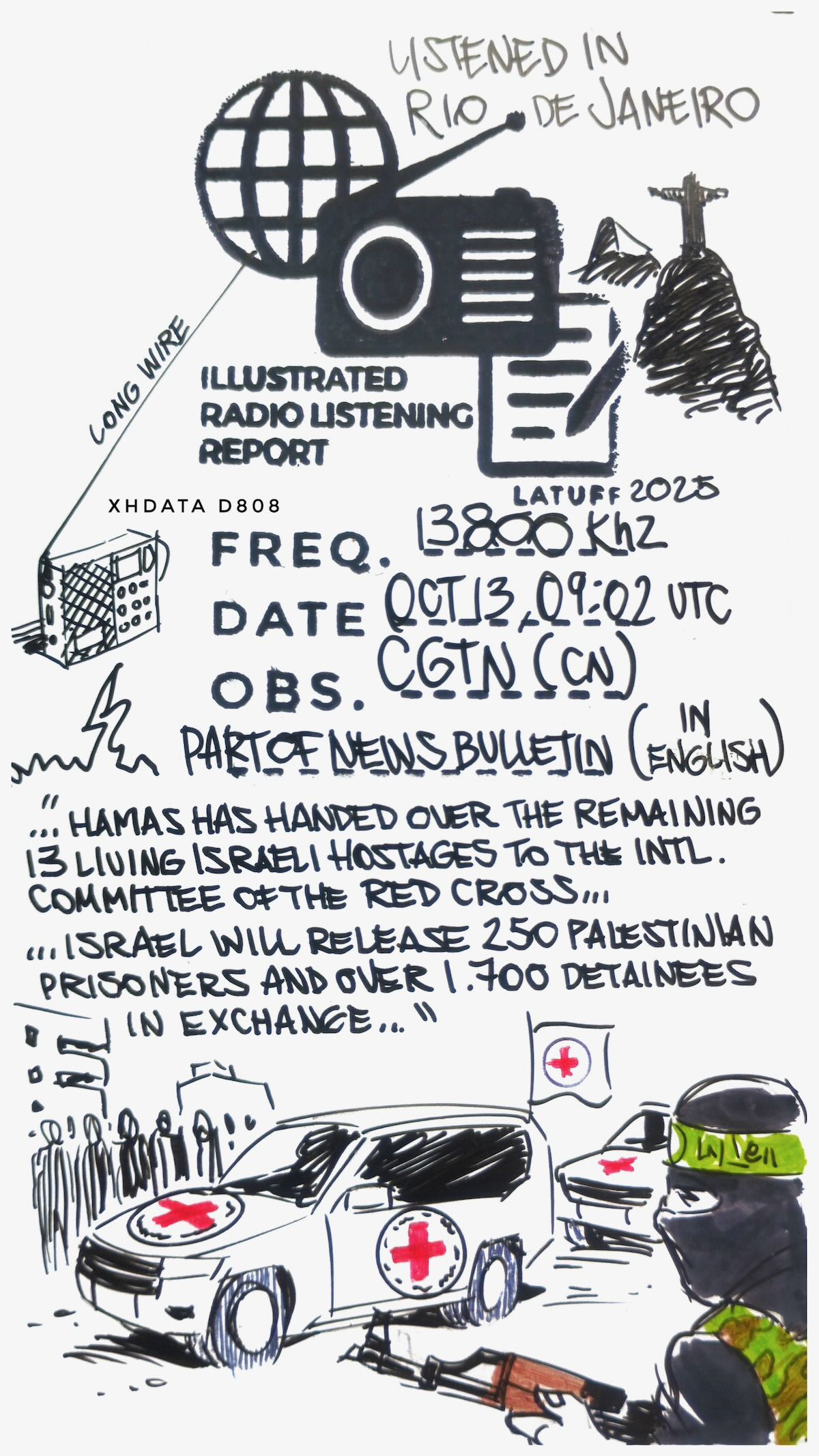
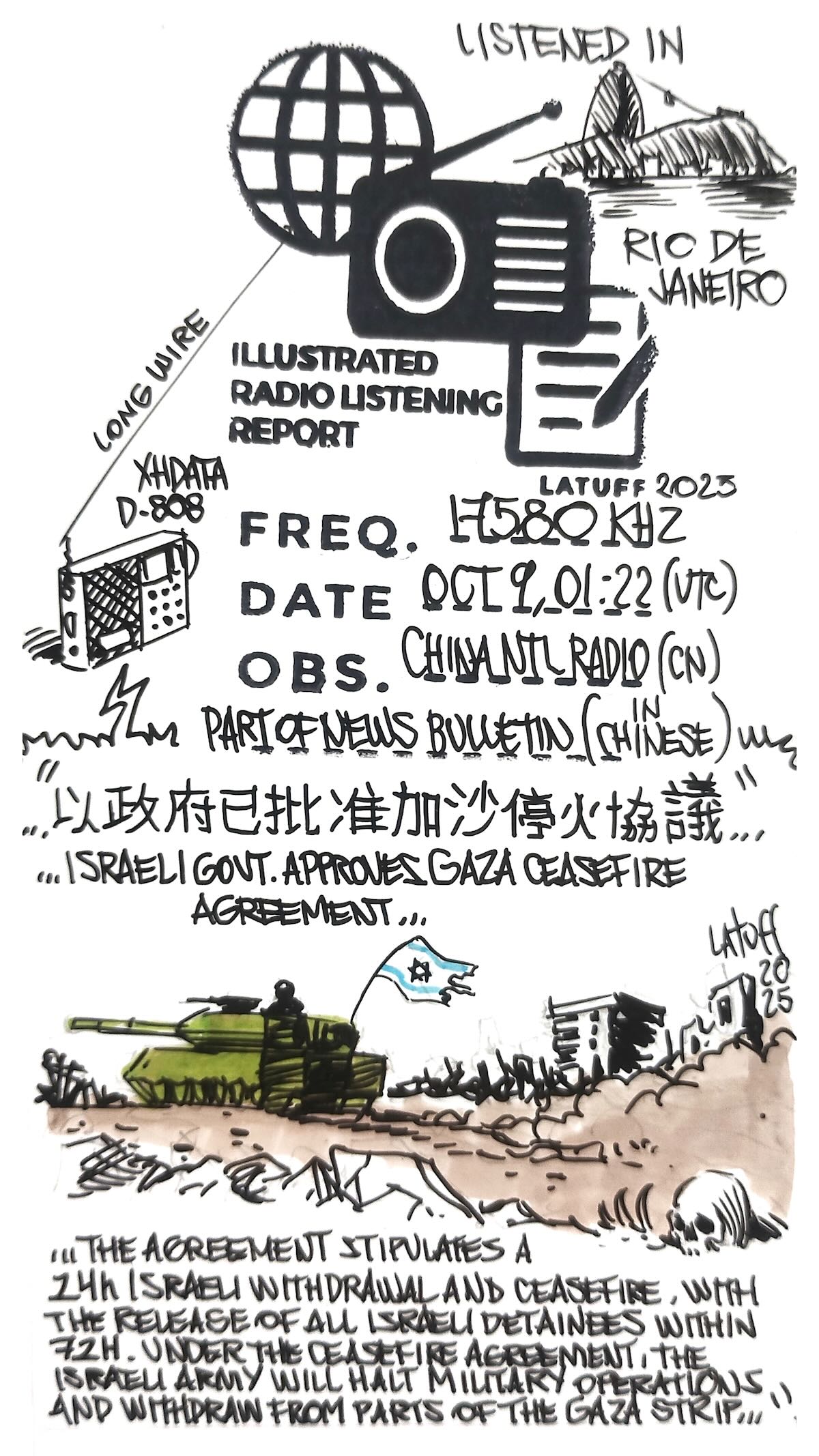
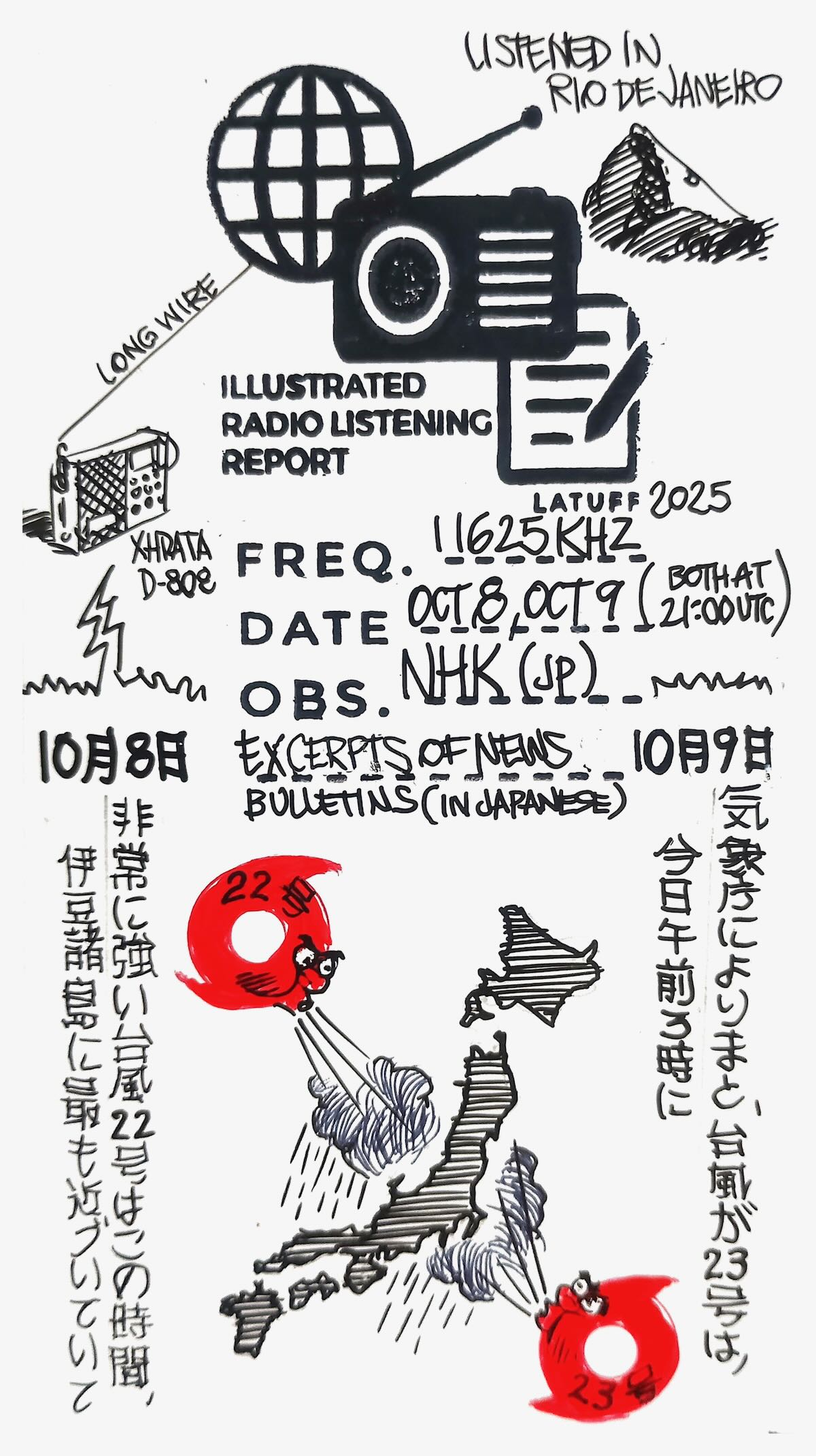
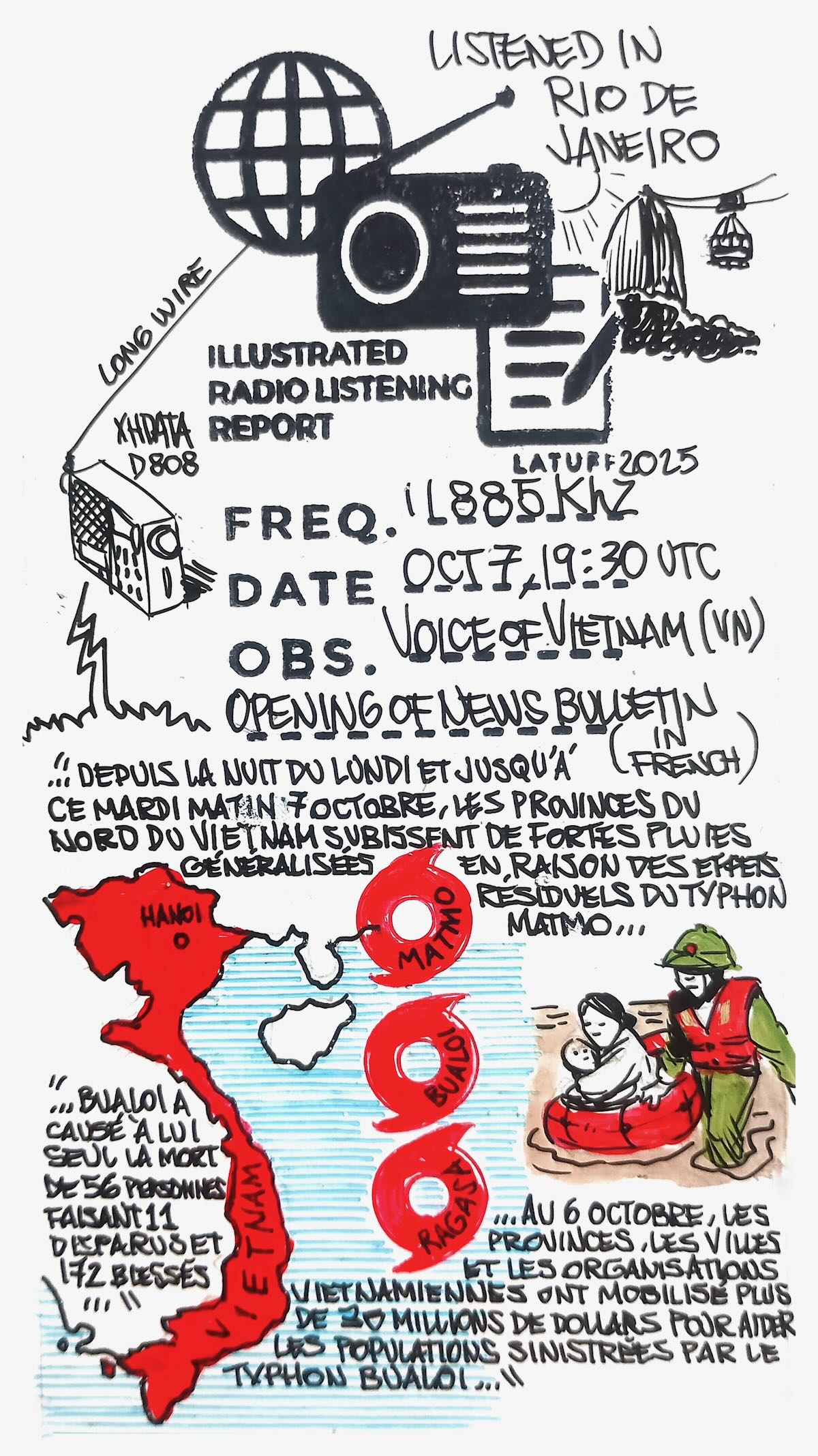
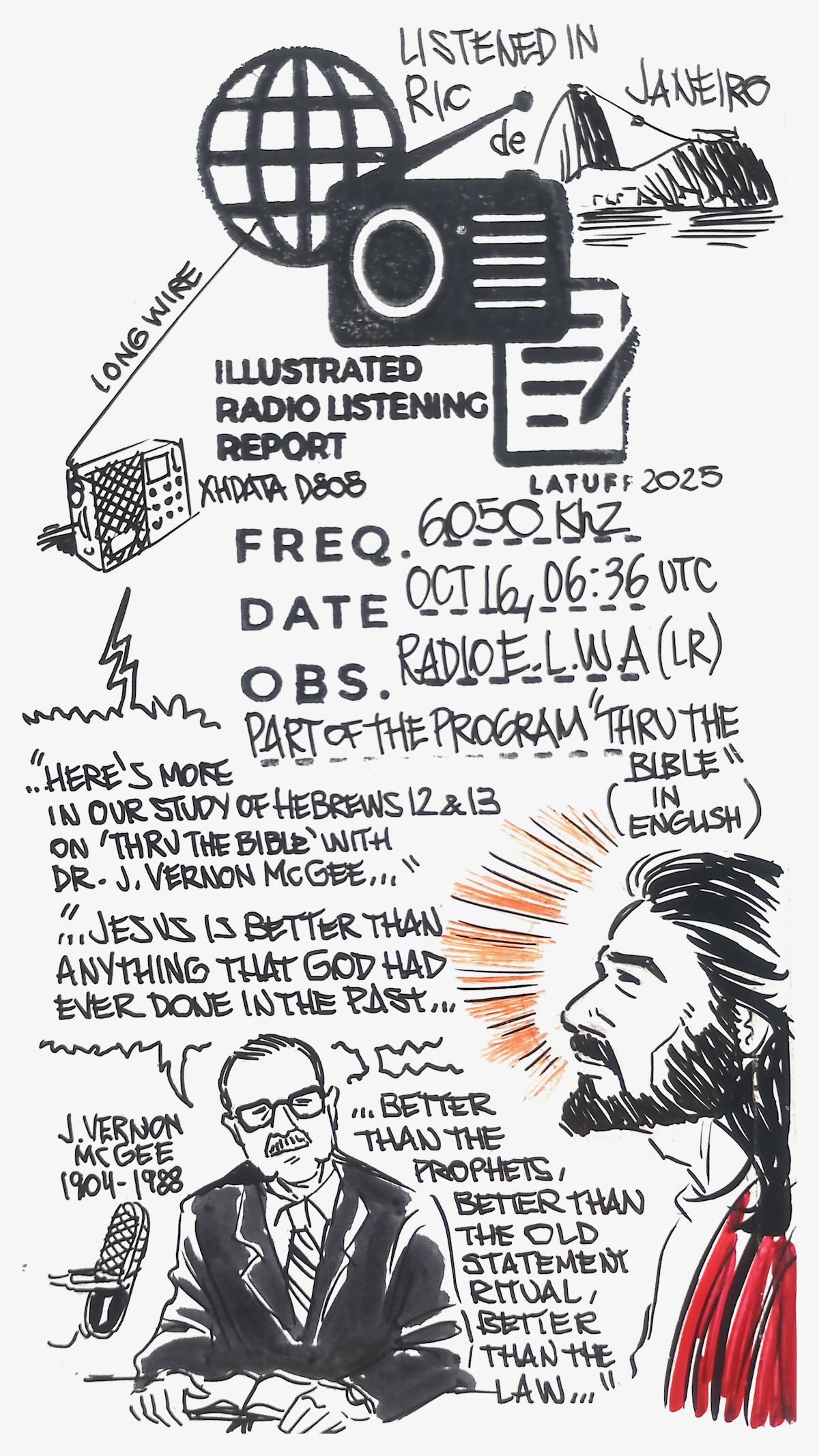
While conducting these recent radio listening sessions, I discovered that ELWA Radio celebrated its 70th anniversary in May of this year. To mark this occasion, I decided to create a commemorative illustration of this station, which is a true symbol of the resilience of the Liberian people.
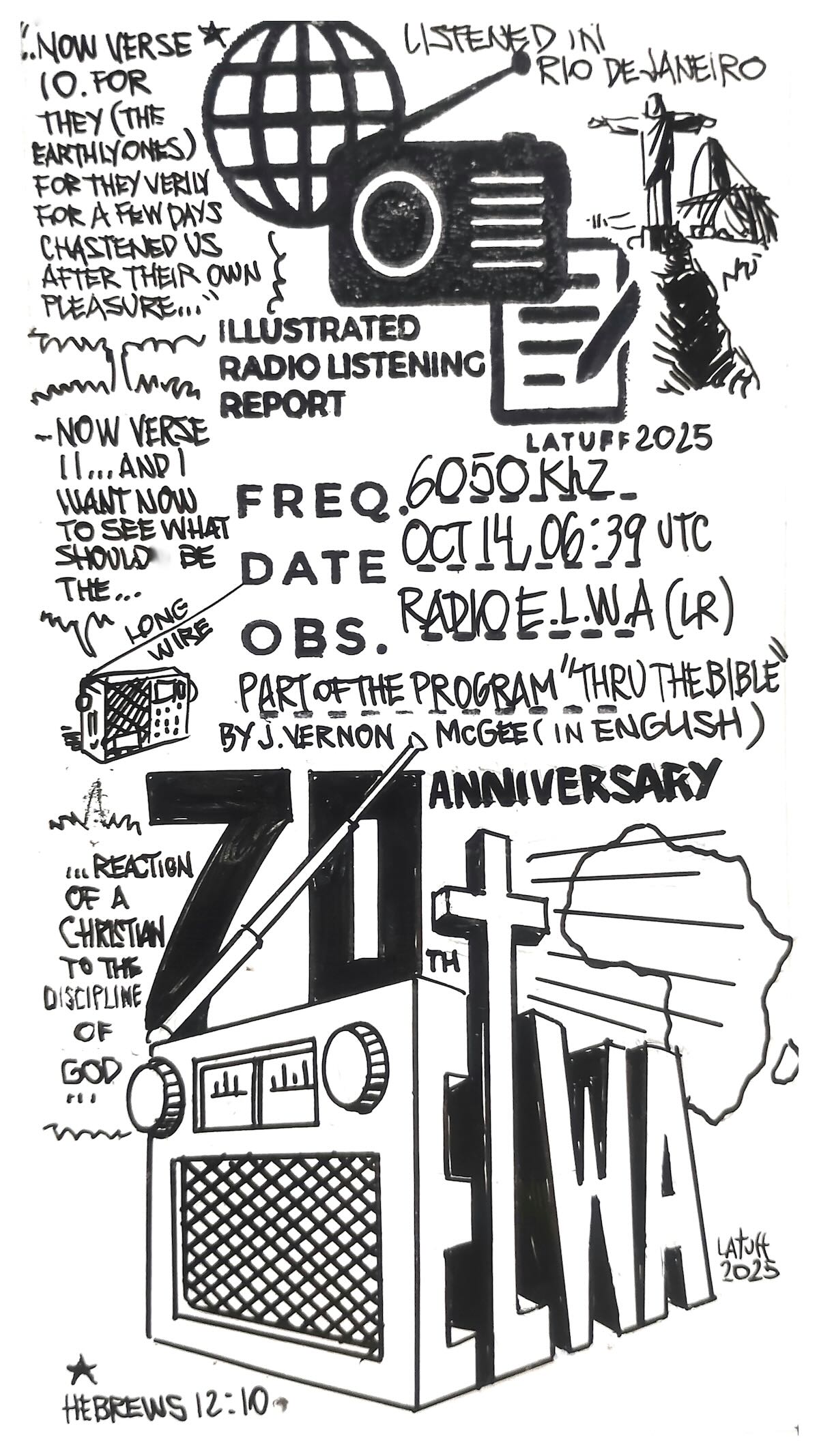
I was informed by the station’s manager, Rev. Perry Saydee, that the program I tuned into yesterday, October 14th, is called “Thru the Bible,” and searching on YouTube, I found the audio related to my radio listening session.
The program is hosted by Steve Shwetz and shows sermons by Dr. J. Vernon McGee, Presbyterian minister from the United States who died in 1988
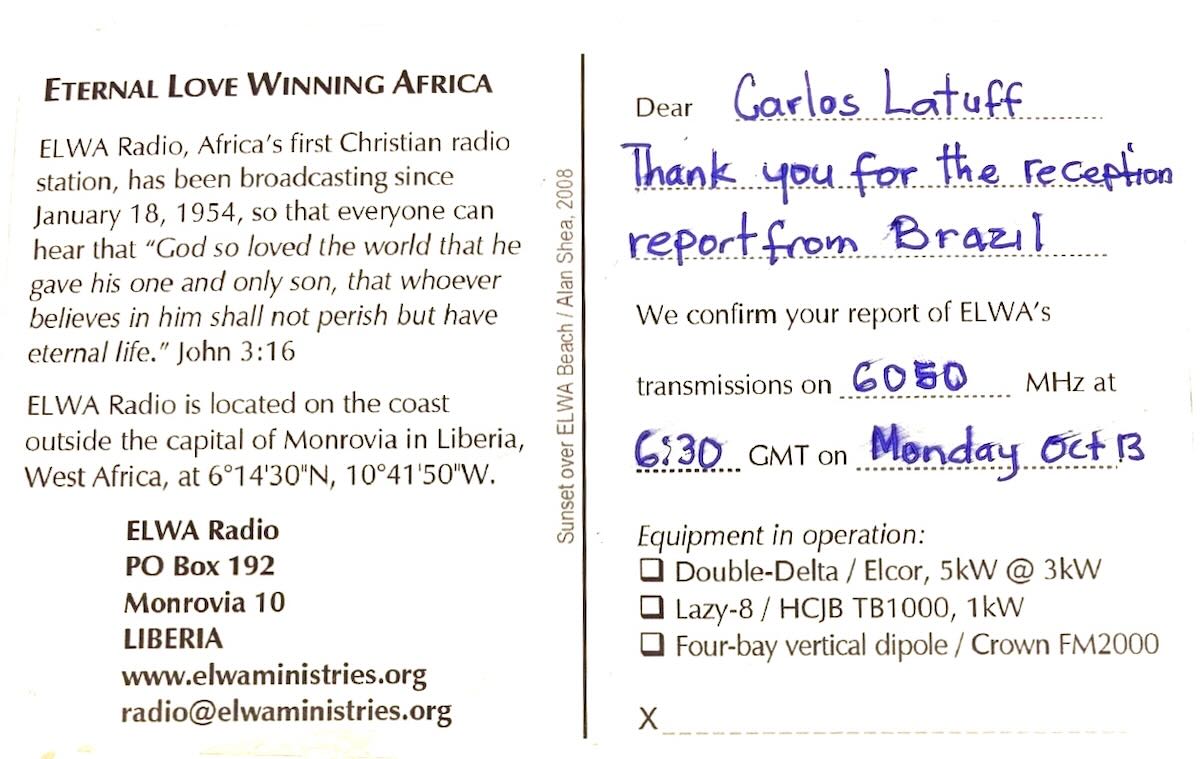
I was kindly awarded with this e-QSL card due my listening report of October 13th.
Today, October 15th, I also managed to capture ELWA Radio’s interval signal.
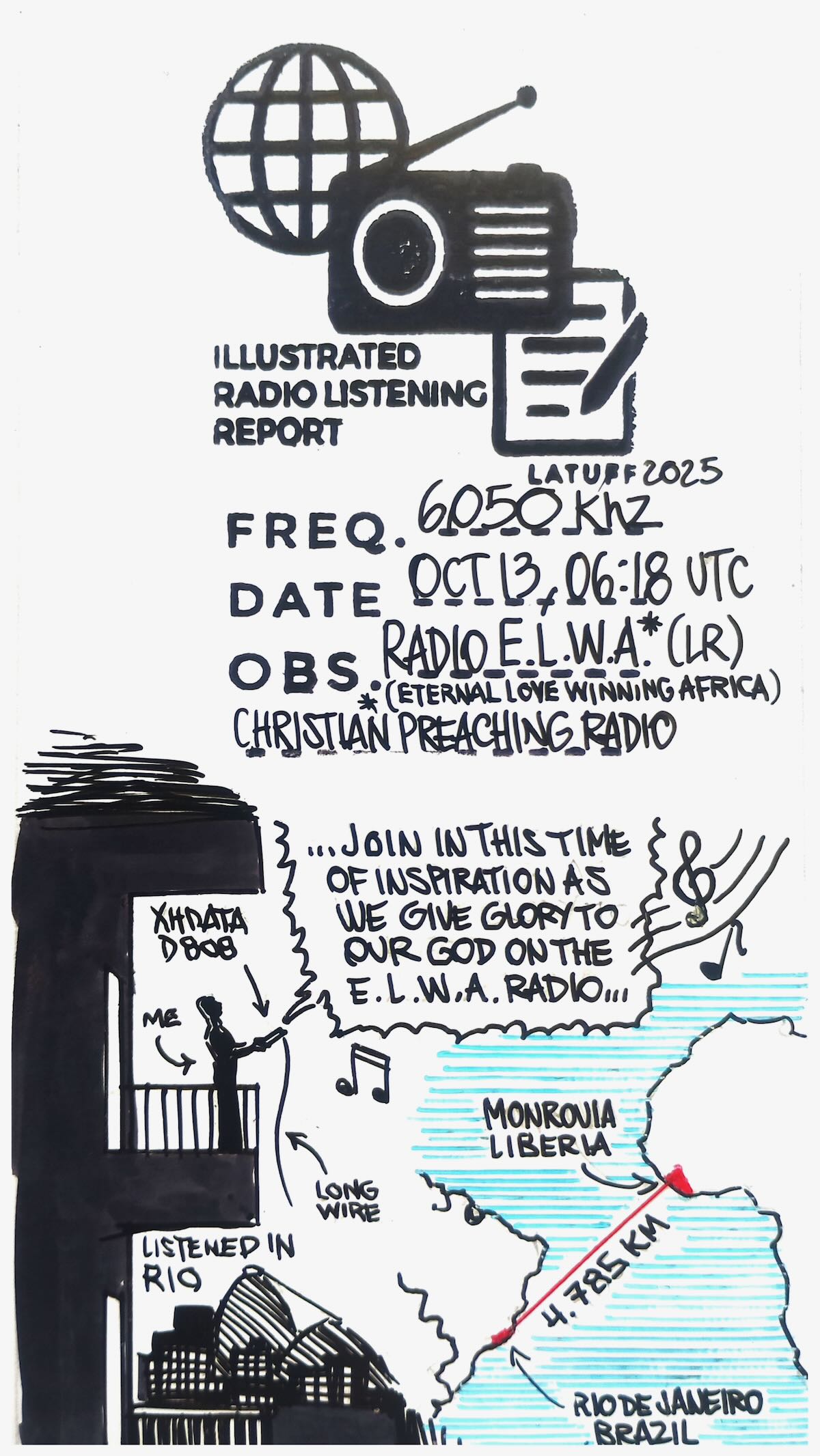
It’s never been easy for me to pick up the ELWA (Eternal Love Winning Africa) radio signal on 6050 kHz in Brazil. The signal was always weak, propagation was poor, and conditions were never particularly favorable for listening to the historic evangelical radio station from Monrovia, the capital of Liberia. Until then, I had only listened ELWA, with great difficulty, in Porto Alegre and Guaíba, both cities in Rio Grande do Sul, and in Juiz de Fora, Minas Gerais. Recently, while scanning shortwave frequencies during the early morning hours in Rio de Janeiro, I received the ELWA radio signal and decided to try recording the broadcast. I noticed a sort of propagation window between 6:30 and 6:50 (UTC). Even though, it took at least six days of failed attempts, the same weak signal and poor propagation, until finally today, October 13th, I got clear audio.

 Carlos notes: