Author Archives: Thomas

LRA36: A new email address for reception reports

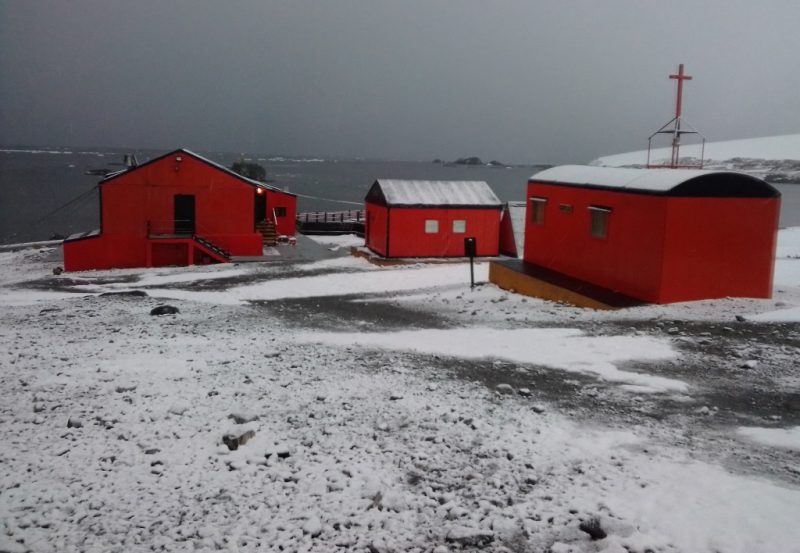
Source: Base Esperanza – Antártida

Many thanks to SWLing Post contributor, Harald Kuhl, who notes that LRA36 (Radio Nacional Arcángel San Gabriel) has published the following new email address to be used for reception reports: [email protected]

Thanks for sharing this Harald as I have not had luck with the former email address. I’ll re-submit my last report!

WRMI’s origins in Scituate, MA

(Source: The Patriot Ledger)

WHAT IS IT?

Located off Hatherly Road, the Scituate Proving Grounds was used as an ammunition dump and a testing facility for artillery during World War I. During World War II, it served a different purpose, beaming radio broadcasts to occupied Europe as the transmitter site for shortwave station WRUL. The station’s signal also had strong coverage in Africa, South America and at sea.

LAST WE HEARD

The station traces its origin back to the first shortwave radio license granted in the United States in 1926. In 1936, the station built its transmitters and antennas on the Scituate site, broadcasting university lectures, cultural and news programs from studios on Boston’s Commonwealth Avenue. The call letters stood for World Radio University Listeners.

At the start of World War II, its broadcasts were credited with keeping more than 900 Norwegian ships from being captured by Nazi Germany. The station was used by the U.S. Government during the war, and broadcast the Voice of America service from 1947 to 1953. The station went through some ownership changes and in 1960 its studios moved to New York. The call letters were changed to WNYW in 1966, and the station was knocked off the air by a fire at the Scituate facility in 1967.

When it returned to the air, it was bought by Family Radio in 1973 and was one of only a handful of privately-owned shortwave stations in the United States. Family Radio gradually moved the transmitter site to Okeechobee, Florida. The Scituate transmitters were turned off in 1979.

WHAT’S HAPPENING NOW?

After being vacant for many years, the Hatherly Road property became the site of the Seaside at Scituate Condominiums. As for the station, WYFR went off the air in 2013. Its facilities were taken over by WRMI “Radio Miami,” which is still on the air.

Click here to read the full article at The Patriot Ledger.

New Microtelecom Perseus SDRs on eBay

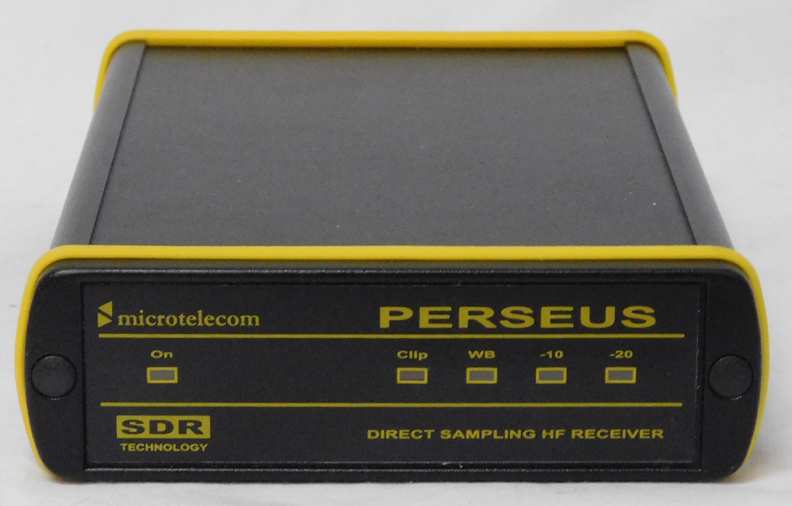
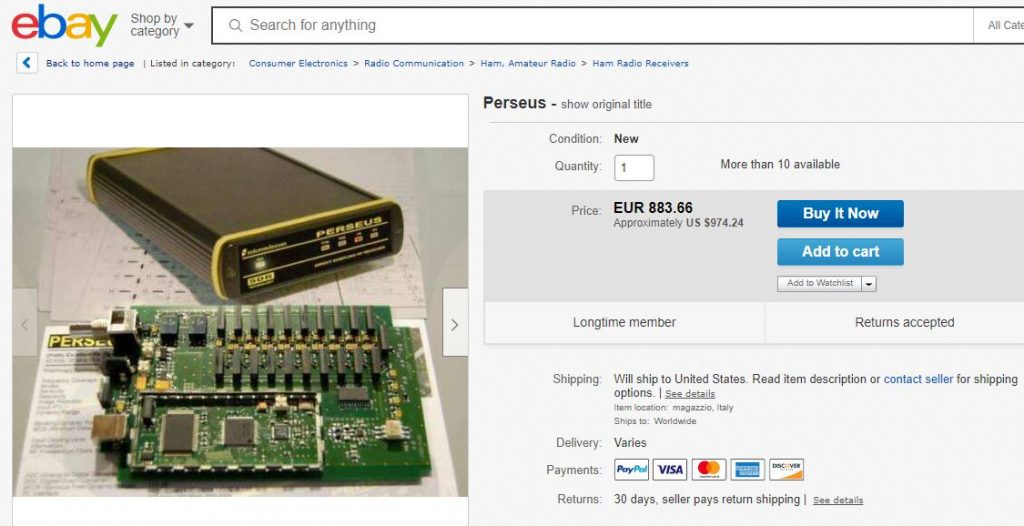
Many thanks to SWLing Post contributor, Dan Robinson, who notes that an eBay vendor in Italy is selling new inventory of the benchmark Microtelecom Perseus SDR. The price is 883.66 Euro or roughly $975 US. 

I have gotten a lot of inquiries about the Perseus over the past few years since it’s more difficult to find ones new-in-box. It appears this vendor has at least ten units and a 99.3% rating with almost 800 eBay reviews. The seller allows for a thirty day return period and they also pay return shipping. If you’ve been looking for a new Perseus, this may be worth considering.

Click here to view on eBay.

“Visualizing the Geography of FM Radio”

(Source: ERDavis.com)

This project, like the one before it, started as an offshoot of another project that I’ll finish… someday…

I start one project, which brings up questions I need to answer in other projects, so I start those projects, which lead to more questions… and before I know it I have a tangled mess that’ll take months to sort out.  To illustrate, there’s currently 11 projects in my “Active” queue and 11 more in my “Paused” queue. I’m personally very proud that I get anything done at all!

For this particular tangled project mess, I needed to see how many classical music radio stations there are in the States. That quickly lead to wanting to plot where those classical stations broadcast. That lead to a burning desire to map all radio station broadcast areas, ever, and also to map how many radio stations broadcast in a given area.

[…]I started by simply plotting the service contours of the 20,000-odd stations on my list. I love the way this looks, like phosphorescent jellyfish or raindrops on water.[…]

Click here to read the full article and view all images.


Washington Post features WWV and WWVB

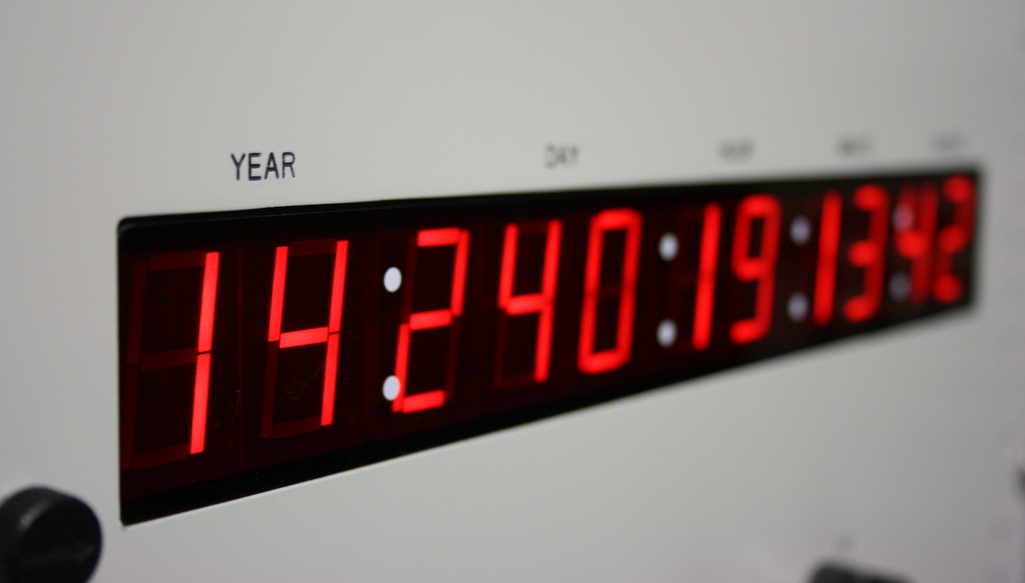
A WWV Time Code Generator

(Source: Washington Post via Ulis K3LU)

If you tune a shortwave radio to 2.5, 5, 10 or 15 MHz, you can hear a little part of radio history — and the output of some of the most accurate time devices on Earth.

Depending on where you are in the United States, those frequencies will bring you to WWV and WWVH, two extremely accurate time signal stations.

Developed before commercial radio existed, WWV recently celebrated its 100th anniversary. It’s the oldest continually operating radio station in the United States.

Both stations are overseen by the National Institute of Standards and Technology, the federal agency that governs standards for weights and measures and helps define the world’s official time.

That time can be heard on shortwave radio 24/7.[…]

Click here to read the full article.

If you’d like to hear why I believe WWV/WWVH and WWVB are important services, check out this interview I did with Scott Simon for NPR Weekend Edition.

Thirty Years of Radio New Zealand’s International Service

RNZI QSL

Yesterday, Radio New Zealand celebrated 30 years of service to the Pacific. Many thanks to SWLing Post contributors Jason Walker and Peter Marks for sharing the following story and audio from Radio New Zealand:

On 24 January 1990, Radio New Zealand International beamed into the Pacific, on a new 100 kilowatt transmitter.

New Zealand has had a short-wave service to the Pacific since 1948. The station broadcast on two 7.5kw transmitters from Titahi Bay, which had been left behind by the US military after the Second World War.

In the late 1980s, following growing political pressure to take a more active role in the Pacific area, the New Zealand government upgraded the service.

A new 100kw transmitter was installed and, on the same day the Commonwealth Games opened in Auckland, the service was re-launched as Radio New Zealand International.

“What we were able to understand was how important radio was and still is in the Pacific, where as here radio had become a second cousin to television… different thing in most of the countries we worked with,” said RNZ International’s first manager was Ian Johnstone, from 1990 to ’93.

Mr Johnstone said news of a dedicated Pacific service into the region was welcomed by Pacific communities.

He also said it was important for New Zealanders to remember that New Zealand is part of the Pacific.[…]

Continue reading the full article and listen to embedded audio at Radio New Zealand.

Audio:

Click here for the audio links.

PIRATE Act signed into law by President

Photo by David Everett Strickler on Unsplash

(Source: The White House)

On Friday, January 24, 2020, the President signed into law:

H.R. 583, the “Preventing Illegal Radio Abuse Through Enforcement Act” or the “PIRATE Act,” which authorizes enhanced penalties for pirate radio broadcasters and requires the Federal Communications Commission to increase enforcement activities; and

H.R. 2476, the “Securing American Nonprofit Organizations Against Terrorism Act of 2019,” which authorizes within the Department of Homeland Security a Nonprofit Security Grant Program to make grants to eligible nonprofit organizations for target hardening and other security enhancements to protect against terrorist attacks.