Author Archives: Thomas

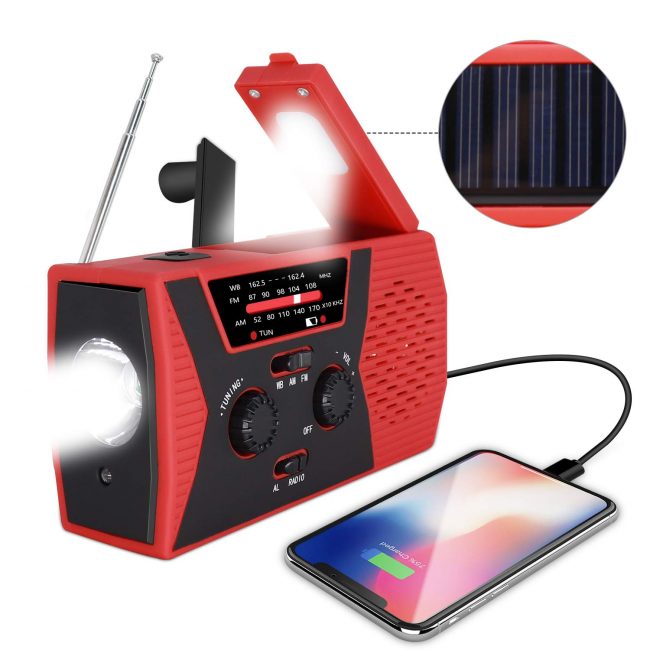
Doug recommends the RegeMoudal Emergency Solar Hand Crank AM/FM/WX Radio

Many thanks to SWLing Post contributor, Doug Nickle, who writes:

“You once recommended some alternatives to the CCrane Solar Observer. In looking at the RunningSnail you initially recommended, I came across this other upgraded version (with a slightly larger battery bank, 2000 mAh, vs. 1000 mAh).

[…]I did pick up the RegeMoudal Emergency Solar Hand Crank Radio. It looks like it’s made for a couple different companies/brands.

So far I like it a lot, for an emergency radio. Audio is pretty good for a radio in this price range.

[…]I’ve been generally happy with the WX reception. AM and FM are generally clear, if not a bit tinny, but that is dependent on the clarity of the station to begin with as the stronger stations come in smooth and balanced.

The flashlight and reading light are bright and functional LED; the flip up reading light is a really nice addition and would work well in a tent or simply in a power outage.

I haven’t tested it yet, but I bought this unit because of the 2000 mAH battery bank. I’ve got multiple dedicated, higher capacity battery banks, but I figured having one more can’t hurt.

My only wish would be a slightly longer antenna (this one is only nine inches).

I’m currently using rechargable AAA batteries but it comes with a micro USB and has both micro and regular USB inputs for charging, as well as a plug for a headset.

Neat little rig and worth having in the bag for emergencies or power outages. All in all, this is a great emergency radio for under $30 bucks.”

Click here to view on Amazon (note: this affiliate link supports the SWLing Post)

Thank you, Doug.  I agree with you: the increased capacity of the internal battery is actually a major plus. I’m also happy to hear that the LED lighting is functional.  I don’t think I’ve ever seen a model with a pop-up light on top. Thanks for sharing your review.

The Spirit of Radio

Neil Peart (Source: Rush.com)

i just learned about the passing of Rush drummer and lyricist, Neil Peart.

Rush is one of my all-time favorite rock bands and their music has been an ever-present part of my life. Although all three of Rush’s members are incredibly talented musicians, Peart truly defined Rush, in my opinion. Rush is one of the few rock bands that prominently feature the drummer front-and-center in every piece.

Peart was a legend and surely a benchmark for any percussionist.

As the Rolling Stone put it:

“Peart was one of rock’s greatest drummers, with a flamboyant yet utterly precise style that paid homage to his hero, the Who’s Keith Moon, while going well beyond that example. He joined singer-bassist Geddy Lee and guitarist Alex Lifeson in Rush in 1974, and his virtuosic playing and literate, wildly imaginative lyrics – which drew on Ayn Rand and science fiction, among other influences – helped make the trio one of the essential bands of the classic-rock era.”

Peart passed away at the age of 67 after more than a three year battle with glioblastoma, an aggressive form of brain cancer

One of my favorite pieces by Rush is “The Spirit of Radio” which was released in 1980 and appeared on their iconic album Permanent Waves. The following live performance features an phenomenal intro into the song. If you like Rush, you’ll love this concert clip:

Click here to view on YouTube.

Rest in peace, Neil…

VOA Museum featured in Atlas Obscura

VOA Bethany

(Source Atlas Obscura via Paul Evans W4/VP9KF)

The former Voice of America broadcast site at Bethany Station is now a museum. It covers the history and role of Voice of America, as well as the history of broadcast and radio itself.

Tucked into the former equipment bays are row upon row of early radio examples. You’ll spot everything from early broadcast equipment to novelty radios from the ’70s.

From 1944 to 1994, the site was used to broadcast news and information to Europe and North Africa. It was originally run by the Office of War Information. Adolf Hitler complained after a Cincinnati broadcaster impersonated him.

In 1963, the Voice of America took direct control of the broadcast facility. Using the expertise of the local Crosley Broadcasting Corporation’s engineers, enormous 250-kilowatt transmitters were built.

Although the towers were torn down in 1998, the Art Deco broadcast building remains, and houses the Amateur Radio Association, Media Heritage, and the Gray History of Wireless collections call the facility home.[…]

Click here to read the full article in Atlas Obscura.

The WWII “Mosquito Network”

Many thanks to SWLing Post contributor, Marty, who shares this article by Mark Durenberger in Radio World:

Inside the U.S. effort in a battle of the airwaves during the Pacific campaign of World War II

We can’t fully appreciate the importance of news from home to those who served in World War II. In the Pacific campaigns, G.I.s, sailors and Marines fought bloody island-hopping battles; as each island was cleared, garrison troops and hospitals moved in and carried on their own war against mosquitoes, isolation and boredom. The island fighters were fortunate if dated mail caught up with them before they moved on to the next target. Timely personal-level communications were pretty much absent.

Radio programming from America was available but only on shortwave. And shortwave radios were not generally available. The fortunate few had been issued “Buddy Kits” that included a radio, a small PA system and a record player for discs sent by mail. But for most there was no way to receive short-lived information such as news and sports. They were left with enemy radio propaganda such as Japan’s “Orphan Ann/Annie” (aka one of several Tokyo Roses) and the “Zero Hour” program.

No wonder that the idea of having a local island radio station doing “live from home” was so fiercely supported. Enlightened commanders saw the idea as a terrific morale-builder. The only problem was how to pull it off.

A solution, not uniquely, came from within the ranks. It started with the work of some bored but talented soldiers in the Panama Canal Zone who in 1940 built a couple of 50 W transmitters and put them on the air without authorization, labeling them “PCAN” and “PCAC.”[…]

Click here to continue reading the full article at Radio World.

John works with FCC to track down WX radar interference

Photo source: John (AE5X)

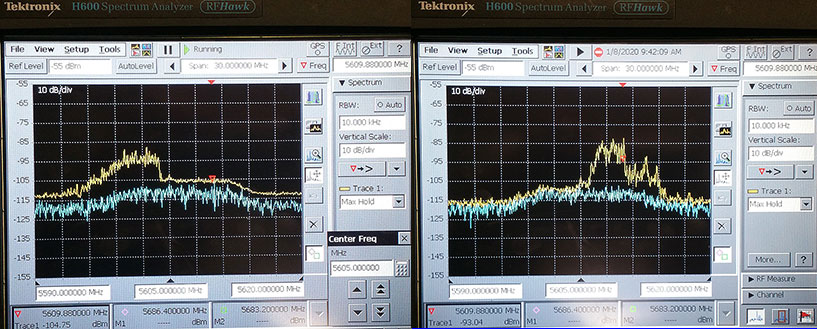
Many thanks to SWLing Post contributor, John Harper (AE5X), who notes that he recently worked with an FCC crew to find the source of noise that was affecting a weather radar site. In the process, John got to check out, first hand, RF Hawk and some of the equipment the FCC uses to locate interference (including pirate radio stations).

Click here to read John’s full post.

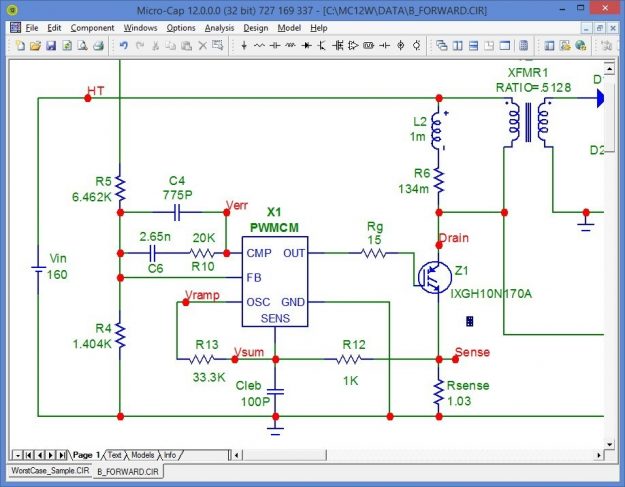
Commercial circuit simulator, Micro-Cap 12, now a free download

Many thanks to SWLing Post contributor, Grayhat, who writes:

Maybe it’s old news for you, I just discovered it and thought you may
be interested, the commercial circuit simulator “Micro-Cap 12” which
was sold at around $4,500 for each license is now *free*, I found the
information here along with some further details:

https://hackaday.com/2020/01/08/commercial-circuit-simulator-goes-free/

The decision of releasing it as freeware seems to be related to the
fact that the company selling it (Spectrum Software) closed (not sure
for the reasons); anyhow, since the site or the download link may
disappear in some time, I think it would be a good idea to pick a copy
of the software, the full CD image including the program, libraries and
everything else can be downloaded from this page

http://www.spectrum-soft.com/download/download.shtm

Thank you for the tip! I agree with you about grabbing a full install of the application while you can!

SDRplay RSPdx update

(Source: Jon Hudson with SDRplay)

Happy new Year from all of us at SDRplay.

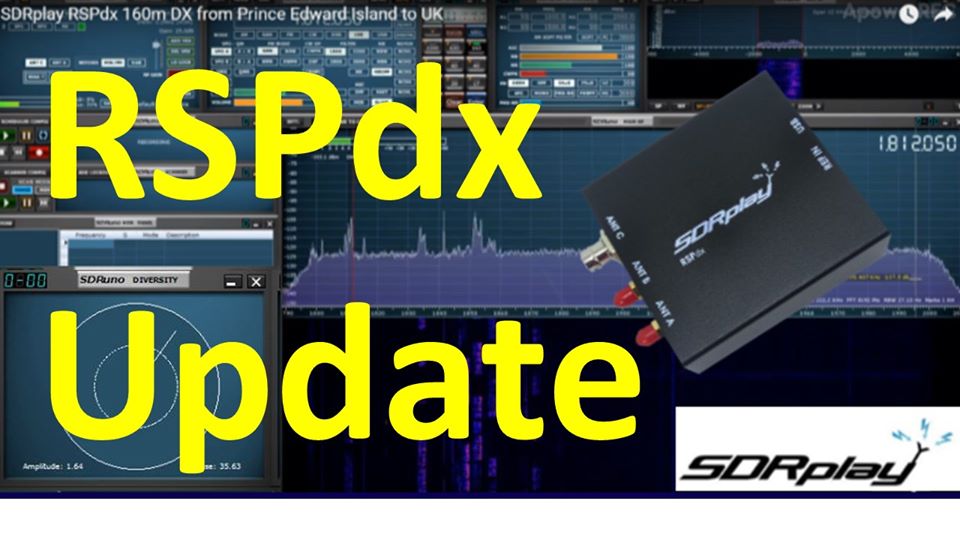
Here’s an update on additional software for the RSPdx. SDRplay’s SDRuno fully supports the RSPdx but it takes several weeks for other software to catch up to the capabilities offered on the other RSP models.

Simon Brown has released his latest version of SDR Console V3 which supports the RSPdx (Version 3.0.18 dated January 1st) over on https://www.sdr-radio.com/ (make sure you download the latest API 3.x from our downloads page first)

We have released an EXTIO plugin for the RSPdx which will enable the RSPdx to work with any EXTIO-based software (e.g. HDSDR) although it doesn’t support HDR mode. HDR mode will not be added and the source code for the plugin can be found on our GitHub repository (https://github.com/SDRplay/ExtIO_SDRplay) we will not be supporting the plugin source code or extending the plugins capabilities. They are all free to be modified.

It is important to note that the RSPdx ExtIO plugin does NOT, AND WILL NOT, support HDR mode. If you need HDR mode, then SDRuno is the best option. HDR mode requires the end application to work in a certain way and this is not something that can be controlled via the ExtIO protocol.

Work has also begun on supporting RSPdx for SoapySDR based applications such as Cubic SDR (again this won’t include HDR mode). A Gnu Radio source block for the RSPdx will follow.

We are working with Steve Andrew, author of the Software Analyser software programme (see https://www.sdrplay.com/spectrum-analyser/ ) to help get compatibility for the RSPdx – this is a slightly longer process so this will take several more weeks.

Regarding stocks of the RSPs, SDRplay and most of our resellers on www.sdrplay.com/distributors/ have plenty of stock of RSP1A and the RSPduo. However there continues to be a shortage of the RSPdx whereby many of the resellers have sold out of their first deliveries. SDRplay is queuing up their replacement orders on a first come, first served basis. We also have our own quantity planned in there to allow us to sell direct from our website. We still hope that by the end of January we will have supplied this second wave of RSPdx demand.

For newcomers to SDR, see also, the glossary and links included in the news item on: https://www.sdrplay.com/happy-new-year-and-an-rspdx-update/