Author Archives: Thomas

Cambridge Consultants design a prototype $10 DRM receiver

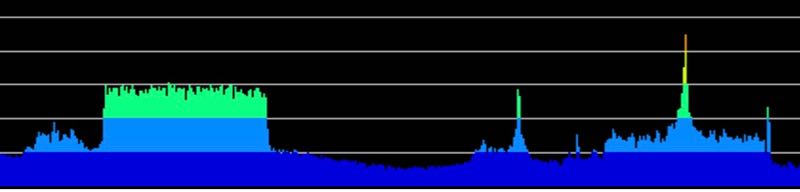
DRM broadcast (left) as seen via a KiwiSDR spectrum display.

Many thanks to SWLing Post contributor, Michael Bird, who shares the following news via Cambridge Consultants:

Digital launched, ever so long ago, with TV and radio. So what’s the big story? It’s that the last piece of the digital jigsaw is finally in place: a system called Digital Radio Mondiale (DRM), designed to deliver FM-radio-like quality using the medium wave and short wave bands.

We’re familiar with AM on medium wave and accustomed to the horrible buzz, splat, fade away and back again. But it does have a great advantage in that it will reach for hundreds of miles from a single transmitter. That’s a lot easier than FM or DAB, which both need transmitters every 30 or 40 miles. No fewer than 443 DAB transmitter sites are needed to cover the UK alone.

So take a modern digital scheme, apply some clever (and low cost) computing power, and you can get good sound for hundreds of miles. You get to choose radio stations by name instead of kilohertz, and you can even receive text and pictures. Emergency warning and information features are also built into DRM.

Great technology. But will it fly? Is it available for everyone?

The new news is that India, through its national broadcaster All India Radio, has invested in and rolled out a national DRM service, live today. Just 35 transmitters cover that large country. New cars in India have DRM radios in them now. Other countries like South Africa, Malaysia and Brazil are likely to follow India’s lead.

But something’s missing. The radios that can receive DRM are still prohibitively expensive, especially for those markets that would benefit most. So vast swathes of the world remain unconnected to the services that DRM can provide. Where’s the cheap portable that you can pick up from a supermarket to listen to the news or sport?

Cambridge Consultants has just held its annual Innovation Day, where we throw open our doors to industry leaders and reveal future technology. One of our highlights was the prototype of a DRM design that will cost ten dollars or less to produce, addressing that vital need for information by the 60-ish per cent of our global population that doesn’t have internet or TV. It’s low power, so can run from solar or wind-up.

This design will be ready in 2020, available for any radio manufacturer to licence and incorporate into its own products. We’re doing our bit to make affordable radios for every corner of the globe!

Click here to read this post at the Cambridge Consultants website.

Michael also shares this piece from Radio World regarding this project.

I must admit: there have been so many proposed low-cost DRM receiver designs that never came to fruition, it’s easy to be skeptical. I assume the $10/9 Euro design will be for the receiver chip only–not the full portable radio, of course. They plan to bring this to fruition in 2020, so we’ll soon know if they succeed.

NASA publishes free eBook: Earth At Night

(Source: Southgate ARC)

Earth has many stories to tell, even in the dark of night. Earth at Night, NASA’s new 200-page ebook, is now available online and includes more than 150 images of our planet in darkness as captured from space by Earth-observing satellites and astronauts on the International Space Station over the past 25 years.

The images reveal how human activity and natural phenomena light up the darkness around the world, depicting the intricate structure of cities, wildfires and volcanoes raging, auroras dancing across the polar skies, moonlight reflecting off snow and deserts, and other dramatic earthly scenes.

“Earth at Night explores the brilliance of our planet when it is in darkness,” wrote Thomas Zurbuchen, associate administrator of NASA’s Science Mission Directorate, in the book’s foreword. “The book is a compilation of stories depicting the interactions between science and wonder. I am pleased to share this visually stunning and captivating exploration of our home planet.”

In addition to the images, the book tells how scientists use these observations to study our changing planet and aid decision makers in such areas as sustainable energy use and disaster response.

NASA brings together technology, science, and unique global Earth observations to provide societal benefits and strengthen our nation. The agency makes its Earth observations freely and openly available to everyone for use in developing solutions to important global issues such as changing freshwater availability, food security and human health.

For more information about NASA’s Earth science programs, visit:
https://www.nasa.gov/earth

NOAA Space Weather Enthusiasts Dashboard gets an upgrade

Sun NOAA GOES SUVI

Many thanks to SWLing Post contributor, Jake Brodsky (AB3A), who writes:

I am a regular at
https://www.swpc.noaa.gov/communities/space-weather-enthusiasts

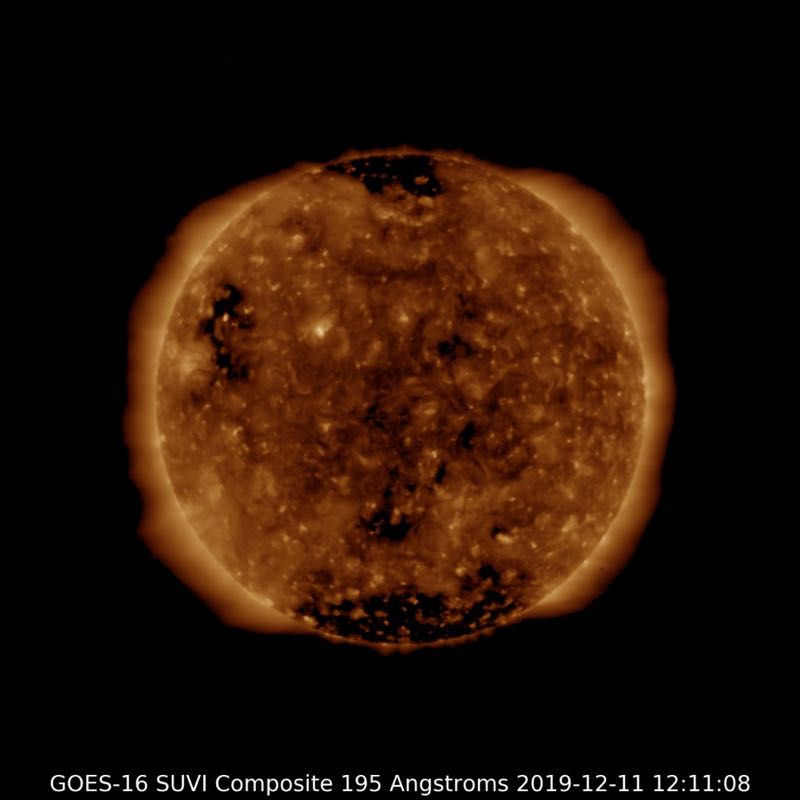
I just noticed today that the formerly crunchy low resolution x-ray view of the sun has been replaced by the GOES-16 SUVI images on a three hour loop. This has a 195 Angstrom view of the sun in great detail, so you can immediately see where the holes are forming in the corona.

Solar weather enthusiasts don’t need to go to the solar dynamics observatory page all the time to see what the last three hours looked like.

Thanks for the tip, Jake!

Cold War Sports: High-Speed Telegraphy

Many thanks to SWLing Post contributor, Paul Evans, who shares the following short radio documentary from the BBC World Service:

The end of the Cold War in 1989 spelt the demise of a little-known, but surprisingly popular sport behind the Iron Curtain – high-speed telegraphy competitions. With the help of two of Czechoslovakia’s best former Morse-coders, we revisit the inaugural World Championship in Moscow in 1983 when the Soviet Union rolled out the red carpet for teams from across the Communist bloc. Ashley Byrne reports. The programme is a Made-In-Manchester Production.

Click here to listen to this program via the BBC.

As Paul points out, “HST is still going strong as a sport!” Indeed it is because CW is simply timeless! Thanks for the tip, Paul!

Radio Caroline North broadcast December 14th – 15th

(Source: Southgate ARC)

Join us on the River Blackwater for the final Radio Caroline North broadcast of 2019 over the weekend 14th – 15th December

This month’s sponsor is Rush Jets and our on-air competition is sponsored by Rush Jets and sister company Inflight Goods, who are kindly providing three gents Rotary watches as prizes.

We’re LIVE from our historic radio-ship Ross Revenge on the River Blackwater, Essex. Listen in on 648 AM in the South and South-East, on 1368 AM in the North and North-West courtesy of our friends at Manx Radio, around the world online here, on various apps and radio players, and on your smart speakers – “Hey Alexa (or Siri), play Radio Caroline!”

We would love to hear from you – send your emails direct to the  Ross studios at [email protected] during the broadcast.

http://radiocaroline.co.uk/#home.html

LRA36 to broadcast coverage of Alberto Fernandez inauguration

Many thanks to SWLing Post contributor, Adrian Korol, who writes:

On December 10 [today], a new President will assume office in Argentina. The ceremony will be re-broadcast from LRA36 at 1200 UTC on 15476 still with the emergency Collins transmitter, less than 1 kw but with better antenna conditions.

Many thanks for the tip, Adrian!

DXtreme Monitor Log 12

(Source: DXtreme)

DXtreme Software™ has released a new version of its popular logging program for radio monitoring enthusiasts – DXtreme Monitor Log 12 – which lets listeners and DXers log the stations they’ve heard using features that enhance their monitoring experiences.

User’s Choice of Country Formats

When starting Monitor Log 12 the first time as a new user – or when creating a new secondary database – users can select the country format they want to use: NASWA Countries or ARRL Entities. Country information is fully editable when changes occur.

Finding Broadcast Stations to Monitor

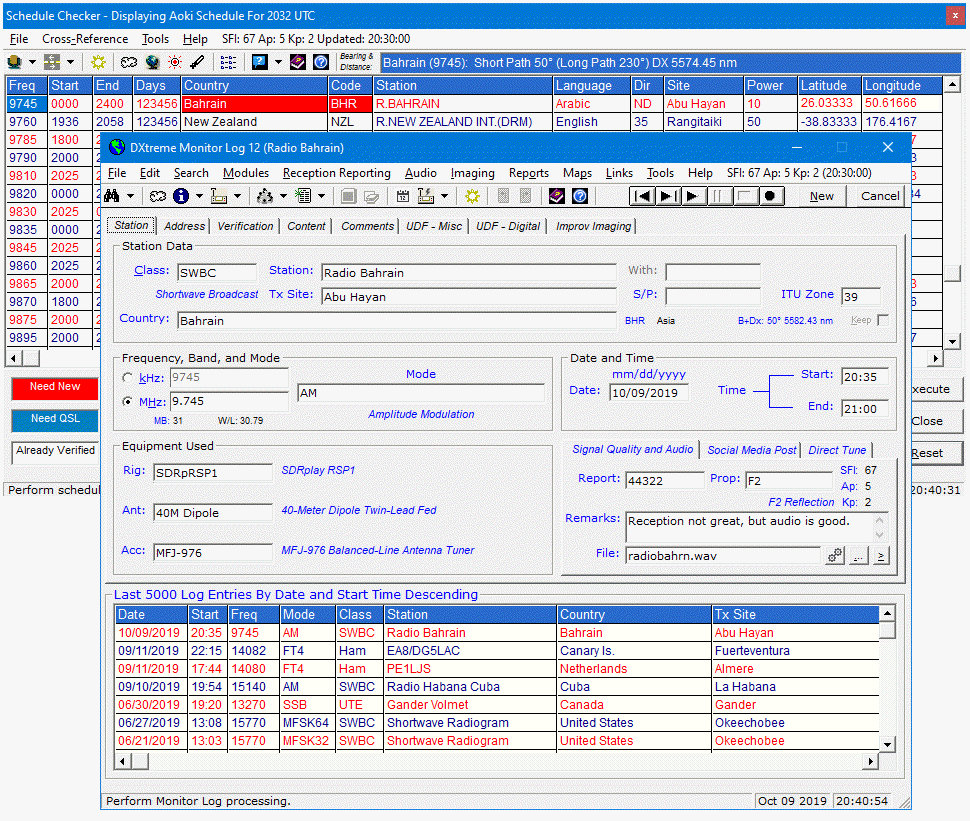
The Schedule Checker lets users import schedules from Aoki, EiBi, and FCC AM web sites and display schedule data according to the filter criteria they specify. A list box lets users switch between schedule types. And users can filter schedule information by band, frequency, station, country, time of day, language, and more.

When the What’s On Now? function is activated, the schedule refreshes automatically at the top of each hour for Aoki and EiBi schedules.

For each schedule item, Schedule Checker queries the Monitor Log 12 database to let users know – through user-defined, foreground and background display colors – whether they need to monitor a station for a brand-new or verified country. Schedule Checker also displays bearing and distance, runs optional Afreet Ham CAP propagation predictions, draws optional Afreet DX Atlas azimuth plots, tunes supported radios to schedule frequencies when users double-click schedule items, and starts log entries for scheduled stations monitored.

Finding Amateur Radio Stations to Monitor

Monitor Log 12 integrates with optional Afreet Band Master to let users see, on its graphical interface, where hams are operating. Monitor Log 12 supplies Band Master with an Entity Needed List based on the user’s Monitor Log database, making it possible for Band Master to indicate the stations whose entities (countries) users need to monitor.

Finding Utility Stations to Monitor

A Links menu provides convenient access to user-specified blogs and web sites that can inform users as to where utility and other stations may be operating.

Logging Stations

Monitor Log 12 lets users log all kinds of stations – radio, television, broadcast, Amateur Radio, utility, military, and more! And it lets users log stations across the radio spectrum – from long wave, to medium wave, to short wave, and beyond. Users can also select the display of kHz or MHz frequencies.

The Last Log Entries Grid on the Monitor Log window shows up to 5000 of the most recent log entries added. Its records can be sorted, and double-clicking records displays detailed data on the Monitor Log window. Users can resize the grid columns and scroll horizontally to columns that do not appear initially. Users can also display a larger, resizable Last Log Entries window. A Properties window lets users change the order of columns, the number of log entries to display, and the font and color attributes of grids and other program components, such as: Content Tabs for describing the content monitored, Script Editor for creating and editing scripts, Direct Tune interface for tuning radios, and Comments for typing ad hoc comments.

Reporting Reception

Users can create customized paper and e-mail reception reports for sending to stations plus club report entries for reporting catches to clubs and magazines.

When users add or display a log entry, Monitor Log 12 prepares a post announcing their DX catch and displays it on the Social Media Post tab. From there, users can drag the post to their favorite social media web sites to share their catch with others.

Using the Script Editor window, users can create and edit scripts that format reception reports, eReports, and social media posts to their liking. The software prompts users to select the script they want to use. Dozens of scripts come with Monitor Log 12.

Users can also print SWL and Address labels on industry-standard label stock, and send eQSL requests to hams automatically via the popular https://www.eqsl.cc site.

Imaging

Improv Imaging lets users associate ad hoc images with log entries using Capture,Scan, and Clipboard functions. Captures of stations received on digital applications, waterfall displays, facsimile and Amateur TV pictures are popular. The Improv Imaging tab and Application let users view images anytime, and an Improv Image Explorer lets them peruse their entire collection and display associated log entries. A QSL Imaging facility functions the same as Improv Imaging for associating QSLs.

Other Features

Rig Control – Retrieves the frequency and mode from supported radios and permits tuning from the Schedule Checker and Direct Tune interface. Rig control is provided through integration with Afreet Omni-Rig and SDR applications like HDSDR, SDR Console, and SDRuno.

Audio Archiving – Lets users maintain an audio archive of stations heard.

Reporting and Searching – Produces Performance, Stations, and Log Entry reports that track the performance and progress of the user’s monitoring station in its entirety. The software lets users tailor the appearance of reports plus FTP them to user-provided Web space for remote access and sharing. Reports can integrate with Afreet DX Atlas to create pin maps. Searches allow access to all monitoring data in a variety of formats.

ADIF Import – Lets users import ADIF-formatted log entries into their database.

eQSL.cc Inbox Update – Updates user’s database with eQSL.cc Inbox verifications.

Documentation – Context-sensitive Procedural Help, Field Help, and Microhelp are accessible per window to provide instructions quickly. A web-based Information Center is accessible from the Help menu for late-breaking assistance, and Installation Instructions and a Getting Started Guide are delivered in PDF format with the software.

Operating Systems, Pricing, Contact Information DXtreme Monitor Log 12 runs in 32- and 64-bit versions of Microsoft® Windows® 10, 8.1, 8, 7, Vista®, and XP. It retails for $94.99 USD worldwide for electronic distribution.

Pricing for CD versions and upgrading users is available on our Web site. All prices include product support by Internet e-mail. For more information, visit https://www.dxtreme.com or contact Bob Raymond at [email protected].

SWLing Post readers should note that DXtreme was one of our first company supporters. Their ad revenue helps bring the SWLing Post to you daily. Thanks, DXtreme!

Click here to check out DXtreme Monitor Log 12.