Category Archives: Articles

Shortwave radio still packs an audible thrill (Reuters)

This article posted by Reuters is cracking at explaining why so many people still turn to SWLing:

It’s easy and cheap — and fun. You can hear and learn things that you would never find even if you work your search engine like a mule. From Swaziland to Paris to Havana, shortwave broadcasters can surprise an adventurous listener more than any MP3 playlist.

I couldn’t have said it better myself.

Author Robert MacMillan (with Reuters) began by comparing shortwave radios to many sleek portable digital media devices on display at the Consumer Electronics Show (CES) this year:

iPods and satellite radios are slim and pocket-sized, while shortwaves are throwbacks, typically as square as a textbook and just as serious looking.

While it’s true that most portable shortwave radios are slightly bigger than a Sony Walkman, few portables approach the size of a textbook. Sony, for example, produced the ultra small SW100S years ago–before the internet was much more than an easy way for university researchers to exchange off-color jokes. The SW100S, by the way, was about the size of a pack of cards. Innovative radio designer, Etón Corporation, announced the new, sleek, Grundig Mini 400 at the CES. [Krunker.com has photos of the Mini 400 and other Etón products from the CES–order your Mini 400 at Universal Radio.] I should also note that Chinese manufacturer, Degen, recently released a new, sleek, pocket radio MP3 recorder/player–see Passport’s take here.

I was quite happy to see a few good shortwave news items come out of the CES this year. Yes, more and more focus is being given to web-based devices, and it should be. I am a huge fan of the world wide web and all that it has to offer. But what keeps me glued to my shortwave radio?  MacMillian puts it best:

[W]hen you hear voices over the noise and squeal, and realize you are hearing Mongolia, live, there is a warmth and a human connection that are hard to find on the Web.

Amen. Thanks, Robert.

Read the full Reuters article here.

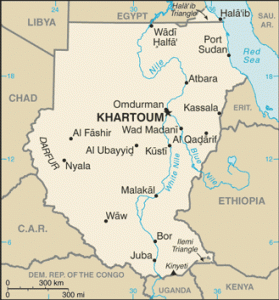
Wind powered community radio in Southern Sudan

This week’s Living on Earth Broadcast featured an interview with Internews program director Deborah Ensor about bringing solar and wind energy to the region to power a new radio station in Southern Sudan.

This story is a wonderful example of how radio empowers and promotes community relations in parts of the world that lack a communication infrastructure.

Links:

VOA honors former director who introduced Special English programming

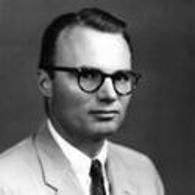
Henry Loomis (1919-2008)

Henry Loomis (1919-2008)

Voice of America (VOA) recently broadcast a tribute to former director, Henry Loomis who passed away last month. The VOA tribute was appropriately broadcast in “Special English”–a broadcast method Loomis created and championed at VOA.

Importance of Special English

Loomis developed the concept of Special English for VOA while travelling the world in the 1950s. He noticed that English was quickly becoming an international language and VOA’s international listeners were keen to learn but needed a simplified “text book” English broadcast to better understand the content. Loomis developed English broadcasts with slower speaking rates and more simplified vocabulary.

Though VOA began broadcasting in Special English on October 19, 1959, the programming was internally criticized as ineffective and American embassies even demanded that the slower rate program be cancelled. Regardless, Loomis continued to champion the method and hundreds of listeners soon wrote to VOA praising the system. Today, Special English programming remains some of the most popular at VOA.

Other Special Language Broadcasts

Since I am a native English speaker, I rarely listen to programming in Special English. However, I have listened to programming from other international broadcasters in Special French (Français Facile).

Français Facile from Radio France International gave me the confidence to listen to professional news broadcasts in French when I was still a student. Though I speak French fluently now, I still like to listen to these broadcasts. I believe the slower rate and careful diction actually help to improve my French vocabulary.

If you have never heard a broadcast in Special English, I encourage you to listen to the VOA broadcast mentioned above–click here to download the recorded broadcast as an mp3 file (courtesy of VOA).

More information on Loomis and Special English:

Great article on Passport’s site

Passport To World Band Radio has published a free article on their site called the, “100th Anniversary of Radio’s Great Danes.” It’s a fascinating short read about Einar Dessau, Johan Nyrop and Peter L. Jensen –the first gentlemen to successfully transmit and receive voice and music via shortwave in March 19, 1909. We’re about to celebrate the 100th Anniversary of this event. The Passport Article has some great photos including one of the very first QSL cards.

Sorry–no longer available.

Passport is a real gem in the SWLing world.

If you haven’t picked up your new copy of Passport To Word Band Radio 2009, you can do so by clicking the image to the right, or visiting their site. Their annual book contains not only a full schedule of shortwave broadcasts in a “TV Guide” style, easy to read format, but they also include fascinating stories about shortwave broadcasters and shortwave history.

Update: All links have been removed above because, unfortunately, Passport to World Band Radio is no more. But hey! We’re here! Check out our latest posts and archives.