Category Archives: Articles

David Goren Explores Numbers Stations

September, 22 2011: Out of SWLing Post archives–David Goren Explores Numbers Stations:

David Goren, independent radio producer and shortwave enthusiast, has produced a radio documentary about numbers stations for The Lost and Found Sound Series. It has been recently picked up by L.A. Theatre Works.

towersWhat are numbers stations?  I wish I knew–but if you’ve been listening to shortwave radio for long, you’ve undoubtedly stumbled upon these mysterious broadcasts of strings of supposedly meaningless numbers, too.

When I tune to a numbers station, I stop and listen for several minutes. Why? I’m not sure. Is it that I imagine a spy in some foreign country, huddled up to a radio with pen in hand, ready to decode a secret message on the back of an envelope? Or is it that I think I’m actually hearing the pulse of the shortwave bands over the ether? I’m not exactly sure, but I now know they’ve been part of the SWLing experience since the Cold War (or longer), and that I’m not alone in my curiosity about them.

David also produces and mixes his own fascinating brand of “sonic, aesthetic, and cultural resonances of the shortwave radio spectrum” at his site, Shortwaveology.

Listen to “Atencion: Seis Siete Tres Siete Cero: The Shortwave Numbers Mystery” by visiting  Shortwaveology.
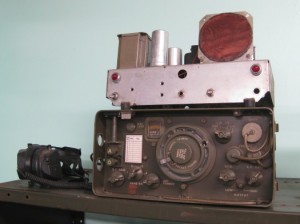
Lessons From Military Surplus Radios

The AN-GRR-5 Shortwave Radio. (Photo source: Popular Science)

The AN-GRR-5 Military Shortwave Radio. (Photo source: Popular Science)

Vin Marshall, of Popular Science, has written a great short article about lessons learned from military surplus radios:

“Military surplus equipment is more than just cheap, weird and green. For me, it’s a design study in what happens when usability and ruggedness are given priority and production cost is forgotten. […] Leaving aside the cost issues, I like to look at these pieces of equipment as a design study: How to build something that will be easy to operate and will continue working in almost any conditions.”

Read the full article on Pop Sci’s website–be sure to check out the photo gallery, too.

Zimbabwe needs shortwave radio and text messages

250px-sw_radio_africa_logoFrom Journalism.co.uk:

“We just need old media. We just need radio. We just need people to be allowed to listen to radio,” explains Gerry Jackson, the founder of Zimbabwean radio station SW Radio Africa (SWRA).

“Shortwave and text messages are only real way to get into Zimbabwe…[b]ecause our focus is on serving people in the country,” explains Jackson.

Read the full article here.

Ted Landphair takes us to the VOA Bethany transmitting station

bethanyvoa

VOA Bethany transmitting station, now a museum and park.

Veteran Voice of America “Americana” reporter and essayist, Ted Landphair recently posted an essay on his blog outlining the past and present of VOA’s Bethany, Ohio transmitter site. This article is a fascinating read and takes us back to the the site’s roots in WLW and wartime propaganda.

Thanks Ted–and to Kim Elliot for bringing this article to my attention.

Shortwave radio still packs an audible thrill (Reuters)

This article posted by Reuters is cracking at explaining why so many people still turn to SWLing:

It’s easy and cheap — and fun. You can hear and learn things that you would never find even if you work your search engine like a mule. From Swaziland to Paris to Havana, shortwave broadcasters can surprise an adventurous listener more than any MP3 playlist.

I couldn’t have said it better myself.

Author Robert MacMillan (with Reuters) began by comparing shortwave radios to many sleek portable digital media devices on display at the Consumer Electronics Show (CES) this year:

iPods and satellite radios are slim and pocket-sized, while shortwaves are throwbacks, typically as square as a textbook and just as serious looking.

While it’s true that most portable shortwave radios are slightly bigger than a Sony Walkman, few portables approach the size of a textbook. Sony, for example, produced the ultra small SW100S years ago–before the internet was much more than an easy way for university researchers to exchange off-color jokes. The SW100S, by the way, was about the size of a pack of cards. Innovative radio designer, Etón Corporation, announced the new, sleek, Grundig Mini 400 at the CES. [Krunker.com has photos of the Mini 400 and other Etón products from the CES–order your Mini 400 at Universal Radio.] I should also note that Chinese manufacturer, Degen, recently released a new, sleek, pocket radio MP3 recorder/player–see Passport’s take here.

I was quite happy to see a few good shortwave news items come out of the CES this year. Yes, more and more focus is being given to web-based devices, and it should be. I am a huge fan of the world wide web and all that it has to offer. But what keeps me glued to my shortwave radio?  MacMillian puts it best:

[W]hen you hear voices over the noise and squeal, and realize you are hearing Mongolia, live, there is a warmth and a human connection that are hard to find on the Web.

Amen. Thanks, Robert.

Read the full Reuters article here.

Wind powered community radio in Southern Sudan

This week’s Living on Earth Broadcast featured an interview with Internews program director Deborah Ensor about bringing solar and wind energy to the region to power a new radio station in Southern Sudan.

This story is a wonderful example of how radio empowers and promotes community relations in parts of the world that lack a communication infrastructure.

Links: