Category Archives: Ham Radio

How to use the SDRPlay RSP as a panadapter

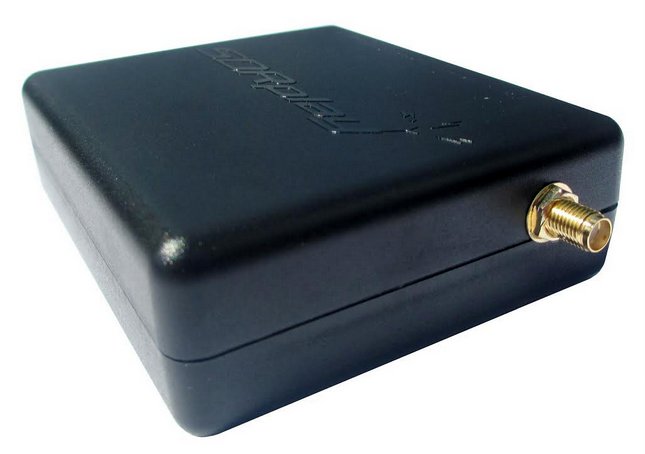
SDPlay-RSP

In this post, I will show you how to use an SDR as a panadapter for a commercial communications receiver. I’m using an Icom R72 and a SDRPlay RSP, but you can do it with nearly all receivers and SDRs.

The Icom R72 is a double conversion HF (0-30 MHz) communications receiver.

A panadapter lets you see the spectrum of your receiver (it gives you a broader, higher-level picture of what’s around your tuned frequency). After using it, you’ll wonder how you’ve been using your receiver without a spectrum display! 🙂

Almost all the radios we use are of superhetrodyne type. To connect a SDR to the radio, you should first find its 1st IF mixer output (if it has more than one Intermediate Frequency stage).

To find it, the best way is to consult the service manual. The first IF of Icom R72 is 70.4500 MHz, so we can use RTL-SDR dongles too.

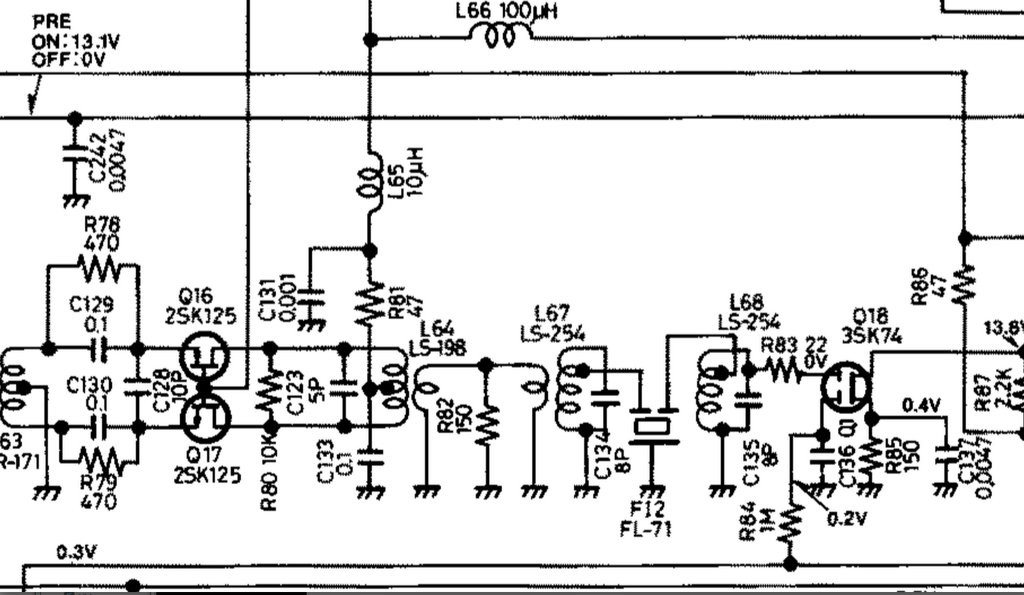
Here’s a part of R72’s schematics, extracted from its service manual:

IC-R72-Schematic-Mehdi-Asgari

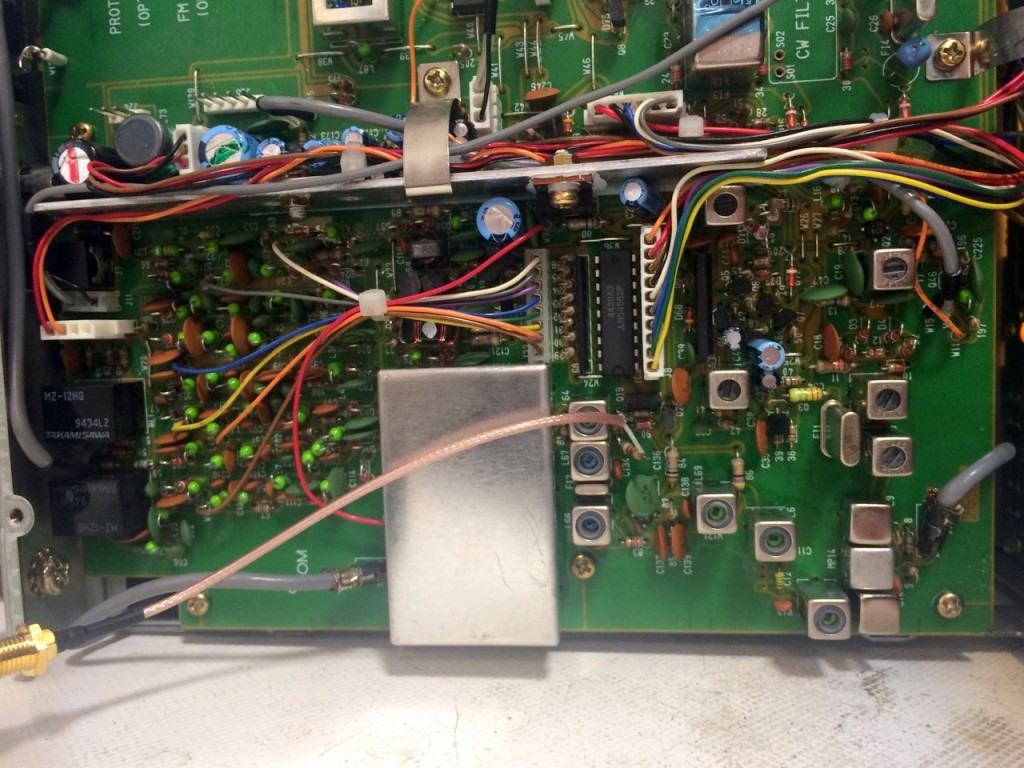
Look at the R82 resistor; it’s located at the output of first IF stage, so I soldered a connector to its pins (its other pin is connected to the ground)

Between the R82 resistor and the output, we’ve added a series 470-ohm resistor (to prevent loading the IF stage)

IC-R72-Internal-IF-Stage-Mehdi

Click to enlarge.

The other side of this connector is connected to the antenna input of my SDRPlay RSP.

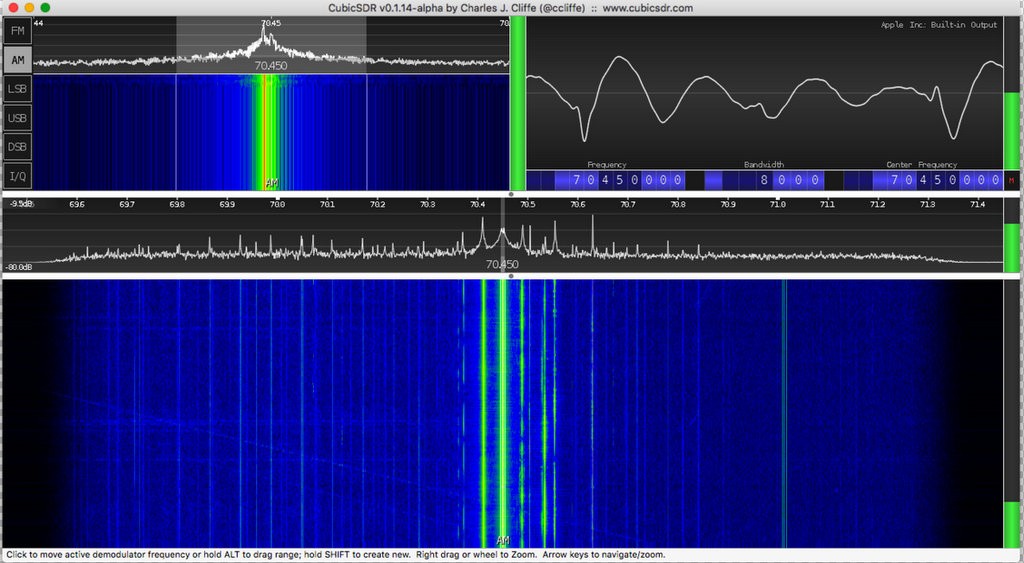
Now I can view my spectrum on a PC.

Here’s a screenshot of CubicSDR on Mac OS X (you can use other apps like HDSDR, SDR Console, etc.):

CubicSDR-Screenshot-Mehdi

Although this post was about the SDRPlay RSP and Icom R72, this procedure can be done for almost any combination of receivers and SDRs provided that your SDR covers the frequency of first IF stage.

Also, don’t forget that you should tune the SDR to the frequency of IF–in this case: 70.4500 MHz.

Mehdi Asgari, the author of this post, is a regular contributor to the SWLing Post. Mehdi lives in Tehran and is an active member of the EP2C amateur radio club.

Dave reviews the Yaesu FT1XD

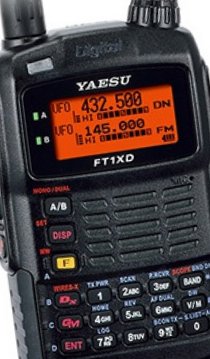
Yaesu-FT1XDSWLing Post contributor, Dave Zantow (N9EWO), has completed a review of the Yaesu FT1XD (FT1XDR) “System Fusion” Digital-Analog Handheld Transceiver.

The FT1DX 2 meter/440 HT provides both analog and digital communications on both bands with up to 5 watts. It also has wideband receiver that covers from 500 kHz to 999 MHz (US version, less cellular) including the AM and FM broadcast band. It even has a built-in ferrite bar for mediumwave/AM reception.

What does Dave think?

Click here to read Dave’s full review.

KCUR Interview: US Amateur Radio during The Great War

WWI-Battleships-Hochseeflotte_2

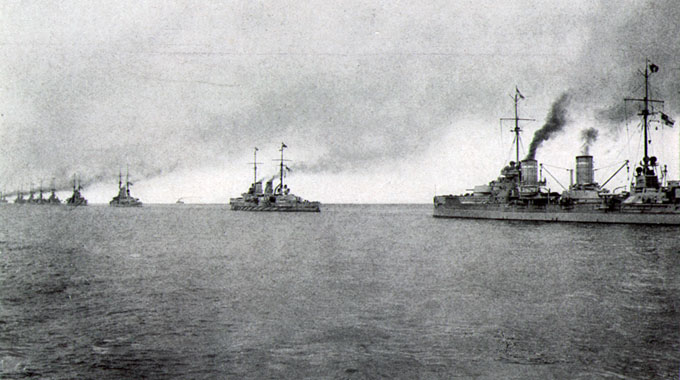
Battleships of the Hochseeflotte, 1917. (Source: Wikimedia Commons)

(Source: KCUR via the Southgate ARC)

When America declared war on Germany in 1917, most radio stations came under government control, reserved for war efforts. On this edition of Up To Date,  we learn why HAM radio operators were prevented from broadcasting during The Great War.

Guests:

  • Jonathan Casey is the Edward Jones Research Center Manager at the National World War I Museum.
  • Herb Fiddick is the amateur radio voice of the National World War I Museum.

This weekend, the National WWI Museum will host special event station WW1USA. The station will be manned by amateur radio operators for 31 consecutive hours, beginning Saturday, December 12 at 10 a.m. through Sunday at 5 p.m. The event is free. For more information go to theworldwar.org.

Click here to listen to the interview on KCUR.

The annual “Santa Net” on 3916 kHz

Santa-Radio-Vintage

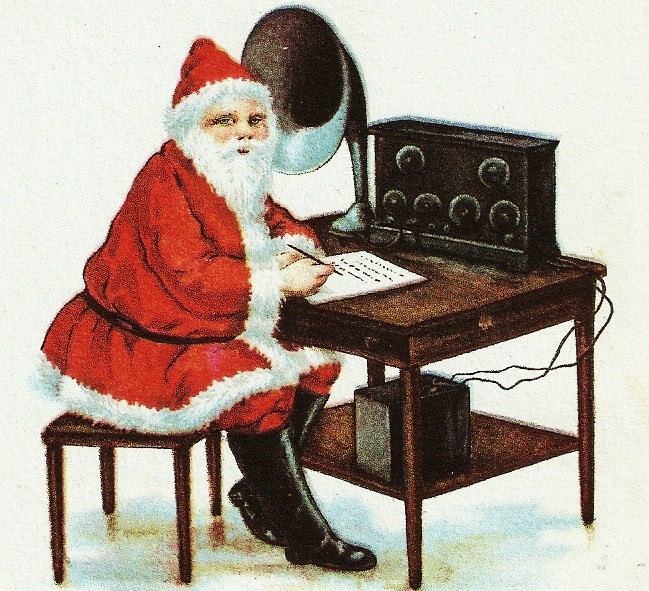
If you have a shortwave radio with SSB mode, you too can listen to the Santa Net on 3916 kHz LSB every night until Christmas starting at 01:30 UTC (7:30 PM CST). Of course, if you’re an amateur radio operator, you can talk to Santa as well!

(Source: Southgate ARC)

Santa Net 3916 kHz

Larry Shaunce WD0AKX provides a reminder that at this time of year kids can talk to Santa at the North Pole via amateur radio

Every year before Christmas, there is the Santa net on 3916 kHz on the 75 meter ham radio phone band 7:30 CST or 0130 UT. Round up your kids, grand kids, or neighbor’s kids and let them talk to Santa at the North Pole.

Watch Talk To Santa By Ham Radio – It’s The Santa Net On 3916 kHz!

https://www.youtube.com/watch?time_continue=263&v=KfFk430lxXU

Morse code training in the Air Force

 (U.S. Air Force photo by Kemberly Groue)

(U.S. Air Force photo by Kemberly Groue)

Many thanks to SWLing Post reader, Pete Carron (W3DKV) who writes:

“Thought you might be interested in the following article from Goodfellow Air Force Base in Texas, posted May 20, 2015. Apparently Morse Code still isn’t dead, not even in the military!”


Morse code training moving to Goodfellow

GOODFELLOW AIR FORCE BASE, Texas — Morse code training at Fort Huachuca, Arizona, will transfer to the 316th Training Squadron at Goodfellow, allowing the Air Force to take the reins for future training.

The move stems from the Army’s redirection of training requirements, leaving the Air Force as the sole remaining branch attending the course taught at Fort Huachuca.

In the last 10 years, the Army renovated the course to cater as a secondary skill set and serve as a support function, rather than being a single source of intelligence gathering. As this happened, the Navy began teaching their own course at Pensacola, Florida.

The Goodfellow course will train 10 students annually starting July 1. Tech. Sgt. Ryan N. Kilcrease and Senior Airman James M. Gosnell, 316th Training Squadron Morse code instructors, will be the first to teach the course here.

“Morse will never fully go away as long as it remains the cheapest, most reliable way to communicate,” said Kilcrease. “Our adversaries will continue to use it, so we still need to be able to understand them if we want to be able to continue our mission successfully.”

Gosnell believes that the course still holds benefits for the Air Force.

The military recognized the benefits of Morse code for communication after Samuel F. B. Morse completed the first coded message in history by transmitting, “What hath God wrought?” from the U.S. Capitol to a railroad station in Baltimore, Maryland, May 24, 1844.

President Abraham Lincoln relied on it during the Civil War to gather intelligence and communicate directly with his generals.

The Department of Defense embedded it heavily into all armed forces as a communication device with the Army-lead training in Fort Devens, Massachusetts. In 1993, the training moved to Fort Huachuca, Arizona, where Operating Location B, 316th TRS, is located.


Thanks for sharing this article, Pete!

I like Tech. Sgt. Ryan N. Kilcrease’s quote:

“Morse will never fully go away as long as it remains the cheapest, most reliable way to communicate”

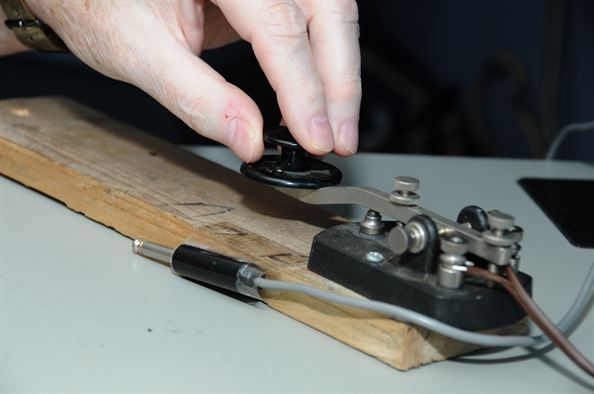
If you listen to the CW (a.k.a. Morse code) portions of the ham radio bands, you’ll hear that CW is still very much alive and well. It is an incredibly reliable and robust communications medium.  As we CW operators say: “CW always gets through!”

Ten-Tec has a new owner with long-term vision

TenTecLogoMany thanks to several readers who sent a link to this discussion by software engineer, John Henry (KI4JPL) on the Ten-Tec email discussion group:

I wanted to bring people up to date on what is happening right now.

I had a discussion with the new owner last night, and I wanted to relay some information.

He is now officially the new owner of TEN-TEC.

He is planning the rigs and amplifiers and other accessory products to engineer and to manufacture for the coming year to cover the purchase and expenses for the year, working on the details of the various plans for service, sales, and marketing, etc.

Don’t underestimate the amount of time and planning and effort that this business strategy planning maintaining overhead etc stuff takes.

Learning lessons from the past to help the future of the company be more viable.

What will you see? and when?

Planning on having the OMNI-VII back in production in 1st quarter 2016, hoping to ship in 2nd quarter 2016.

Dayton, He will be there, going to try to get the same TEN-TEC booth/booths as possible. Showcasing the existing products, and possibly something new based on the existing products, time will tell.

He did say that he will either bring back the Orion II or have an Orion III. Time frame is tbd. could be as early as end of 2016 or Dayton 2017????

There might be improvements/changes to certain rigs, e.g. maybe there will be an OMNI-VII+ maybe an OMNI-VIII in a year???

The Eagle will go back into production some time after the 1st OMNI-VII run.

Prices will return to the original pre liquidation sale prices when the new website is up so that each will be at a point that will make enough profit to make the company viable. Other features will get added where possible.

TEN-TEC was actually shipping a $200 bill with every one of a specific model that it sold this last year.

There were so many ways that TEN-TEC has been hemorrhaging over the last couple of years, and even back a bit further, that changes will have to be made. Some the public won’t like, but then the alternative is that TEN-TEC would close forever.

Also remember, it was made public that the two owners of RKR were looking for a new owner, and how many stood up to say “I’ll buy it/fund it/save it”. This gentleman did and will do what he has to do to keep the brands alive.

There are plans to bring back some VERY good products, items that have been big sellers for TEN-TEC just a few years ago, and were profitable and have been requested for quite some time.

Also, there are still commercial orders coming in that will be there for maybe another year or two using the same RX331/RX340 platforms that will help him maintain a cash flow that will help realize amateur market production runs. There might be a need in the future to try to raise some more capital if certain plans come to fruition with commercial and fema customers, if those work out, may need to raise some cash to buy the parts, so there might be a gofundme funding campaign set up, where amateur customers can help donate to purchase the parts, and then part of or all of or x times the amount of the donation is taken off of their next order of a TEN-TEC product > a certain dollar amount. No, don’t look for exchanging your $100 donation to cover 1/2 of a Rebel, that won’t happen, Talking a major product, e.g. an OMNI-VII, or a high powered amp….. To do this first class, we need a 200K capital infusion for a new factory building and some new equipment to replace that was liquidated if anyone cares to step
up and accelerate our success. 400K would give us the facility, equipment and capitol to put everything back in production to a stocking basis and allow us to complete the Orion III. If 400 people will give us 1K each, we will commit to the Orion III of your dreams in 18-24 months and give you 2K off the target price of 5K as well as engrave your name and call on a plaque on the new building that says you helped build it and save TEN TEC.

Where do I fit in?

No, I’m not the owner, but I am going to do whatever I can in the evenings to ensure that TEN-TEC is a success. I want to see it be a success, and maintain what can be maintained of the people, and improve it’s image/products/etc back to where they were years ago. The owner is quite insistent that I remain intimately involved with TEN-TEC even if it is on a part time basis. It is my choice of how much or little I spend on TEN-TEC
and the door is assuredly left open for me to come and go as I please. He wants me to be the VP of Engineering, but, well, time will tell how all of this plays out.

I am also working on digital modes for HRD, so, my evenings are quite interesting.

In the future, who knows?

Where do you fit in?

Be patient, this is a total reboot of a company, ripping away the excess that bleeds it dry (e.g. high rent, using an MRP system that costs $$$$ monthly when something is already in place to take care of it, changing to a cost effective internet/phone system, so many “luxuries” will be removed and put in their place the necessities to get business going profitably), and building the business and products with the key employees to make it strong again. You build the employees, the employees build the company. But it will take time.

The products are there, the technology is also there for the future (some things that were in the works that no one in the public knows about) that the new owner has a plan to finish soon.

Actually, TEN-TEC does need to take the time it will take to make it a success. Otherwise if he runs headlong into this as was done in the past, he will fail. If people buy rigs and amps and tuners and other accessories elsewhere in the meantime, well, that is their decision. The market continually has new and continued customers. existing customers periodically look for something new, enough of a continual market that should sustain itself for years.

The new products coming out that are planned include continuances of good known technology, and of course some are a step ahead of what is in the market today, and you will see those in 1-2-3 years.

I will not divulge nor answer speculation on anything further than what I have stated above as to what products, when, etc. I can also tell you is that the owner has emphatically stated to me that this the last time Ten Tec will change hands for the next 15-20 years or so as he is my age and plans for us both to operate it until we are in our 70s or physically unable to continue, so Ten Tech could not be in the hands of anyone more SERIOUSLY long term goal oriented. He has wanted Ten Tech for a long time for the excellent DSP AGC technology built in to our transceivers so I think it is safe to say that there will be future generations of the Omni, and Orion style units as finances permit. But again in order for this to happen it is critical that YOU support TEN TEC by purchasing existing TEN TEC products. Look for the Omni 7+ next year.

So, whereas he still wants to remain anonymous until his formal announcement in the first quarter, I myself am convinced that this will work, enough so to help him wherever I can, and so are the key core employees at TEN-TEC. If anything, our message at this time is please be patient with the negativity. There are other things happening behind the scenes which can not yet be publically discussed before they are finished.

If this sounds like cheerleading, well, then so be it, I care about TEN-TEC, the people, the legacy, and will do what I can to make it a success, and, if this fails, well, we will give it a valiant effort.

Please understand that I have other commitments from now until Monday next week that I may not be able to respond/answer questions until then. But do realize, that I have disclosed about as much as I can for now.
This statement came from a draft I created, and the new owner gave me inputs on, which items he felt like disclosing now, etc. So, there may be some he/I/our’s mixed up, but I hope the message from him is clear. TEN-TEC is something he is passionate about, and is committed to making it a success. Yes, there are trials and tribulations, but, he is convinced he can do it, and I will do whatever I can to assist, and so will various core TEN-TEC individuals.

73, KI4JPL

John Henry

This is a most interesting development. As many of you know, I’ve always loved Ten-Tec equipment–I consider their amateur radio receivers to be some of the best on the market. It’s been a tough few years for them and I certainly hope the new owner can inject some energy and innovation behind the brand. I will post updates as they become available.

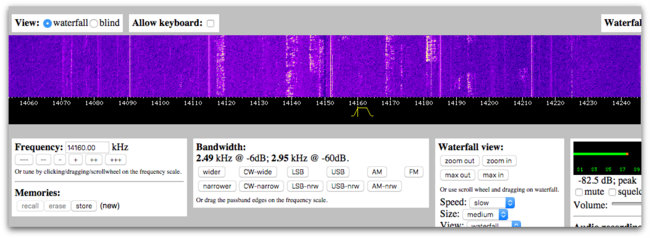
Now Online: A New WebSDR in Iran

WebSDR-Iran-Waterfall

SWLing Post contributor, Mehdi, has informed me that his ham radio club (EP2C) has just put a WebSDR online in Iran–perhaps the first in this part of the world. Mehdi notes some of the details about the receiver:

[The WebSDR is] installed and operated by our amateur club: EP2C (www.ep2c.ir)

[Perhaps] the first WebSDR in the Middle East (the nearest one I know of is located at Armenia). We have a dipole antenna and an AVALA SDR receiver (going to be replaced by a SoftRock).

For the moment, it just covers 20 meter band, but we may increase the coverage to 30 and 40 meters too.

The server and antenna are all in EP2C club’s office (Karaj/Iran). Iran’s timezone is GMT+03:30.

Because of our bandwidth limitations, the total number of simultaneous users is limited to 10 (will try to increase it in the future).

Our WebSDR address: http://websdr.ir:34567

Thank you for the announcement, Mehdi! I’ve been listening to the EP2C WebSDR this morning–it’s been working flawlessly.

Please keep up informed as you improve and upgrade the EP2C WebSDR!

Click here to use to the EP2C WebSDR online.