Category Archives: Ham Radio

Atlas Obscura: Time to update the Spelling Alphabet?

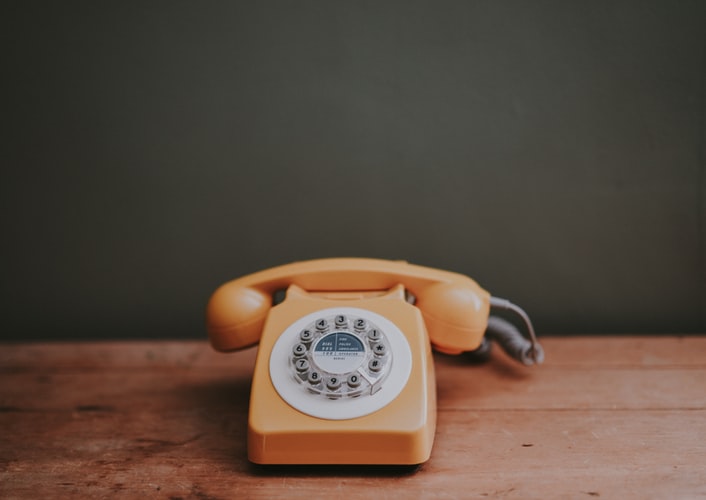
Image by Annie Spratt

Photo by Annie Spratt

Many thanks to SWLing Post contributors, Paul Evans and Eric McFadden, who share this article from Atlas Obscura where author Dan Nosowitz asks if it’s time to update the spelling (a.k.a. phonetic) alphabet:

WHEN SOMEONE ON THE PHONE—THE doctor’s office, the bank, the credit card company—asks for my name, I always offer to spell it out—it’s a pretty uncommon surname. So far as I know, there are somewhere between 10 and 20 Nosowitzes in the world, and they’re all closely related to me. Because it’s uncommon, and because it would be a problem if my bank writes my name down as “Moskowitz,” I err on the side of caution. “N as in Nancy, O, S as in Samuel, O, W, I, T as in Thomas, Z as in Zebra,” I chant.

This uses what is what’s called a “spelling alphabet,” or, confusingly, a “phonetic alphabet.” (The latter is confusing because it has little to do with phonemes, or a unit of sound in a language. Plus there’s the International Phonetic Alphabet, which is something else entirely.) The history of spelling alphabets is fascinating and winding, but it’s notable that there hasn’t been an official update to the most commonly used English version in about half a century. We might be in need of one. As mobile phones have replaced landlines, call quality has, strangely, gone down. The general connectivity of the world—including the ease of international video calls and the use of foreign call centers—means that spelling out a name or word is an increasingly common practice. A modern, updated, globally friendly English spelling alphabet would be pretty useful right now, but getting people to use one might be harder than you’d think.

[…]For about 80 years, governments and corporations futzed with these spelling alphabets, and learned that some stuff didn’t work—it turns out, for example, that “Lima” is also the Malay word for the number five. A tremendous amount of research, time, and money was invested into figuring out the optimal spelling alphabet—at least for the three languages that the International Civil Aviation Organization (ICAO, the United Nations agency that handles air transportation) felt significant enough to have one (English, French, and Spanish). The ICAO scrambled, using researchers across the globe on the problem, and by 1959 had finalized what is today probably the best-known spelling alphabet: Alfa, Bravo, Charlie, Delta, Echo, and so on. (As a side note: “Alfa” is not a typo. The whole “ph equals f” thing is confusing, and reasonably so, for non-English speakers. The same goes for the alphabet’s J—Juliett with a doubled final letter so the French won’t say “Juliay.”)

That is the now the standard alphabet for organizations including NATO (which often lends its name to the alphabet), the Federal Aviation Administration of the United States, the International Amateur Radio Union, and pretty much any international group that wants or needs a standard. It’s certainly the most commonly used spelling alphabet in the world, but it is, as most of these alphabets are, exceedingly Anglocentric.[…]

Click here to continue reading the full article at Atlas Obscura.

Thanks for sharing this, Eric and Paul!

Funny story: Last week, I visited my parents and started cooking a nice dinner. Ten minutes into baking a roasted vegetable dish, the oven’s temperature started rising unexpectedly because the oven’s control board  (turns out) could no longer receive the temperature probe data. Its fail safe was to shut down the oven completely.

After a little online research, I found the parts that had most likely failed, so I pulled the oven away from the wall, disassembled the back panel, evaluated the parts, gathered the model number, and called a local appliance parts store.

When the associate answered the phone I described the problem and the parts I might need. He agreed with my diagnosis, so asked for the oven’s 16 character model number :

Me: LWZTF700…

Him: LWCDF700…???

Me: Sorry, let me try again. Lima Whiskey Zulu Tango Foxtrot…

Him: Excellent! I copy that. Say, were you in the military?

Me: Ha ha… No, I’m a ham radio operator.

Him: I am too! My call sign is….

He then proceeded to give me their best price on the parts.

I’m sure he hears variations of the spelling/phonetic alphabet multiple times a day and appreciates it when his customers use the one most widely accepted!

For your reference, here’s the standard spelling alphabet currently accepted by NATO, the FAA, and the IARU:

(Source: Wikimedia)
David Warren: Radio enthusiast who invented the “Black Box” flight recorder

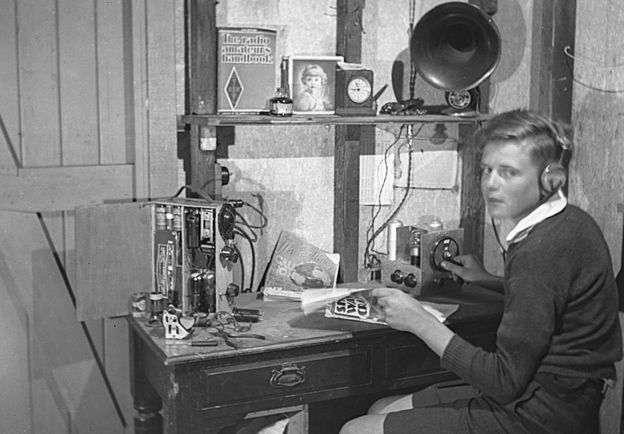
As a schoolboy, David was fascinated by electronics and learned to build his own radio sets (Source: BBC and the Warren Family Collection)

Many thanks to SWLing Post contributor, Paul W4/VP9KFPaul W4/VP9KF, who notes that David Warren, inventor of ‘Black Box’ recorders was a ham radio operator and radio enthusiast.

The following short biography comes from this memorial website:

David Warren (full name David Ronald de Mey Warren) was an Australian inventor. He is most famous for his invention of the Flight data recorder (invented in 1956), or more commonly known as the “black box”

The “Black Box” is a device that records in-flight conversations and data. Warren came up with the idea of recording the flight crew’s conversation on a device that could be protected to increase its chances of surviving the crash. Although it has the name “Black Box”, it is coated with heat-resistant bright orange paint for high visibility in a wreckage, and the Black Box is usually mounted in the aircraft’s tail section, where it is more likely to survive a severe crash.

David Warren was born on the 20th of March, 1925, on Groote Eylandt, an island off the coast of the Northern Territory. He was the first child of European descent born on the island. When he was at the age of four, he was sent to Tasmania and Sydney to spend most of the next 12 years in boarding schools (Launceston Grammar School in Tasmania and Trinity Grammar School in Sydney).

Australia’s first major air crash in 1934 claimed the life of David’s father.

Warren had received a crystal set from his father just before the disaster that started his interest in amateur radio and electronics. Almost 20 years later, when the age of commercial jet aircraft was just beginning, Warren worked as a chemist, specialising in aircraft fuels at the Aeronautical Research Laboratories.

Dr Warren was working as a scientist at Melbourne’s Aeronautical Research Laboratory, where he was helping to investigate the 1953 mystery crash of a Comet jetliner. New fuels being used in Jets in the early 50’s were more likely to become explosive at altitude than conventional aircraft fuels and this was identified as a possible cause of the Comet crash. While listening to the arguments over possible causes of the Crash, Warren realised that the solution could be at hand if someone on the plane had been carrying a device similar to the then newly released “Protona Minifon” portable recorder that he saw at a trade fair.

The device would be fire proof (using steel wire as the recording medium like the “Pocket Recorder”) and erase itself so that the last hours of the flight were always recorded. The device consisted of a single steel wire as the recording medium and provided four hours of recording and automatically switched itself on and off with the aircraft. It was during this period that Dr Warren incorporated the idea of recording instruments on a separate channel – his interest in electronics as a schoolboy was brilliantly applied to turn instrument readings into recordable dots and bleeps.

The recorder was well received in England (where the name “Black Box” was made up by a journalist at a briefing) and also in Canada where the idea was seen as a potential addition to beacons being developed there.

Warren continued to lead the project, developing the Flight Memory device to record more instruments with greater accuracy. This led to the first commercially produced flight recorder-the Red Egg.

A further disaster at Wintoon in 1967 saw Australia become the first country to make both flight data and cockpit voice mandatory on all jets.

While a student at the University of Sydney, David met Ruth Meadows, who became his wife and lifetime supporter. Together, they raised a family and shared an interest in science and education. When he retired, David and Ruth lived in Caulfield South, Victoria, in regular contact with their four children and seven grandchildren.

David died at the age of 85 in 2010, 19 July, Melbourne, Australia. After his death, He was buried in a casket bearing the label “Flight Recorder Inventor; Do Not Open”.

Then in June 2012, the ACT Government named a road, David Warren Road, in the suburb of Hume in recognition of Warren. On 25 March 2014, the Defence Science and Technology Organisation renamed their Canberra headquarters to the David Warren Building.

Thanks for sharing this, Paul!  Fascinating…

Note that the BBC recently published an amazing piece about Dr. Warren on the 9th anniversary of his passing–click here to read.

Apollo 11 ham radio special event stations

Many thanks to SWLing Post contributor, Randy (KS4L), who writes:

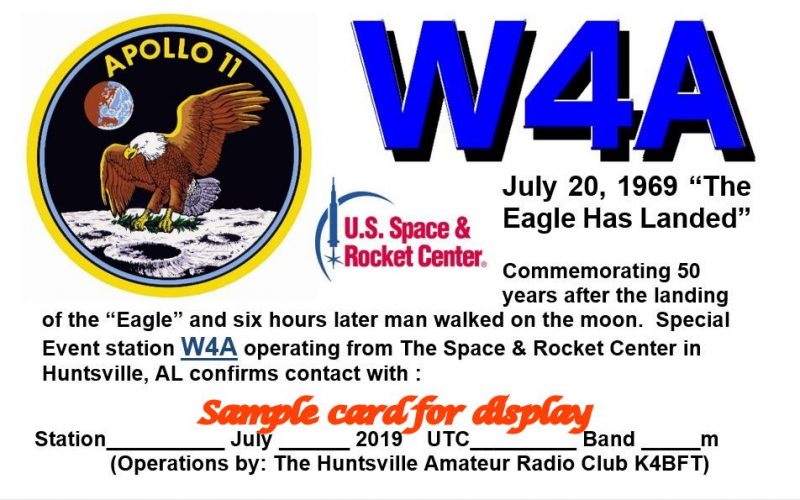
Don’t know if you’re aware, but there are a number of Special Event Stations on the air this weekend commemorating the 50th anniversary of the Apollo 11 landing on the moon.

This includes W4A at the US Space and Rocket Center here in Huntsville. W4A has 2 SSB stations on 20m and 40m, and a CW station switching between 40m, 30m, 20m and 15m. I believe there may also be a satellite station.

Thanks for the tip, Randy! I’ll have to put some of these stations in the logs!

The ARRL has also published a comprehensive list of other special event stations on their website:

N8A, until July 24, Midwest VHF/UHF Society, West Chester, Ohio; WB4ICJ, July 14 – 20, Kennedy Space Center; N1A, July 14 – 28, Milford (Ohio) Amateur Radio Club; N4A, July 16 – 25, NASA Marshall Space Flight Center Amateur Radio Club; K2M, July 16 – 24, Great South By Amateur Radio Club (honoring those who built the LEM on Long Island); K2CAM, July 16 – 24, Long Island Mobile Amateur Radio Club;

N5A, July 18 – 21, Razorback Contest Club, Springdale, Arkansas; W3A, July 18 – 23, the National Electronics Museum Amateur Radio Club (K3NEM); W4A, July 19 – 21, Huntsville (Alabama) Amateur Radio Club; K8QYL, July 20, Reservoir Amateur Radio Association; K9MOT, July 20 – 21, Motorola Amateur Radio Club; N0M, July 20 – 22, South East Metro Amateur Radio Club; K1M, July 20 – 28, Stratford Amateur Radio Club; GB5EHL, until July 28, Leicester Radio Society “Eagle Has Landed” commemoration, and PA11APOLLO, until August 2, in the Netherlands.

Search for additional Apollo 11 special event stations on the ARRL website.

Operations end for many of these stations today (July 21). Work them while you can!

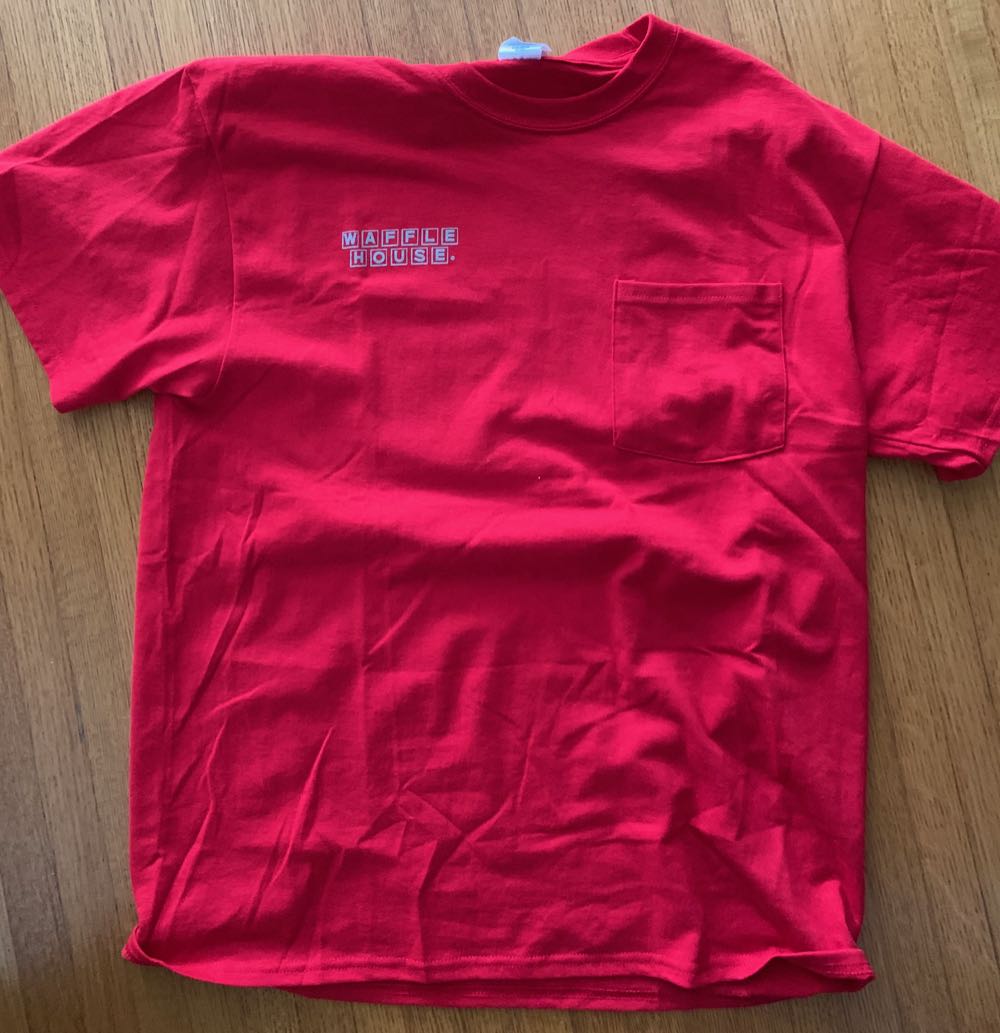
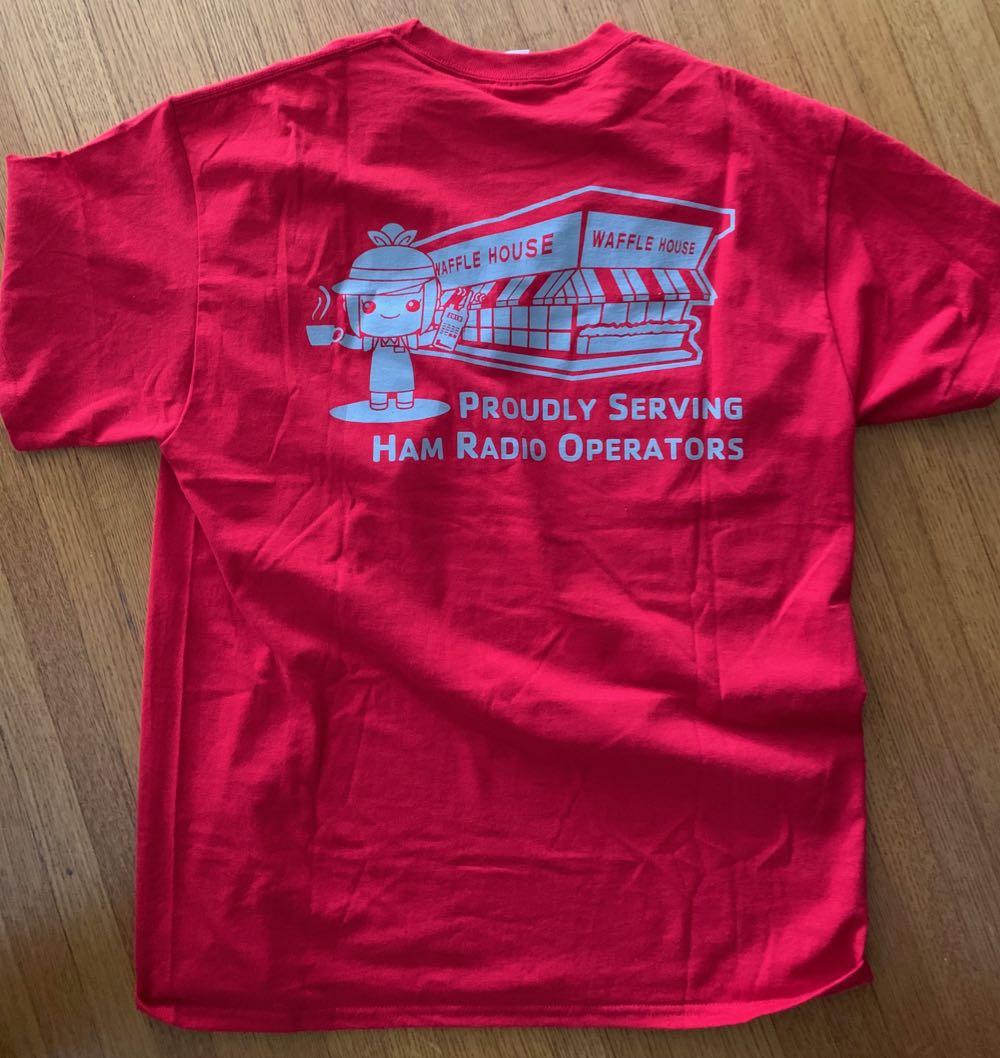
Waffle House Tee: “Proudly Serving Ham Radio Operators”

Many thanks to SWLing Post contributor, Robert Yowell, who writes:

Thomas – while I was in Dayton last month (after Hamvention), I stopped in a Waffle House and noticed all the workers were wearing the same T-Shirt which had emblazoned on the back “Proudly Serving Ham Radio Operators”!

I asked if the shirts were for sale and was told I needed to contact the regional office in Huber Heights which handles all Dayton area Waffle Houses. It turns out that for the past decade or so, every year in June the Waffle Houses in the Dayton area would have their employees wear shirts to honor Hamvention.

I was told the designs and colors are different every year, but this is what this year’s shirt looks like. They sold it to me do $18 including shipping!

Thank you, Robert. The connection between the Waffle House and Ham Radio has been a mystery to me and you’ve solved it! Each year at Hamvention, like you, I see Waffle House shirts floating around everywhere. Thanks for sharing!

IEEE Spectrum: “Is Ham Radio a Hobby, a Utility…or Both?”

Many thanks to a number of SWLing Post readers who have shared a link to the following article that follows the debate and discussion over an FCC proposal–RM-11831 (PDF)–to “Reduce Interference and Add Transparency to Digital Data Communications.”

The IEEE article, written by Julianne Pepitone, covers both sides of the debate:

Is Ham Radio a Hobby, a Utility…or Both? A Battle Over Spectrum Heats Up

Some think automated radio emails are mucking up the spectrum reserved for amateur radio, while others say these new offerings provide a useful service

Like many amateur radio fans his age, Ron Kolarik, 71, still recalls the “pure magic” of his first ham experience nearly 60 years ago. Lately, though, encrypted messages have begun to infiltrate the amateur bands in ways that he says are antithetical to the spirit of this beloved hobby.

So Kolarik filed a petition, RM-11831 [PDF], to the U.S. Federal Communications Commission (FCC) proposing a rule change to “Reduce Interference and Add Transparency to Digital Data Communications.” And as the proposal makes its way through the FCC’s process, it has stirred up heated debate that goes straight to the heart of what ham radio is, and ought to be.

The core questions: Should amateur radio—and its precious spectrum—be protected purely as a hobby, or is it a utility that delivers data traffic? Or is it both? And who gets to decide?

Since Kolarik filed his petition in late 2018, this debate has engulfed the ham world. Fierce defenders of both sides have filed passionate letters and comments to the FCC arguing their cases.

On one side is Kolarik in Nebraska. In his view, it’s all rather simple: “Transparency is a core part of ham radio,” he says. “And yet, you can find tons of traffic from automatic[ally controlled digital] stations that are extremely difficult to identify, if you can identify them at all, and they cause interference.”

The automatically controlled digital stations (ACDS) Kolarik refers to can serve to power services like Winlink, a “global radio email” system.

Overseen and operated by licensed volunteers around the globe, Winlink is funded and guided by the Amateur Radio Safety Foundation, Inc. (ARSFI). The service uses amateur and government radio frequencies around the globe to send email messages by radio. Users initiate the transmission through an Internet connection, or go Internet-free and use smart-network radio relays.

On Winlink’s website, the service says it provides its licensed users the ability to send email with attachments, plus messages about their positions, and weather and information bulletins. Representatives of the service say it also allows users to participate in emergency and disaster relief communications.

But Kolarik’s petition argues two points: First, because such messages “are not readily and freely able to be decoded,” the FCC should require all digital codes to use protocols that “can be monitored in entirety by third parties with freely available, open-source software.” Secondly, he wants the rule change to reduce the interference that he says services like Winlink can create between amateur-to-amateur stations—by relegating the often-unattended automatic stations to operate solely on narrower sub-bands.

Loring Kutchins, the president of ARSFI, says he believes Kolarik’s petition is “well intentioned in its basis. But the fundamental conflict is between people who believe amateur radio is about hobby, not about utility. But nowhere do the FCC rules use the word ‘hobby.’”[…]

Click here to continue reading the full article on the IEEE Spectrum website.

ARRL reports California earthquakes disrupted west coast HF propagation

(Source: Southgate ARC)

The ARRL reports earthquakes in California disrupted HF propagation on the west coast

British Columbia radio amateur Alex Schwarz, VE7DXW, said that an Independence Day magnitude 6.4 earthquake in California’s Mojave Desert and multiple aftershocks negatively affected HF propagation on the US west coast.

Schwarz, who maintains the “RF Seismograph” and has drawn a correlation between earthquake activity and HF band conditions, said the radio disruption began at around 1600 UTC on July 4, and continued into July 5. He said that on July 4, the blackout was total except for 20 meters, where conditions were “severely attenuated,” Schwarz said. The RF Seismograph also detected the magnitude 7.1 earthquake on July 6 in the same vicinity, Schwarz reported. The distance between the monitoring station in Vancouver, British Columbia, and that quake’s epicenter is 1,240 miles.

“Things are back to normal after the strong quake, as far as the ionosphere is concerned, but the unrest has not stopped yet,” Schwarz told ARRL on July 8.

Read the full ARRL report at
http://www.arrl.org/news/view/report-california-earthquakes-disrupted-hf-propagation-on-west-coast

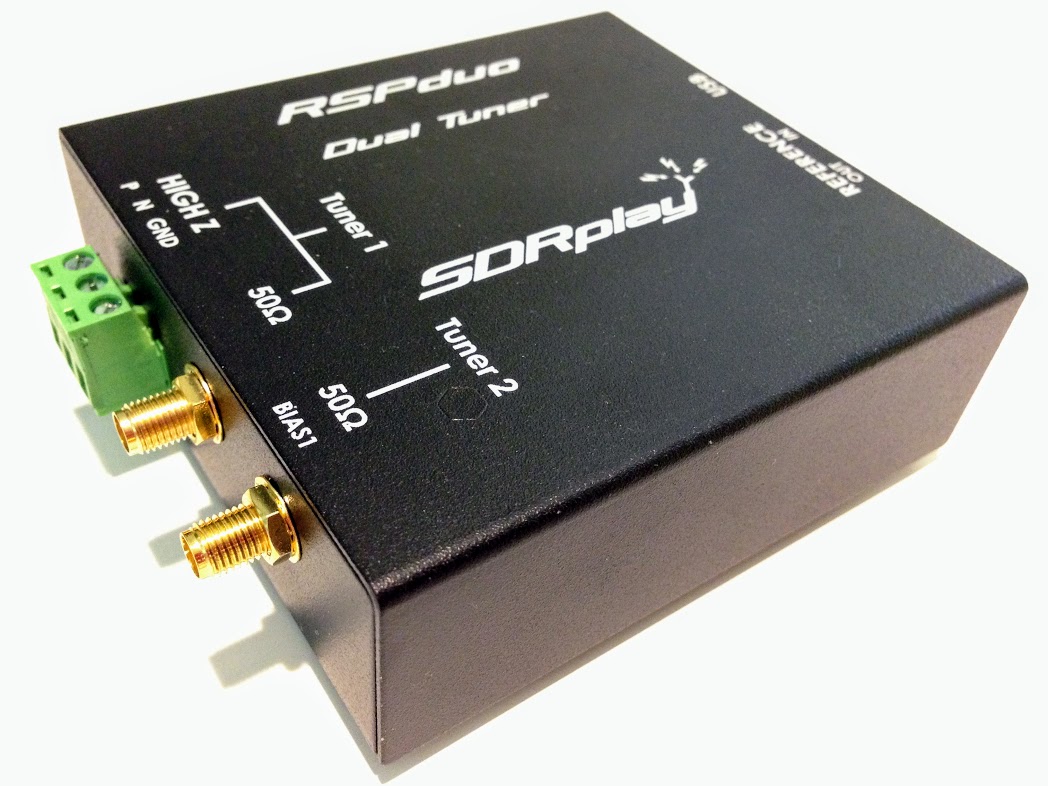
SDRplay RSPduo: SDRuno update now adds diversity reception!

The SDRplay RSPduo

Many thanks to Andy with SDRplay who notes:

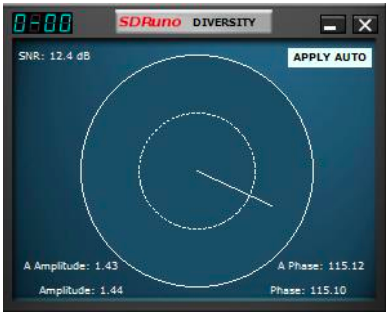
We are pleased to announce the release of v1.32 of SDRuno. The purpose of this release is primarily to add MRC Diversity functionality for the RSPduo, but it also contains other fixes and additions based on customer feedback. Diversity functionality is described on P.78 of the SDRuno User Manual.

A full list of the changes can be found in the release notes: https://www.sdrplay.com/docs/SDRplay_SDRuno_Release_Notes.pdf

Issues can be reported to us via our ticket system: https://www.sdrplay.com/support

Comments and feedback can be sent to [email protected] – emails sent to that address are usually not responded to unless we have questions, but are always read and noted.