Category Archives: Radio History

D-Day: 75 years ago today, Operation Overlord initiated wall-to-wall news coverage

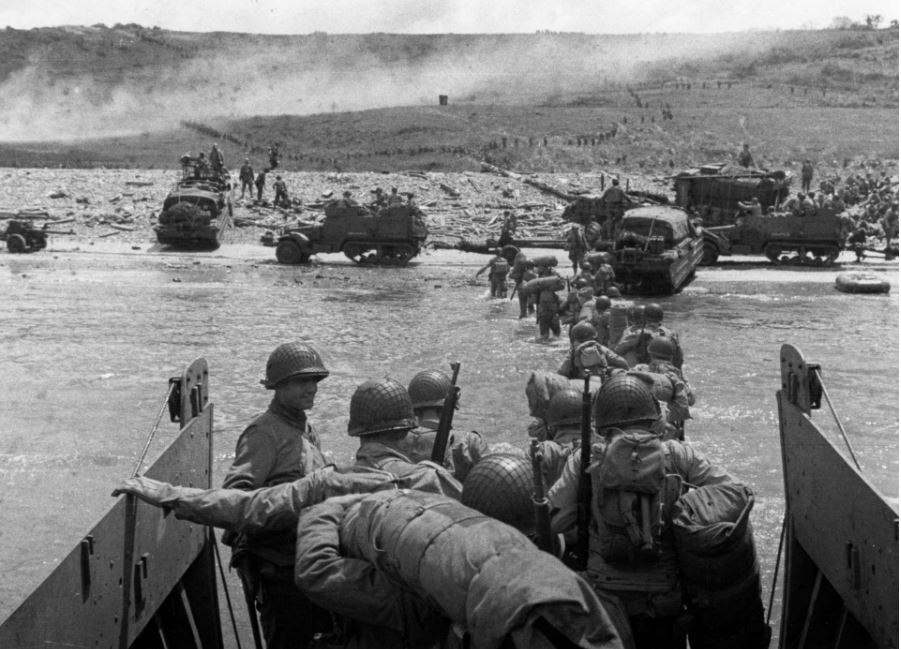
Soldiers coming ashore in Normandy, France. (Photo: National Archives)

Today, as many know, is the 75th anniversary of the World War II battle in Normandy, France, known to history as D-Day. “Operation Overlord,” as D-Day was code named, without doubt, was one of the key turning points of World War II.

But many may not know that D-Day was also one of the first events that brought continuous news coverage via radio on the home front.

As mentioned in this excellent article from MyNorthwest:

“In addition to what it meant as a great turning point in world history, D-Day is also unique in how it was broadcast by American radio networks, as CBS, NBC, and what would become ABC pooled their reporters, engineers and other resources, and cooperated closely with military officials to present, for the first time, what would now be called “wall-to-wall” coverage of a developing major international news event for American audiences.

It’s something we take for granted now in the age of the internet and cable news, but this kind of media coverage can be traced back to D-Day.”

But the widely-covered event was originally top secret.  So secret, in fact, that news agencies in the US first learned about Operation Overlord via not Allied news, but Axis news sources. Thus the information was delivered with caution, since the source wasn’t the War Department of Allied Forces.

A little after 3:30 AM (Eastern War Time), the Supreme Headquarters of the Allied Expeditionary Force (SHAEF) in London produced Communiqué #1, a short statement read twice by Colonel R. Ernest Dupuy, confirming that Allied naval forces, with the support of the air forces, and under the command of General Eisenhower, began landing Allied armies that morning on the northern coast of France.

Here is the actual recording via the Miller Center at UVA:

Click here to listen via Soundcloud.

Fortunately, live recordings from NBC and CBS studios have been well-preserved, and are freely available for online listening.

Below, I’ll embed links to the full recording sets; you can listen to the news just as it rolled in.

NBC coverage
The first confirmed report begins at 9:07 in the following recording:

Click here to download the MP3.

Click here to listen to a full broadcast set starting at 0250 Eastern War Time. I’ve also embedded an Internet Archive player below that will play the full recording playlist in chronological order:

CBS coverage
CBS’ confirmed report of D-Day begins at 49:25 in the following recording:

Click here to download the MP3.

Click here to listen to a full CBS broadcast set. I’ve also embedded an Internet Archive player below that will play the full recording playlist in chronological order:


For a blow-by-blow account of how news was presented on D-Day, I encourage you to check out this page at the Miller Center at UVA.
From the Post Archives: Honoring Memorial Day with Dame Vera Lynn

The following Memorial Day post was originally published on May 25th, 2015:


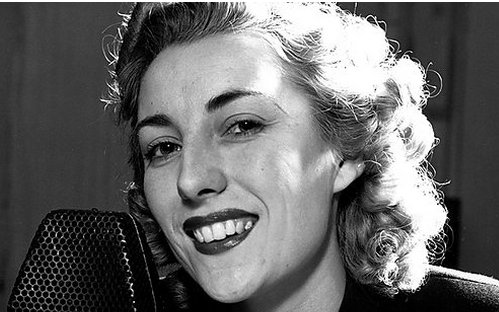
Dame Vera Lynn

Dame Vera Lynn

Today is Memorial Day, and I’m feeling humbly grateful to all of those who paid the ultimate sacrifice for their country. Since I’ve been reading a lot of WWII history lately, I’ve also been playing a lot of WWII-era music here in my sanctuary to all things radio.

Few songs sum up the yearning sentiment of World War II better than Vera Lynn’s 1942 rendition of “The White Cliffs of Dover.” It’s an iconic song, one that helped British soldiers see beyond the war while mourning its painful toll. It was written in 1941 when England was taking heavy casualties, just before American allies joined the effort.

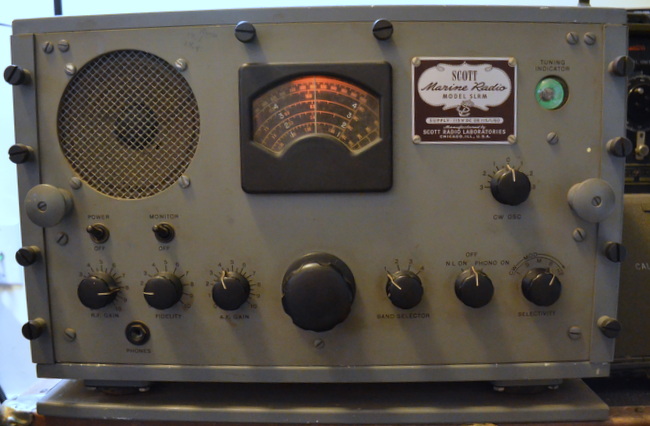
Scott-Marine-Radio-SLR-M

This morning, seeking something with a little authenticity, I played “The White Cliffs of Dover” though my SStran AM transmitter, and listened to it through “Scottie,” my WWII-era Scott Marine radio (above). I made this recording by placing my Zoom H2N recorder directly in front of the Scott’s built-in monitor speaker.

So here you go: a little radio tribute to all of those who fell–on both sides–of that infamous second world war.

And thanks to all who serve and have served in the name of “peace ever after.”

Click here to download the recording as an MP3, or simply listen below:

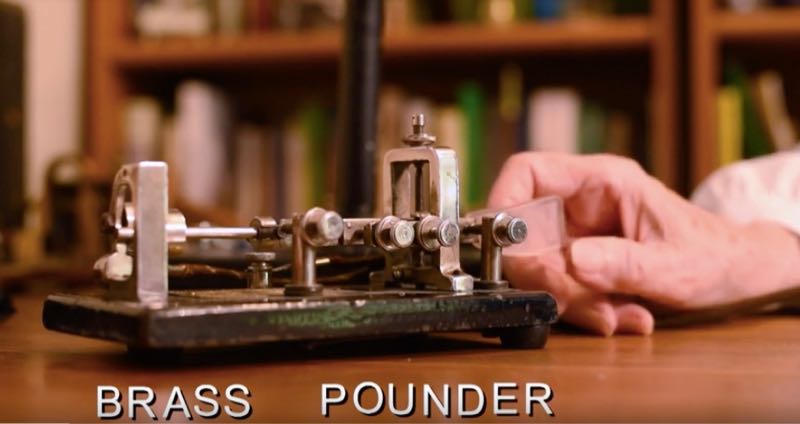
Lavina Shaw: History of a Canadian railway brass pounder

Many thanks to SWLing Post contributor, Eric McFadden (WD8RIF) who shares the following post by James Wade (WB8SIW) from the QRZ.com forums:

The CBC recently interviewed Lavina Shaw, Past International President of the Morse Telegraph Club. In this biographical documentary, Lavina talks about her experiences working as a railroad and commercial telegrapher as well as her experiences as a woman working in a man’s world. Like many telegraphers of her era, Lavina had a front-row seat to history.

In addition to railroad and commercial operations (telegrams, cablegrams), the telegraph was widely used in a variety of applications such as stock brokerage operations, commodities and board of trade work, press operations, and so forth. Even the telephone company used Morse telegraphy extensively for its internal operations well into the post war era.

Radio amateurs in general, and CW operators in particular, will undoubtedly find this video interesting, not just for the human interest content, but for its insights into the antecedents of radiotelegraphy.

The Morse Telegraph Club is a non-profit historical and educational association dedicated to preserving the history and traditions of telegraphy and the telegraph industry. MTC members and chapters demonstrate telegraphy at historical events, design and construct historically correct museum exhibits and conduct presentations on the history of telegraphy. MTC also publishes an excellent quarterly journal entitled “Dots and Dashes, which includes articles on telegraph history and first-person accounts of telegraph industry employees.

Click here to view on YouTube.

For more information on MTC membership, please contact James Wades (WB8SIW).

Thanks, Eric, for sharing this fascinating piece about Lavina Shaw!

The Audimeter: A 1939 solution for measuring radio audiences

Photo showing off the inside of an Audimeter, a device for measuring what people were listening to on radio (Photo: February 1945 issue of Radio-Craft via Gizmodo)

(Source: Gizmodo)

[…]The February 1945 issue of Radio-Craft magazine included an article titled “Radio Audience Meter” which looked at the machine that was revolutionizing audience measurement. First installed in homes on a trial basis in 1939, the Audimeter was placed next to a family’s existing radio.

The article included photo cutaways that showed how the Audimeter worked. Back in those days, radios had dials. Fitted with a series of gears, the Audimeter was a standalone device connected to a radio. It had an arm that moved whenever the radio dial was turned. So whenever the radio station was changed, the Audimeter’s arm would swivel along a long tape that was slowly rolling inside this gadget. The tape inside was about 100 feet long and three inches wide and reportedly lasted for about a month of recording.

The market researchers would collect the tapes by visiting each house monthly and shipping the tapes to a plant in Chicago. Once there, the tapes were processed by dozens of laborers feeding the tapes into tabulation machines.

“The Audimeter made it more scientific,” Buzzard noted about the measuring device. “They got automatic readings.”

And words like “scientific” and “automatic” were all the rage for gadgets of the 1940s, even if by today’s standards there was quite a bit of legwork involved.[…]

Click here to read the full story.

Smithsonian: Morse Code Celebrates 175 Years and Counting

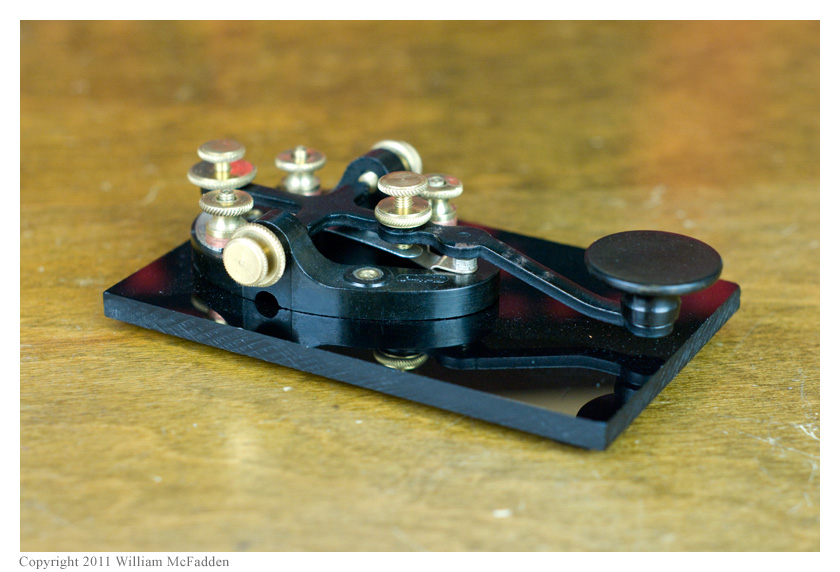
The U.S. military J-41-A straight key (Photo by WD8RIF)

Many thanks to a number of SWLing Post readers who shared the following article from the Smithsonian Magazine:

The first message sent by Morse code’s dots and dashes across a long distance traveled from Washington, D.C., to Baltimore on Friday, May 24, 1844 – 175 years ago. It signaled the first time in human history that complex thoughts could be communicated at long distances almost instantaneously. Until then, people had to have face-to-face conversations; send coded messages through drums, smoke signals and semaphore systems; or read printed words.

Thanks to Samuel F.B. Morse, communication changed rapidly, and has been changing ever faster since. He invented the electric telegraph in 1832. It took six more years for him to standardize a code for communicating over telegraph wires. In 1843, Congress gave him US$30,000 to string wires between the nation’s capital and nearby Baltimore. When the line was completed, he conducted a public demonstration of long-distance communication.

Morse wasn’t the only one working to develop a means of communicating over the telegraph, but his is the one that has survived. The wires, magnets and keys used in the initial demonstration have given way to smartphones’ on-screen keyboards, but Morse code has remained fundamentally the same, and is still – perhaps surprisingly – relevant in the 21st century. Although I have learned, and relearned, it many times as a Boy Scout, an amateur radio operator and a pilot, I continue to admire it and strive to master it.[…]

Click here to continue reading the full article at the Smithsonian online.

RSGB Archives Film: Field Day 1947

Many thanks to SWLing Post contributor, Kris Partridge, who shares the following film from the archives of the Radio Society of Great Britain (RSGB):

Click here to view on YouTube.

Wow!  Thanks so much for sharing this film, Kris.  What an amazing number of classic rigs. Hams back then needed some serious muscle to take their gear to the field!

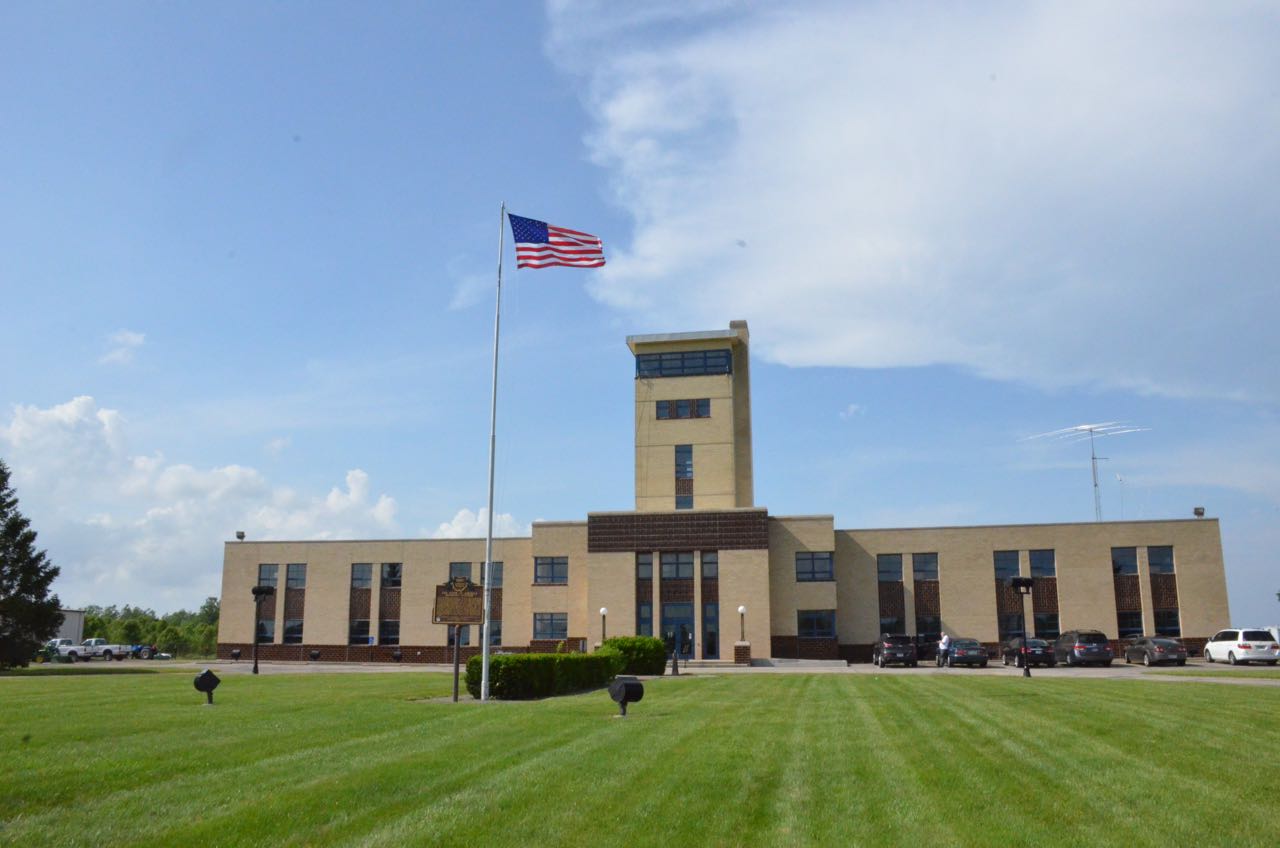
VOA Museum to host 75th anniversary commemoration of D-Day on June 6

(Source: Southgate ARC)

The National Voice of America Museum of Broadcasting in West Chester will host a 75th anniversary commemoration of the D-Day landing on Thursday, June 6 at 9 a.m. on the museum’s front lawn.

The event sponsored by Kehoe Financial Advisors of Cincinnati will honor the memory of WW II soldiers who participated in D-Day and the Battle of Normandy, as well as veterans of all wars.

After a color guard presentation by Veterans of Foreign Wars Post 7696 and a brief ceremony, veterans and other attendees will be invited inside the museum for free coffee, donuts and museum tours until noon.
The public is invited.

Coffee will be donated by CAVU of West Chester, with donuts provided by Kroger stores in Sharonville and on Tylervsille Road in West Chester.

“D-Day was the largest seaborne invasion in the history of the world and put Allied troops on the trajectory to win World War II,” said Ken Rieser, VOA Museum board president. “The sacrifice in human life that day alone is sobering—about 4,500 Allied soldiers and from 3,000 to 9,000 Nazi troops.”

During Operation Overlord, which occurred from the June 6, 1944 D-Day landing through August 30, 1944, when German troops retreated east across the Seine River, more than 425,000 Allied and German troops died, according to Barrett Tillman’s D-Day Encyclopedia (2014, Regnery Publishing), on www.HistoryontheNet.com. About 209,000 were estimated to be Allied troops.

“Although many of the soldiers who participated in D-Day are no longer with us, we want to commemorate their sacrifice—as well as the sacrifices of all veterans in all wars since then,” said Tom Keller of Kehoe Financial Advisors. “D-Day is a solemn day, but also an uplifting reminder of what our country can accomplish when we band together for a just cause.”

RSVPs are requested by noon on Wednesday, June 5 for the D-Day commemoration at [email protected] to ensure adequate food and beverages.