Shortwave listening and everything radio including reviews, broadcasting, ham radio, field operation, DXing, maker kits, travel, emergency gear, events, and more
Fifty years ago, there were dozens, if not hundreds, of Brazilian shortwave signals to hear on shortwave. As with the rest of the world, this is no longer the case. However, especially with the advent of remote SDRs to assist with the enjoyment of the DXing hobby, there are still a number of stations broadcasting from Brazil that are well worth a listen, even if you don’t understand Portuguese. Here is a sampling of what can be heard in 2025.
Radio Nacional da Amazonia 6180 and 11780 kHz
This is perhaps the easiest station to hear for overseas listeners. They run high-powered transmitters and have been widely reported in many parts of the globe. The station began a short daily broadcast in English and Spanish in late March, but I’m not sure if this is still going, as I haven’t checked recently. Here is a recording from April 18:
The transmitter power used by the next two stations is unknown, so the use of a remote SDR to hear them well may be required. Overseas listeners can look for them anyway, but note that their schedules seem to be irregular. Broadcasts consist mostly of popular music with frequent station ID’s in Portuguese between selections.
The last two stations should be audible to DXers outside Brazil.
Radio Inconfidencia, Belo Horizonte, Minas Gerais 6010 and 15190 kHz
With 5 kW of power, Radio Inconfidencia gives a full identification in Portuguese at the top of most hours that includes callsigns, frequencies, and location. It is on the air around the clock.
Radio Inconfidencia full ID recording – September 16 at 2158 UTC on 15190 kHz:
Radio Inconfidencia second recording – September 15 at 2353 UTC on 15190 kHz:
Radio Voz Missionaria, Camboriu SC 5940 and 9665 kHz
Using 10 kW of power from the south of Brazil, Radio Voz Missionaria should be heard, at least on occasion, in many parts of the world. This station also operates 24 hours a day.
Recording – Radio Voz Missionaria – April 23 at 2357 UTC on 9665 kHz:
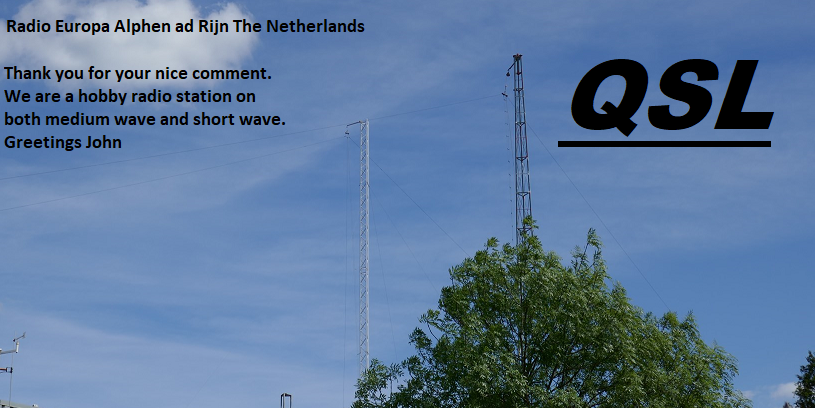
Many thanks to SWLing Post contributor Paul Jamet, who shares a follow-up to his recent reception reports of Radio Europe on 6130 kHz.
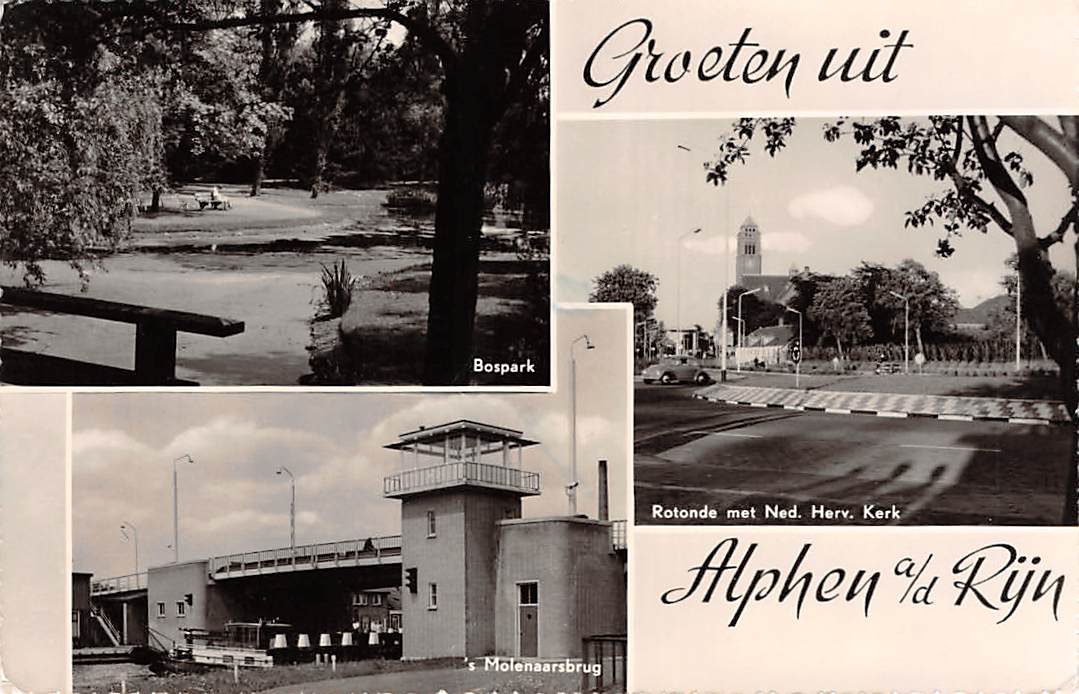
Paul not only received a QSL card (see above) from the station but also exchanged several friendly messages with the team behind Radio Europe—three brothers from the Netherlands who have been active in radio since the 1970s. They also included the following photos and postcards:
In their replies, the Radio Europe team wrote (English translation):
Hi Paul,
Great photos and thanks again for the recording and comment.
I’ll add a little more about who we are. We are three brothers who have been involved in this wonderful hobby since the 1970s. We started out on 27 MHz, and after obtaining some licenses, we started building radio tubes, transmitters, receivers, and antennas, including loop antennas for broadcasting on legal frequencies.
For years, John, the owner of RadioEuropa, used homemade tube transmitters. For several years now, we have been using factory transmitters, which consume less energy. We also use sound processors to make the audio sound as good as possible. We also work with a V-type antenna inverter that is located a few meters above the ground. The photo shows the old situation high up, but since the move, everything is now on the ground floor.
Based on the responses, we believe that the antenna and transmitter are working well. Given that it can sometimes be windy, John plans to keep the antenna low for the time being, because on shortwave, the sound can always vary or be heard differently. This also makes it very interesting for us.
Thanks again.
You have a beautiful radio and antenna. Best regards from the Netherlands. Radioeuropa
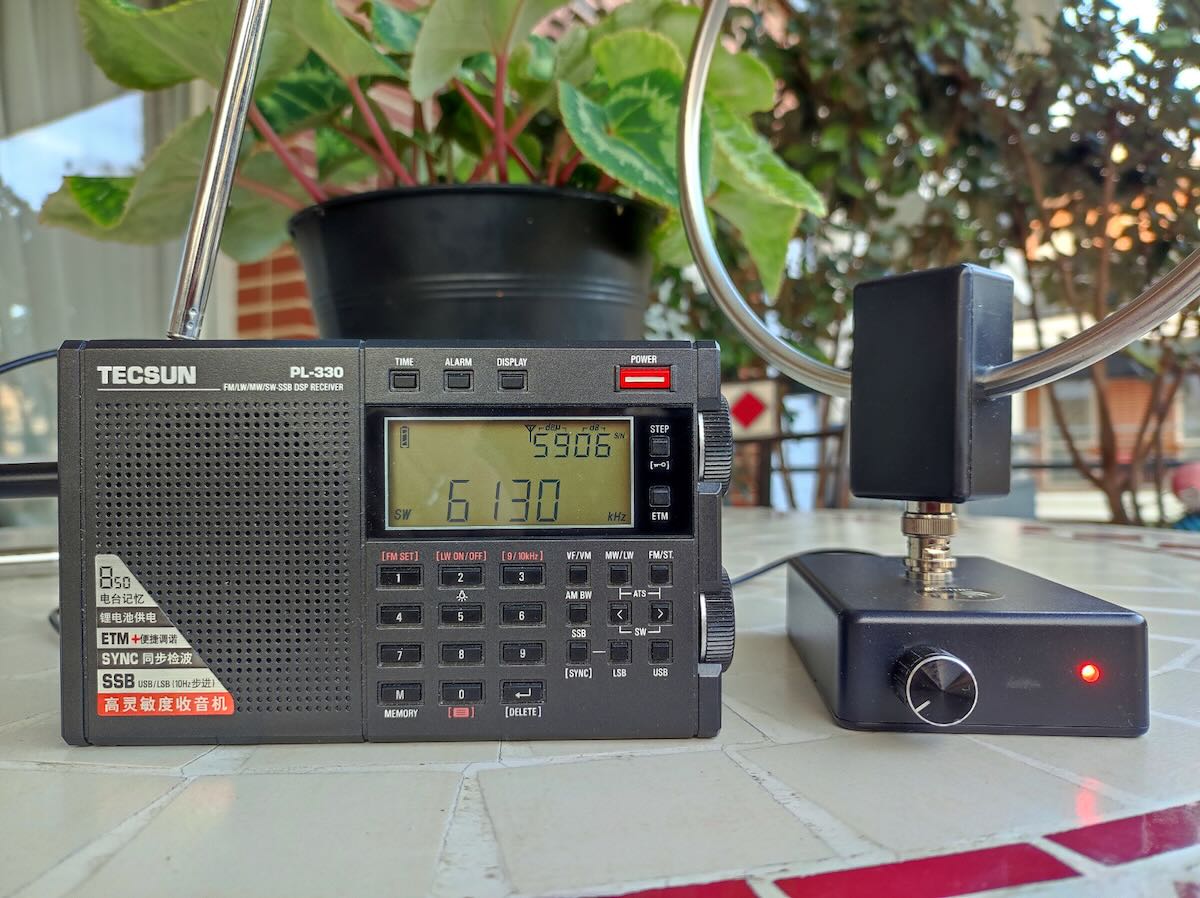
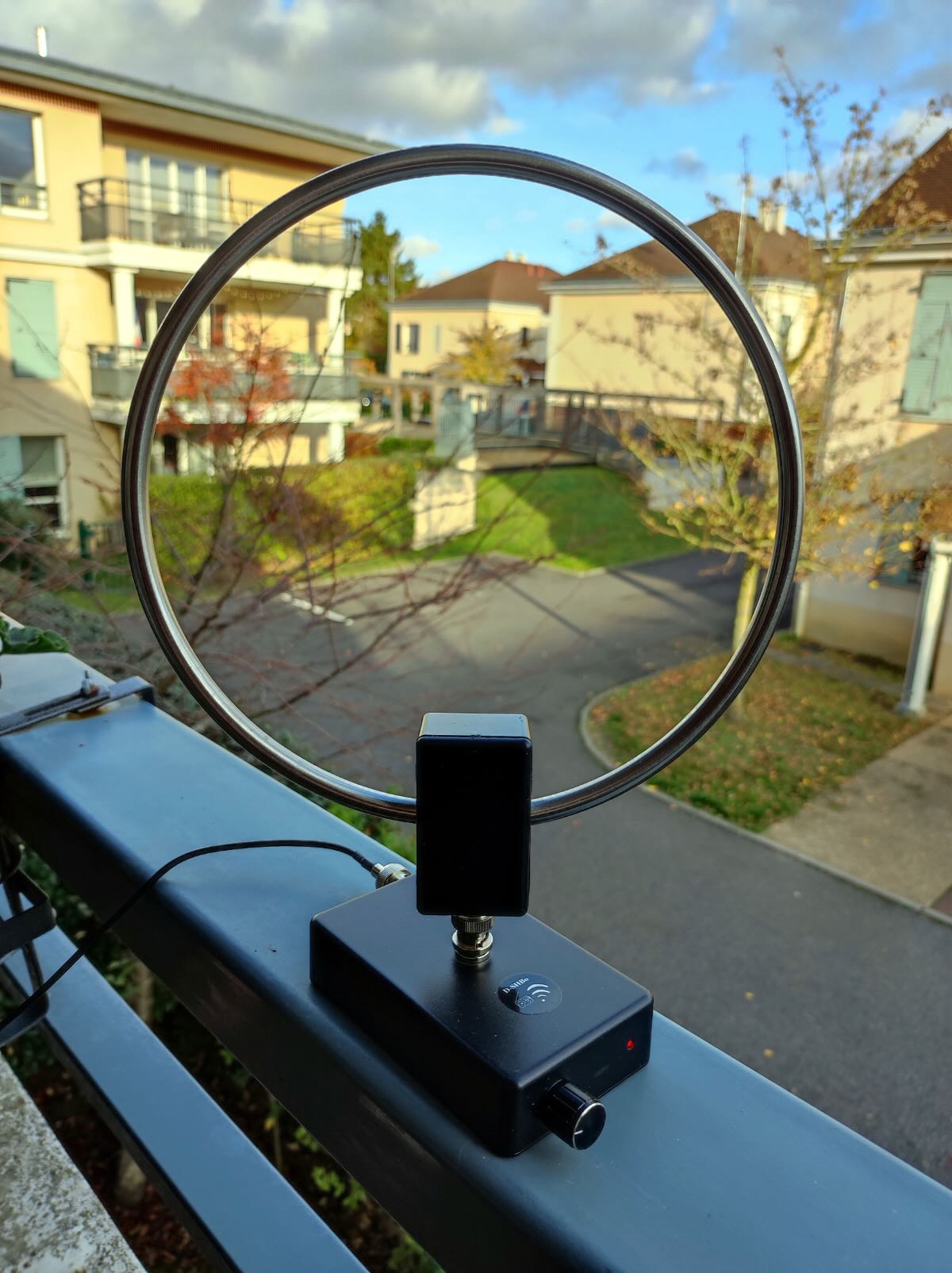
Paul also shared his most recent recording of Radio Europe made from his balcony in France, using a TECSUN PL-330 receiver and a Deshibo GA-450 loop antenna (20 cm diameter–see photos above and below). Even from a city location surrounded by small buildings, reception was quite good.
“This little loop antenna from Deshibo sometimes gives interesting results,” Paul notes. “The TECSUN PL-330 is a safe bet.”
Many thanks again to Paul for sharing his listening reports, correspondence, and these great insights into one of Europe’s independent shortwave broadcasters!
Please support this website by adding us to your whitelist in your ad blocker. Ads are what helps us bring you premium content! Thank you!

 Carlos notes: