Tag Archives: BBC

“BBC sets out plan to inform, educate and entertain during unprecedented times”

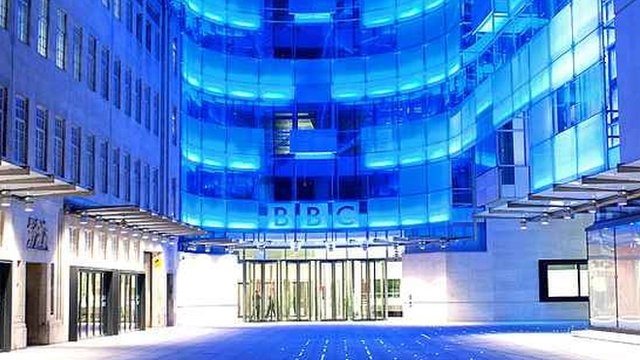
(Image source: BBC)

(Source: BBC Media Centre)

Today the BBC is setting out how it will ensure it keeps the nation informed, educated, and entertained in unprecedented times.

Director-General Tony Hall says: “We all know these are challenging times for each and every one of us. As the national broadcaster, the BBC has a special role to play at this time of national need.

“We need to pull together to get through this. That’s why the BBC will be using all of its resources – channels, stations and output – to help keep the nation informed, educated and entertained. We are making a series of changes to our output to achieve that.

“We will continue to deliver all the essential news and information – with special programming and content.

“We also will do everything from using our airwaves for exercise classes for older people, religious services, recipes and advice on food for older people and low-income families, and should schools close, education programming for different age groups. We will also be launching a whole new iPlayer experience for children. And of course there will be entertainment – with the ambition of giving people some escapism and hopefully the odd smile.

“Clearly there will be disruption to our output along the way, but we will do our very best.

“It will take time to emerge from the challenges we all face, but the BBC will be there for the public all the way through this.”

The BBC is announcing a wide-ranging package of measures today.

Our core role is to bring trusted news and information to audiences in the UK and around the world in a fast-moving situation, and counter confusion and misinformation.

In particular:

  • We will do everything we can to maintain Breakfast, the One, Six and Ten and ensure they continue to perform a vital role on BBC One
  • We will broadcast a weekly prime-time Coronavirus special on Wednesdays on BBC One, and move Question Time to 8pm on Thursdays, with call-in audiences and remote guests.
  • We will record a daily edition of the Coronavirus podcast, and film it where possible for
  • News channel use in the UK and abroad.
  • We will bring listeners the most up-to-date information on Coronavirus through 5 Live. 5
  • Live will be answering listeners’ questions with regular phone-ins.
  • We will focus local radio breakfast and mid-morning output on news, open phone lines and expert advice for local communities between 6am and midday.
  • Under the umbrella Make A Difference, every local radio station will join up with local volunteer groups to help co-ordinate support for the elderly, housebound or at risk, making sure people know what help is available in their area.
  • We will keep Newsround bulletins on air throughout the day on CBBC.
  • We will delay the planned closure of the Red Button text news and information service.

We will help people in the UK deal with the impact of the crisis on their own lives, by providing advice, education and support.

Initiatives include:

  • Using The One Show as a consumer programme show for all aspects of the crisis. This will include health and well-being advice, keeping fit and healthy eating tips, as well as links to other BBC output that can help and support.
  • In BBC One daytime, Health Check UK Live will directly address the concerns of viewers who are in isolation, offering tips on how to keep healthy and happy at home.
  • Making BBC Homepage the BBC’s bulletin board supplying clear information – the answers to all the key questions, with public information, health advice and recipes.
  • Launching a virtual church service on Sunday mornings across local radio in England, led initially by the Archbishop of Canterbury.
  • Subject to outside broadcast capacity and our partners, we will aim to broadcast a weekly Sunday morning church service on BBC One, and explore how to support other religions and denominations, including in the run-up to Ramadan.
  • We will work with partners to get older age group exercise routines and other fitness programming into people’s homes on TV or radio.
  • We will retarget the BBC Food website around collections of recipes and advice on what can be made with essentials, especially for older people, and for low-income families.

In the event that schools are shut down, and subject to further work and discussions with the Department for Education, devolved administrations and schools, we are exploring:

  • A daily educational programme for different key stages or year groups – with a complementary self-learning programme for students to follow, broadcast on BBC Red Button and made available on demand on BBC iPlayer.
  • Expanding BBC Bitesize content, with our social media running daily troubleshooting Q&As focusing on a different subject each day.
  • Increasing our educational programming on BBC iPlayer, bringing together the best from BBC Bitesize, BBC Teach and the wider BBC portfolio where educationally appropriate.
    Creating two new daily educational podcasts for BBC Sounds, one for primary and one for secondary.
  • BBC Four and BBC Red Button devoting a block of programming each weekday evening to show programmes that support the GCSE and A Level curriculum. In Scotland, the Scotland channel will support the Scottish NQs and Highers in daytime.

We will keep people entertained, providing laughter, escapism, companionship, shared experiences and a sense of connection to the outside world.

Initiatives include the following:

  • We will bring back many favourite shows, allowing people of all ages to escape into some top-quality entertainment both on our channels and on BBC iPlayer. New boxsets going up shortly include Spooks, The Missing, Waking The Dead, French And Saunders, Wallander and The Honourable Woman, as well as more from BBC Three.
  • We will be launching an exciting new iPlayer experience for children, offering a wide range of entertaining and educational series. It will be easy to use and easy for them to find what’s relevant to them.
  • Radio 1, Radio 2 and Radio 4 will provide the information, explanation and escape that millions rely on. On Radio 4, we will dig into our rich archive of drama with such well-loved titles as The Complete Smiley, all of the novels by the Bronte Sisters, film noir classics by Raymond Chandler, and reassuring favourites as Rumpole and Wodehouse. We will be sharing popular podcast dramas with a wider radio audience for the first time by broadcasting the award-winning Forest 404 and The Whisperer In Darkness. We will also hope to provide some joy and laughter by running classic editions of I’m Sorry I Haven’t a Clue and Just A Minute.
  • We will do the same in BBC Sounds, looking at bringing back classic sport, comedy and drama, as well as exploring using the BBC’s programme index to allow audiences to search thousands of online archive radio programmes.
  • We will aim to create live fund-raising events, to raise money for coronavirus good causes.
  • At a time when British culture is having to close its doors, the BBC, through iPlayer and Sounds, can give British culture an audience that can’t be there in person. We propose to run an essential arts and culture service – Culture in Quarantine – that will keep the Arts alive in people’s homes, focused most intensely across Radio 3, Radio 4, BBC Two, BBC Four, Sounds, iPlayer and our digital platforms, working closely with organisations like Arts Council England and other national funding and producing bodies. This will include guides to shuttered exhibitions, performances from world-class musicians and comedy clubs, new plays created especially for broadcast featuring exceptional talent, poetry and book readings.
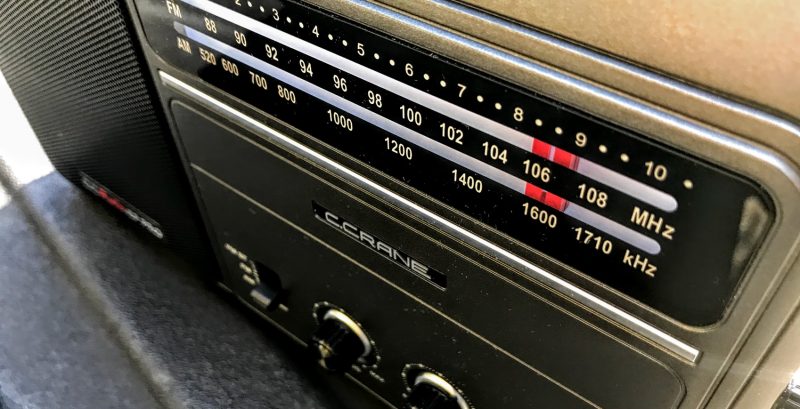
Radio Waves: Plant-powered Satellite Comms, BBC Pips, Filter Basics, and Replacing Shortwave

Radio Waves:  Stories Making Waves in the World of Radio

Because I keep my ear to the waves, as well as receive many tips from others who do the same, I find myself privy to radio-related stories that might interest SWLing Post readers.  To that end: Welcome to the SWLing Post’sRadio Waves, a collection of links to interesting stories making waves in the world of radio. Enjoy!

Many thanks to SWLing Post contributors Marty, Dennis Howard, Dennis Dura, Kris Partridge and Richard Langley and for the following tips:


Plant-powered sensor sends signal to space (Phys.org)

A device that uses electricity generated by plants as its power source has communicated via satellite—a world first.

[…]The device can inform farmers about the conditions of their crops to help increase yield, and enable retailers to gain detailed information about potential harvests.

It transmits data on air humidity, soil moisture and temperature, enabling field-by-field reporting from agricultural land, rice fields or other aquatic environments.

The extremely low power device sends signals at radio frequencies that are picked up by satellites in low Earth orbit. It was developed by Dutch company Plant-e and Lacuna Space, which is based in the Netherlands and the UK, under ESA’s programme of Advanced Research in Telecommunications Systems (ARTES).[…]

The eccentric engineer: a tale of six pips and how the BBC became the national arbiter of time (Engineering and Technology)

This edition of Eccentric Engineer tells the story of the BBC Time Signal and how, over the years, it has just got more complicated.

Every engineer needs to know the time, if only so as to not miss lunch. Since 1924, many Britons have been checking their watches against the BBC time signal, known affectionately as ‘the pips’.

The history of the ‘pips’ is almost as long as the history of the BBC itself. The first transmissions from what was then the British Broadcasting Company began in late 1922 and soon afterwards there were suggestions of broadcasting a time signal under the control of the Royal Observatory at Greenwich – then the arbiter of time in the UK.

No one seems to have seen a need for this degree of precision, but early broadcasts did use their own ad hoc ‘pips’, marking the 8pm and 9pm news programmes with a time signal consisting of the announcer playing the Westminster chimes on a piano and later a set of tubular bells. This proved rather popular with listeners, who could now adjust their clocks and watches daily, so the BBC decided to invest in some more high-tech clocks from the Synchronome Company. These provided audible ‘ticks’, which the announcer then simply counted down.[…]

What Is Replacing Shortwave? (Radio World)

A joint effort is necessary to bring the digitization of radio to a successful end

Analog shortwave will celebrate about 100 years of existence in 2028 when many hope 5G will have been properly defined, tested and applied, though broadcasting is low on its long list of perceived advantages.

It’s true that shortwave was typically a medium of the Cold War that peaked in 1989 and that afterward its listenership dwindled. Many international broadcasters gave up on it as the post-war transmitters got rustier and the energy bills kept mounting.

After all, when budget cuts are needed, no transmitter will go on strike or write to the press, as happened when the BBC World Service tried to unsuccessfully close its Hindi shortwave transmissions in 2011. In 2020 these broadcasts stopped, when committed BBC Indian listeners, writers and thinkers who opposed it in 2011 did not protest too much.

The slow death of shortwave has been blamed on the internet and satellite. As technology and content are inextricably linked, shortwave created its type of content that is no longer favored by the savvy FM listener, internet user and cellphone obsessed.[…]

Filter Basics: Stop, Block and Roll(off) (Nuts and Volts)

A casual observer might think that wireless systems consist primarily of filters connected by the occasional bit of circuit! Block diagrams of transceivers often include as many filters as any other function. This is true at the system level, just as it is at the circuit level — and many circuits behave in a filter-like way, whether intended to be a filter or not! That makes understanding filter basics important for wireless success.[…]


Do you enjoy the SWLing Post?

Please consider supporting us via Patreon or our Coffee Fund!

Your support makes articles like this one possible. Thank you!

Sky News: “BBC could be forced to sell radio stations in ‘massive pruning back'”

(Image source: BBC)

(Source: Sky News via Dan Van Hoy)

The number of TV channels could also be reduced, the website scaled back and stars banned from taking well-paid second jobs.

[…]The Sunday Times quoted a senior Downing Street source as saying that Prime Minister Boris Johnson is “really strident” on the need for serious reform at the national broadcaster.

The number of TV channels could be reduced, the website scaled back and stars banned from taking well-paid second jobs, the newspaper said.

There will also be a consultation on replacing the licence fee with a subscription model, the source said, adding: “We are not bluffing on the licence fee.

“We are having a consultation and we will whack it. It has got to be a subscription model.

“They’ve got hundreds of radio stations, they’ve got all these TV stations and a massive website. The whole thing needs massive pruning back.

“They should have a few TV stations, a couple of radio stations and massively curtailed online presence and put more money and effort into the World Service which is part of its core job.

Read the full article at Sky News.

Radio Waves: BBC lifeline, NZ Concert FM, Band Planning Group, and SETI VLA search

Radio Waves:  Stories Making Waves in the World of Radio

Because I keep my ear to the waves, as well as receive many tips from others who do the same, I find myself privy to radio-related stories that might interest SWLing Post readers.  To that end: Welcome to the SWLing Post’sRadio Waves, a collection of links to interesting stories making waves in the world of radio. Enjoy!

Many thanks to SWLing Post contributors Howard, Mark Hirst, Micheal Bird, Pete Eaton, andTroy Riedel for the following tips:


The BBC gave me a lifeline as a child. It must be kept public (The Guardian)

Those who lobby against the corporation’s service remit fail to understand its unique relationship with its audience

ou’re mistaken if you think you can hand Margaret Thatcher a pearl-handled revolver and expect her to do the right thing. She’d shoot you with it.” As memory serves me, those were the words of a member of parliament being interviewed on the BBC World Service in November 1990. The programme was Newshour, and the presenter was Owen Bennett-Jones. I recall these details because the ousting of Thatcher was the first political event I tuned into properly as a child with an interest in politics living in a sub-Saharan African country with no access to media that covered current events.

Satellite dishes were prohibitively expensive, and apart from a short news bulletin on state-controlled TV there was no other source of news, let alone analysis – until I found the BBC World Service on shortwave radio. I started to haul the only portable radio in the house, a large battery-powered contraption with a long-bent aerial, everywhere I went, becoming aware of the dead zones in the house where the signal was weak, and making note of the times when the signal was strongest. Night-times were the worst. I would heave the radio into the bed and painstakingly tease the dial to find the crackling transmission from Bush House, able only to fall asleep when I managed to find the faint voices fading in and out of the crackle of white noise.[…]

NZ’s Concert FM may be safe (RadioInfo)

The future of New Zealand’s Concert FM seems to have been assured after NZ Prime Minister, Jacinda Ardern said her Cabinet was looking at an unused FM frequency as a solution to keeping the station on air.

There has been public outcry since the announcement of Concert FM’s proposed closure late last week with ex PM, Helen Clark going public to condemn the move.

RNZ’s breakfast king, Mike Hosking, says that the government is out of touch replacing it with a youth station, “The fact they’re calling it “youth” immediately shows how out of touch they already are, and hopefully they can hire someone who’s pants aren’t pulled up quite as high who can put them straight.”

Under the proposed changes, the classical station would lose its FM frequency, presenters, interviews and live programmes, become fully automated and move to the AM band.[…]

New HF Band Planning Discussion Group (Southgate ARC)

The ARRL has created a new HF Band Planning Discussion Group which is open to both members and non-members

The ARRL say:

HF Band Planning Committee Chair Mike Raisbeck, K1TWF, will moderate the group, which will focus on the ARRL HF Band Planning Committee’s recommendations and other band-planning activities.

Earlier this month, the ARRL HF Band Planning Committee invited comments and suggestions from the Amateur Radio community on its report to the ARRL Board. At the Board’s January meeting, the committee presented its specific recommendations in graphical form for each HF band and each US license class, with the goal of increasing harmony on the HF bands, particularly between CW and digital users. Those responding to the initial call for comments and suggestions are encouraged to cross-post their remarks to the new HF Band Planning Discussion Group.

The discussion group is at
https://groups.arrl.org/g/ARRL-HF-Band-Planning/

Other discussion groups are at
https://groups.arrl.org/g/ARRL-Groups/subgroups

Source ARRL
http://www.arrl.org/news/arrl-creates-new-hf-band-planning-discussion-group

Astronomers to sweep entire sky for signs of extraterrestrial life (The Guardian)

Project is collaboration between privately-funded firm and New Mexico observatory

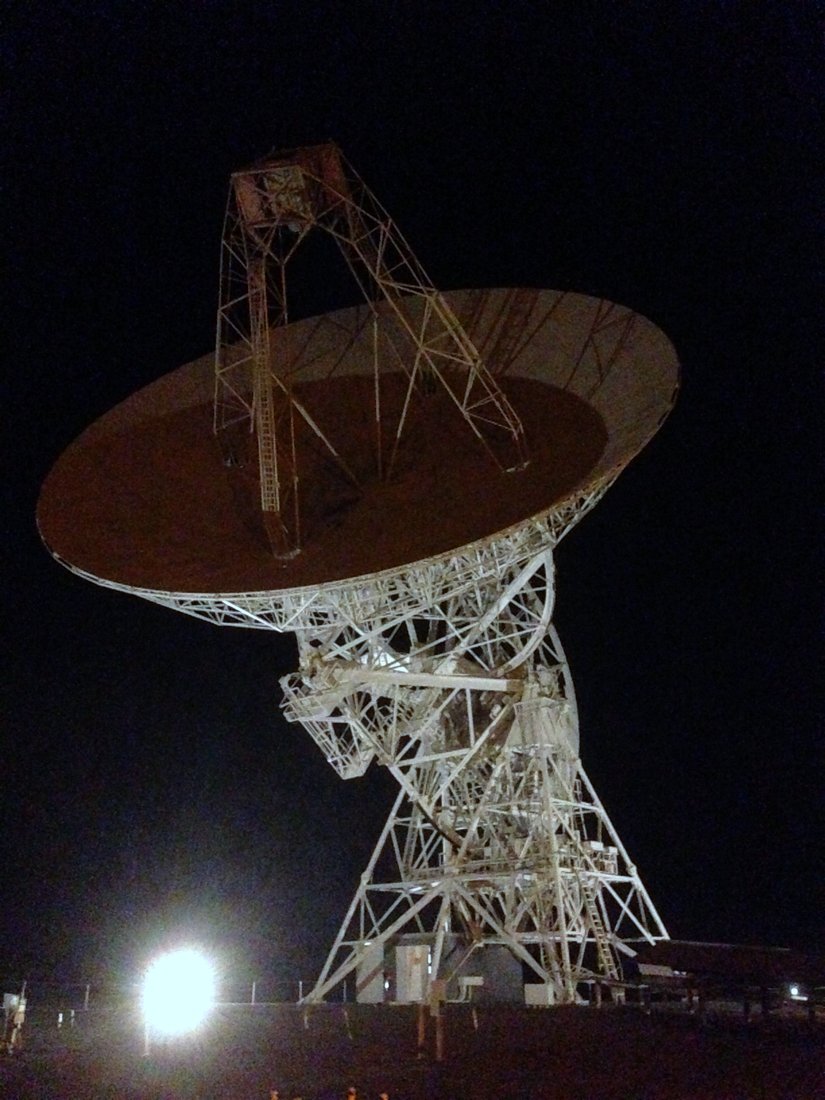
Astronomers will sweep the entire sky for signs of extraterrestrial life for the first time, using 28 giant radio telescopes in an unprecedented hunt for alien civilisations.

The project is a collaboration between the privately-funded Seti Institute and the Very Large Array observatory in New Mexico, one of the world’s most powerful radio observatories. Gaining real-time access to all the data gathered by VLA is considered a major coup for scientists hunting extraterrestrial lifeforms and an indication that the field has “gone mainstream”.

Normal astronomy operations will continue at the VLA, which was featured in the 1997 film Contact, but under the new arrangement all data will be duplicated and fed through a dedicated supercomputer that will search for beeps, squawks or other signatures of distant technology.

“The VLA is being used for an all-sky survey and we kind of go along for the ride,” said Andrew Siemion, director of the Berkeley Seti centre. “It allows us to in parallel conduct a Seti survey.

“Determining whether we are alone in the universe as technologically capable life is among the most compelling questions in science, and [our] telescopes can play a major role in answering it,” said Tony Beasley, director of The National Radio Astronomy Observatory, which runs the VLA.[…]


Do you enjoy the SWLing Post?

Please consider supporting us via Patreon or our Coffee Fund!

Your support makes articles like this one possible. Thank you!

Loss of BBC Hindi shortwave service and listener reactions

(Photo by Elle via Unsplash)

Many thanks to SWLing Post contributor, David Iurescia (LW4DAF), who shares the following story from The Print:

Emotional emails & offers to crowdfund — how fans tried to keep BBC Hindi radio on air

The service fell silent last month with its last transmission on 31 January. The BBC management now plans to boost its digital and TV presence.

New Delhi: It was the BBC’s Hindi radio on shortwave that slowly carved an identity for the British broadcaster in India after its launch 80 years ago. With an estimated audience of 40 lakh across India, the radio service was the first choice for consumers of serious news and entertainment alike, particularly in the remote and far-flung parts of the country.

But the service fell silent last month, on 31 January, with the BBC management citing a dwindling audience and plans to boost digital and TV presence as reasons to call time on this chapter of history.

It came as a rude shock for its loyal audience and the dismay was evident, according to BBC insiders.

“It was heartbreaking to see the kind of emotional emails and letters we received on the days preceding the shutdown and after that,” an insider told ThePrint. “They (the audience) pleaded to keep the service afloat. Some even said they were willing to crowdfund it. But it seems the management was interested in the numbers and the BBC Hindi radio service on shortwave was not giving them adequate numbers.”

Another insider in the BBC said audience numbers for the radio service had come down from 1 crore a few years ago to about 40 lakh now, even as its presence on platforms such as YouTube thrived. The service has also established its presence on television with a tie-up with news channel NDTV.

“But in our experience the quality of news consumers is poor in digital as compared to the loyal audience that BBC Hindi radio service in shortwave enjoyed,” the second insider said, basing the assessment on feedback received from both sets of audiences.

“I would say the management was insensitive to the millions of listeners in the remote corners of India who banked on the service as their daily source of news,” the insider added.

The decision to switch off BBC Hindi radio is part of the British broadcaster’s global cost-cutting efforts. It had planned to end the BBC Hindi radio service in 2011, but changed plans owing to massive outrage and a high-profile campaign supported by eminent journalist and author Sir Mark Tully, a former bureau chief of the BBC.

It’s not just the BBC Hindi radio service that has suffered on account of this twin push to cut costs and go digital. Even BBC Urdu announced in December last year that it will end the radio broadcast of its popular news and current affairs programme, Sairbeen.

In India, BBC also has internet broadcasts in other Indian regional languages, but no associated radio services. […]

Continue reading the full article at The Print.

Radio Waves: RNZ Cuts Classical, Australian EmComm Plan, BBC Funding, and NHK Viewing Fees

Radio Waves:  Stories Making Waves in the World of Broadcasting 

Because I keep my ear to the waves, as well as receive many tips from others who do the same, I find myself privy to radio-related stories that might interest SWLing Post readers.  To that end: Welcome to the SWLing Post’s Radio Waves, a collection of links to interesting stories making waves in the world of radio. Enjoy!

Many thanks to SWLing Post contributors Troy Riedel and Michael Bird for the following tips:

RNZ set to cut back Concert and launch new youth service (Radio New Zealand)

In the biggest overhaul of its music services in years, RNZ is planning to cut back its classical music station RNZ Concert and replace it on FM radio with music for a younger audience as part of a new multimedia music brand. Mediawatch asks RNZ chief executive Paul Thompson and music content director Willy Macalister to explain the move.

The broadcaster is proposing to remove RNZ Concert from its FM frequencies and transform it into an automated non-stop music station which will stream online and play on AM radio.

It would be replaced on FM by a service aimed at a younger, more diverse audience as part of a new multimedia “music brand”.

RNZ Concert would be taken off FM radio on May 29 and the youth platform would be phased in ahead of its full launch on August 28.

RNZ’s music staff were informed about the proposed changes this morning in an emotional, occasionally heated meeting with the RNZ music content director Willy Macalister, head of radio and music David Allan, and chief executive Paul Thompson.[…]

[Australian] Senate to vote on National Emergency Communications Plan (ABC Friends)

Today Senators can vote to recognise and support ABC Emergency Broadcasting Services and start to plan for a National Emergency Communications Plan.

[…]The motion comes after ABC Friends surveyed bushfire affected communities, with 95% of the 750 respondents indicating that they wanted to see a national plan of additional essential communications infrastructure.

More information to come once the motion has been moved.[…]

UK government, at odds with media, eyes BBC funding change (AP)

LONDON (AP) — Britain’s government announced Wednesday it is considering a change in the way the BBC is funded that would severely dent the coffers of the nation’s public broadcaster.

Prime Minister Boris Johnson’s Conservative government — which is increasingly at odds with the country’s news media — said it would hold a “public consultation” on whether to stop charging people with a criminal offense if they don’t pay the annual levy that funds the BBC.

The broadcaster gets most of its money from a license fee paid by every television-owning household in the country, which currently stands at 154.50 pounds ($201) a year. Failing to pay can result in a fine or, in rare cases, a prison sentence.

In 2018, more than 121,000 people were convicted and fined for license fee evasion. Five people were imprisoned for not paying their fines.

The BBC is Britain’s largest media organization, producing news, sports and entertainment across multiple TV, radio and digital outlets. The BBC’s size and public funding annoy private-sector rivals, who argue the broadcaster has an unfair advantage.[…]

NHK Asked to Cut Viewing Fees Further (Jiji Press)

Tokyo, Feb. 5 (Jiji Press)–Japanese Internal Affairs and Communications Minister Sanae Takaichi asked Japan Broadcasting Corp. (NHK) on Wednesday to cut television-viewing fees further.
The request was included in a set of proposals compiled by Takaichi. The proposals were approved the same day at a meeting of the Radio Regulatory Council, which advises the minister.

After expected cabinet approval, the proposals will be submitted to the ongoing session of the Diet, Japan’s parliament, together with NHK’s fiscal 2020 draft budget.

The public broadcaster has already decided to cut viewing fees and expand the scope of fee exemptions by the end of fiscal 2020, in order to reduce viewers’ burdens by the equivalent of 6 pct of its fiscal 2018 fee revenue.[…]