Tag Archives: NPR

In Zimbabwe, “if you want to hear the truth…listen to Shortwave Radio Africa…listen to VOA”

This is a brilliant piece on the lack of press freedom in Zimbabwe and the importance of shortwave radio. It was broadcast yesterday on Weekend All Things Considered. Links to the show and audio are below.

(Source: NPR)

In Seke, a rural community 40 miles outside Harare, James Chidakwa and his father eat roasted nuts and cornmeal inside a small brick hut. They’re farmers who rely heavily on maize and chickens to survive. James Chidakwa says that like many, his family refuses to listen to government TV or radio broadcasts.

“They always lie to the people,” he says. “Everything they say is a lie.”

So at 6 p.m. most evenings, they turn on a battery-powered, short-wave radio and tune in to a “pirate radio station.” Chidakwa says Shortwave Radio Africa and Voice of America are their favorites.

“If you want to hear the truth, wait for the end of the day to listen to Shortwave Radio Africa, to listen to VOA,” he says.

The stations, which are based in the U.K. and the U.S., send their signals through radio towers in countries that border Zimbabwe. That means Zimbabwean officials — who claim these broadcasts are illegal — have little recourse. In the past, they’ve confiscated short-wave radios. Chidakwa says that forces some people to listen undercover.

“Some of them, they will take the radios into their bedrooms and, low volume, they listen to the news. But the truth is, there is fear in them,” he says.

But for Chidakwa and his father, it’s a risk they are prepared to take.

The stations, which are based in the U.K. and the U.S., send their signals through radio towers in countries that border Zimbabwe. That means Zimbabwean officials — who claim these broadcasts are illegal — have little recourse. In the past, they’ve confiscated short-wave radios. Chidakwa says that forces some people to listen undercover.

“Some of them, they will take the radios into their bedrooms and, low volume, they listen to the news. But the truth is, there is fear in them,” he says.

But for Chidakwa and his father, it’s a risk they are prepared to take.

You can listen to the full story from Weekend All Things Considered, by clicking here (mp3), or read the transcript on this page.

This is just one more story we’ll file under “Why Shortwave Radio.”

RCI, and others, I wish you were listening. Those in Zimbabwe certainly are.

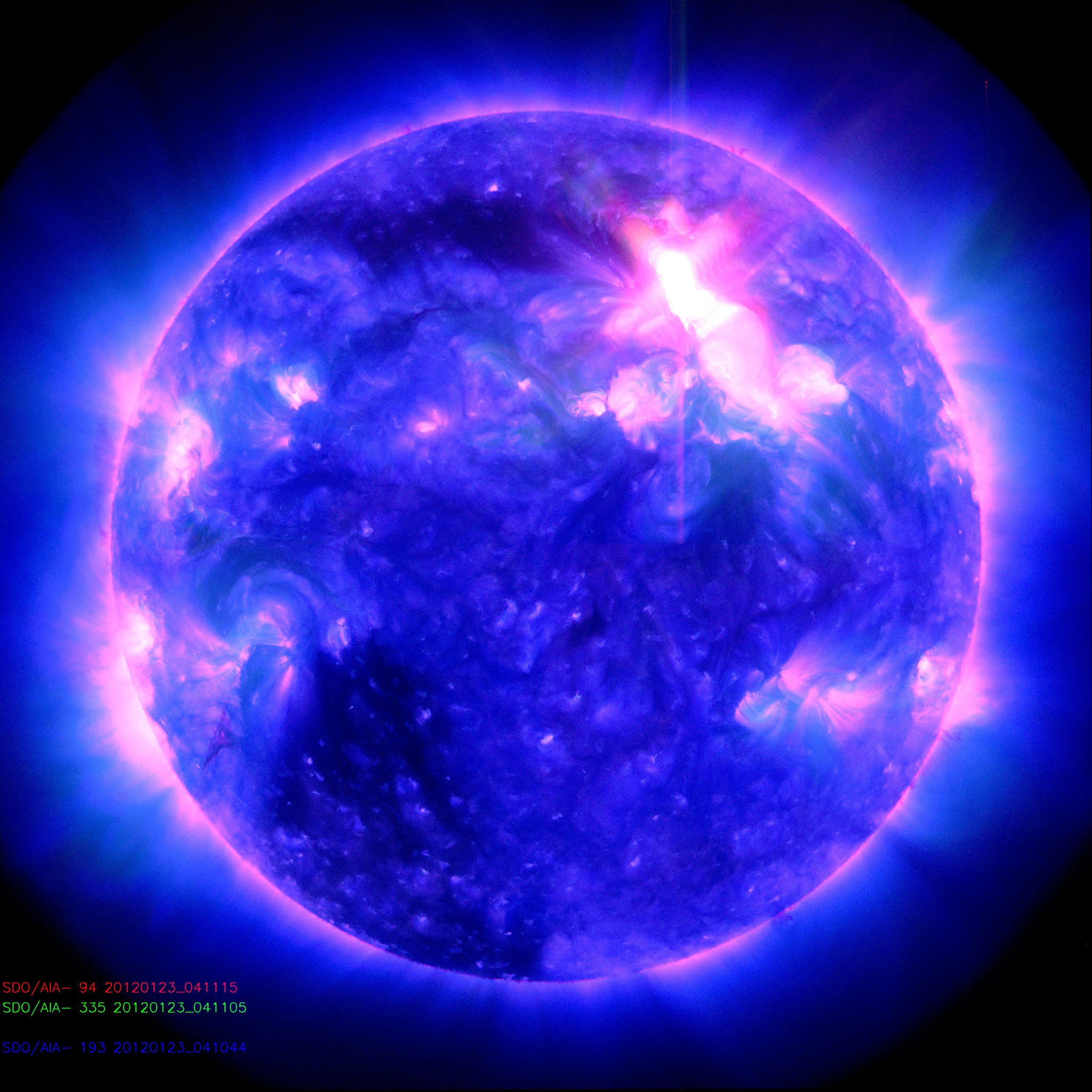
NPR explains space weather and the CME heading our way

(Source: SpaceWeather.com)

I think this is one of the best, simple explanations of space weather that I’ve seen lately:

(Source: NPR)

Space weather, as it is called, originates with solar magnetic activity. The sun is a giant spinning ball of charged particles. In addition to its spin, the heat released from the core through nuclear fusion eventually sets the upper layers of the sun into a kind of boiling motion called convection. All that motion — spin and convection — means lots of charged particles streaming this way and that. Since current (the flow of charges) produces magnetic fields, the outer domains of the sun are ruled by magnetism. Magnetic fields are the source of all those cool images of giant flares erupting in planet-spanning arcades of super-hot plasma. It’s also the source of so-called Coronal Mass Ejections or CMEs, which are, essentially, the space storms that space weather is all about.

CMEs are eruptions of matter and magnetism from the sun into space. A typical CME will blow 10 billion kilograms (about 22 billion pounds) of solar plasma into space along with enough energy to represent a flotilla of 220 aircraft carriers moving at 500 km/s. The fact the CME’s are quite common says a lot about the power locked up in an ordinary star like the sun.

While 1 to 3 CMEs may occur every day, we only the notice the ones that slam into the Earth on their journey across the solar system. When a CME crosses the Earth it runs into our planet’s own magnetic field. Charged particles from the CME get trapped by the Earth’s magnetic field and stream down toward the planet’s surface near the poles.

When those CME particles, running down magnetic field lines, strike atmospheric gas atoms, the collisions cause the atoms to light up like Christmas tree bulbs. That is the origin of the simmering walls of color we called aurora. There was a time when pretty lights were all there was to space weather. Those days are over.

Read the full article on NPR’s website.

NPR: Voice Of America’s Role In Internet Age

(Source: NPR)

Host Scott Simon speaks with David Ensor, who took over directorship of Voice of America last month. A longtime journalist for NPR, CNN and ABC News, his most recent post was in Afghanistan, where he was director for communications and public diplomacy at the U.S. Embassy in Kabul.

Click here to listen to full story on NPR’s website.

NPR brings amateur radio spectrum threats to light

Click image to go to ARRL page for HR607.

(Source: National Public Radio)

Across Alabama, emergency communications systems fell silent this week when tornadoes knocked down antennas and cell phone towers. Amateur radio operators are helping to restore emergency communication in some of the areas hardest hit by the storms. But those volunteers say their ability to provide that help is threatened by a new bill in Congress.

Listen to full report at NPR.

As a ham radio operator, I ask that all SWLing.com readers (who live in the US) please take action by contacting your member of congress and asking them to protect the radio spectrum which is vital to emergency communications.

NPR’s Bob Boilen on radio listening

I like Bob’s contemporary take on radio listening. Embrace old and new technologies:

Here’s the thing. I have radios that pick up FM, AM and short wave signals, but I also have an IP, or internet radio, that picks up signals that are broadcast from various sources. So while I’m cooking in my suburban Maryland kitchen, I can listen to WFUV originating from the Bronx, or The Current from Minneapolis or KEXP in Seattle. These are traditional radio signals but they are no longer bound by geography. Before finishing the meal I whipped up, I could also potentially hear a homemade folk music show from Norway, some classical Hindi music, a tech show and so much more.

Links:

NPR Explores Numbers Stations

This weekend, NPR’s Guy Raz interviewed Mark Stout, the official historian at the International Spy Museum. Their topic? Numbers stations. Click hear to go to NPR’s webpage, listen and/or read the full transcript. You can also download an MP3 audio file of the report by clicking here.

For even more numbers station audio, check out the piece that shortwave enthusiast, David Goren, produced by clicking here.  Also, read all of our various articles that mention numbers stations.

Wind powered community radio in Southern Sudan

This week’s Living on Earth Broadcast featured an interview with Internews program director Deborah Ensor about bringing solar and wind energy to the region to power a new radio station in Southern Sudan.

This story is a wonderful example of how radio empowers and promotes community relations in parts of the world that lack a communication infrastructure.

Links: