Tag Archives: Radio Romania International

Radio Romania International “broadcasts” to US phones

276_banner-lucru-en copy

SWLing Post reader, Mike Kitchen, kindly shared this message from Radio Romania International:

“Dear friends, you can listen to us on your mobile phone, in the US. Our programs in English are available live or on demand, at the following call-to-listen phone number: 716.274.2526. This incurs no extra charge and is the equivalent of making a standard mobile call in the US.”

I just tried the service and am happy to report that each time you call, the RRI English language service begins at the top of the hour. While not nearly as fun as listening over shortwave, it does make this Romanian broadcaster even more accessible within the US.

Shortwave Radio Recordings: Radio Romania International

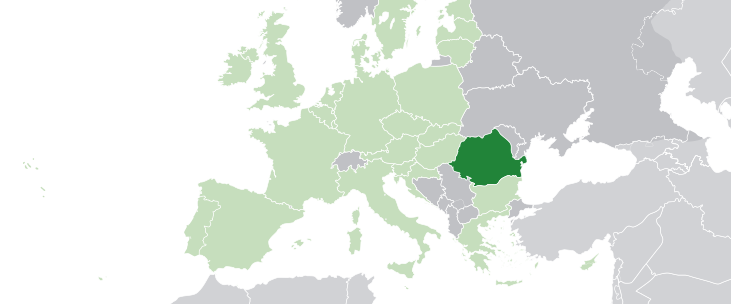
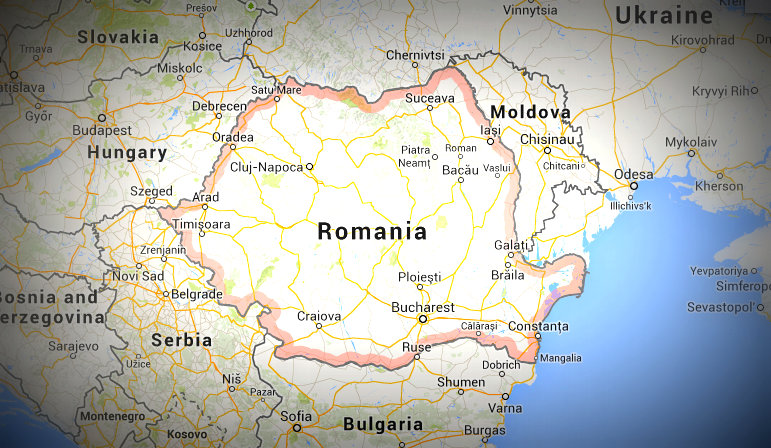
RomaniaMap

For your listening enjoyment:  Radio Romania International‘s English language service.

This RRI broadcast was recorded on January 4, 2013 starting a little before 01:00 UTC on 7,325 kHz. It begins with a few seconds of RRI’s interval signal.

Be sure to also check out the Shortwave Radio Audio Archive for a two hour recording of RRI’s Romanian language service, which was broadcast simultaneously on 7,340 kHz.

Click here to download the recording as an MP3, or simply listen via the embedded player below:

BBC News on the long-term survival of shortwave radio

BBC-World-Service-007Many thanks to SWLing Post reader, Alex, who shares this essential listening: an audio report aired at 17:45 GMT today by Lucy Burton of the BBC World Service.

In this report, Burton discusses the future (or lack thereof) of shortwave radio. Burton interviews staff at Radio Romania International and even Glenn Hauser. To listen, just click:

The report reminds me that shortwave radio is often viewed as only legacy technology, when, in fact, shortwave has many advantages over digital options and is as relevant as ever.

This photo was taken in South Sudan, after Ears To Our World distributed radios in this rural community for the fourth year running. This photo was taken prior to the outbreak of violence the country is currently enduring.  Can you imagine the power of information each radio can provide to its community?

This photo was taken in rural South Sudan, after Ears To Our World had distributed hundreds of radios via our partner Project Education South Sudan. This photo was taken prior to the recent outbreak of violence the country is currently enduring. Can you imagine the power of information just one radio can provide to a community during these turbulent times?

As I’ve mentioned before, Gareth Mitchell once interviewed me for the BBC World Service technology program Click. Mitchell’s interview focused specifically on my non-profit, Ears To Our World, which uses self-powered shortwave radios to further its mission. His description of our radios during his introduction was as insightful as it was humorous:BBC_Click

“…Portable battery powered devices that can stream audio in real time all via an intuitive touch interface.”

Aptly put.  Shortwave radio, after all, has several profound benefits over the Internet, the three most significant being: 1) radio has no regard for national borders, and crosses them effortlessly; 2) listeners retain anonymity (thus cannot be readily tracked nor penalized by repressive authorities); and 3) radio requires no apps nor subscriptions to work.  Nor even, for that matter, a power grid.  It’s “just” an inexpensive “battery powered device” that can bring listeners vital lifesaving information, and, well…the world.

In short, I continue to stand by what I reported to UNESCO last year:

This post joins our popular tag: Why Shortwave Radio?

Radio Romania International celebrates 85 years on the air

RRI-RadioRomaniaInternationalTo celebrate 85 years on the air, RRI is asking their listeners: “How do you see the future of international radio broadcasting?”

Send your response and RRI might read it on the air during their November 3rd, 2013 broadcast.  Read full details below.

(Source: Radio Romania International)

On November 1, 2013 we celebrate 85 years of Romanian radio broadcasting. An anniversary that we take pride in, that we think about more or less nostalgically, and which brings questions about the future.

It is an occasion for Radio Romania International to challenge you, on this year’s Listener’s Day, to answer the question “How do you see the future of international radio broadcasting?”

Ever since its first days, radio broadcasting has been subject to countless tests, on the one hand prompted by the changes in the media landscape, such as the growth of television, the development of private radio stations, the emergence of the Internet and of social networks, and on the other hand triggered by the diversifying means of reception and transmission. In response, the radio outputs and contents have also changed. Radio broadcasting and reception modernized.

Political factors, regime changes and wars also influenced the mission and programmes of radio stations, while economic factors, such as the periods of economic growth or slumps, have affected the number of stations and their broadcasts. International stations have been subject to all these influences, just like all other radio stations.

This is why, dear listeners, we invite you to tell us how you think international radio stations will develop in the coming years, and what your expectations are in this respect. What will the global supply of programmes for foreign audiences look like, and how large will it be? What means of transmission will be used by most international broadcasters? What will be the role of radio stations for foreign listeners, in a world where access to information is ever easier?

We are looking forward to your answers to the question “What will be the future of international radio broadcasting?” and will award the most interesting 20 contributions.

As usual, it is based on your answers that we will produce the “Listener’s Day” programme on RRI, aired on the first Sunday in November, that is November 3rd this year. You can send your answers in audio format, or in writing, via email, regular mail or fax, on Facebook or using the form on our website. Our contact details are: Radio Romania International, 60-64 General Berthelot Street, sector 1, Bucharest, PO Box 111, code 010165, fax no. 00.40.21.319.05.62, email [email protected].

Shortwave Radio Recordings: Radio Romania International

Victory Avenue (Calea Victoriei), a major avenue in central Bucharest (Source: Wikimedia Commons)

Victory Avenue (Calea Victoriei), a major avenue in central Bucharest (Source: Wikimedia Commons)

Today at 20:30 UTC, Radio Romania International’s signal on 11,745 kHz was  quite strong, as it so often is.  RRI is one of the few broadcasters that still target Europe and the eastern US on shortwave.

RRI is a treasure of a station, too, with true local flavor–Romanian news, music, and mini cultural documentaries. This Sunday broadcast features the program Inside Romania, Romanian Without Tears (a language program which always reminds me of the similarities between French and Romanian), DX Mailbag, and Roots.

Click here to download the full broadcast as an MP3, or simply listen via the embedded player below. This recording features their interval signal before and after the broadcast:

If you enjoy Radio Romania International, I encourage you to send an accurate and descriptive reception report to: [email protected] Maybe your letter will be featured on their DX Mailbag!

Shortwave Radio Recordings: Radio Romania International

RRI-RadioRomaniaInternationalRadio Romania International is on of my favorite international broadcasters. I routinely listen to their broadcasts in English and French. With the demise of Radio Bulgaria in 2012, I turn to RRI for news not only about Romania, but Eastern Europe in general.

I do fear for the future of Radio Romania International on the shortwaves as so many broadcasters are pulling out of the spectrum and putting all of their faith into online “broadcasting.” If you enjoy RRI as much as I do, consider submitting a reception report and letting them know that you’re listening.

Tuesday, I recorded RRI’s English broadcast from Tiganesti on 9.435 MHZ (21:30 UTC)–quite an easy and reliable catch in eastern North America. You can click here to download the recording as an MP3, or simply listen via the embedded player below: