Category Archives: Current Events

Staying the Course: W9IMS Stages its Second Special Event of the Month, Celebrating the Indy 500

By Brian D. Smith, W9IND

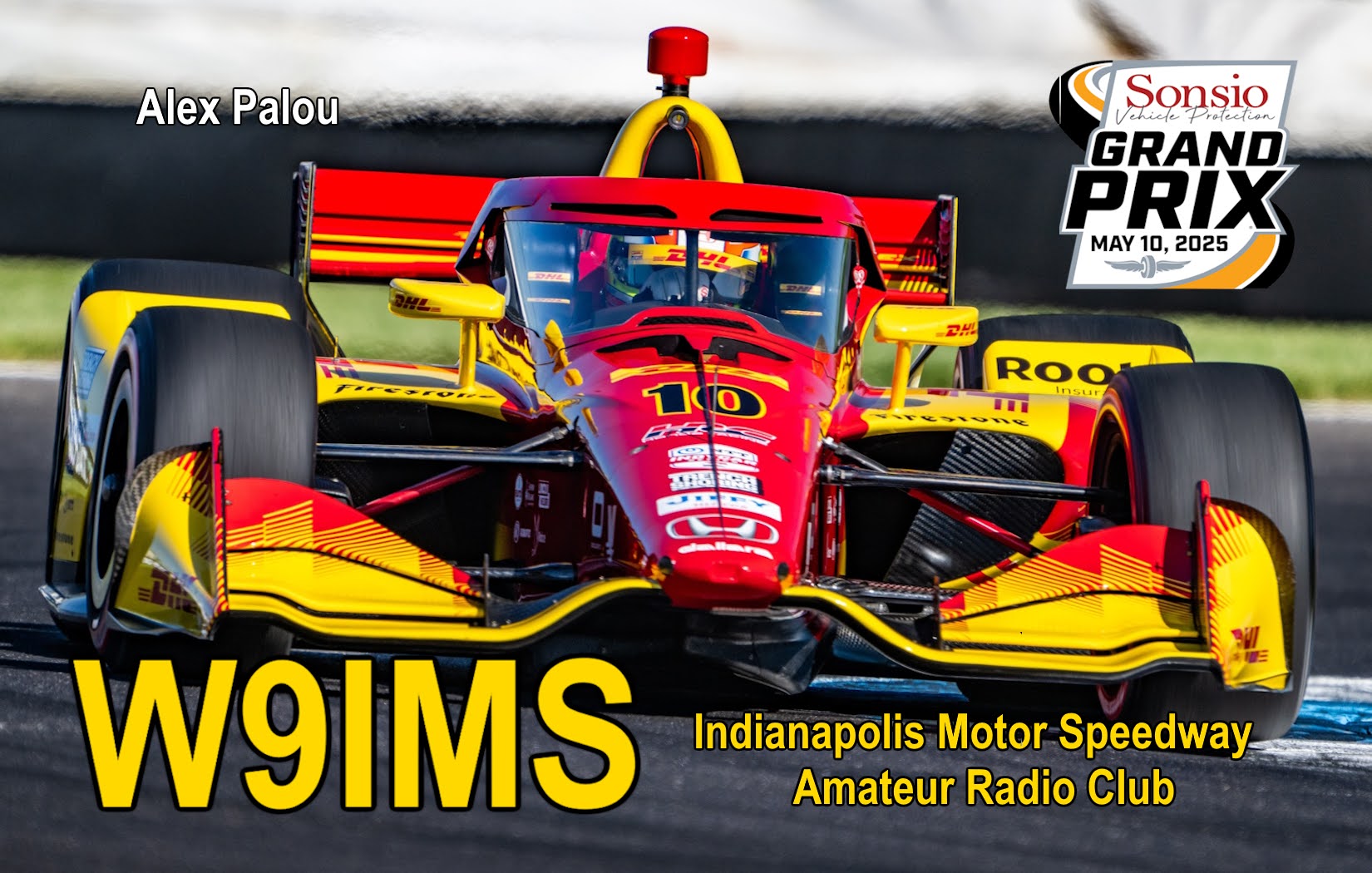
It’s back to the track for amateur radio station W9IMS. Less than 2 weeks after concluding their first special event of the year, members of the Indianapolis Motor Speedway Amateur Radio Club will take to the airwaves from now through Sunday, May 24, to commemorate the legendary Indianapolis 500. 

If you already worked or tuned in W9IMS during the initial event, the IndyCar Grand Prix, this is your chance to snare the second of three contacts required for the 2026 Checkered Flag Award. To earn this certificate, radio amateurs must contact all three W9IMS events in the same year (SWLs may substitute reception reports). The third special event, honoring the NASCAR Brickyard 400, will fire up from July 20-26.

Even if you missed the Grand Prix, you’re still eligible for a colorful and collectible QSL card marking the 110th running of the Indy 500. The current operation is slated to conclude at 11:59 p.m. Sunday, May 25 (Indy time) or 0359 UTC Monday, May 26.

Tips on finding W9IMS:

  1. Check DX Summit (www.dxsummit.fi) for spots listing the current frequency or frequencies of W9IMS. You can customize your search by typing “W9IMS” in the box at upper right. 
  2. Go to the W9IMS page on QRZ.com (short cut: www.w9ims.com) and look for the heading, “2026 Operating Schedule.” The Indianapolis 500 link opens into a weeklong schedule of individual operators and their reserved time slots. Although the special event can be activated at any time throughout Race Week, your odds of snaring the station improve dramatically during hours with a listed op.
  3. Look for the Indy 500 station on 20 and 40 meters – on or near 14.245 and 7.245 MHz – and there’s a bonus band if you plan to attend the race or be in the Indianapolis area on Race Day. Each year on the morning of the 500, W9IMS operates simplex FM on 146.52 MHz, working hams situated in the grandstands and the infield of the track, as well as those en route or residing in the local area.
  4. Remember that the published schedule can be shortened by adverse circumstances, such as local thunderstorms, solar flares, and a lack of calling stations. Don’t wait till the final hour to hunt W9IMS!
  5. However, radio amateurs who still haven’t worked W9IMS by Sunday may benefit from the policy changes that usually kick in at the end of Race Week. W9IMS ops tend to start calling for “only stations that have not worked this event” and may switch to contest-style operations, exchanging only signal reports to put more contacts in the log.
  6. Keep in mind that both hams and SWLs are eligible for QSL cards and the certificate. So if you’re unable to work W9IMS by Sunday night, you can create a reception report by copying down details of other contacts – such as date, frequency, UTC, and the callsigns of a few stations you heard W9IMS working. SWL reports count as credits too, but the certificate will likely feature your name instead of your call. 
  7. If you succeed in bagging W9IMS, congratulations! The station website (www.w9ims.com) contains everything you’ll need to know about obtaining your QSL cards and certificate. 

Hams: If you can hear W9IMS but can’t complete a QSO in the waning minutes of the special event, don’t give up. You can still create an SWL report by jotting down the details of other W9IMS contacts – including frequency, UTC, a signal report and the callsigns of several stations that you heard W9IMS contact. A valid report satisfies the requirements for a Grand Prix QSL card and the first of three credits for a certificate. SWL certificates feature operators’ names instead of callsigns but are otherwise indistinguishable from awards issued to amateur radio operators.

Remember to stay on your toes once the Grand Prix operation is over – the Indy 500 special event begins only nine days later!

Seven Days in May: Earn an Indianapolis Motor Speedway QSL and the first step toward the 2026 Checkered Flag Award

By Brian D. Smith, W9IND

The long wait is over for W9IMS paper chasers! As racing teams spend the coming week tuning up their speed machines, radio enthusiasts can tune in for their first chance at earning Indianapolis Motor Speedway QSL cards and the 2026 certificate.

The first of three special events commemorating major auto races at the legendary 2-and-a-half-mile oval begins Sunday, May 3, and continues till 11:59 p.m. Indy time on Saturday, May 9 (0359 UTC Sunday, May 10) – Race Day for the 13th running of the IndyCar Grand Prix.

To qualify for the certificate, known as Checkered Flag Award, hams and shortwave listeners must work/tune in all three of this year’s special events, which also include the Indianapolis 500 from May 18-24 and the NASCAR Brickyard 400 from July 20-26. But even if you fall short in attempting to bag the trio, you can still claim a colorful, collectible QSL card for each of the events you connect with.

Prime time for W9IMS is 6 to 10 p.m. Eastern Time (2200-0200 UTC) on weekdays, sometimes extending to midnight (0400 GMT Sunday) and beyond, and the bands of choice are 40 and 20 meters – generally on or around 7.245 and 14.245 MHz. But QRM and other issues can prompt changes in frequencies. The best bet is to check for W9IMS spots on DX Summit (www.dxsummit.fi) and eHam (www.eHam.net).

Also, while W9IMS can take to the airwaves at any time between now and the final Saturday signoff, you’ll have a better chance of finding active stations by going to the W9IMS QRZ page (www.w9ims.org) and clicking the Grand Prix link under “2026 Operating Schedule” – which displays the time slots that operators have signed up for. The same page contains additional information about W9IMS QSL cards and the certificate.

For radio amateurs who still haven’t worked W9IMS by Saturday afternoon, note that toward the end of the event, operators often start limiting calls to stations that haven’t yet worked the current special event. Another tip is to drop in for happy hour, the last hour of the last day – in this case, 11 p.m. Saturday (0300 UTC Sunday). That’s when W9IMS ops traditionally switch to contest-style QSOs, exchanging only signal reports so they can log as many stations as possible. But remember, too, that W9IMS special events can end prematurely if they encounter sparse QSOs or unfavorable solar or weather conditions.

And a final tip for hams: If you can hear W9IMS but can’t complete a QSO in the waning minutes of the special event, don’t give up. You can still create an SWL report by jotting down the details of other W9IMS contacts – including frequency, UTC, a signal report and the callsigns of several stations that you heard W9IMS contact. A valid report satisfies the requirements for a Grand Prix QSL card and the first of three credits for a certificate. SWL certificates feature operators’ names instead of callsigns but are otherwise indistinguishable from awards issued to amateur radio operators.

Remember to stay on your toes once the Grand Prix operation is over – the Indy 500 special event begins only nine days later!
Another One Bites The Dust In Brazil?!?!

Written/Published/Edited by SWLing.com Contributor Paul Walker, avid SW DXer and manager of KSKO 89.5 McGrath, Alaska

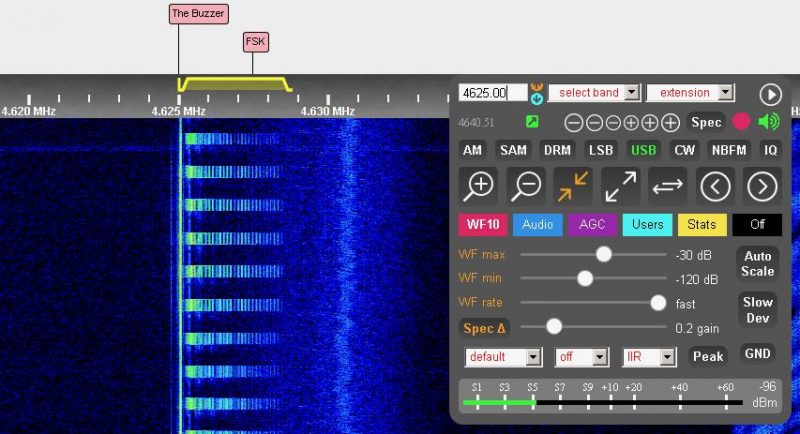
Surprisingly, RBC’s 7.5KW signal on 11815khz was quite regular here and heard very well at times.  A few weeks ago, I realized I hadn’t heard it in several months, which has never happened really. I’m a member of the North American Shortwave Association so I posted a question there, because no matte how niche a station may be, someone can usually find or knows the answer.

I was greeted with this answer from Rich D’Angelo:

The following ius from May’s Listeners Notebook contributed by Brazilian DX’er Pedro de Castro:

Rádio Brasil Central AM – which currently operates at 1270 – will migrate to FM, according to the process approved by the Ministry of Communications at the end of last February. According to the president of Agência Brasil Central, Reginaldo Junior, the migration will guarantee the survival and legacy of 75 years of the station. The AM operation will be terminated at Fazenda Bananal, where the transmitters of these operations in medium, short and tropical waves are installed. Two other FM radio stations may be created with the migration of shortwave and tropical frequencies as well, still unpredicted. (Juliana Carnevalli via Agência Brasil Central (ABC) – Government of Goiás/Pedro de Castro-Brazil)

Sad to hear, but we must face the reality and progression of time and technology. SW equipment is tough, expensive and time to repair, maintain or purchase new. With a few well placed FM signals, they can cover the areas that really matter in much better, much more consistent quality. We have to remember we as DX’ers aren’t the target and the fact we can hear a sub 10,000 Watt signal outside of its target area wasn’t intended and just a bonus. The electricity costs for a few FM signals are likely less than a 50KW full time AM and 2 full time shortwave signals.

FT Video: “Ukraine’s battle of the airwaves”

Many thanks to a number of SWLing Post contributors who share a link to the following video via the Financial Times.

Description:

A look at three aspects of wartime radio in Ukraine: the interception of communications between Russian soldiers, how broadcasters are using radio to combat censorship online, and the mysterious silence of a radio transmitter known as ‘The Russian Lady’

Click here to view on YouTube or click here to view on the Financial Times website.

Radio Waves: A Second Golden Age, RFE Popular in Russia, Station Helps Ukrainian Refugees, Symbol of Normalcy, Saving Wax Cylinders, and Antarctic Post Office Opportunity

Radio Waves:  Stories Making Waves in the World of Radio

Because I keep my ear to the waves, as well as receive many tips from others who do the same, I find myself privy to radio-related stories that might interest SWLing Post readers.  To that end: Welcome to the SWLing Post’s Radio Waves, a collection of links to interesting stories making waves in the world of radio. Enjoy!


Is radio in a second golden age? Here’s what the first looked like. (MSN / Washington Post)

On. Oct. 30, 1938, America was rocked by shocking news: Aliens had been spotted crash-landing outside Grover’s Mill, N.J. Additional sightings were soon made across the Northeast, including reports of Martians unleashing poisonous gas on Manhattan and burning onlookers alive with ray guns. Periodically, the breathless news reports would be reduced to static.

Listeners reacted in real time; many of them flooded the streets wearing gas masks and wet towels over their faces. Stores were raided, bridges and expressways were inundated with traffic, and pregnant women reportedly went into early labor.

Of course, the alien invasion never actually happened. The news bulletins were part of a live Halloween program a young producer and a cast of talented actors were presenting over the radio. The producer was 23-year-old Orson Welles, and the name of the episode was “War of the Worlds.” The H.G. Wells-adapted story had been produced for radio as part of Welles’s regular Sunday night broadcast, “The Mercury Theater on the Air” — a program that had hitherto been largely ignored, as it was up against a wildly popular variety show starring comedians Edgar Bergen and Charlie McCarthy.

Only this Sunday was different, as millions of Americans who had tuned in to listen to Bergen and McCarthy changed their dials when the duo introduced a guest opera singer. “No one was in the mood for opera that night, and much of the country stumbled onto Welles’s broadcast by mistake, not knowing the news bulletins they heard were part of a radio drama,” explained Carl Amari, a syndicated radio host and the founder of Radio Spirits, a large distributor of classic radio programs. [Continue reading…]

The Kremlin tries to stifle Radio Free Europe — and its audience surges (Washington Post)

As the U.S.-funded broadcaster is forced to shut most of its Russian operations, its Web traffic indicates that Russian people are eagerly consuming its stories

Radio Free Europe, the U.S.-funded operation that got its start by piping American-flavored news through the Iron Curtain in 1950, could see big trouble brewing for its Russian operation in recent years.

The Kremlin kept putting the screws to its Russian-language broadcasts, throwing up ever more regulatory hurdles. But it was in late 2020 that the hammer really came down. The “media regulator” demanded that every broadcast, digital story and video carry an intrusive disclaimer at the top stating that what followed was the product of a foreign agent.

“Basically, it was like telling our audience to go away,” said Jamie Fly, the CEO of Radio Free Europe/Radio Liberty, as the organization has been known since a 1976 merger.

That labeling would interfere with the private nonprofit’s mission at a core level. So, Fly told me, “we refused to comply.” [Continue reading…note that this content might be behind a paywall for some readers.]

New radio station helps Ukrainian refugees adapt in Prague (AP)

PRAGUE (AP) — This is Radio Ukraine calling.

A new Prague-based internet radio station has started to broadcast news, information and music tailored to the day-to-day concerns of some 300,000 Ukrainian refugees who have arrived in the Czech Republic since Russia launched its military assault against Ukraine.

In a studio at the heart of the Czech capital, radio veterans work together with absolute beginners to provide the refugees with what they need to know to settle as smoothly as possible in a new country. Continue reading

Radio Waves: Arecibo Failure Caught on Video, Heathkit Employee Reminisces, Radio at 100 Series, and FCC to Require Email on Applications

Arecibo Observatory’s 305-meter telescope in November 2020 (Credit: University of Central Florida)

Radio Waves:  Stories Making Waves in the World of Radio

Because I keep my ear to the waves, as well as receive many tips from others who do the same, I find myself privy to radio-related stories that might interest SWLing Post readers.  To that end: Welcome to the SWLing Post’s Radio Waves, a collection of links to interesting stories making waves in the world of radio. Enjoy!

Many thanks to SWLing Post contributors Ned Wharton, Pete Eaton, Zack Schindler, and Dave Zantow for the following tips:


NSF releases footage from the moment Arecibo’s cables failed (ARS Technica)

Today, the National Science Foundation released video taken at the moment the Arecibo Radio Observatory’s cables failed, allowing its massive instrument platform to crash into the dish below. In describing the videos, the NSF also talked a bit about the monitoring program that had put the cameras in place, ideas it had been pursuing for stabilizing the structure pre-collapse, and prospects for building something new at the site.

A quick recap of the collapse: the Arecibo dish was designed to reflect incoming radio radiation to collectors that hung from a massive, 900-ton instrument package that was suspended above it. The suspension system was supported by three reinforced concrete towers that held cables that were anchored farther from the dish, looped over the towers, and then continued on to the platform itself. Failure of these cables eventually led to the platform dropping into the dish below it.

[…]The video of that collapse comes from a monitoring system put in place in the wake of the cable failures. Due to the danger of further cable breaks, the NSF had instituted no-go zones around each of the three towers that supported the cables. With no personnel allowed to get close enough to inspect the cables, the staff started monitoring them using daily drone flights, one of which was in progress during the collapse. In addition, a video camera was installed on top of the visitor’s center, which had a clear view of the instrument platform and one of the support towers.

Continue reading full article.

Heathkit: An Employee’s Look Back (Electronic Design)

Lessons of a successful electronic business—an interview with Chas Gilmore, former Heath executive.

For those of you who do not know or remember, Heath Company was the largest kit company in the world. Heath designed and put practically every type of electronic product into kit form. Its products, called Heathkits, were exceptionally popular and many are still in use today.

Over the years, Electronic Design has published many Heathkit-related articles and blogs. Recently, I had a chance to talk with Chas Gilmore, who was a Heath executive. For those of you who fondly remember Heathkit and miss its products, here’s a look back at this amazing company and the lessons it offers.

Chas, what was your affiliation with Heath?

A recent physics graduate, I joined Heath in 1966 as an engineer in the Scientific Instruments department. This was a new group designing laboratory instruments supporting the Malmstadt/Enke, Electronics for Scientists program. The kit business was making great strides.

The audio department was about to introduce the AR-15 FM receiver/amplifier. It had rave reviews, putting Heath in the top tier of the Audio/HiFi market. At the same time, the Ham (amateur radio) department was updating the phenomenally successful SB-line of an HF SSB receiver, transmitter, and transceiver, and modernizing the popular $99 single-band SSB transceiver line[]

Radio at 100 & Roots of Radio Series (Radio World)

Zack writes:

Found this interesting series at Radioworld called “Radio at 100”. It is 29 different articles about the history of broadcasting in the USA. A lot of your readers might enjoy these;
https://www.radioworld.com/tag/radio-at-100

Another great series at Radioworld that your readers might be interested in “Roots of Radio”:

https://www.radioworld.com/columns-and-views/roots-of-radio

ARLB038 FCC to Require Email Addresses on Applications (ARRL Bulletin 38 ARLB038)

Amateur radio licensees and candidates will have to provide the FCC with an email address on applications, effective sometime in mid-2021.

If no email address is included, the FCC may dismiss the application as defective.

The FCC is fully transitioning to electronic correspondence and will no longer print or provide wireless licensees with hard-copy authorizations or registrations by mail.

A Report and Order (R&O) on “Completing the Transition to Electronic Filing, Licenses and Authorizations, and Correspondence in the Wireless Radio Services” in WT Docket 19-212 was adopted on September 16. The new rules will go into effect 6 months after publication in the Federal Register, which hasn’t happened yet, but the FCC is already strongly encouraging applicants to provide an email address.

When an email address is provided, licensees will receive an official electronic copy of their licenses when the application is granted.

The Report and Order can be found in PDF format online at, https://www.fcc.gov/document/fcc-adopts-electronic-licensing-report-and-order

Under Section 97.21 of the new rules, a person holding a valid amateur station license “must apply to the FCC for a modification of the license grant as necessary to show the correct mailing and email address, licensee name, club name, license trustee name, or license
custodian name.” For a club or military recreation station license, the application must be presented in document form to a club station call sign administrator who must submit the information to the FCC in an electronic batch file.

Under new Section 97.23, each license will have to show the grantee’s correct name, mailing address, and email address. “The email address must be an address where the grantee can receive electronic correspondence,” the amended rule will state. “Revocation of the station license or suspension of the operator license may result when correspondence from the FCC is returned as undeliverable because the grantee failed to provide the correct email address.”
NNNN
/EX[]


Do you enjoy the SWLing Post?

Please consider supporting us via Patreon or our Coffee Fund!

Your support makes articles like this one possible. Thank you!