Tag Archives: Radio Waves

Radio Waves: WBCN, Reactions to AM Digital, More KPH, and Cereal Box Telescopes

Radio Waves:  Stories Making Waves in the World of Radio 
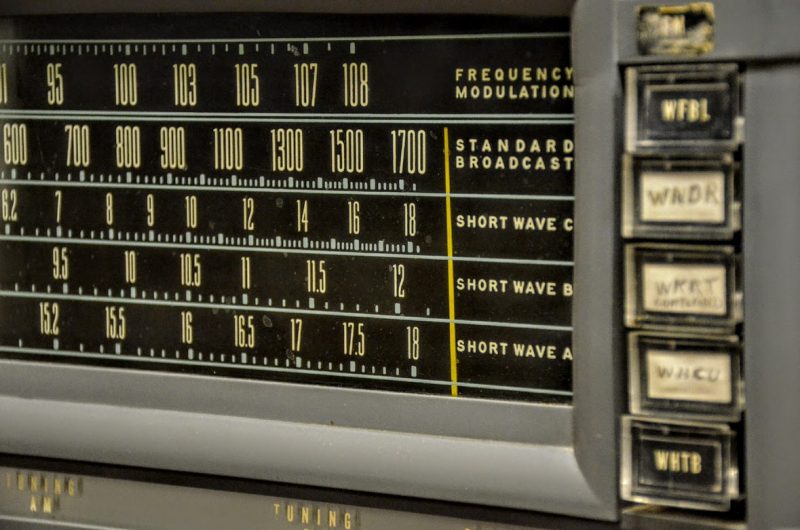
Because I keep my ear to the waves, as well as receive many tips from others who do the same, I find myself privy to radio-related stories that might interest SWLing Post readers.  To that end: Welcome to the SWLing Post’s Radio Waves, a collection of links to interesting stories making waves in the world of radio. Enjoy!

Many thanks to SWLing Post contributors, Mike Terry, Troy Riedel, andGrant Porter for the following tips:


WBCN history reveals revolutionary power in local radio (Boston University News Service)

SOMERVILLE – What started as a midnight to 6 a.m. slot on a failing classical music station, became the voice of a generation in 1970s Boston. Now, more than 50 years after WBCN sparked a “revolutionary new experiment in radio,” the bygone rock station is still making waves.

The 2018 documentary, “WBCN and The American Revolution,” tells the origin story of Boston’s first rock and roll station through a combination of rock hits. Never-before-seen photos, videos and interviews with some of Boston’s most beloved radio hosts, were greeted with cheers at the Somerville Theatre screening Thursday night.

Bill Lichtenstein, who began volunteering with WBCN at 14, directed and produced the film. After crowdfunding and a decade in the making, it has been touring independent theaters and festivals across the U.S. for the last year and a half.

WBCN was grounded in good music. Founded by Ray Riepen, owner of South End music venue The Boston Tea Party, WBCN introduced voices like The Velvet Underground, The Who, Bruce Springsteen and Led Zeppelin to the city, and quickly found a home in Boston’s huge student population. Within three months, the station, run by amateur hosts and young volunteers during classroom breaks, was playing 24 hours per day.[…]


“It Will Make Millions of Receivers Obsolete … This Is Needless” (Radio World)

What people are saying to the FCC about all-digital on the AM band

Radio World is providing an ongoing sampler of comments of what people are telling the FCC about its proposal to allow U.S. stations on the AM band to switch voluntarily to all-digital transmission. Here are more in the series:

Kirk Mazurek told the FCC that he is an avid AM listener who has “invested time and money in equipment towards my hobby as many others have. If this proposal goes through it will make the millions of receivers obsolete requiring the purchase of new equipment. This is needless, there are a lot of people who have vintage radios and a lot of them have been restored. This proposal would make them useless. I urge you not to ratify this proposal.”

Mark Wells raised concern about interference from digital to analog signals on the same channel. “This is especially applicable at night when one is listening to distant stations in out-of-state markets, he wrote. “For example, clear channel stations WBT in Charlotte and KFAB in Omaha are both on both on 1110 kHz. Let’s say one switches to digital, and one does not. As it is they both may fade in and out as the atmosphere does its nightly tricks, but the signals remain mostly useable. But, if one is digital and the other analog would it not ‘blank out’ the analog station?”[…]


Podcast features Coastal Radio Station KPH (DitDit.fm)

There was a time when the airways bristled with Morse Code. There were commercial radio stations all around the world whose business was sending and receiving Morse Code messages to ships at sea. Coast station KPH, located at Point Reyes National Seashore near San Francisco, is one of those stations. Richard Dillman was there in 1997 when KPH sent it’s last message and closed it’s doors. It was the end of the line for the men and women who had spent their careers sending Morse Code to ships at sea. There was nowhere else for them to go…

Two years later, Richard Dillman with a group of volunteers returned to KPH and put it back on the air. Listen as Richard tells us about the future of Maritime Morse Code Coastal Station KPH!


A hydrogen line telescope made from cereal boxes and an RTL-SDR (RTL-SDR.com)

SpaceAustralia.com have recently been hosting a community science project that involves encouraging teams to build backyard radio telescopes that can detect the arms of our Milky Way Galaxy by receiving the Hydrogen line frequency of 1420 MHz.

This can be achieved at home by building a horn antenna out of cardboard and aluminum foil, and a feed from a tin can. Then the Hydrogen line and galactic plane can be detected by using an RTL-SDR, LNA, and software capable of averaging an FFT spectrum over a long period of time.

While most horn antennas are typically made from four walls, one participant, Vanessa Chapman, has shown that even trash can be used to observe the galaxy. Vanessa’s horn antenna is made from multiple cereal boxes lined with aluminum foil and an old tin fuel can. The boxes are held together by some string and propped up by some sticks.

With her cereal box horn antenna combined with an RTL-SDR Blog V3, and an RTL-SDR Blog Wideband LNA, Vanessa was able to use software to average the spectrum over time as the galactic plane passed overhead, revealing the Hydrogen line peak and corresponding doppler shift from the galactic plane.[…]


Do you enjoy the SWLing Post?

Please consider supporting us via Patreon or our Coffee Fund!

Your support makes articles like this one possible. Thank you!

Radio Waves: Kumu Networks, resistors, transistors, and one tower’s vulture problem

Radio Waves:  Stories Making Waves in the World of Radio 

Because I keep my ear to the waves, as well as receive many tips from others who do the same, I find myself privy to radio-related stories that might interest SWLing Post readers.  To that end: Welcome to the SWLing Post’sRadio Waves, a collection of links to interesting stories making waves in the world of radio. Enjoy!

Many thanks to SWLing Post contributors, Marty, David Korchin, and Paul Evans for the following tips:


Kumu Networks Launches an Analog Radio Module That Cancels Its Own Interference (IEEE Spectrum)

It’s a problem as old as radio: Radios cannot send and receive signals at the same time on the same frequency. Or to be more accurate, whenever they do, any signals they receive are drowned out by the strength of their transmissions.

Being able to send and receive signals simultaneously—a technique called full duplex—would make for far more efficient use of our wireless spectrum, and make radio interference less of a headache. As it stands, wireless communications generally rely on frequency- and time-division duplexing techniques, which separate the send and receive signals based on either the frequency used or when they occur, respectively, to avoid interference.

Kumu Networks, based in Sunnyvale, Calif., is now selling an analog self-interference canceller that the company says can be easily installed in most any wireless system. The device is a plug-and-play component that cancels out the noise of a transmitter so that a radio can hear much quieter incoming signals. It’s not true full duplex, but it tackles one of radio’s biggest problems: Transmitted signals are much more powerful than received signals.[…]


This 40-Year-Old Transistor Changed the Communications Industry (IEEE Spectrum)

While working as an electronics engineer in 1977 at Fujitsu Laboratories in Atsugi, Japan, IEEE Life Fellow Takashi Mimura began researching how to make the metal-oxide-semiconductor field-effect transistor quicker. The MOSFET, which had been invented in 1966, was the fastest transistor available at the time, but Mimura and other engineers wanted to make it even quicker by enhancing electron mobility—how speedily electrons could move through semiconducting material.

Mimura began to research an alternative semiconductor to the silicon used in the MOSFET, hoping it would be the solution. He came across an article in the Applied Physics Letters journal on heterojunction superlattices—structures of two or more semiconductors of significantly different bandgaps—developed by Bell Labs in Holmdel, N.J. The superlattices, which used a modulation-doping technique to spatially separate conduction electrons and their parent donor impurity atoms, inspired Mimura to create a new transistor.

In 1979 he invented the high-electron-mobility transistor. His HEMT used a heterojunction superlattice to enhance electron mobility, improving on speed and performance.

The invention now powers cellphones, satellite television receivers, and radar equipment.[…]


Why do resistors have a color code? (Hackaday)

One of the first things you learn in electronics is how to identify a resistor’s value. Through-hole resistors have color codes, and that’s generally where beginners begin. But why are they marked like this? Like red stop signs and yellow lines down the middle of the road, it just seems like it has always been that way when, in fact, it hasn’t.

Before the 1920s, components were marked any old way the manufacturer felt like marking them. Then in 1924, 50 radio manufacturers in Chicago formed a trade group. The idea was to share patents among the members. Almost immediately the name changed from “Associated Radio Manufacturers” to the “Radio Manufacturer’s Association” or RMA. There would be several more name changes over the years until finally, it became the EIA or the Electronic Industries Alliance. The EIA doesn’t actually exist anymore. It exploded into several specific divisions, but that’s another story.

This is the tale of how color bands made their way onto every through-hole resistor from every manufacturer in the world.[…]


Coming Soon to a Processor Near You: Atom-Thick Transistors? (IEEE Spectrum)

If there’s one thing about Moore’s Law that’s obvious to anyone, it’s that transistors have been made smaller and smaller as the years went on. Scientists and engineers have taken that trend to an almost absurd limit during the past decade, creating devices that are made of one-atom-thick layers of material.

The most famous of these materials is, of course, graphene, a hexagonal honeycomb-shaped sheet of carbon with outstanding conductivity for both heat and electricity, odd optical abilities, and incredible mechanical strength. But as a substance with which to make transistors, graphene hasn’t really delivered. With no natural bandgap—the property that makes a semiconductor a semiconductor—it’s just not built for the job.

Instead, scientists and engineers have been exploring the universe of transition metal dichalcogenides, which all have the chemical formula MX2.[…]


Border Officials Seek to Evict Defecating Vultures From Texas Radio Tower (NY Times)

Some 300 vomiting, defecating vultures have made a United States Customs and Border Protection radio tower in South Texas their home, coating the tower and buildings beneath it with potentially hazardous excrement as besieged border officials try to stem the deteriorating situation.

In a notice on Thursday, the agency said it was looking for advice on how to attach some sort of net on the 320-foot tower in Kingsville to keep the vultures from roosting and nesting on its “railings, catwalks, supports, and on rails and conduit throughout.”[…]

Radio Waves: iHeart Layoffs • Radio JK FM • 2nd Chance for Pirates • Invisible War


Radio Waves:  Stories Making Waves in the World of Radio 

Because I keep my ear to the waves, as well as receive many tips from others who do the same, I find myself privy to radio-related stories that might interest SWLing Post readers.  To that end: Welcome to the SWLing Post’sRadio Waves, a collection of links to interesting stories making waves in the world of radio. Here’s the first Radio Waves story collection. Enjoy!

‘The Culling Has Begun’: Inside the iHeartMedia Layoffs (Rolling Stone)

The largest radio company in America cut a number of employees this week, dealing a blow to local radio across the country

“The largest radio conglomerate in the country, iHeartMedia, initiated a round of mass layoffs this week, cutting enough people that one former on-air host described Tuesday as “one of the worst days in on-air radio history.” The layoffs were concentrated in small and medium markets, where staffs had already been reduced, striking another major blow to local radio.”

AER (Asociación Española de Radioescucha) Radio JK FM

SWLing Post contributor, Martin Butera, writes:

“Proclaimed in 2011 by UNESCO member states, and adopted by the United Nations General Assembly in 2012 as International Day, February 13 became World Radio Day (WRD). This 2020, on World Radio Day, UNESCO calls on all radio stations to defend diversity, both in their newsrooms and on radio waves. Martin Butera, visited an important FM of Brasilia DF, capital of Brazil and anticipates this year’s motto that will be: “Pluralism, representation and diversity.”

A report in Spanish that Martin invites you to read by clicking here.

Give radio pirates chance to go legit (The Boston Globe)

The massive fines levied last month against two unlicensed Boston stations that served the Haitian immigrant community went too far.

The Invisible War of the Cold War Airwaves (X-Ray Audio)

In the radio show below, an episode of our Bureau of Lost Culture series on Soho Radio, we meet with Russian journalist, broadcaster and writer Vladimir Raevsky to hear the fascinating story of the Soviet Radio Jammers. Vladimir tells of the extraordinary lengths people went to to listen to the music they loved and of the gigantic amount of money spent by both sides in this invisible war of the airwaves.

We also hear from BBC Russian Arts correspondent Alex Kan about the brave / foolhardy so-called Radio Hooligans – the technically savvy young Soviets who dared to risk punishment by setting up their own little pirate radio stations to broadcast themselves and the music they liked using bootlegged and adapted equipment.

And finally we hear the strange story of the signal emitted by The Duga a gigantic mysterious installation near the Chernobyl nuclear site.