
Many thanks to SWLing Post contributor Paul Jamet, who shares the following article:
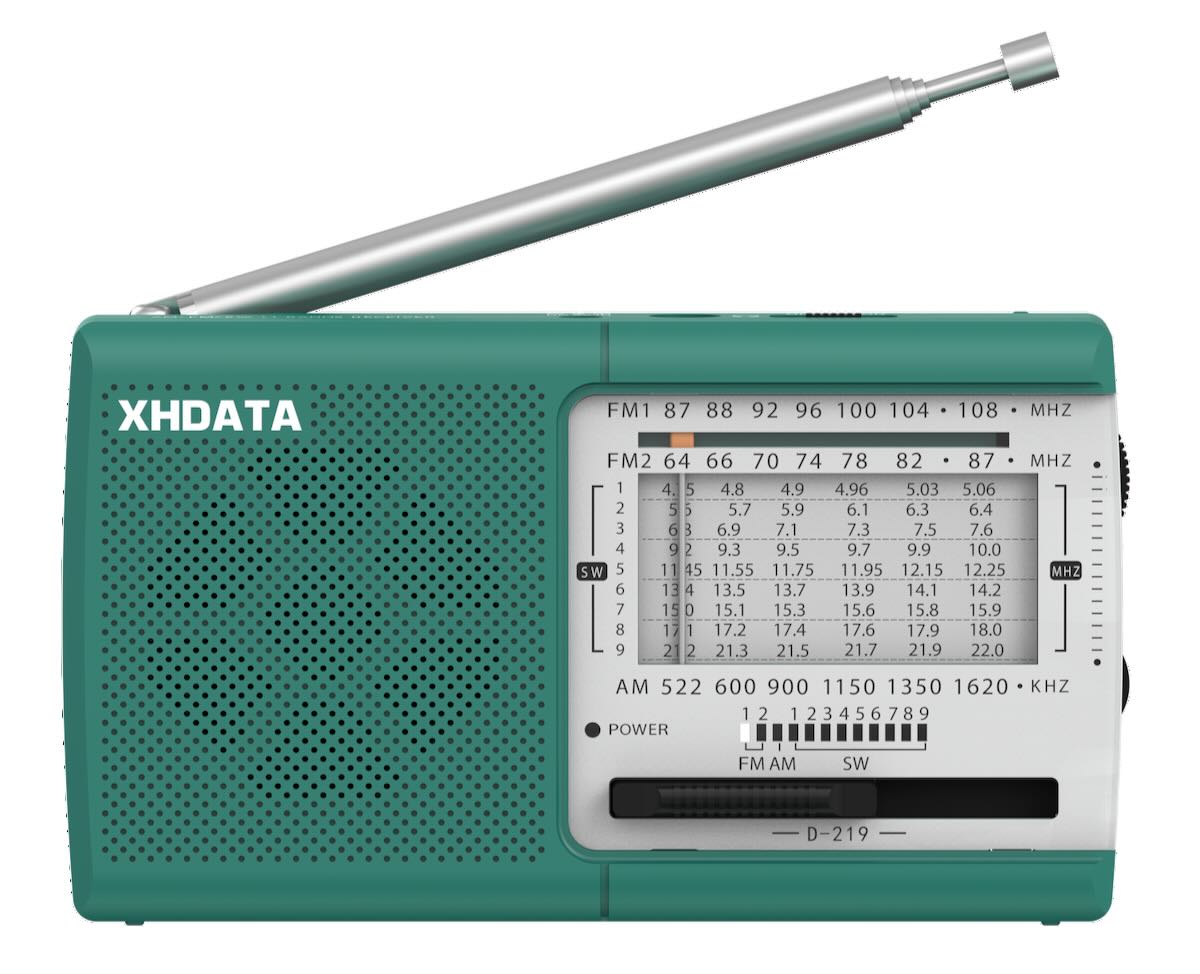
The XHDATA D-219 Receiver Gets a New Look
by Paul Jamet
Two and a half years ago, I shared my enthusiasm for an XHDATA receiver, the D-219, first launched at the end of 2022:
Read: Paul explores the incredible affordability of the XHDATA D-219
The XHDATA D-219 stands out for its low price and impressive performance. It combines nostalgic analog charm—with its needle dial—with the power of modern DSP technology, delivering excellent multiband performance for its class and cost. Whether you’re an enthusiast, a traveler, or simply discovering shortwave for the first time, the D-219 is a wonderful gateway into the vast world of radio.
More than 25 readers have commented on or contributed to discussions about this little receiver. The D-219 is very easy to use, has a vintage look, a classic needle dial, and runs on two AA batteries. Sources confirm that it is based on a Si4825-A10 architecture, with analog tuning (via potentiometer and voltage), mono audio output, and reception across the following bands:
- FM1: 87–108 MHz (International band)
- FM2: 64–87 MHz (East Asia)
- AM (MW): 520–1710 kHz (10 kHz spacing) or 522–1620 kHz (9 kHz spacing, depending on version)
- SW: 9 shortwave bands covering 4.75–22 MHz
Switching between bands is simple—just turn the side-mounted dial.
Recent events have also renewed interest in battery-powered radios and resilient technologies like AM radio, particularly during massive power outages such as:
- Chile, February 25, 2025
“Ni el mejor celular pudo superar…” – Social networks pay tribute to battery-powered radios after the blackout
https://www.lacuarta.com/tendencias/noticia/ni-el-mejor-celular-pudo-superar-redes-sociales-rinden-tributo-a-la-radio-a-pila-tras-el-apagon/GRFM2C7EHZD7NLOBUC7ALJAZLY/ - Spain and Portugal, April 28, 2025
“People were stunned”: how a massive blackout unfolded across Spain and Portugal
https://www.theguardian.com/world/2025/apr/28/spain-portugal-massive-blackout - Battery radio sales increased by over 4000%
https://lisboasecreta.co/fr/forte-demande-de-radios-a-piles/
In such emergency situations, the D-219 becomes even more appealing: it’s lightweight (150 g without batteries), very intuitive to use, and powered by standard AA cells. On top of that, its performance is excellent.
Until recently, XHDATA offered the D-219 in just two classic colors: gray and silver-gray.
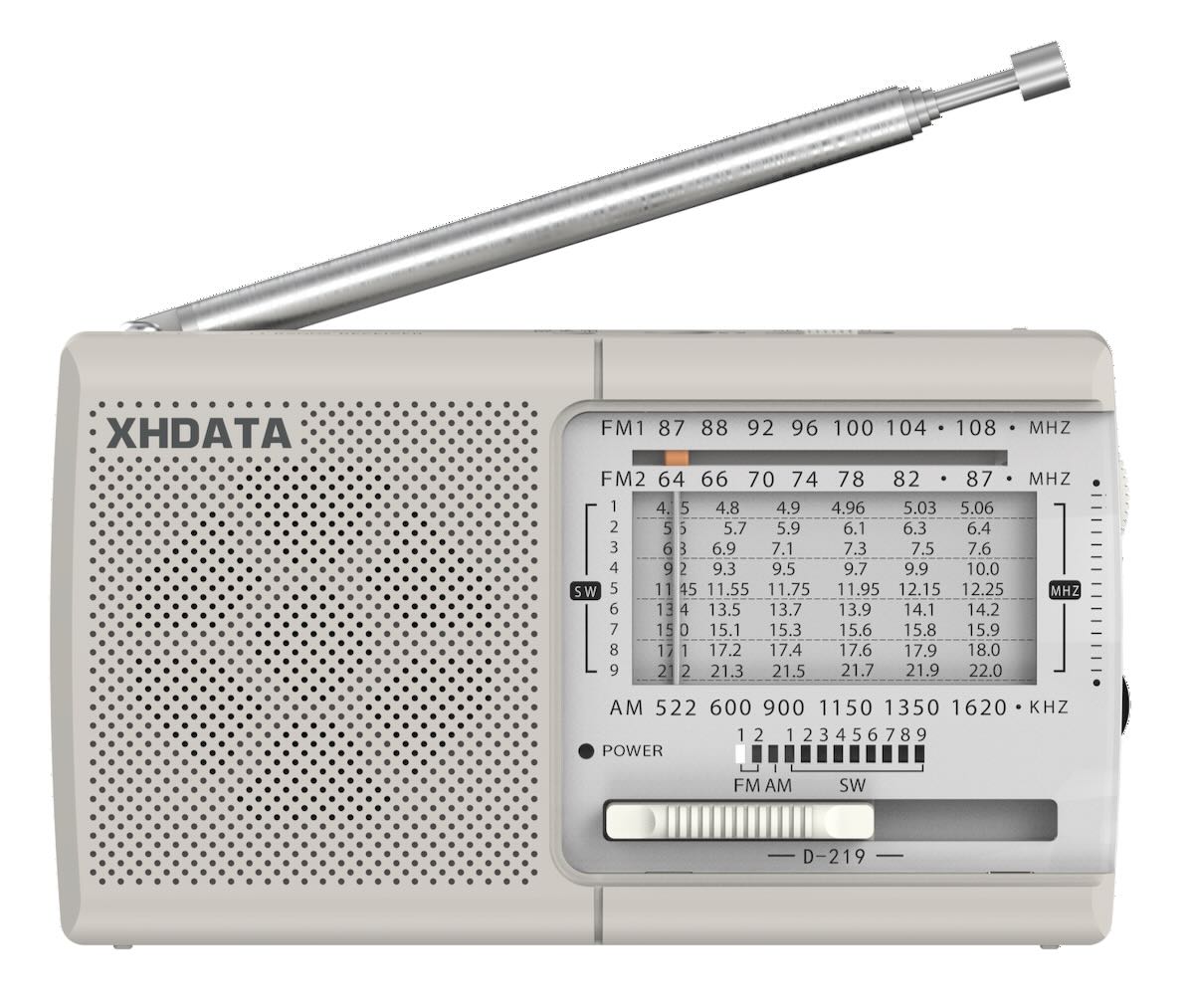 But in the past few days, XHDATA has introduced two new finishes on its website: malachite green and grayish white—still under €9 (excluding shipping). Stocks appear to be limited.
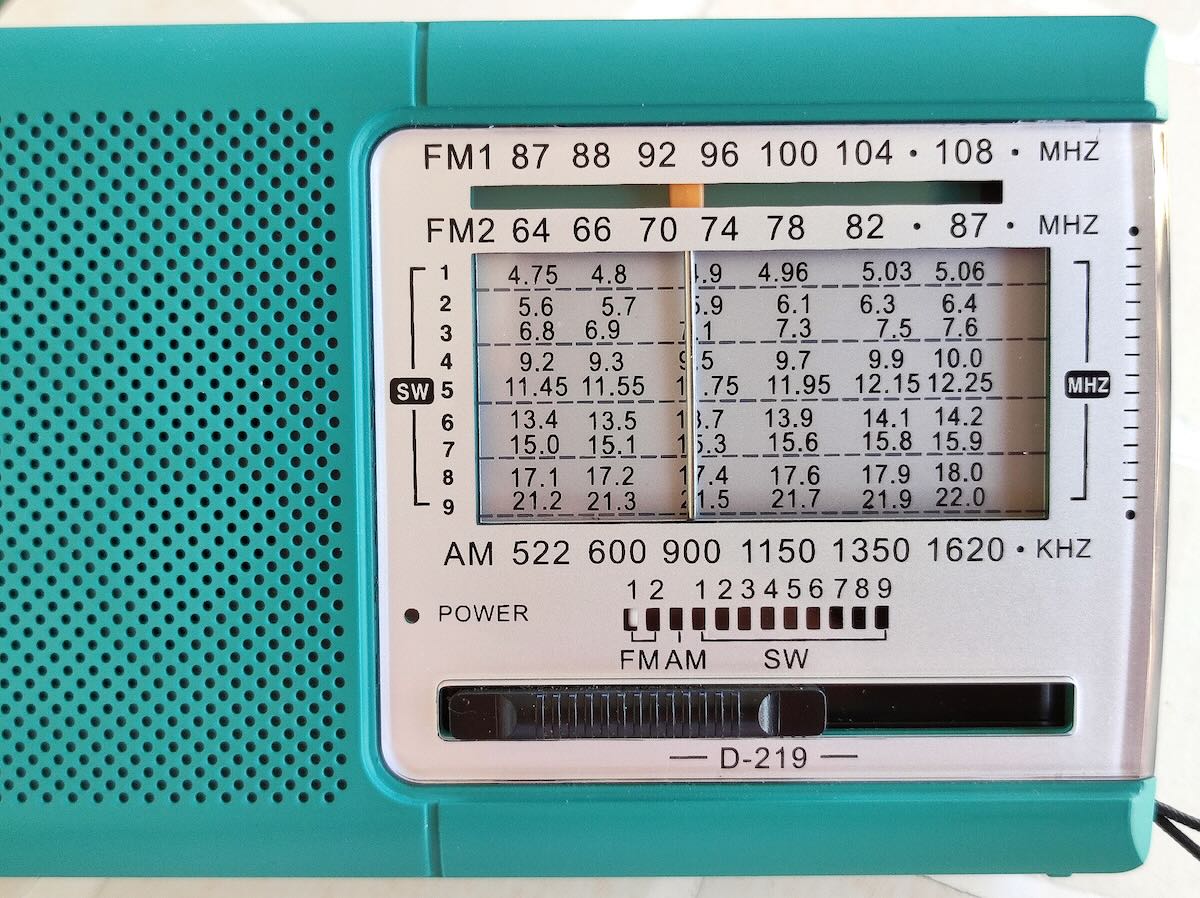
Personally, I was immediately drawn to the Malachite Green version.
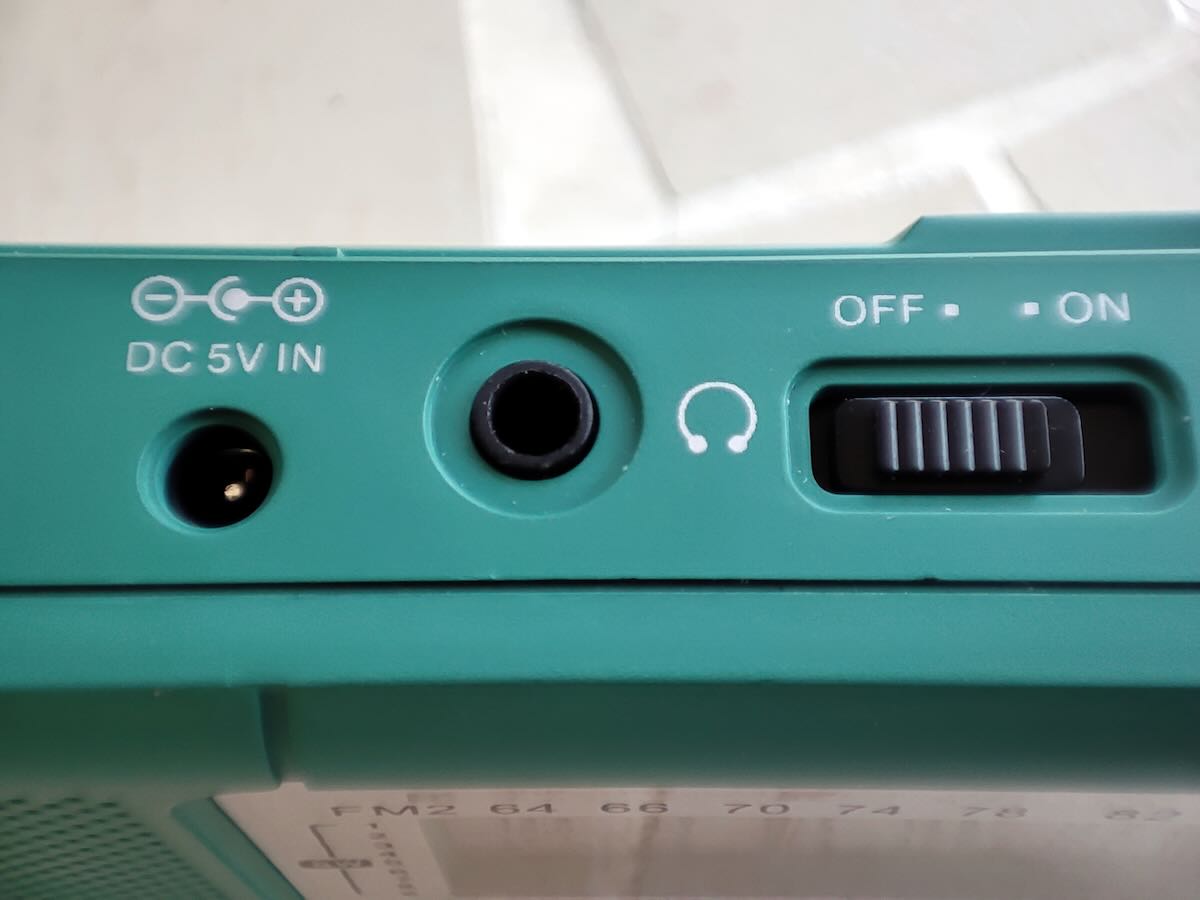
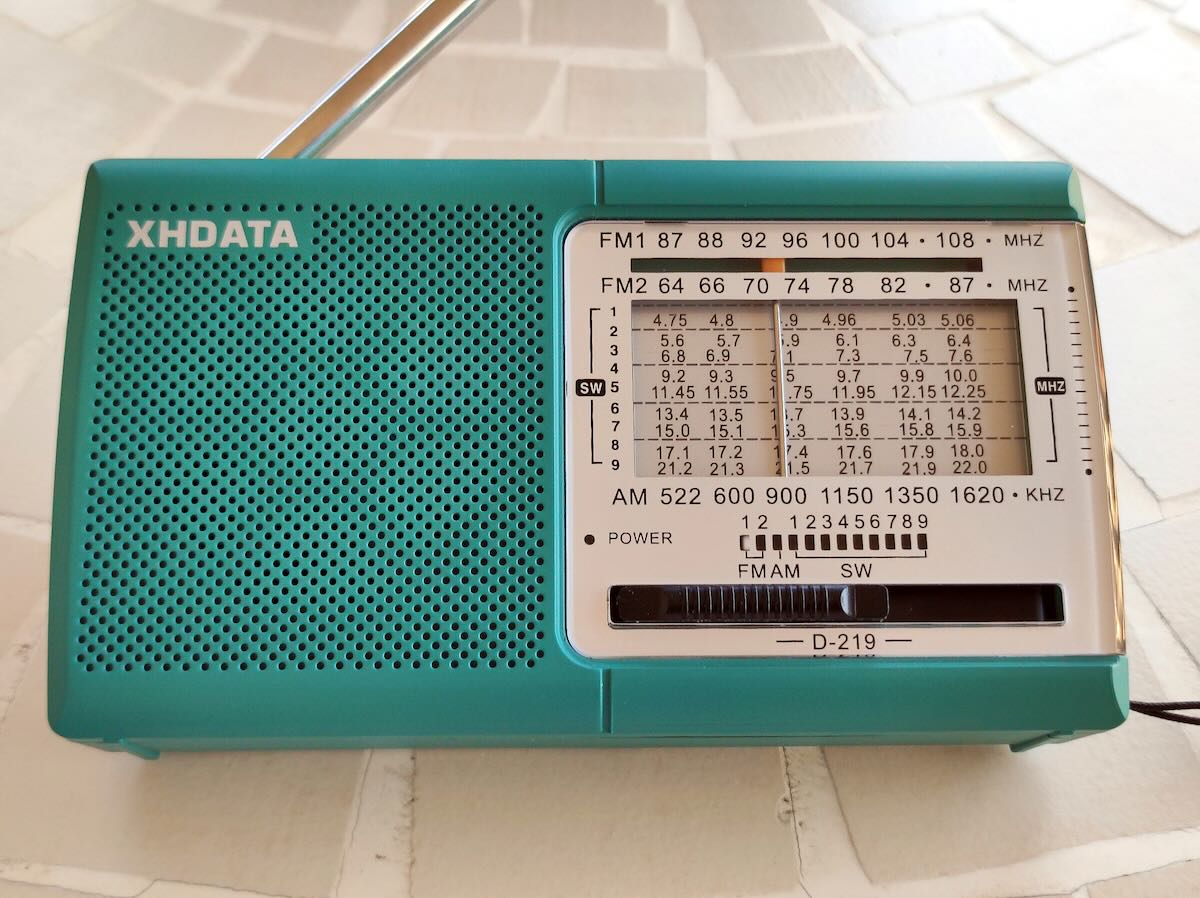 Its matte finish looks elegant and really highlights the receiver’s craftsmanship. Honestly, I think it’s beautiful! The green gives it a distinctive character and elevates the quality of the finish.
Elegance, performance, and price all come together to make the D-219 an excellent way to discover—or rediscover—shortwave across its nine bands.
With the D-219 ‘Malachite Green,’ radio isn’t just something you hear—it’s something that catches your eye.
As of mid December 2025, a model with 10 KHz steps for the Mediumwave Broadcast Band, and the new color scheme, is available in the US for around $12. Just purchased one from Amazon.
…new model 1k with 1kHz steps is now available. Old version schows 511-1620 kHz and new 1k version shows 520-1720 kHz 🙂
I’m a pretty novice SW user and ended I picked up a D-219 just for the simplicity of just tuning in easily while camping. This analog tuning just is so easy to use, even while laying in my camp cot (I don’t sleep on the unless I have to) in the dark is a very simple easy process not needing an eye on the tuning screen. Beside I camped out last weekend in -3c temperature and pretty sure other LCD tuning screen would crap out at that temp.
I would have hoped that XHDATA used the refresh as an opportunity to change the MW steps to 1KHz as they did on the D-220 variants. Frankly that is the only advantage I see in the D-220, which is terribly frustrating to tune because of the lack of SW bandspread displays.
Mike,
The International Telecommunications Union which is part of the United Nations have World Radio Conferences to agree frequency allocations from ‘DC to daylight’
In 1975 with pressure for mare medium frequency channels for more broadcasters it was agreed to use a 9 kHz frequency raster eg …702, 720, 729 kHz… Unfortunately North & South America decided to not reduce the highest audio frequency by 1 kHz so instead kept the 10 kHz raster but used the rest 1600 – 1700 kHz instead.
So there is absolutely no need for a 1KHz step which will take much longer to scan the band.
In the High Frequency band there is a worldwide agreement for a 5 kHz raster up to 30 MHz for broadcasters.
Remember for AM the signal bandwidth is twice the raster hence overlaps, where as SSB is not
FWIW the D-220 DSP is claimed to use 1KHz increments (not bandwidth, obviously). Independent reviewers (and my own experience with this model) seem to confirm this when compared side-by-side to the D-219. I would also be skeptical about the mechanics of the tuning dial rotation in this case, but nothing seems odd about it.
https://www.youtube.com/watch?v=e7G3GzaC7jc
Mike
I had one of their cheapo radios and it petered out after a few months! And as a company they also don’t take any personal responsibility for products that are defective or with missing parts! The only thing they’ve made worth a darn is the D808! As a company, they’re customer service is Non-Existant!
9kw? Analog tuning!!!? Seems like the 9 vs 10 would not be an issue if it was truly analog tuing, unless the analog tuning is faked for only appearances
Ken_C, this is a software designed radio which uses a digital signal processor. This has removed all the coils and capacitors used for tuning and because the signal is converted from its incoming frequency to audio in one conversion all adjacent channel interference becomes supersonic and inaudible. There is no Intermediate Frequency filter so sound is a little clearer by retaining more higher pitched sounds This has drastically reduced the price as well as improving performance
The chip in this radio uses a variable capacity diode instead of a variable plate capacitor. The oscillator is a fixed crystal of a much higher frequency, to provide a frequency which is exactly the desired frequency. My criticism of this design is they should have selected a frequency which has highest common factor which is divisible by 9 or 10. Then they could have a software switch to select not only 5 kHz but also 9 kHz and 10 kHz/. This will increase power consumption. An alternative is to include a crystal for 10, 5 kHz and another for 9 kHz. Instead they have 2 models.
On FM there is an agreement of a 200 kHz, fortunately it is the signal bandwidth. DRM will insert two 100 kHz wide channels in place of a 200 kHz FM channels. HDradio® uses a pair of FM channels.
“On FM there is an agreement of a 200 kHz, fortunately it is the signal bandwidth. DRM will insert two 100 kHz wide channels in place of a 200 kHz FM channels. HDradio® uses a pair of FM channels”
Mangosman, what do you mean by “an agreement of a 200kHz??”
whilst 200kHz (0.2MHz) steps (.1/.3/.5/.7/.9) are used for the FM band in some parts of the world such as America, in most of the world 100kHz (0.1MHz) steps are needed on FM , even though the deviation is the same.
What DRM and HD radio does is irrelevant on this type of radio (analogue reception only).
“An alternative is to include a crystal for 10, 5 kHz and another for 9 kHz”
I am not aware of DSP receivers using different crystals for different frequency steps. The ones I have seen usually work off a single crystal of 32.768kHz (common clock crystal) and different AM channel steps can be selected on the chip by the user, if the radio manufacturer allows this.
Great article. Bummer if they are only available in 9K MW.
Tom
It appears that, according to the XHDATA website, that the special colors are available only in the 9K model.