Author Archives: Robert Gulley

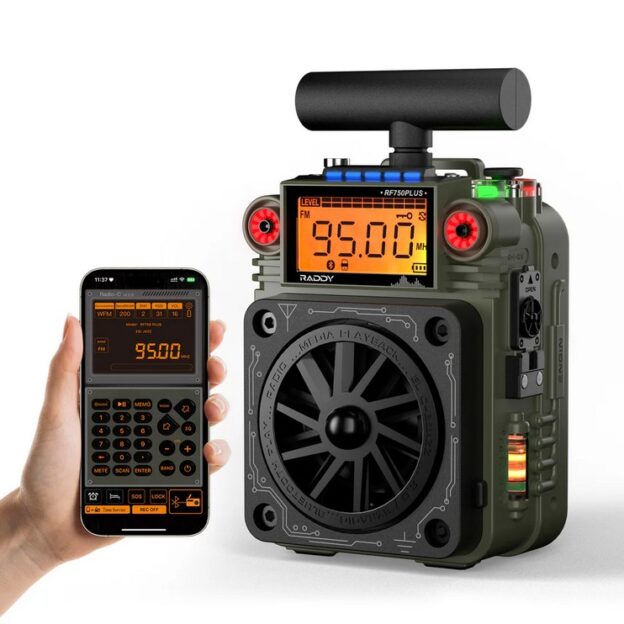
Raddy RF750Plus: A Miniature Wonder!


Robert K4PKM

Raddy has come out with what I call a miniature wonder – a feature-rich radio that really does fit in the palm of your hand!

The Raddy RF750Plus is a very small radio. It measures roughly 2”x3”x1-1/2” without either antenna extended/attached. In fact, one of the reasons I agreed to review yet another shortwave radio from Raddy was because this was so small. Frankly, I was curious whether this radio would have real usability, or would it just be a cute little “toy” radio. Well, it definitely falls into the “real usability” category for those who want to take a small radio along with them wherever they go, even in their shirt pocket!
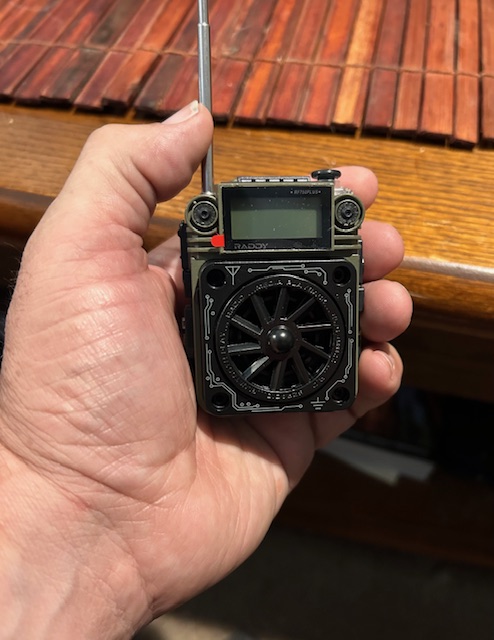
Truly hand-held!

This is truly a hand-holdable radio!
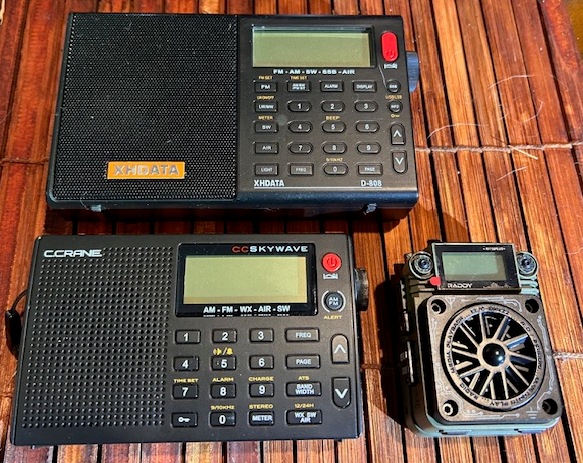
Quite the size difference!

Quite the size difference!

Okay, enough about the size, for now. This radio has most of the typical features we have come to expect from small portable radios these days. Rather than repeat what features it has myself, here is the main information from Raddy’s website:

RF750 PLUS Brings You:

Multi-band and 3-in-1 Receiver: BT speaker, SD card music player.

APP Control.

Enhanced AM Reception with an extra T-type antenna.

User-friendly features like USB-C charging & headset port, a replaceable lithium battery, and SOS alarm

Specifications
Reception Range:
FM: 64.0-108MHz
AM: 520-1710KHz
SW: 4.75-21.85MHz
WB: 162.40-162.55MHz(Only US)
Receiving sensitivity: FM/WB: ?18dB / AM: ?86dB / SW: ?30dB
Preset Stations: Total 297
Quiescent current: ?50uA
Max current: ?800mA
Speaker: 4? 3W
Bluetooth version: Ver 5.2
Min working voltage: 3.4V
External input voltage: DC5V
Lithium battery: 3.7V
TF card playback Format: MP3/WMA/WAV /APE/FLAC
TF card capacity: ?256GB
Battery: BL5C 3.7V 1000mAh
Earphone output: Type-C
Dimension: 2.2×3.0x1.7 inches / 75x56x44 mm
Weight: 7.9oz / 226g

What’s in the box?
1 x RF750 PLUS Shortwave Radio
1 x T-Type Antenna
1 x Type-C Charging Cable
1 x Type-C to 3.5mm Adapter
1 x Strap
1 x Carabiner
1 x User Manual

I have tested the app on an iPhone and it worked right out of the box, using the same app as other Raddy radios, and I have to admit, it’s the way to go if the radio is stationary. It is easy to tune through the app keyboard, as well as change various settings.

Several nice features deserve special mention with the radio. One is its heft. This is not a lightweight radio compared to its size. It will easily stand on its own without blowing over in reasonable conditions. As one might expect, the weakest point is the antenna – one must be aware of its limitations. It is telescopic, but not rotatable. In reaching for the radio, it stands quite a bit taller than the radio itself, so you should be careful to look at what you are grabbing!

A second nice feature is the included external AM antenna which does rotate, and which does a nice job of pulling in signals. You may already have similar, larger external antennas which will also work with the radio, but the one included performs well.

A third feature I find well-thought out are the covers for the various jacks, such as the external antenna cover, the USB-C cover, and the TF card cover. These open easily, but also snap into place to provide a good level of dust and moisture control.

Finally, the included cables for charging and for adapting a set of earphones/headphones are a welcome touch at this price point.
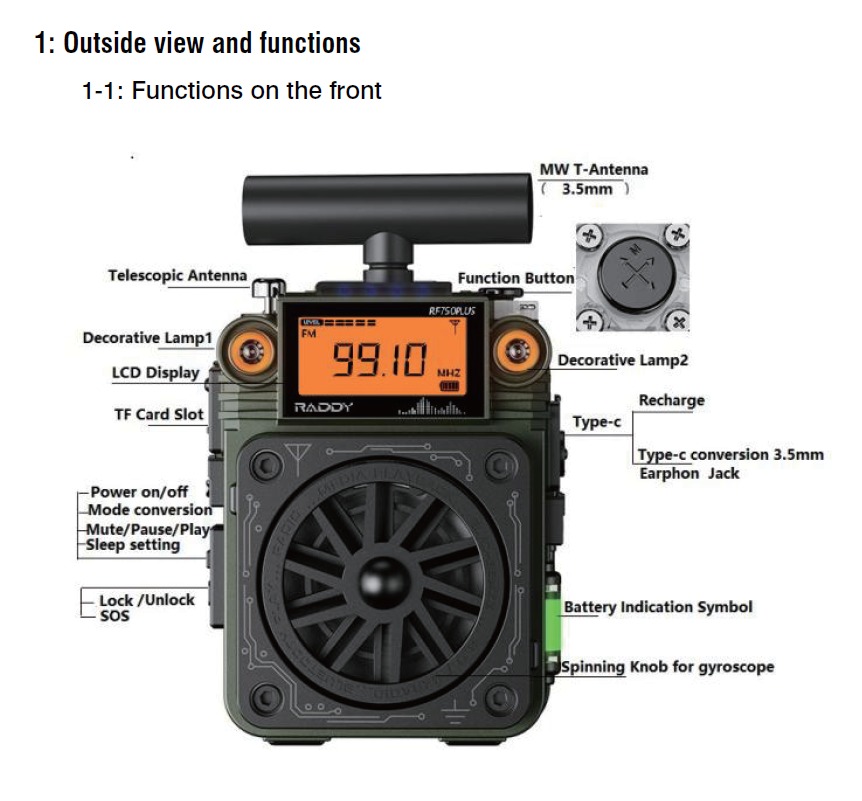
You will definitely want to read the manual to operate this radio!

Performance

Audio quality is good, with full sound despite the speaker being housed in a small unit. FM sounds excellent (though not in stereo through the earphone jack/adapter, but does come out of both sides), as does AM with strong signals. Naturally weaker AM signals are typical of any radio, but there is some adjustment possible with the equalizer settings available should you want to experiment.

Shortwave reception is adequate given the length of the antenna, but not a powerhouse, which is to be expected for a radio in this class. Stronger stations come in fine with good audio, but this is not a radio with which you will go DX hunting on the SW bands. Like many small portable radios, this is primarily an AM/FM/Weather radio, with shortwave thrown in as a bonus.

As for the NOAA weather stations, I receive only one of the stations at my home, while other portables may receive up to three. Of course, location is the primary factor here, so your mileage may vary. The one it receives is very strong, and a second station is very faint – but that might also be due to being inside when testing.

Pros and Cons

Pros

  • Small size (see also Cons)
  • Solid case with good weight
  • Good sound
  • 2-speed scanning – hold the joystick to start tuning and then release, or hold it a bit longer and get much faster tuning, great for shortwave bands
  • Excellent app for iPhone (and likely excellent for Android)
  • Dust/Moisture covers
  • Lots of lights 🙂
  • Included cables and replaceable battery
  • External antenna included
  • Includes a bubble level – who knows when that might come in handy?!
  • SOS feature
  • Price (currently $34.99 on Raddy site during anniversary sale)

Cons

  • Small size (see also Pros) – large hands may have difficulty switching modes with the power button
  • Power button requires quick double press to change modes – at first I thought it was not working until I moved more quickly.
  • Multi-function joystick has a lot of tasks depending on mode – being small might make this more difficult to operate or achieve desired action. I did adjust pretty quickly to this.
  • Antenna is flimsy, but if handled properly still should last without issue.

Conclusions

This is a nice little radio which takes up very little space, can be carried in a shirt pocket, and has a lot of features packed inside its solid frame. The price is very reasonable for what it offers, and the ability to use an app to control it is a great feature given its small footprint. Frankly, I cannot see how one could make a smaller radio with all this functionality, except perhaps in a James Bond movie! We do live in rather amazing times! Cheers!

Available at Raddy ($34.99 USD at time of writing; $41.99 regularly)
Available at Amazon


A New Solar Cycle Wrinkle

An interesting article caught my attention on spaceweather.com concerning new research on what is called the Gleissberg Cycle. Interested? Read on!

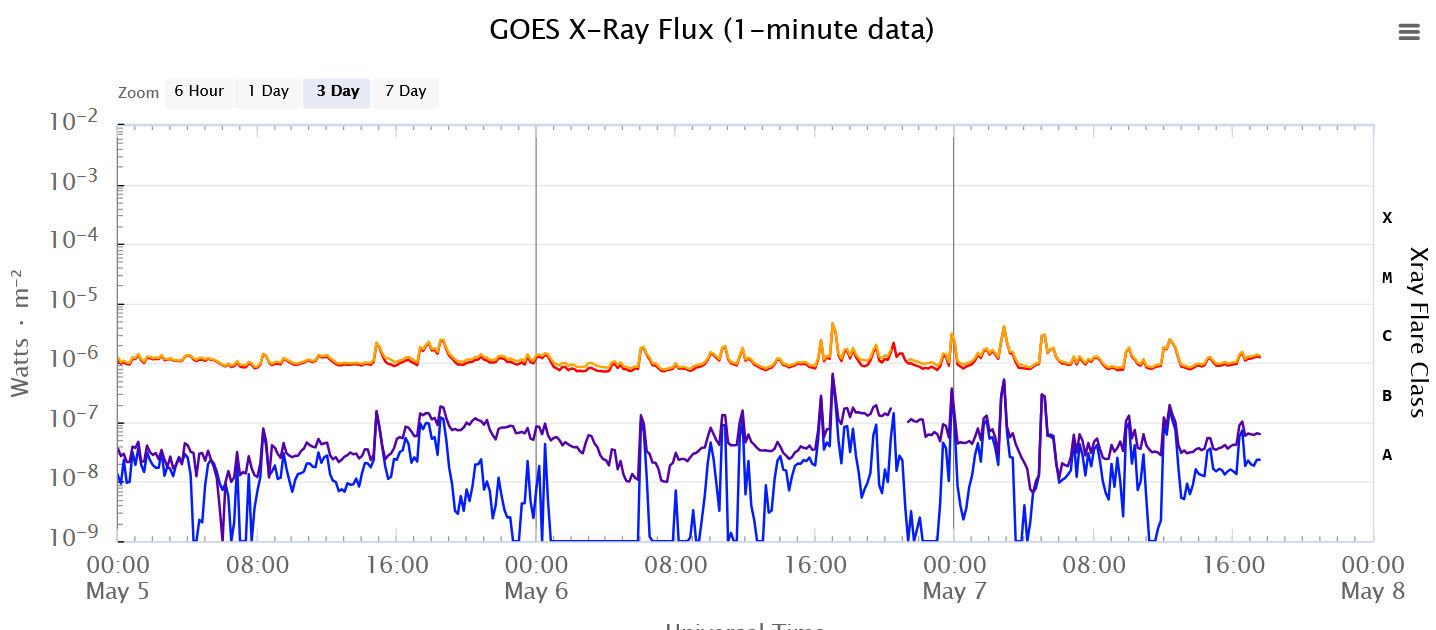
THE COUNTER-INTUITIVE QUIET CONTINUES: Big sunspots usually produce big solar flares. Giant sunspot 4079 is an exception to the rule. All week long, it has been strangely quiet, producing only a handful of puny C-class solar flares. If the quiet continues for a few more days, the behemoth sunspot will rotate off the sun’s western limb without having caused any significant space weather. Solar flare alerts: SMS Text

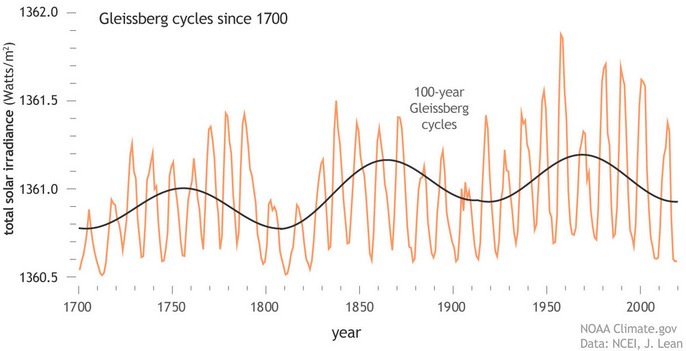
THE CENTENNIAL GLEISSBERG CYCLE: If you’ve been enjoying the auroras of Solar Cycle 25, we’ve got good news. The next few solar cycles could be even more intense–the result of a little-known phenomenon called the “Centennial Gleissberg Cycle.”

100 year Solar Cycle

You’ve probably heard of the 11-year sunspot cycle. The Gleissberg Cycle is a slower modulation, which suppresses sunspot numbers every 80 to 100 years. For the past ~15 years, the sun has been near a low point in this cycle, but this is about to change.

New research published in the journal Space Weather suggests that the Gleissberg Cycle is waking up again. If this is true, solar cycles for the next 50 years could become increasingly intense.

“We have been looking at protons in the South Atlantic Anomaly,” explains the paper’s lead author Kalvyn Adams, an astrophysics student at the University of Colorado. “These are particles from the sun that come unusually close to Earth because our planet’s magnetic shield is weak over the south Atlantic Ocean.”


Above: The South Atlantic Anomaly (blue) is a weak spot in Earth’s magnetic field where particles from the sun can come relatively close to Earth [more]

For more details, go to spaceweather.com


Navigation Map and Compass

Three Useful References in PDF Format

Guest Post by Robert Gulley K4PKM

I wanted to pass along three useful references I came across from several posts in the Utility DXers Forum posted by Steve Handler.

The first is:

Radio Aids to Marine Navigation 2025 (Atlantic, St. Lawrence, Great Lakes, Lake Winnipeg, Arctic and Pacific

(Both English and French versions are available, published by the Canadian Coast Guard)

The second is:

WORLDWIDE MARINE RADIOFACSIMILE BROADCAST SCHEDULES published by the U.S. DEPARTMENT OF COMMERCE  (WEFAX Weather Broadcasts, March 2025 edition)

The Third is:

US DOD / National Geospatial Agency Flight Information Handbook  (March 2018, 273 pages) containing frequencies and other interesting info

I suspect many SWLing readers are also on the Utility DXers Forum, but for those who may not be, or who might have missed these posts, I hope you find them useful!

Cheers! Robert K4PKM

Solar Ham Logo

Solar Ham Website News

A website I have used (and supported) regularly for the last 18 years is currently off-line, taking, according to the site’s founder, “an extended break” for the foreseeable future. The SolarHam.com site, operated by Kevin Gibeau, VE3EN, has been an amazing resource for solar weather news for amateur radio folks, astronomers, and, I suspect, hobbyists and professionals from many fields.

I, like many others, will miss the site, and wish Kevin well, and look for his (hopefully soon!) return.

Here is the note posted today on the Solar Ham Space Weather Website:

After 19 years SolarHam will be taking an extended break. The current world events and life in general has made me want to refocus my attention on what matters most, my daughter, my family and my health. Thank you all for the support over the past two decades, I really cannot thank you enough. Space Weather will always remain a passion of mine, but as of right now my heart is not fully committed and that is not fair to you my followers. I hope to return once I feel well enough. Sorry for the sudden departure and I hope you understand.
Kevin (SolarHam).

Robert, K4PKM

Radioddity CBL-561

The Radioddity CBL-561

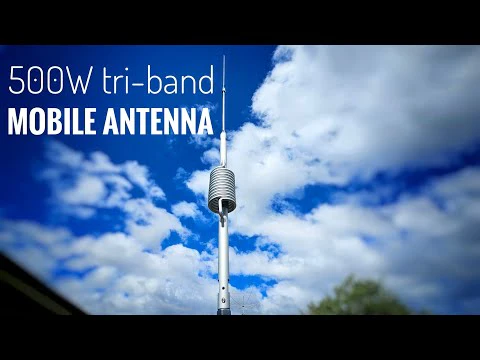
The Radioddity CBL-561 is an antenna designed to work with the Radioddity QT80 10M radio (of course it can work with other radios as well), covering a range of 25 to 30 MHz. It is an extremely solid antenna, with an extensible section easily adjustable for different bands and frequencies. Frankly, I was quite impressed with how well designed the antenna is, and I suspect it could withstand just about any knocks or elements while mounted to a car or other metallic platform suitable for antennas.

There are various mounting methods available as typical for mobile antennas, but given the size, weight, and rigidity of the antenna, either a solid clamping-type mount, or one of the triangular/delta type mounts like the Radioddity M916 with its broader base area, would be my recommendation.

Radioddity M916

This type of mount provides more surface area to hold the antenna in place

The antenna has a PL-259 connector, which requires your mount to have a S0-239 female connection, or adapted to a different size mount/coax connection. Again, I would recommend keeping connections as straight forward as possible, as adapters can add line loss, but more importantly, weaken the connection chain.

From the Manufacturer:

Compatible with:
10 Meter Radio
Radioddity QT40, Radioddity QT60, Radioddity QT80, and all other brand’s 10 meter radios.

CB Radio
Radioddity CS-47, Radioddity CB-27 Pro, Radioddity CB-500, Radioddity CB-900 Pro, and all other brand’s CB radios.

Specifications:
Frequency Band: 25-30MHz
SWR: ~1.3:1
Maximum Power: 500W (PEP)
Connector: PL-259
Whip Length: Adjustable
Material: Aluminum Alloy

Works with
1. Radioddity M916 Antenna Base (recommended)
2. Radioddity RA-M5 Antenna Base

What’s in the box?
1 x The bottom section of the antenna (fixed length of 44.5 cm/17.5 in)
1 x The middle section of the antenna (fixed length of 32 cm/12.6 in)
1 x The top section of the antenna (variable active length between 26.8 cm/10.6 in and 72 cm/28.3 in)
1 x 2mm Allen-key

———————————

Adjusting the antenna

Adjusting the antenna is very simple. The provided Allen key is all that is needed. The top section of the antenna is adjustable between ~10.5″ and ~28″, based on the frequencies you wish to cover. If you plan on using the antenna for different bands, you might want to mark the antenna with some paint after determining the best height for each band, so as to quickly make the adjustments.

The chart below gives suggested starting points for various frequencies. As each mounting situation is different, you will want to start with these numbers and then make adjustments as needed. For those who may not have done this type of adjustment before, I recommend making very small changes until you get a feel for how much difference an adjustment makes, otherwise you may end up “chasing your tail” as the saying goes.

Length Chart based on frequency

This Length Chart based on frequency can be used as a starting point

You will want some form of an SWR meter to check the antenna match. If your radio has one built-in, that may be sufficient for getting it close. If you have access to a stand-alone meter, your readings will likely be more precise. I used an MFJ-269c for my readings, but any basic SWR meter capable of covering the ranges you need will be sufficient.

Another useful suggestion is to try different placements to see where you get the best readings. If mounting to an automobile trunk lid, for example, you might be surprised to realize you often only have two connection points to the trunk and the rest of the car body, namely the trunk lid hinges (as most trunks have rubber insulation around the seam to prevent water leakage).

If you do a search on the Internet for antenna grounding on automobiles, you can find out some interesting ways to increase the effectiveness of any antenna mounted to an automobile which can make use of a much greater surface area. Some solutions are quite clever!!

Conclusion

This is a great time to be working the upper amateur bands, and by extension, the CB band. This antenna should serve you well for those tasks, and should last a good long time! I doubt you could find a more solidly built antenna.

(For my review of the Radioddity QT80 10-meter radio click here.)

73, Robert K4PKM

Sunspots

A Second Solar Max Peak?


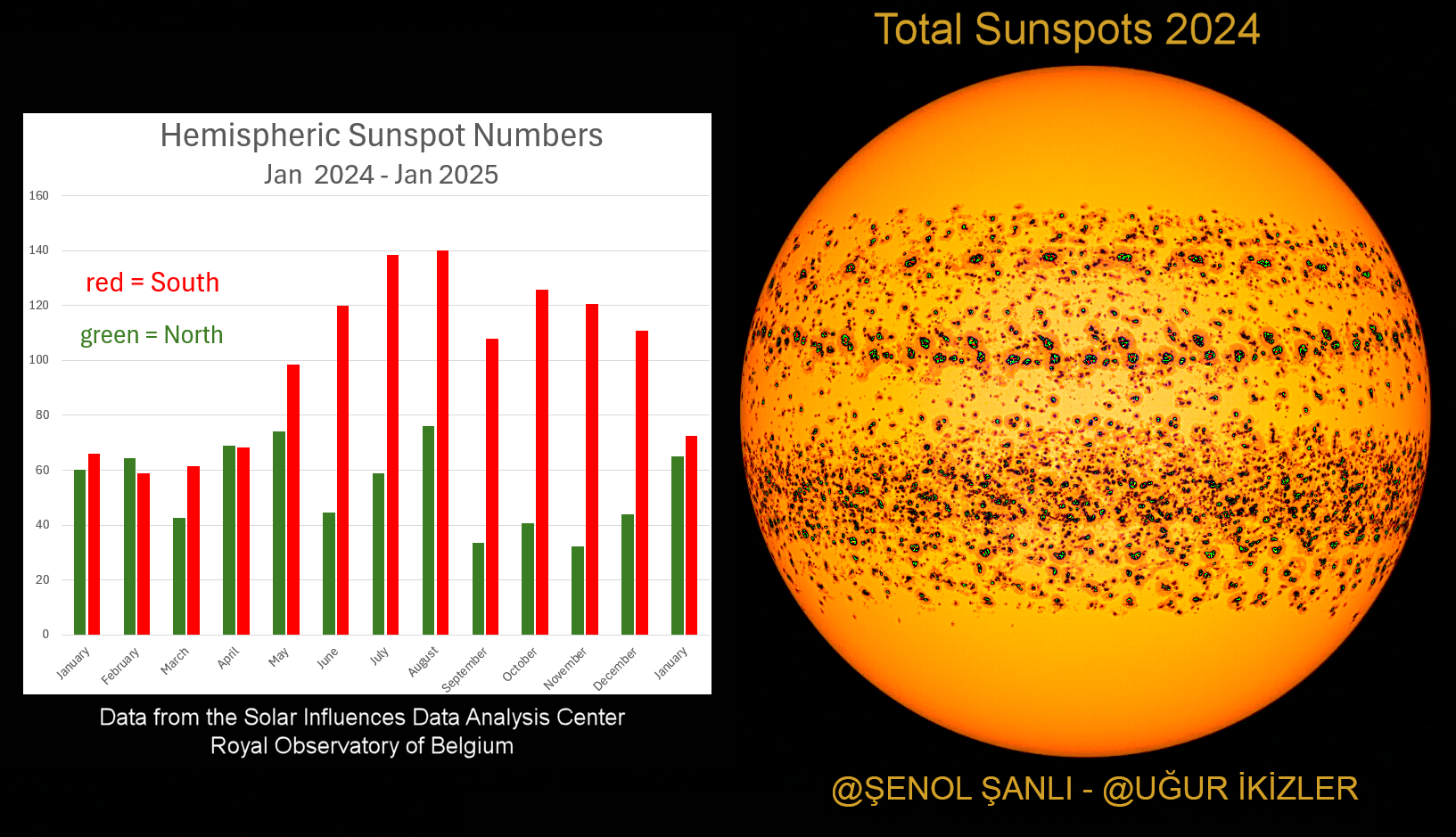
SOLAR MAX — IS A SECOND PEAK COMING? Last October, NOAA and NASA announced that Solar Max has arrived. Only half the sun got the memo. The majority of solar activity has been happening in just one of the sun’s hemispheres–the south. The solar superstorm of May 10, 2024, for instance, was caused by a monster southern sunspot.

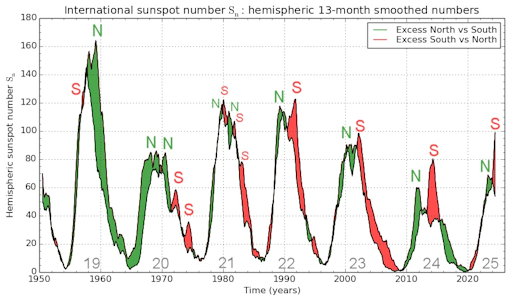
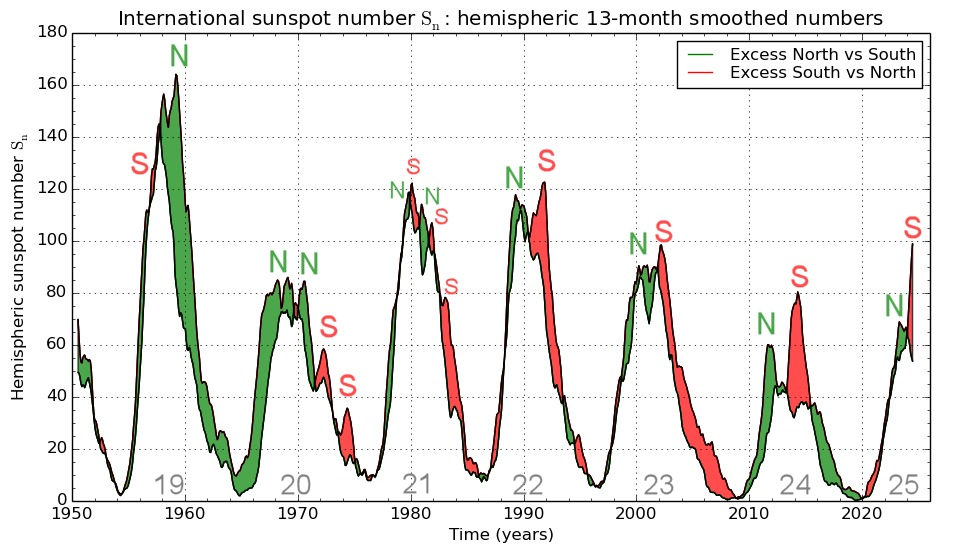
It makes you wonder, is the other half of Solar Max still coming? This plot of hemispheric sunspot numbers from SILSO provides some context:

Here we see all seven solar cycles of the Space Age, punctuated by current Solar Cycle 25 on the far right. The most recent cycles are double peaked, with northern sunspots (green) and southern sunspots (red) reaching their own Solar Max ~two years apart. This isn’t big news. Researchers have long known that the two hemispheres of the sun are slightly out of sync. The north vs. south delay is called the “Gnevyshev gap.”

This composite image of last year’s sunspots shows how dominant the southern hemisphere has been:

For forecasters of the solar cycle, this raises an interesting possibility: Maybe the northern peak is still coming. Indeed, there are signs in February 2025 that the pendulum is swinging. This month’s sunspots have been more evenly distributed between the two hemispheres, a sign that activity may be shifting north.

On the other hand, the northern peak might have already occured [sic]. Take another look at the first plot. There is a puny northern peak near the beginning of Solar Cycle 25. Perhaps that was it. (Indeed, that would jibe with the north-first, south-second order of recent double peaks.)

This discussion focuses attention on the north-south balance of sunspots. A northern shift in the months ahead could herald a second peak and another year or two of excellent auroras before Solar Cycle 25 finally peters out. Stay tuned!

Published by Spaceweather.com

Posted by Robert Gulley, K4PKM

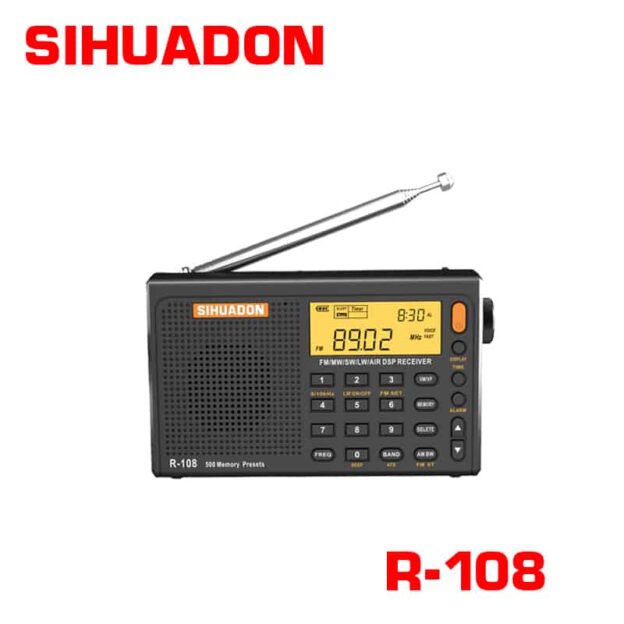
SIHUADON R-108

SIHUADON R-108 Bonus Coupon Extended

Hi Folks,

Just a quick update on the additional 20% coupon offered by XHDATA on the SIHUADON R-108 – it has been extended until the 13th of February 2025. I received a note this evening and wanted to share the news immediately. Here are the links to the American Amazon listings for the Black or Gray versions:

“I wanted to share some exciting news regarding our recent collaboration on the SIHUADON R108 promotion. Due to the enthusiastic support from our customers, we have decided to extend the promotion period.

We’d like to provide you with a stackable 20% discount code.
Here are the exclusive discount codes:

  • R108 (Black & Gray):  20R108forSWL

Effective time:

 From 2025-2-6 To 2025-2-13  11:59?Pacific Standard Time?

Product links:

———————————————————————————
As a reminder, this coupon is in addition to the 10% coupon already on Amazon, making the radio ~$45 (if your state requires tax) or less.
Thanks to XHDATA for extending the extra coupon deadline available only to SWLing Blog readers!
Update by Robert Gulley K4PKM