Shortwave listening and everything radio including reviews, broadcasting, ham radio, field operation, DXing, maker kits, travel, emergency gear, events, and more
Many thanks to SWLing Post contributor, Ron, who reminds us that today is Class D CB radio’s 60th anniversary. From Wikipedia:
On September 11, 1958 the Class D CB service was created on 27 MHz, and this band became what is popularly known today as “Citizens Band”. There were only 23 channels at the time; the first 22 were taken from the former amateur radio service 11-meter band, and channel 23 was shared with radio-controlled devices. Some hobbyists continue to use the designation “11 meters” to refer to the Citizens Band and adjoining frequencies.
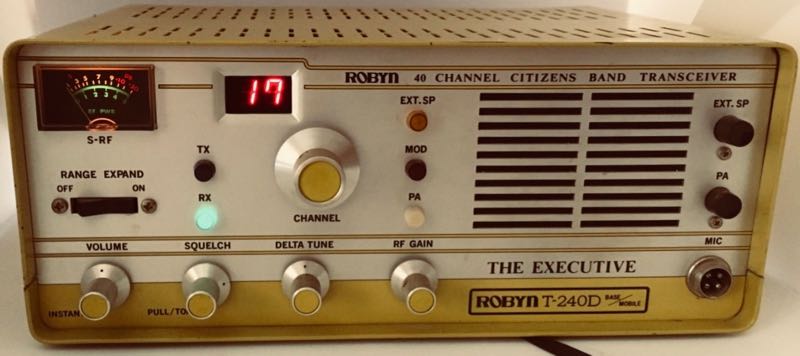
My dad was an avid CBer when I was a kid. He had an FCC-issued license and belonged to a healthy community of CBers in our part of the state. He had a beautiful yellow Robyn T-240D (same as pictured above) as a base station, and a mobile CB installed in every car. After the FCC dropped the licensing requirement, his activity on the bands slowed down although it did give me a chance to hop on.
My best friend (who lived about 1/4 mile away) and I used to keep in constant contact with our 40 channel 5 watt CB walkie talkies. It was great fun.
Of course, it was a treat when I would catch some “skip” and make contact with someone two states away with that same walkie talkie.
Like it or hate it, a lot of radio enthusiasts and ham radio operators cut their teeth on CB radio.
I was certainly one of them.
CB radio is still a pretty dynamic public radio space today. True, it’s a bit of a free-for-all and if you can’t tolerate profanity and “colorful metaphors” then you best stay away.
Jackie Gleason with Audrey Meadows (The Honeymooners)
Many thanks to SWLing Post contributor, Ron, who notes that, “Jackie Gleason was a radio nut during his last years.” He shares the following quote from Gleason’s stepson [source]:
“The majority of his time at home was spent quietly,” he said. “He was a prolific reader. Constantly reading. There was a store called Bookland… Every week or two the owners would come by and drop off a box of books. Jackie just consumed books. He read everything but he was most intrigued with non-fiction. He felt that his life as an actor, as a performer, was all fiction.
“He also listened to the radio. He had a room upstairs that we called the radio room. There were dozens of radios. He listened to airplanes flying over at the airport, long distance radio operators from around the world. He had the passion and curiosity of a child with the experiences of an adult.”
Thanks for sharing that, Ron! I’ve always liked Jackie Gleason and especially those episodes of The Honeymooners.
One of the most stunning sights of the Bay Area is the historic KPH Radio Station, also known as Marine Coast Station KPH. To reach the station, you must first pass through a clerestory tunnel of cypress trees near the Point Reyes National Seashore.[…]
KPH began providing Morse Code telegram service to ships at sea in the early 20th century, broadcasting from the Palace Hotel in San Francisco (where the station gets its PH call sign). The 1906 earthquake forced the station to move until it was eventually acquired by the Radio Corporation of America (RCA) and found its home in Marin County. The Receiving Station is a classic white Art Deco structure built in 1920. The transmitters themselves, in nearby Bolinas, are a similar style.
At the time, there were dozens of stations like KPH around the United States, though KPH was one of the biggest, sometimes referred to as “the wireless giant of the Pacific.” When the station fell into disuse, land contractors were set to demolish it, including its antennas, to build condominiums. But Globe Wireless acquired the site in 1997 and it was left untouched.[…]
Many thanks to SWLing Post contributor, Mike Barraclough, who notes the following update to BBCeng.info:
Skelton, Penrith and the World 1943-1993
A personal account by the author Ken Davies.
Following my request I have been notified that Cumbria County Council, the publishers of this book, would have no objection to it being on bbceng. Unfortunately I have not been able to contact Ken Davies but, given the nature of the publication, I think it is likely that he would approve. He clearly wanted to celebrate the achievements of everyone involved with Skelton transmitting station and his efforts in compiling this record are gratefully acknowledged.
Many thanks to SWLing Post contributor Dan Robinson who shares this fascinating story about what has to be “one of the most important occurrences involving a SWBC station that no longer exists — the Voice of Biafra”:
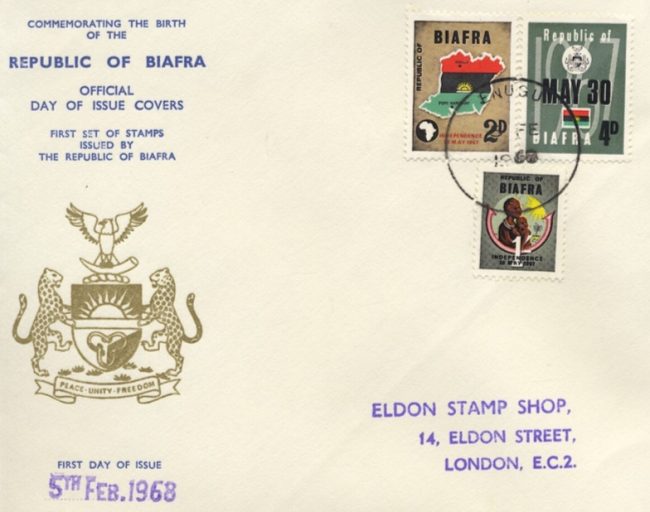
Biafra: One of the rarest of SWBC QSLs
by Dan Robinson
Many SWLing Post readers will no doubt have heard, in recent years, the station Radio Biafra broadcasting via various relay locations on shortwave, and also on the Internet.
Those of us who have been SWLs for many decades remember the history of Biafra and the story of the original Voice of Biafra, which when the station was active on shortwave, before it was closed down by Nigerian government forces.
My own SWLing career began in the late 1960’s, but alas my receivers at the time, and my knowledge of what was on the air were such that I did not hear the transmissions from Biafra (I’m one of those who regrets having missed many former tropical band broadcasters, such as Tonga, Fiji, Gilbert & Ellice Islands (later known as Kiribati) when they used shortwave, and Biafra was on that list as well).
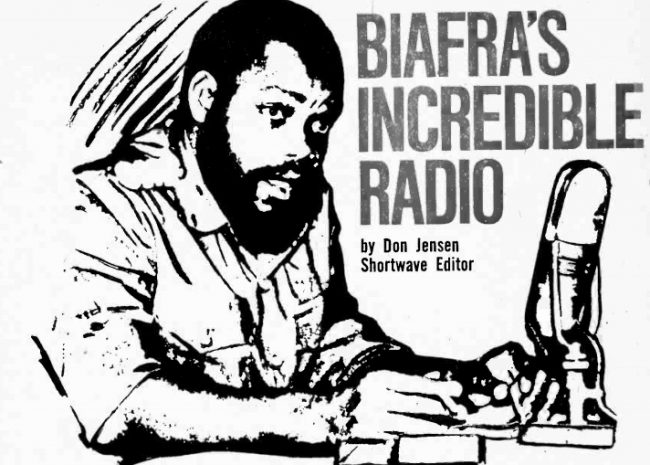
I first learned about the original Radio Biafra from articles written by the late Don Jensen.
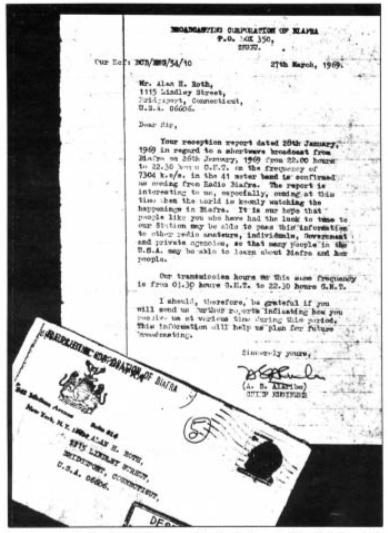
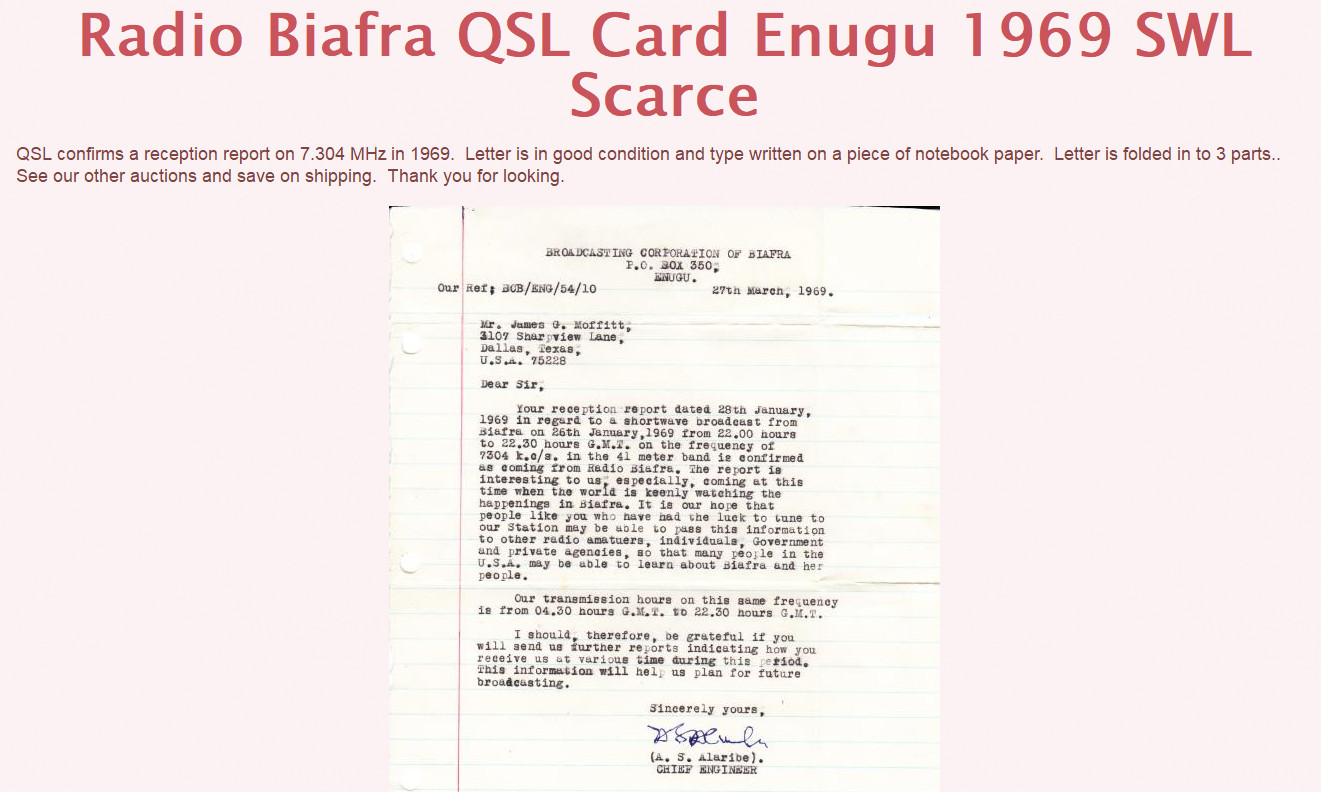
In one of those [download PDF], Don re-printed a copy of one of the most famous SWBC QSLs of all time — a Biafra verification sent to DX’er Alan Roth.
Typed on a piece of notebook paper, it had “Broadcasting Corporation of Biafra, P.O. Box 350, Enugu” at the top. Three paragraphs of text followed, referring to Roth’s reception dated January 28th, 1969 of the station on 7,304 kHz.
Pictured with the letter to Roth was the envelope with “Republic of Biafra” mailed from the Biafra mission on Madison Avenue, in New York City. I will always remember the caption, which said that Roth had taken his reception report to the Biafran delegation office which:
“managed to get it flown into the breakaway nation with other official correspondence, on the emergency airlift. Radio Biafra’s chief engineer wrote the verification letter and returned it via the same route. . . a high contrast photo was required to bring out the typing since a well-born typewriter ribbon had been used.”
For decades this Biafra verification to Roth was indeed considered to be the only one in existence, though because so many SWLs and DX’ers were active through the years, it’s always difficult to state this with certainty.
Those of us who collect historic SWBC QSLs, going through thousands of eBay listings, always keep an eye out for cards and letters and station materials.
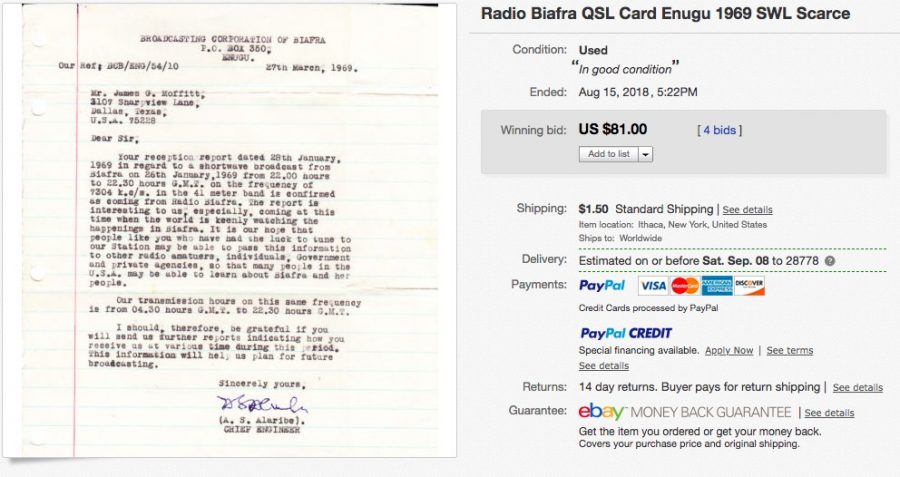
So it was that a few weeks ago, as I was doing my usual due diligence looking through eBay listings, I noticed something unusual. Listed among SWBC QSLs from a seller in Ithaca, New York was something astounding — another Biafra verification letter!
Looking closely, it seemed to be exactly like the famous QSL letter sent to Alan Roth in 1969, with the exact same date, but sent to a James G. Moffitt, in Dallas, Texas.
Days ticked by — I had the QSL on ‘watch’ status on my eBay account, and as I do for any QSL of high value, I also had it on automatic bid status. For this piece of SWBC history, my maximum bid was very high, something I rarely do unless the item has extreme historic or collectors significance.
I envisioned furious bidding for this Biafra verification, but in the end only four bids were recorded. I won the QSL at what I consider to be a very low price ($81) considering its rarity.
As I was preparing to complete this story for SWLing Post, I emailed Jerry who had already written up a comprehensive story about this newly-discovered Biafra verification.
The “Undiscovered QSL of Radio Biafra”, as Jerry calls it in his new article, now resides with me here in Maryland. Unless/until another of its kind emerges somewhere on the QSL market, it has to be considered the only one of its kind in the world.
As for the question of whether this previously “undiscovered” QSL is genuine, Jerry notes the similarities between the Roth QSL letter from 1969, and the one sent to James G. Moffitt, who he notes was active as a DX’er in the days when Radio Biafra existed.
Jerry continues:
“. . .what about the common date, and date-time-frequency details, in the two veries? If the reports had arrived in Biafra at roughly the same time, it would not be unusual for the replies to be prepared on the same day. As to the common date-time-frequency details, perhaps whoever typed the letters thought these references were standard boilerplate rather than information that was to be tailored to the specific listener. Certainly the frequency could be expected to be the same. The common date of reception is harder to explain, but it is not difficult to see how the almost inevitable difference in dates of reception could have been overlooked. QSLers know that verifications can be wrong in their details, misdated, even sent to the wrong listener. As for the different fonts, and for Alan’s letter being light in appearance and Moffitt’s dark, perhaps the typist changed typewriters because one was running out of ink. We will likely never know for sure, but I think the Moffitt verie (which sold on eBay for $81) is genuine. In any event, the story reminds us how, in every endeavor, even shortwave listening, today’s connected world can cast new light on old events and turn longstanding certainties into question marks.”
I am quite happy with having acquired what surely is one of the rarest of SWBC QSLs. It has been added to a collection that, in addition to my own QSLs that I carefully kept over the years, includes other unique cards, including one from ZOE Tristan da Cunha and the station at the former Portuguese Macao.
Amazing story, Dan! It pleases me to no end to know that someone who values our shortwave radio history–and does a proper job archiving it–has acquired this amazing piece. I especially appreciate the time that you and Jerry Berg put into sharing the history of the Voice of Biafra with the shortwave listening and DXing communities. Thank you!
Readers: As Dan suggests, I strongly encourage you to check out Jerry’s website, On The Shortwaves. It’s a deep treasure trove of radio history.
Many thanks to SWLing Post contributor, Dan Robinson, who shares the following recordings and writes:
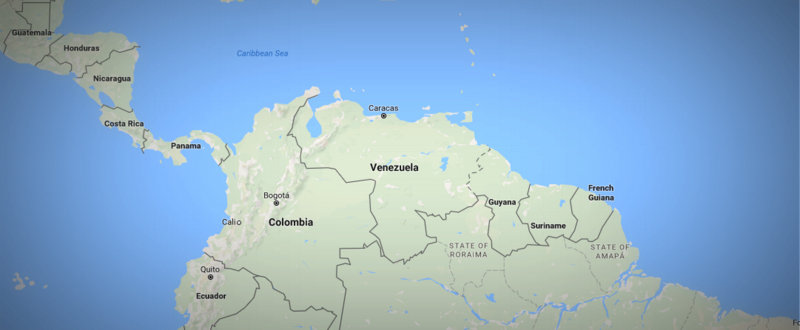
With the news over the past few years, and especially over the last few weeks, of the rapid decline of Venezuela, it’s interesting to recall that there was a day when that country was a powerhouse on the shortwave band, with numerous private radio stations that SWL’s around the world could hear in the 90, 60, 49, 31, and 19 meter bands.
There was also a brief attempt to put Venezuela on the map as an international broadcaster, with Radio Nacional de Venezuela which was audible at good signal levels.
Our thanks to Dan for this 45 minute recording, found in Dan’s archives of recordings, from 2004 when Radio Nacional de Venezuela was on the air in October 2004:
Dan, thank you so much for sharing these excellent off-air recordings! I will also add these to the Shortwave Radio Audio Archive. We look forward to any other recordings you might turn up in your archives.
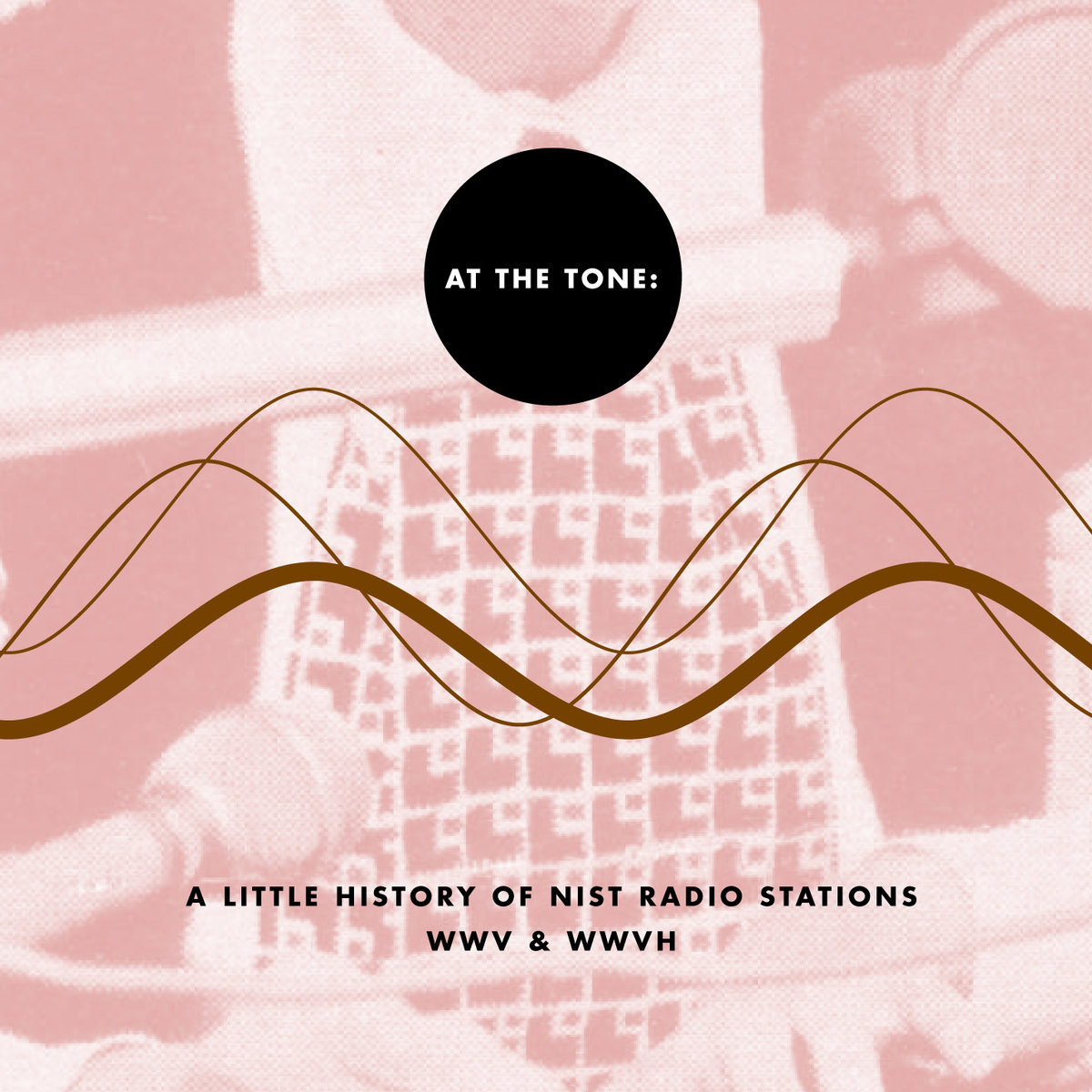
The times have demanded that I kick out a slightly updated version of “At the Tone”, as well as a humble request to your readership. I’ve also shared a long WWVH recording with you for the Archive by special arrangement.
As usual, [At the Tone] is still available in the same old place:
The good news is that anyone who purchased it previously can simply re-download the album in their chosen format from their purchase history page on Bandcamp. They will be instantly treated to the new version with all the additional tracks and liner notes.
The changes aren’t major, but rather in the “nice to have” category:
There’s a new second recording of the 1972 WWV station ID, postdating the big format change in 1971.
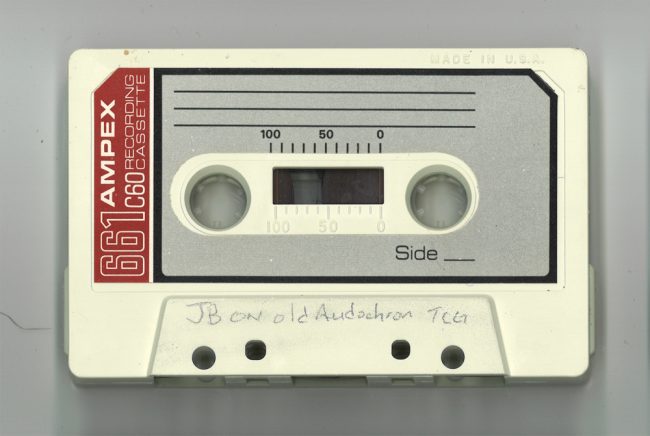
I’ve replaced the very short WWVH 1990 broadcast sample with a longer recording which I finally got around to cleaning up from the box of reels and cassettes sent to me by the station in 2015. I don’t know the exact date, because it came on an undated handwritten cassette labeled “JB on Old Audichron TCG”, but the broadcast format and announcement indicate it’s from the 1980s sometime up until the digital voice replacement in 1991. I attach a scan of the cassette itself.
I’ve done a better job cleaning up the (also WWVH-sourced) 1992 station ID recording from the original master cassette, so I’ve swapped out that track, although it’s otherwise identical in content.
The tape was in pretty bad shape when I received it, so while I’ve done the best I can to bring it up to par, there are some audibly wonky things going on from time to time.
Lastly, since WWV and WWVH are so much on people’s minds right now, I’m putting out one more call for recordings.
In particular, I don’t have good quality versions of the terrible 1991-era digital voices — I’d love to have longer or better tapes of those, especially if they include station IDs.
I also lost my recording of the emergency system test announcement in October 2010, not to be confused with the tests conducted in July of that same year!
Beyond those, though, I’d love to hear of any other recordings folks have dug up recently. There’s been some great stuff shared to the Archive already, but I’m always on the hunt for more to add to “At the Tone.” Contributors will be thanked in the liner notes and will be offered unlimited downloads of the set as they see fit to distribute. And if people have really special WWV recordings which they think might be locked away on on an obsolete or unplayable format, they should also get in touch – WWVH themselves entrusted me with transferring their own archival recordings, so I have some good credit in that department.
I can also vouch for Myke as a trusted custodian of any archived NIST time station recordings you may have.
If you would like to purchase and download At the Tone, please click here. As Myke mentioned, if you’ve already purchased At The Tone, simply login and download the updated version for free.

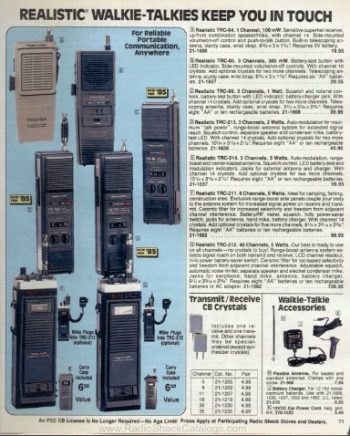 My best friend (who lived about 1/4 mile away) and I used to keep in constant contact with our 40 channel 5 watt CB walkie talkies. It was great fun.