Category Archives: Radio History

Leeds Radio featured in the NY Times

(Source: NY Times)

WHEN an insurance company declared the merchandise at Leeds Radio “not pilferable” last year, it meant that the store’s hundreds of thousands of analog electronic parts — all manufactured before 1968 — were unlikely to be stolen anytime soon.

[…]And yet Leeds, one of the oldest electronics stores in the country, has plenty of paying customers. Located at 68 North Seventh Street in Williamsburg, Brooklyn, two blocks from the Bedford Avenue stop of the L train, it attracts a steady stream of musicians, hi-fi aficionados, ham radio buffs and the kind of people who build Tesla coils in their basements.

The 2,500-square-foot space smells like a vintage record shop (an odor Mr. Matthews describes as equal parts phenolic resin, adhesive, old cardboard and wire insulation) and appears shockingly disorganized. Cubist piles of boxes overflow with switches, capacitors, Bakelite knobs and watt meters. The floor glitters with the glass of shattered vacuum tubes.

Sounds like my radio room, though on a much, much larger scale…the part with piles of boxes, at least. Thanks to the Herculodge for leading me to the NY Times article. We actually posted another article about Leeds Radio when it was featured on WNYC. As both articles mention, radio parts shops like Leeds are certainly on the decline [understatement alert]–luckily, the internet opens up a whole world of mom-and-pop vendors like Leeds, though with a virtual store front, so there is still hope.


Read the full article here.

WWII shortwave messages found on cardboard discs

Photographer: Nigel Mykura. (Creative Commons)

(Source: The Globe and Mail)

The voices of Canadian servicemen fade in and out, at times clear and booming, at others distant and muffled. But for their families, these scratchy, static-laden messages were the sound of hope.

The men were prisoners captured during the Second World War by the Japanese army, which broadcast their messages home over Radio Tokyo. Short-wave radio enthusiasts on the west coast of the United States listened in, making a hobby of recording the messages onto cardboard discs and sending them to the soldiers’ families.

Complete with audio from the original discs, this is an article you should view in full at The Globe and Mail.


Is radio a Canadian invention?

Today is Thanksgiving in Canada–and perhaps we should all thank this fine country for its contribution to radio as we know it today.
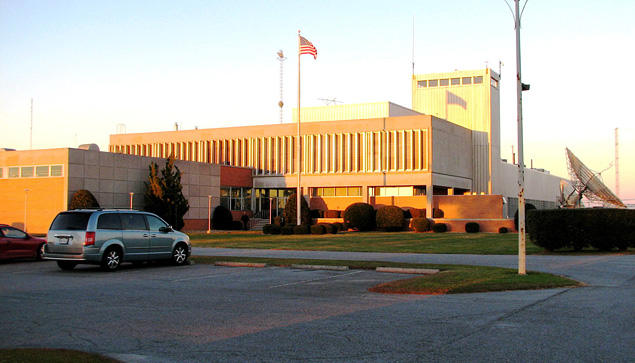
In this short audio documentary, Radio Canada International focuses on the innovative work of Canadian Reginald Aubrey Fessenden. As this piece points out, though Marconi receives recognition as the father of radio, Fessenden played a stronger role in making it possible to hear the human voice over the air.

Click hear to listen to LITTLE KNOWN CANADIAN FACTS: Radio, a Canadian invention at Radio Canada International.

For a full biography of Reginald Aubrey Fessenden, check out the Hammond Museum of Radio‘s website.

Thanks to RCI’s The Link for the tip & Happy Thanksgiving, Canada!

SWLing Book Review–Lisa Spahr’s World War II Radio Heroes

This year I had the pleasure of meeting author Lisa Spahr at the Winter SWLfest in Plymouth Meeting, PA.  There was considerable interest in her new book, World War II Radio Heros, at the event, and after speaking with Ms. Spahr for only a few minutes, I knew I wanted to read it, too.

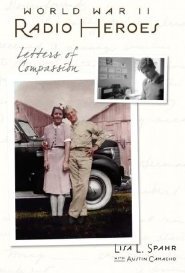
World War II Radio Heroes: Letters of Compassion is the story of Ms. Spahr’s grandfather, Robert Spahr, who was captured by German forces and held as a prisoner of war. After the death of her grandfather, she discovered letters written to her family during the war some sixty years ago, from total strangers, telling her great-grandmother that her son had been captured and was being held as a POW.

In the process of reading through these letters, she discovered a forgotten fraternity of shortwave radio listeners who routinely listened to German propaganda stations in order to hear and pass along news from POWs to their families.

Though one might think that these were condolences–describing that a loved one has been captured and is being held against his will–Spahr demonstrates that such letters (derived from the act of listening to propaganda radio broadcasts) were actually the opposite:  these were messages, she explains, of reassurance, that a loved one is alive, and has not fallen on a battlefield. These propaganda broadcasts inadvertently translated to a form of solace, and the radio listeners knew this.

WWII Radio Heroes is a slim volume, but a wonderful bit of radio history.  I liken it to having a good friend spending the afternoon showing you an album of original letters and photographs that, own their own, tell a heart-warming story. Spahr provides insight into each letter, photograph, and details the curiosity that lead her on this original journey into her family’s and America’s past.

You can purchase WWII Radio Heroes directly from the book’s dedicated website.


Radio Documentary: The Wireless World of Gerry Wells

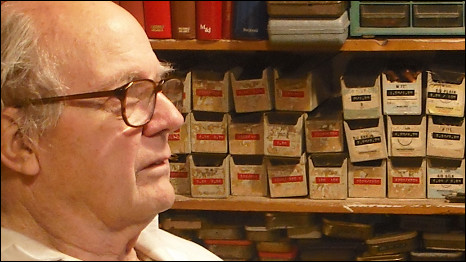
I just discovered (via PRI’s The World Technology Podcast) a 2010 radio documentary about lifelong radio designer and repairman, Gerry Wells.

If you haven’t heard it before, I suggest you drop what you’re doing and give it a listen below. This is the most charming radio doc I’ve ever heard out of the BBC World Service.

For archival purposes, I have a full copy of the radio doc available for download by clicking here.

Again, a special thanks to Clark Boyd with PRI’s The World for bringing this to my attention.

Victorian era “radio”

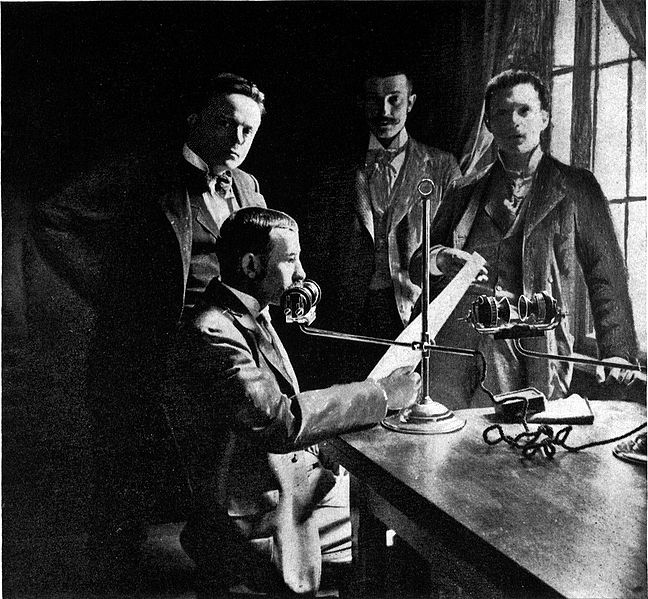
A stentor reading the day's news to 6200 subscribers - An image depicting the stentor of Telefon Hirmondó. Source: Wikimedia Commons

A stentor reading the day’s news to 6200 subscribers – An image depicting the stentor of Telefon Hirmondó. Source: Wikimedia Commons

This post is off topic from my typical posts about wireless technology. Nonetheless, I’m a sucker for documentaries regarding the history of technology.

BBC Radio 3 recently had a Sunday documentary about the “Pleasure Telephone”–a Victorian era technology that used telephone almost like we use radio today. As someone interested in broadcasting and technology, I found the story fascinating.

BBC no longer has the documentary available to stream from their site.

However, Clark Boyd, of PRI’s The World Technology Podcast, picked up the story and published the bulk of it at the end of his July 14th show. You can find it here.

It’s worth a listen–in fact, the PRI World Technology Podcast series in general is worth a subscription. I never miss an episode.

For more information on the pleasure telephone, check out this article in Early Radio History, or its Wikipedia entry.