Many thanks to SWLing Post contributor, friend, and political cartoonist Carlos Latuff, who shares the following guest post:
My experiences receiving Kyodo News
by Carlos Latuff
Back in the 90s, I used the fax machine a lot, I even had one in my house, sending messages and cartoons to my clients and even to live TV shows (see the video example below). Lots of fun!
But for me, the fax only worked through the phone line.
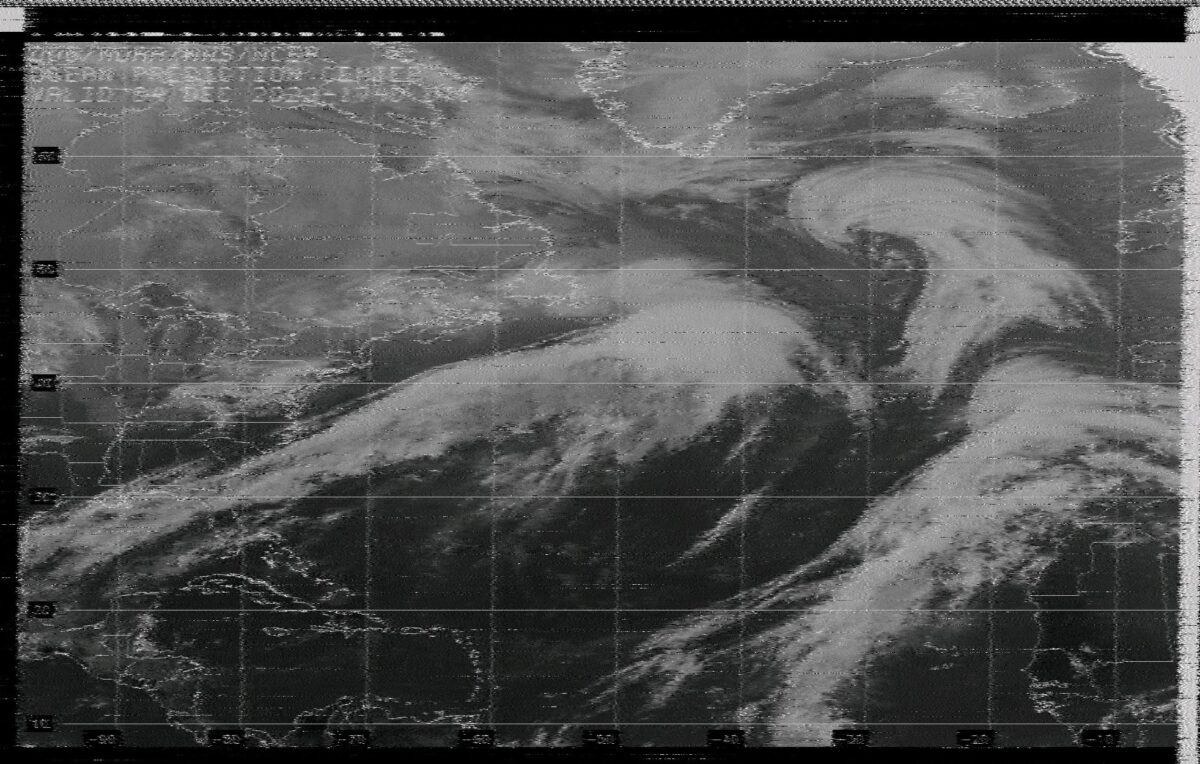
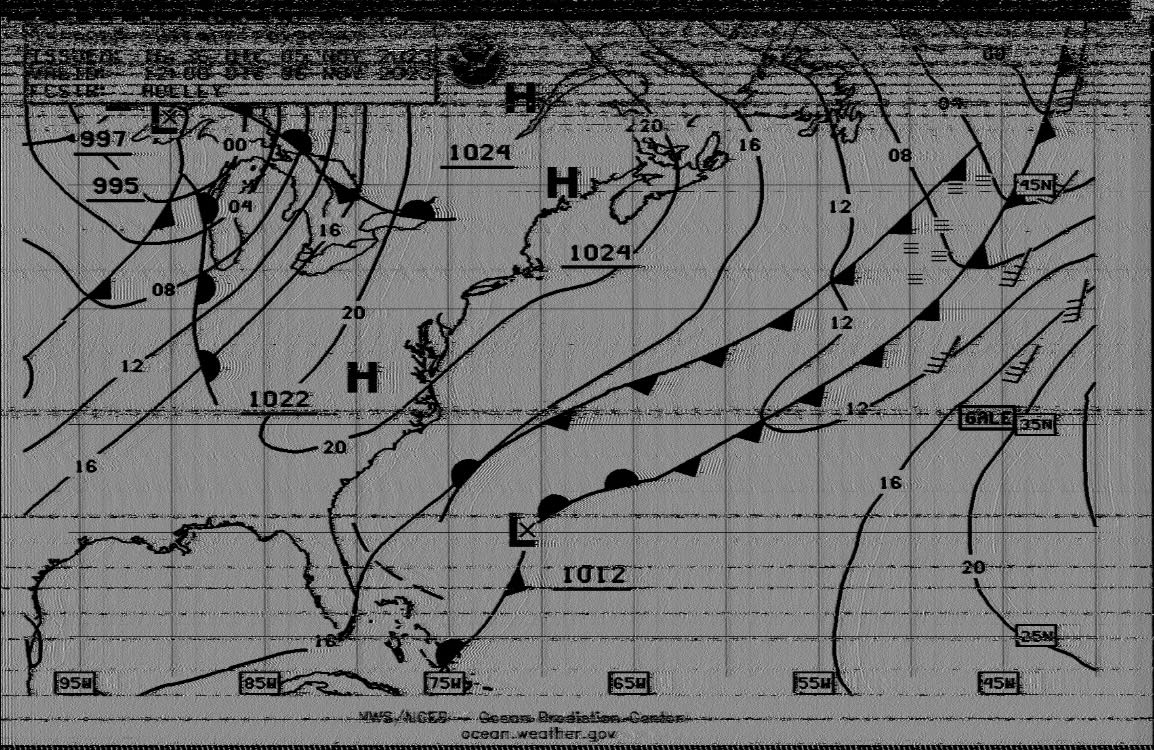
It was only in 2020, during the covid-19 pandemic, that I, by chance, during one of my radio listening sessions, came across a strange signal that I would only later discover was a radiofax.
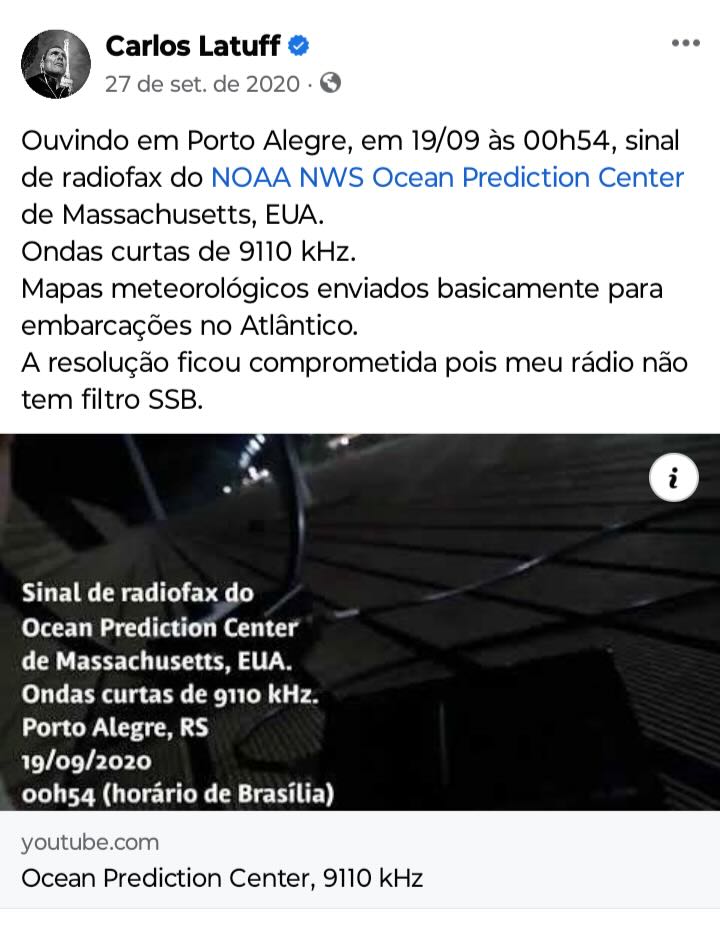
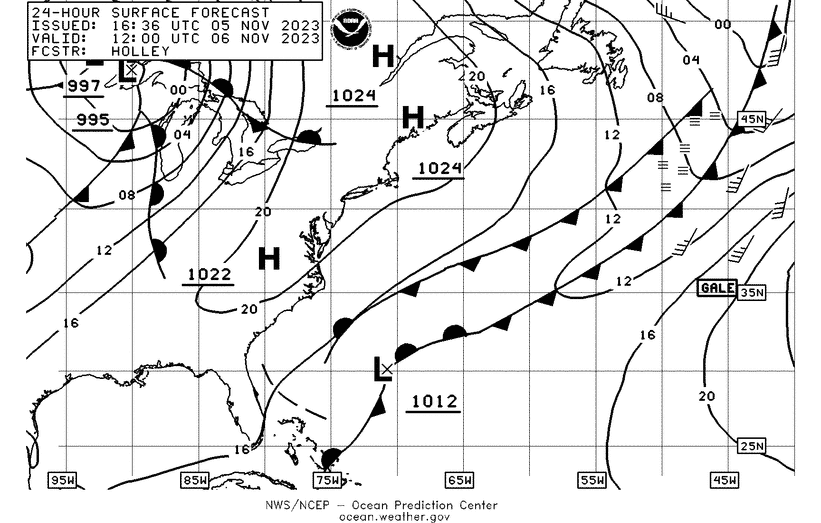
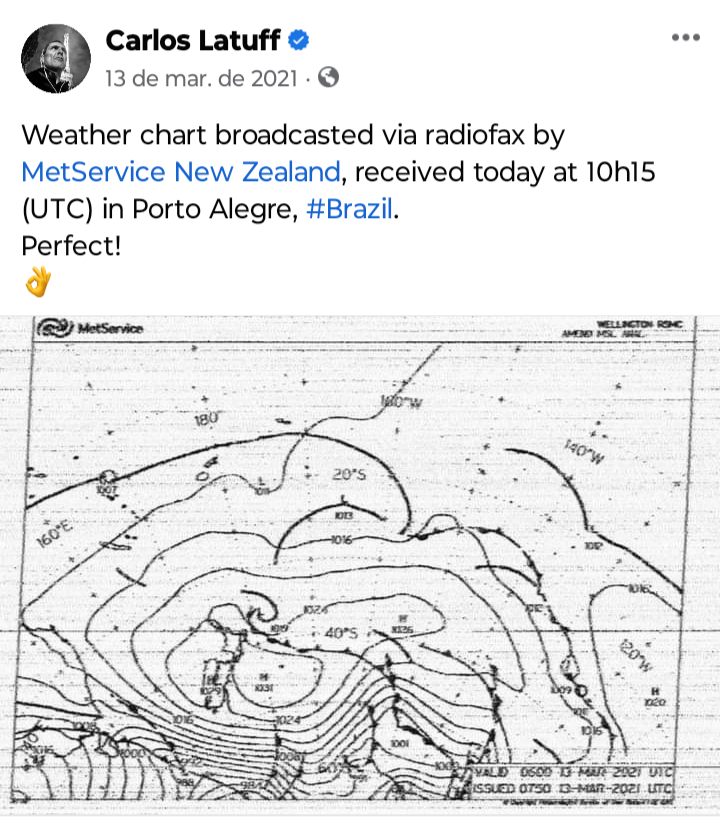
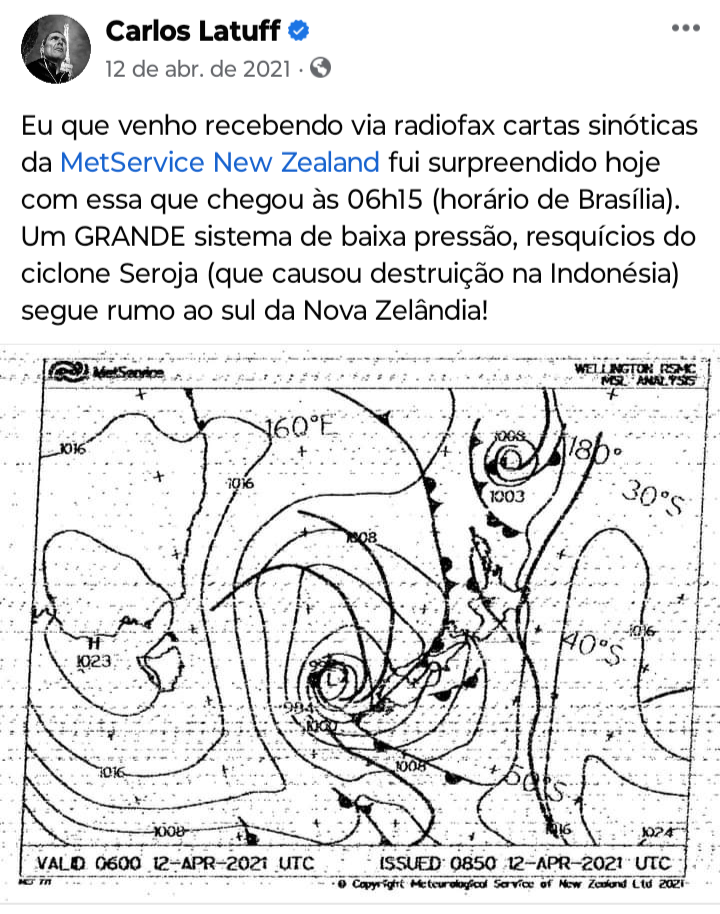
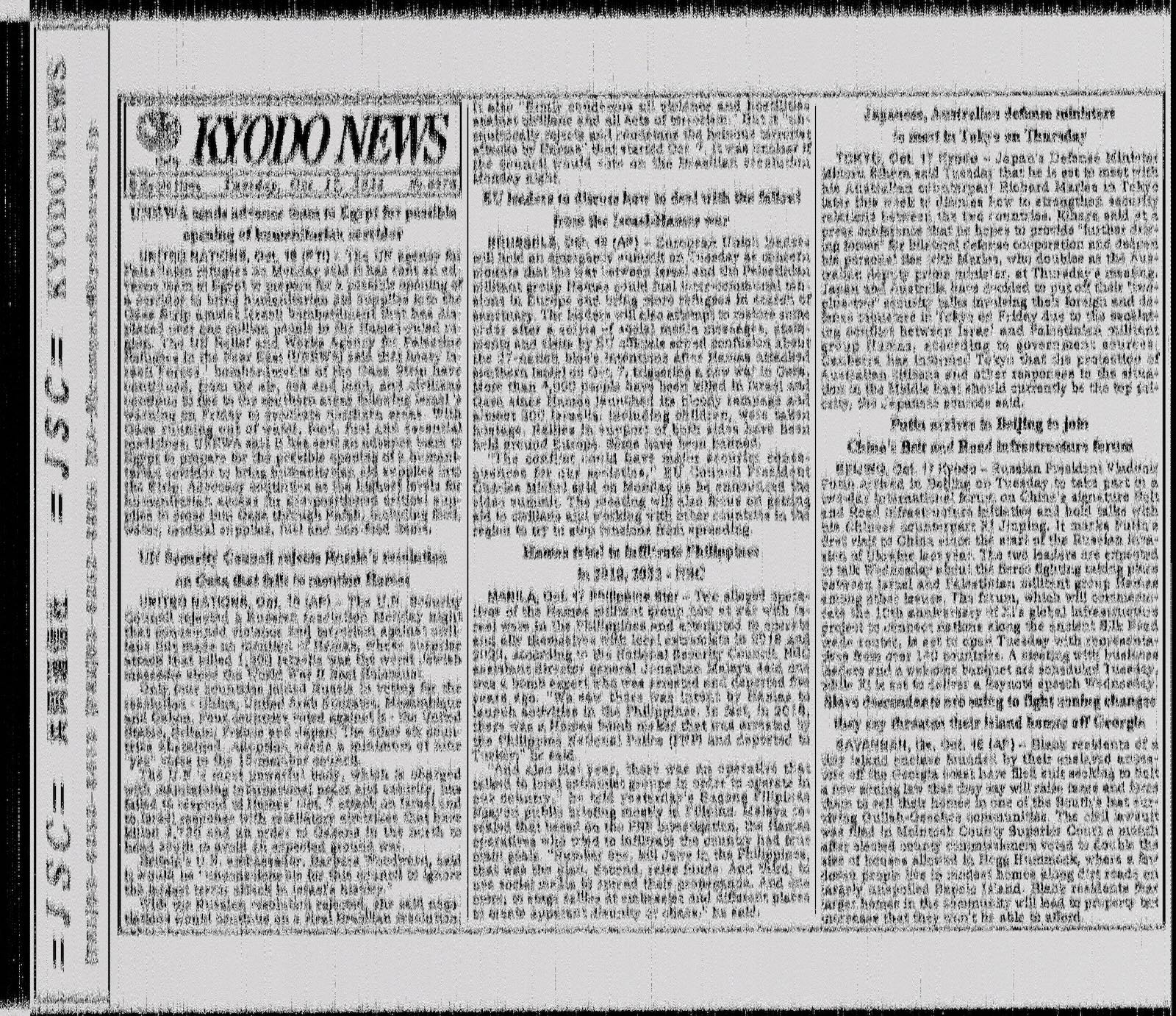
It was then that I realized that several meteorological agencies around the world broadcast synoptic charts and satellite images to vessels on the seas by radiofax, and that there was a Japanese news agency (the only one left in the world) that broadcast daily news to fishing boats and cargo ships: Kyodo News.
I was fascinated by that!
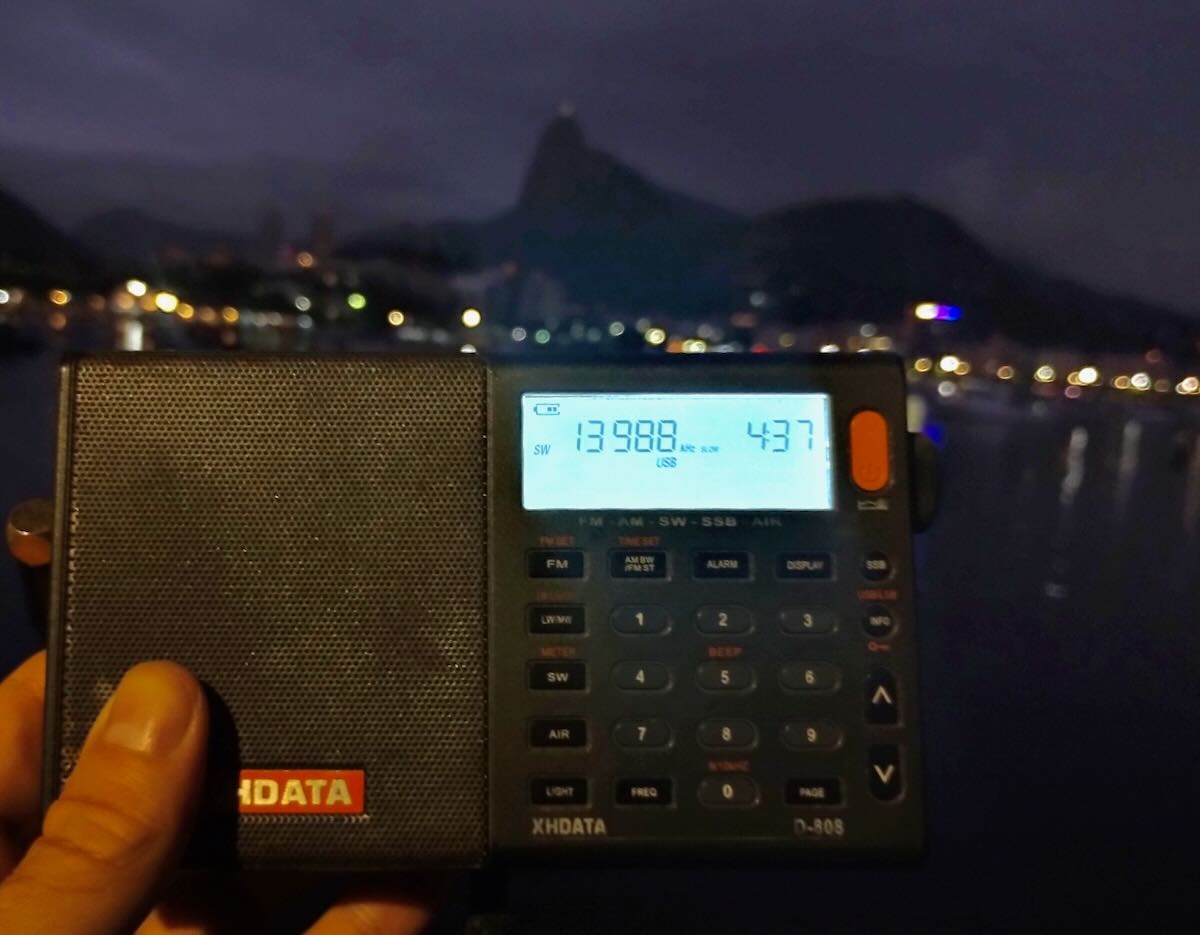
And I started tuning to the frequency of 16971 kHz USB (16970 in fact, to properly receive images) using basically my Xhdata D-808 and its telescopic antenna (now I use a 3-meter long wire antenna).
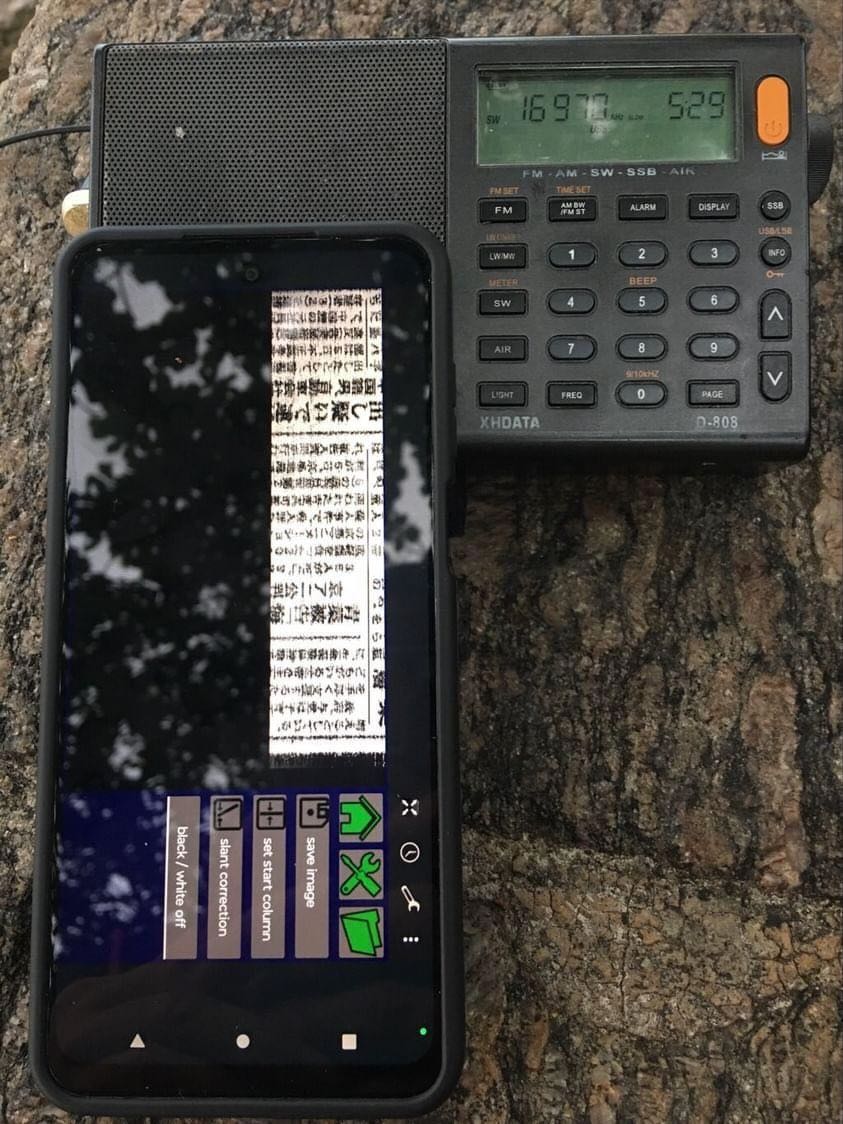
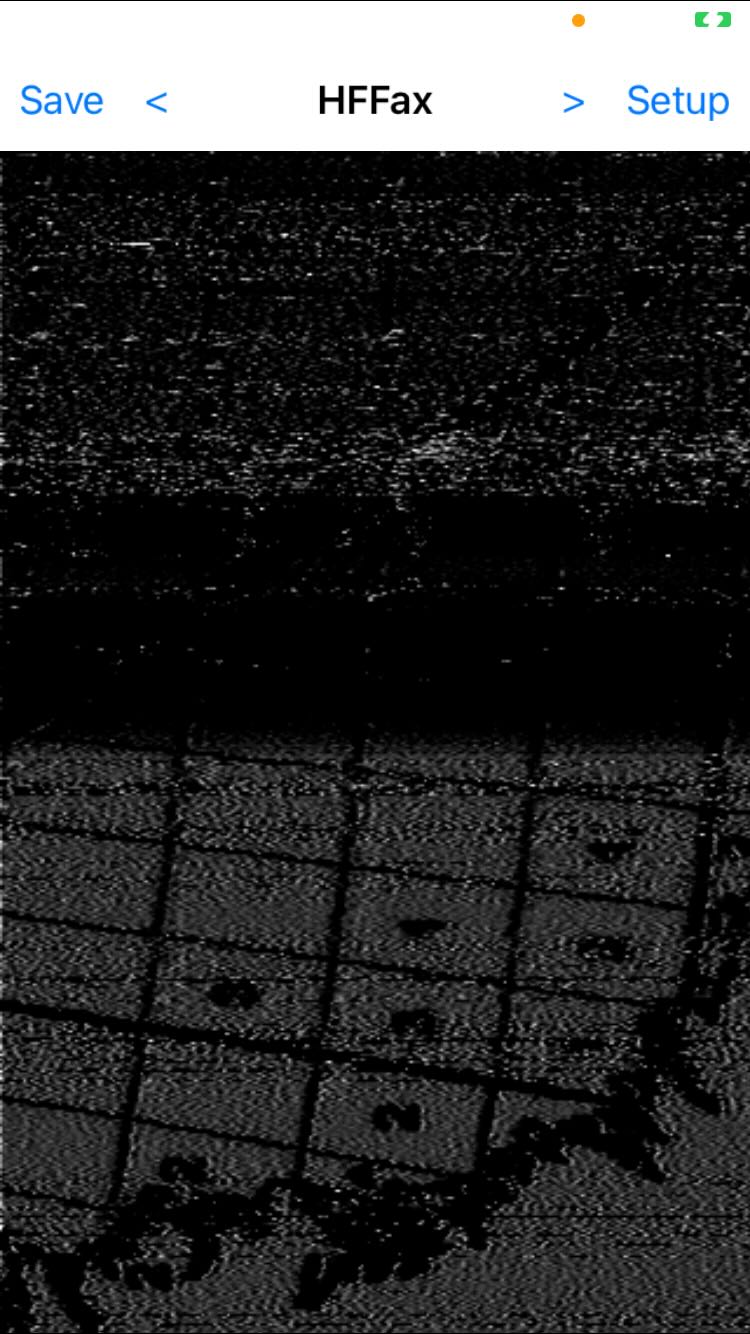
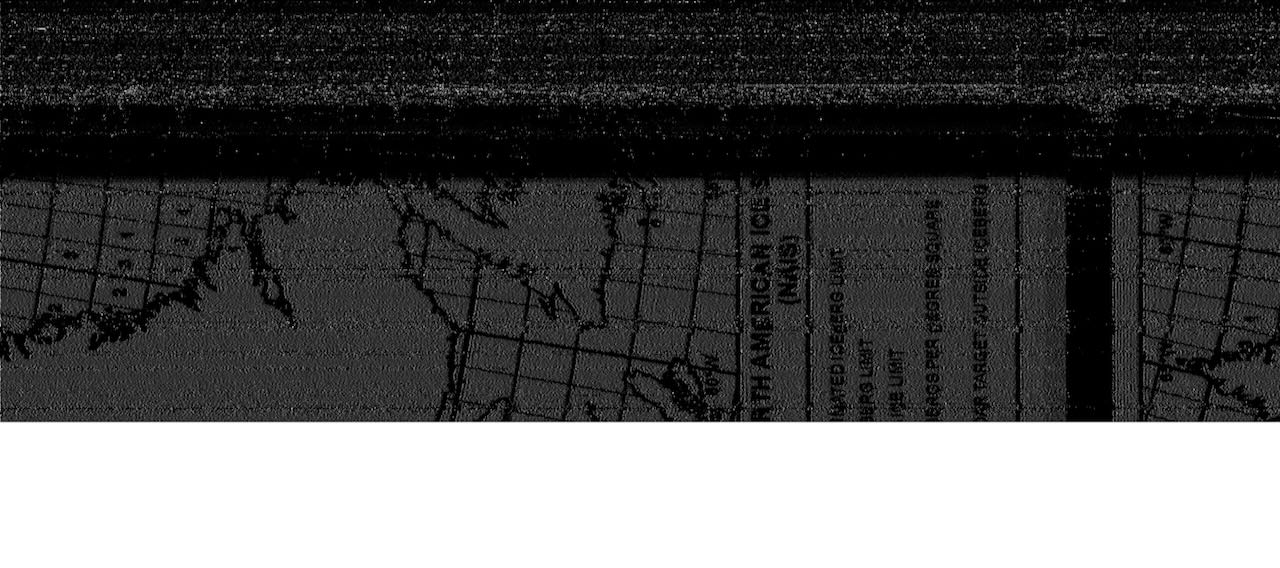
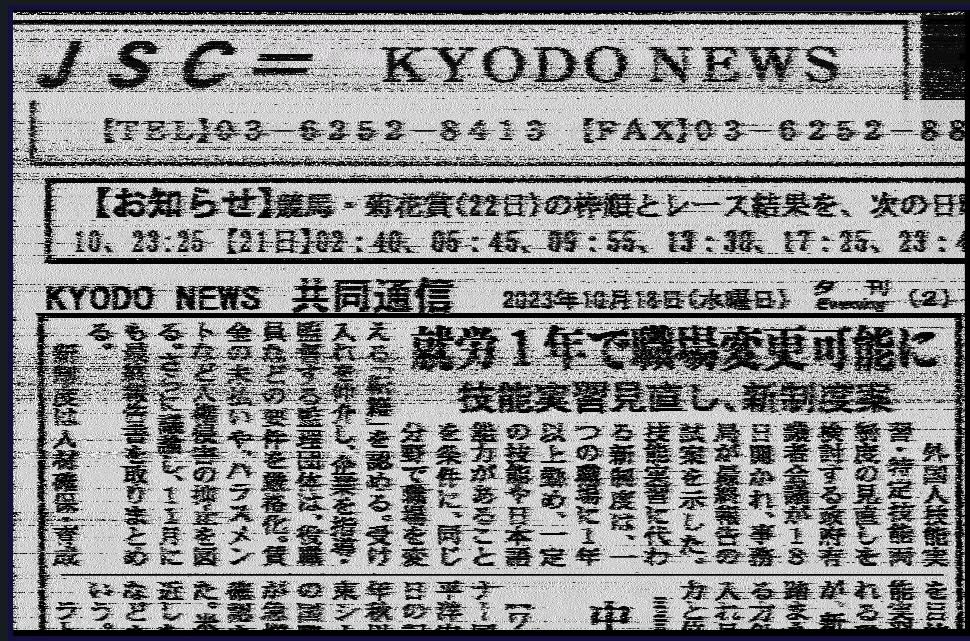
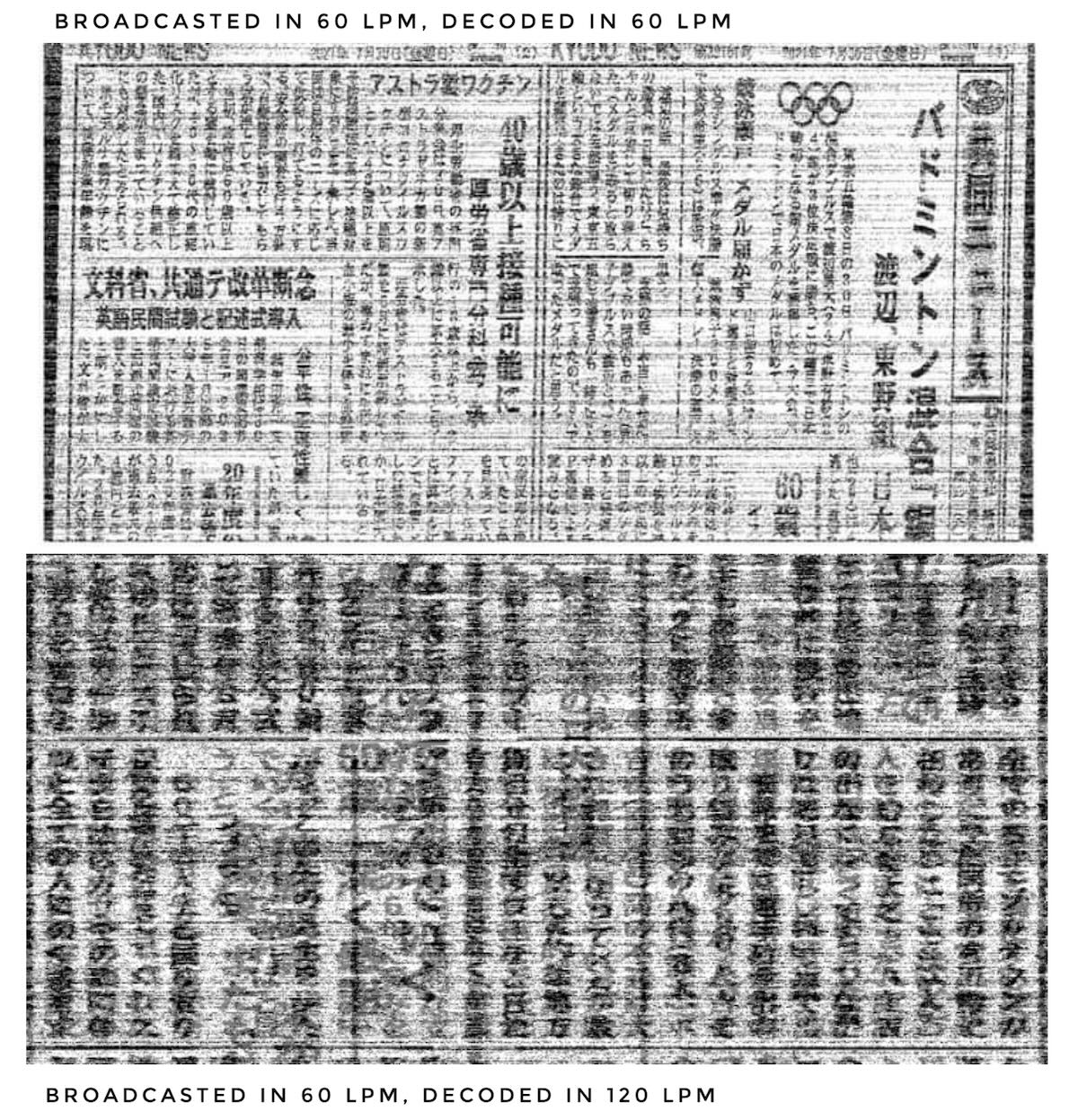
All the weather agencies I know broadcast at 120 lines per minute, while Kyodo News broadcasts at 60 lines. When I used to have a laptop, I had programs installed where I could adjust this cadence, like MixW, however, using an Android cell phone, the only application that works for radiofax is HF Weather Fax, which only decodes at 120 lines per minute (I had some problems with the app, which, being old, sometimes generated conflicts with Android and crash suddenly or even didn’t even open. Another bug is that after around 40 minutes of continuous decoding, the app stops). When you receive a radiofax at a rate of 60 lpm and decode it at 120 lpm, it’s as if you cut the image in half, vertically, and joined the two parts into one, mixing the letters.
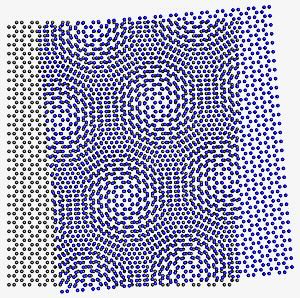
I noticed that, when enlarging the image with my fingertips on the surface of the cell phone, while receiving the radiofax, I was able to see the right and left side of the image at a time, in an effect known in graphic arts as “moiré pattern”.
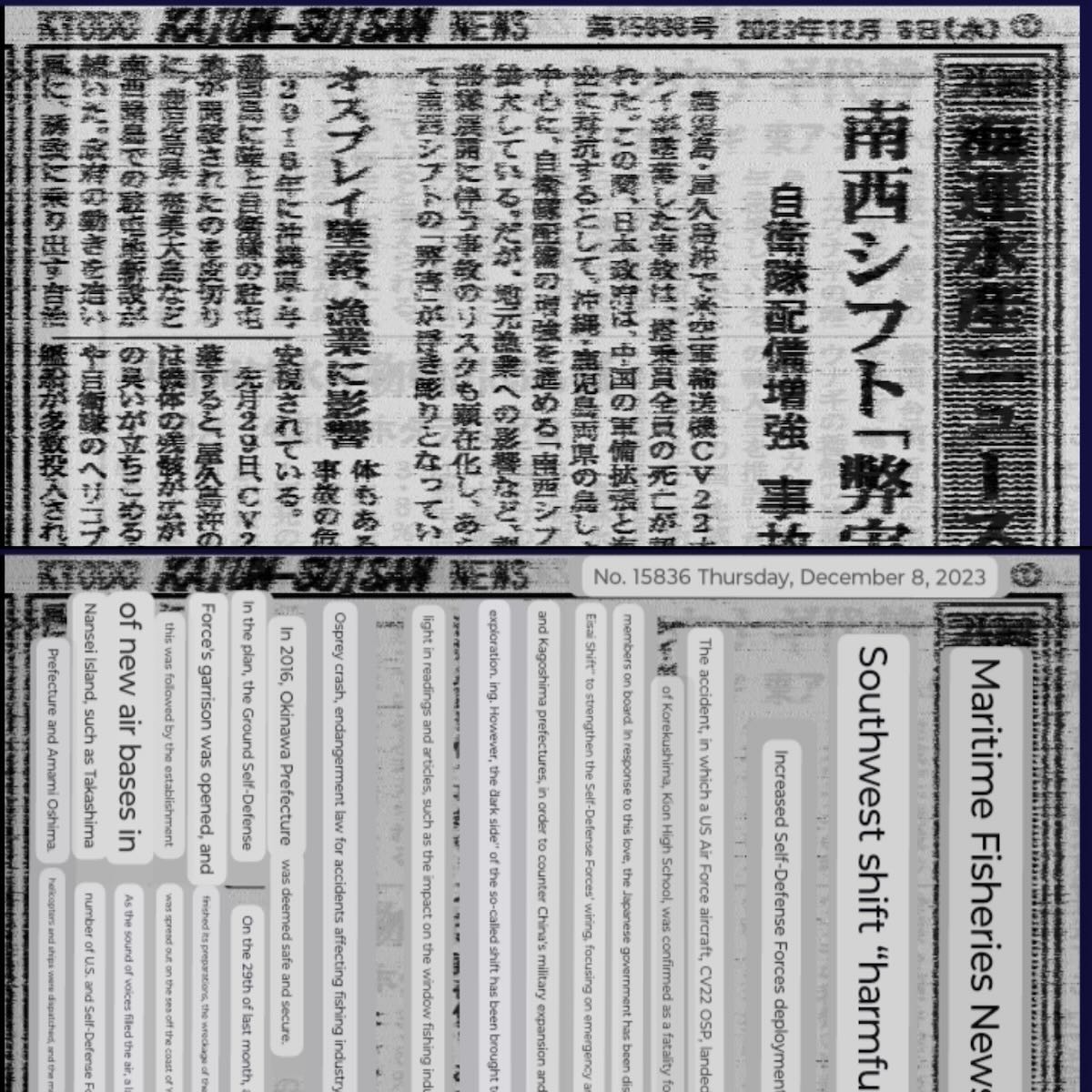
So, using HF Weather Fax I cannot download a Kyodo News radiofax in full (except when I receive the bulletin in English, the only time Kyodo News broadcasts in 120 lpm), but I can view parts of it and make print screens. And with these prints, I open them on Google translator app translating from Japanese to English. If image is in good quality, the translation is perfect.
Results I got were obtained from radio listening in Porto Alegre, Tramandaí beach in Rio Grande do Sul, and Urca beach in Rio de Janeiro, all located in Brazil. The best time has been late in the morning/early in the morning.
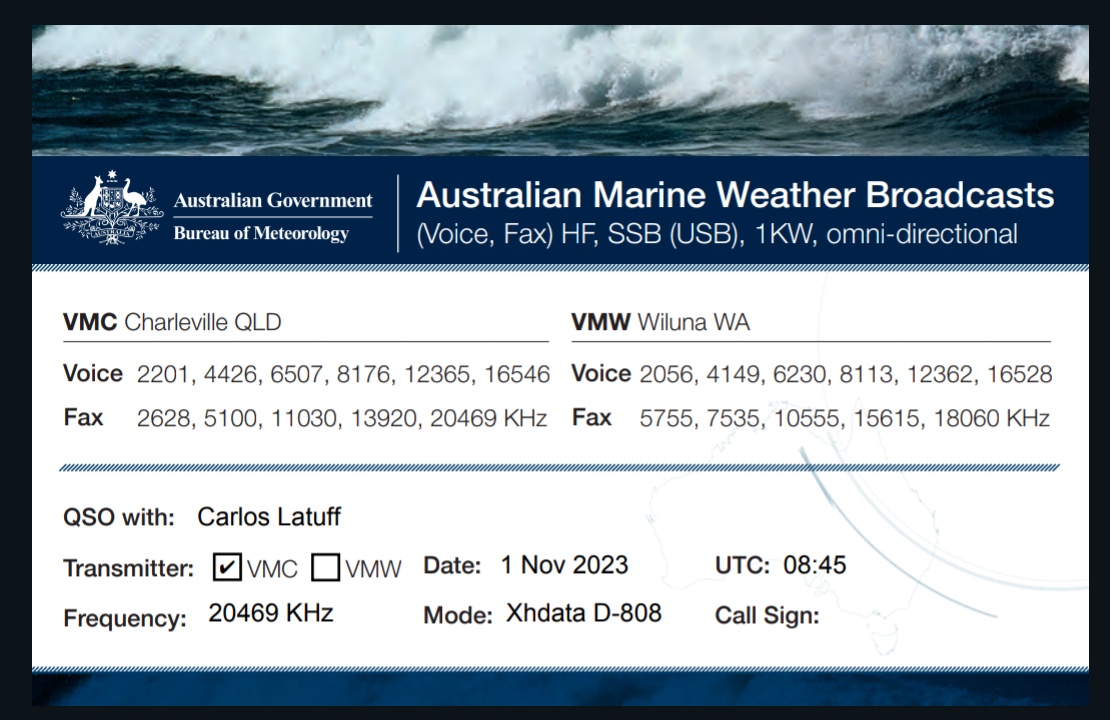
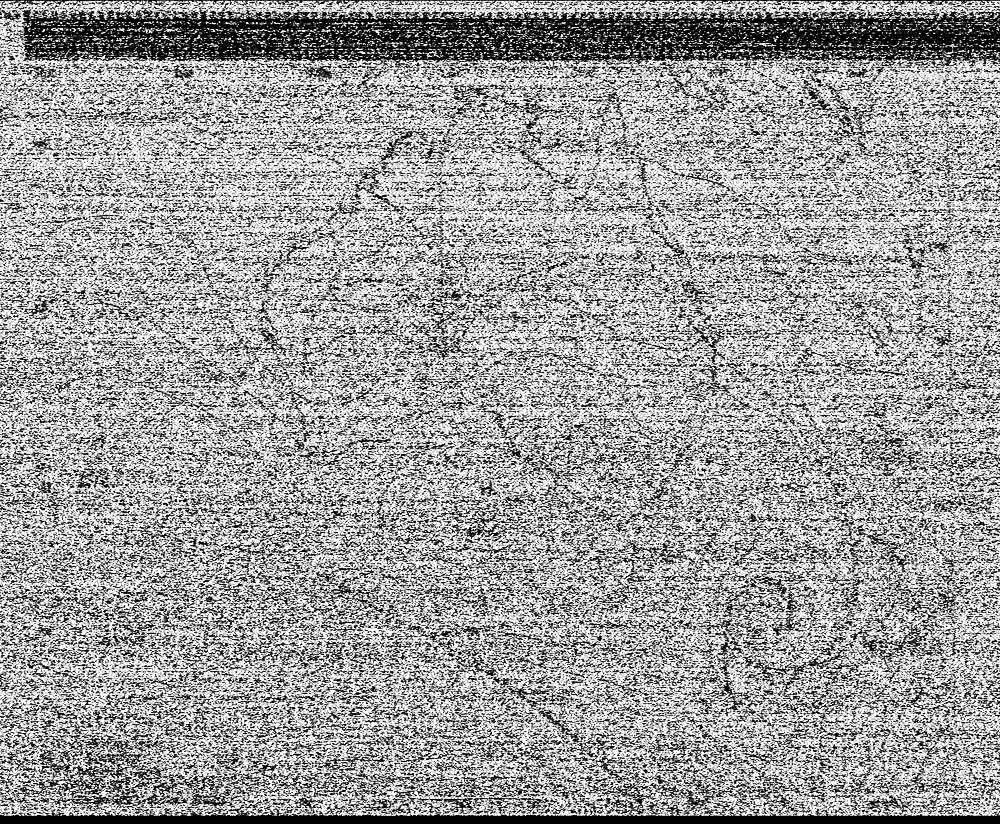
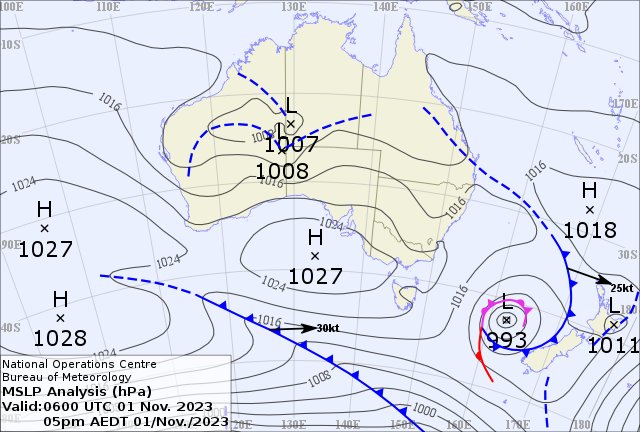
I’ve already obtained digital QSL cards from some meteorological agencies, such as those in Germany, Australia and Kagoshima in Japan, but Kyodo News doesn’t even respond to my emails.
But the main question is: why go to so much work to receive news via radiofax when you can easily receive it on the Internet through the Kyodo News website–?
Firstly, I’m nostalgic, receiving these radiofax has a touch of the past that I like to remember. And second, I believe that with the advancement of new satellite data transmission technologies, it’s only a matter of time before radiofax disappears as means of communication for vessels on the high seas. This is already happening!
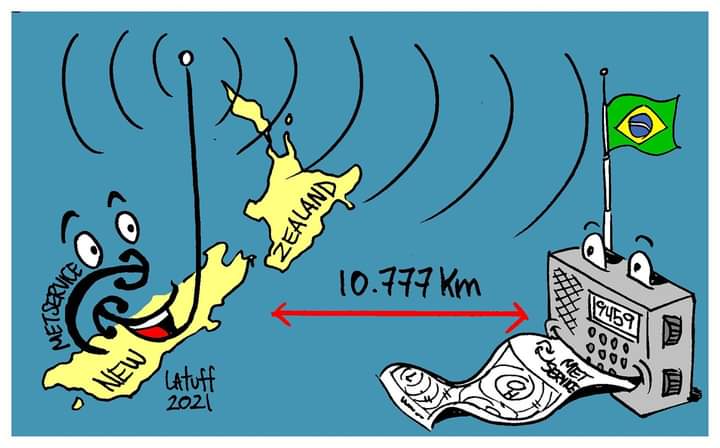
Remember the end of radiofax transmissions from the New Zealand meteorological agency MetService this year?
So I’m enjoying the radiofax, before it ends!
The following are reports from some of my listening/decoding sessions: Continue reading